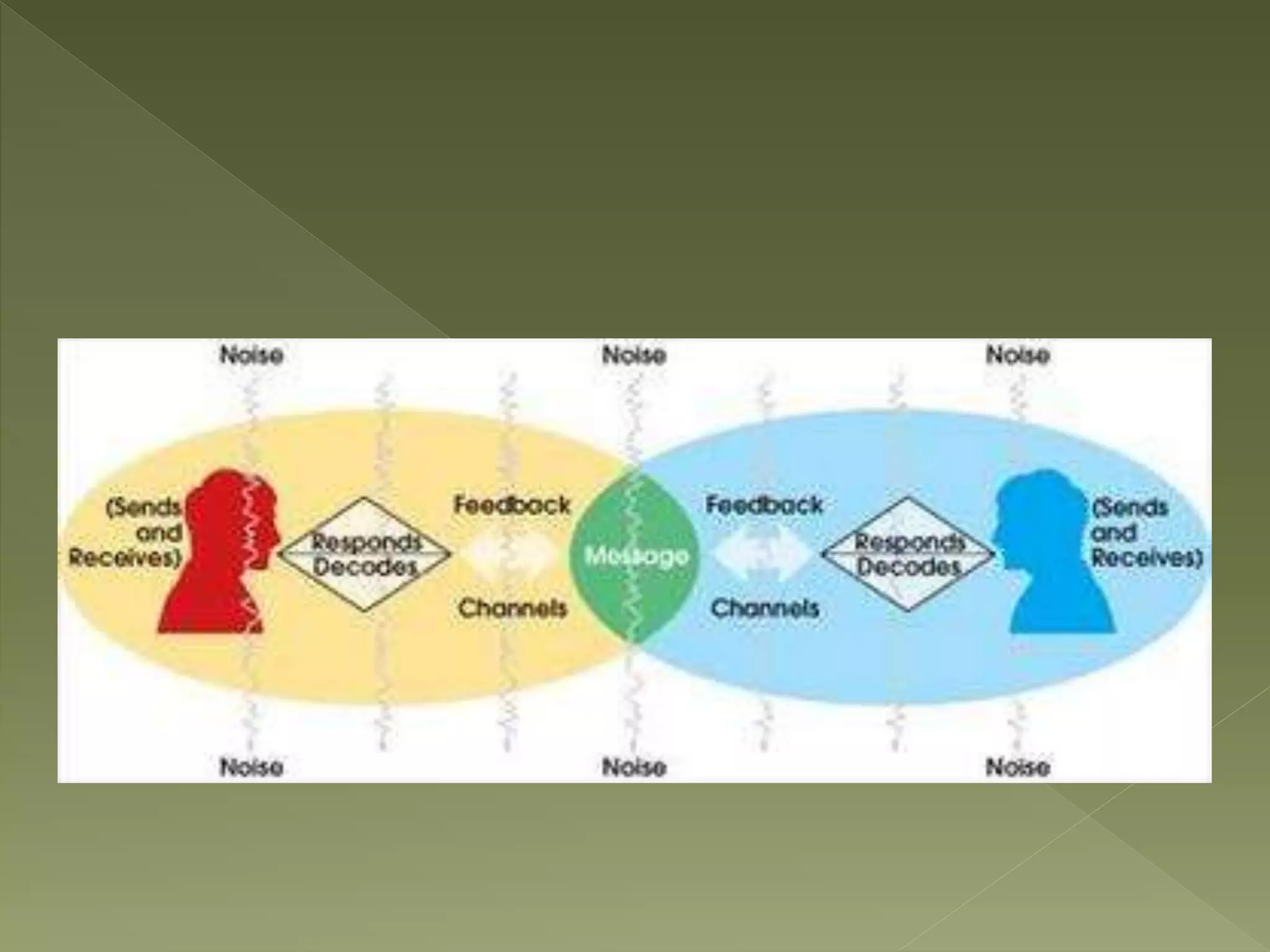
 Proposed by Dean Barnlund in 1970
 Presents a multi-layered feedback system
for all parties involved, and recognizes that
anyone can be a sender and receiver at the
same time.
 Layers of feedback consists of both verbal
and non-verbal cues.
 Most systematic of the functional models
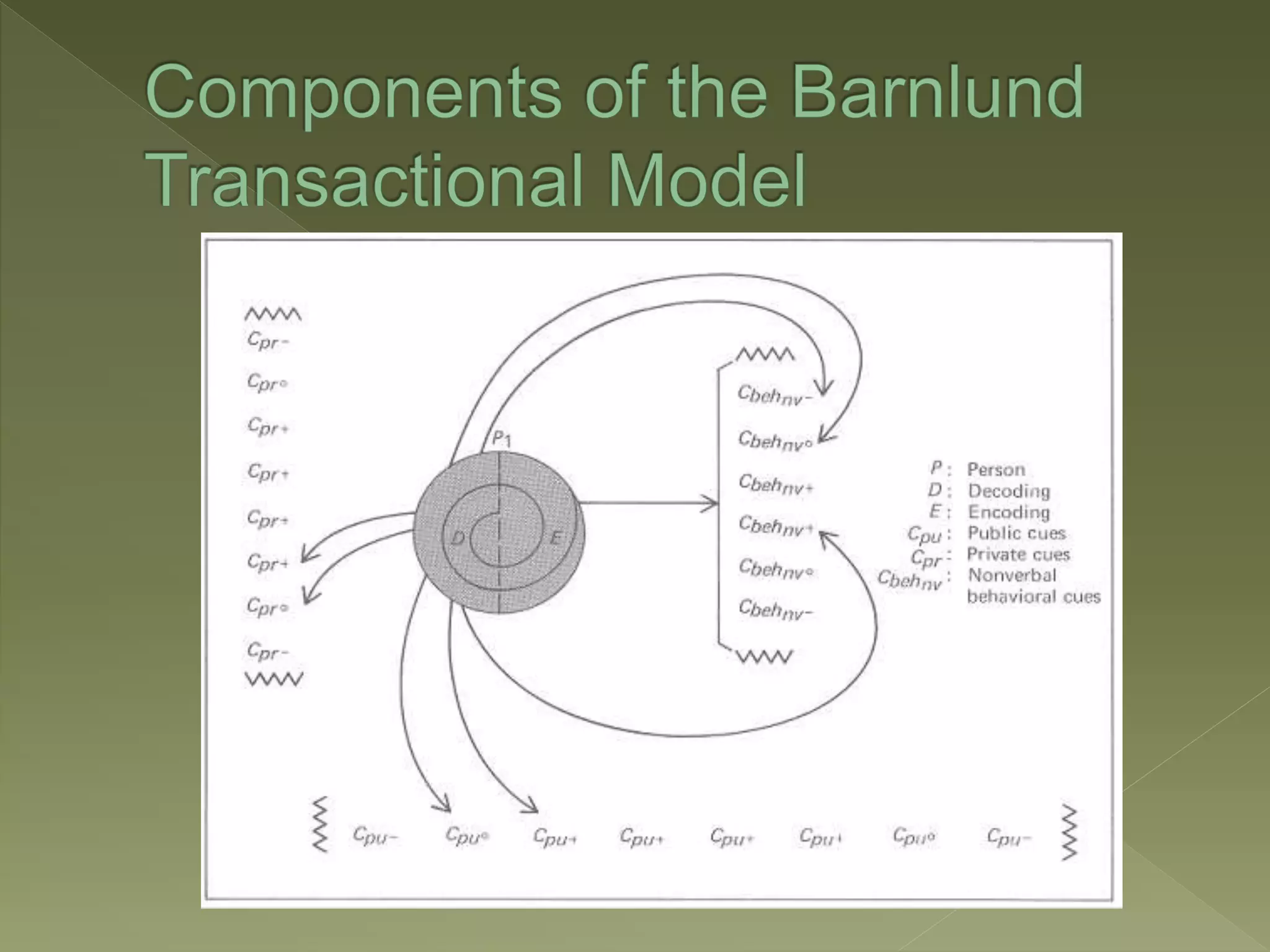
 Cues refer to the signs for doing something.
› Public Cues (CPU) – are physical,
environmental, or artificial and natural or man-
made.
› Private Cues (CPR) – are also known as private
objects of orientation which includes senses of a
person.
› Behavioral Cues – can be verbal as well as
non-verbal.
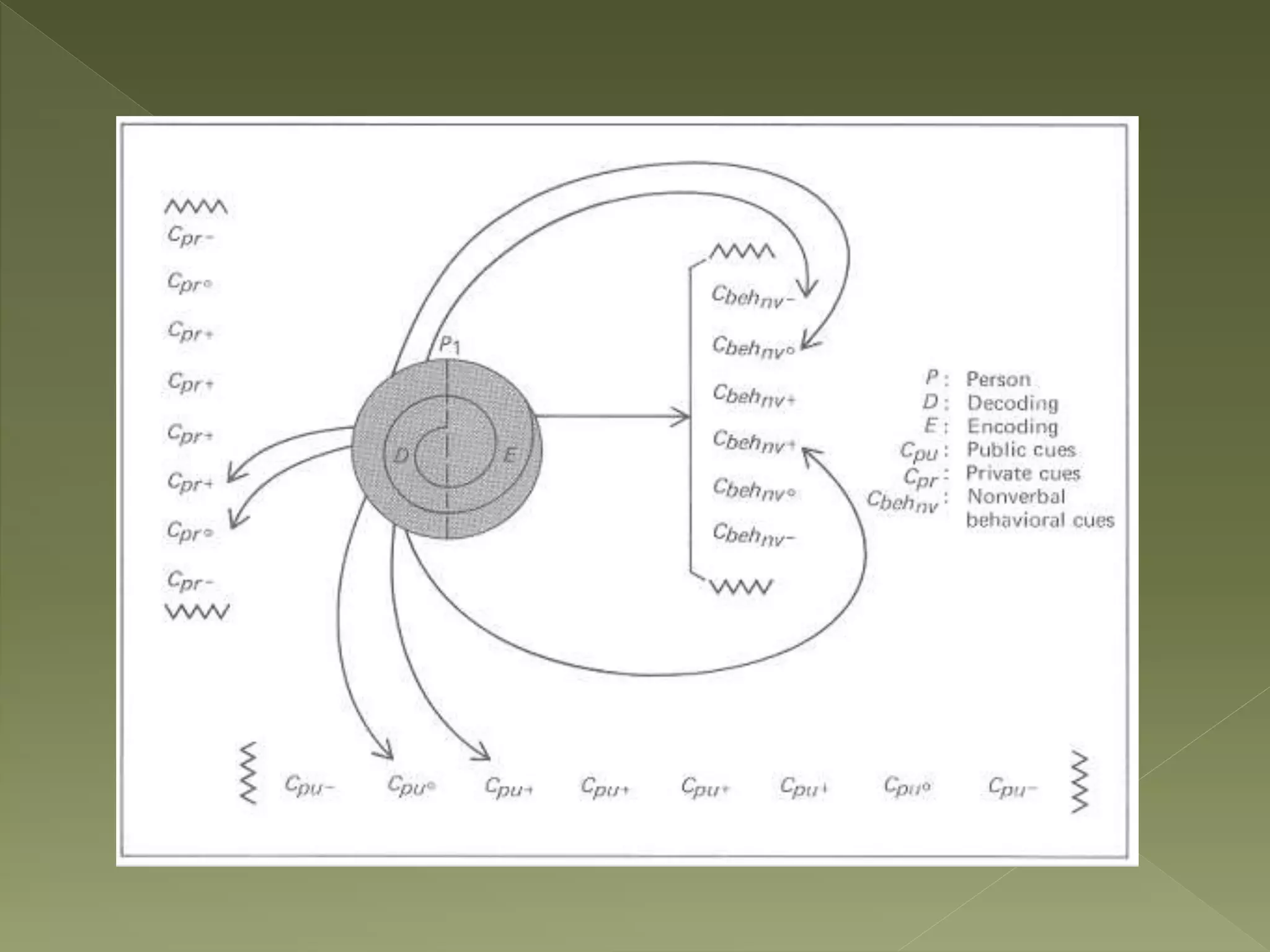
 Jagged lines show that the availability of
cues can be unlimited and are denoted as
VVVV.
 The valence signs, +, 0, and – are also
attached to these types of cues.
 Speech act refers to particular instance of
communication in the model.
 Filters are the realities of people engaged in
communication.
 Noise is the problem that arises in
communication flow and disturbs the
message flow.
 The model shows shared field experience of
the sender and receiver.
 Talks about simultaneous message sending
noise and feedback.
 Is taken by critics as the most systemaic
model of communication.
 Very complex
 Both the sender and receiver must
understand the codes sent by the other .
Barnlund Transactional Model

Barnlund Transactional Model

  • 2.
     Proposed byDean Barnlund in 1970  Presents a multi-layered feedback system for all parties involved, and recognizes that anyone can be a sender and receiver at the same time.  Layers of feedback consists of both verbal and non-verbal cues.  Most systematic of the functional models
  • 4.
     Cues referto the signs for doing something. › Public Cues (CPU) – are physical, environmental, or artificial and natural or man- made. › Private Cues (CPR) – are also known as private objects of orientation which includes senses of a person. › Behavioral Cues – can be verbal as well as non-verbal.
  • 5.
     Jagged linesshow that the availability of cues can be unlimited and are denoted as VVVV.  The valence signs, +, 0, and – are also attached to these types of cues.  Speech act refers to particular instance of communication in the model.
  • 6.
     Filters arethe realities of people engaged in communication.  Noise is the problem that arises in communication flow and disturbs the message flow.
  • 8.
     The modelshows shared field experience of the sender and receiver.  Talks about simultaneous message sending noise and feedback.  Is taken by critics as the most systemaic model of communication.
  • 9.
     Very complex Both the sender and receiver must understand the codes sent by the other .