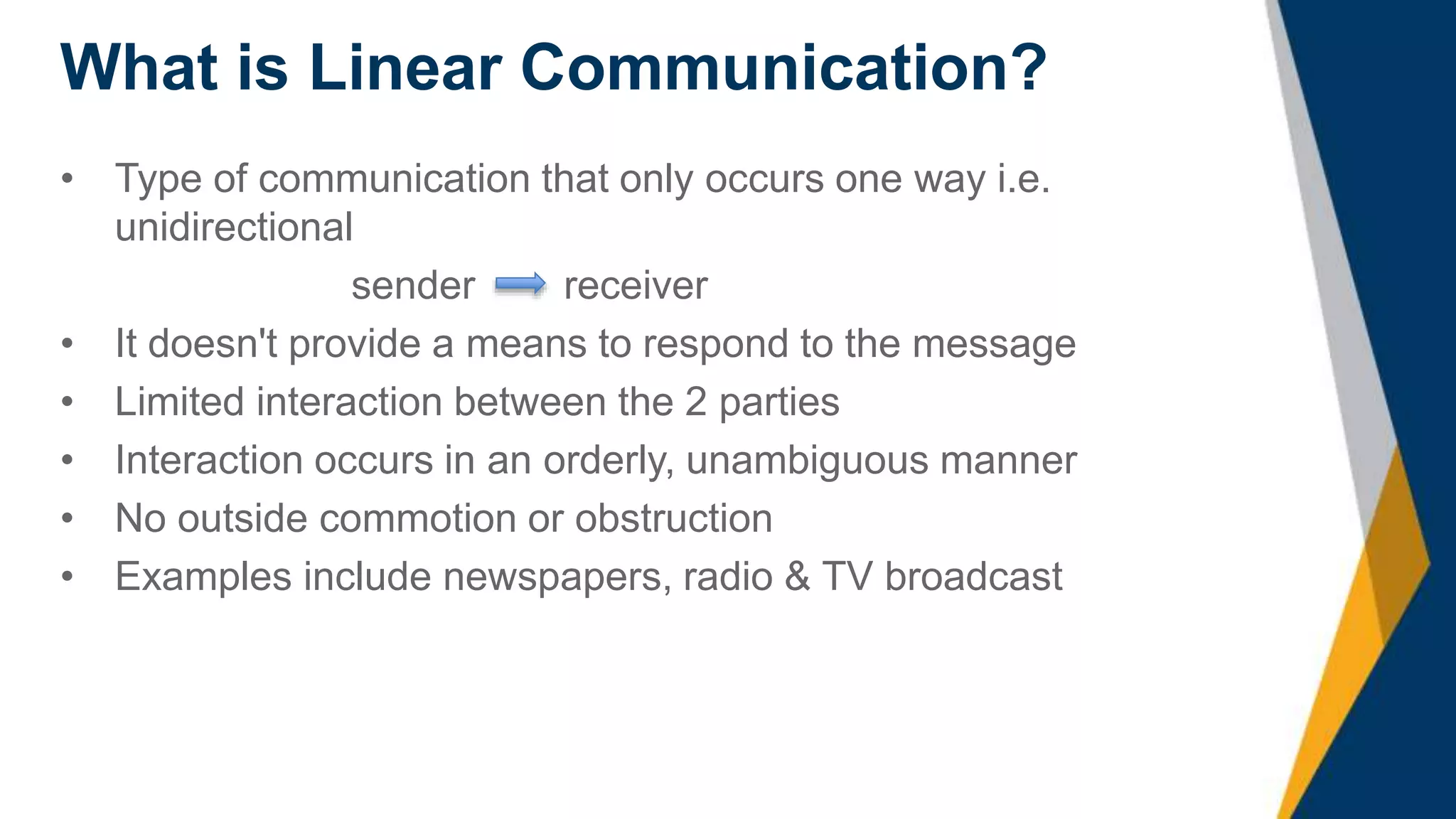
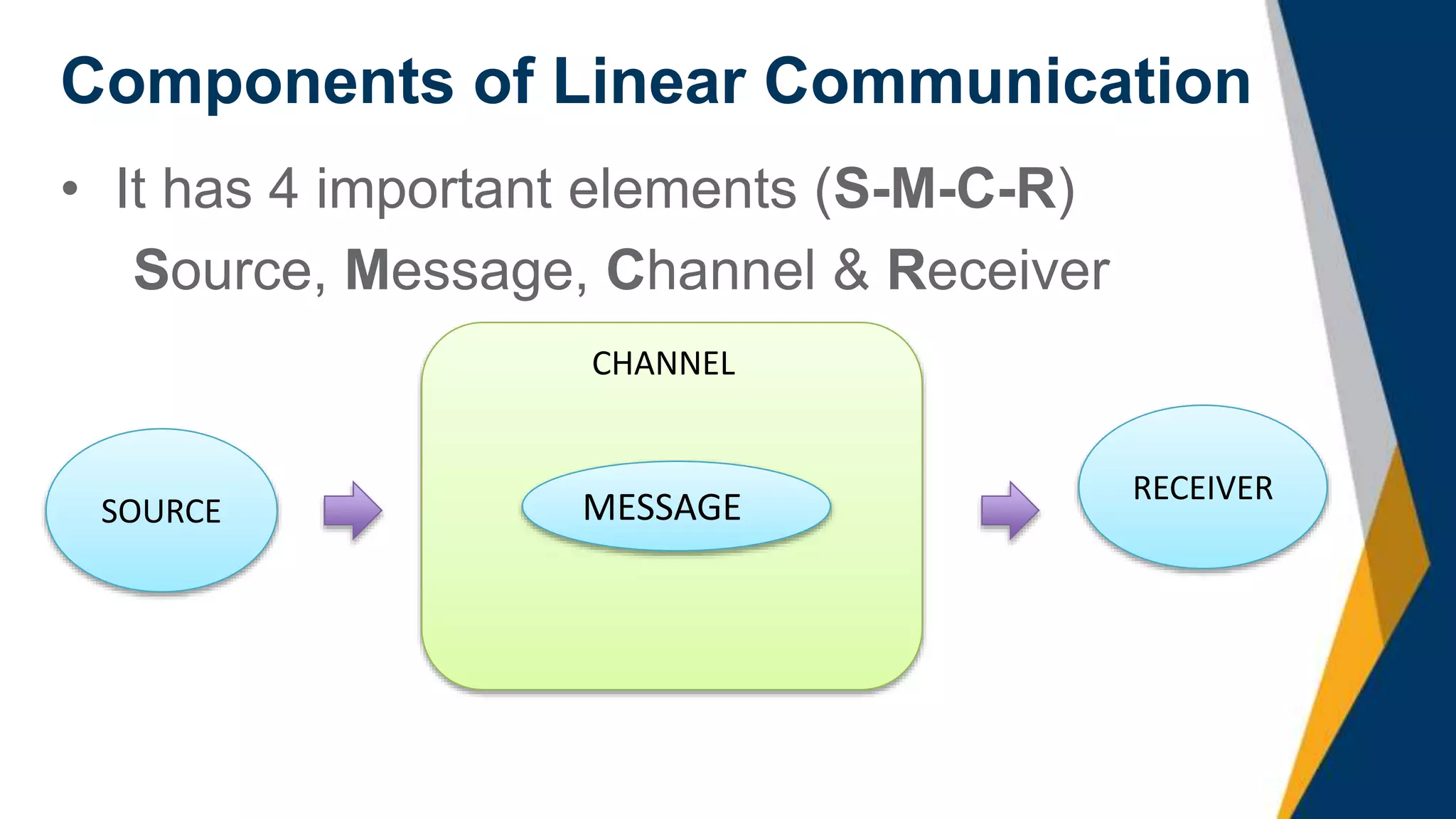
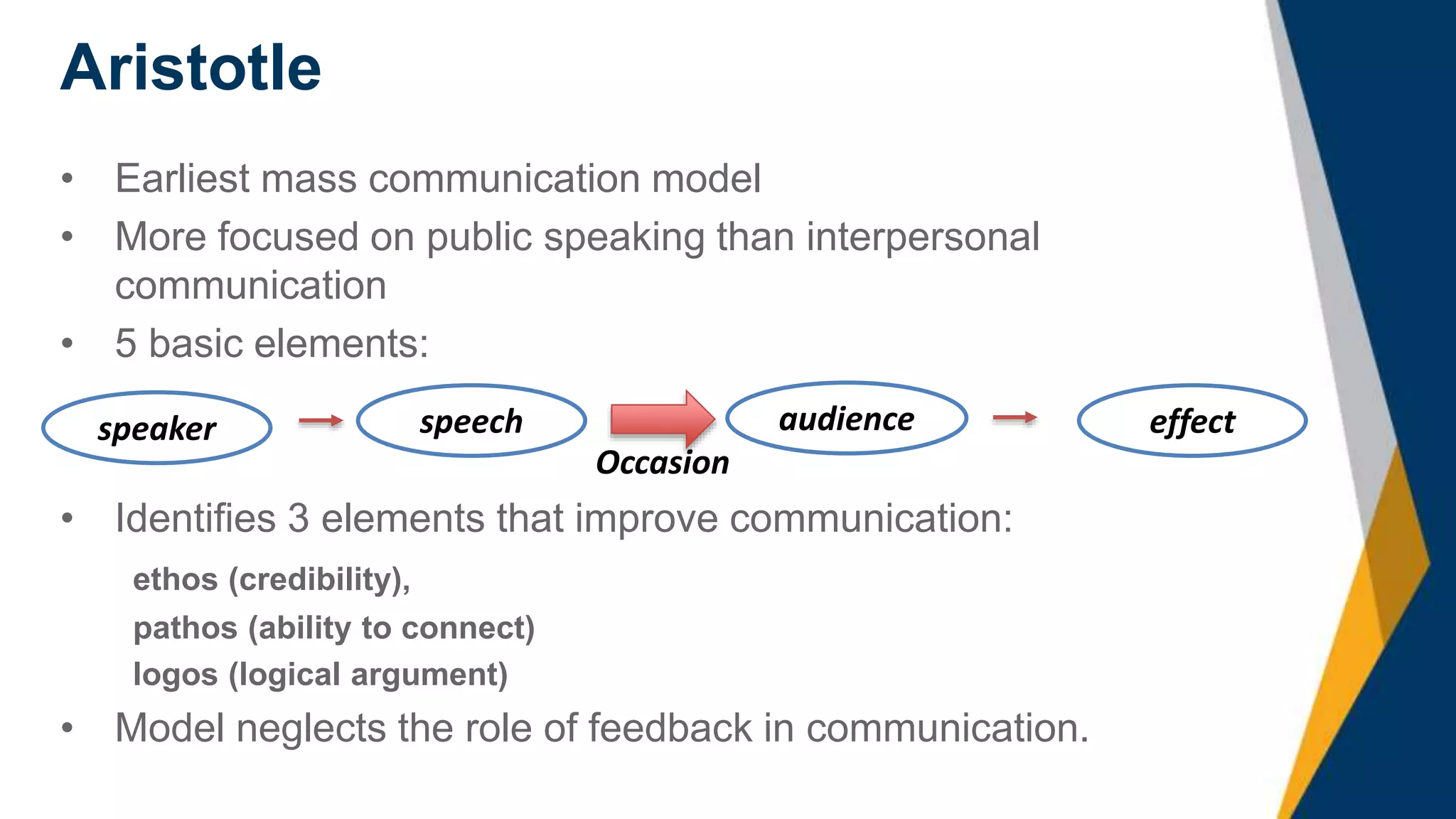
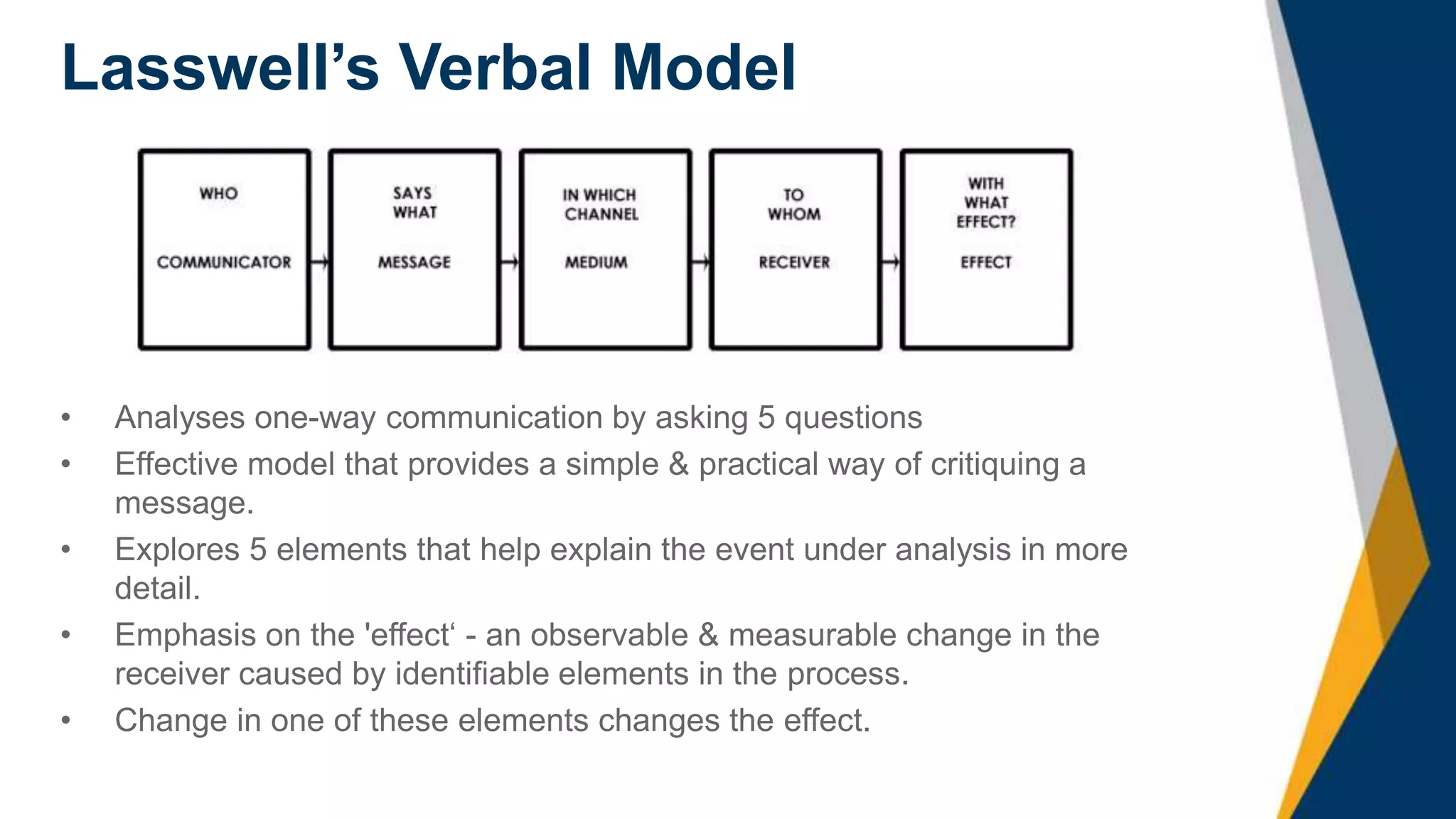
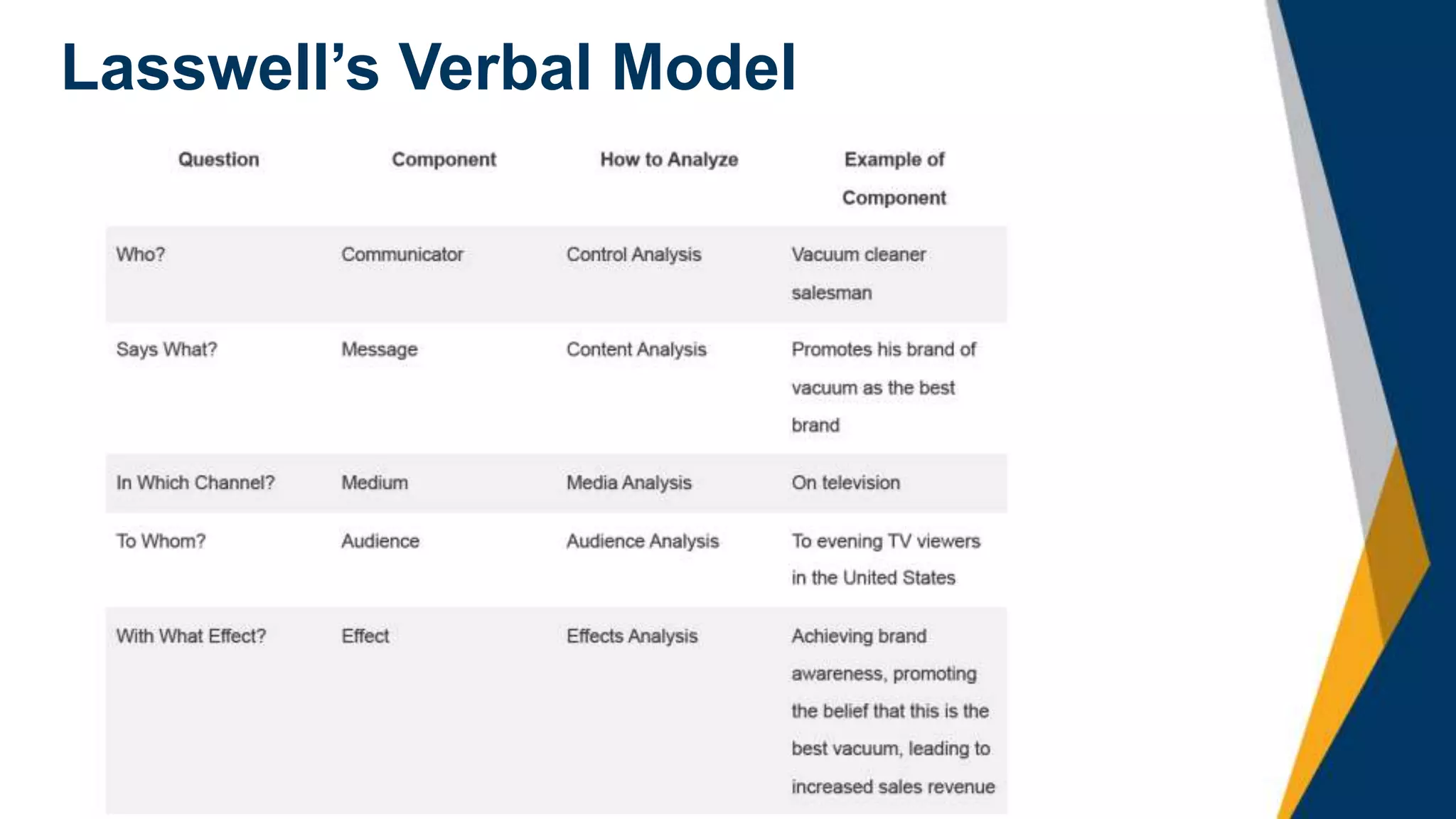
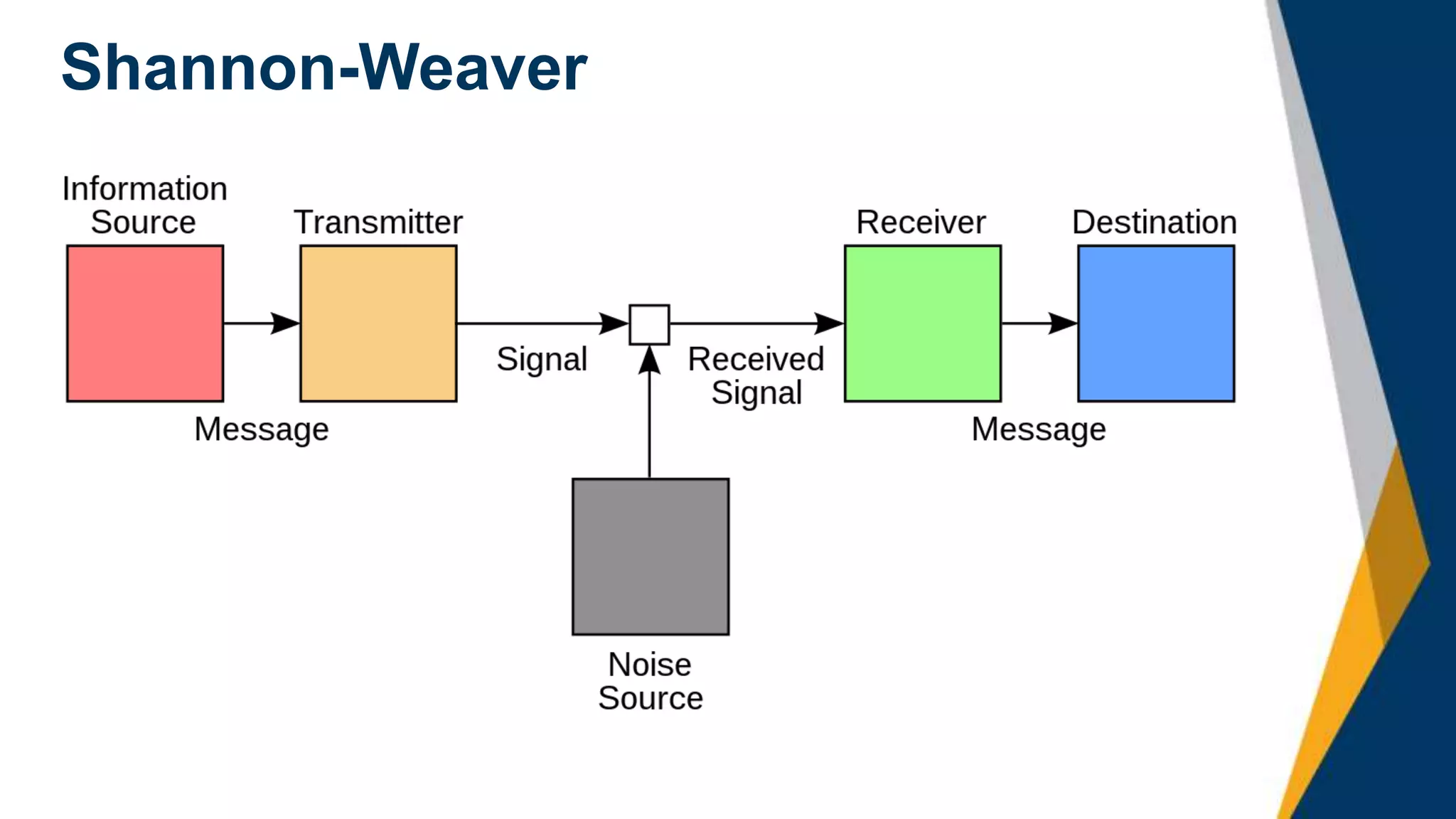
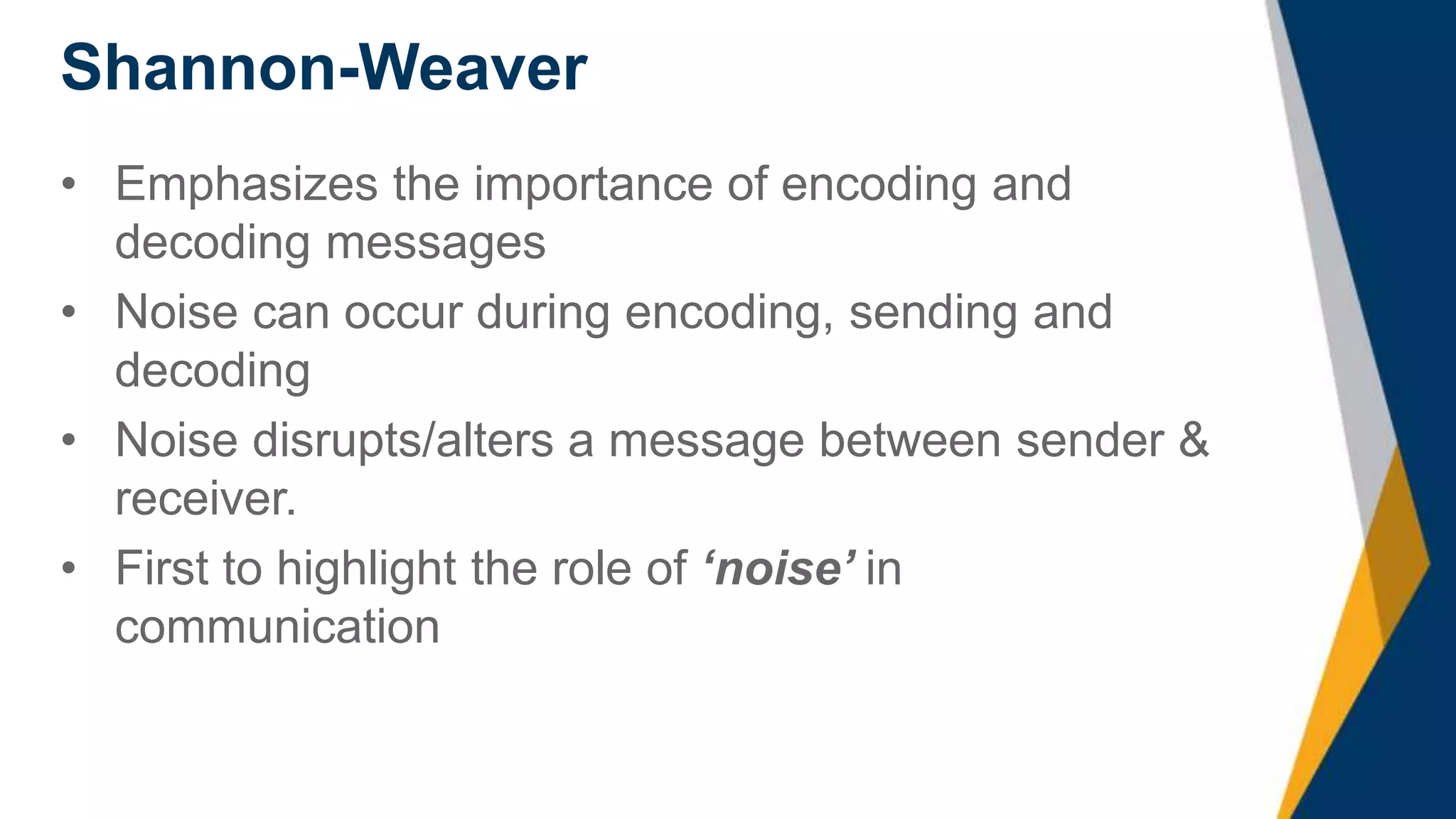
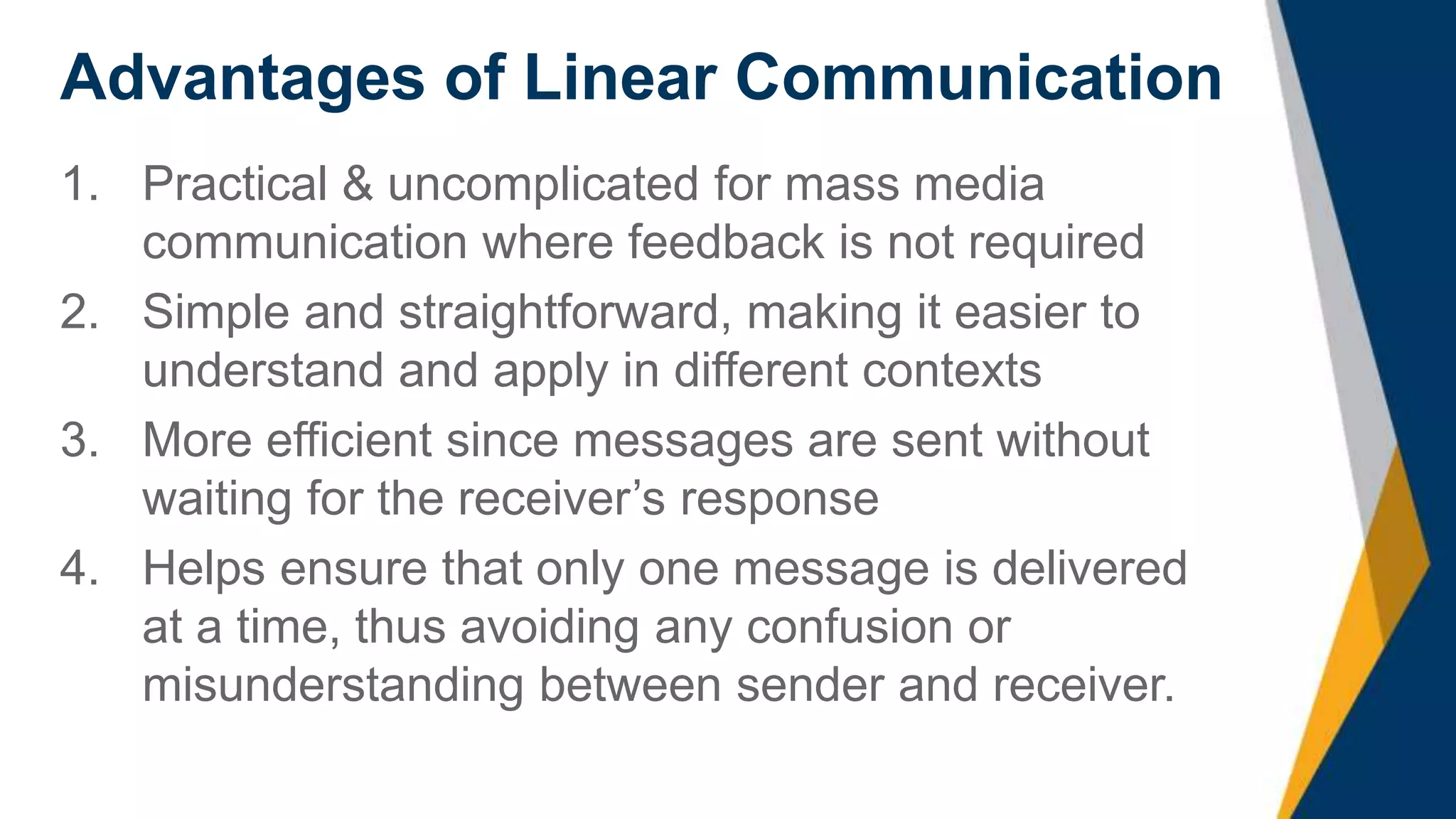
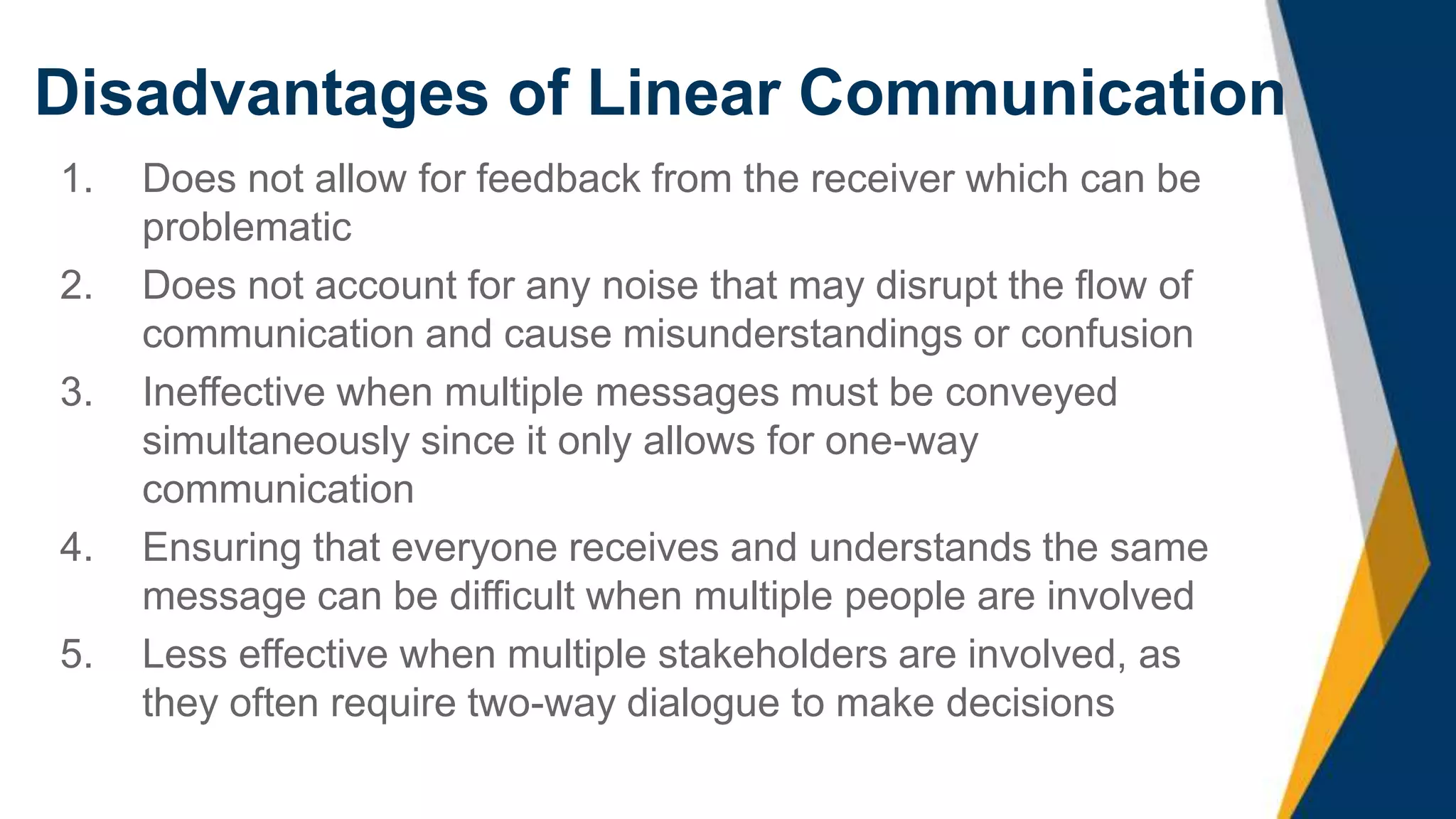
The linear model of communication describes one-way communication from a sender to a receiver without feedback. It has four key elements: a source that creates a message, a channel to deliver the message, the message itself, and a receiver of the message. Several classic models of linear communication are described, including Aristotle's model of public speaking, Lasswell's model examining who says what through which channel to whom with what effect, and Shannon-Weaver's model highlighting the role of encoding, sending, and decoding messages with the potential for noise. While linear communication is practical for mass media, it is limited by the lack of feedback and ability to convey multiple simultaneous messages.
![References
• ‘8 Communication Models Explained’, Knowledge Hub, 2022
<https://pumble.com/learn/communication/communication-models/> [accessed 11 May
2023]
• Alam, Shahnawaz, ‘What Is Linear Communication Model? Things You Need To Know
About It’, Voiceofaction, 2022 <https://voiceofaction.org/linear-communication-model/>
[accessed 11 May 2023]
• ‘Communication - Models of Communication | Britannica’
<https://www.britannica.com/topic/communication/Models-of-communication> [accessed
11 May 2023]
• Kobiruzzaman, M. M., ‘Linear Communication Model Examples With Advantages and
Disadvantages’, Newsmoor, 2023 <https://newsmoor.com/linear-model-of-communication-
examples-situation-advantages-disadvantages/> [accessed 11 May 2023]
• Sus (MA), Viktoriya, and Chris Drew (PhD), ‘Linear Model of Communication: Examples
and Definition (2023)’, 2023 <https://helpfulprofessor.com/linear-model-of-
communication/> [accessed 11 May 2023]](https://image.slidesharecdn.com/linearcommunicationpresentation-230519140843-112b44a9/75/Linear-Communication-Presentation-pptx-15-2048.jpg)


