Episode	
  11:

Creating	
  Eye	
  Candy
Kriztine	
  Rosales-­‐Viray
Concept	
  Catcher
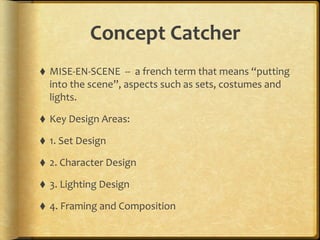
⬧ MISE-­‐EN-­‐SCENE	
  	
  -­‐-­‐	
  	
  a	
  french	
  term	
  that	
  means	
  “putting	
  
into	
  the	
  scene”,	
  aspects	
  such	
  as	
  sets,	
  costumes	
  and	
  
lights.	
  
⬧ Key	
  Design	
  Areas:	
  
⬧ 1.	
  Set	
  Design	
  
⬧ 2.	
  Character	
  Design	
  
⬧ 3.	
  Lighting	
  Design	
  
⬧ 4.	
  Framing	
  and	
  Composition
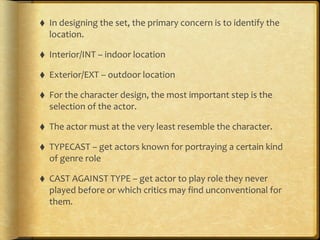
⬧ In	
  designing	
  the	
  set,	
  the	
  primary	
  concern	
  is	
  to	
  identify	
  the	
  
location.	


⬧ Interior/INT	
  –	
  indoor	
  location	
  
⬧ Exterior/EXT	
  –	
  outdoor	
  location	
  
⬧ For	
  the	
  character	
  design,	
  the	
  most	
  important	
  step	
  is	
  the	
  
selection	
  of	
  the	
  actor.	
  
⬧ The	
  actor	
  must	
  at	
  the	
  very	
  least	
  resemble	
  the	
  character.	
  
⬧ TYPECAST	
  –	
  get	
  actors	
  known	
  for	
  portraying	
  a	
  certain	
  kind	
  
of	
  genre	
  role	
  
⬧ CAST	
  AGAINST	
  TYPE	
  –	
  get	
  actor	
  to	
  play	
  role	
  they	
  never	
  
played	
  before	
  or	
  which	
  critics	
  may	
  find	
  unconventional	
  for	
  
them.
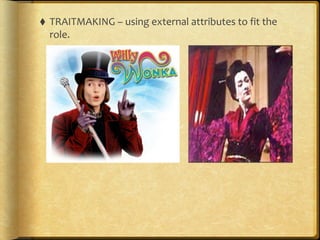
⬧ TRAITMAKING	
  –	
  using	
  external	
  attributes	
  to	
  fit	
  the	
  
role.
⬧ Designing	
  the	
  mood	
  of	
  the	
  entire	
  visual	
  
narrative	
  is	
  easily	
  conveyed	
  by	
  proper	
  
lighting	
  design.	
  
⬧ 3	
  Basic	
  Lighting	
  Design	
  
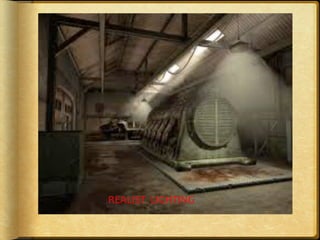
⬧ 1.	
  Realist	
  –	
  logical	
  or	
  actual	
  light	
  sources.	
  	
  
“what	
  the	
  eye	
  can	
  see”	
  
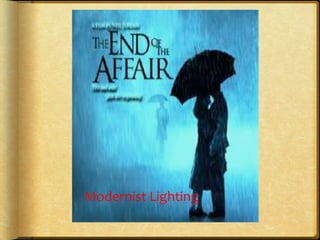
⬧ 2.	
  Modernist	
  –	
  non-­‐naturalistic.	
  	
  Based	
  on	
  
abstract	
  or	
  is	
  subjective.	
  
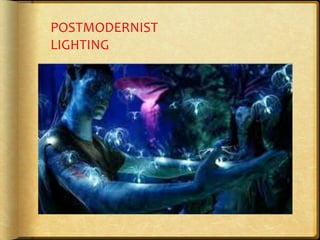
⬧ 3.	
  Post	
  Modernist	
  -­‐-­‐	
  	
  tricky.	
  Unrelated	
  to	
  the	
  
thoughts	
  and	
  feelings	
  of	
  the	
  character.
REALIST	
  	
  LIGHTING
Modernist	
  Lighting
POSTMODERNIST	
  
LIGHTING
BRAINSTORM
⬧ The	
  task	
  of	
  preparing	
  design	
  documents	
  as	
  part	
  of	
  
the	
  pre-­‐production	
  packet	
  is	
  headed	
  by	
  the	
  art	
  
director	
  and/or	
  production	
  designer	
  along	
  with	
  a	
  
team	
  of	
  costume	
  designers,	
  wardrobe	
  assistants,	
  
make-­‐up	
  artists,	
  prosthetic	
  artists,	
  location	
  scouts,	
  
set	
  designers,	
  property	
  master,	
  props	
  men	
  ,	
  etc.
9
Pre-­‐Production	
  Packet	
  
Documents
⬧1.	
  Script	
  Breakdown	
  Sheet	
  
⬧2.	
  Location	
  Site	
  Survey	
  
⬧3.	
  Location	
  photo/sketch	
  
⬧4.	
  Character	
  Sketch	
  
⬧5.	
  Casting	
  sheet
10
Production	
  design
⬧ To	
  help	
  you	
  design	
  your	
  production,	
  answer	
  the	
  
following	
  questions:	
  
⬧ 1.	
  PERIOD?	
  When	
  and	
  Where	
  am	
  I?	
  
⬧ 2.	
  GENRE?	
  What	
  kind	
  of	
  story	
  is	
  this?	
  
⬧ 3.	
  MOOD?	
  How	
  do	
  I	
  feel?	
  
⬧ 4.	
  MOTIF?	
  What	
  items	
  help	
  reflect	
  this	
  idea?
11

Episode 11 creating eye candy pdf

  • 1.
    Episode  11:
 Creating  Eye  Candy Kriztine  Rosales-­‐Viray
  • 2.
    Concept  Catcher ⬧ MISE-­‐EN-­‐SCENE    -­‐-­‐    a  french  term  that  means  “putting   into  the  scene”,  aspects  such  as  sets,  costumes  and   lights.   ⬧ Key  Design  Areas:   ⬧ 1.  Set  Design   ⬧ 2.  Character  Design   ⬧ 3.  Lighting  Design   ⬧ 4.  Framing  and  Composition
  • 3.
    ⬧ In  designing  the  set,  the  primary  concern  is  to  identify  the   location.       ⬧ Interior/INT  –  indoor  location   ⬧ Exterior/EXT  –  outdoor  location   ⬧ For  the  character  design,  the  most  important  step  is  the   selection  of  the  actor.   ⬧ The  actor  must  at  the  very  least  resemble  the  character.   ⬧ TYPECAST  –  get  actors  known  for  portraying  a  certain  kind   of  genre  role   ⬧ CAST  AGAINST  TYPE  –  get  actor  to  play  role  they  never   played  before  or  which  critics  may  find  unconventional  for   them.
  • 4.
    ⬧ TRAITMAKING  –  using  external  attributes  to  fit  the   role.
  • 5.
    ⬧ Designing  the  mood  of  the  entire  visual   narrative  is  easily  conveyed  by  proper   lighting  design.   ⬧ 3  Basic  Lighting  Design   ⬧ 1.  Realist  –  logical  or  actual  light  sources.     “what  the  eye  can  see”   ⬧ 2.  Modernist  –  non-­‐naturalistic.    Based  on   abstract  or  is  subjective.   ⬧ 3.  Post  Modernist  -­‐-­‐    tricky.  Unrelated  to  the   thoughts  and  feelings  of  the  character.
  • 6.
  • 7.
  • 8.
  • 9.
    BRAINSTORM ⬧ The  task  of  preparing  design  documents  as  part  of   the  pre-­‐production  packet  is  headed  by  the  art   director  and/or  production  designer  along  with  a   team  of  costume  designers,  wardrobe  assistants,   make-­‐up  artists,  prosthetic  artists,  location  scouts,   set  designers,  property  master,  props  men  ,  etc. 9
  • 10.
    Pre-­‐Production  Packet   Documents ⬧1.  Script  Breakdown  Sheet   ⬧2.  Location  Site  Survey   ⬧3.  Location  photo/sketch   ⬧4.  Character  Sketch   ⬧5.  Casting  sheet 10
  • 11.
    Production  design ⬧ To  help  you  design  your  production,  answer  the   following  questions:   ⬧ 1.  PERIOD?  When  and  Where  am  I?   ⬧ 2.  GENRE?  What  kind  of  story  is  this?   ⬧ 3.  MOOD?  How  do  I  feel?   ⬧ 4.  MOTIF?  What  items  help  reflect  this  idea? 11