Methods of Studying Memory
Dr Rajesh Verma
Assistant Professor in Psychology
Govt. College Adampur, Hisar (Haryana)
Introduction
The scientific techniques used to measure the
memory system is known as method of studying
memory. Memory can be measured in various ways. As
we know that memory is of different types, hence for
measurement of specific type of memory specific
method is required. Hermann Ebbinghaus (1885),
German psychologist who
first systematically studied
memory. He used recall
method and suggested that
retention can be tested
either by immediate recall
or delayed recall.
Methods of Studying Memory
(i) Recall method (for measuring facts)
(ii) Recognition (Episodic memory)
(iii) Sentence Verification Method (for measuring
semantic memory)
(iv) Priming (for measuring
information we cannot
report verbally)
(v) Relearning
(vi) Reconstruction
Important Methods of Studying Memory
(i) Recall method (for measuring facts) тАУ The
repetition of learned material after specific lapse of time
is called recall. The recall of learned material depends
upon individual and stimulus related factors. The
interesting, meaningful and short learning material is
easy to memorize
and recall.
Recall is of two type i.e.
(a) Free Recall
(b) Serial Recall
(a) Free recall тАУ In this method, participants
are presented with some words [preferably
meaningless] or
information which
they are asked to
memorize and recall
[after some time]
in any order.
(b) Serial Recall тАУ The administration method
is similar to the free recall method, the only
difference is that
participants are
required to
recall the learned
material in the
same order as it
was presented.
(ii) Recognition (Episodic memory) тАУ According to
Guilford (1917) recognition is knowing again the same
material. In recognition, participants are shown
learning material along with distracter items (the
material that they had not seen earlier) and asked to
memorize. Then
they are asked to
recognize the
learned [stimuli]
items.
The % of recognition can be calculated by the
following formula: -
% of Recognition = ЁЭС╣ тИТ
ЁЭС╛
ЁЭС▓тИТЁЭЯП
ЁЭР▒
ЁЭЯПЁЭЯОЁЭЯО
ЁЭРз
R= total no. correct items recognized.
W= total no. items incorrectly recognized.
K= total no. of distractors
presented [during learning
+ during recognition].
n= no. of items presented
for learning.
For example тАУ A participant could correctly recognize 6
items out of 10. The experimentor presented 10
distractors during learning phase while 10 different
distractors during recognition phase. Then calculate the
% of recognition.
% of Recognition = ЁЭЯФ тИТ
ЁЭЯТ
ЁЭЯРЁЭЯОтИТЁЭЯП
ЁЭР▒
ЁЭЯПЁЭЯОЁЭЯО
ЁЭЯПЁЭЯО
= 6 тАУ 4/19 x 10 = 57.89%
(iii) Sentence Verification Method (for measuring
semantic memory) тАУ Semantic memory by virtue of its
nature [general knowledge] is not prone to forgetting.
In this method the participants are asked to indicate
whether the given sentences are true or false. Faster the
participantsтАЩ correct response better is the semantic
memory i.e. the better
is the retained
information that
is needed to verify
the shown sentences.
(iv) Priming (for measuring information we cannot
report verbally) тАУ In this method, participants are
shown a list of meaningful words, such as truck,
machine etc. and then they are shown parts of these
words tru, mac along with parts of other meaningful
words which they had not seen earlier. Then
participants are asked to complete the words. It has
been found that participants complete parts of seen
words more quickly than parts of words they had not
seen. When asked, they are
often unaware of this and
report that they have only
guessed (NCERT).
(v) Relearning тАУ This method was suggested by
Ebbinghaus (1885) and also known as method of
тАШsavingтАЩ. The quantitative capacity of memory is
measured with the help of this method. The participants
are provided with learning material. Then they are
asked to memorize it fully. After
specific time interval the same
material is presented for
memorizing. Time and number
to trials taken by each
participant is recorded in both
the situations.
Then percentage of saving [time and trials] is
calculated using following formula: -
Saving % =
ЁЭРОЁЭРЛЁЭРУтИТЁЭРСЁЭРЛЁЭРУ
ЁЭРОЁЭРЛЁЭРУ
ЁЭР▒ЁЭЯПЁЭЯОЁЭЯО
OLT = Original learning
trials
RLT = Relearning trials
For example тАУ if a
participant takes 20 trials
to memorize a original
material and 8 trials to
relearn it then % of saving
will be
Saving % =
ЁЭЯРЁЭЯОтИТЁЭЯЦ
ЁЭЯРЁЭЯО
ЁЭР▒ЁЭЯПЁЭЯОЁЭЯО = 60%
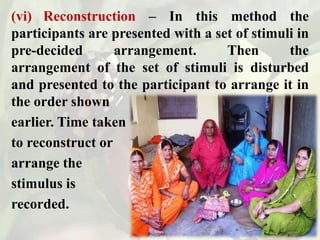
(vi) Reconstruction тАУ In this method the
participants are presented with a set of stimuli in
pre-decided arrangement. Then the
arrangement of the set of stimuli is disturbed
and presented to the participant to arrange it in
the order shown
earlier. Time taken
to reconstruct or
arrange the
stimulus is
recorded.
References:
1. NCERT, XI Psychology Text book.
2. http://www.preservearticles.com/psychology/
methods-used-for-the-measurement-of-human-
memory/3926
vermasujit@yahoo.com
Next Discussion
Forgetting an
Introduction

methods of studying memory

  • 1.
    Methods of StudyingMemory Dr Rajesh Verma Assistant Professor in Psychology Govt. College Adampur, Hisar (Haryana)
  • 2.
    Introduction The scientific techniquesused to measure the memory system is known as method of studying memory. Memory can be measured in various ways. As we know that memory is of different types, hence for measurement of specific type of memory specific method is required. Hermann Ebbinghaus (1885), German psychologist who first systematically studied memory. He used recall method and suggested that retention can be tested either by immediate recall or delayed recall.
  • 3.
    Methods of StudyingMemory (i) Recall method (for measuring facts) (ii) Recognition (Episodic memory) (iii) Sentence Verification Method (for measuring semantic memory) (iv) Priming (for measuring information we cannot report verbally) (v) Relearning (vi) Reconstruction
  • 4.
    Important Methods ofStudying Memory (i) Recall method (for measuring facts) тАУ The repetition of learned material after specific lapse of time is called recall. The recall of learned material depends upon individual and stimulus related factors. The interesting, meaningful and short learning material is easy to memorize and recall.
  • 5.
    Recall is oftwo type i.e. (a) Free Recall (b) Serial Recall (a) Free recall тАУ In this method, participants are presented with some words [preferably meaningless] or information which they are asked to memorize and recall [after some time] in any order.
  • 6.
    (b) Serial RecallтАУ The administration method is similar to the free recall method, the only difference is that participants are required to recall the learned material in the same order as it was presented.
  • 7.
    (ii) Recognition (Episodicmemory) тАУ According to Guilford (1917) recognition is knowing again the same material. In recognition, participants are shown learning material along with distracter items (the material that they had not seen earlier) and asked to memorize. Then they are asked to recognize the learned [stimuli] items.
  • 8.
    The % ofrecognition can be calculated by the following formula: - % of Recognition = ЁЭС╣ тИТ ЁЭС╛ ЁЭС▓тИТЁЭЯП ЁЭР▒ ЁЭЯПЁЭЯОЁЭЯО ЁЭРз R= total no. correct items recognized. W= total no. items incorrectly recognized. K= total no. of distractors presented [during learning + during recognition]. n= no. of items presented for learning.
  • 9.
    For example тАУA participant could correctly recognize 6 items out of 10. The experimentor presented 10 distractors during learning phase while 10 different distractors during recognition phase. Then calculate the % of recognition. % of Recognition = ЁЭЯФ тИТ ЁЭЯТ ЁЭЯРЁЭЯОтИТЁЭЯП ЁЭР▒ ЁЭЯПЁЭЯОЁЭЯО ЁЭЯПЁЭЯО = 6 тАУ 4/19 x 10 = 57.89%
  • 10.
    (iii) Sentence VerificationMethod (for measuring semantic memory) тАУ Semantic memory by virtue of its nature [general knowledge] is not prone to forgetting. In this method the participants are asked to indicate whether the given sentences are true or false. Faster the participantsтАЩ correct response better is the semantic memory i.e. the better is the retained information that is needed to verify the shown sentences.
  • 11.
    (iv) Priming (formeasuring information we cannot report verbally) тАУ In this method, participants are shown a list of meaningful words, such as truck, machine etc. and then they are shown parts of these words tru, mac along with parts of other meaningful words which they had not seen earlier. Then participants are asked to complete the words. It has been found that participants complete parts of seen words more quickly than parts of words they had not seen. When asked, they are often unaware of this and report that they have only guessed (NCERT).
  • 12.
    (v) Relearning тАУThis method was suggested by Ebbinghaus (1885) and also known as method of тАШsavingтАЩ. The quantitative capacity of memory is measured with the help of this method. The participants are provided with learning material. Then they are asked to memorize it fully. After specific time interval the same material is presented for memorizing. Time and number to trials taken by each participant is recorded in both the situations.
  • 13.
    Then percentage ofsaving [time and trials] is calculated using following formula: - Saving % = ЁЭРОЁЭРЛЁЭРУтИТЁЭРСЁЭРЛЁЭРУ ЁЭРОЁЭРЛЁЭРУ ЁЭР▒ЁЭЯПЁЭЯОЁЭЯО OLT = Original learning trials RLT = Relearning trials For example тАУ if a participant takes 20 trials to memorize a original material and 8 trials to relearn it then % of saving will be Saving % = ЁЭЯРЁЭЯОтИТЁЭЯЦ ЁЭЯРЁЭЯО ЁЭР▒ЁЭЯПЁЭЯОЁЭЯО = 60%
  • 14.
    (vi) Reconstruction тАУIn this method the participants are presented with a set of stimuli in pre-decided arrangement. Then the arrangement of the set of stimuli is disturbed and presented to the participant to arrange it in the order shown earlier. Time taken to reconstruct or arrange the stimulus is recorded.
  • 15.
    References: 1. NCERT, XIPsychology Text book. 2. http://www.preservearticles.com/psychology/ methods-used-for-the-measurement-of-human- memory/3926
  • 16.