Types of Attention
Dr Rajesh Verma
Assistant Professor in Psychology
Govt. College Adampur, Hisar (Haryana)
Meaning
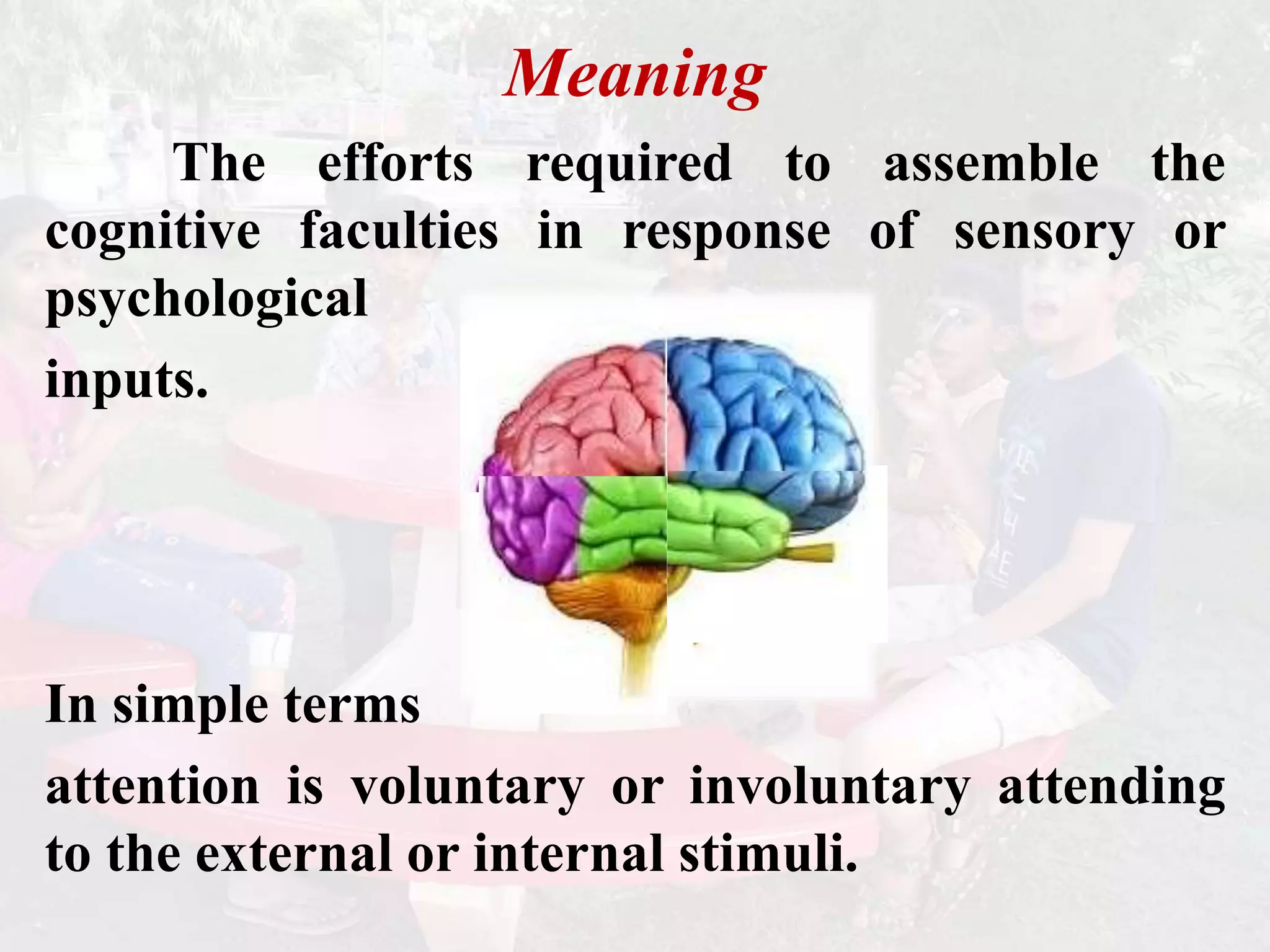
The efforts required to assemble the
cognitive faculties in response of sensory or
psychological
inputs.
In simple terms
attention is voluntary or involuntary attending
to the external or internal stimuli.
Definition
The process through which certain stimuli are
selected from a group of others is generally referred to as
attention (NCERT, XI).
A state in which cognitive resources are focused on
certain aspects of the environment rather than on others
and the central nervous system is in a state of readiness to
respond to stimuli (APA).
In essence attention is
the state of awareness
centered towards the specific
stimuli.
Attention Types
The attention is mainly of following four types: -
(i) Sustained Attention
(ii) Selective Attention
(iii) Divided
Attention
(iv) Alternating
Attention
(i) Sustained Attention – The mental capacity to
remain focused on a stimuli for longer duration is
called sustained attention. For example watching a
movie, dancing on D J floor, reading a book,
listening a lecture or cooking a dish, painting etc. It
is also referred as span of attention (the ability to
remain focused on more than one stimulus at a
time). The
duration and
quality of
attention can
be improved
with practice.
(ii) Selective Attention – It can also be referred
to as focused or intentional attention. It means
selecting or focusing on one stimulus from the
group of stimuli. The stimuli that are perceived
to be irrelevant are screened out or rejected
because they are expected to interfere with the
attention process.
For example
listening one’s
name in the
midst of a
commotion.
(iii) Divided Attention – The ability to keep focus on more
than one stimulus or event simultaneously. The cognitive
resources which are required for attention are divided, to
maintain focus on multiple stimuli at the same time. It can be
expressed through engaging in multitasking. For example
driving and listing to music. Divided attention can also be
improved through sustained
practice. However, some
studies suggest that it is not
feasible to maintain our
attention on more than
one object simultaneously,
the only thing is that
attention shifts between
tasks rapidly.
(iv) Alternating Attention – The ability to shift
or switch concentration or focus among various
stimuli simultaneously. Alternating attention
expresses the degree flexibility in cognitive
resources. This type of attention is most
commonly found in sales persons who deal with
multiple customers at the same time.
Apart From Above Discussed Various manuals
and Books Describes Following Attention Types
(i) Primary attention;
(ii) Effortless attention;
(iii) External attention
(iv) Internal attention;
(v) Involuntary
attention;
(vi) Post-voluntary attention;
(vii) Secondary attention;
(viii) Spatial attention;
(ix) Visual
attention;
(x) Auditory
attention.
References:
1. NCERT, XI Psychology Text book.
2. https://www.bitbrain.com/blog/what-is-
attention-types.
Next Discussion
Introduction to Psychophysics
Meet You Soon
With Next Video
vermasujit@yahoo.com
Thanks

Types of attention (Four Major types and others)

  • 1.
    Types of Attention DrRajesh Verma Assistant Professor in Psychology Govt. College Adampur, Hisar (Haryana)
  • 2.
    Meaning The efforts requiredto assemble the cognitive faculties in response of sensory or psychological inputs. In simple terms attention is voluntary or involuntary attending to the external or internal stimuli.
  • 3.
    Definition The process throughwhich certain stimuli are selected from a group of others is generally referred to as attention (NCERT, XI). A state in which cognitive resources are focused on certain aspects of the environment rather than on others and the central nervous system is in a state of readiness to respond to stimuli (APA). In essence attention is the state of awareness centered towards the specific stimuli.
  • 4.
    Attention Types The attentionis mainly of following four types: - (i) Sustained Attention (ii) Selective Attention (iii) Divided Attention (iv) Alternating Attention
  • 5.
    (i) Sustained Attention– The mental capacity to remain focused on a stimuli for longer duration is called sustained attention. For example watching a movie, dancing on D J floor, reading a book, listening a lecture or cooking a dish, painting etc. It is also referred as span of attention (the ability to remain focused on more than one stimulus at a time). The duration and quality of attention can be improved with practice.
  • 6.
    (ii) Selective Attention– It can also be referred to as focused or intentional attention. It means selecting or focusing on one stimulus from the group of stimuli. The stimuli that are perceived to be irrelevant are screened out or rejected because they are expected to interfere with the attention process. For example listening one’s name in the midst of a commotion.
  • 7.
    (iii) Divided Attention– The ability to keep focus on more than one stimulus or event simultaneously. The cognitive resources which are required for attention are divided, to maintain focus on multiple stimuli at the same time. It can be expressed through engaging in multitasking. For example driving and listing to music. Divided attention can also be improved through sustained practice. However, some studies suggest that it is not feasible to maintain our attention on more than one object simultaneously, the only thing is that attention shifts between tasks rapidly.
  • 8.
    (iv) Alternating Attention– The ability to shift or switch concentration or focus among various stimuli simultaneously. Alternating attention expresses the degree flexibility in cognitive resources. This type of attention is most commonly found in sales persons who deal with multiple customers at the same time.
  • 9.
    Apart From AboveDiscussed Various manuals and Books Describes Following Attention Types (i) Primary attention; (ii) Effortless attention; (iii) External attention (iv) Internal attention; (v) Involuntary attention;
  • 10.
    (vi) Post-voluntary attention; (vii)Secondary attention; (viii) Spatial attention; (ix) Visual attention; (x) Auditory attention.
  • 11.
    References: 1. NCERT, XIPsychology Text book. 2. https://www.bitbrain.com/blog/what-is- attention-types.
  • 12.
  • 13.
    Meet You Soon WithNext Video vermasujit@yahoo.com Thanks