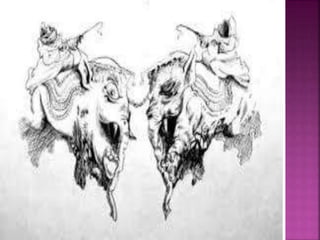
A psychological test in which words, images,
or situations are presented to a person and the
responses analyzed for unconscious expression
of elements of personality that they reveal.
a projective test is a personality test designed to
let a person respond to ambiguous stimuli,
presumably revealing hidden emotions and
internal conflicts projected by the person into
the test.
Types
Rorschach inkblot
Thematic apperception test
House-tree-person test
CAT
VPT
Holtzman inkblot test
Rorschach test developed in 1921 by Herman
Rorschach.
1921 Rorschach wrote his
book Psychodiagnostik.
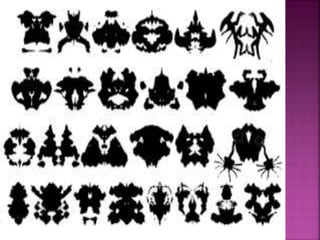
The Rorschach test is a psychological test in
which subjects' perceptions of inkblots are
recorded and then analyzed
using psychological interpretation.
 used for depression, schizophrenia , and
anxiety disorders.
Total 10 cards
Black and white 5
Two colored(black and red) 2
Multicolored 3
Upside down position
Seating side by side.
One card at one time in same order.
must be administered by a
trained psychologist.
The Thematic Apperception Test (TAT) is
a projective psychological test.
Proponents of the technique assert that
subjects' responses, in the narratives they
make up about ambiguous pictures of
people, reveal their underlying motives,
concerns, and the way they see the social
world.
The TAT was developed during the 1930s
by the American psychologist Henry A.
Murray and Christiana D. Morgan.
3 sets of cards a, b, c, and final d.
Total 31 cards
1 of the blank
10 for boys
10 for girls
10 for both
Two sessions
1. Less ambiguous cards
2. Highly ambiguous cards
To tell as dramatic a story as they can for
each picture presented, including the
following:
what has led up to the event shown?
what is happening at the moment?
what the characters are feeling and
thinking?
what the outcome of the story was?
HTP was designed by John Buck and
was originally based on the Goodenough
scale of intellectual functioning.
The HTP was developed in 1948.
 Buck included both qualitative and
quantitative measurements of intellectual
ability in the HTP.
The House-Tree-Person test (HTP) is
a projective test designed to measure
aspects of a person’s personality.
 The test can also be used to assess brain
damage and general mental functioning.
The test is a diagnostic tool for clinical
psychologists, educators, and employers.
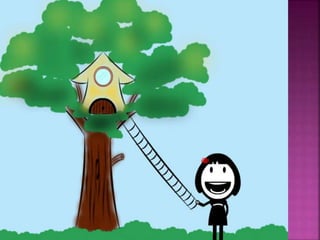
 The subject receives a short, unclear instruction to
draw a house, a tree, and the figure of a person.
 During the first phase, the test-taker is asked to
draw the house, tree, and person and the test-giver
asks questions about each picture.
 There are 60 questions originally designed by
Buck .
 therapists and trained test givers can also design
their own questions, or ask follow up questions
This phase is done with a crayon.
During the second phase of HTP, the test-
taker draws the same pictures with a
pencil or pen.
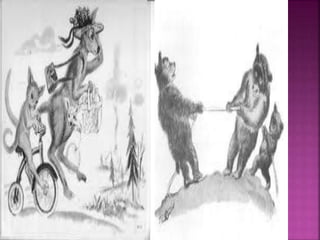
It was devised by Bellak in 1949.
young children aged between 3 and 10
years.
10 pictures all these are of animals.
 What went in the story before and what
will happen latter?
The CAT is intended to measure the
personality traits, attitudes,
and psychodynamic processes evident
in pre-pubertal children.
 It is a combination of TAT and SCT, it is
developed by T.E Shanmuguam of Madras
university here verbal pictures will be
presented to the subject requesting him to write
a story on it.
 There are about 20 items in this test.
 Two typess
 WAT
 SCT
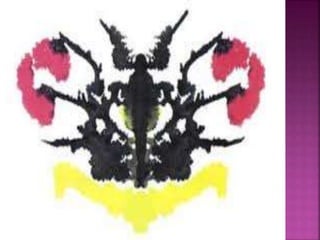
 Developed by psychologist Wayne Holtzman and c
olleagues, was introduced in 1961.
 projective personality assessment test for persons a
ges five and up.
 diagnostic tool in
assessing schizophrenia, depression, addiction, and
character disorders.
 stack of 47 cards with inkblots.
 2 practice cards
 45 test cards
 Takes 50-80 minutes.
 The HIT is then scored against 22 personality-
related characteristics.
 Helpful when the issues to be addressed are
personal, sensitive, or subject to strong social
norms.
 Helpful when underlying motivations, beliefs, and
attitudes are operating at a subconscious level.
 Projective test can be used in marketing:
 Projective test useful in business:
 It need highly qualified and experienced
professionals
 It is expensive
 Risk of interpretation bias
 Unstructured techniques
 Low psychometrics characteristics

projective Techniques

  • 2.
    A psychological testin which words, images, or situations are presented to a person and the responses analyzed for unconscious expression of elements of personality that they reveal. a projective test is a personality test designed to let a person respond to ambiguous stimuli, presumably revealing hidden emotions and internal conflicts projected by the person into the test.
  • 3.
    Types Rorschach inkblot Thematic apperceptiontest House-tree-person test CAT VPT Holtzman inkblot test
  • 4.
    Rorschach test developedin 1921 by Herman Rorschach. 1921 Rorschach wrote his book Psychodiagnostik. The Rorschach test is a psychological test in which subjects' perceptions of inkblots are recorded and then analyzed using psychological interpretation.  used for depression, schizophrenia , and anxiety disorders.
  • 6.
    Total 10 cards Blackand white 5 Two colored(black and red) 2 Multicolored 3 Upside down position Seating side by side. One card at one time in same order. must be administered by a trained psychologist.
  • 7.
    The Thematic ApperceptionTest (TAT) is a projective psychological test. Proponents of the technique assert that subjects' responses, in the narratives they make up about ambiguous pictures of people, reveal their underlying motives, concerns, and the way they see the social world.
  • 8.
    The TAT wasdeveloped during the 1930s by the American psychologist Henry A. Murray and Christiana D. Morgan. 3 sets of cards a, b, c, and final d. Total 31 cards 1 of the blank 10 for boys 10 for girls 10 for both
  • 9.
    Two sessions 1. Lessambiguous cards 2. Highly ambiguous cards To tell as dramatic a story as they can for each picture presented, including the following: what has led up to the event shown? what is happening at the moment? what the characters are feeling and thinking? what the outcome of the story was?
  • 11.
    HTP was designedby John Buck and was originally based on the Goodenough scale of intellectual functioning. The HTP was developed in 1948.  Buck included both qualitative and quantitative measurements of intellectual ability in the HTP.
  • 12.
    The House-Tree-Person test(HTP) is a projective test designed to measure aspects of a person’s personality.  The test can also be used to assess brain damage and general mental functioning. The test is a diagnostic tool for clinical psychologists, educators, and employers.
  • 13.
     The subjectreceives a short, unclear instruction to draw a house, a tree, and the figure of a person.  During the first phase, the test-taker is asked to draw the house, tree, and person and the test-giver asks questions about each picture.  There are 60 questions originally designed by Buck .  therapists and trained test givers can also design their own questions, or ask follow up questions
  • 14.
    This phase isdone with a crayon. During the second phase of HTP, the test- taker draws the same pictures with a pencil or pen.
  • 16.
    It was devisedby Bellak in 1949. young children aged between 3 and 10 years. 10 pictures all these are of animals.  What went in the story before and what will happen latter? The CAT is intended to measure the personality traits, attitudes, and psychodynamic processes evident in pre-pubertal children.
  • 18.
     It isa combination of TAT and SCT, it is developed by T.E Shanmuguam of Madras university here verbal pictures will be presented to the subject requesting him to write a story on it.  There are about 20 items in this test.  Two typess  WAT  SCT
  • 19.
     Developed bypsychologist Wayne Holtzman and c olleagues, was introduced in 1961.  projective personality assessment test for persons a ges five and up.  diagnostic tool in assessing schizophrenia, depression, addiction, and character disorders.  stack of 47 cards with inkblots.  2 practice cards  45 test cards
  • 20.
     Takes 50-80minutes.  The HIT is then scored against 22 personality- related characteristics.
  • 23.
     Helpful whenthe issues to be addressed are personal, sensitive, or subject to strong social norms.  Helpful when underlying motivations, beliefs, and attitudes are operating at a subconscious level.  Projective test can be used in marketing:  Projective test useful in business:
  • 24.
     It needhighly qualified and experienced professionals  It is expensive  Risk of interpretation bias  Unstructured techniques  Low psychometrics characteristics