History of Genetics
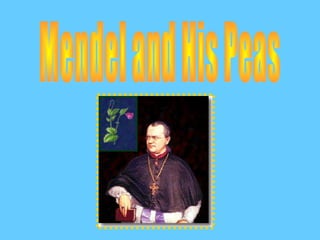
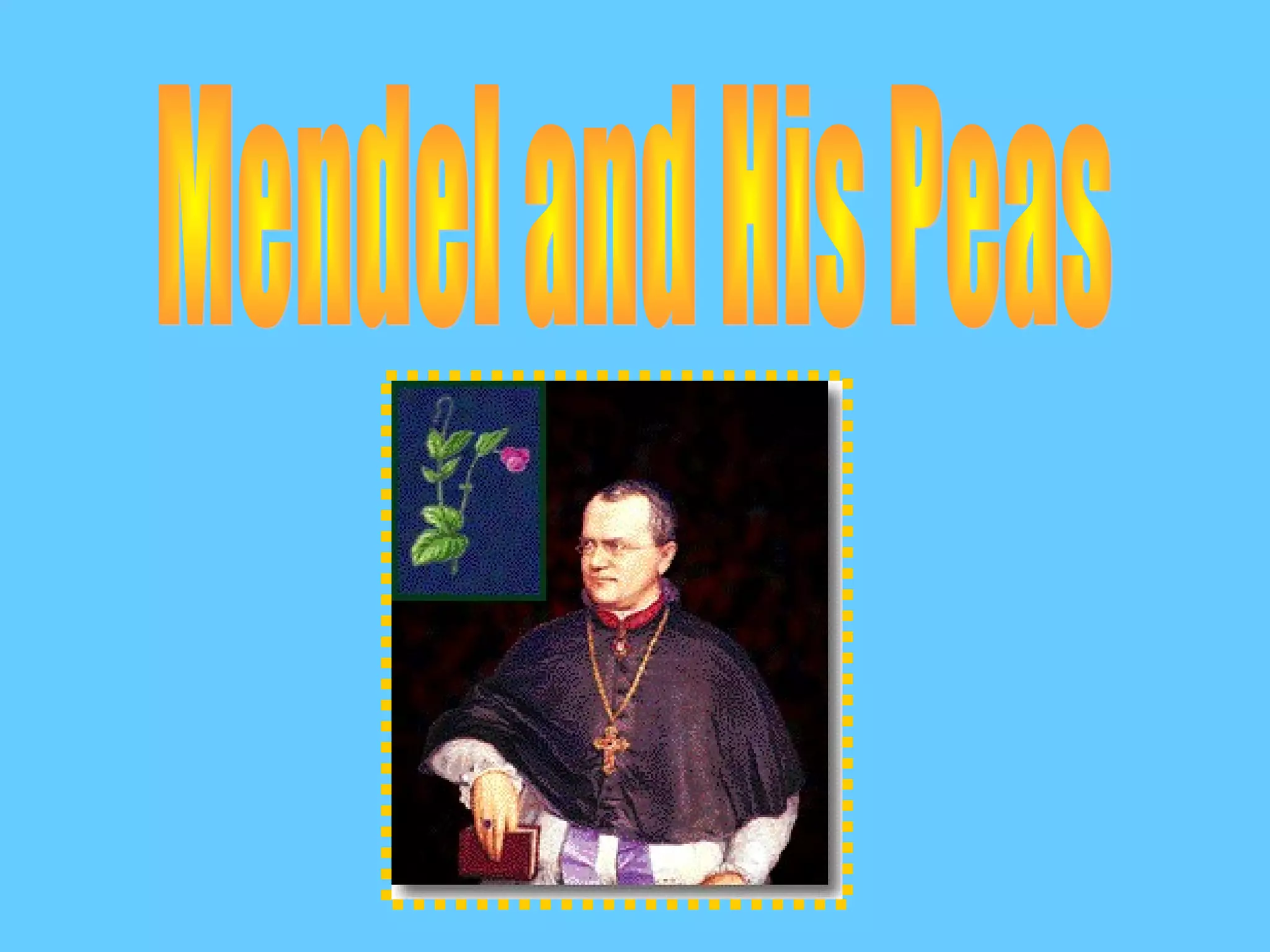
   During the 1860’s, an
    Austrian monk and
    teacher named
    Gregor Mendel
    experimented with
    pea plants to see if
    he could find a pattern
    in the way certain
    traits are handed
    down from one
    generation to the next
    generation.
   The passing of genetic traits from
    parents to offspring is called heredity .
   From working with plants, Mendel knew
    that sometimes a trait in one generation
    (parents) would not appear in the next
    generation (offspring ). Then the trait
    would show up in the next generation.
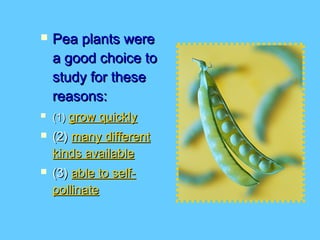
   Pea plants were
    a good choice to
    study for these
    reasons:
   (1) grow quickly
   (2) many different
    kinds available
   (3) able to self-
    pollinate
   A self-pollinating plant has both
    male and female reproductive
    structures
   In cross-pollination, pollen from
    one plant fertilizes the ovule of a
    flower on a different plant.
   Mendel only studied one characteristic
    at a time, such as flower color .
Mendel’s First Experiments

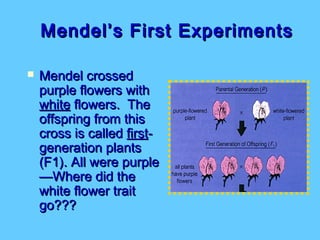
   Mendel crossed
    purple flowers with
    white flowers. The
    offspring from this
    cross is called first-
    generation plants
    (F1). All were purple
    —Where did the
    white flower trait
    go???
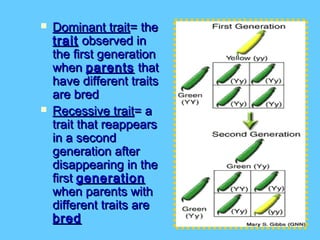
   Dominant trait= the
    trait observed in
    the first generation
    when parents that
    have different traits
    are bred
   Recessive trait= a
    trait that reappears
    in a second
    generation after
    disappearing in the
    first generation
    when parents with
    different traits are
    bred
   Mendel’s Second
    Experiments
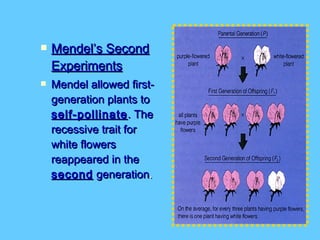
   Mendel allowed first-
    generation plants to
    self-pollinate . The
    recessive trait for
    white flowers
    reappeared in the
    second generation.
Gone, but Not Forgotten
   Mendel realized that his results proved
    that each plant has two sets of
    instructions for each trait . Each
    parent would then donate one set of
    instructions.
   Mendel’s work wasn’t widely
    recognized until after his death, more
    than 30 years later.
A Great Idea
   Mendel knew from his experiments that there
    must be two sets of instructions for each
    characteristic scientists now call these
    instructions for an inherited traits “ genes”
   Each parent gives one set of genes to the
    offspring —the different forms of a gene are
    known as alleles , like hair color
   Dominant alleles are shown with a capital letter
   Recessive alleles are shown with a lowercase
    letter
Phenotype & Genotype
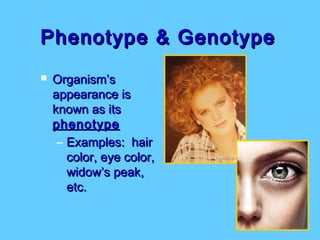
   Organism’s
    appearance is
    known as its
    phenotype
     – Examples: hair
       color, eye color,
       widow’s peak,
       etc.
   Both inherited alleles
    together form an
    organism’s genotype
    – homozygousorganism
      with two dominant or
      two recessive alleles,
      like RR or rr for flower
      color
    – Heterozygous
     organism that has one
      dominant and one
      recessive allele, like Rr
      for flower color
Label each genotype as “HOM” for
homozygous or “HET” for heterozygous

   Hh: ____     AA: ____

   ww: ____     Gg: ____

   Ff: _____    SS: ____

Mendel and his peas

  • 2.
    History of Genetics  During the 1860’s, an Austrian monk and teacher named Gregor Mendel experimented with pea plants to see if he could find a pattern in the way certain traits are handed down from one generation to the next generation.
  • 3.
    The passing of genetic traits from parents to offspring is called heredity .  From working with plants, Mendel knew that sometimes a trait in one generation (parents) would not appear in the next generation (offspring ). Then the trait would show up in the next generation.
  • 4.
    Pea plants were a good choice to study for these reasons:  (1) grow quickly  (2) many different kinds available  (3) able to self- pollinate
  • 5.
    A self-pollinating plant has both male and female reproductive structures  In cross-pollination, pollen from one plant fertilizes the ovule of a flower on a different plant.  Mendel only studied one characteristic at a time, such as flower color .
  • 7.
    Mendel’s First Experiments  Mendel crossed purple flowers with white flowers. The offspring from this cross is called first- generation plants (F1). All were purple —Where did the white flower trait go???
  • 8.
    Dominant trait= the trait observed in the first generation when parents that have different traits are bred  Recessive trait= a trait that reappears in a second generation after disappearing in the first generation when parents with different traits are bred
  • 9.
    Mendel’s Second Experiments  Mendel allowed first- generation plants to self-pollinate . The recessive trait for white flowers reappeared in the second generation.
  • 10.
    Gone, but NotForgotten  Mendel realized that his results proved that each plant has two sets of instructions for each trait . Each parent would then donate one set of instructions.  Mendel’s work wasn’t widely recognized until after his death, more than 30 years later.
  • 11.
    A Great Idea  Mendel knew from his experiments that there must be two sets of instructions for each characteristic scientists now call these instructions for an inherited traits “ genes”  Each parent gives one set of genes to the offspring —the different forms of a gene are known as alleles , like hair color  Dominant alleles are shown with a capital letter  Recessive alleles are shown with a lowercase letter
  • 12.
    Phenotype & Genotype  Organism’s appearance is known as its phenotype – Examples: hair color, eye color, widow’s peak, etc.
  • 13.
    Both inherited alleles together form an organism’s genotype – homozygousorganism with two dominant or two recessive alleles, like RR or rr for flower color – Heterozygous organism that has one dominant and one recessive allele, like Rr for flower color
  • 14.
    Label each genotypeas “HOM” for homozygous or “HET” for heterozygous  Hh: ____ AA: ____  ww: ____ Gg: ____  Ff: _____ SS: ____