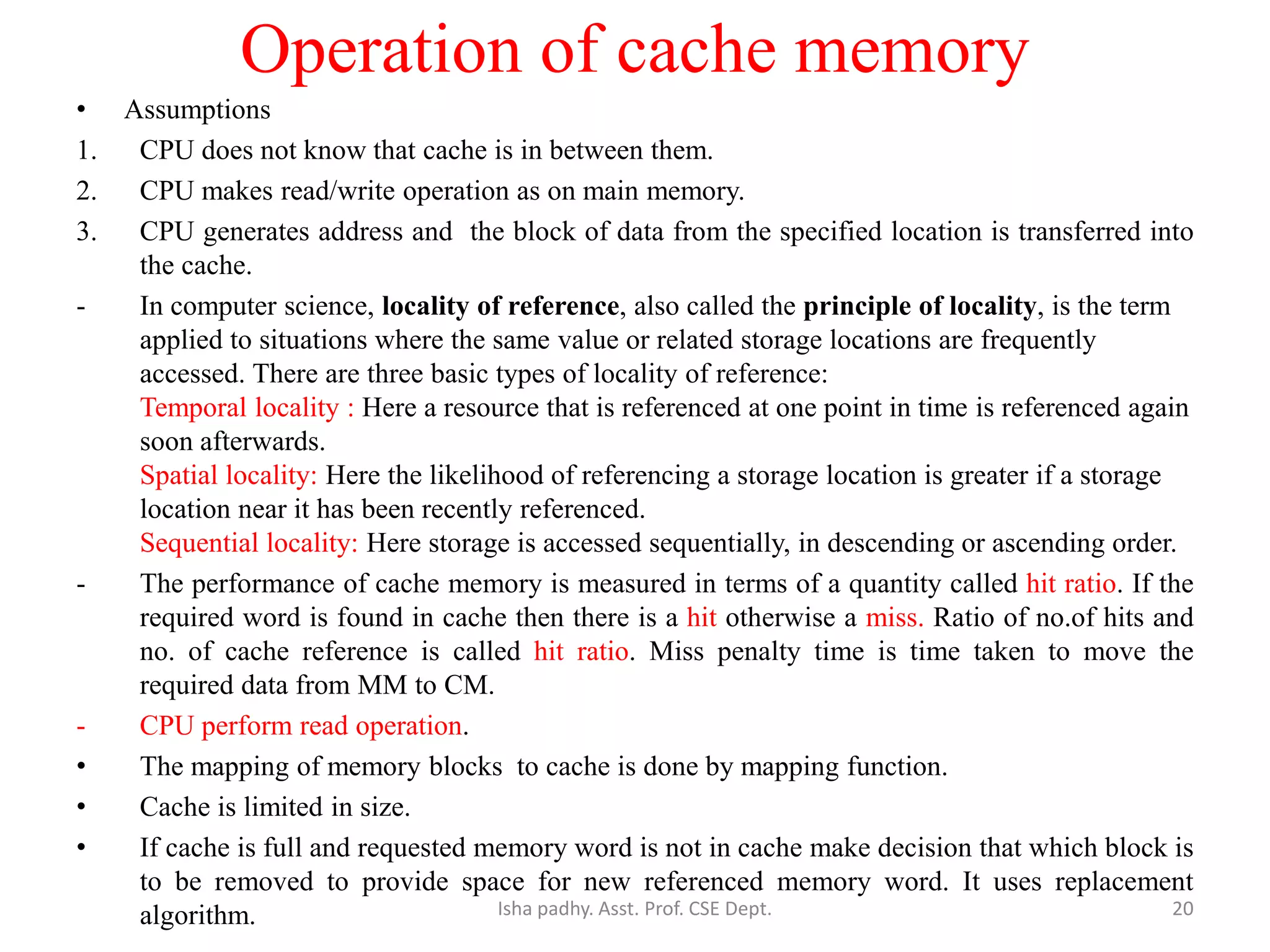
The document discusses the memory hierarchy in computers. It explains that memory is organized in a hierarchy with different levels providing varying degrees of speed and capacity. The levels from fastest to slowest are: registers, cache, main memory, and auxiliary memory such as magnetic disks and tapes. Cache memory sits between the CPU and main memory to bridge the speed gap. It exploits locality of reference to improve memory access speed. The document provides details on the working of each memory level and how they interact with each other.