Downloaded 59 times






![DIRECT ACCESS DEVICES
A direct-access storage device (DASD is any secondary storage device in which "each physical
record has a discrete location and a unique address."[1] IBM developed DASDs for use with
mainframe computers and some minicomputers. Disk drives, magnetic drums, and data cells, and
optical disc drives are all classified as DASDs.[2]
DASDs access methods include sequential, indexed, and direct reading. The direct access
capability, occasionally and incorrectly called random access (although that term survives when
referring to memory or RAM), stands in contrast to sequential access used in tape drives. A record
on DASD can be accessed without having to read through intervening records from the current
location, whereas reading anything other than the "next" record on tape requires skipping over
intervening records, and requires a proportionally long time to access a distant point in a medium.](https://image.slidesharecdn.com/secondarystoragedevices-141210082810-conversion-gate02/75/Secondary-storage-devices-13-2048.jpg)

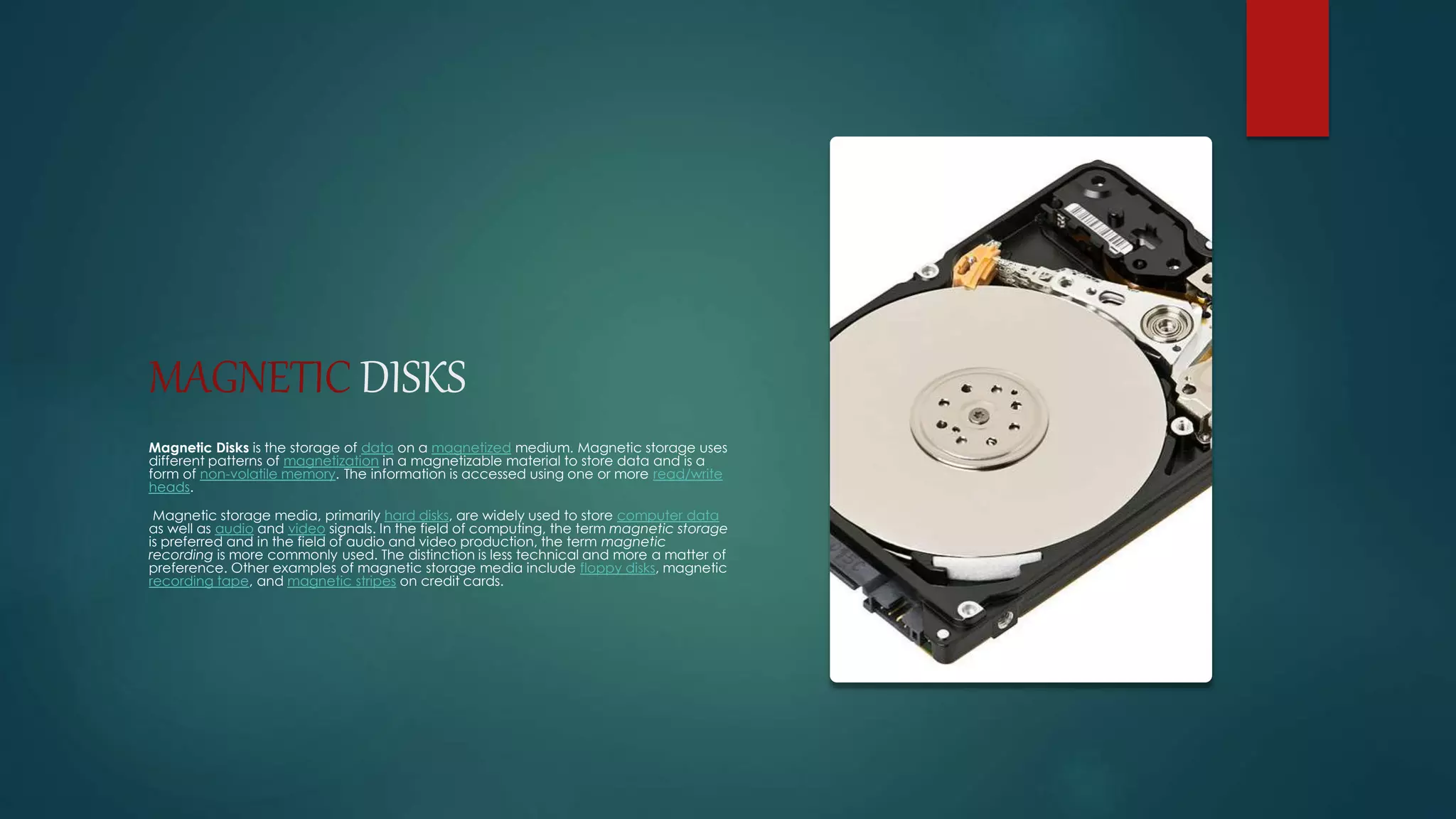
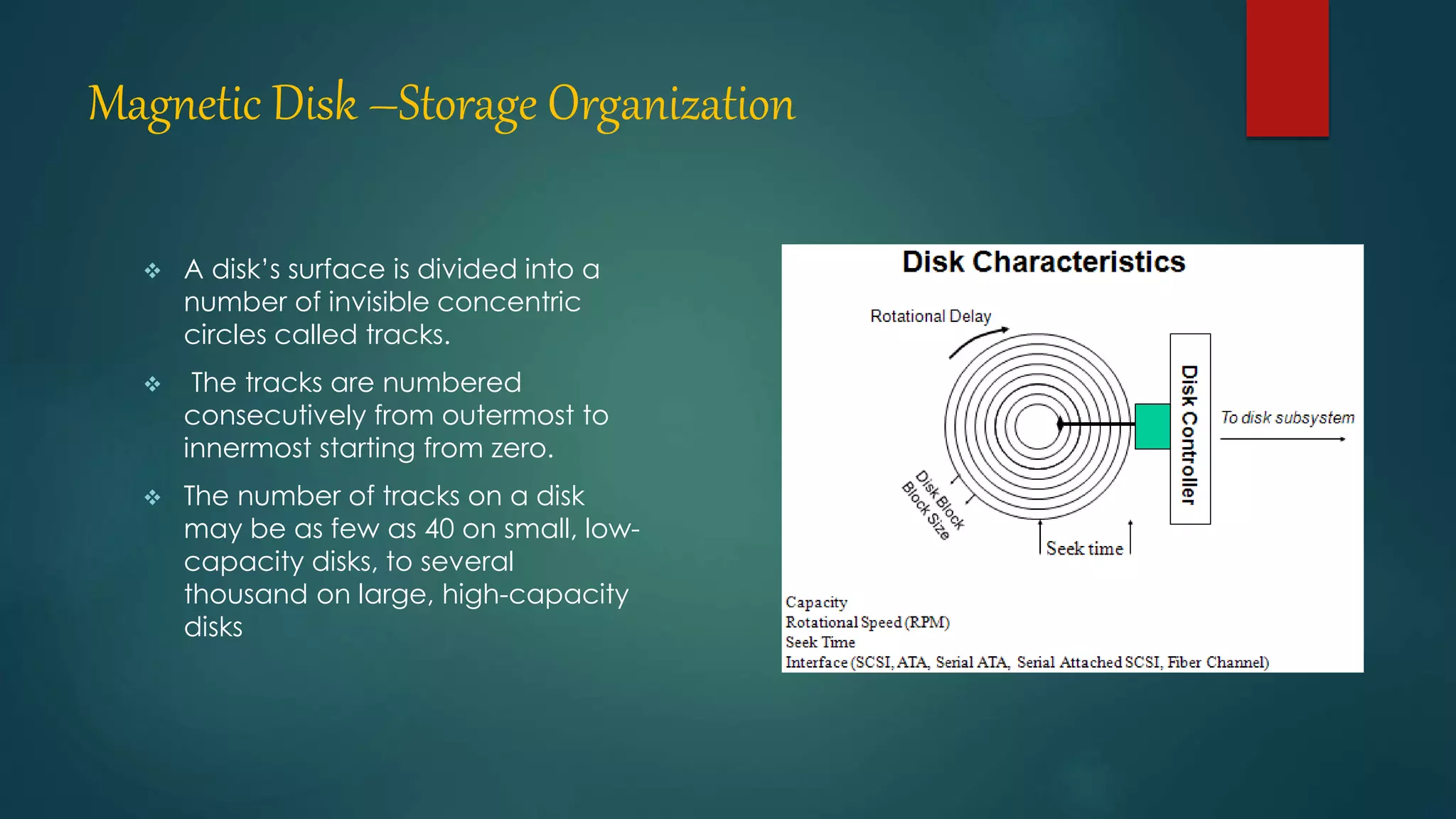




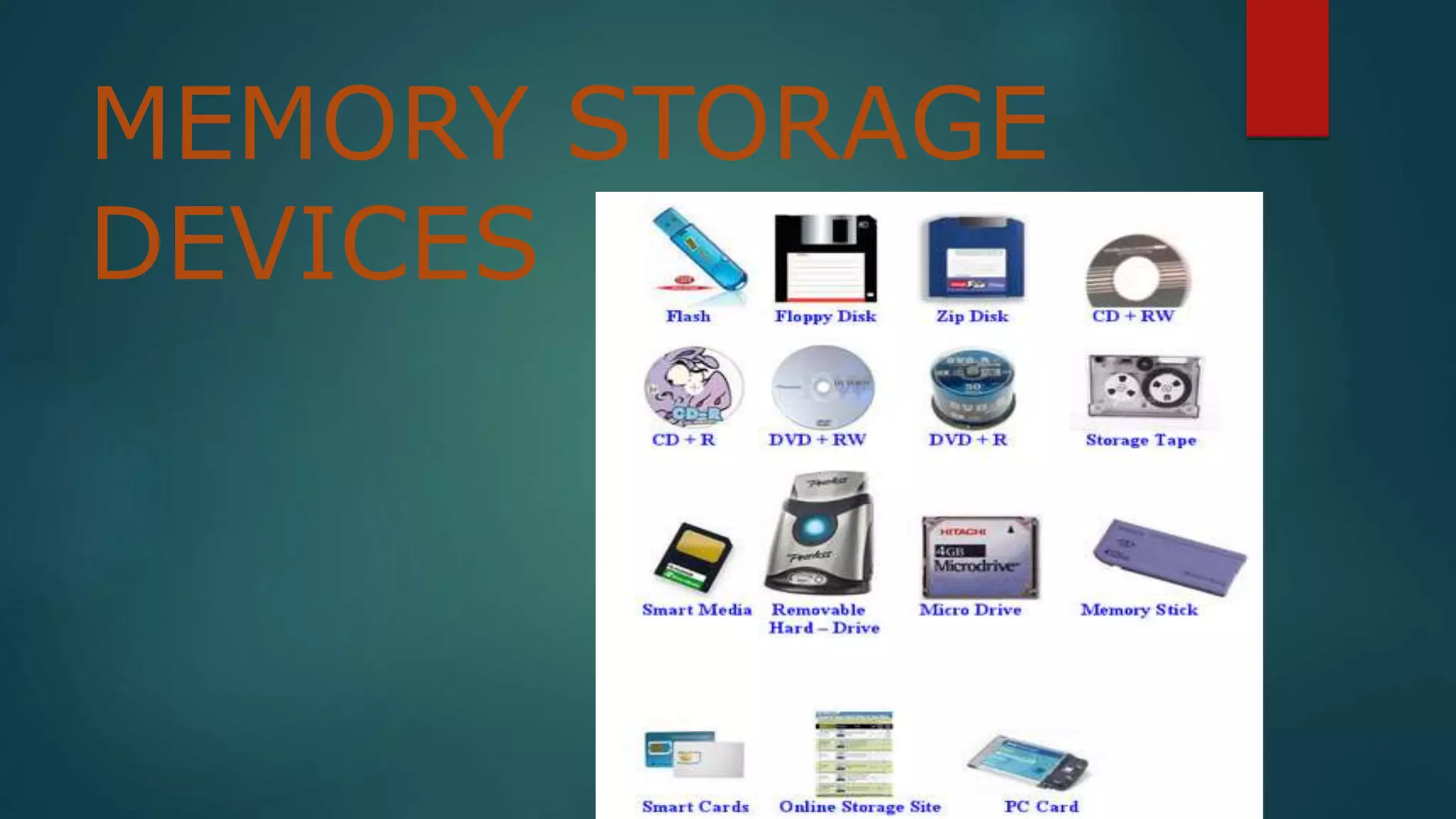
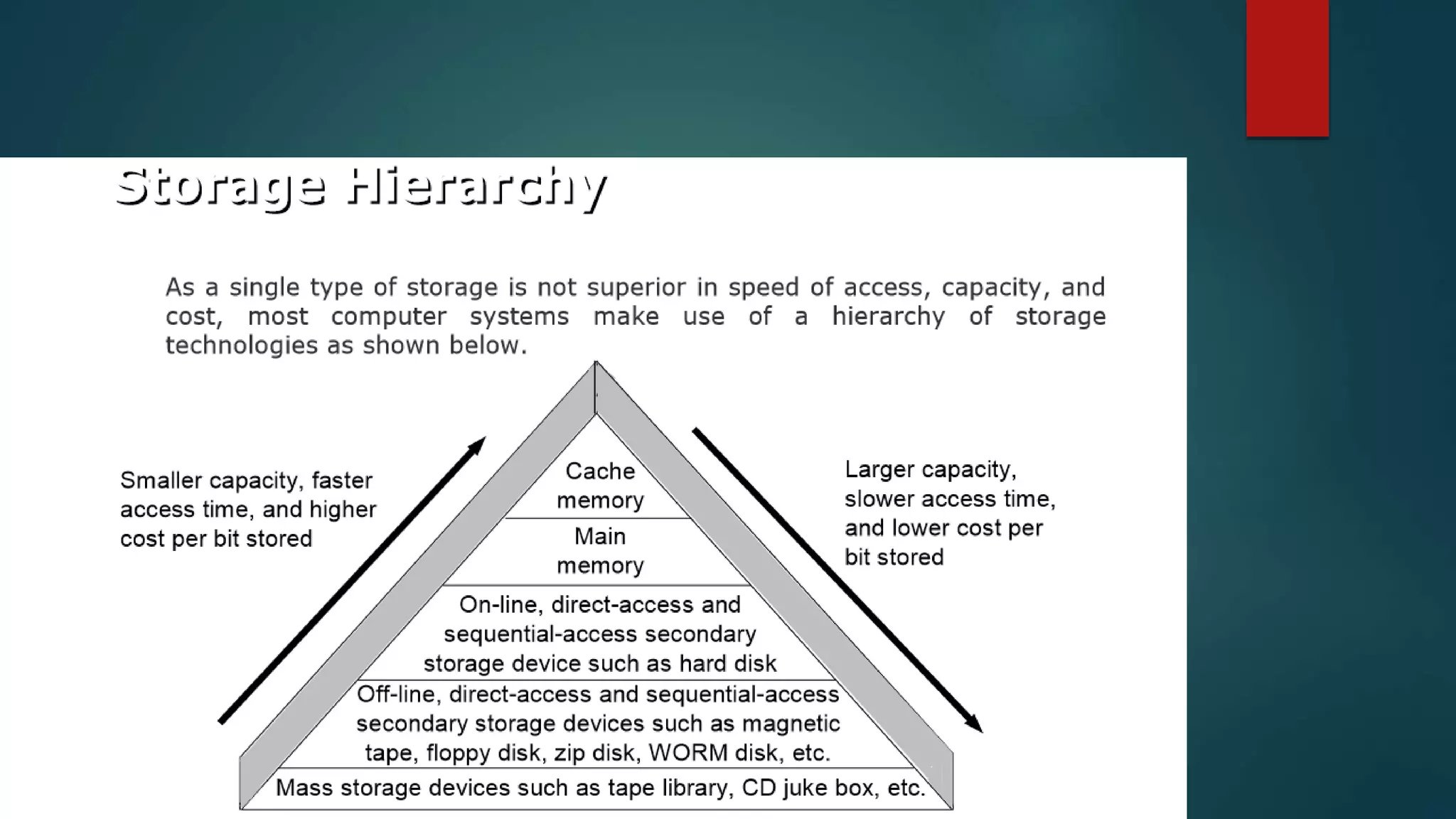

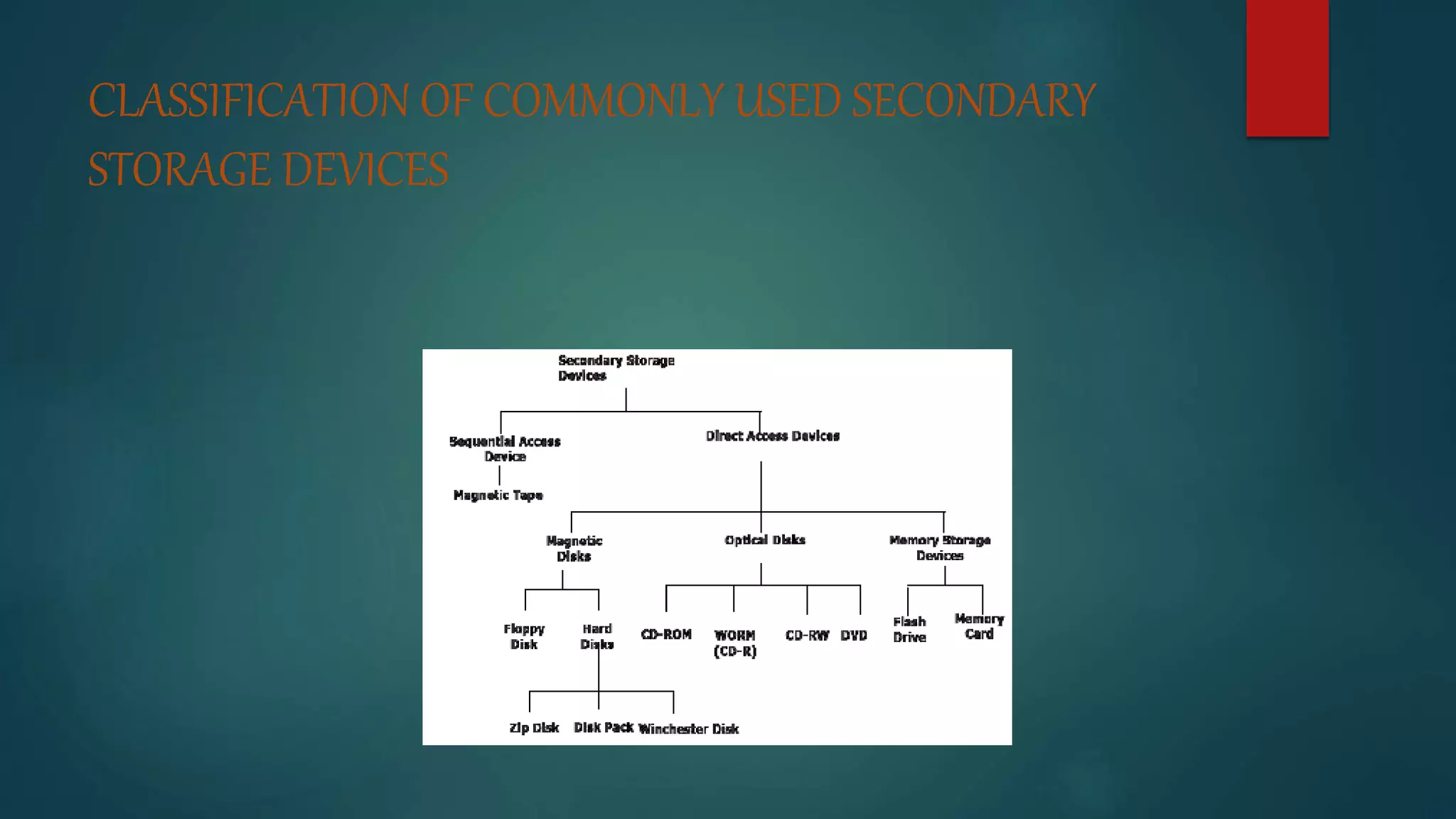
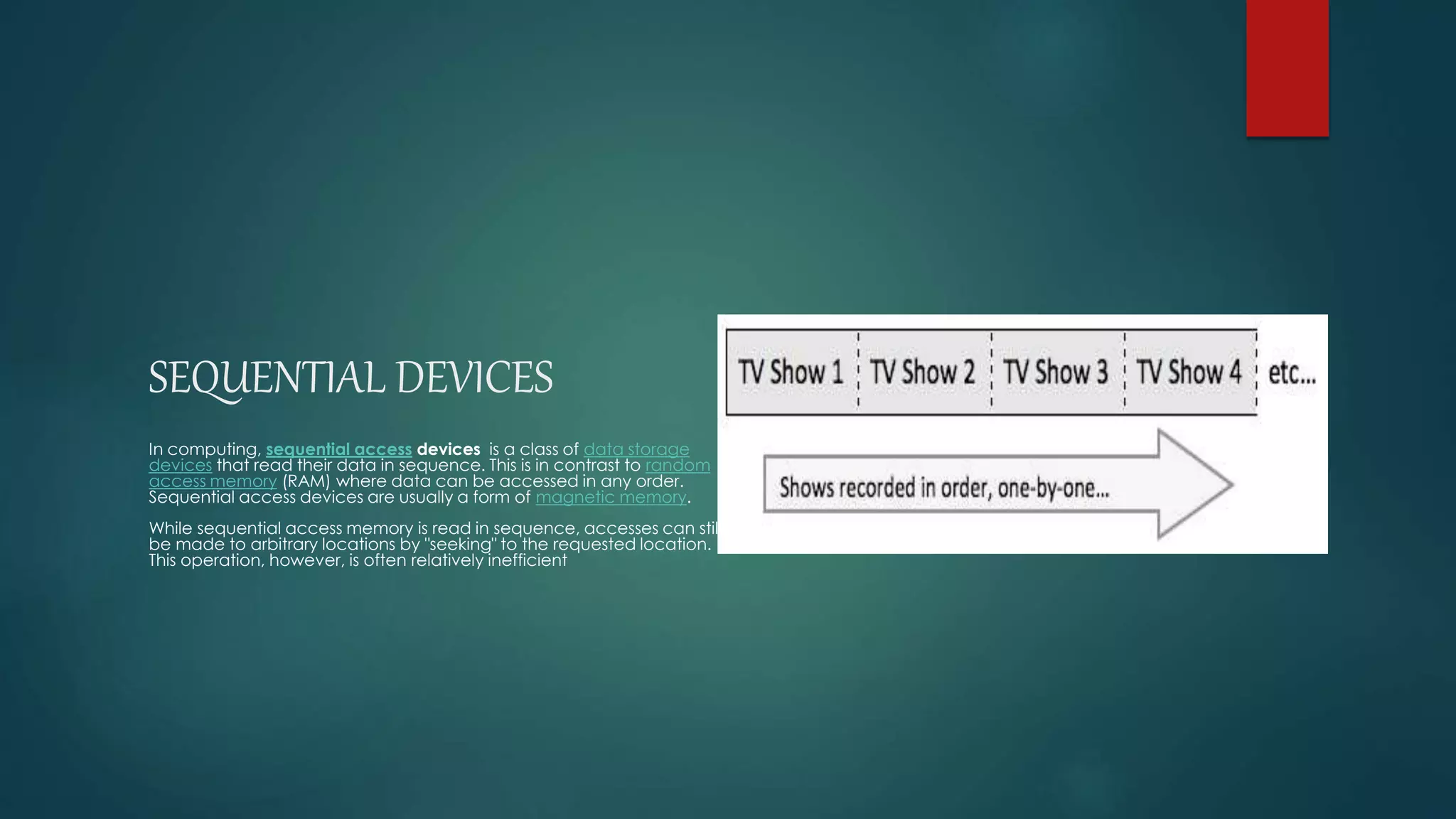
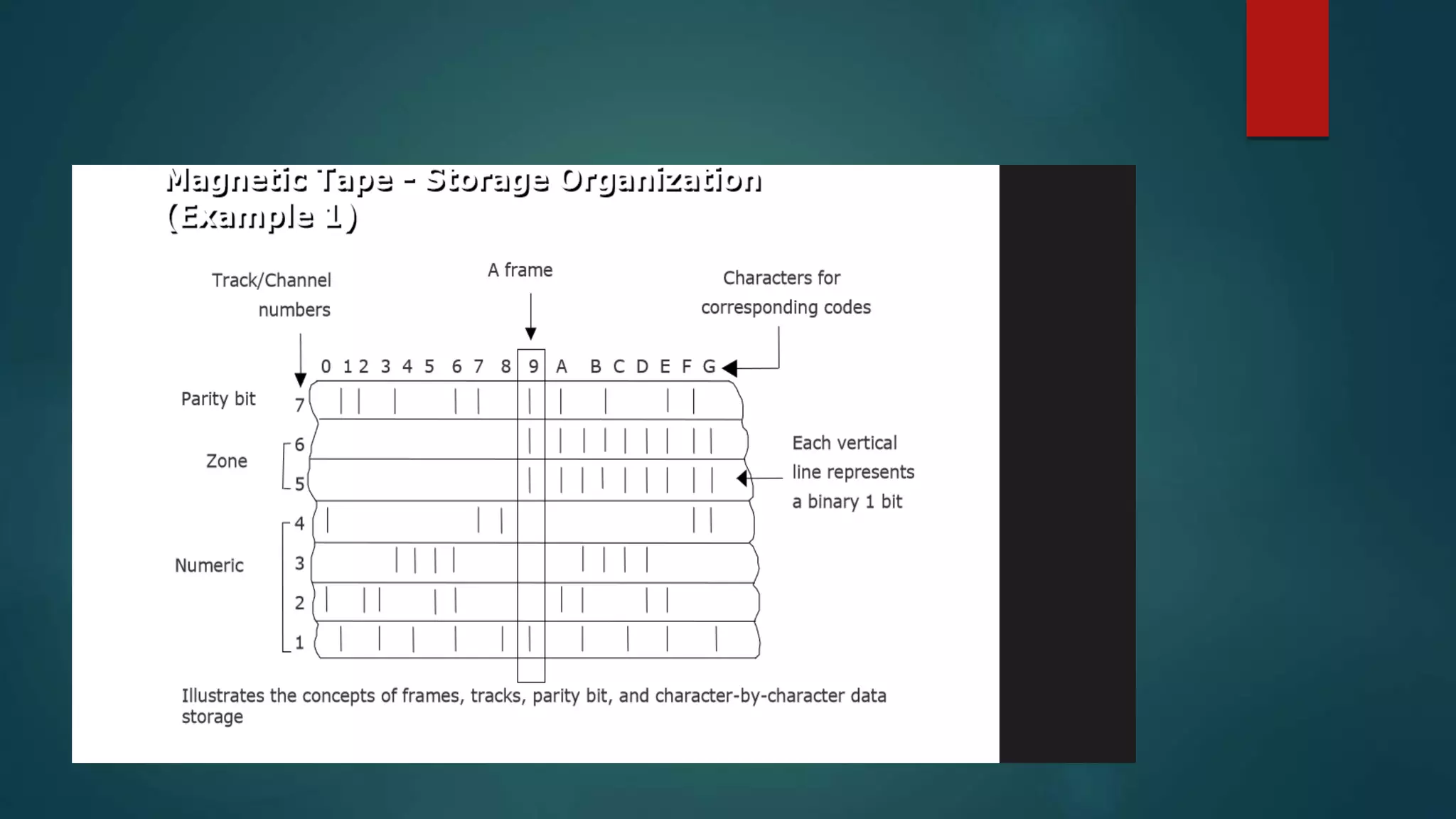
Secondary storage devices hold information regardless of whether the computer has power. Examples include floppy disks and hard drives. Secondary storage is slower than primary storage but is used for storing programs and data due to its larger size and lower cost. Magnetic tapes and disks are common sequential and direct access storage devices that differ in their access methods and performance characteristics. Tapes are portable but slow to access random data while disks allow faster random access but have lower capacity than tapes.


