

By
Prof. Liwayway Memije-Cruz
Measurement: The basis
of all scientific work
Measurement is the process of finding out how many
units there are in something. The basis of all scientific
work is measurement. There are various units of
measurement depending on what we wish to
measure. There are measurements of length, mass,
force, volume, time, velocity, density, electric current
and many others and these are expressed in different
units.
Almost all of us use measurements. The food we eat,
the clothes and shoes we wear, the work we do, and
many of the games we play involve measurements.
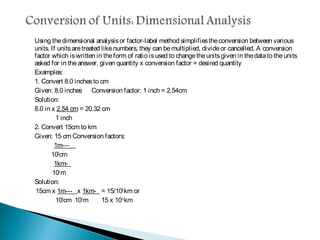
Using the dimensional analysis or factor-label method simplifies the conversion between various units. If units are treated
like numbers, they can be multiplied, divide or cancelled. A conversion factor which is written in the form of ratio is used
to change the units given in the data to the units asked for in the answer. given quantity x conversion factor = desired
quantity
Examples:
1. Convert 8.0 inches to cm
Given: 8.0 inches Conversion factor: 1 inch = 2.54cm
Solution:
8.0 in x 2.54 cm = 20.32 cm
1 inch
2. Convert 15cm to km
Given: 15 cm Conversion factors:
1m---__
102
cm
1km-_
103
m
Solution:
15cm x 1m---_ x 1km-_ = 15/105
km or
102
cm 103
m 15 x 10-5
km
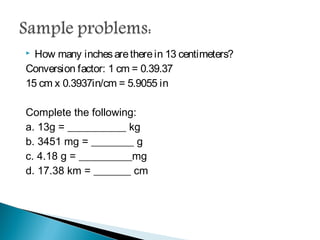
 How many inches are there in 13 centimeters?
Conversion factor: 1 cm = 0.39.37
15 cm x 0.3937in/cm = 5.9055 in
Complete the following:
a. 13g = ___________ kg
b. 3451 mg = ________ g
c. 4.18 g = __________mg
d. 17.38 km = _______ cm
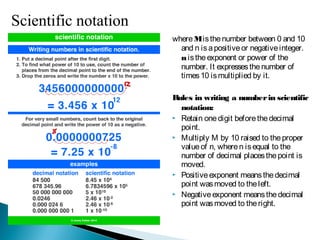
where M is the number between 0 and 10 and
n is a positive or negative integer. n is the
exponent or power of the number. It
expresses the number of times 10 is
multiplied by it.
Rules in writing a number in scientific notation:
 Retain one digit before the decimal point.
 Multiply M by 10 raised to the proper value
of n, where n is equal to the number of
decimal places the point is moved.
 Positive exponent means the decimal point
was moved to the left.
 Negative exponent means the decimal point
was moved to the right.
Scientific notation has the form M x 10n
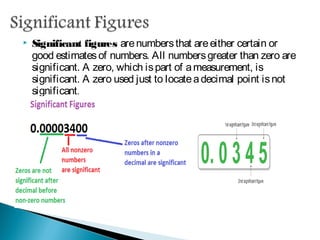
 Significant figures are numbers that are either certain or good
estimates of numbers. All numbers greater than zero are significant.
A zero, which is part of a measurement, is significant. A zero used
just to locate a decimal point is not significant.
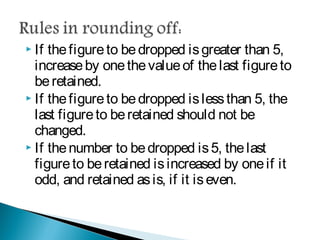
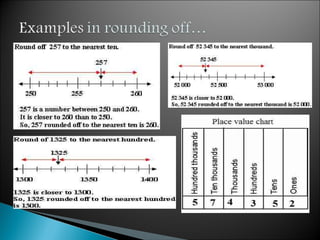
 If the figure to be dropped is greater than 5,
increase by one the value of the last figure to be
retained.
 If the figure to be dropped is less than 5, the last
figure to be retained should not be changed.
 If the number to be dropped is 5, the last figure to
be retained is increased by one if it odd, and
retained as is, if it is even.
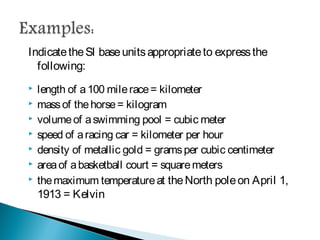
Indicate the SI base units appropriate to express the following:
 length of a 100 mile race = kilometer
 mass of the horse = kilogram
 volume of a swimming pool = cubic meter
 speed of a racing car = kilometer per hour
 density of metallic gold = grams per cubic centimeter
 area of a basketball court = square meters
 the maximum temperature at the North pole on April 1, 1913 =
Kelvin
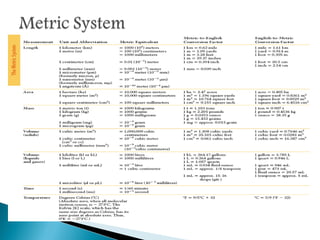
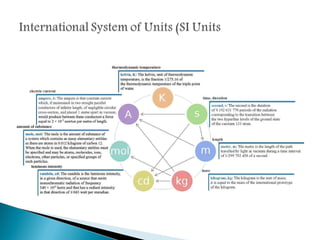
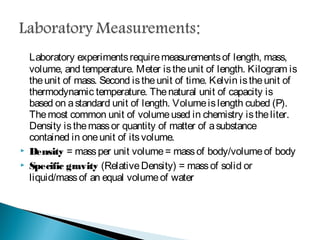
Laboratory experiments require measurements of length, mass, volume,
and temperature. Meter is the unit of length. Kilogram is the unit of
mass. Second is the unit of time. Kelvin is the unit of thermodynamic
temperature. The natural unit of capacity is based on a standard unit of
length. Volume is length cubed (P). The most common unit of volume
used in chemistry is the liter. Density is the mass or quantity of matter of
a substance contained in one unit of its volume.
 Density = mass per unit volume = mass of body/volume of body
 Specific gravity (Relative Density) = mass of solid or liquid/mass of an
equal volume of water
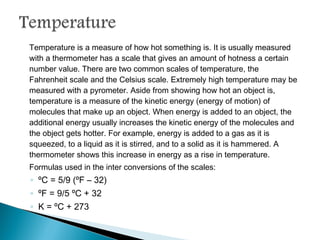
Temperature is a measure of how hot something is. It is usually measured with a
thermometer has a scale that gives an amount of hotness a certain number value.
There are two common scales of temperature, the Fahrenheit scale and the
Celsius scale. Extremely high temperature may be measured with a pyrometer.
Aside from showing how hot an object is, temperature is a measure of the kinetic
energy (energy of motion) of molecules that make up an object. When energy is
added to an object, the additional energy usually increases the kinetic energy of
the molecules and the object gets hotter. For example, energy is added to a gas as
it is squeezed, to a liquid as it is stirred, and to a solid as it is hammered. A
thermometer shows this increase in energy as a rise in temperature.
Formulas used in the inter conversions of the scales:
◦ ºC = 5/9 (ºF – 32)
◦ ºF = 9/5 ºC + 32
◦ K = ºC + 273
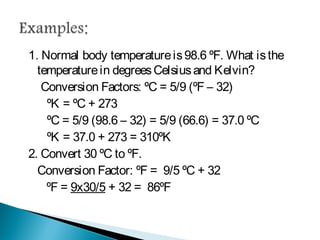
1. Normal body temperature is 98.6 ºF. What is the
temperature in degrees Celsius and Kelvin?
Conversion Factors: ºC = 5/9 (ºF – 32)
ºK = ºC + 273
ºC = 5/9 (98.6 – 32) = 5/9 (66.6) = 37.0 ºC
ºK = 37.0 + 273 = 310ºK
2. Convert 30 ºC to ºF.
Conversion Factor: ºF = 9/5 ºC + 32
ºF = 9x30/5 + 32 = 86ºF
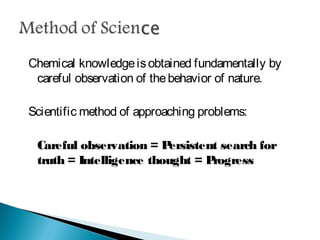
Chemical knowledge is obtained fundamentally by careful
observation of the behavior of nature.
Scientific method of approaching problems:
Careful observation = Persistent search for truth =
Intelligence thought = Progress
Measurement

Measurement

  • 1.
    By Prof. Liwayway Memije-Cruz Measurement:The basis of all scientific work
  • 2.
    Measurement is theprocess of finding out how many units there are in something. The basis of all scientific work is measurement. There are various units of measurement depending on what we wish to measure. There are measurements of length, mass, force, volume, time, velocity, density, electric current and many others and these are expressed in different units. Almost all of us use measurements. The food we eat, the clothes and shoes we wear, the work we do, and many of the games we play involve measurements.
  • 5.
    Using the dimensionalanalysis or factor-label method simplifies the conversion between various units. If units are treated like numbers, they can be multiplied, divide or cancelled. A conversion factor which is written in the form of ratio is used to change the units given in the data to the units asked for in the answer. given quantity x conversion factor = desired quantity Examples: 1. Convert 8.0 inches to cm Given: 8.0 inches Conversion factor: 1 inch = 2.54cm Solution: 8.0 in x 2.54 cm = 20.32 cm 1 inch 2. Convert 15cm to km Given: 15 cm Conversion factors: 1m---__ 102 cm 1km-_ 103 m Solution: 15cm x 1m---_ x 1km-_ = 15/105 km or 102 cm 103 m 15 x 10-5 km
  • 6.
     How manyinches are there in 13 centimeters? Conversion factor: 1 cm = 0.39.37 15 cm x 0.3937in/cm = 5.9055 in Complete the following: a. 13g = ___________ kg b. 3451 mg = ________ g c. 4.18 g = __________mg d. 17.38 km = _______ cm
  • 7.
    where M isthe number between 0 and 10 and n is a positive or negative integer. n is the exponent or power of the number. It expresses the number of times 10 is multiplied by it. Rules in writing a number in scientific notation:  Retain one digit before the decimal point.  Multiply M by 10 raised to the proper value of n, where n is equal to the number of decimal places the point is moved.  Positive exponent means the decimal point was moved to the left.  Negative exponent means the decimal point was moved to the right. Scientific notation has the form M x 10n
  • 8.
     Significant figuresare numbers that are either certain or good estimates of numbers. All numbers greater than zero are significant. A zero, which is part of a measurement, is significant. A zero used just to locate a decimal point is not significant.
  • 9.
     If thefigure to be dropped is greater than 5, increase by one the value of the last figure to be retained.  If the figure to be dropped is less than 5, the last figure to be retained should not be changed.  If the number to be dropped is 5, the last figure to be retained is increased by one if it odd, and retained as is, if it is even.
  • 12.
    Indicate the SIbase units appropriate to express the following:  length of a 100 mile race = kilometer  mass of the horse = kilogram  volume of a swimming pool = cubic meter  speed of a racing car = kilometer per hour  density of metallic gold = grams per cubic centimeter  area of a basketball court = square meters  the maximum temperature at the North pole on April 1, 1913 = Kelvin
  • 14.
    Laboratory experiments requiremeasurements of length, mass, volume, and temperature. Meter is the unit of length. Kilogram is the unit of mass. Second is the unit of time. Kelvin is the unit of thermodynamic temperature. The natural unit of capacity is based on a standard unit of length. Volume is length cubed (P). The most common unit of volume used in chemistry is the liter. Density is the mass or quantity of matter of a substance contained in one unit of its volume.  Density = mass per unit volume = mass of body/volume of body  Specific gravity (Relative Density) = mass of solid or liquid/mass of an equal volume of water
  • 15.
    Temperature is ameasure of how hot something is. It is usually measured with a thermometer has a scale that gives an amount of hotness a certain number value. There are two common scales of temperature, the Fahrenheit scale and the Celsius scale. Extremely high temperature may be measured with a pyrometer. Aside from showing how hot an object is, temperature is a measure of the kinetic energy (energy of motion) of molecules that make up an object. When energy is added to an object, the additional energy usually increases the kinetic energy of the molecules and the object gets hotter. For example, energy is added to a gas as it is squeezed, to a liquid as it is stirred, and to a solid as it is hammered. A thermometer shows this increase in energy as a rise in temperature. Formulas used in the inter conversions of the scales: ◦ ºC = 5/9 (ºF – 32) ◦ ºF = 9/5 ºC + 32 ◦ K = ºC + 273
  • 16.
    1. Normal bodytemperature is 98.6 ºF. What is the temperature in degrees Celsius and Kelvin? Conversion Factors: ºC = 5/9 (ºF – 32) ºK = ºC + 273 ºC = 5/9 (98.6 – 32) = 5/9 (66.6) = 37.0 ºC ºK = 37.0 + 273 = 310ºK 2. Convert 30 ºC to ºF. Conversion Factor: ºF = 9/5 ºC + 32 ºF = 9x30/5 + 32 = 86ºF
  • 17.
    Chemical knowledge isobtained fundamentally by careful observation of the behavior of nature. Scientific method of approaching problems: Careful observation = Persistent search for truth = Intelligence thought = Progress