Processes of Mass WastingJanet KochEDU 290PowerPoint Presentation
DefinitionMass wasting is the down-slope movement of material under direct influence of gravity
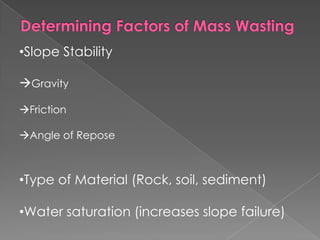
Water influences the effects of mass wasting but gravity is the most important factorDetermining Factors of Mass WastingSlope StabilityGravityFriction
Angle of Repose
Type of Material (Rock, soil, sediment)
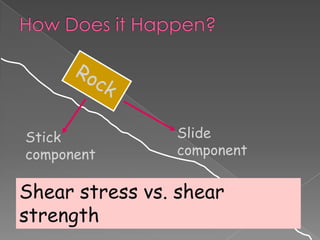
Water saturation (increases slope failure)  How Does it Happen?RockSlide componentStick componentShear stress vs. shear strength
When Gravity WinsWhen the force of gravity exceeds the friction of the slope, material begins to move
Shear strength resists movement, if gravity is too strong the object loses frictionAngle of ReposeThe steepness of a slope is an important factorSteeper the slope  increase in the amount of gravity pulling on the objectThe angle of repose is the steepest angle a slope can maintain without collapseAround 25-40 degrees
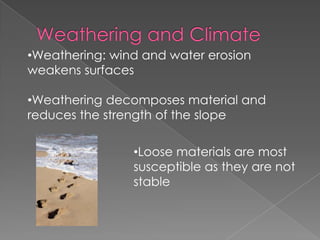
Weathering and ClimateWeathering: wind and water erosion weakens surfaces
Weathering decomposes material and reduces the strength of the slope
Loose materials are most susceptible as they are not stableTriggering Events Events that encourage mass wasting:EarthquakesSnowmeltHeavy rainstormsWhy?
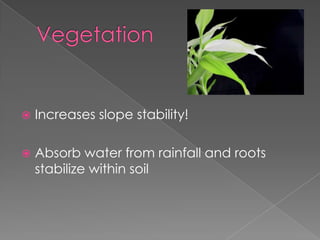
VegetationIncreases slope stability! Absorb water from rainfall and roots stabilize within soil
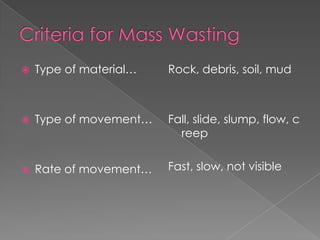
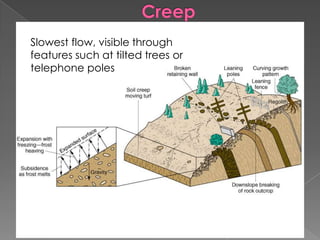
Criteria for Mass WastingType of material…Type of movement…Rate of movement…Rock, debris, soil, mudFall, slide, slump, flow, creepFast, slow, not visible
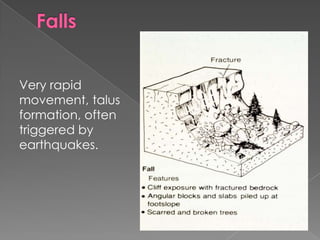
FallsVery rapid movement, talus formation, often triggered by earthquakes.
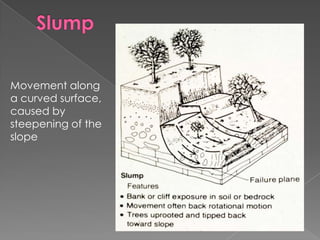
SlumpMovement along a curved surface, caused by steepening of the slope
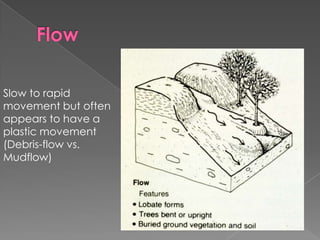
FlowSlow to rapid movement but often appears to have a plastic movement (Debris-flow vs. Mudflow)
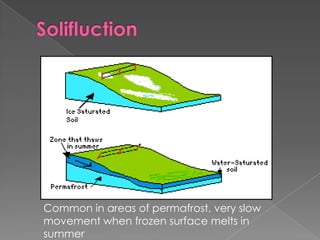
SolifluctionCommon in areas of permafrost, very slow movement when frozen surface melts in summer

Edu290 ppt1koch