MARKET STRUCTURES
What is Market Structures?
The interconnected characteristics of a market
,such as the number and relative strength
of buyers and sellers and degree of collusion
among them, level and forms of competition,
extent of product differentiation, and ease
of entry into and exit from the market
Classification of Market
Structure
Regular Market Structure
Special Market Structure
Regular Market Structures
Perfect Competition
Monopoly
Oligopoly
Monopolistic Competition
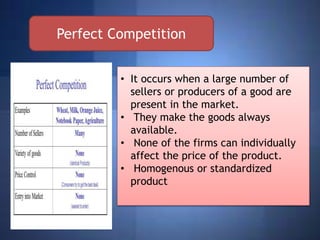
Perfect Competition
• It occurs when a large number of
sellers or producers of a good are
present in the market.
• They make the goods always
available.
• None of the firms can individually
affect the price of the product.
• Homogenous or standardized
product
Monopoly
• Single firm produces the entire
available products in an industry.
• Special case of imperfect
competition.
• Usually has a great influence over
pricing and output decision.
• Two types:
• natural monopoly
• legislated monopoly
Oligopoly
• Characterized by very few sellers
in the market making the
product(s) available for the
consuming public.
• Oil and telecommunication
industries in the Philippines are
example of this.
• Joint-monopoly solution – rivals
cooperate.
• Cartel – Cooperative method to
restrict individual and collective
output.
Monopolistic Competition
• Market structure in which there are
enough sellers and each independently of
the others, but are few enough that each
tends to have “monopoly” of its own
specific target market segment.
• Differentiated Products – are those tend
to be similar of nature and purpose, but
are used differently and generally
preferred by specific groups and
costumers.
Special Types of Market Structure
Monopsony
Oligopsony
Monopsony
• Having a single seller, and there is a
single buyer in the industry.
• Some governments tend to participate
this way in specific and sensitive
industries.
• The purchase of armaments, nuclear
technology and the like tend to be
monopoly of many governments,
assuring that these products will not
be readily available to the public for
national security reasons and
measures.
Oligopsony
• Having very few sellers in the
industry and there are only very
few buyers of a particular product.
• Transportation companies such as
airlines and shipping lines tend to
fall into industries with this market
structure.
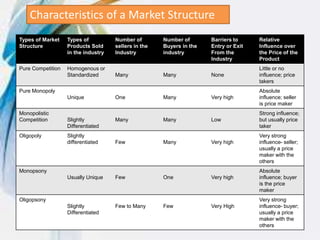
Types of Market
Structure
Types of
Products Sold
in the industry
Number of
sellers in the
Industry
Number of
Buyers in the
industry
Barriers to
Entry or Exit
From the
Industry
Relative
Influence over
the Price of the
Product
Pure Competition Homogenous or
Standardized Many Many None
Little or no
influence; price
takers
Pure Monopoly
Unique One Many Very high
Absolute
influence; seller
is price maker
Monopolistic
Competition Slightly
Differentiated
Many Many Low
Strong influence;
but usually price
taker
Oligopoly Slightly
differentiated Few Many Very high
Very strong
influence- seller;
usually a price
maker with the
others
Monopsony
Usually Unique Few One Very high
Absolute
influence; buyer
is the price
maker
Oligopsony
Slightly
Differentiated
Few to Many Few Very High
Very strong
influence- buyer;
usually a price
maker with the
others
Characteristics of a Market Structure

Market Structures (economics)

  • 1.
  • 2.
    What is MarketStructures? The interconnected characteristics of a market ,such as the number and relative strength of buyers and sellers and degree of collusion among them, level and forms of competition, extent of product differentiation, and ease of entry into and exit from the market
  • 3.
    Classification of Market Structure RegularMarket Structure Special Market Structure
  • 4.
    Regular Market Structures PerfectCompetition Monopoly Oligopoly Monopolistic Competition
  • 5.
    Perfect Competition • Itoccurs when a large number of sellers or producers of a good are present in the market. • They make the goods always available. • None of the firms can individually affect the price of the product. • Homogenous or standardized product
  • 6.
    Monopoly • Single firmproduces the entire available products in an industry. • Special case of imperfect competition. • Usually has a great influence over pricing and output decision. • Two types: • natural monopoly • legislated monopoly
  • 7.
    Oligopoly • Characterized byvery few sellers in the market making the product(s) available for the consuming public. • Oil and telecommunication industries in the Philippines are example of this. • Joint-monopoly solution – rivals cooperate. • Cartel – Cooperative method to restrict individual and collective output.
  • 8.
    Monopolistic Competition • Marketstructure in which there are enough sellers and each independently of the others, but are few enough that each tends to have “monopoly” of its own specific target market segment. • Differentiated Products – are those tend to be similar of nature and purpose, but are used differently and generally preferred by specific groups and costumers.
  • 9.
    Special Types ofMarket Structure Monopsony Oligopsony
  • 10.
    Monopsony • Having asingle seller, and there is a single buyer in the industry. • Some governments tend to participate this way in specific and sensitive industries. • The purchase of armaments, nuclear technology and the like tend to be monopoly of many governments, assuring that these products will not be readily available to the public for national security reasons and measures.
  • 11.
    Oligopsony • Having veryfew sellers in the industry and there are only very few buyers of a particular product. • Transportation companies such as airlines and shipping lines tend to fall into industries with this market structure.
  • 12.
    Types of Market Structure Typesof Products Sold in the industry Number of sellers in the Industry Number of Buyers in the industry Barriers to Entry or Exit From the Industry Relative Influence over the Price of the Product Pure Competition Homogenous or Standardized Many Many None Little or no influence; price takers Pure Monopoly Unique One Many Very high Absolute influence; seller is price maker Monopolistic Competition Slightly Differentiated Many Many Low Strong influence; but usually price taker Oligopoly Slightly differentiated Few Many Very high Very strong influence- seller; usually a price maker with the others Monopsony Usually Unique Few One Very high Absolute influence; buyer is the price maker Oligopsony Slightly Differentiated Few to Many Few Very High Very strong influence- buyer; usually a price maker with the others Characteristics of a Market Structure