Prepared by
K.MOHANAKRISHNAN
I M.Sc (Agricultural Economics)
PAJANCOA&RI
MARKET STRUCTURE
Market
“A market consists of all the potential customers sharing a
particular need or want who might be willing and able to engage in
exchange to satisfy that need or want” (Philip Kotler).
Market Structure
Those characteristics of the market that significantly affect the
behavior and interaction of buyers and sellers.
Components of Market Structure
1.Number and size of sellers and buyers ( single, few, many)
2.Type of the product ( homogenous, heterogenous)
3.Conditions of entry and exit (free entry or exit and barrier to entry or exit)
4.Transparency of information (perfect information of market)
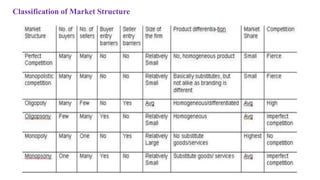
Types of Market Structure
1.Perfect Competition – many sellers and buyers
2.Imperfect Competition – deviation from perfect competition
i.Monopoly – single seller and many buyers
ii.Oligopoly – many buyers and few sellers
iii.Monopolistic – many buyers and sellers, homogenous
product
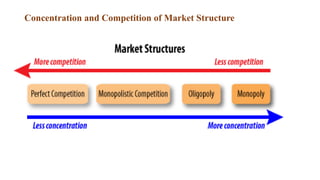
Concentration and Competition of Market Structure
Classification of Market Structure
Perfect Competition
Perfect copetiton is a market structure in which there are
many sellers and buyers transacting a homogenous product.
i. Many sellers and buyers, so that no one can affect the market
ii. Homogeneous product
iii. Free entry to and exit from the industry
iv. Transparent and free information
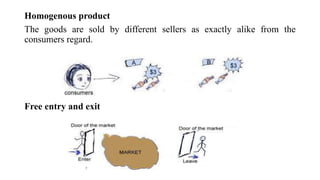
Homogenous product
The goods are sold by different sellers as exactly alike from the
consumers regard.
Free entry and exit
Imperfect Competition
Any deviation from the condition of perfect competition in a
market leads to the existence of imperfect of competition.
Types in imperfect competition
i.Monopoly
ii.Duopoly
iii.Monopolistic
Monopoly
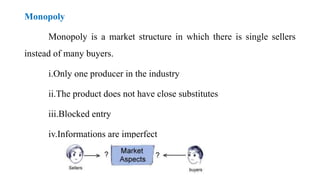
Monopoly is a market structure in which there is single sellers
instead of many buyers.
i.Only one producer in the industry
ii.The product does not have close substitutes
iii.Blocked entry
iv.Informations are imperfect
Oligopoly
It represents the presence of a few firms in the market ,producing
either a homogenous product which are close but not perfect substitutes
to each other.
i. presence of few sellers
ii. products homogenous are close but not perfect
iii. sellers nor consumers are fully aware of the cost, price, quality
and quantity sold by different sellers.
These two types derived from Oligopoly market.
Monopsony
Monopsony means the presence of a many sellers for the products
produced by the firms. Ex. sugar factory purchase sugarcane from
farmers.
Oligopsony
It’s from the buyers side in a market. There are only few buyers
and many sellers. Ex. Buying gas from government.
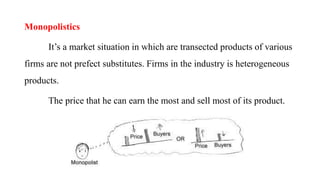
Monopolistics
It’s a market situation in which are transected products of various
firms are not prefect substitutes. Firms in the industry is heterogeneous
products.
The price that he can earn the most and sell most of its product.

Market structure

  • 1.
    Prepared by K.MOHANAKRISHNAN I M.Sc(Agricultural Economics) PAJANCOA&RI
  • 2.
    MARKET STRUCTURE Market “A marketconsists of all the potential customers sharing a particular need or want who might be willing and able to engage in exchange to satisfy that need or want” (Philip Kotler). Market Structure Those characteristics of the market that significantly affect the behavior and interaction of buyers and sellers.
  • 3.
    Components of MarketStructure 1.Number and size of sellers and buyers ( single, few, many) 2.Type of the product ( homogenous, heterogenous) 3.Conditions of entry and exit (free entry or exit and barrier to entry or exit) 4.Transparency of information (perfect information of market)
  • 4.
    Types of MarketStructure 1.Perfect Competition – many sellers and buyers 2.Imperfect Competition – deviation from perfect competition i.Monopoly – single seller and many buyers ii.Oligopoly – many buyers and few sellers iii.Monopolistic – many buyers and sellers, homogenous product
  • 5.
    Concentration and Competitionof Market Structure
  • 6.
  • 7.
    Perfect Competition Perfect copetitonis a market structure in which there are many sellers and buyers transacting a homogenous product. i. Many sellers and buyers, so that no one can affect the market ii. Homogeneous product iii. Free entry to and exit from the industry iv. Transparent and free information
  • 8.
    Homogenous product The goodsare sold by different sellers as exactly alike from the consumers regard. Free entry and exit
  • 9.
    Imperfect Competition Any deviationfrom the condition of perfect competition in a market leads to the existence of imperfect of competition. Types in imperfect competition i.Monopoly ii.Duopoly iii.Monopolistic
  • 10.
    Monopoly Monopoly is amarket structure in which there is single sellers instead of many buyers. i.Only one producer in the industry ii.The product does not have close substitutes iii.Blocked entry iv.Informations are imperfect
  • 11.
    Oligopoly It represents thepresence of a few firms in the market ,producing either a homogenous product which are close but not perfect substitutes to each other. i. presence of few sellers ii. products homogenous are close but not perfect iii. sellers nor consumers are fully aware of the cost, price, quality and quantity sold by different sellers.
  • 12.
    These two typesderived from Oligopoly market. Monopsony Monopsony means the presence of a many sellers for the products produced by the firms. Ex. sugar factory purchase sugarcane from farmers. Oligopsony It’s from the buyers side in a market. There are only few buyers and many sellers. Ex. Buying gas from government.
  • 13.
    Monopolistics It’s a marketsituation in which are transected products of various firms are not prefect substitutes. Firms in the industry is heterogeneous products. The price that he can earn the most and sell most of its product.