

Presentation On Market
Structure
Market
• In economics, market means a social system
through which the sellers and purchasers of a
commodity or a service (or a group of
commodities and services) can interact with
each other.
• Market does not refers to a place or a location.
• It refers to an institutional relationship between
purchaser and the seller.
• It links buyer and the seller.
Market Structure
Market
Structure
Imperfect
Competition
Monopolistic
competition
Oligopoly
Perfect
Competition
Monopoly
Market Structure
Perfect Competition
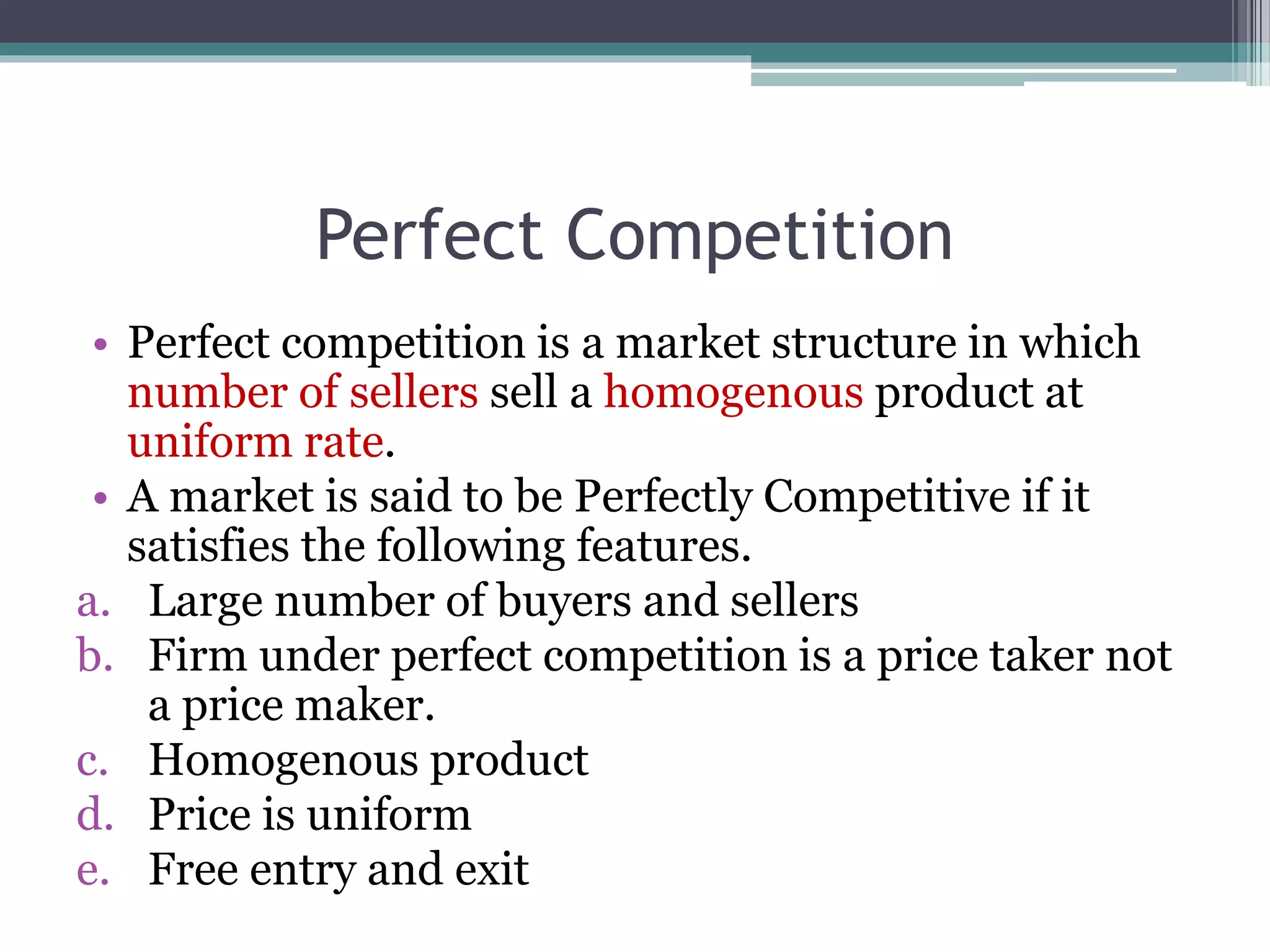
• Perfect competition is a market structure in which
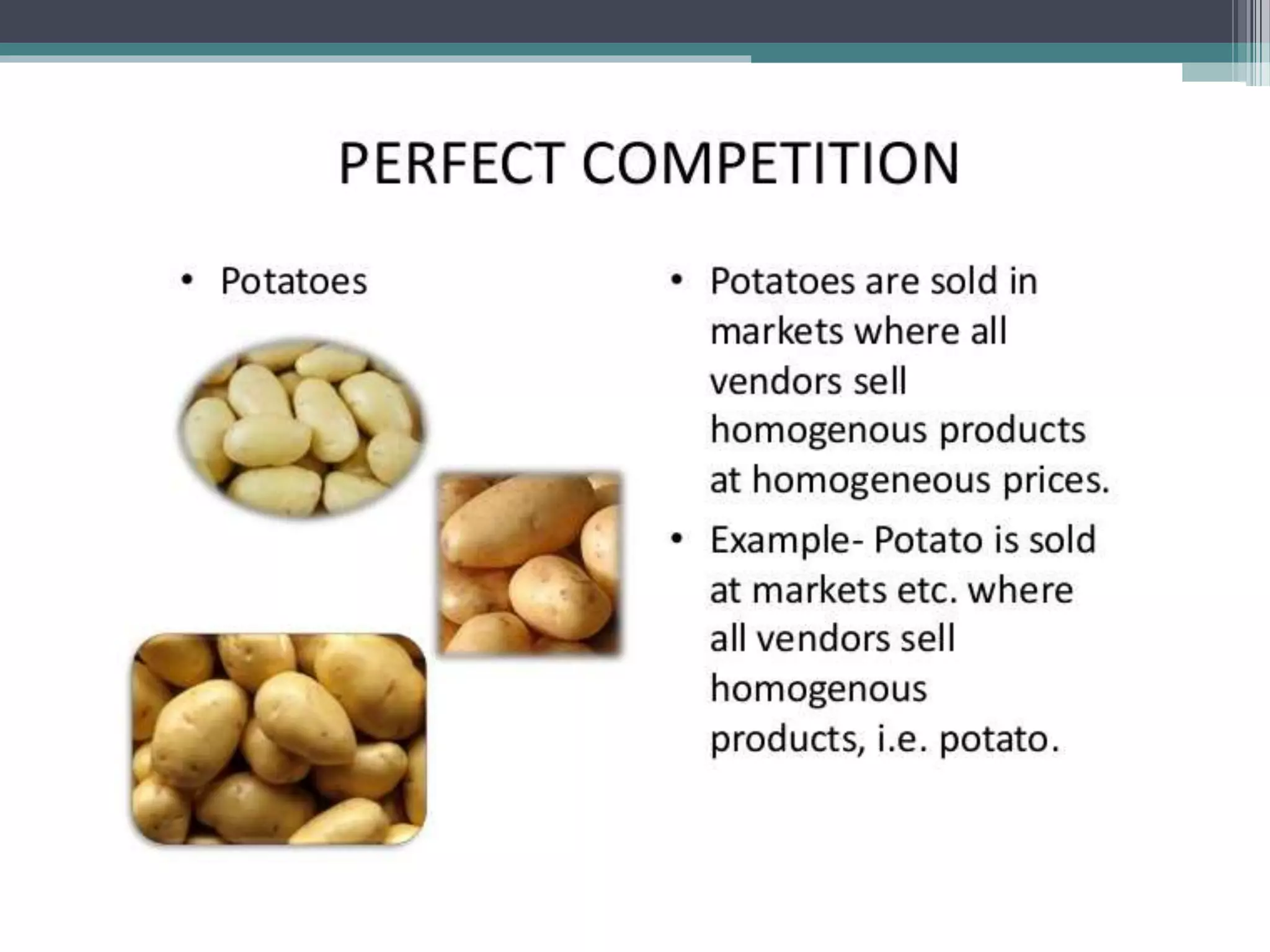
number of sellers sell a homogenous product at
uniform rate.
• A market is said to be Perfectly Competitive if it
satisfies the following features.
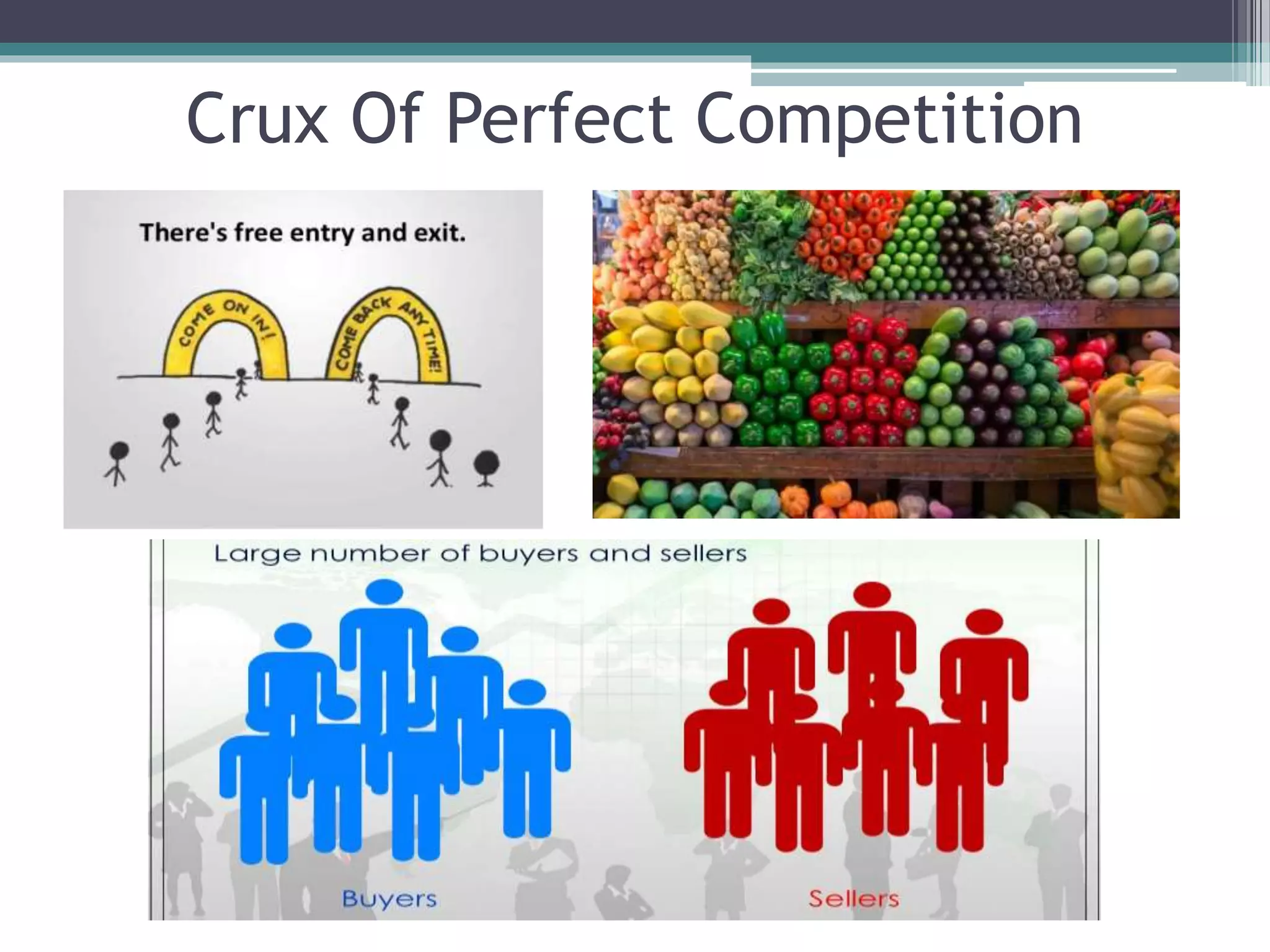
a. Large number of buyers and sellers
b. Firm under perfect competition is a price taker not
a price maker.
c. Homogenous product
d. Price is uniform
e. Free entry and exit
Perfect Competition
f. Profit maximization
g. No government regulation
h. Perfect mobility of factors: resources can move
freely from one firm to another without any
restriction.
i. Perfect knowledge
j. Absence of transportation cost
k. Perfectly elastic demand curve
Perfectly Elastic Demand Curve
Crux Of Perfect Competition
Monopoly
• Monopoly refers to the market situation where there
is one seller and there is no close substitute to the
commodities sold by the seller.
• Seller has full control over the supply of that
commodity.
• One seller, so the monopoly firm and an industry are
the same.
• No close substitute
• Restriction on entry and exit of new firm
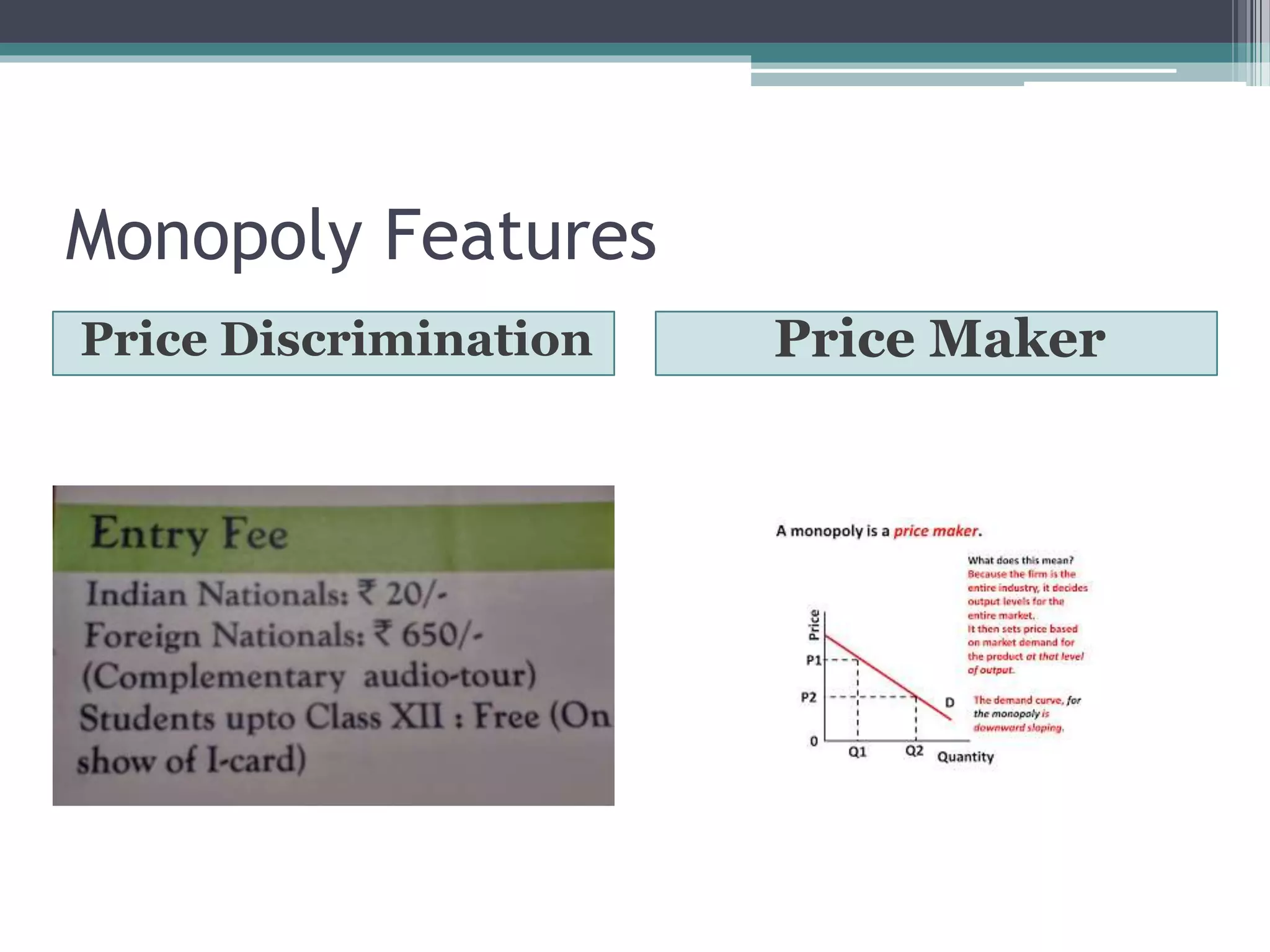
• Price maker
• Possibility of price discrimination
Monopoly Features
Price Discrimination Price Maker
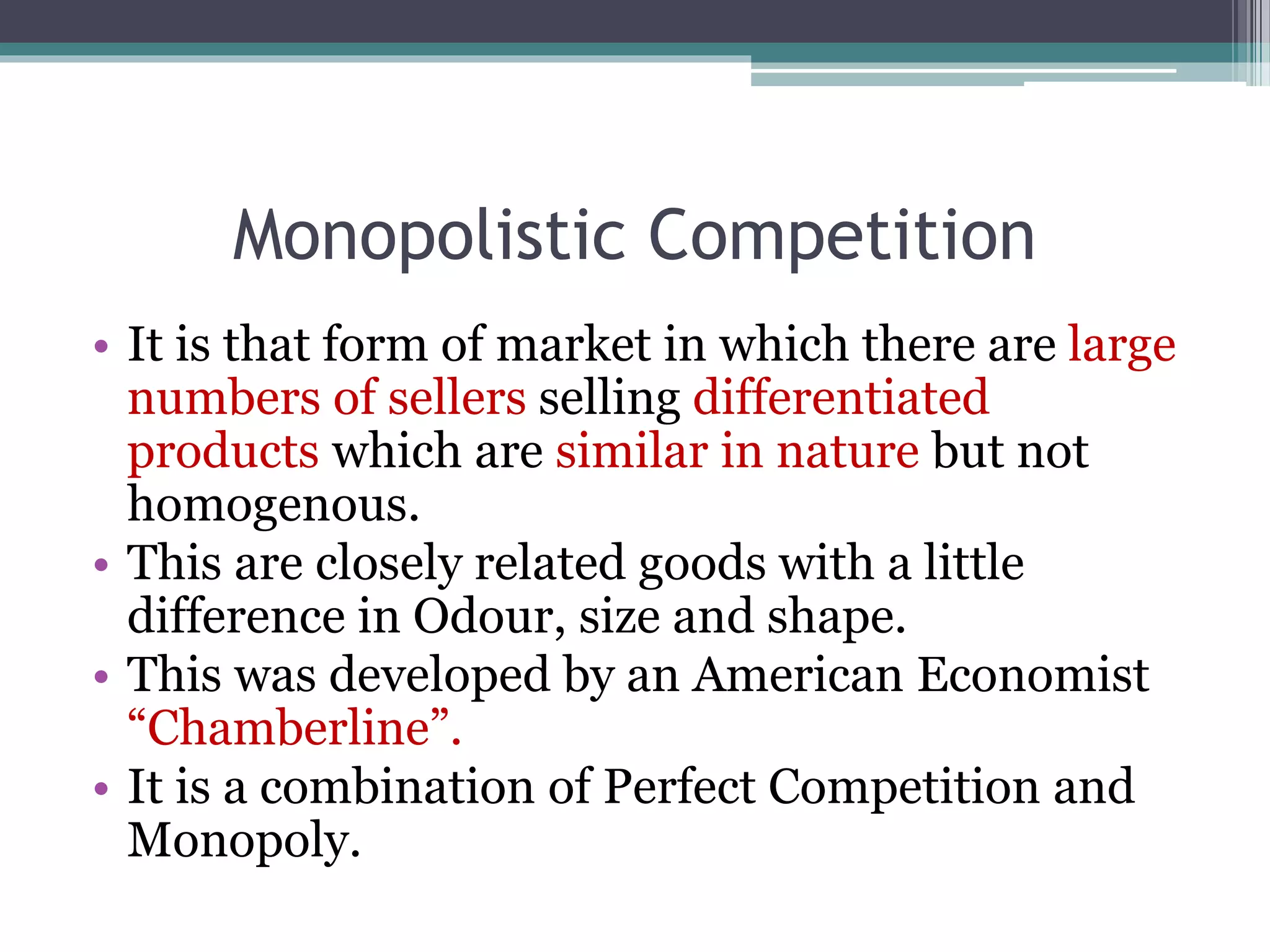
Monopolistic Competition
• It is that form of market in which there are large
numbers of sellers selling differentiated
products which are similar in nature but not
homogenous.
• This are closely related goods with a little
difference in Odour, size and shape.
• This was developed by an American Economist
“Chamberline”.
• It is a combination of Perfect Competition and
Monopoly.
Examples Of Monopolistic Competition
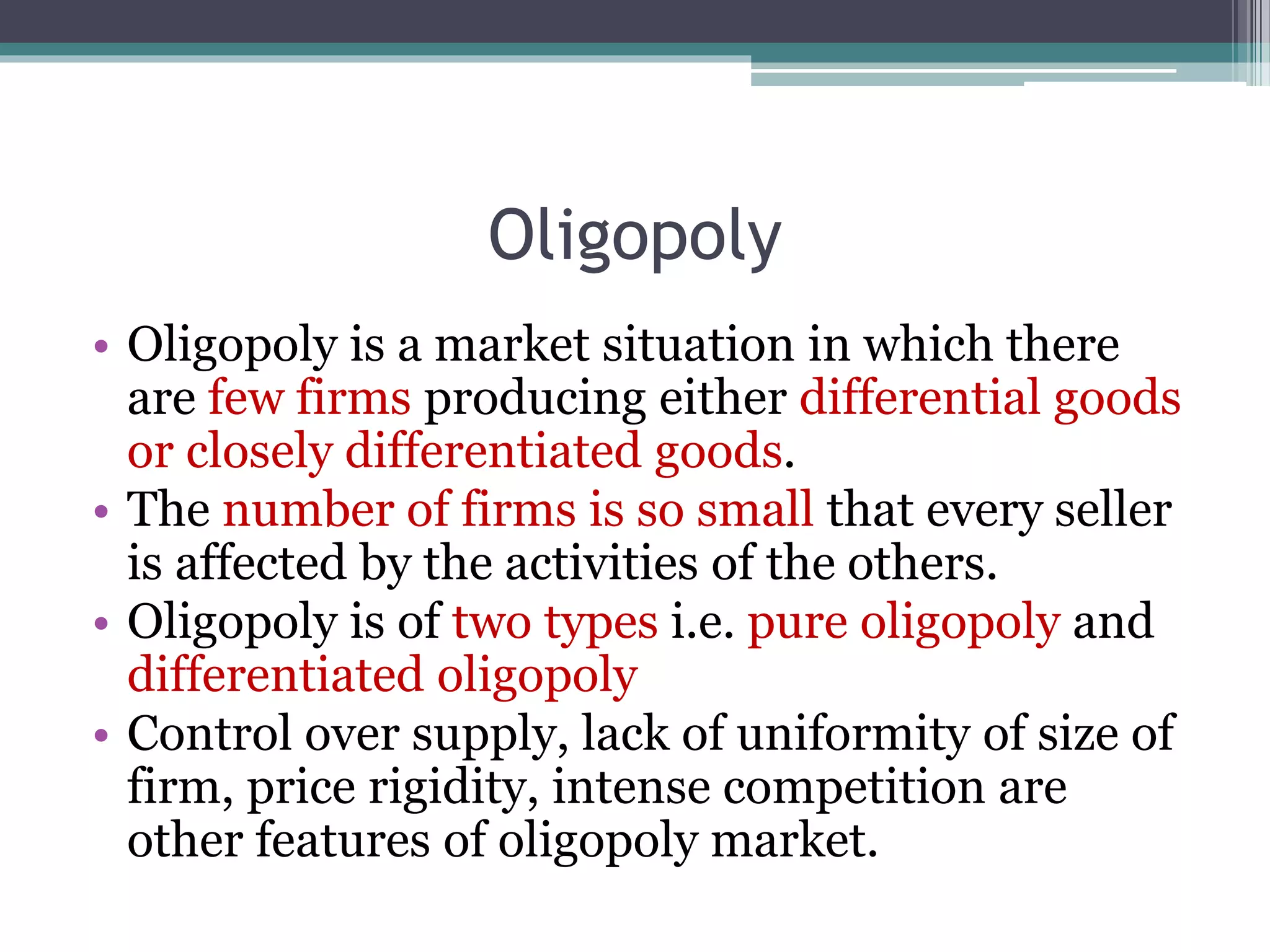
Oligopoly
• Oligopoly is a market situation in which there
are few firms producing either differential goods
or closely differentiated goods.
• The number of firms is so small that every seller
is affected by the activities of the others.
• Oligopoly is of two types i.e. pure oligopoly and
differentiated oligopoly
• Control over supply, lack of uniformity of size of
firm, price rigidity, intense competition are
other features of oligopoly market.
Market structure
Market structure

Market structure

  • 1.
  • 2.
    Market • In economics,market means a social system through which the sellers and purchasers of a commodity or a service (or a group of commodities and services) can interact with each other. • Market does not refers to a place or a location. • It refers to an institutional relationship between purchaser and the seller. • It links buyer and the seller.
  • 3.
  • 4.
  • 5.
    Perfect Competition • Perfectcompetition is a market structure in which number of sellers sell a homogenous product at uniform rate. • A market is said to be Perfectly Competitive if it satisfies the following features. a. Large number of buyers and sellers b. Firm under perfect competition is a price taker not a price maker. c. Homogenous product d. Price is uniform e. Free entry and exit
  • 6.
    Perfect Competition f. Profitmaximization g. No government regulation h. Perfect mobility of factors: resources can move freely from one firm to another without any restriction. i. Perfect knowledge j. Absence of transportation cost k. Perfectly elastic demand curve
  • 7.
  • 8.
    Crux Of PerfectCompetition
  • 10.
    Monopoly • Monopoly refersto the market situation where there is one seller and there is no close substitute to the commodities sold by the seller. • Seller has full control over the supply of that commodity. • One seller, so the monopoly firm and an industry are the same. • No close substitute • Restriction on entry and exit of new firm • Price maker • Possibility of price discrimination
  • 11.
  • 13.
    Monopolistic Competition • Itis that form of market in which there are large numbers of sellers selling differentiated products which are similar in nature but not homogenous. • This are closely related goods with a little difference in Odour, size and shape. • This was developed by an American Economist “Chamberline”. • It is a combination of Perfect Competition and Monopoly.
  • 14.
  • 15.
    Oligopoly • Oligopoly isa market situation in which there are few firms producing either differential goods or closely differentiated goods. • The number of firms is so small that every seller is affected by the activities of the others. • Oligopoly is of two types i.e. pure oligopoly and differentiated oligopoly • Control over supply, lack of uniformity of size of firm, price rigidity, intense competition are other features of oligopoly market.