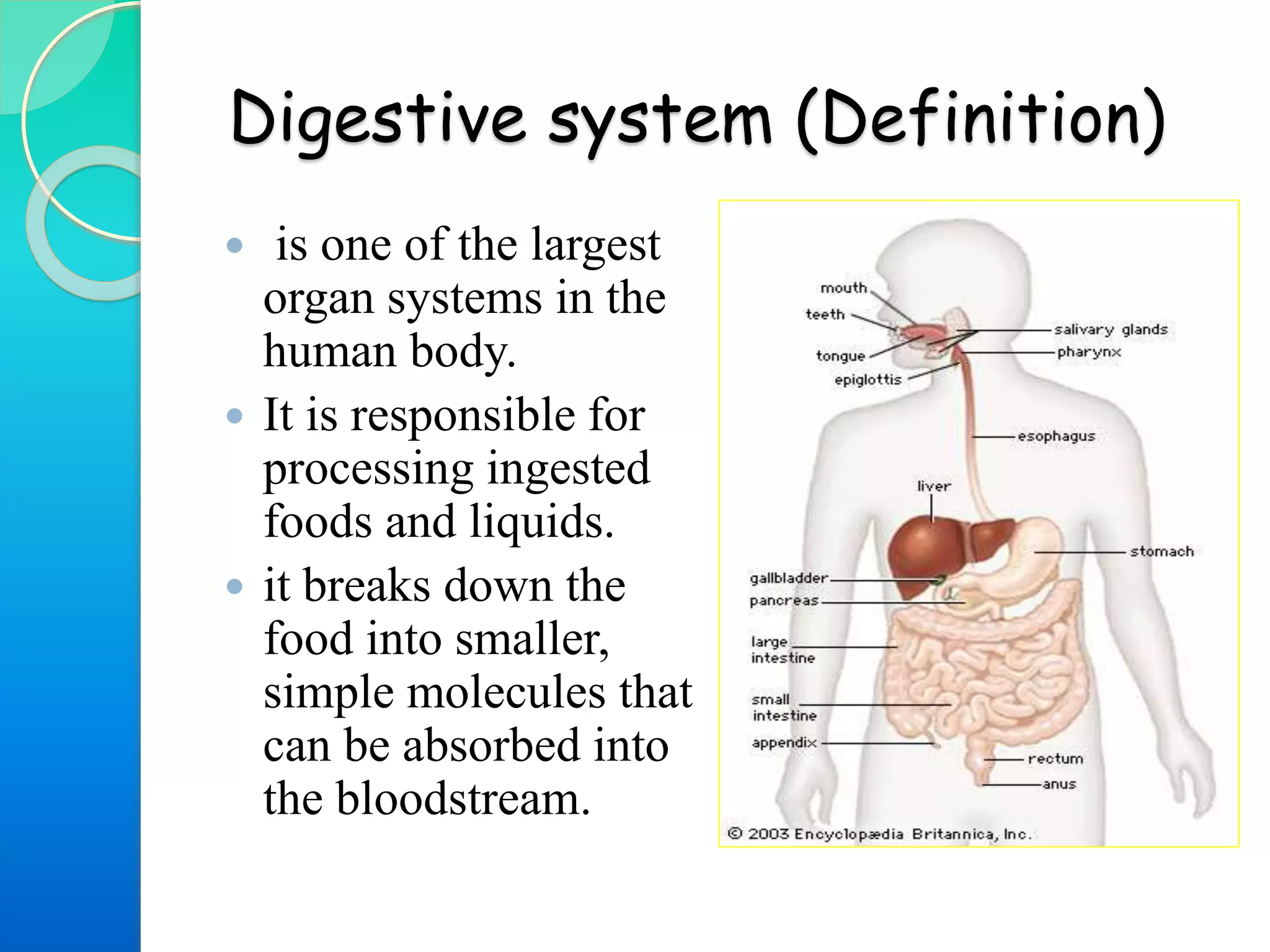
Digestive system (Definition)
 is one of the largest
organ systems in the
human body.
 It is responsible for
processing ingested
foods and liquids.
 it breaks down the
food into smaller,
simple molecules that
can be absorbed into
the bloodstream.

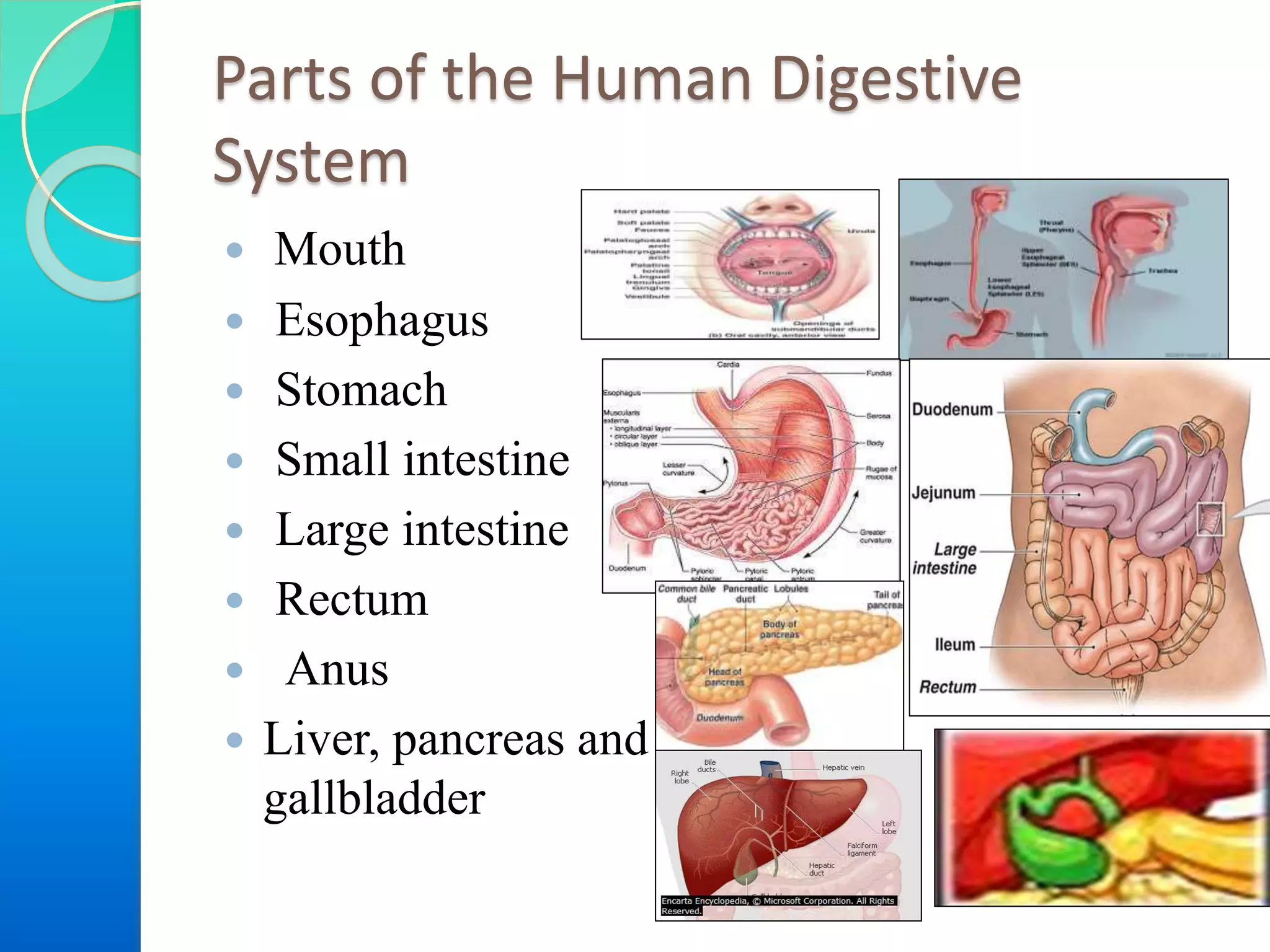
Parts of the Human Digestive
System
 Mouth
 Esophagus
 Stomach
 Small intestine
 Large intestine
 Rectum
 Anus
 Liver, pancreas and
gallbladder

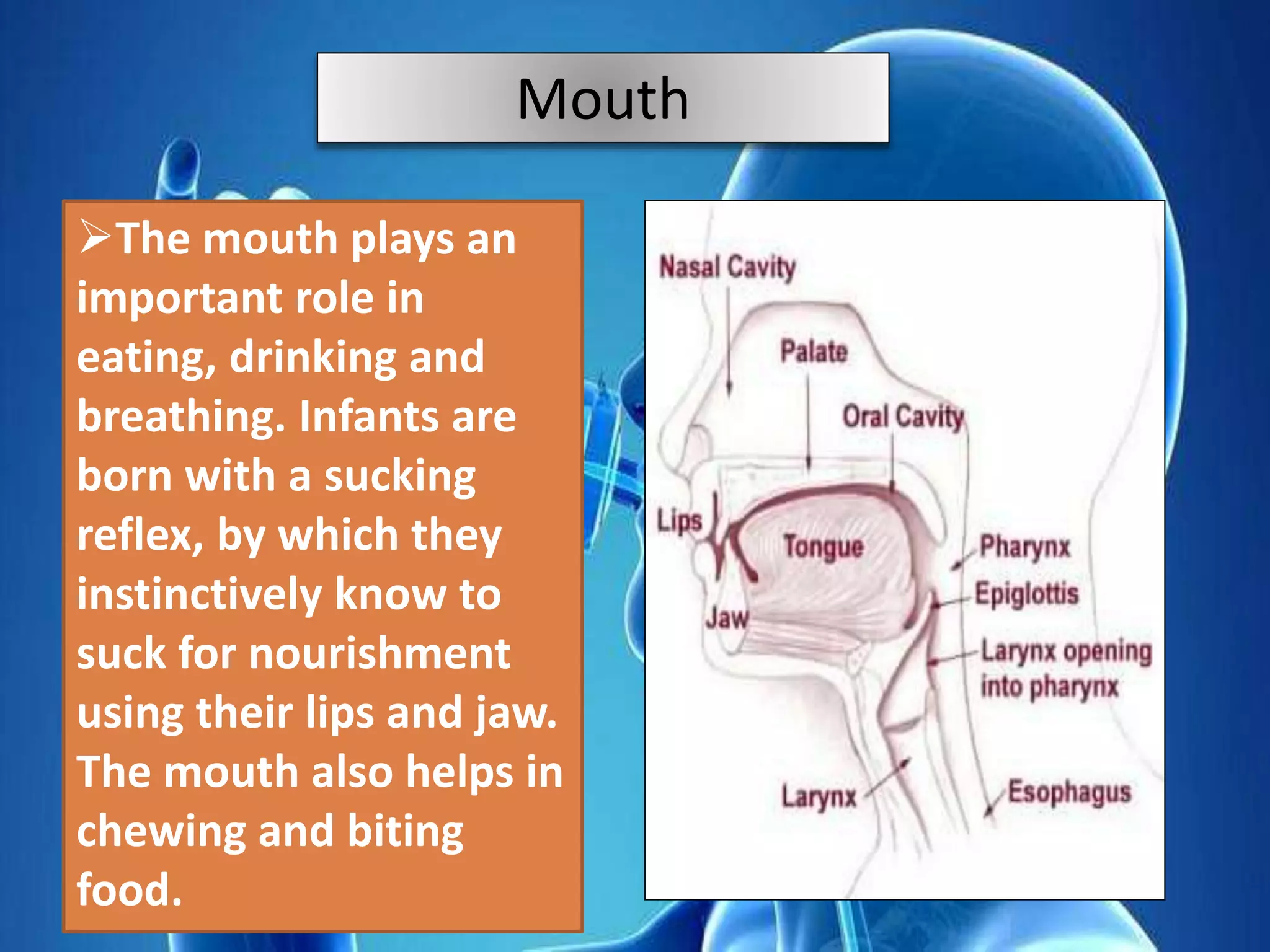
Mouth
The mouth plays an
important role in
eating, drinking and
breathing. Infants are
born with a sucking
reflex, by which they
instinctively know to
suck for nourishment
using their lips and jaw.
The mouth also helps in
chewing and biting
food.
Mouth
Diseases in Mouth
 Tooth decay
Gum
(Periodontal)
Disease
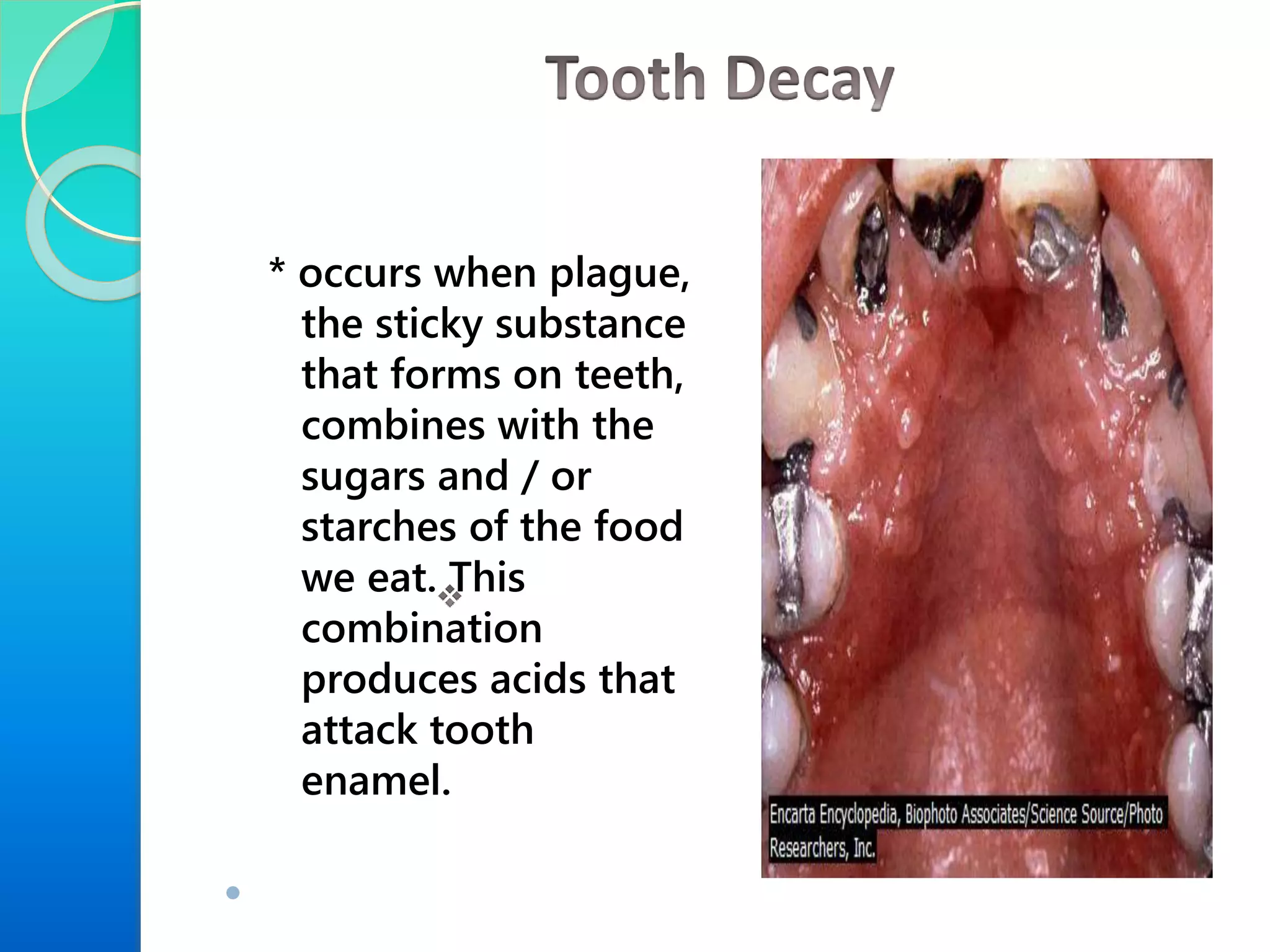
* occurs when plague,
the sticky substance
that forms on teeth,
combines with the
sugars and / or
starches of the food
we eat. This
combination
produces acids that
attack tooth
enamel.

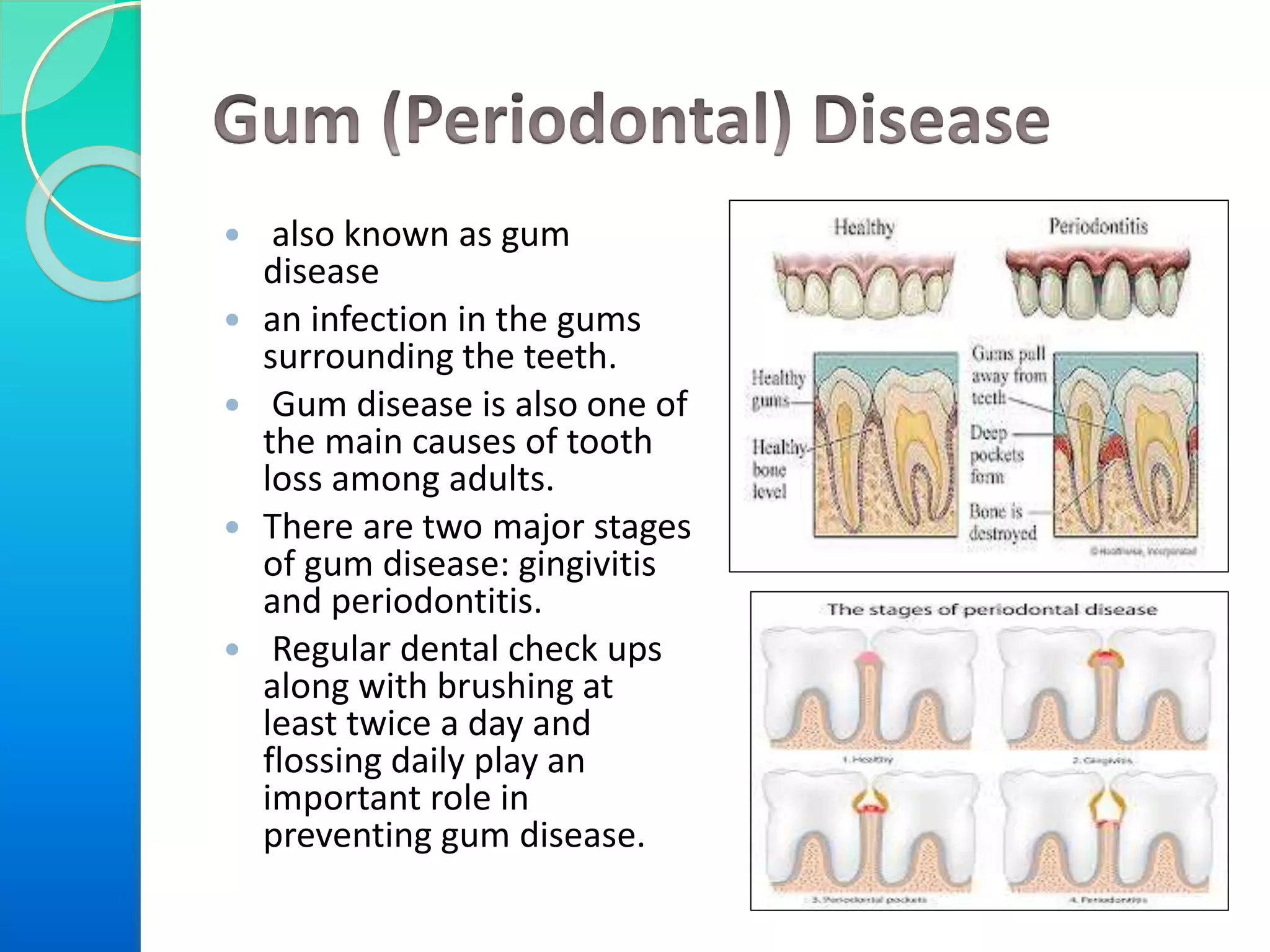
 also known as gum
disease
 an infection in the gums
surrounding the teeth.
 Gum disease is also one of
the main causes of tooth
loss among adults.
 There are two major stages
of gum disease: gingivitis
and periodontitis.
 Regular dental check ups
along with brushing at
least twice a day and
flossing daily play an
important role in
preventing gum disease.
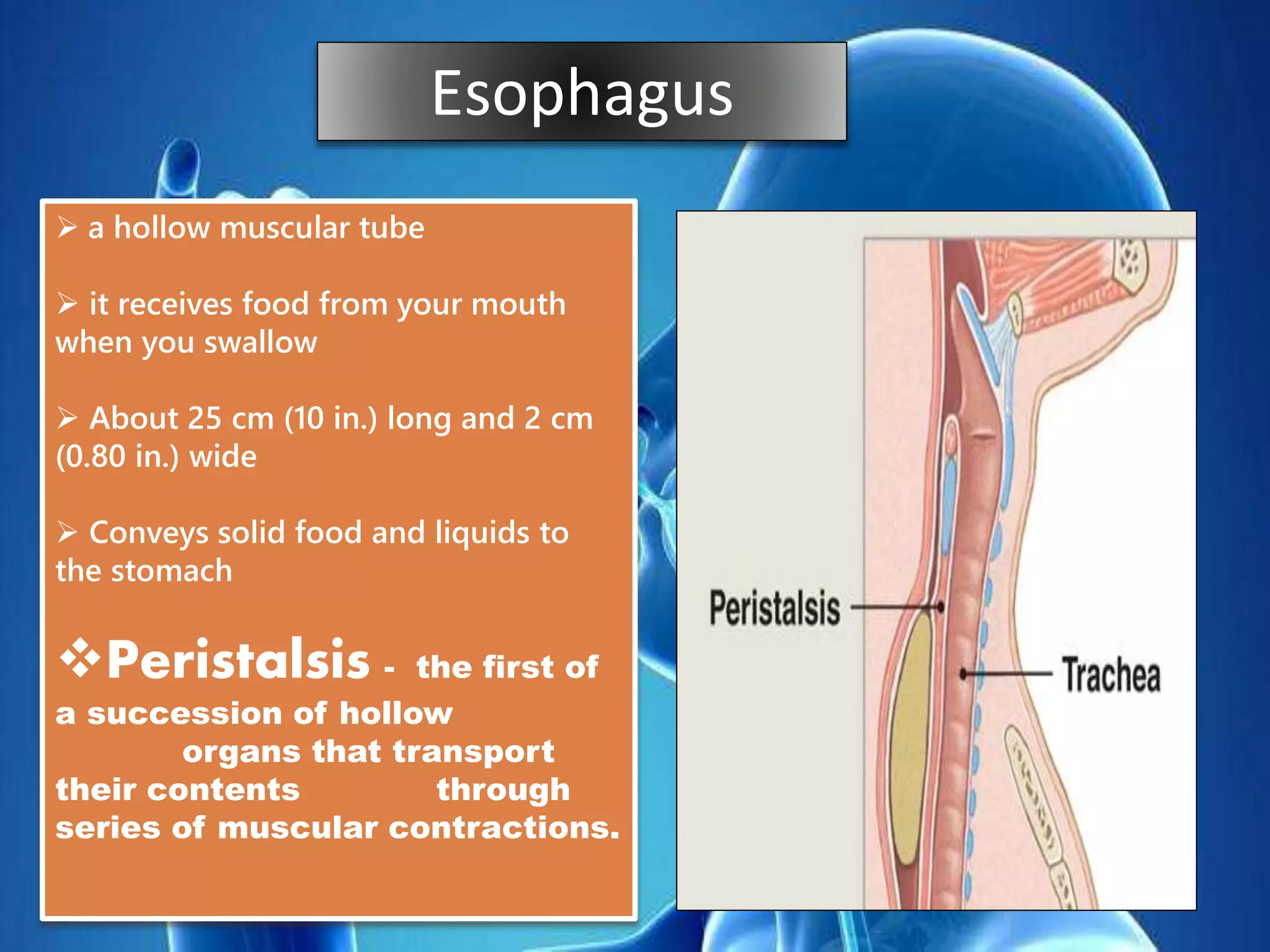
 a hollow muscular tube
 it receives food from your mouth
when you swallow
 About 25 cm (10 in.) long and 2 cm
(0.80 in.) wide
 Conveys solid food and liquids to
the stomach
Peristalsis - the first of
a succession of hollow
organs that transport
their contents through
series of muscular contractions.
Esophagus
Esophagus (function)
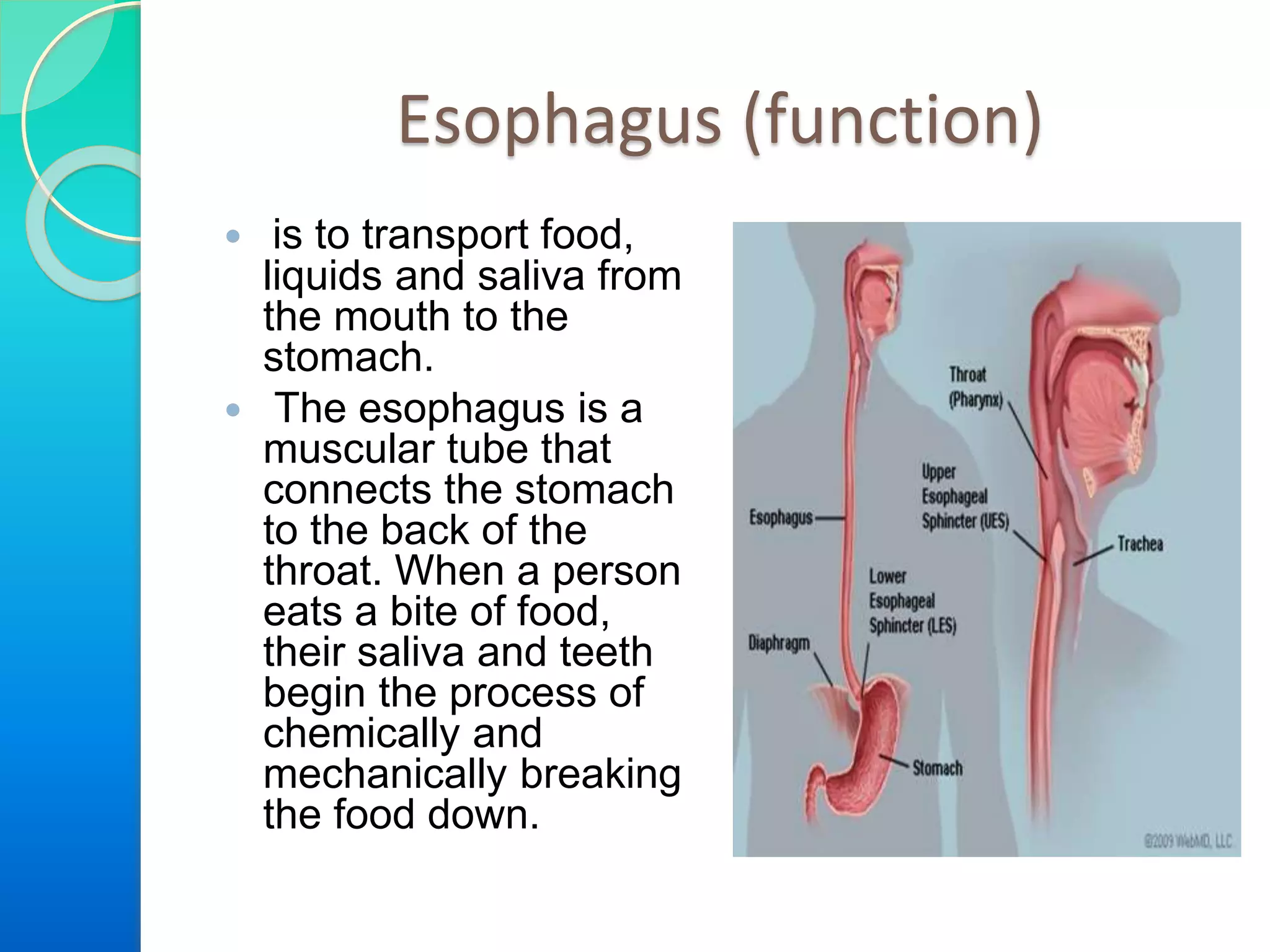
 is to transport food,
liquids and saliva from
the mouth to the
stomach.
 The esophagus is a
muscular tube that
connects the stomach
to the back of the
throat. When a person
eats a bite of food,
their saliva and teeth
begin the process of
chemically and
mechanically breaking
the food down.
Acid Reflux Disease
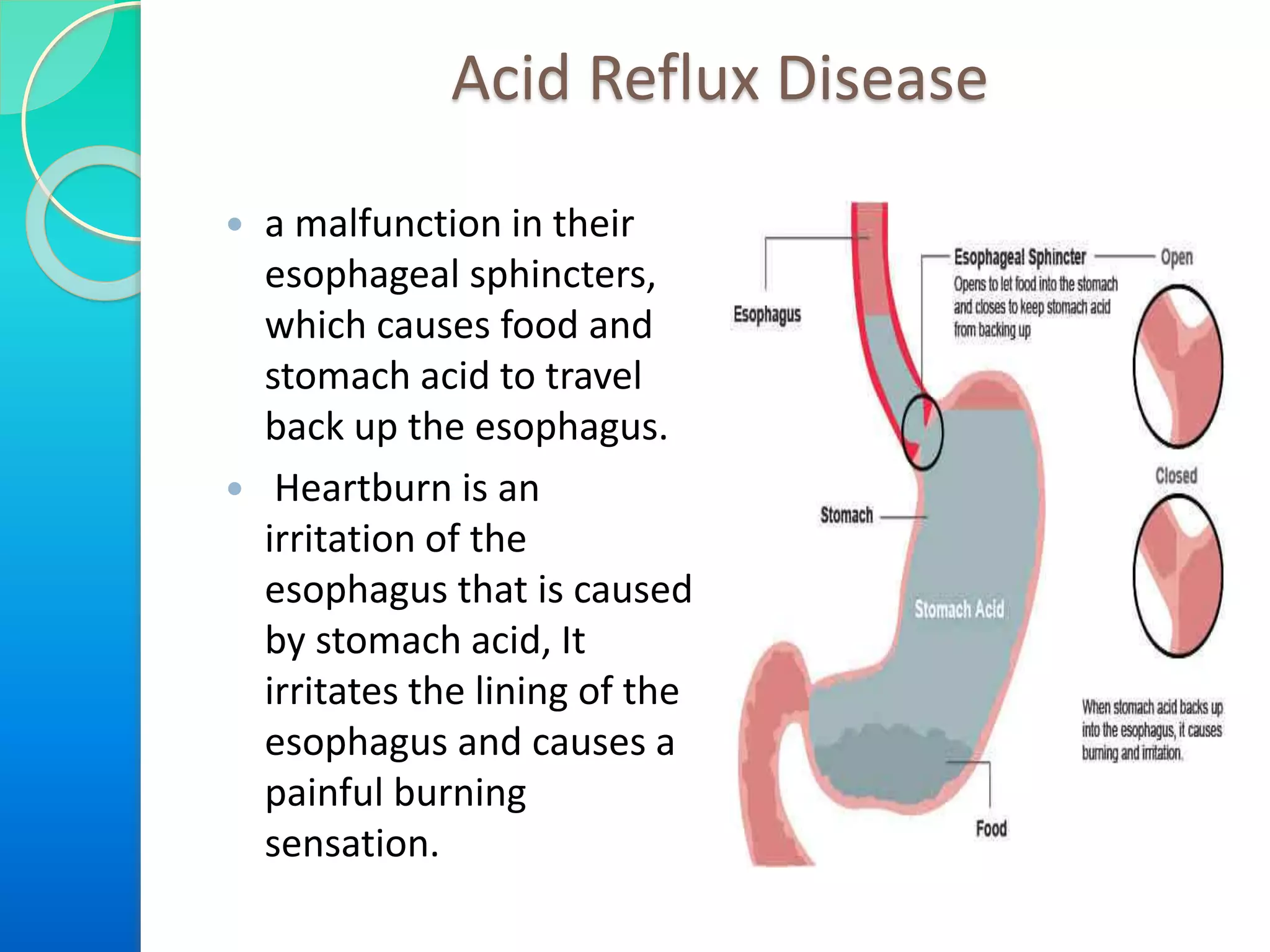
 a malfunction in their
esophageal sphincters,
which causes food and
stomach acid to travel
back up the esophagus.
 Heartburn is an
irritation of the
esophagus that is caused
by stomach acid, It
irritates the lining of the
esophagus and causes a
painful burning
sensation.
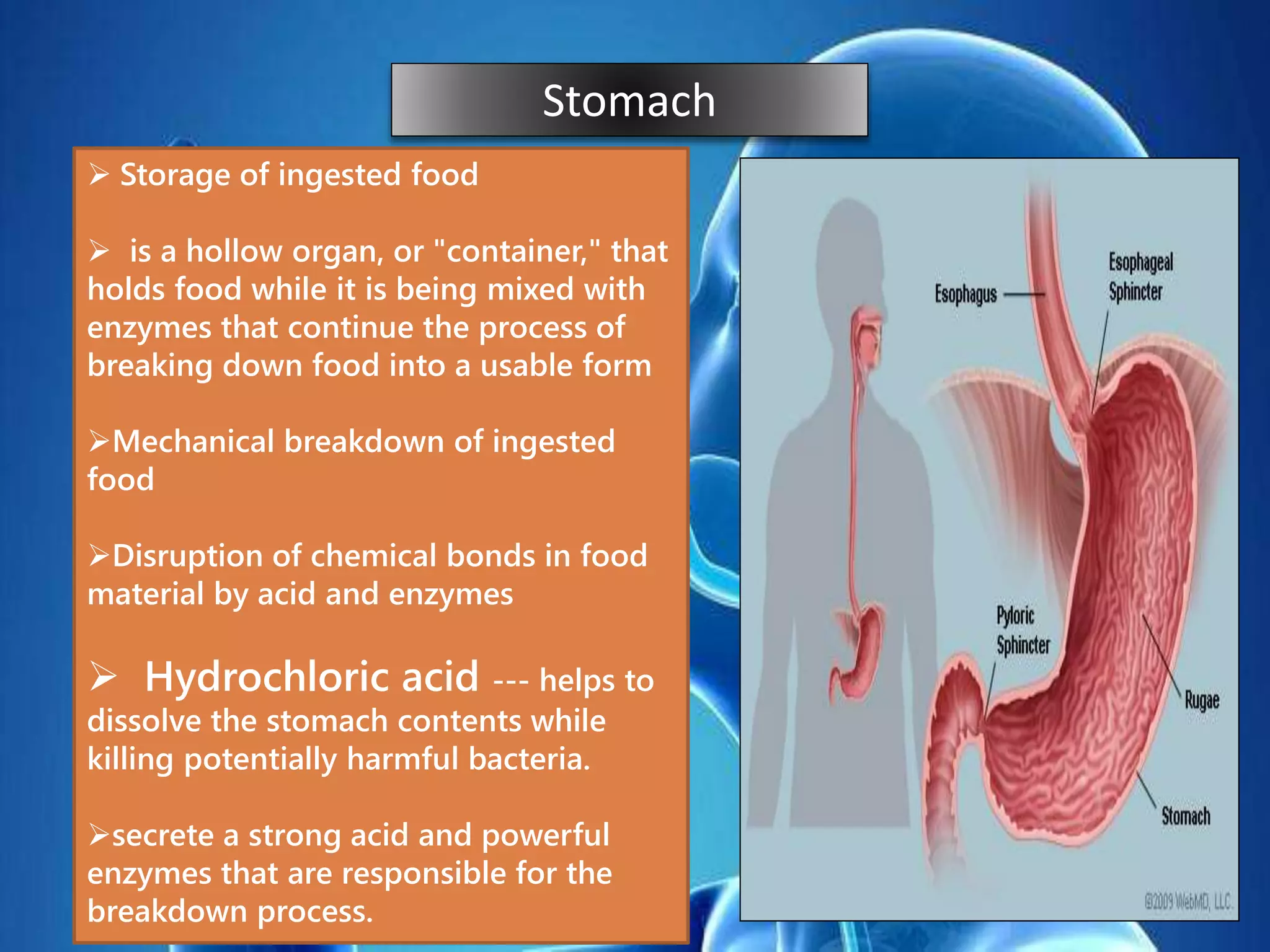
 Storage of ingested food
 is a hollow organ, or "container," that
holds food while it is being mixed with
enzymes that continue the process of
breaking down food into a usable form
Mechanical breakdown of ingested
food
Disruption of chemical bonds in food
material by acid and enzymes
 Hydrochloric acid --- helps to
dissolve the stomach contents while
killing potentially harmful bacteria.
secrete a strong acid and powerful
enzymes that are responsible for the
breakdown process.
Stomach
Diseases In Stomach
 Gastric ulcer
(stomach
ulcer)
 Peptic ulcer
disease
 Gastritis
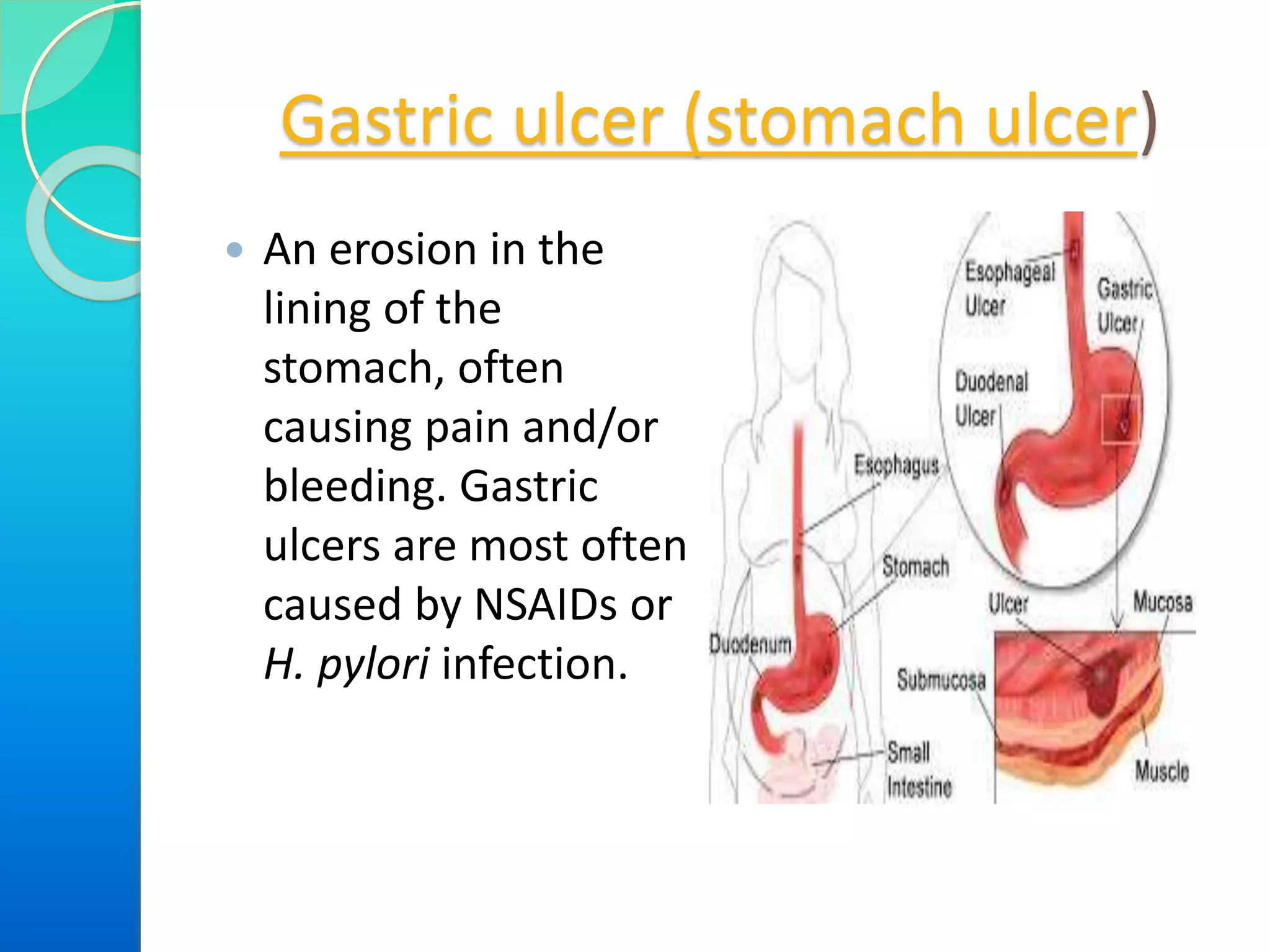
Gastric ulcer (stomach ulcer)
 An erosion in the
lining of the
stomach, often
causing pain and/or
bleeding. Gastric
ulcers are most often
caused by NSAIDs or
H. pylori infection.
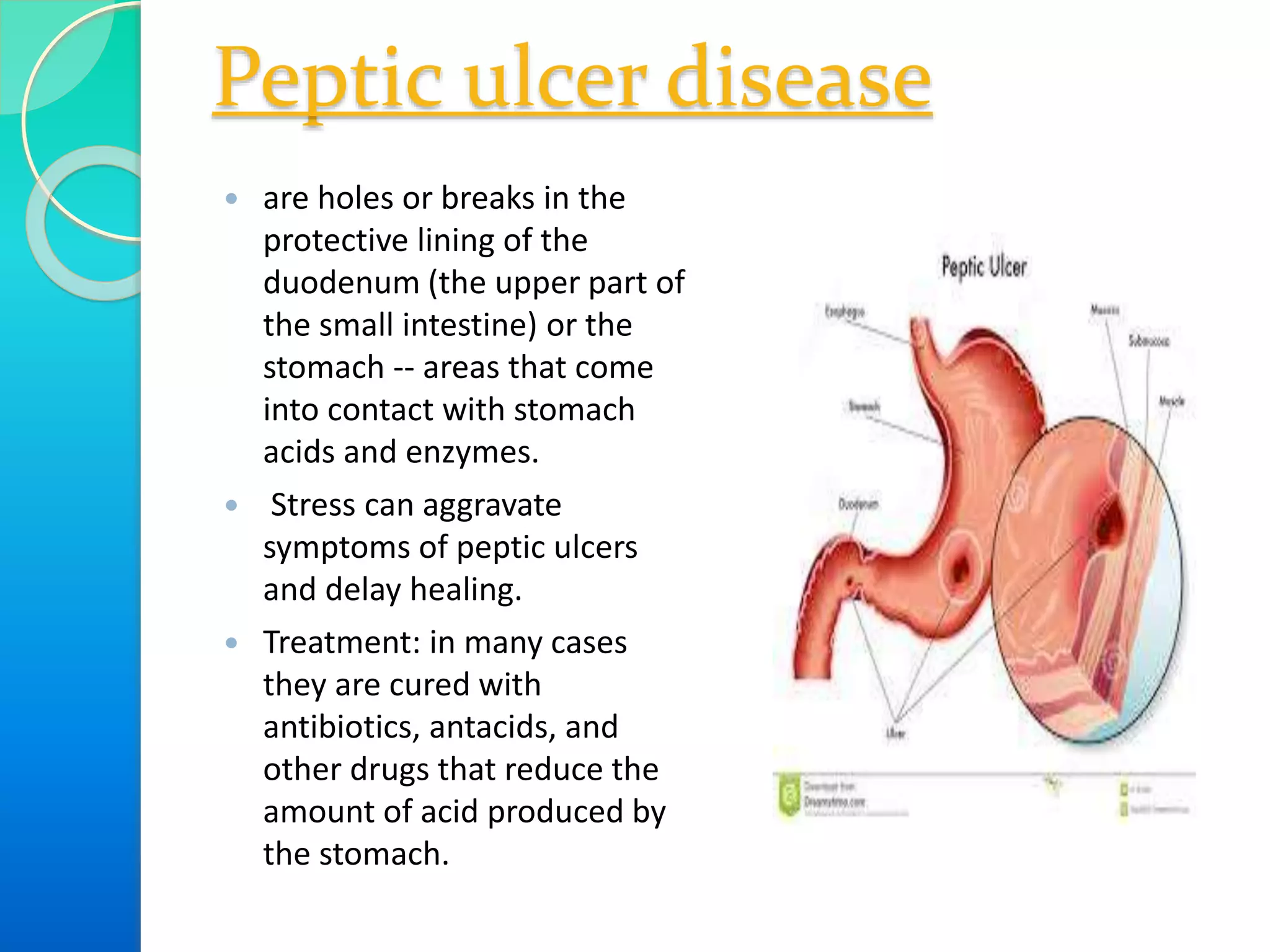
Peptic ulcer disease
 are holes or breaks in the
protective lining of the
duodenum (the upper part of
the small intestine) or the
stomach -- areas that come
into contact with stomach
acids and enzymes.
 Stress can aggravate
symptoms of peptic ulcers
and delay healing.
 Treatment: in many cases
they are cured with
antibiotics, antacids, and
other drugs that reduce the
amount of acid produced by
the stomach.
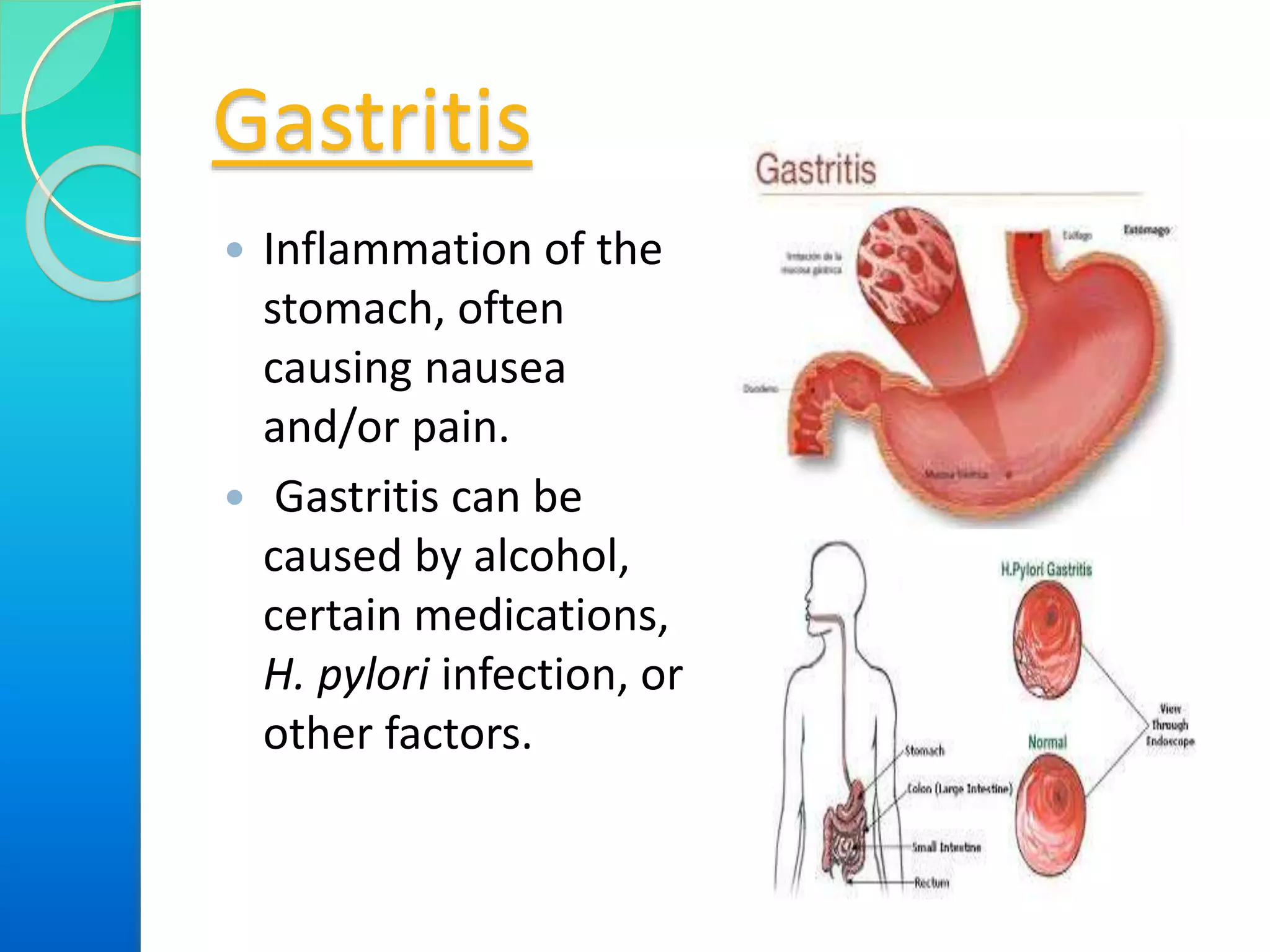
Gastritis
 Inflammation of the
stomach, often
causing nausea
and/or pain.
 Gastritis can be
caused by alcohol,
certain medications,
H. pylori infection, or
other factors.
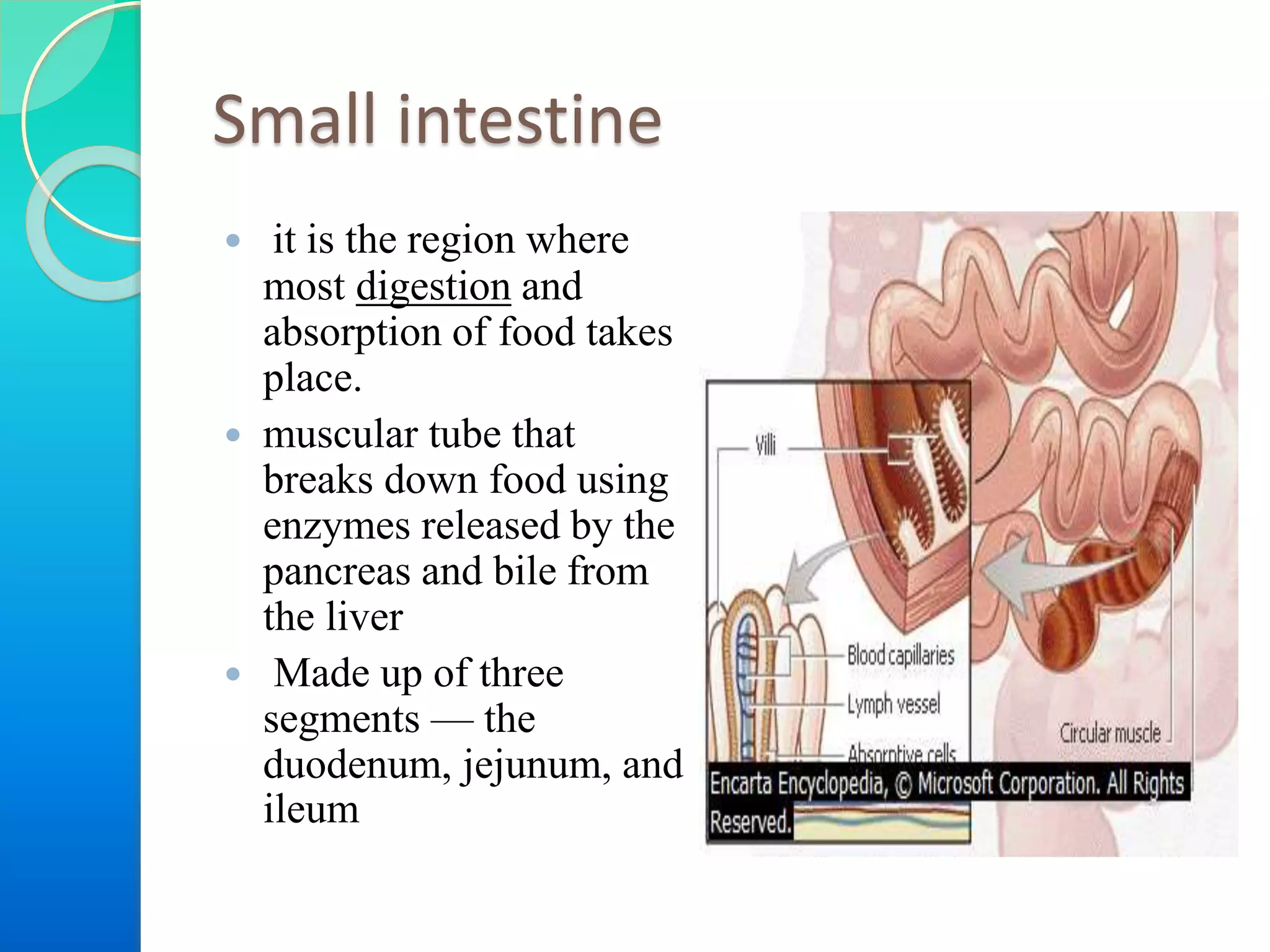
Small intestine
 it is the region where
most digestion and
absorption of food takes
place.
 muscular tube that
breaks down food using
enzymes released by the
pancreas and bile from
the liver
 Made up of three
segments — the
duodenum, jejunum, and
ileum
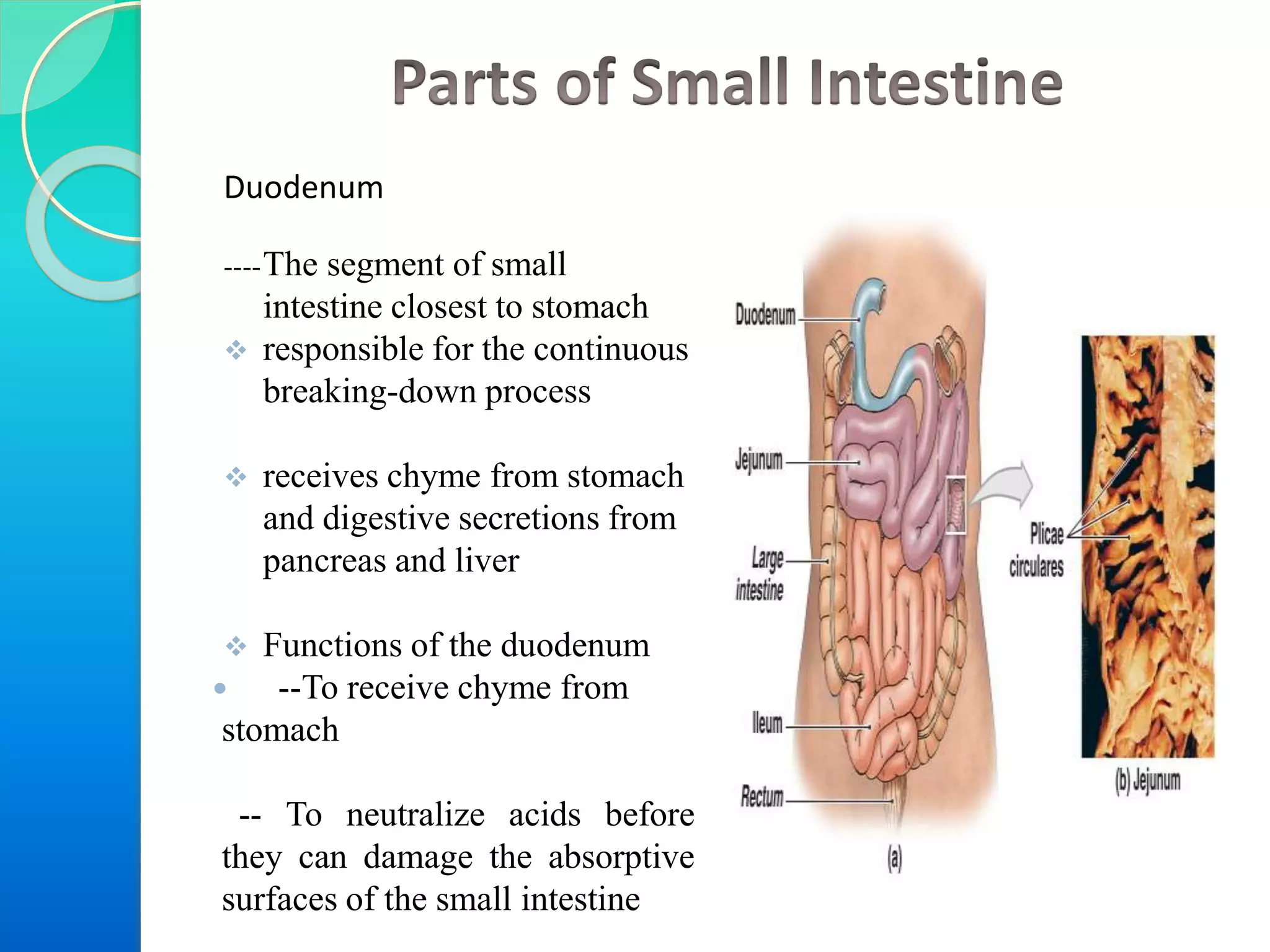
Duodenum
----The segment of small
intestine closest to stomach
 responsible for the continuous
breaking-down process
 receives chyme from stomach
and digestive secretions from
pancreas and liver
 Functions of the duodenum
 --To receive chyme from
stomach
-- To neutralize acids before
they can damage the absorptive
surfaces of the small intestine

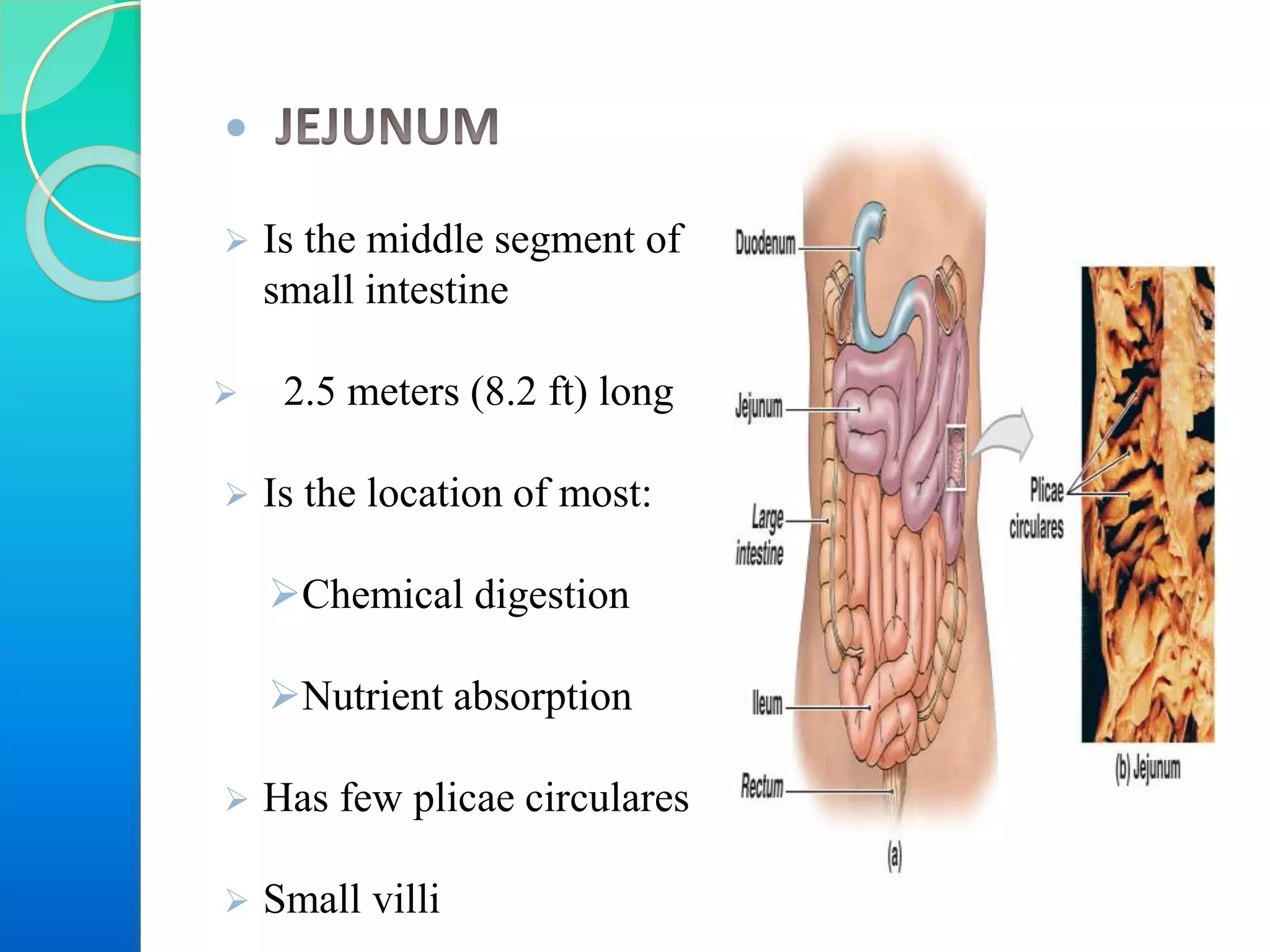
 Is the middle segment of
small intestine
 2.5 meters (8.2 ft) long
 Is the location of most:
Chemical digestion
Nutrient absorption
 Has few plicae circulares
 Small villi


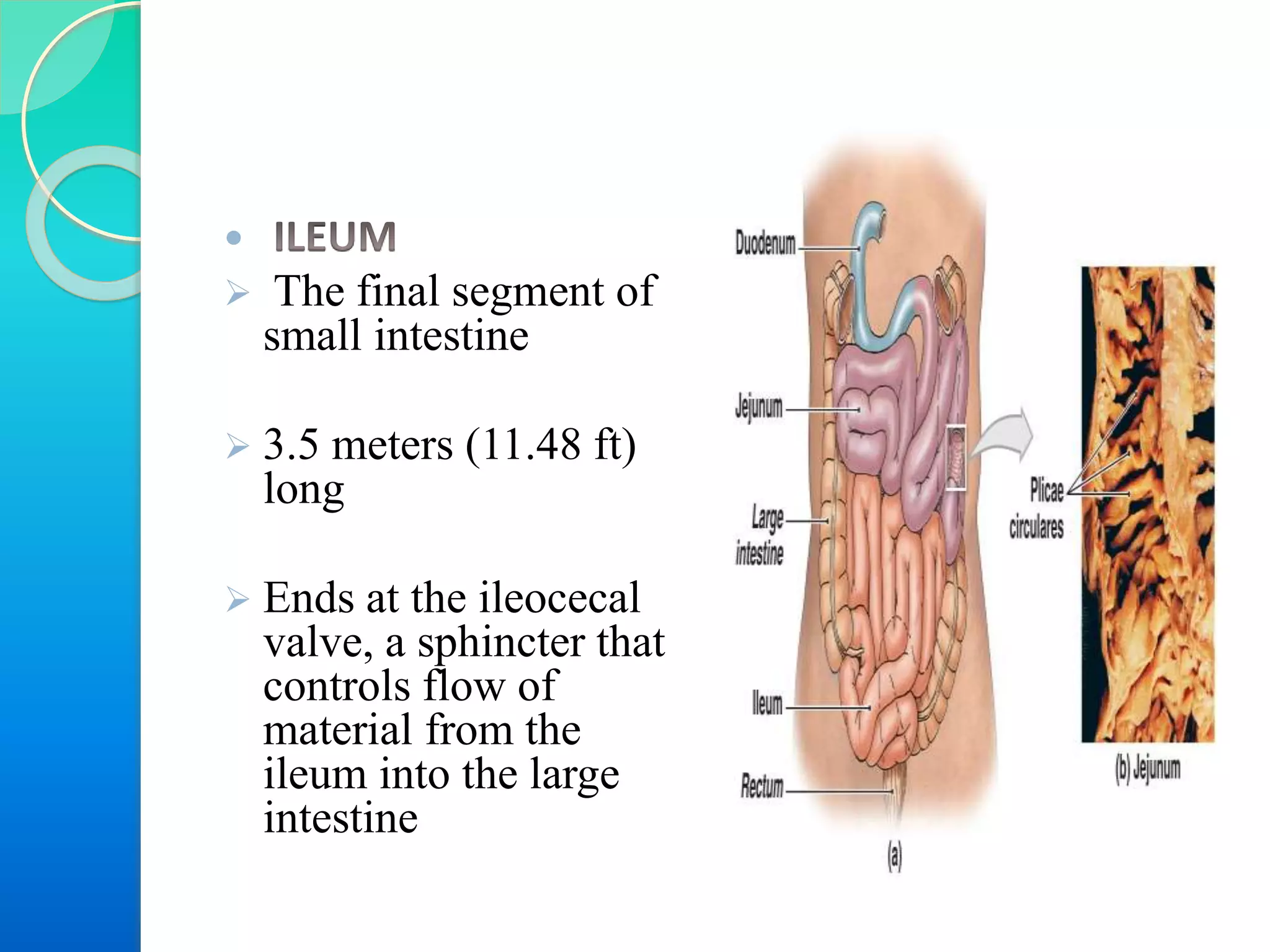
 The final segment of
small intestine
 3.5 meters (11.48 ft)
long
 Ends at the ileocecal
valve, a sphincter that
controls flow of
material from the
ileum into the large
intestine

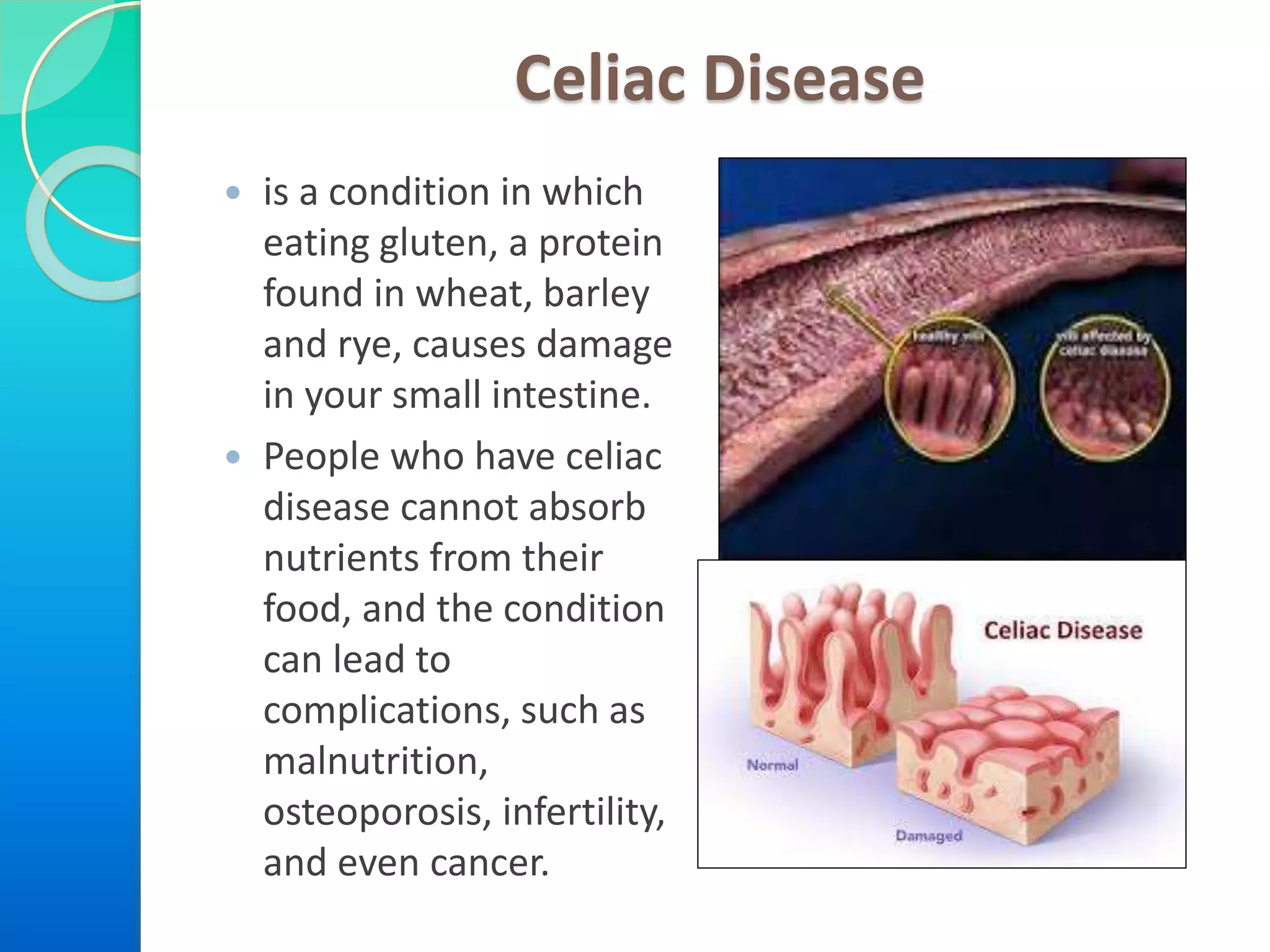
Celiac Disease
 is a condition in which
eating gluten, a protein
found in wheat, barley
and rye, causes damage
in your small intestine.
 People who have celiac
disease cannot absorb
nutrients from their
food, and the condition
can lead to
complications, such as
malnutrition,
osteoporosis, infertility,
and even cancer.
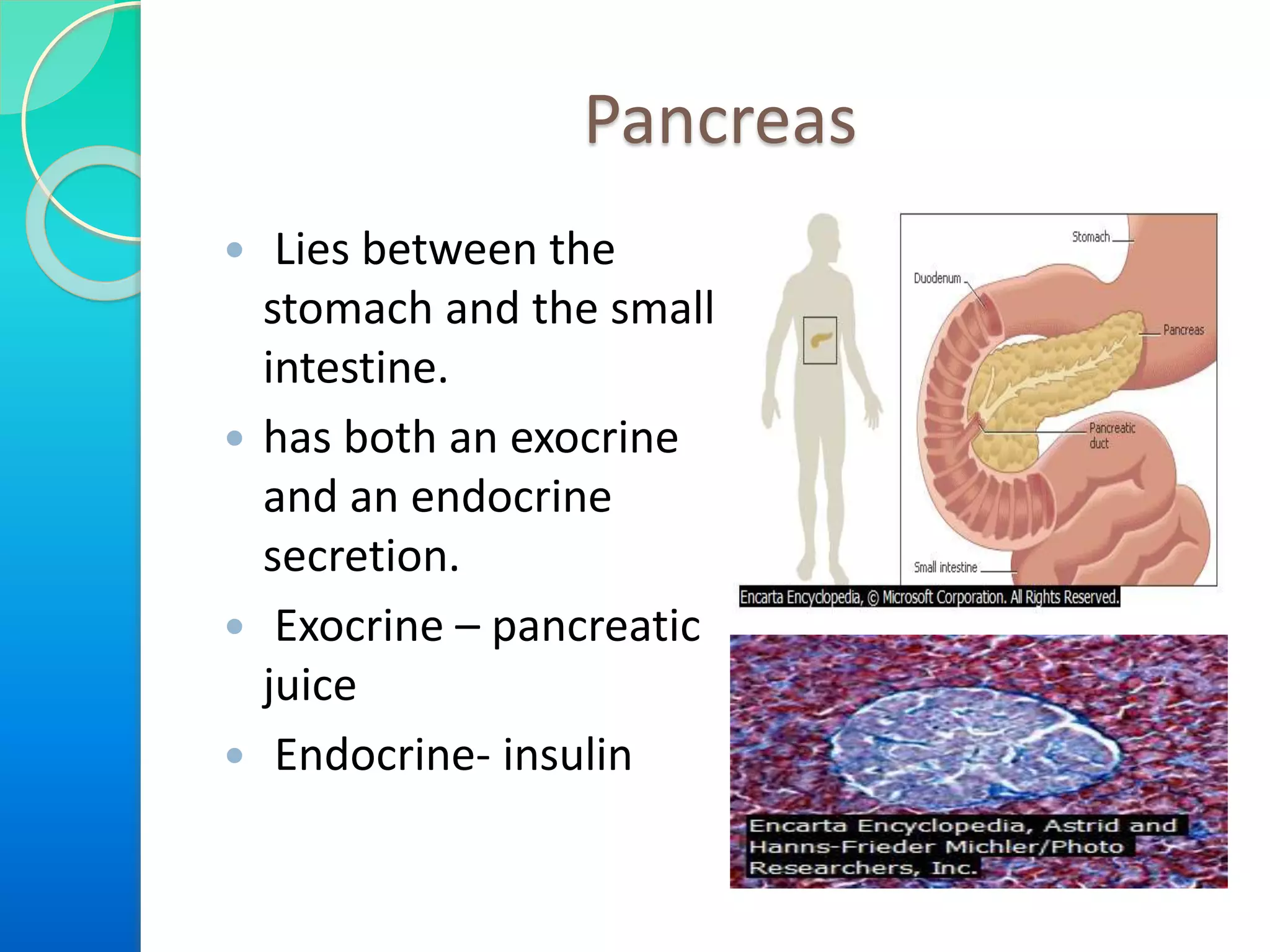
Pancreas
 Lies between the
stomach and the small
intestine.
 has both an exocrine
and an endocrine
secretion.
 Exocrine – pancreatic
juice
 Endocrine- insulin
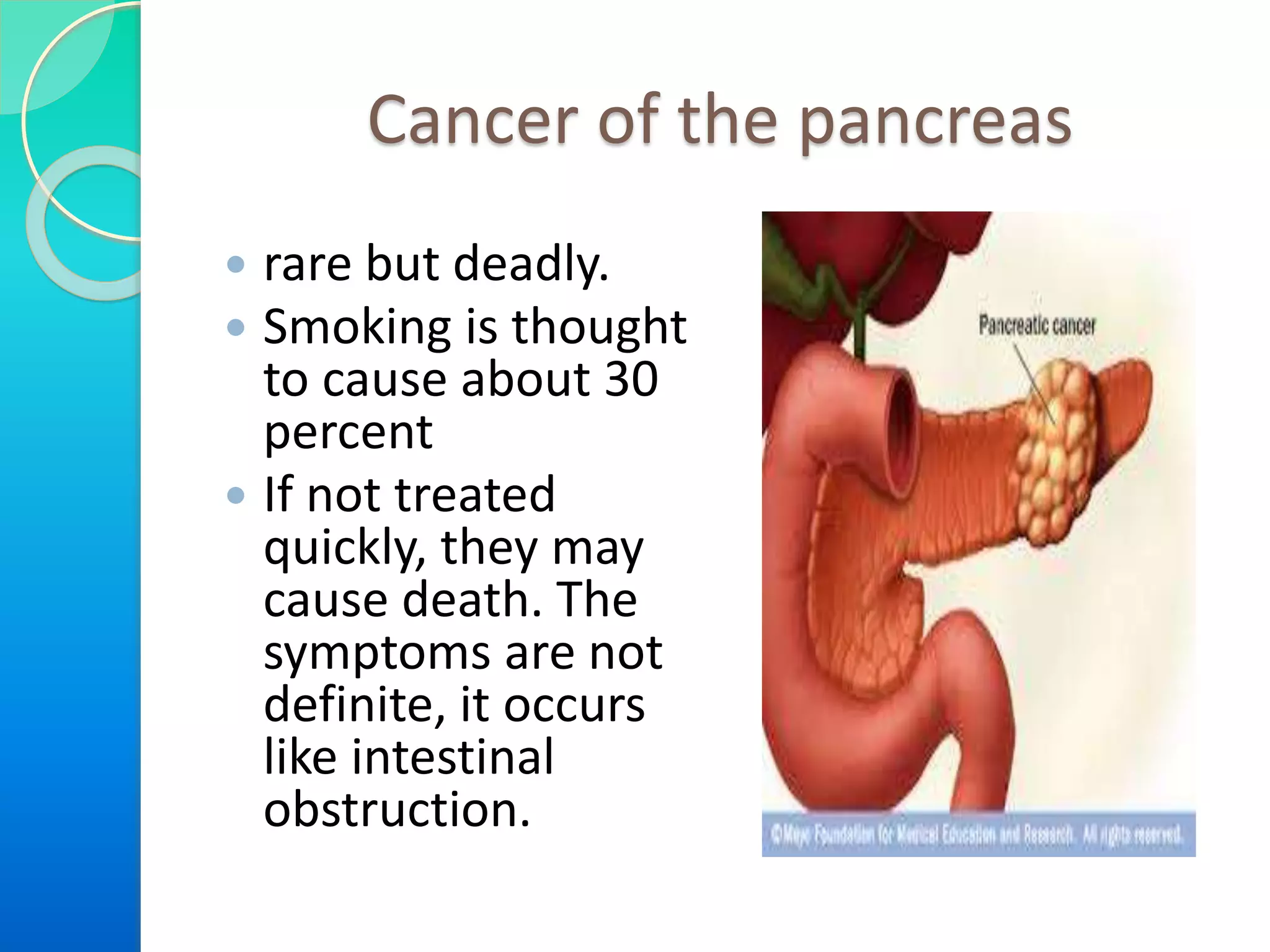
Cancer of the pancreas
 rare but deadly.
 Smoking is thought
to cause about 30
percent
 If not treated
quickly, they may
cause death. The
symptoms are not
definite, it occurs
like intestinal
obstruction.
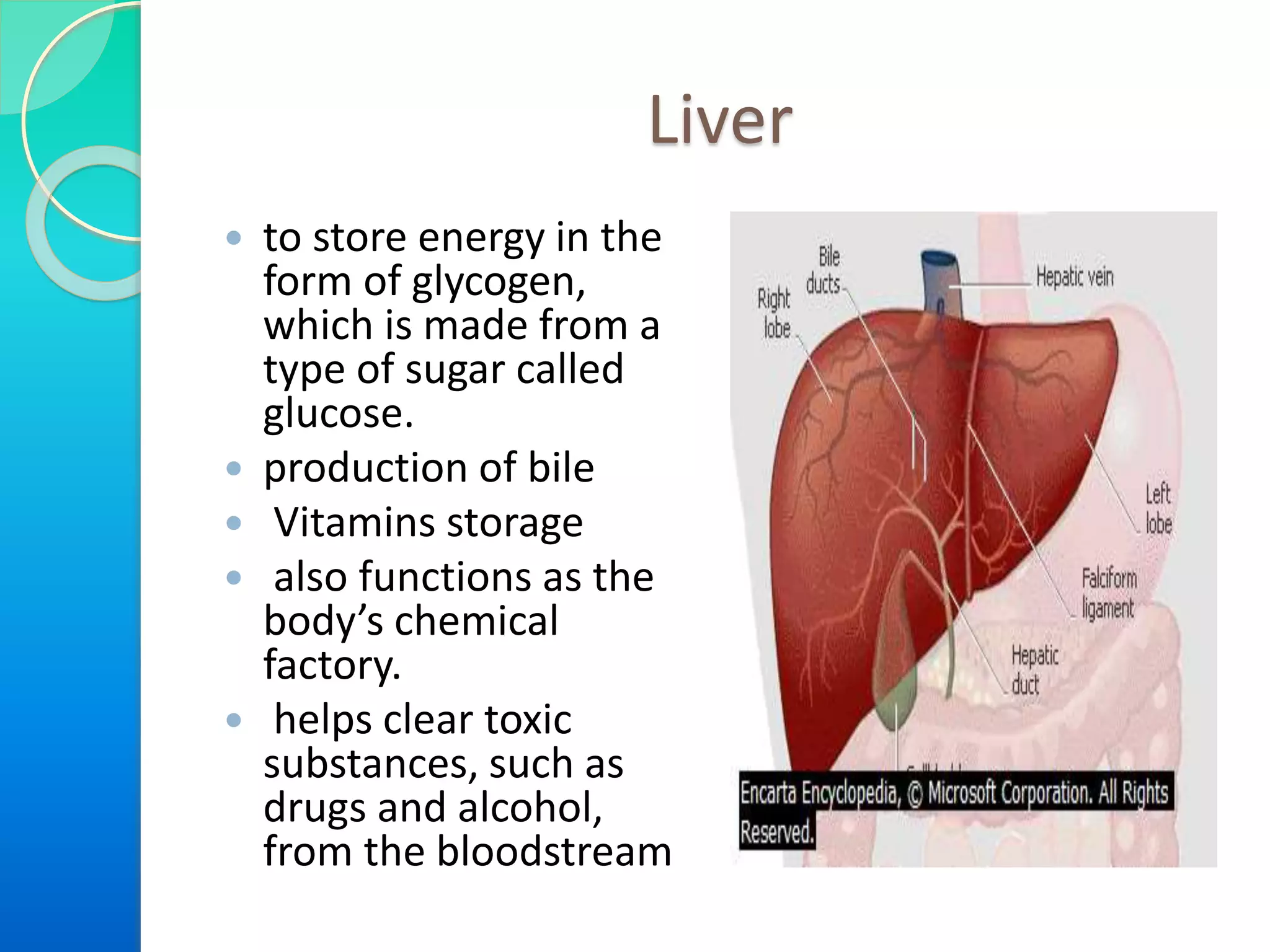
Liver
 to store energy in the
form of glycogen,
which is made from a
type of sugar called
glucose.
 production of bile
 Vitamins storage
 also functions as the
body’s chemical
factory.
 helps clear toxic
substances, such as
drugs and alcohol,
from the bloodstream
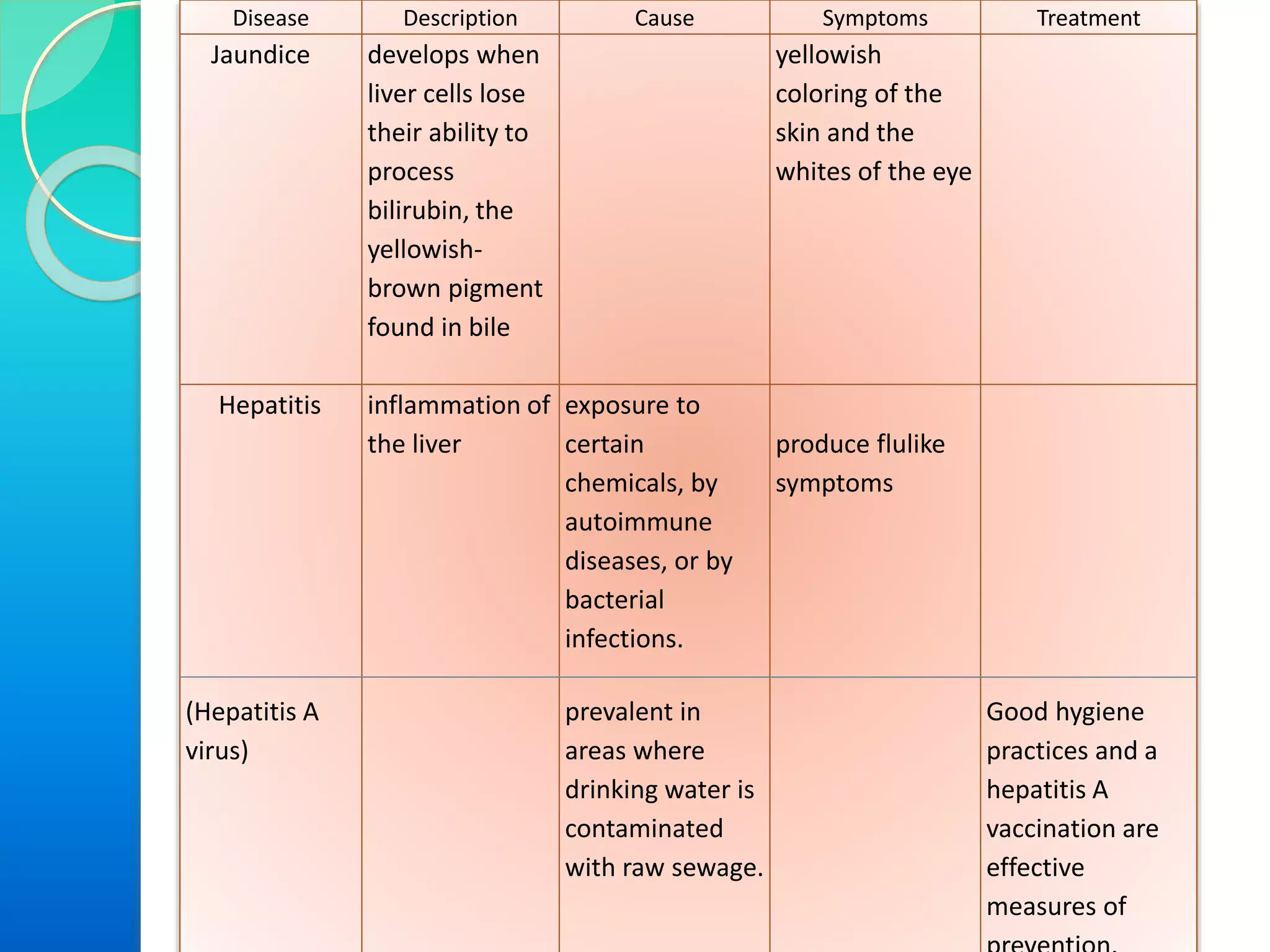
Disease Description Cause Symptoms Treatment
Jaundice develops when
liver cells lose
their ability to
process
bilirubin, the
yellowish-
brown pigment
found in bile
yellowish
coloring of the
skin and the
whites of the eye
Hepatitis
(Hepatitis A
virus)
inflammation of
the liver
exposure to
certain
chemicals, by
autoimmune
diseases, or by
bacterial
infections.
prevalent in
areas where
drinking water is
contaminated
with raw sewage.
produce flulike
symptoms
Good hygiene
practices and a
hepatitis A
vaccination are
effective
measures of
(Hepatitis B
virus)
permanently
damaging the
liver.
HBV is found
in blood and
other body
fluids—tears,
saliva, and
semen
unprotected
sexual
intercourse
and the
sharing of
infected
needles or
other sharp
objects that
puncture the
skin.
.
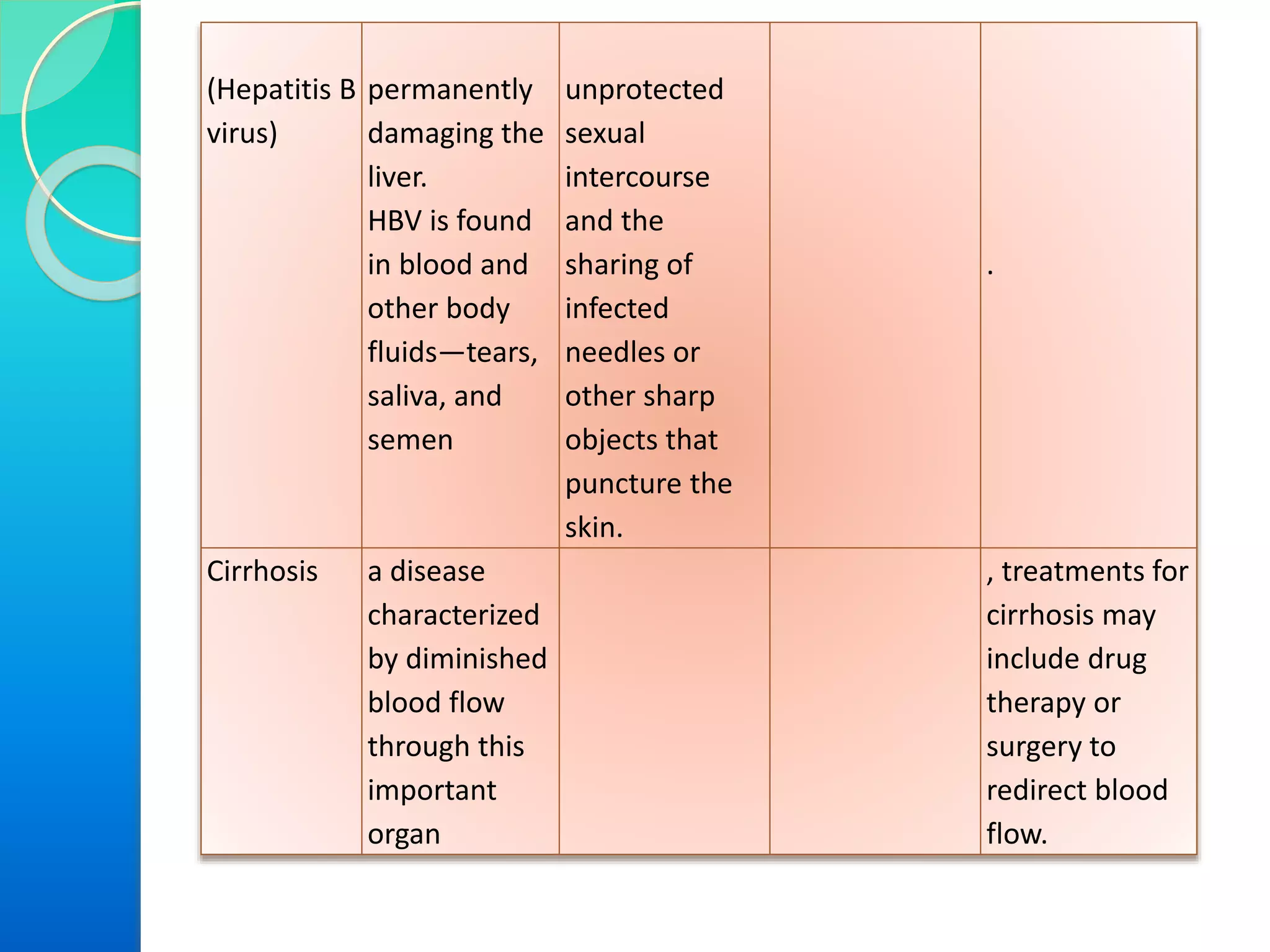
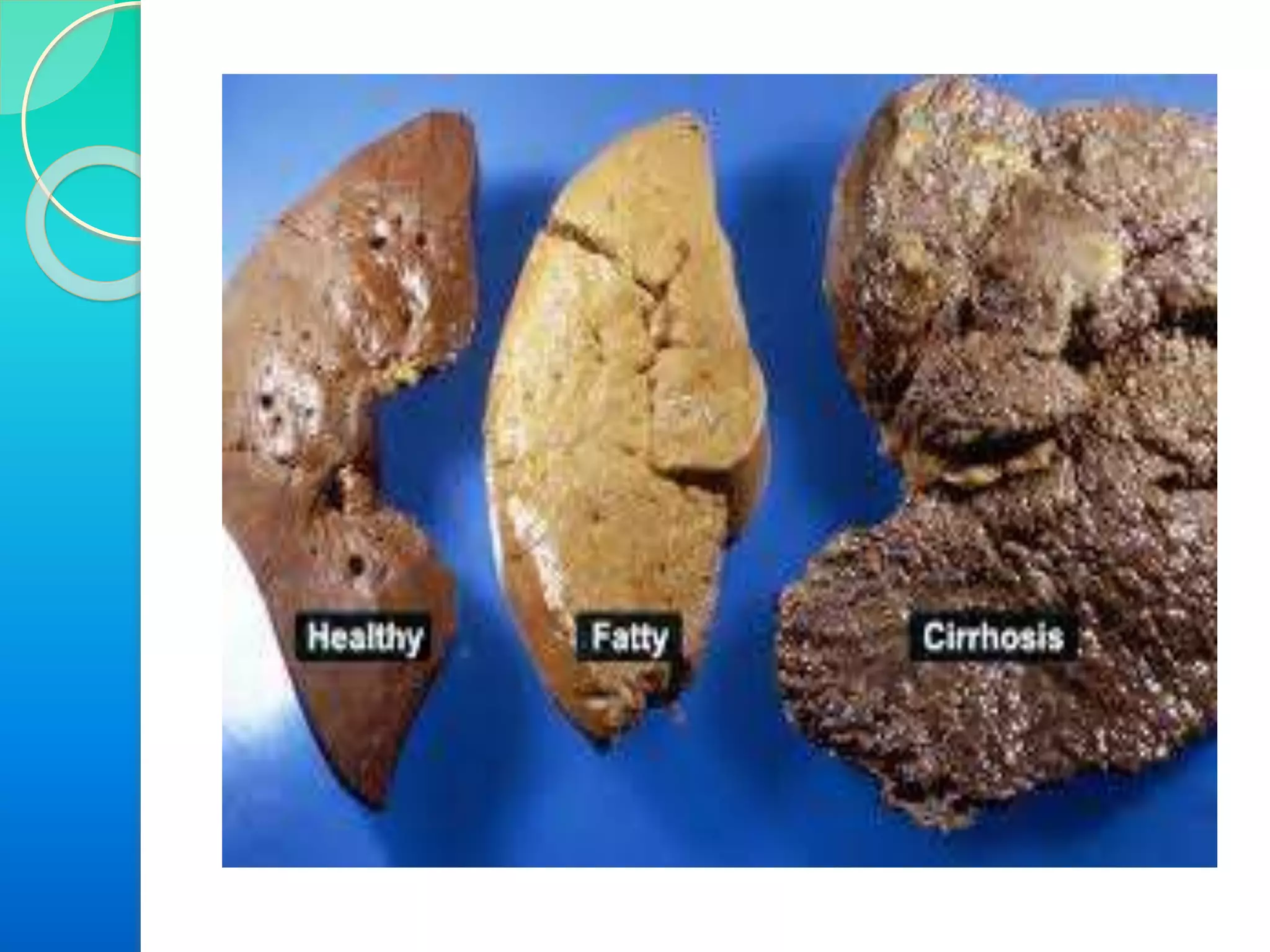
Cirrhosis a disease
characterized
by diminished
blood flow
through this
important
organ
, treatments for
cirrhosis may
include drug
therapy or
surgery to
redirect blood
flow.
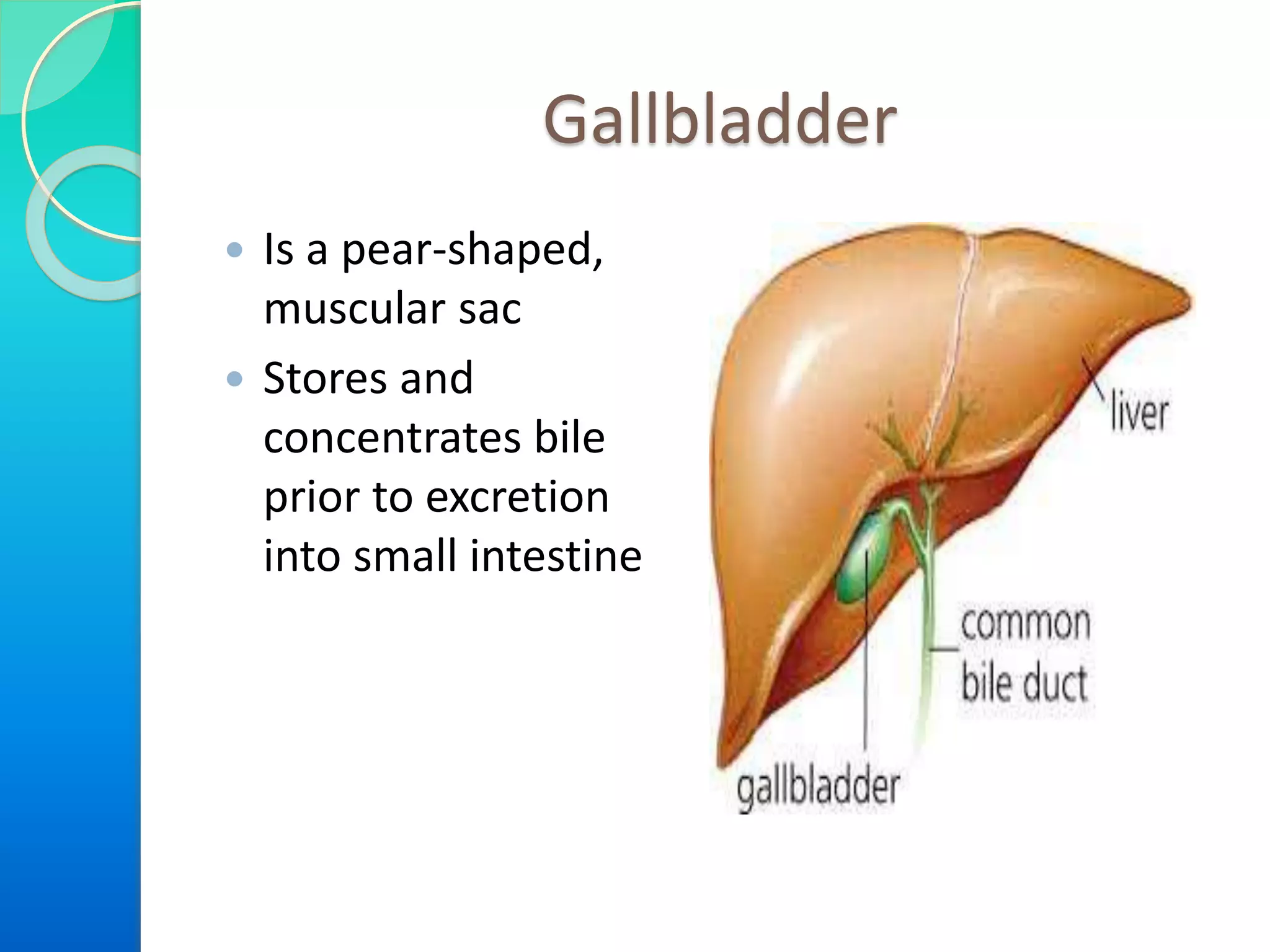
Gallbladder
 Is a pear-shaped,
muscular sac
 Stores and
concentrates bile
prior to excretion
into small intestine
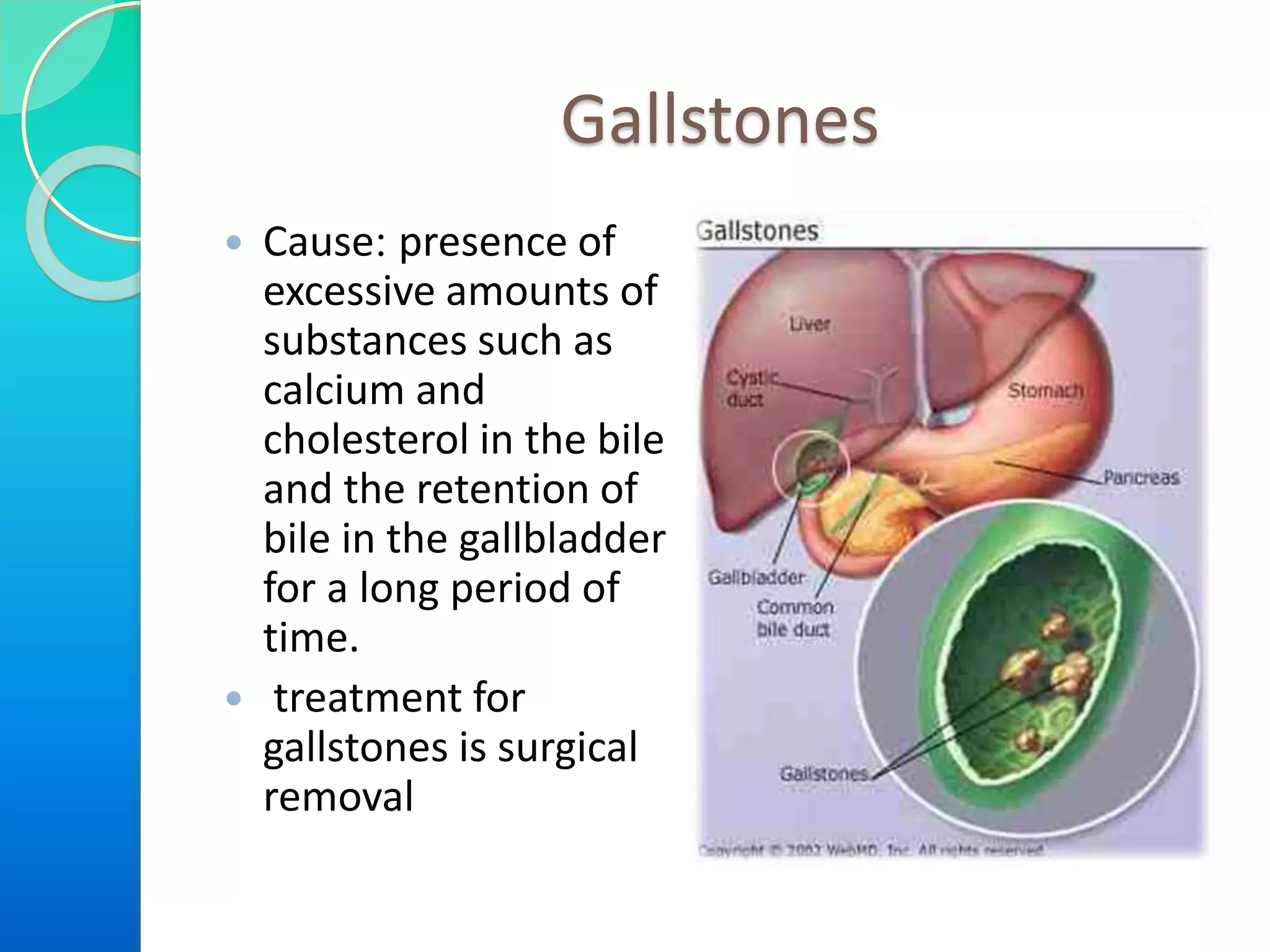
Gallstones
 Cause: presence of
excessive amounts of
substances such as
calcium and
cholesterol in the bile
and the retention of
bile in the gallbladder
for a long period of
time.
 treatment for
gallstones is surgical
removal
Large intestine(function)
 Re-absorption of
water and salts.
 Compaction of
intestinal contents
into feces
 Absorption of
important vitamins
 Storage of fecal
material prior to
defecation
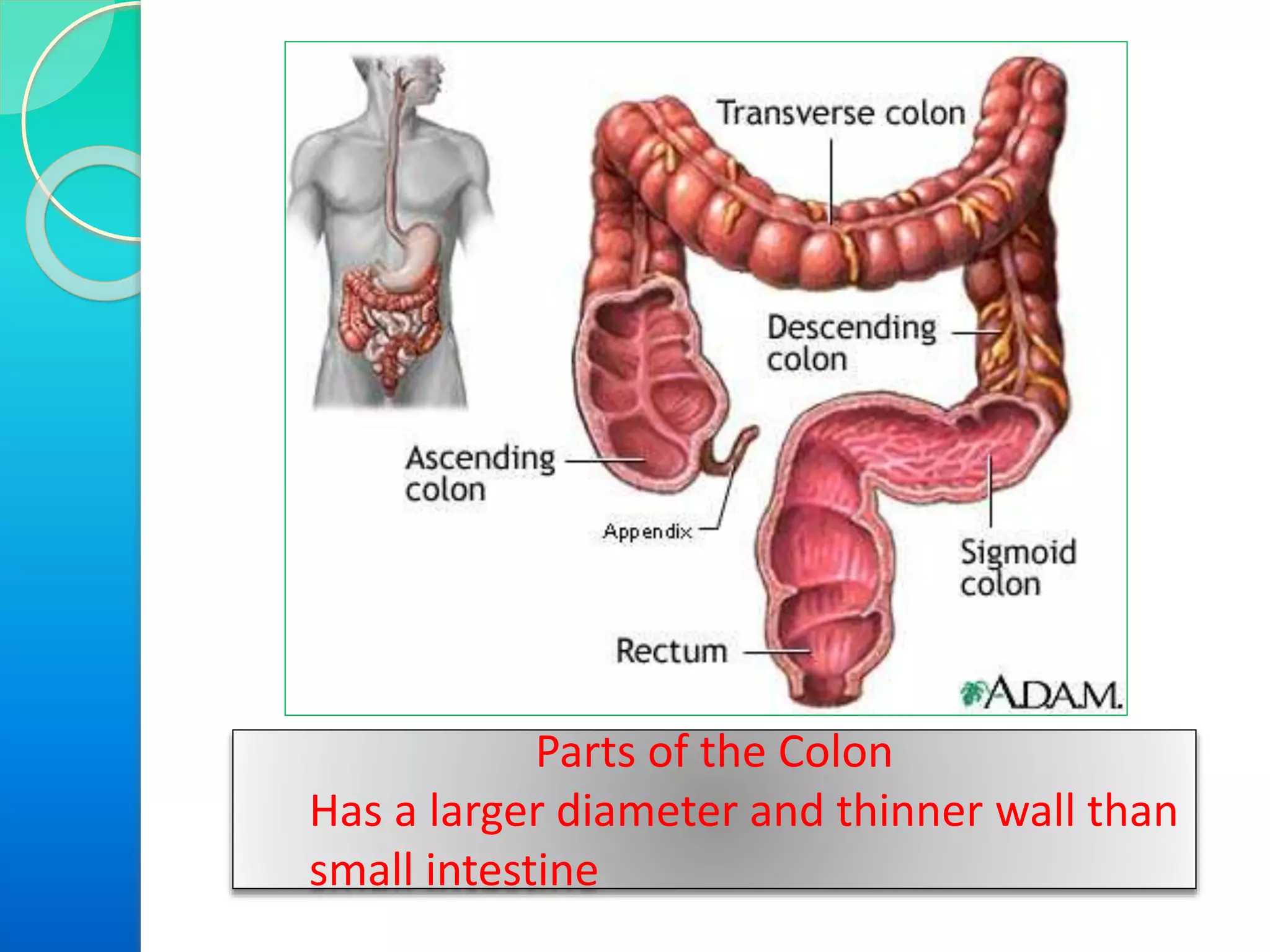
Parts of the Colon
Has a larger diameter and thinner wall than
small intestine
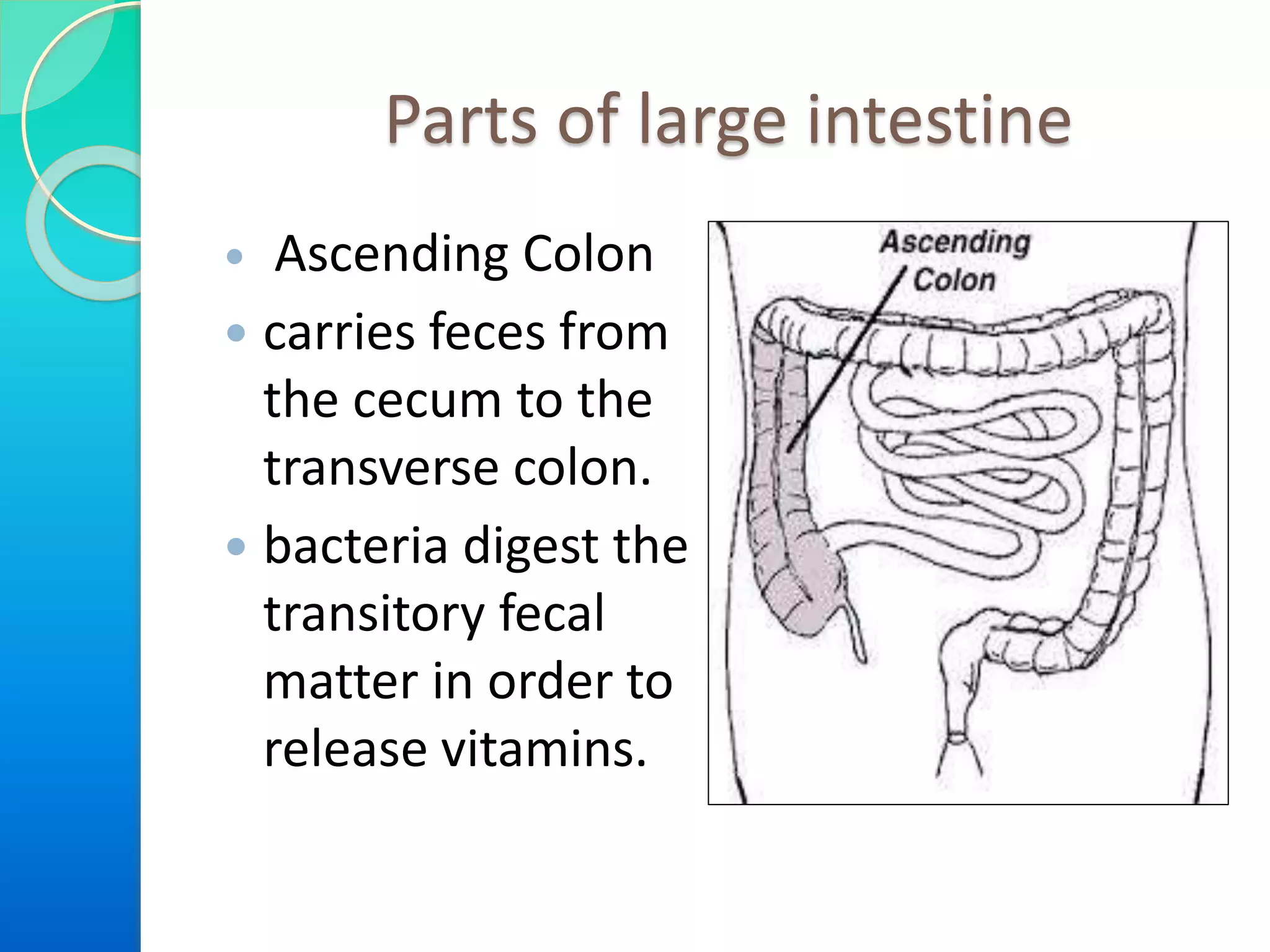
Parts of large intestine
 Ascending Colon
 carries feces from
the cecum to the
transverse colon.
 bacteria digest the
transitory fecal
matter in order to
release vitamins.

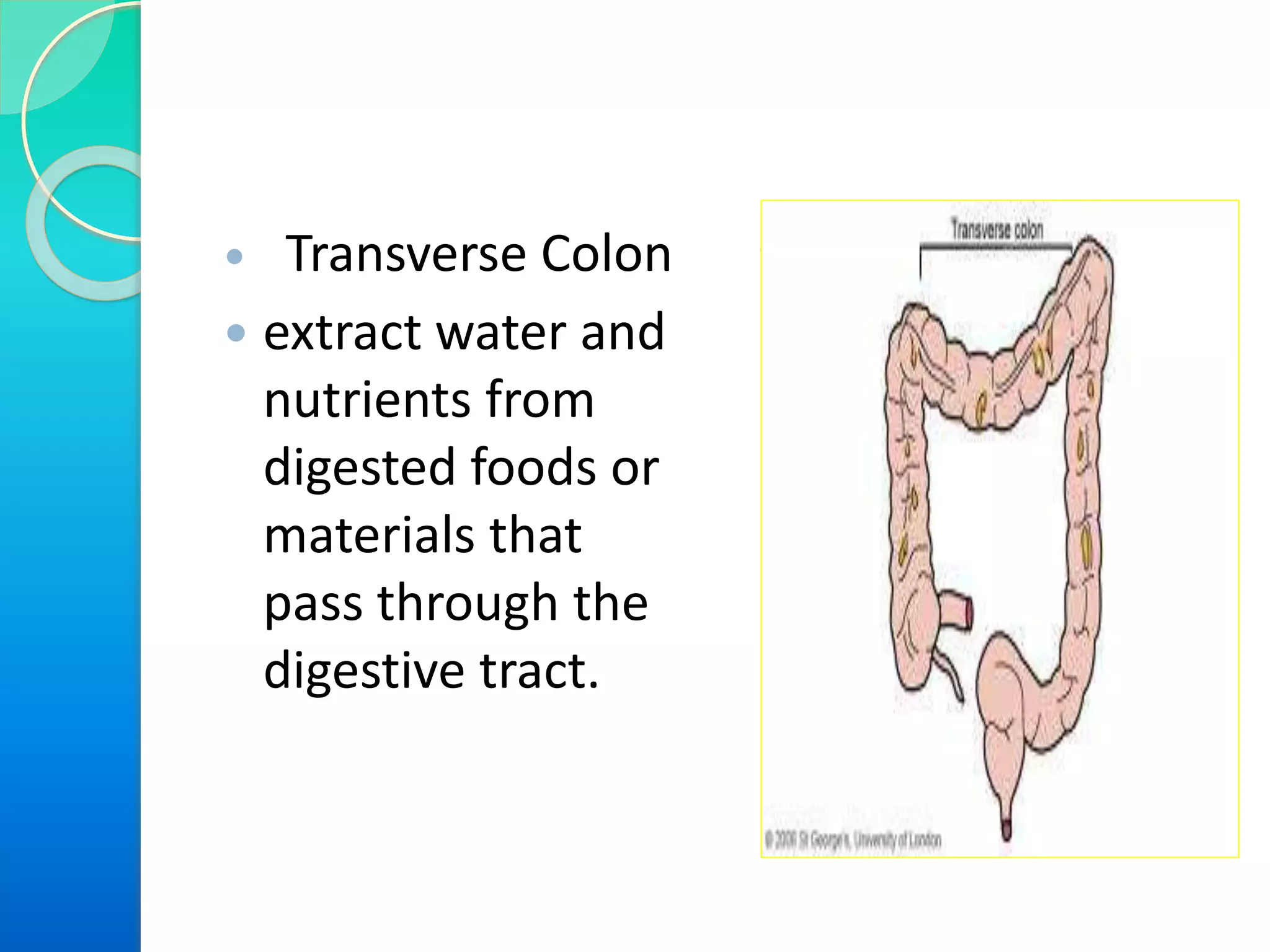
 Transverse Colon
 extract water and
nutrients from
digested foods or
materials that
pass through the
digestive tract.

 Descending Colon
 absorb water from
fecal matter
 store the remains
of digested food
that will be
emptied into the
rectum.

 Sigmoid Colon
 the S-shaped
portion of the
large intestine
 to store fecal
wastes until they
are ready to leave
the body

Diseases in Large Intestine
 Appendicitis
 Constipation
 Chron’s disease
 Ulcerative Colitis
 Diverticulitis
 Flatulence
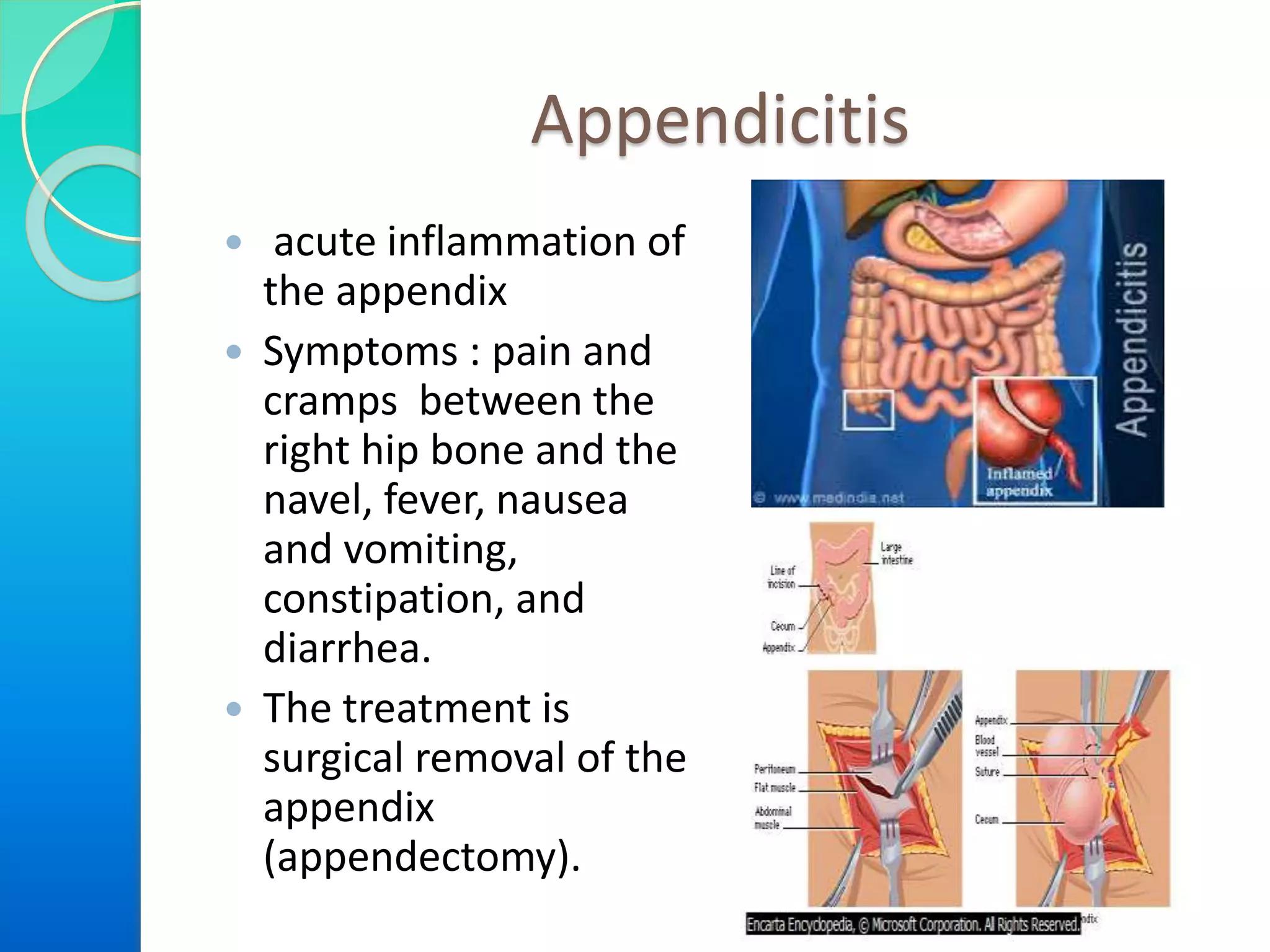
Appendicitis
 acute inflammation of
the appendix
 Symptoms : pain and
cramps between the
right hip bone and the
navel, fever, nausea
and vomiting,
constipation, and
diarrhea.
 The treatment is
surgical removal of the
appendix
(appendectomy).

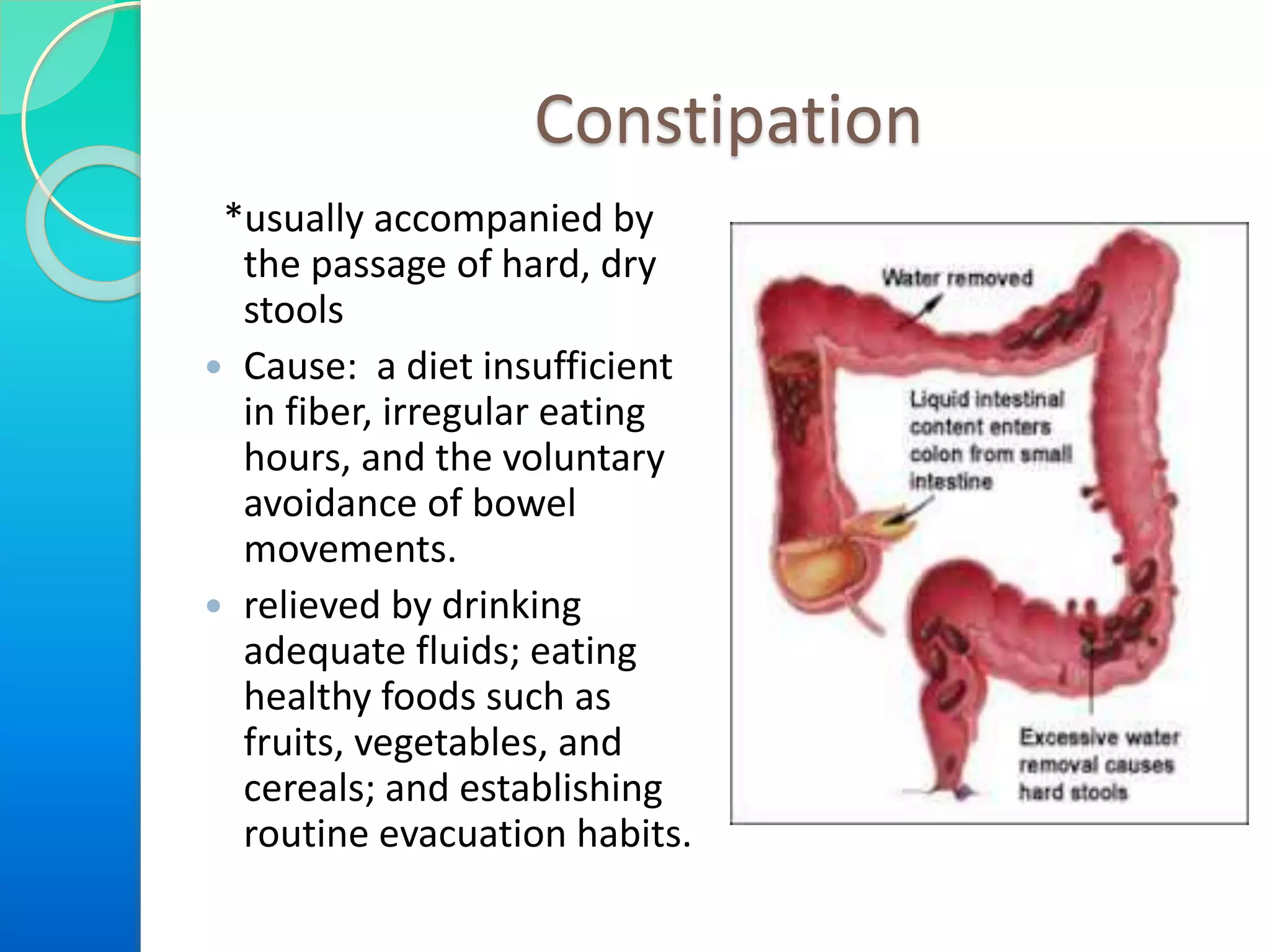
Constipation
*usually accompanied by
the passage of hard, dry
stools
 Cause: a diet insufficient
in fiber, irregular eating
hours, and the voluntary
avoidance of bowel
movements.
 relieved by drinking
adequate fluids; eating
healthy foods such as
fruits, vegetables, and
cereals; and establishing
routine evacuation habits.

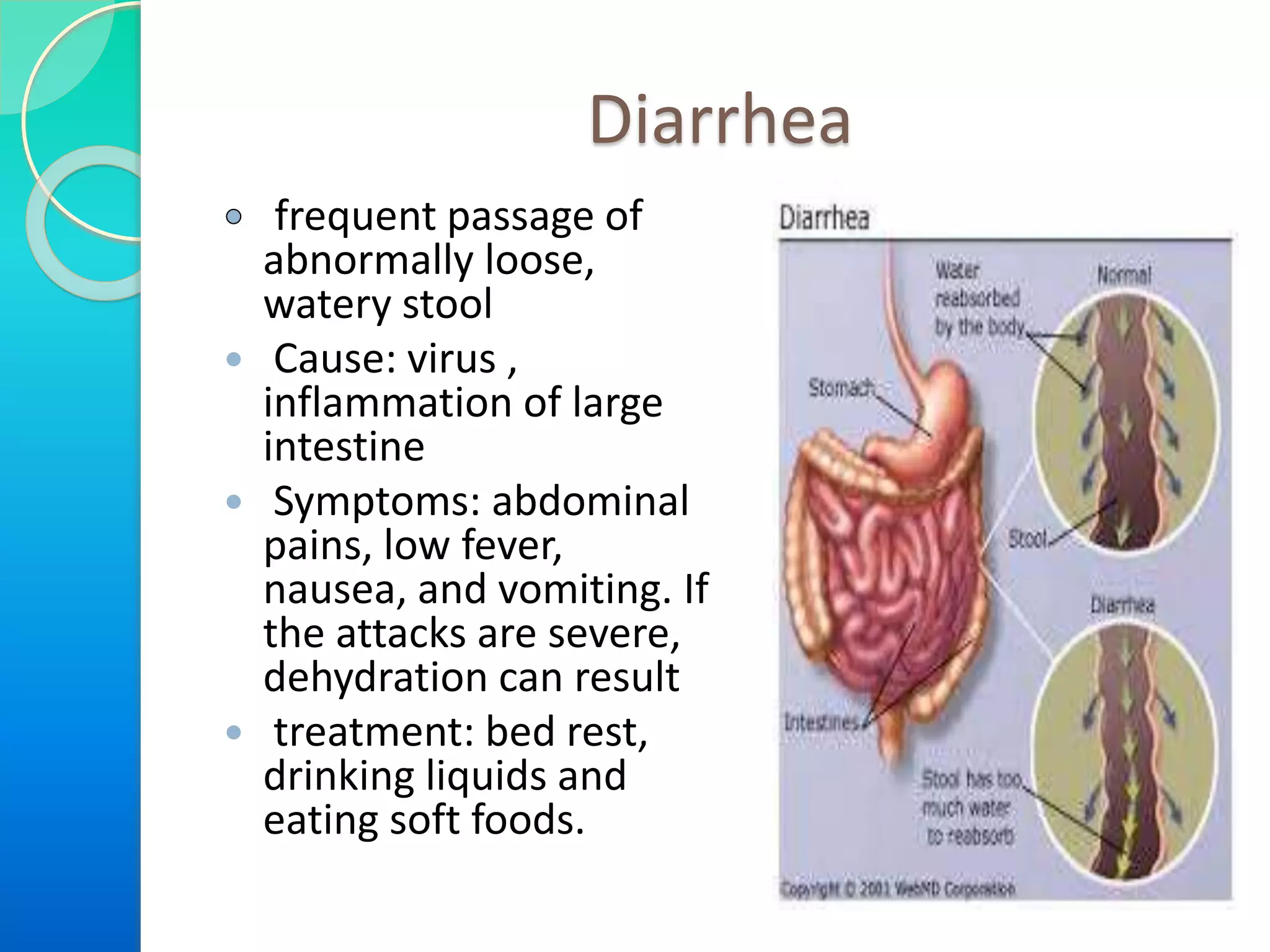
Diarrhea
frequent passage of
abnormally loose,
watery stool
 Cause: virus ,
inflammation of large
intestine
 Symptoms: abdominal
pains, low fever,
nausea, and vomiting. If
the attacks are severe,
dehydration can result
 treatment: bed rest,
drinking liquids and
eating soft foods.
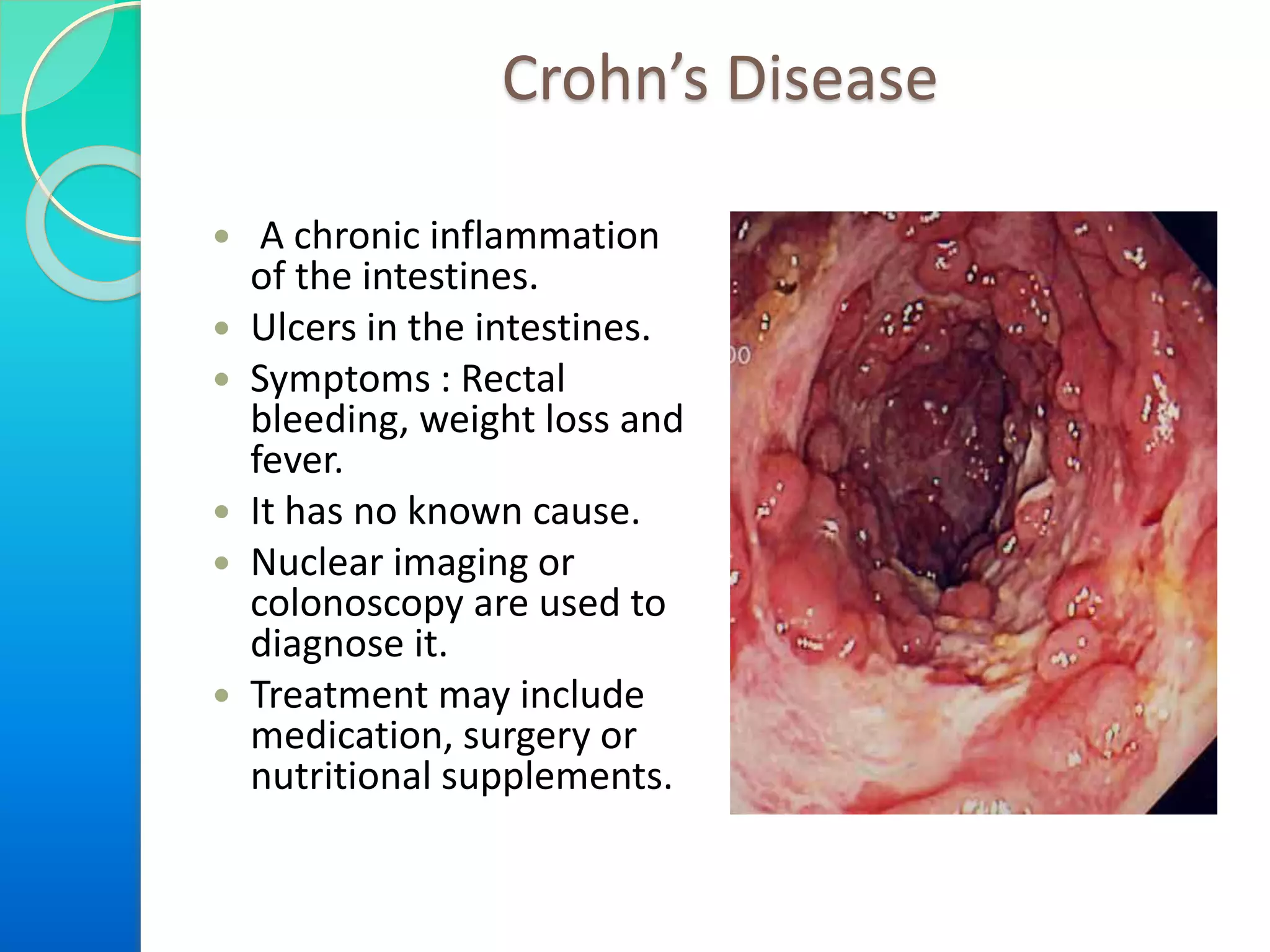
Crohn’s Disease
 A chronic inflammation
of the intestines.
 Ulcers in the intestines.
 Symptoms : Rectal
bleeding, weight loss and
fever.
 It has no known cause.
 Nuclear imaging or
colonoscopy are used to
diagnose it.
 Treatment may include
medication, surgery or
nutritional supplements.

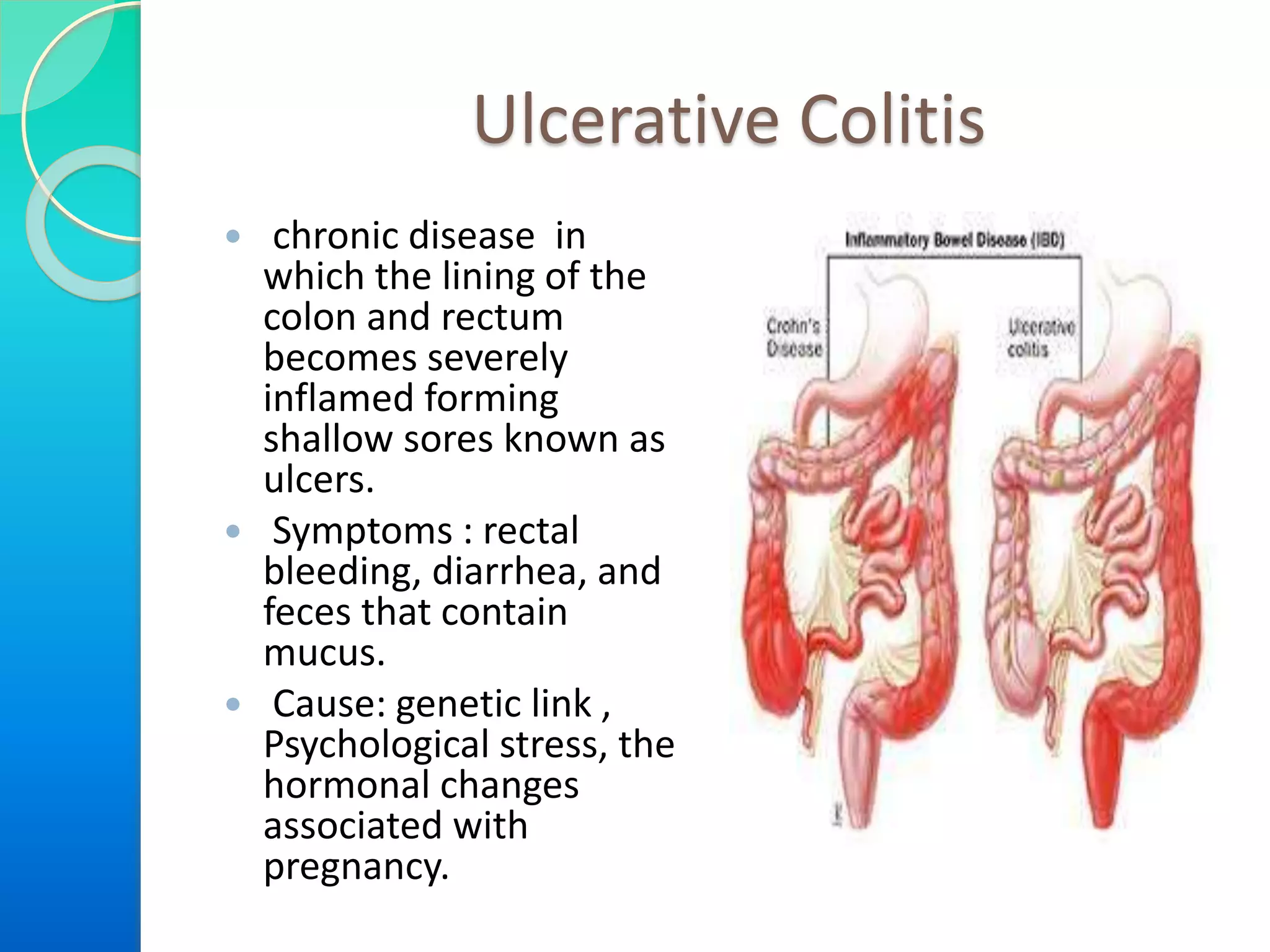
Ulcerative Colitis
 chronic disease in
which the lining of the
colon and rectum
becomes severely
inflamed forming
shallow sores known as
ulcers.
 Symptoms : rectal
bleeding, diarrhea, and
feces that contain
mucus.
 Cause: genetic link ,
Psychological stress, the
hormonal changes
associated with
pregnancy.
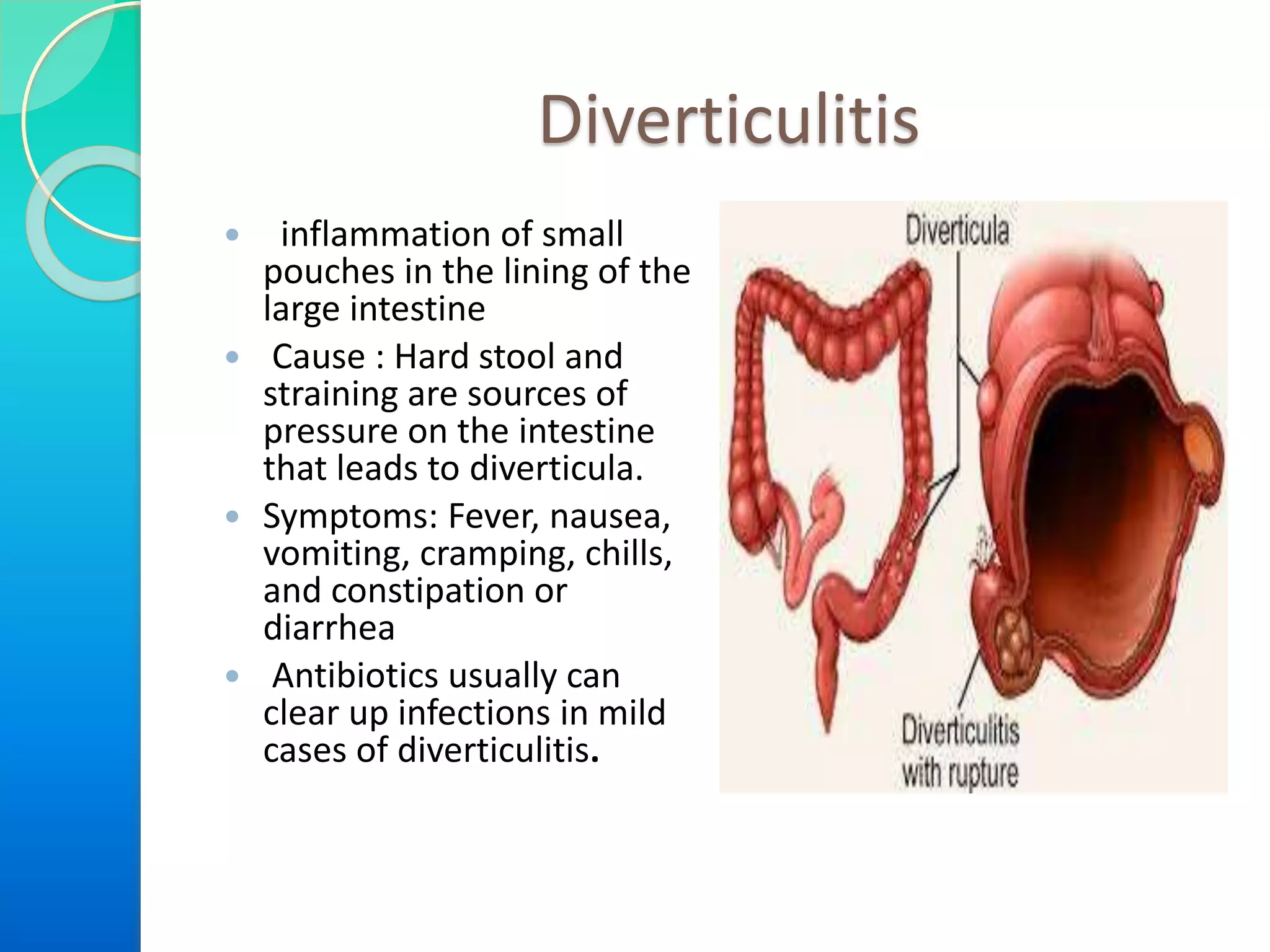
Diverticulitis
 inflammation of small
pouches in the lining of the
large intestine
 Cause : Hard stool and
straining are sources of
pressure on the intestine
that leads to diverticula.
 Symptoms: Fever, nausea,
vomiting, cramping, chills,
and constipation or
diarrhea
 Antibiotics usually can
clear up infections in mild
cases of diverticulitis.

Flatulence (Intestinal Gas)
 presence of excessive amounts of gas in the
stomach or intestines.
 It comes from swallowed air and the
breakdown of undigested food
 eating slowly, avoiding milk if you are lactose
intolerant, and not eating gas-inducing foods--
beans, bagels, bran, broccoli, brussels sprouts,
cabbage, cauliflower, and onions.

Rectum
--- 8-inch chamber that
connects the colon to
the anus.
--- Is an expandable
organ for temporary
storage of feces
Anus
--- Also called anal
orifice
-- important in allowing
control of stool.
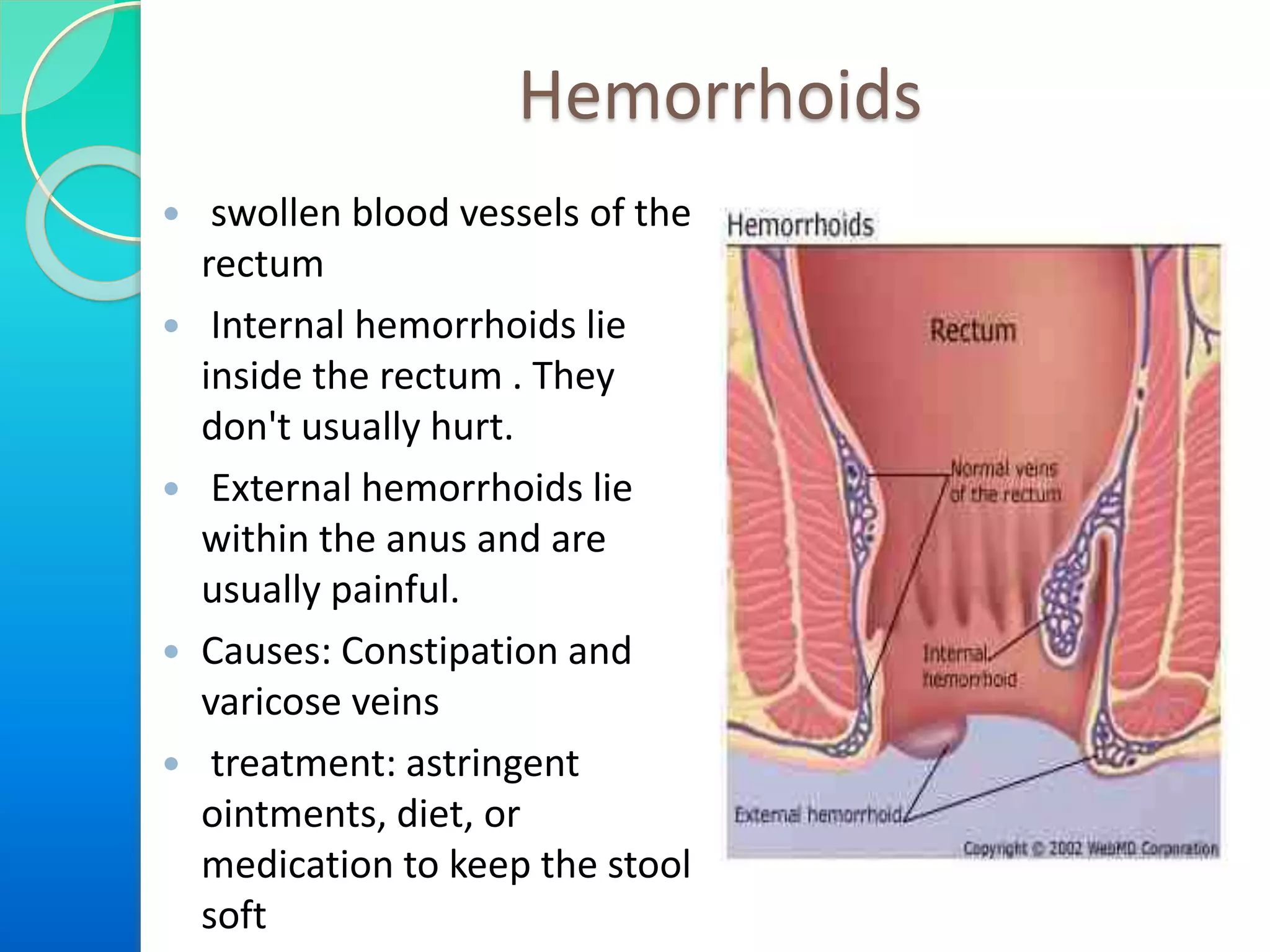
Hemorrhoids
 swollen blood vessels of the
rectum
 Internal hemorrhoids lie
inside the rectum . They
don't usually hurt.
 External hemorrhoids lie
within the anus and are
usually painful.
 Causes: Constipation and
varicose veins
 treatment: astringent
ointments, diet, or
medication to keep the stool
soft
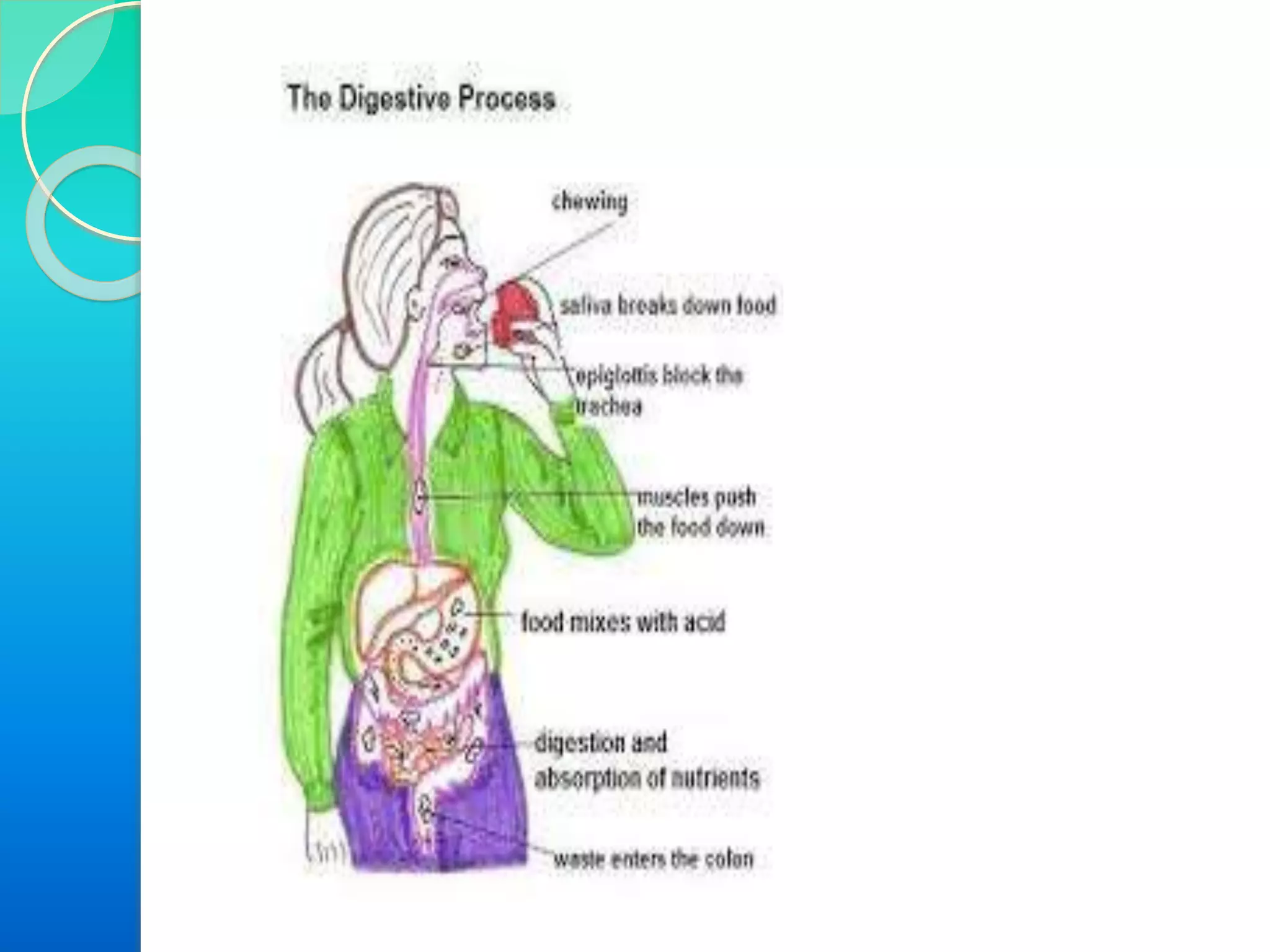
Processes in Digestive System
 Ingestion
◦ Occurs when material
enters via the mouth
 Mechanical
Processing
◦ Crushing / Shearing –
makes material easier
to move through the
tract
 Digestion
◦ Chemical breakdown
of food into small
organic compounds
for absorption
 Secretion
◦ Release of water acids,
buffers, enzymes &
salts.
 Absorption
 Movement of organic
substance, vitamins &
water across digestive
epithelium
 Excretion
◦ Removal of waste
products from body
fluids
Control of digestion
 Nervous system and
hormones regulates
digestion.
 hormones:
 gastrin – secreted by
the stomach. Acid
production ceases.
 secretin - causes the
pancreas and liver
bicarbonate into
small intestine.
 Cholecystokinin –
stimulates the
release of digestive
enzymes, and bile.
Summary
 Food is ingested in the mouth.
 Teeth is used to grind and cut the food.
 Too much the sugars and / or starches of
the food we eat can cause tooth decay.
 Esophagus primary function is to
transport food, liquids and saliva from the
mouth to the stomach.
 Stomach acid irritates the esophagus
that causes heartburn.
 Hydrochloric acid --- helps to dissolve the
stomach contents while killing potentially harmful
bacteria.
 Duodenum (function) -neutralize acids before
they can damage the absorptive surfaces of the
small intestine
 Sodium Bicarbonate – neutralize acidic chyme.
 feces- 2/3 water, 1/3 solid matter.
 The treatment is surgical removal of the
appendix (appendectomy).
 Rectum -- Is an expandable organ for temporary
storage of feces
 Excretion
◦ Removal of waste products from body fluids

Digestive System

  • 2.
    Digestive system (Definition) is one of the largest organ systems in the human body.  It is responsible for processing ingested foods and liquids.  it breaks down the food into smaller, simple molecules that can be absorbed into the bloodstream. 
  • 3.
    Parts of theHuman Digestive System  Mouth  Esophagus  Stomach  Small intestine  Large intestine  Rectum  Anus  Liver, pancreas and gallbladder 
  • 4.
    Mouth The mouth playsan important role in eating, drinking and breathing. Infants are born with a sucking reflex, by which they instinctively know to suck for nourishment using their lips and jaw. The mouth also helps in chewing and biting food. Mouth
  • 5.
    Diseases in Mouth Tooth decay Gum (Periodontal) Disease
  • 6.
    * occurs whenplague, the sticky substance that forms on teeth, combines with the sugars and / or starches of the food we eat. This combination produces acids that attack tooth enamel. 
  • 7.
     also knownas gum disease  an infection in the gums surrounding the teeth.  Gum disease is also one of the main causes of tooth loss among adults.  There are two major stages of gum disease: gingivitis and periodontitis.  Regular dental check ups along with brushing at least twice a day and flossing daily play an important role in preventing gum disease.
  • 8.
     a hollowmuscular tube  it receives food from your mouth when you swallow  About 25 cm (10 in.) long and 2 cm (0.80 in.) wide  Conveys solid food and liquids to the stomach Peristalsis - the first of a succession of hollow organs that transport their contents through series of muscular contractions. Esophagus
  • 9.
    Esophagus (function)  isto transport food, liquids and saliva from the mouth to the stomach.  The esophagus is a muscular tube that connects the stomach to the back of the throat. When a person eats a bite of food, their saliva and teeth begin the process of chemically and mechanically breaking the food down.
  • 10.
    Acid Reflux Disease a malfunction in their esophageal sphincters, which causes food and stomach acid to travel back up the esophagus.  Heartburn is an irritation of the esophagus that is caused by stomach acid, It irritates the lining of the esophagus and causes a painful burning sensation.
  • 11.
     Storage ofingested food  is a hollow organ, or "container," that holds food while it is being mixed with enzymes that continue the process of breaking down food into a usable form Mechanical breakdown of ingested food Disruption of chemical bonds in food material by acid and enzymes  Hydrochloric acid --- helps to dissolve the stomach contents while killing potentially harmful bacteria. secrete a strong acid and powerful enzymes that are responsible for the breakdown process. Stomach
  • 12.
    Diseases In Stomach Gastric ulcer (stomach ulcer)  Peptic ulcer disease  Gastritis
  • 13.
    Gastric ulcer (stomachulcer)  An erosion in the lining of the stomach, often causing pain and/or bleeding. Gastric ulcers are most often caused by NSAIDs or H. pylori infection.
  • 14.
    Peptic ulcer disease are holes or breaks in the protective lining of the duodenum (the upper part of the small intestine) or the stomach -- areas that come into contact with stomach acids and enzymes.  Stress can aggravate symptoms of peptic ulcers and delay healing.  Treatment: in many cases they are cured with antibiotics, antacids, and other drugs that reduce the amount of acid produced by the stomach.
  • 15.
    Gastritis  Inflammation ofthe stomach, often causing nausea and/or pain.  Gastritis can be caused by alcohol, certain medications, H. pylori infection, or other factors.
  • 16.
    Small intestine  itis the region where most digestion and absorption of food takes place.  muscular tube that breaks down food using enzymes released by the pancreas and bile from the liver  Made up of three segments — the duodenum, jejunum, and ileum
  • 17.
    Duodenum ----The segment ofsmall intestine closest to stomach  responsible for the continuous breaking-down process  receives chyme from stomach and digestive secretions from pancreas and liver  Functions of the duodenum  --To receive chyme from stomach -- To neutralize acids before they can damage the absorptive surfaces of the small intestine
  • 18.
      Is themiddle segment of small intestine  2.5 meters (8.2 ft) long  Is the location of most: Chemical digestion Nutrient absorption  Has few plicae circulares  Small villi 
  • 19.
      The finalsegment of small intestine  3.5 meters (11.48 ft) long  Ends at the ileocecal valve, a sphincter that controls flow of material from the ileum into the large intestine 
  • 20.
    Celiac Disease  isa condition in which eating gluten, a protein found in wheat, barley and rye, causes damage in your small intestine.  People who have celiac disease cannot absorb nutrients from their food, and the condition can lead to complications, such as malnutrition, osteoporosis, infertility, and even cancer.
  • 21.
    Pancreas  Lies betweenthe stomach and the small intestine.  has both an exocrine and an endocrine secretion.  Exocrine – pancreatic juice  Endocrine- insulin
  • 22.
    Cancer of thepancreas  rare but deadly.  Smoking is thought to cause about 30 percent  If not treated quickly, they may cause death. The symptoms are not definite, it occurs like intestinal obstruction.
  • 23.
    Liver  to storeenergy in the form of glycogen, which is made from a type of sugar called glucose.  production of bile  Vitamins storage  also functions as the body’s chemical factory.  helps clear toxic substances, such as drugs and alcohol, from the bloodstream
  • 24.
    Disease Description CauseSymptoms Treatment Jaundice develops when liver cells lose their ability to process bilirubin, the yellowish- brown pigment found in bile yellowish coloring of the skin and the whites of the eye Hepatitis (Hepatitis A virus) inflammation of the liver exposure to certain chemicals, by autoimmune diseases, or by bacterial infections. prevalent in areas where drinking water is contaminated with raw sewage. produce flulike symptoms Good hygiene practices and a hepatitis A vaccination are effective measures of
  • 25.
    (Hepatitis B virus) permanently damaging the liver. HBVis found in blood and other body fluids—tears, saliva, and semen unprotected sexual intercourse and the sharing of infected needles or other sharp objects that puncture the skin. . Cirrhosis a disease characterized by diminished blood flow through this important organ , treatments for cirrhosis may include drug therapy or surgery to redirect blood flow.
  • 27.
    Gallbladder  Is apear-shaped, muscular sac  Stores and concentrates bile prior to excretion into small intestine
  • 28.
    Gallstones  Cause: presenceof excessive amounts of substances such as calcium and cholesterol in the bile and the retention of bile in the gallbladder for a long period of time.  treatment for gallstones is surgical removal
  • 29.
    Large intestine(function)  Re-absorptionof water and salts.  Compaction of intestinal contents into feces  Absorption of important vitamins  Storage of fecal material prior to defecation
  • 30.
    Parts of theColon Has a larger diameter and thinner wall than small intestine
  • 31.
    Parts of largeintestine  Ascending Colon  carries feces from the cecum to the transverse colon.  bacteria digest the transitory fecal matter in order to release vitamins. 
  • 32.
     Transverse Colon extract water and nutrients from digested foods or materials that pass through the digestive tract. 
  • 33.
     Descending Colon absorb water from fecal matter  store the remains of digested food that will be emptied into the rectum. 
  • 34.
     Sigmoid Colon the S-shaped portion of the large intestine  to store fecal wastes until they are ready to leave the body 
  • 35.
    Diseases in LargeIntestine  Appendicitis  Constipation  Chron’s disease  Ulcerative Colitis  Diverticulitis  Flatulence
  • 36.
    Appendicitis  acute inflammationof the appendix  Symptoms : pain and cramps between the right hip bone and the navel, fever, nausea and vomiting, constipation, and diarrhea.  The treatment is surgical removal of the appendix (appendectomy). 
  • 37.
    Constipation *usually accompanied by thepassage of hard, dry stools  Cause: a diet insufficient in fiber, irregular eating hours, and the voluntary avoidance of bowel movements.  relieved by drinking adequate fluids; eating healthy foods such as fruits, vegetables, and cereals; and establishing routine evacuation habits. 
  • 39.
    Diarrhea frequent passage of abnormallyloose, watery stool  Cause: virus , inflammation of large intestine  Symptoms: abdominal pains, low fever, nausea, and vomiting. If the attacks are severe, dehydration can result  treatment: bed rest, drinking liquids and eating soft foods.
  • 40.
    Crohn’s Disease  Achronic inflammation of the intestines.  Ulcers in the intestines.  Symptoms : Rectal bleeding, weight loss and fever.  It has no known cause.  Nuclear imaging or colonoscopy are used to diagnose it.  Treatment may include medication, surgery or nutritional supplements. 
  • 41.
    Ulcerative Colitis  chronicdisease in which the lining of the colon and rectum becomes severely inflamed forming shallow sores known as ulcers.  Symptoms : rectal bleeding, diarrhea, and feces that contain mucus.  Cause: genetic link , Psychological stress, the hormonal changes associated with pregnancy.
  • 42.
    Diverticulitis  inflammation ofsmall pouches in the lining of the large intestine  Cause : Hard stool and straining are sources of pressure on the intestine that leads to diverticula.  Symptoms: Fever, nausea, vomiting, cramping, chills, and constipation or diarrhea  Antibiotics usually can clear up infections in mild cases of diverticulitis. 
  • 43.
    Flatulence (Intestinal Gas) presence of excessive amounts of gas in the stomach or intestines.  It comes from swallowed air and the breakdown of undigested food  eating slowly, avoiding milk if you are lactose intolerant, and not eating gas-inducing foods-- beans, bagels, bran, broccoli, brussels sprouts, cabbage, cauliflower, and onions. 
  • 44.
    Rectum --- 8-inch chamberthat connects the colon to the anus. --- Is an expandable organ for temporary storage of feces Anus --- Also called anal orifice -- important in allowing control of stool.
  • 45.
    Hemorrhoids  swollen bloodvessels of the rectum  Internal hemorrhoids lie inside the rectum . They don't usually hurt.  External hemorrhoids lie within the anus and are usually painful.  Causes: Constipation and varicose veins  treatment: astringent ointments, diet, or medication to keep the stool soft
  • 46.
    Processes in DigestiveSystem  Ingestion ◦ Occurs when material enters via the mouth  Mechanical Processing ◦ Crushing / Shearing – makes material easier to move through the tract  Digestion ◦ Chemical breakdown of food into small organic compounds for absorption  Secretion ◦ Release of water acids, buffers, enzymes & salts.  Absorption  Movement of organic substance, vitamins & water across digestive epithelium  Excretion ◦ Removal of waste products from body fluids
  • 48.
    Control of digestion Nervous system and hormones regulates digestion.  hormones:  gastrin – secreted by the stomach. Acid production ceases.  secretin - causes the pancreas and liver bicarbonate into small intestine.  Cholecystokinin – stimulates the release of digestive enzymes, and bile.
  • 49.
    Summary  Food isingested in the mouth.  Teeth is used to grind and cut the food.  Too much the sugars and / or starches of the food we eat can cause tooth decay.  Esophagus primary function is to transport food, liquids and saliva from the mouth to the stomach.  Stomach acid irritates the esophagus that causes heartburn.
  • 50.
     Hydrochloric acid--- helps to dissolve the stomach contents while killing potentially harmful bacteria.  Duodenum (function) -neutralize acids before they can damage the absorptive surfaces of the small intestine  Sodium Bicarbonate – neutralize acidic chyme.  feces- 2/3 water, 1/3 solid matter.  The treatment is surgical removal of the appendix (appendectomy).  Rectum -- Is an expandable organ for temporary storage of feces  Excretion ◦ Removal of waste products from body fluids