Macromolecules
By
KAUSHAL KUMAR SAHU
Assistant Professor (Ad Hoc)
Department of Biotechnology
Govt. Digvijay Autonomous P. G. College
Raj-Nandgaon ( C. G. )
Contents
 Introduction
 History
 Definition
Properties
 Types of Macromolecules
 Protein
 Carbohydrates
 Lipids
 Nuclic Acid
 Conclusions
 References
Introduction
Cells and their organelles are made up of smaller building blocks
called macromolecules.
Macromolecules are actually made up of even smaller subunits.
Each subunit of a macromolecule is called a monomer.
The macromolecules themselves are called polymers, because
they are made up of many of these subunits.
Macromolecules are formed when monomers are linked together
to form longer chains called polymers.
A macromolecule is a very large molecule commonly created
by polymerization of smaller subunits.
History
1967: Kartha G, Bello J, Harker D. Tertiary structure of
ribonuclease.
The double helical structure of the DNA was predicted by
James Watson and Francis Crick in 1953 (Nobel Prize,
1962)
Hermann Staudinger (1881-1965) “Polymers are composed
of very large molecules containing long sequences of simple
chemical units linked together by covalent bonds.”
Definition
‘A macromolecule is a very large molecule commonly created
by polymerization of smaller subunits.
In biochemistry, the term is applied to the four conventional
biopolymers (nucleic acids, proteins, carbohydrates, and
lipids), as well as non-polymeric molecules with large
molecular mass such as macro cycles.’
‘A macromolecule is a molecule with a very large number of
atoms. Macromolecules typically have more than 100
component atoms.’
Propertiesofmacromolecules
 Many proteins act as enzymes, and catalyze very specific
chemical reactions. Other proteins have roles in the transport of
substances, self-defense and structure.
Proteins are found everywhere – inside of cells, in membranes,
and outside of cells – and play many roles for organisms.
The hydrophobic nature of lipids has important consequences
for how lipids are used, transported, and metabolized in
organisms.
Typesofmacromolecules
There are four macromolecules essential to living matter
containing C, H, O, N and sometimes S.
Proteins
Carbohydrates
Nucleic Acids
Lipids.
protein
Proteins are composed of 4 elements: carbon, hydrogen,
oxygen and nitrogen.
Proteins consist of one or more polymers called polypeptides,
which are made by linking amino acids together with peptide
linkages.
Peptide linkages are formed through condensation reactions.
All proteins are made from the same 20 amino acids.
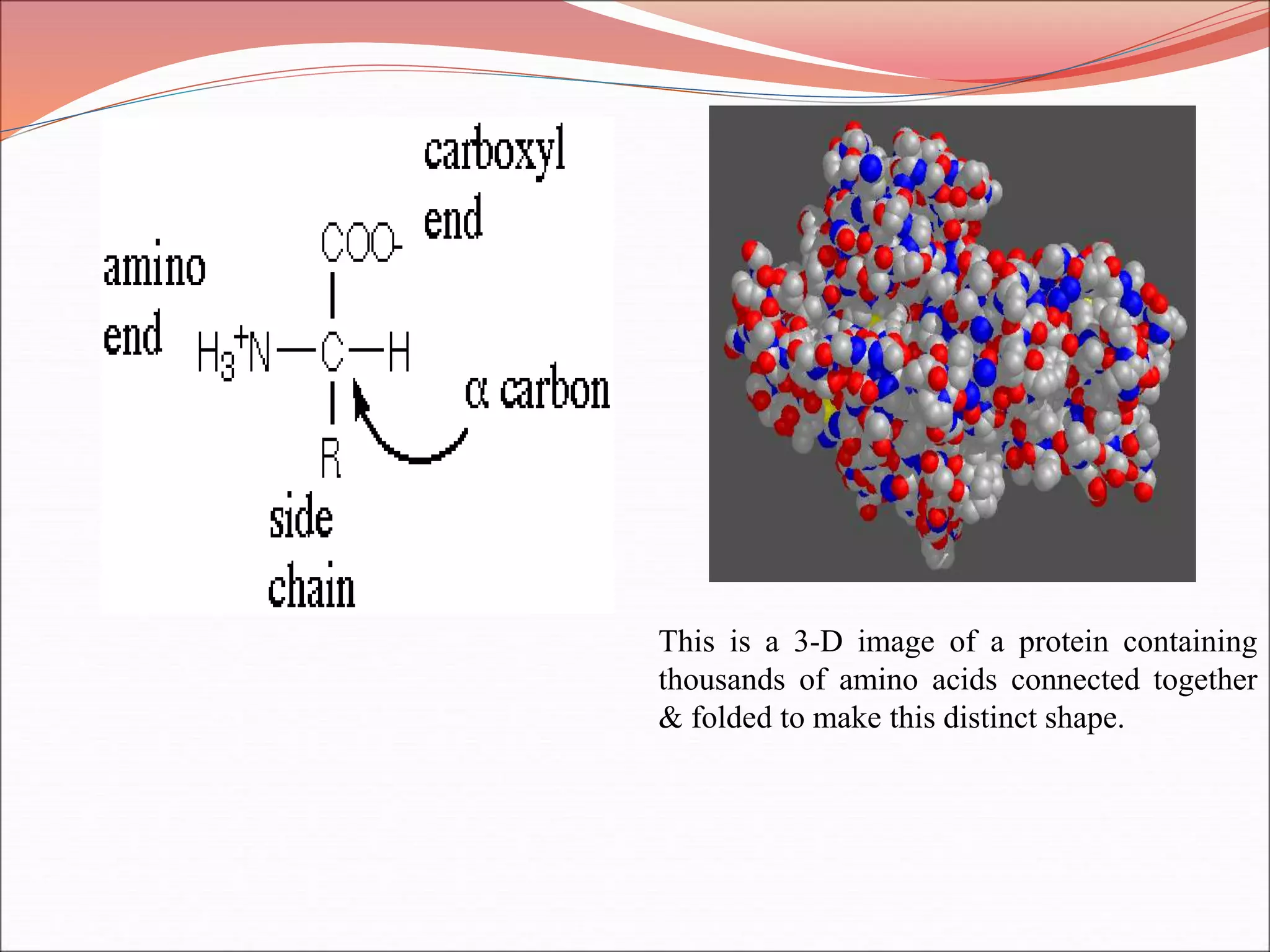
This is a 3-D image of a protein containing
thousands of amino acids connected together
& folded to make this distinct shape.
Structure
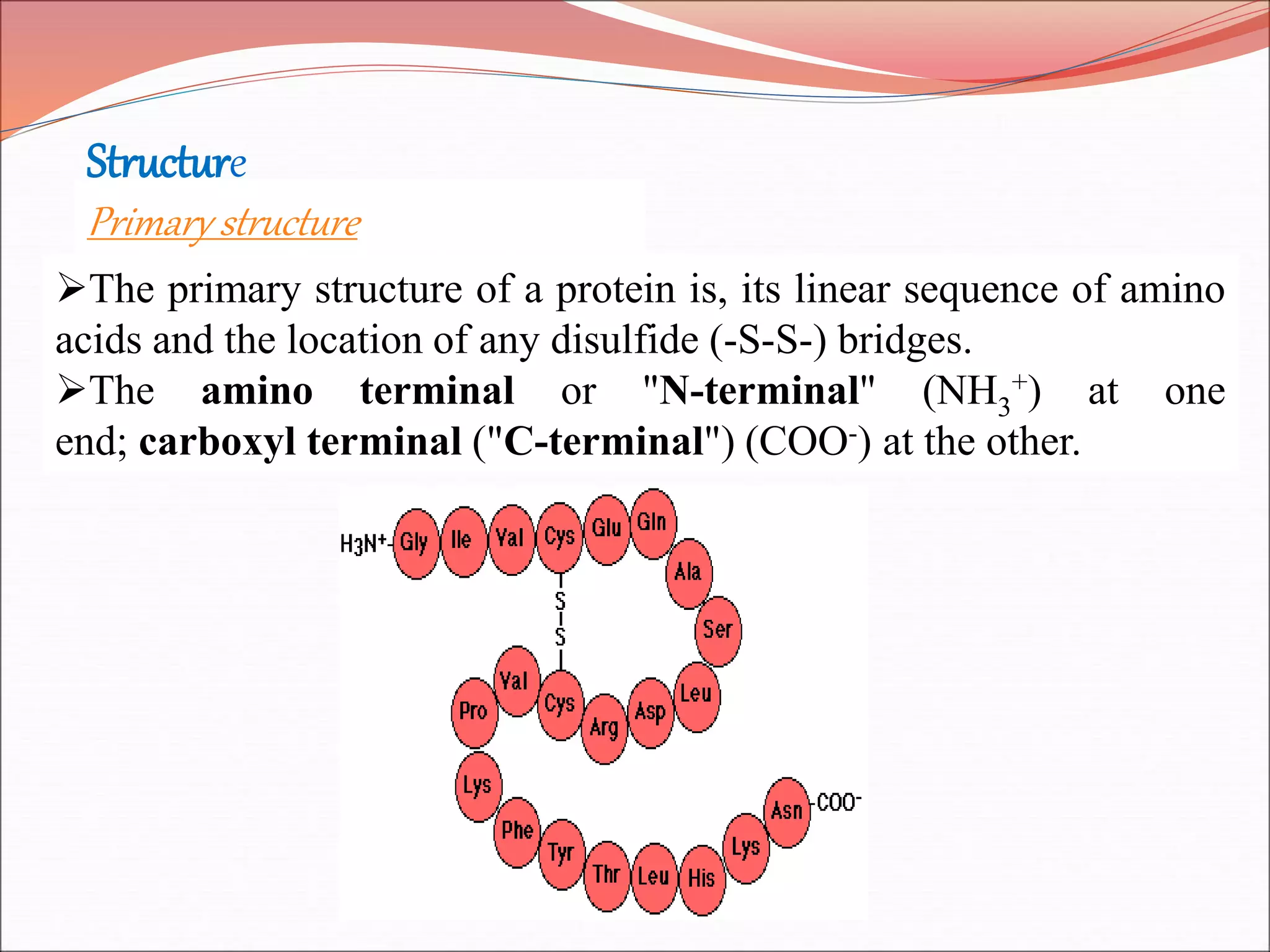
Primary structure
The primary structure of a protein is, its linear sequence of amino
acids and the location of any disulfide (-S-S-) bridges.
The amino terminal or "N-terminal" (NH3
+) at one
end; carboxyl terminal ("C-terminal") (COO-) at the other.
Secondary structure
The parts of the polypeptide chain take up a particular shape;
either folded (β sheets) or coiled (α helix)
Secondary structure develops when the primary structure of a
polypeptide has group projecting from the N-C-C backbone.
Tertiarystructure
Tertiary structure of a protein is when the molecule is further folded
and held in a particular complex shape forming precise and compact
structure, unique to that protein.
The shape is maintained permanently by the intra- molecular bonds:
Hydrogen bond of one hydrogen atom shared by two other atoms
Van der Waals force is the weak force that incurs when two or more atoms are
very close
Disulphide bond is a strong covalent bond formed between two adjacent cysteine
amino acids.
QuaRternarystructure
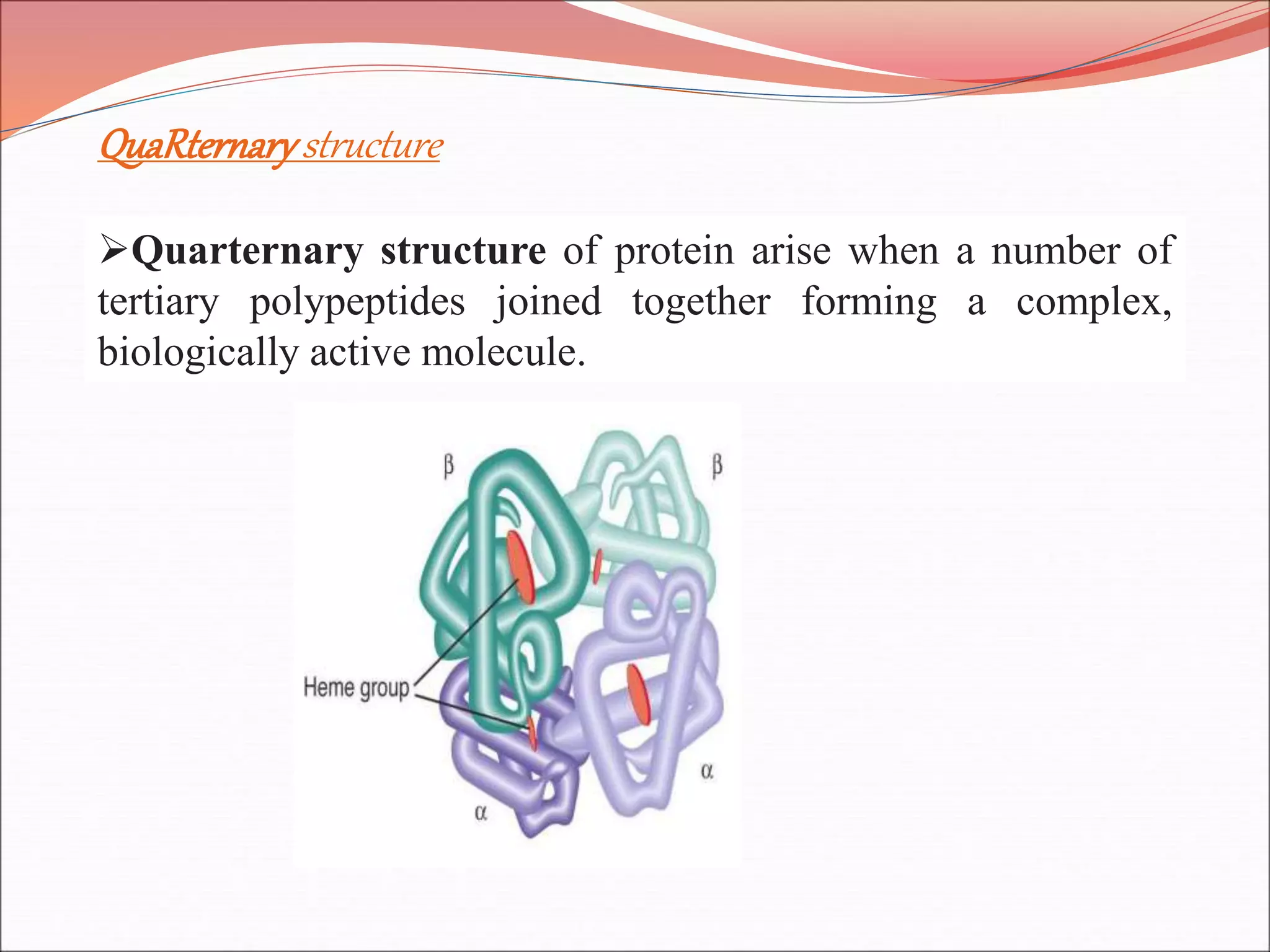
Quarternary structure of protein arise when a number of
tertiary polypeptides joined together forming a complex,
biologically active molecule.
biochemistry
 Most proteins consist of linear polymers built from series of up to 20
different L-α-amino acids.
 All proteinogenic amino acids possess common structural features,
including an α-carbon to which an amino group, a carboxyl group, and a
variable side chain are bonded.
 Only proline differs from this basic structure as it contains an unusual ring
to the N end
 amine group, which forces the CO–NH amide moiety into a fixed
conformation.
Proteins are polymers of amino acids. Every amino acid has
a amine group, acarboxyl group, and a R (variable) group.
Amino acids are connected to form proteins by peptide bonds.
These bonds are formed through dehydration synthesis.
Protein function
Antibodies are specialized proteins involved in defending the
body from antigens (foreign invaders).
They can travel through the blood stream and are utilized by
the immune system to identify and defend
against bacteria, viruses, and other foreign intruders.
Lactase breaks down the sugar lactose found in milk. Pepsin is
a digestive enzyme that works in the stomach to break down
proteins in food.
Contractile Proteins are responsible for movement. Examples
include actin and myosin. These proteins are involved
in muscle contraction and movement.
carbohydrate
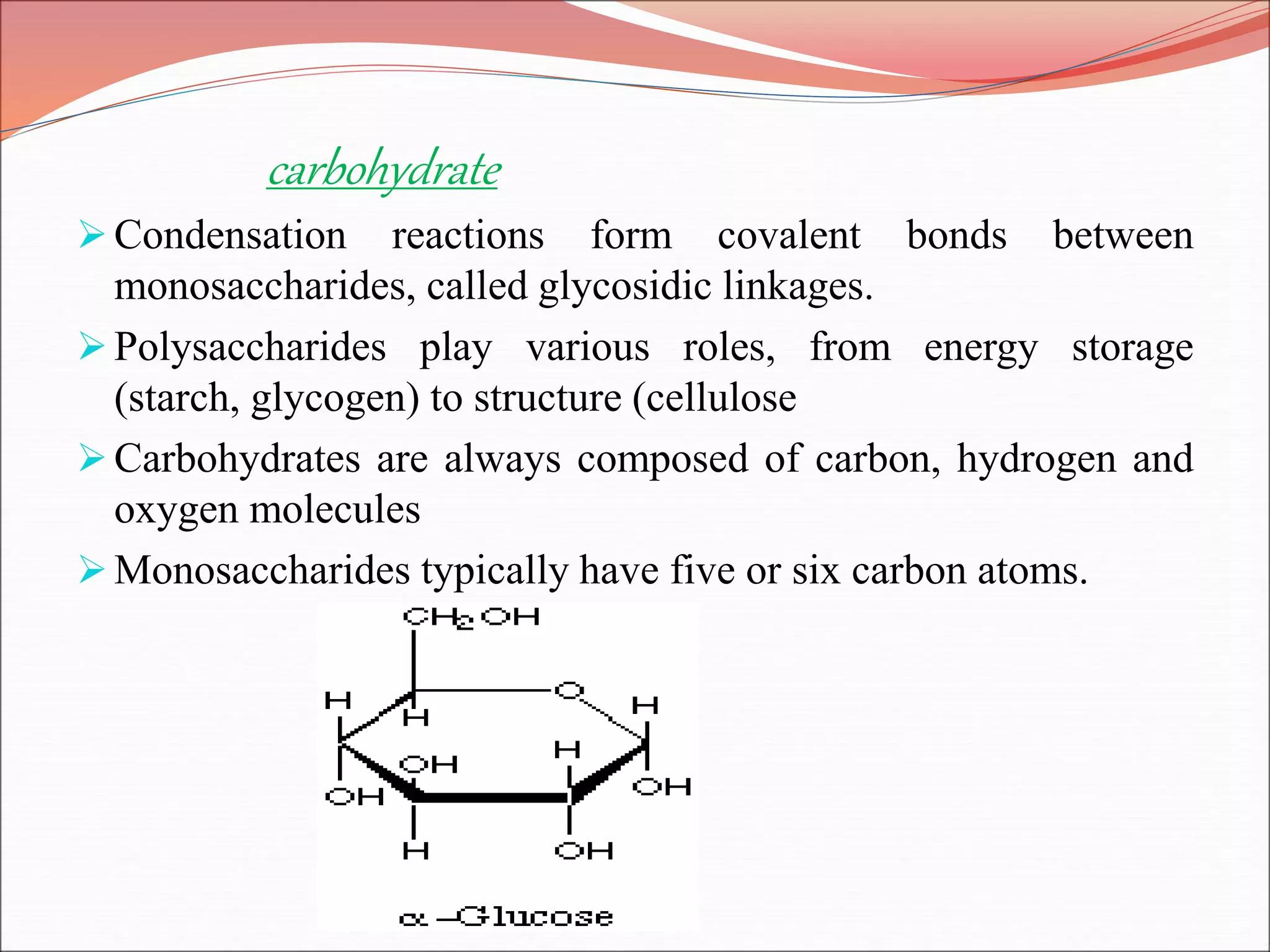
Condensation reactions form covalent bonds between
monosaccharides, called glycosidic linkages.
Polysaccharides play various roles, from energy storage
(starch, glycogen) to structure (cellulose
Carbohydrates are always composed of carbon, hydrogen and
oxygen molecules
Monosaccharides typically have five or six carbon atoms.
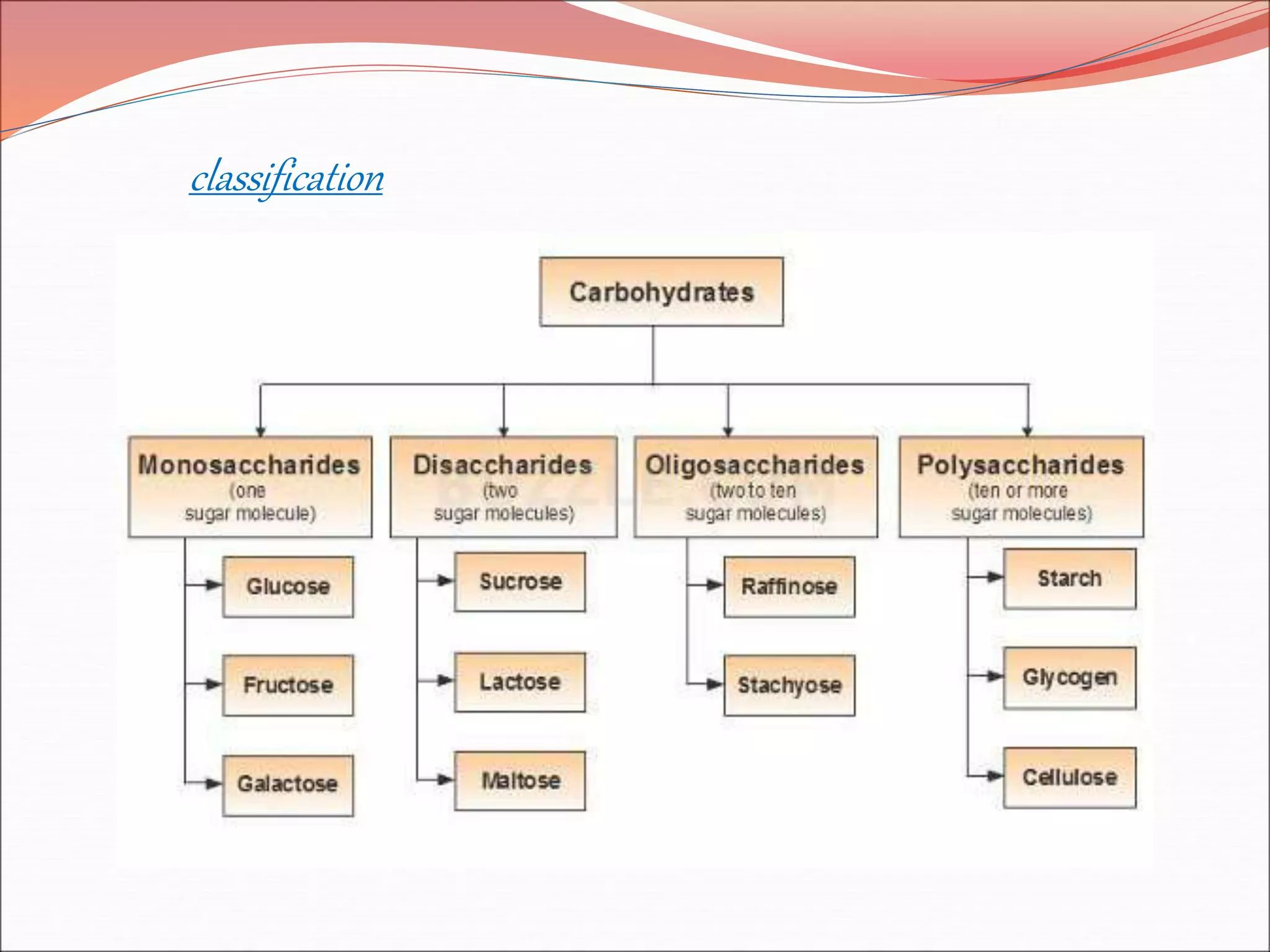
classification
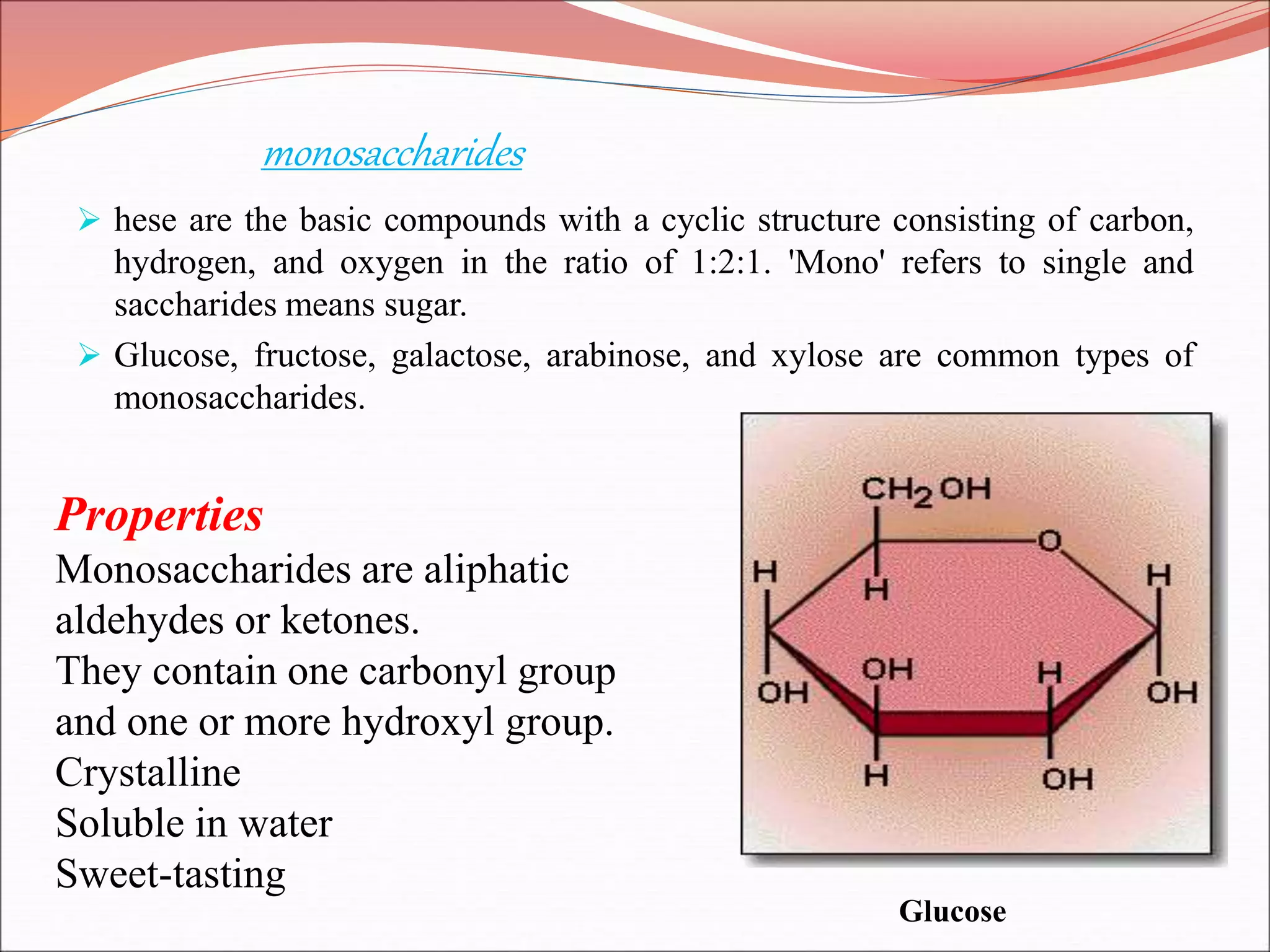
monosaccharides
 hese are the basic compounds with a cyclic structure consisting of carbon,
hydrogen, and oxygen in the ratio of 1:2:1. 'Mono' refers to single and
saccharides means sugar.
 Glucose, fructose, galactose, arabinose, and xylose are common types of
monosaccharides.
Properties
Monosaccharides are aliphatic
aldehydes or ketones.
They contain one carbonyl group
and one or more hydroxyl group.
Crystalline
Soluble in water
Sweet-tasting
Glucose
Disaccharides
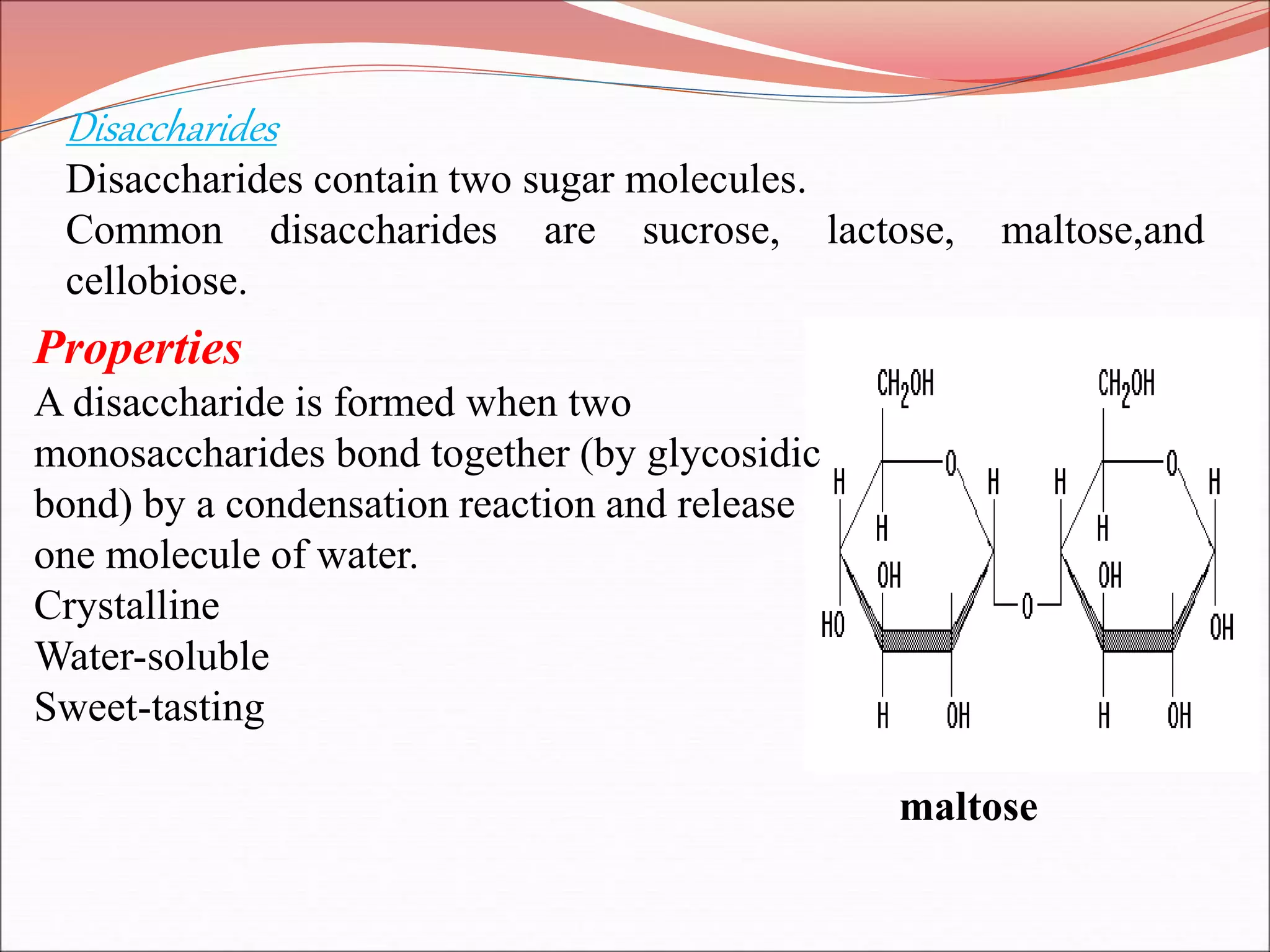
Disaccharides contain two sugar molecules.
Common disaccharides are sucrose, lactose, maltose,and
cellobiose.
maltose
Properties
A disaccharide is formed when two
monosaccharides bond together (by glycosidic
bond) by a condensation reaction and release
one molecule of water.
Crystalline
Water-soluble
Sweet-tasting
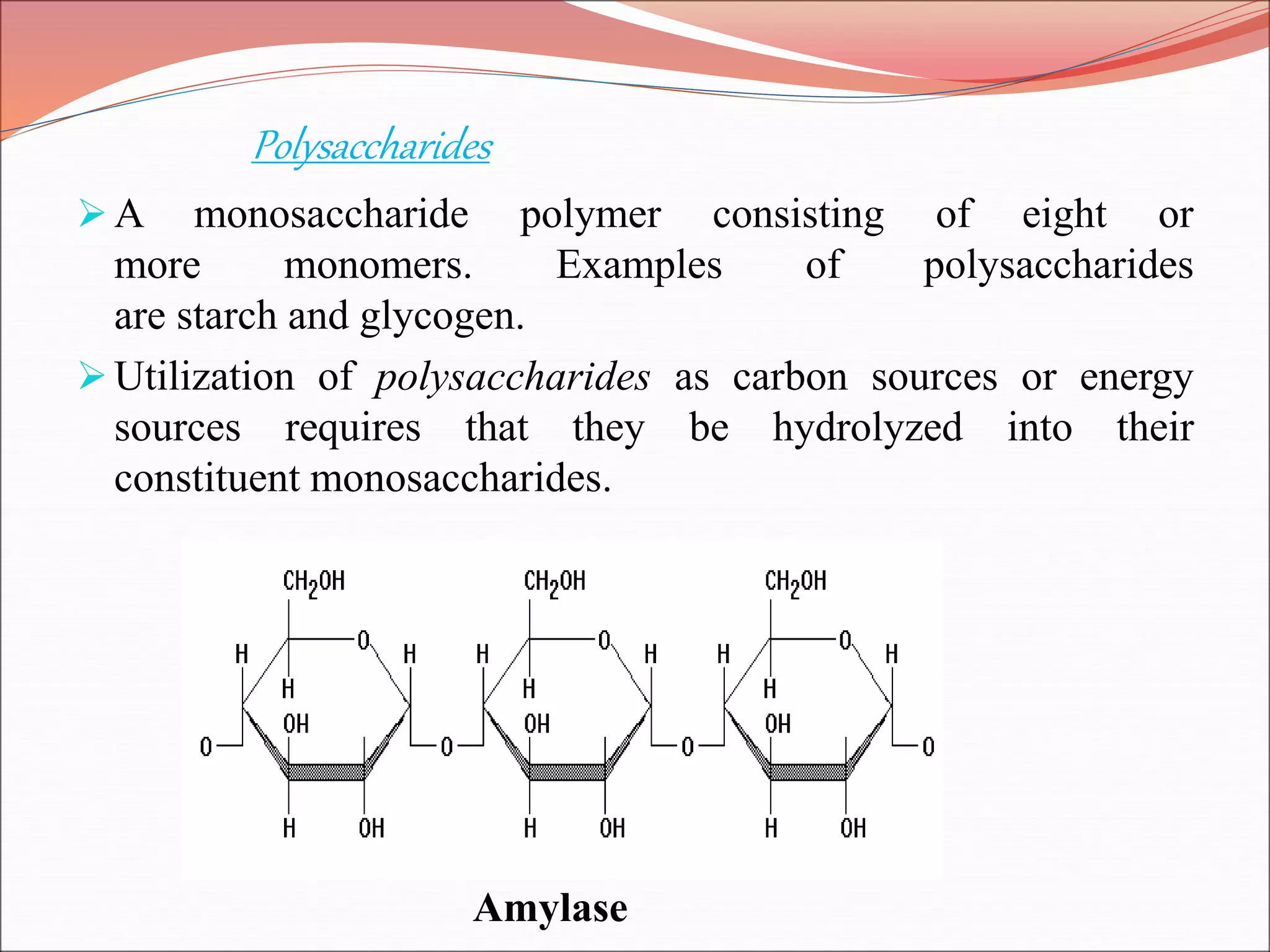
Polysaccharides
A monosaccharide polymer consisting of eight or
more monomers. Examples of polysaccharides
are starch and glycogen.
Utilization of polysaccharides as carbon sources or energy
sources requires that they be hydrolyzed into their
constituent monosaccharides.
Amylase
Properties
Polysaccharides have a high molecular weight.
They are further divided into homopolysaccharides and heteropolysaccharides.
Homopolysaccharides contain the same monosaccharides, whereas
heteropolysaccharides contain more than one type of monosaccharides.
Common homopolysaccharides include starch, cellulose, and glycogen.
Pectin, hemicellulose, and gums are common heteropolysaccharides.
Not water-soluble
Not crystalline
Not sweet
Functions of Carbohydrates
Monosaccharides are a fuel for cellular metabolism.
Monosaccharides are used in several biosynthesis reactions.
Monosaccharides may be converted into space-saving
polysaccharides, such as glyocogen and starch. These molecules
provide stored energy for plant and animal cells.
Carbohydrates are used to form structural elements, such as
chitin in animals and cellulose in plants.
Carbohydrates and modified carbohydrates are important for an
organism's fertilization, development, blood clotting and immune
system function.
Lipids
Hydrophobic property
Lipids are joined together by ester linkages.
Fats and oils are lipids generally associated with energy
storage.
Fatty acids, which make up fats and oils, can be saturated or
unsaturated, depending on the absence or presence of double
bonded carbon atoms.
Types of lipids
Fatty acids
Fatty acids are carboxylic acid with hydrocarbon side chain.
They are the simplest form of lipids.
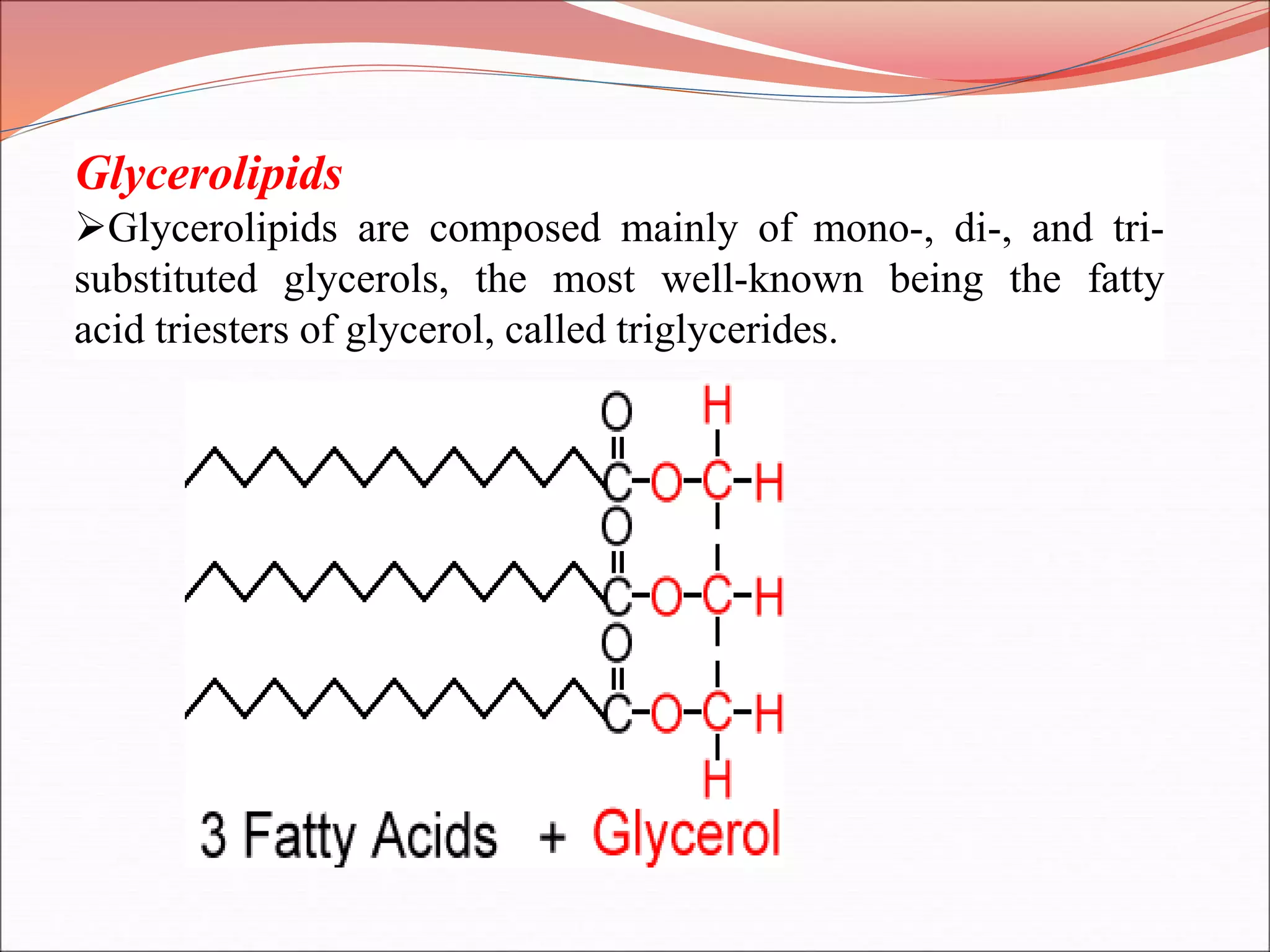
Glycerolipids
Glycerolipids are composed mainly of mono-, di-, and tri-
substituted glycerols, the most well-known being the fatty
acid triesters of glycerol, called triglycerides.
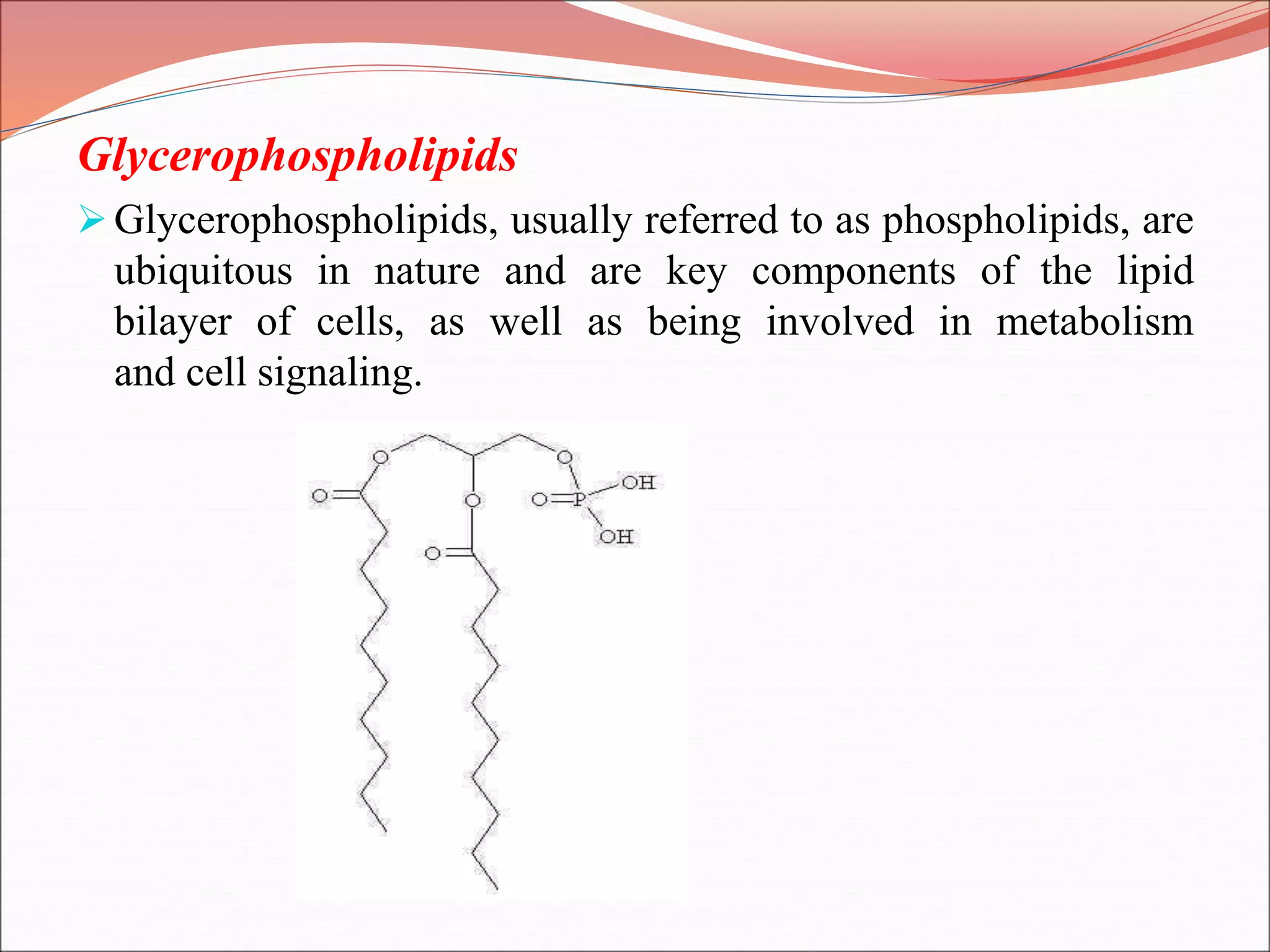
Glycerophospholipids
Glycerophospholipids, usually referred to as phospholipids, are
ubiquitous in nature and are key components of the lipid
bilayer of cells, as well as being involved in metabolism
and cell signaling.
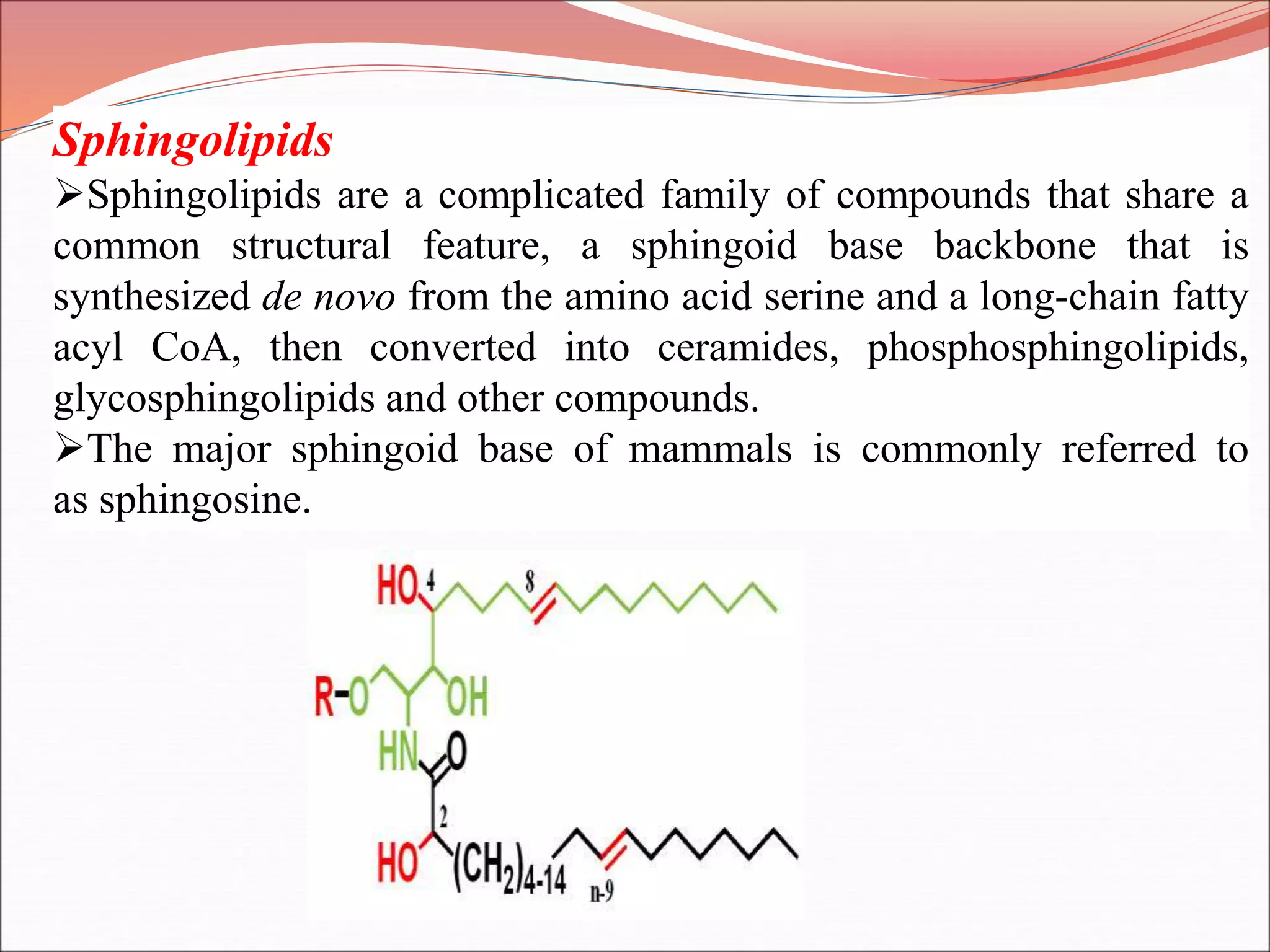
Sphingolipids
Sphingolipids are a complicated family of compounds that share a
common structural feature, a sphingoid base backbone that is
synthesized de novo from the amino acid serine and a long-chain fatty
acyl CoA, then converted into ceramides, phosphosphingolipids,
glycosphingolipids and other compounds.
The major sphingoid base of mammals is commonly referred to
as sphingosine.
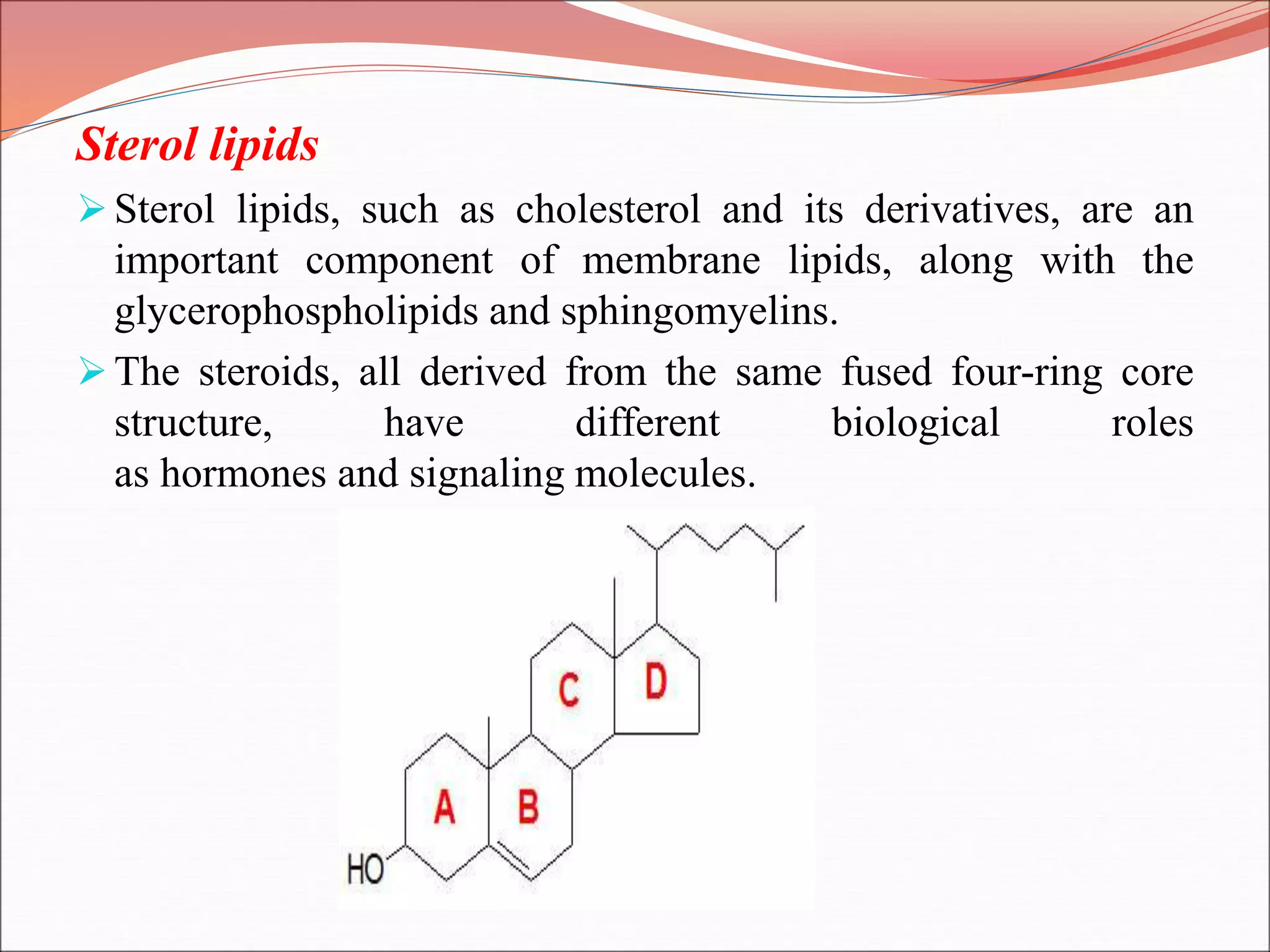
Sterol lipids
Sterol lipids, such as cholesterol and its derivatives, are an
important component of membrane lipids, along with the
glycerophospholipids and sphingomyelins.
The steroids, all derived from the same fused four-ring core
structure, have different biological roles
as hormones and signaling molecules.
Prenol lipids
Prenol lipids are synthesized from the five-carbon-unit
precursors isopentenyl diphosphate and dimethylallyl
diphosphate that are produced mainly via the mevalonic
acid (MVA) pathway.
Saccharolipids
Saccharolipids describe compounds in which fatty acids are
linked directly to a sugar backbone, forming structures that are
compatible with membrane bilayers.
In the saccharolipids, a monosaccharide substitutes for the
glycerol backbone present in glycerolipids and
glycerophospholipids
Biological functions
 Biological functions
 Membranes
 Energy storage
 Signaling
 Other functions
 Maintenance of temperature
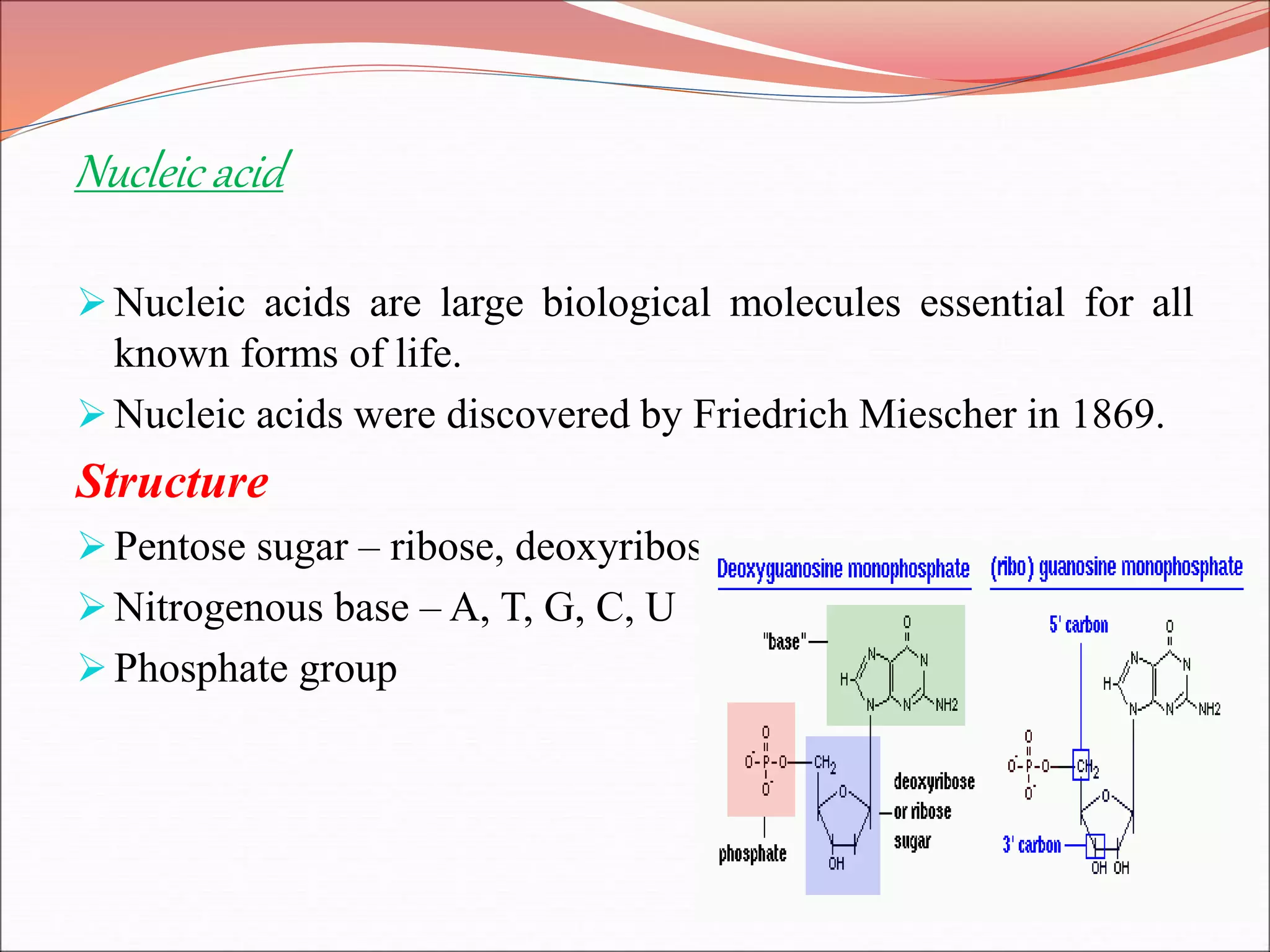
Nucleic acid
Nucleic acids are large biological molecules essential for all
known forms of life.
Nucleic acids were discovered by Friedrich Miescher in 1869.
Structure
Pentose sugar – ribose, deoxyribose
Nitrogenous base – A, T, G, C, U
Phosphate group
Types of Nucleic acid
DNA
Makes up chromosomes, genes
DNA is converted to RNA, which is then translated into a
particular protein.
Replicated prior to cell division
Sequences compared to establish evolutionary
Relationships b/t organisms
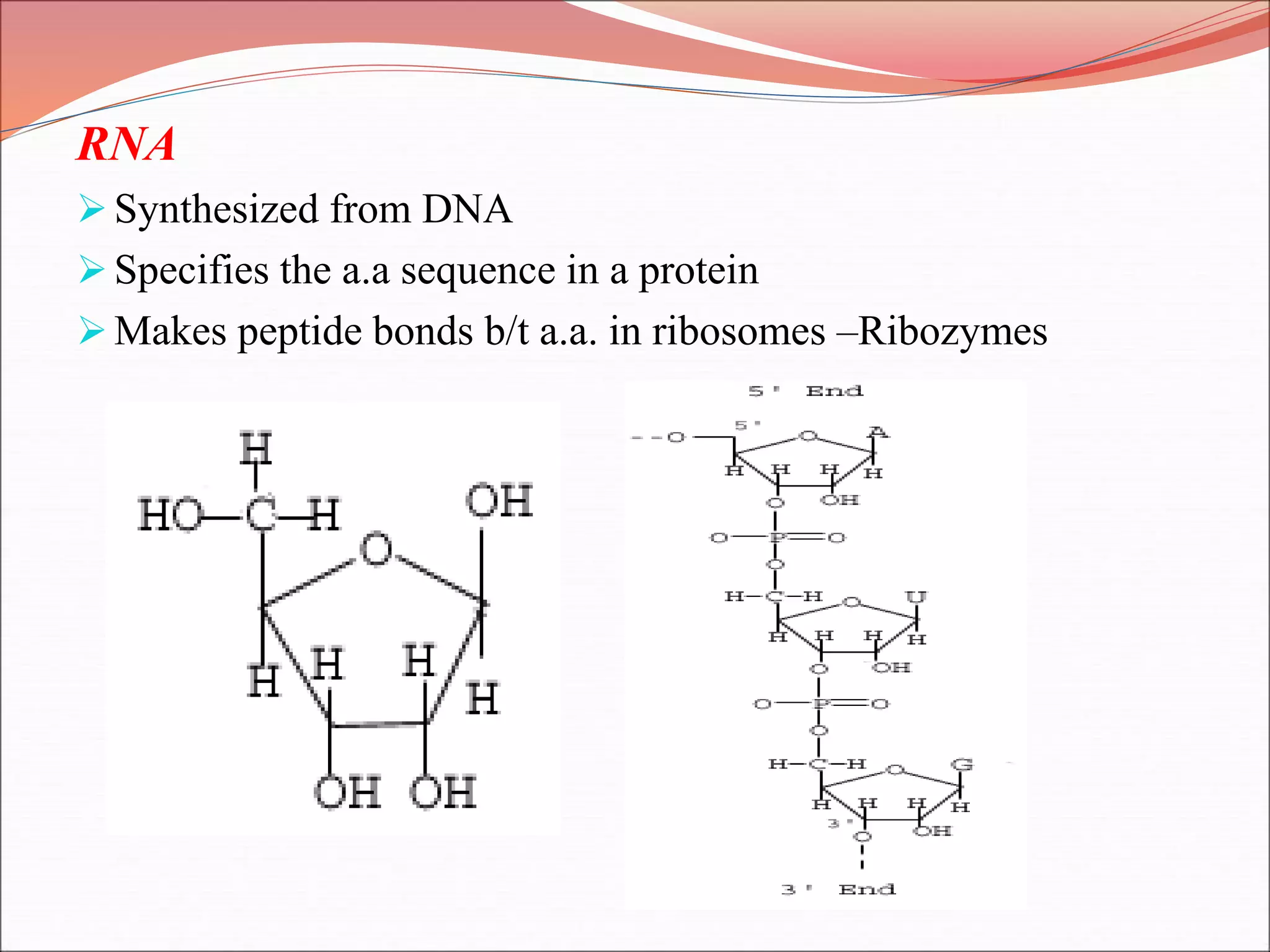
RNA
Synthesized from DNA
Specifies the a.a sequence in a protein
Makes peptide bonds b/t a.a. in ribosomes –Ribozymes
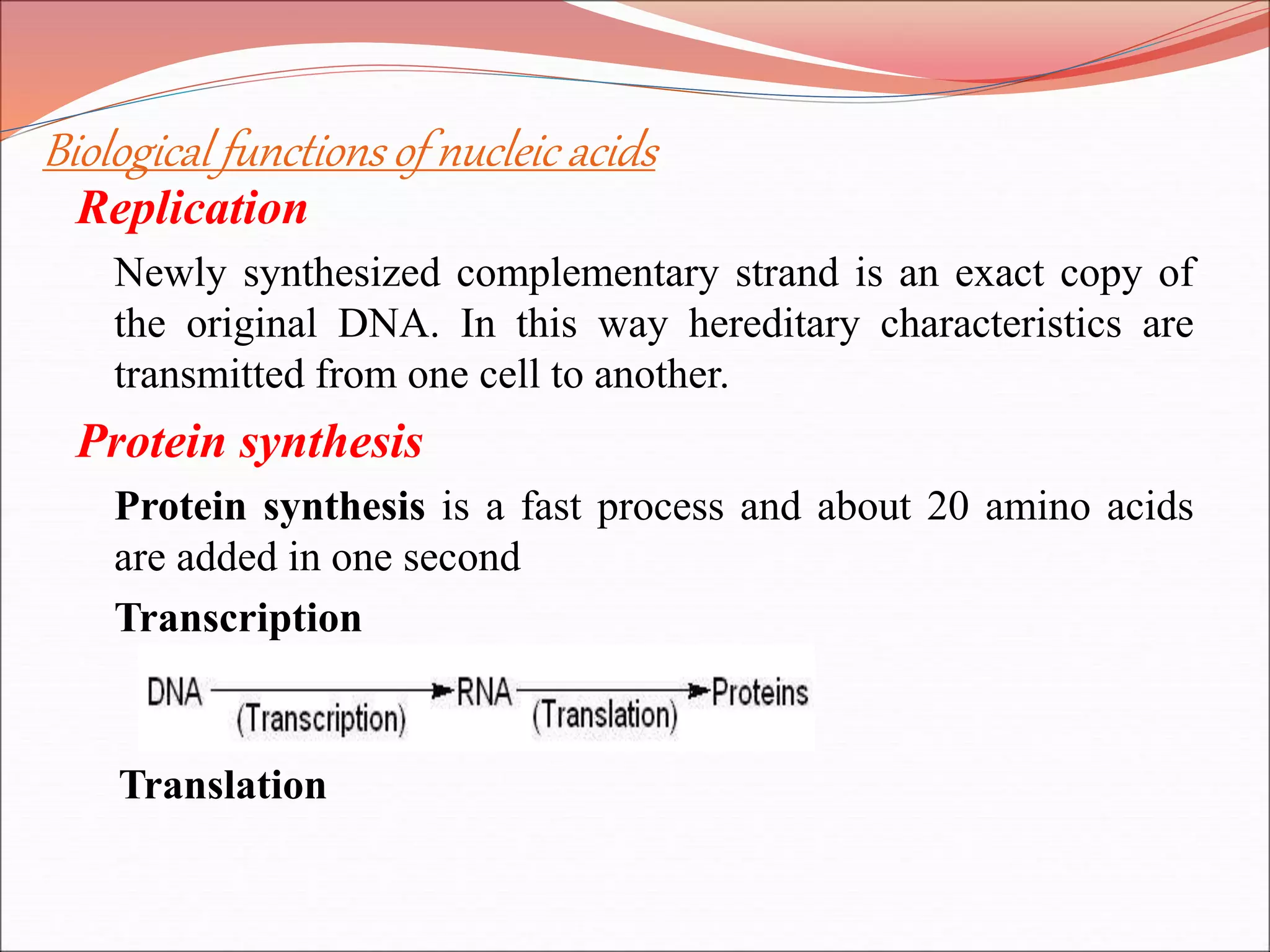
Biological functions of nucleic acids
Replication
Newly synthesized complementary strand is an exact copy of
the original DNA. In this way hereditary characteristics are
transmitted from one cell to another.
Protein synthesis
Protein synthesis is a fast process and about 20 amino acids
are added in one second
Transcription
Translation
References
Principle of Biochemistry- Nelson & Cox 5th edition
Biochemistry- Dr. U Satyanarayana 3rd edition
Biochemistry- Voet &Voet 4th edition
Internet
es.wikipedia.org/wiki/Macromolécula
bibliotecadigital.ilce.edu.mZ
www.langara.bc.ca/biology/mario/Bio

macromolecules by kk sahu sir

  • 1.
    Macromolecules By KAUSHAL KUMAR SAHU AssistantProfessor (Ad Hoc) Department of Biotechnology Govt. Digvijay Autonomous P. G. College Raj-Nandgaon ( C. G. )
  • 2.
    Contents  Introduction  History Definition Properties  Types of Macromolecules  Protein  Carbohydrates  Lipids  Nuclic Acid  Conclusions  References
  • 3.
    Introduction Cells and theirorganelles are made up of smaller building blocks called macromolecules. Macromolecules are actually made up of even smaller subunits. Each subunit of a macromolecule is called a monomer. The macromolecules themselves are called polymers, because they are made up of many of these subunits. Macromolecules are formed when monomers are linked together to form longer chains called polymers. A macromolecule is a very large molecule commonly created by polymerization of smaller subunits.
  • 4.
    History 1967: Kartha G,Bello J, Harker D. Tertiary structure of ribonuclease. The double helical structure of the DNA was predicted by James Watson and Francis Crick in 1953 (Nobel Prize, 1962) Hermann Staudinger (1881-1965) “Polymers are composed of very large molecules containing long sequences of simple chemical units linked together by covalent bonds.”
  • 5.
    Definition ‘A macromolecule isa very large molecule commonly created by polymerization of smaller subunits. In biochemistry, the term is applied to the four conventional biopolymers (nucleic acids, proteins, carbohydrates, and lipids), as well as non-polymeric molecules with large molecular mass such as macro cycles.’ ‘A macromolecule is a molecule with a very large number of atoms. Macromolecules typically have more than 100 component atoms.’
  • 6.
    Propertiesofmacromolecules  Many proteinsact as enzymes, and catalyze very specific chemical reactions. Other proteins have roles in the transport of substances, self-defense and structure. Proteins are found everywhere – inside of cells, in membranes, and outside of cells – and play many roles for organisms. The hydrophobic nature of lipids has important consequences for how lipids are used, transported, and metabolized in organisms.
  • 7.
    Typesofmacromolecules There are fourmacromolecules essential to living matter containing C, H, O, N and sometimes S. Proteins Carbohydrates Nucleic Acids Lipids.
  • 8.
    protein Proteins are composedof 4 elements: carbon, hydrogen, oxygen and nitrogen. Proteins consist of one or more polymers called polypeptides, which are made by linking amino acids together with peptide linkages. Peptide linkages are formed through condensation reactions. All proteins are made from the same 20 amino acids.
  • 9.
    This is a3-D image of a protein containing thousands of amino acids connected together & folded to make this distinct shape.
  • 10.
    Structure Primary structure The primarystructure of a protein is, its linear sequence of amino acids and the location of any disulfide (-S-S-) bridges. The amino terminal or "N-terminal" (NH3 +) at one end; carboxyl terminal ("C-terminal") (COO-) at the other.
  • 11.
    Secondary structure The partsof the polypeptide chain take up a particular shape; either folded (β sheets) or coiled (α helix) Secondary structure develops when the primary structure of a polypeptide has group projecting from the N-C-C backbone.
  • 12.
    Tertiarystructure Tertiary structure ofa protein is when the molecule is further folded and held in a particular complex shape forming precise and compact structure, unique to that protein. The shape is maintained permanently by the intra- molecular bonds: Hydrogen bond of one hydrogen atom shared by two other atoms Van der Waals force is the weak force that incurs when two or more atoms are very close Disulphide bond is a strong covalent bond formed between two adjacent cysteine amino acids.
  • 13.
    QuaRternarystructure Quarternary structure ofprotein arise when a number of tertiary polypeptides joined together forming a complex, biologically active molecule.
  • 14.
    biochemistry  Most proteinsconsist of linear polymers built from series of up to 20 different L-α-amino acids.  All proteinogenic amino acids possess common structural features, including an α-carbon to which an amino group, a carboxyl group, and a variable side chain are bonded.  Only proline differs from this basic structure as it contains an unusual ring to the N end  amine group, which forces the CO–NH amide moiety into a fixed conformation.
  • 15.
    Proteins are polymersof amino acids. Every amino acid has a amine group, acarboxyl group, and a R (variable) group. Amino acids are connected to form proteins by peptide bonds. These bonds are formed through dehydration synthesis.
  • 16.
    Protein function Antibodies arespecialized proteins involved in defending the body from antigens (foreign invaders). They can travel through the blood stream and are utilized by the immune system to identify and defend against bacteria, viruses, and other foreign intruders. Lactase breaks down the sugar lactose found in milk. Pepsin is a digestive enzyme that works in the stomach to break down proteins in food. Contractile Proteins are responsible for movement. Examples include actin and myosin. These proteins are involved in muscle contraction and movement.
  • 17.
    carbohydrate Condensation reactions formcovalent bonds between monosaccharides, called glycosidic linkages. Polysaccharides play various roles, from energy storage (starch, glycogen) to structure (cellulose Carbohydrates are always composed of carbon, hydrogen and oxygen molecules Monosaccharides typically have five or six carbon atoms.
  • 18.
  • 19.
    monosaccharides  hese arethe basic compounds with a cyclic structure consisting of carbon, hydrogen, and oxygen in the ratio of 1:2:1. 'Mono' refers to single and saccharides means sugar.  Glucose, fructose, galactose, arabinose, and xylose are common types of monosaccharides. Properties Monosaccharides are aliphatic aldehydes or ketones. They contain one carbonyl group and one or more hydroxyl group. Crystalline Soluble in water Sweet-tasting Glucose
  • 20.
    Disaccharides Disaccharides contain twosugar molecules. Common disaccharides are sucrose, lactose, maltose,and cellobiose. maltose Properties A disaccharide is formed when two monosaccharides bond together (by glycosidic bond) by a condensation reaction and release one molecule of water. Crystalline Water-soluble Sweet-tasting
  • 21.
    Polysaccharides A monosaccharide polymerconsisting of eight or more monomers. Examples of polysaccharides are starch and glycogen. Utilization of polysaccharides as carbon sources or energy sources requires that they be hydrolyzed into their constituent monosaccharides. Amylase
  • 22.
    Properties Polysaccharides have ahigh molecular weight. They are further divided into homopolysaccharides and heteropolysaccharides. Homopolysaccharides contain the same monosaccharides, whereas heteropolysaccharides contain more than one type of monosaccharides. Common homopolysaccharides include starch, cellulose, and glycogen. Pectin, hemicellulose, and gums are common heteropolysaccharides. Not water-soluble Not crystalline Not sweet
  • 23.
    Functions of Carbohydrates Monosaccharidesare a fuel for cellular metabolism. Monosaccharides are used in several biosynthesis reactions. Monosaccharides may be converted into space-saving polysaccharides, such as glyocogen and starch. These molecules provide stored energy for plant and animal cells. Carbohydrates are used to form structural elements, such as chitin in animals and cellulose in plants. Carbohydrates and modified carbohydrates are important for an organism's fertilization, development, blood clotting and immune system function.
  • 24.
    Lipids Hydrophobic property Lipids arejoined together by ester linkages. Fats and oils are lipids generally associated with energy storage. Fatty acids, which make up fats and oils, can be saturated or unsaturated, depending on the absence or presence of double bonded carbon atoms.
  • 25.
    Types of lipids Fattyacids Fatty acids are carboxylic acid with hydrocarbon side chain. They are the simplest form of lipids.
  • 26.
    Glycerolipids Glycerolipids are composedmainly of mono-, di-, and tri- substituted glycerols, the most well-known being the fatty acid triesters of glycerol, called triglycerides.
  • 27.
    Glycerophospholipids Glycerophospholipids, usually referredto as phospholipids, are ubiquitous in nature and are key components of the lipid bilayer of cells, as well as being involved in metabolism and cell signaling.
  • 28.
    Sphingolipids Sphingolipids are acomplicated family of compounds that share a common structural feature, a sphingoid base backbone that is synthesized de novo from the amino acid serine and a long-chain fatty acyl CoA, then converted into ceramides, phosphosphingolipids, glycosphingolipids and other compounds. The major sphingoid base of mammals is commonly referred to as sphingosine.
  • 29.
    Sterol lipids Sterol lipids,such as cholesterol and its derivatives, are an important component of membrane lipids, along with the glycerophospholipids and sphingomyelins. The steroids, all derived from the same fused four-ring core structure, have different biological roles as hormones and signaling molecules.
  • 30.
    Prenol lipids Prenol lipidsare synthesized from the five-carbon-unit precursors isopentenyl diphosphate and dimethylallyl diphosphate that are produced mainly via the mevalonic acid (MVA) pathway. Saccharolipids Saccharolipids describe compounds in which fatty acids are linked directly to a sugar backbone, forming structures that are compatible with membrane bilayers. In the saccharolipids, a monosaccharide substitutes for the glycerol backbone present in glycerolipids and glycerophospholipids
  • 31.
    Biological functions  Biologicalfunctions  Membranes  Energy storage  Signaling  Other functions  Maintenance of temperature
  • 32.
    Nucleic acid Nucleic acidsare large biological molecules essential for all known forms of life. Nucleic acids were discovered by Friedrich Miescher in 1869. Structure Pentose sugar – ribose, deoxyribose Nitrogenous base – A, T, G, C, U Phosphate group
  • 33.
    Types of Nucleicacid DNA Makes up chromosomes, genes DNA is converted to RNA, which is then translated into a particular protein. Replicated prior to cell division Sequences compared to establish evolutionary Relationships b/t organisms
  • 35.
    RNA Synthesized from DNA Specifiesthe a.a sequence in a protein Makes peptide bonds b/t a.a. in ribosomes –Ribozymes
  • 36.
    Biological functions ofnucleic acids Replication Newly synthesized complementary strand is an exact copy of the original DNA. In this way hereditary characteristics are transmitted from one cell to another. Protein synthesis Protein synthesis is a fast process and about 20 amino acids are added in one second Transcription Translation
  • 37.
    References Principle of Biochemistry-Nelson & Cox 5th edition Biochemistry- Dr. U Satyanarayana 3rd edition Biochemistry- Voet &Voet 4th edition Internet es.wikipedia.org/wiki/Macromolécula bibliotecadigital.ilce.edu.mZ www.langara.bc.ca/biology/mario/Bio