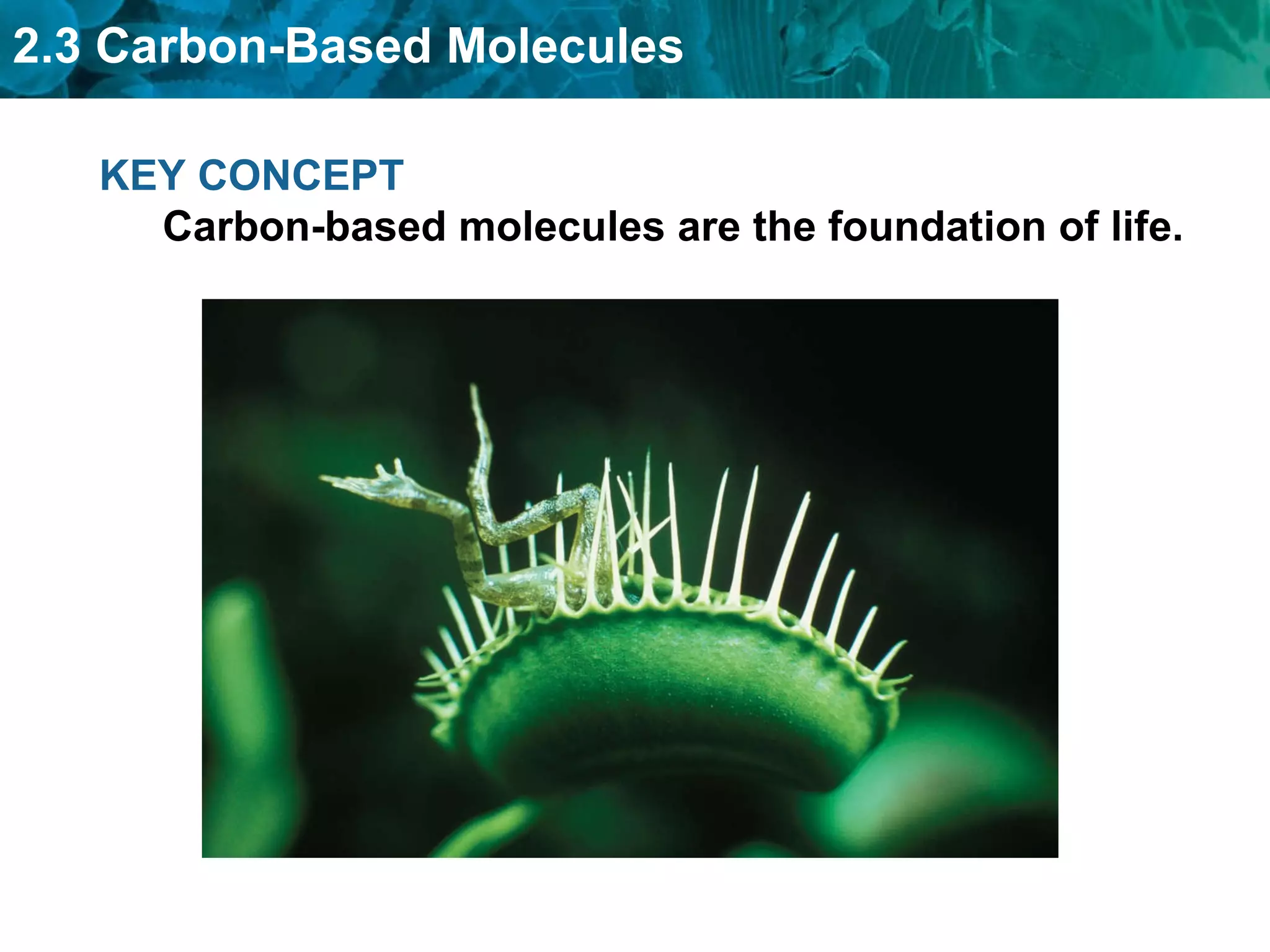
KEY CONCEPT Carbon-based molecules are the foundation of life.
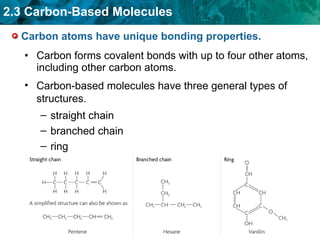
Carbon atoms have unique bonding properties. Carbon forms covalent bonds with up to four other atoms, including other carbon atoms. Carbon-based molecules have three general types of structures. straight chain branched chain ring
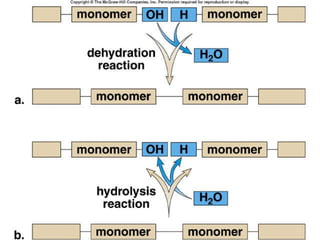
Macromolecules Carbohydrates, lipids, proteins, and nucleic acids are referred to as macromolecules because of their large size. Polymers   are made up of  monomers .
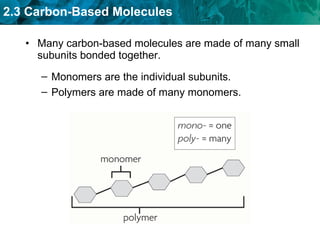
Many carbon-based molecules are made of many small subunits bonded together. Monomers are the individual subunits. Polymers are made of many monomers.
 
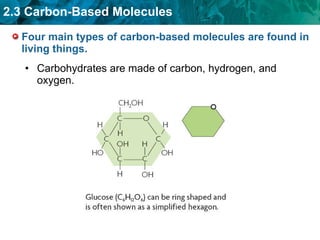
Four main types of carbon-based molecules are found in living things. Carbohydrates are made of carbon, hydrogen, and oxygen.
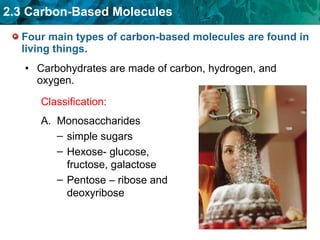
Four main types of carbon-based molecules are found in living things. Carbohydrates are made of carbon, hydrogen, and oxygen. Classification: Monosaccharides simple sugars Hexose- glucose, fructose, galactose Pentose – ribose and deoxyribose
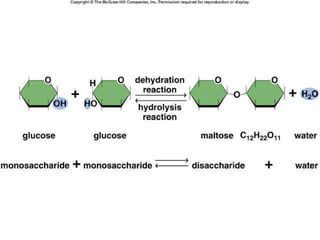
Disaccharides Two monosaccharides chemically bonded together by  dehydration synthesis Maltose, sucrose, lactose Polysaccharides -  polymers of monosaccharides formed by dehydration synthesis -  starch, glycogen, cellulose,  chitin
 
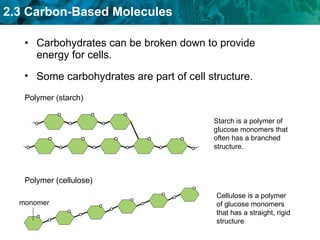
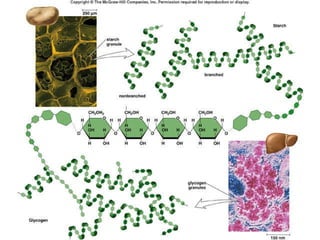
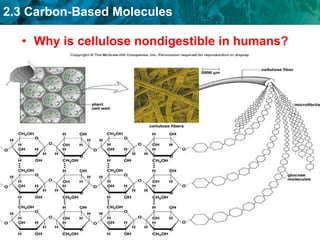
Carbohydrates can be broken down to provide energy for cells. Some carbohydrates are part of cell structure. Polymer (starch) Starch is a polymer of glucose monomers that often has a branched structure. Polymer (cellulose) Cellulose is a polymer of glucose monomers that has a straight, rigid structure monomer
 
Why is cellulose nondigestible in humans?
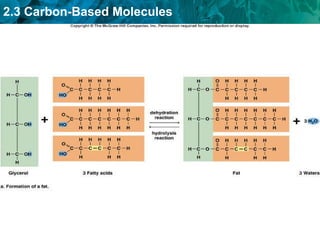
Lipids Lipids are nonpolar molecules that include fats, oils, and cholesterol. Insoluble in water due to hydrocarbon chains. Fats and Oils (Triglycerides) Contain glycerol and fatty acids Glycerol  - Contains three OH -  groups. Triglycerides  - Three fatty acids attached to each glycerol molecule. Fats and oil. Fatty acid  consists of long hydrocarbon chain.
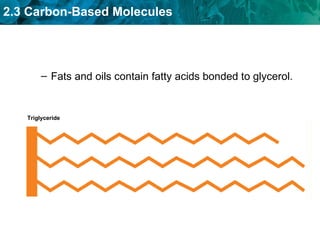
Fats and oils contain fatty acids bonded to glycerol. Triglyceride
 
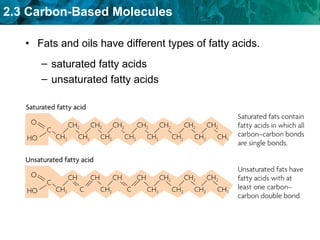
Fats and oils have different types of fatty acids.  saturated fatty acids unsaturated fatty acids
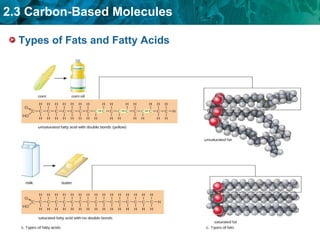
Types of Fats and Fatty Acids
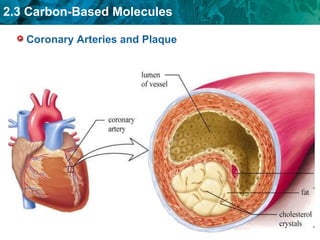
Coronary Arteries and Plaque
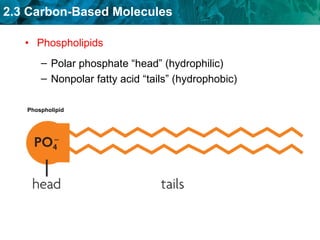
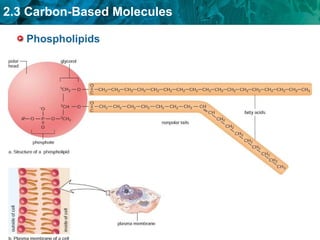
Phospholipids Polar phosphate “head” (hydrophilic) Nonpolar fatty acid “tails” (hydrophobic) Phospholipid
Phospholipids
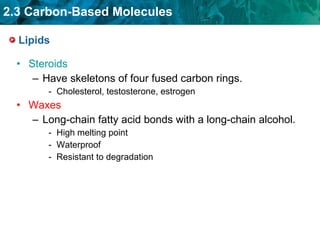
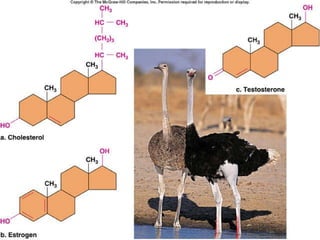
Lipids Steroids Have skeletons of four fused carbon rings. Cholesterol, testosterone, estrogen Waxes Long-chain fatty acid bonds with a long-chain alcohol. High melting point Waterproof Resistant to degradation
 
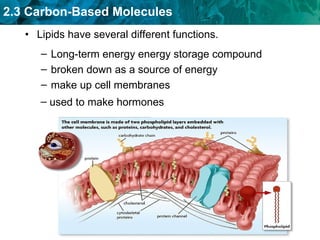
Lipids have several different functions. Long-term energy energy storage compound  broken down as a source of energy  make up cell membranes used to make hormones
Proteins Functions Support Enzymes Transport Defense Hormones Motion
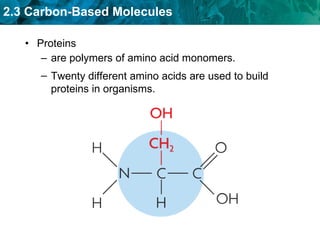
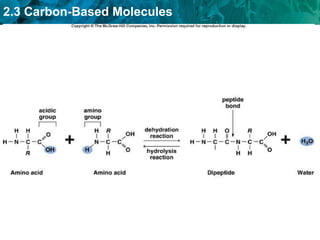
Proteins  are polymers of amino acid monomers. Twenty different amino acids are used to build proteins in organisms.
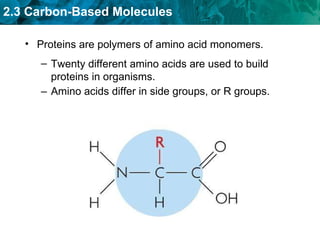
Amino acids differ in side groups, or R groups. Proteins are polymers of amino acid monomers. Twenty different amino acids are used to build proteins in organisms.
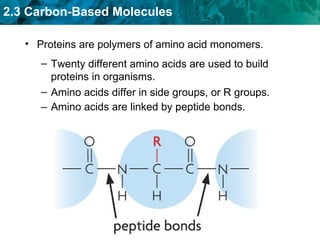
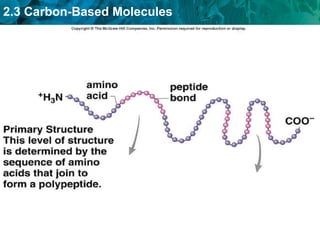
Amino acids are linked by peptide bonds. Proteins are polymers of amino acid monomers. Amino acids differ in side groups, or R groups. Twenty different amino acids are used to build proteins in organisms.
 
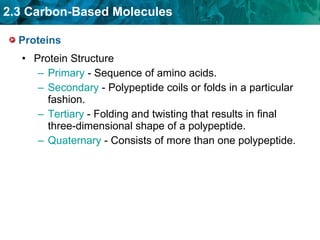
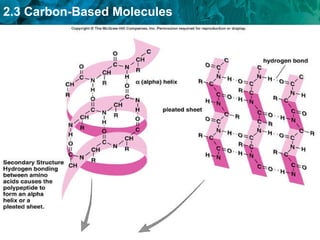
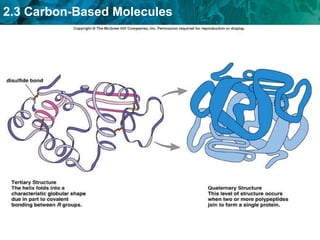
Proteins Protein Structure Primary  - Sequence of amino acids. Secondary   - Polypeptide coils or folds in a particular fashion. Tertiary   - Folding and twisting that results in final three-dimensional shape of a polypeptide. Quaternary   - Consists of more than one polypeptide.


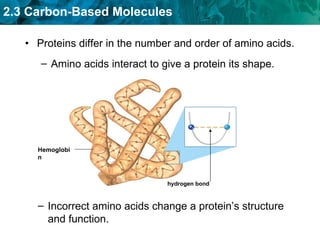
Proteins differ in the number and order of amino acids. Amino acids interact to give a protein its shape. Incorrect amino acids change a protein’s structure and function. hydrogen bond Hemoglobin
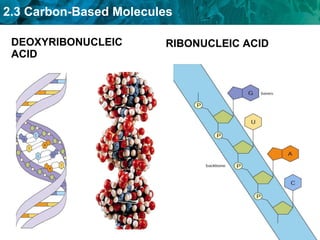
DEOXYRIBONUCLEIC ACID RIBONUCLEIC ACID
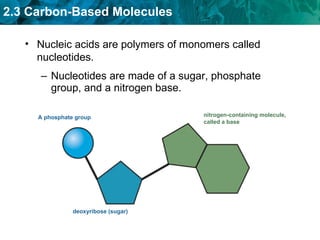
Nucleotides are made of a sugar, phosphate group, and a nitrogen base. Nucleic acids are polymers of monomers called nucleotides. A phosphate group nitrogen-containing molecule, called a base deoxyribose (sugar)
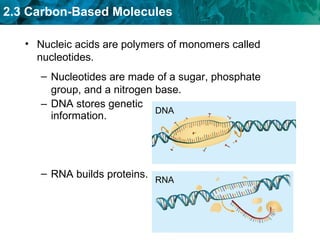
DNA stores genetic information. Nucleic acids are polymers of monomers called nucleotides. Nucleotides are made of a sugar, phosphate group, and a nitrogen base. RNA builds proteins. DNA RNA
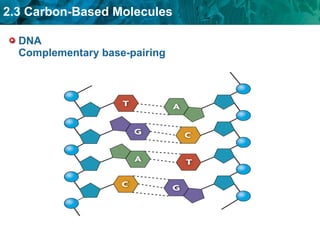
DNA Complementary base-pairing
 

Macromolecules

  • 1.
    KEY CONCEPT Carbon-basedmolecules are the foundation of life.
  • 2.
    Carbon atoms haveunique bonding properties. Carbon forms covalent bonds with up to four other atoms, including other carbon atoms. Carbon-based molecules have three general types of structures. straight chain branched chain ring
  • 3.
    Macromolecules Carbohydrates, lipids,proteins, and nucleic acids are referred to as macromolecules because of their large size. Polymers are made up of monomers .
  • 4.
    Many carbon-based moleculesare made of many small subunits bonded together. Monomers are the individual subunits. Polymers are made of many monomers.
  • 5.
  • 6.
    Four main typesof carbon-based molecules are found in living things. Carbohydrates are made of carbon, hydrogen, and oxygen.
  • 7.
    Four main typesof carbon-based molecules are found in living things. Carbohydrates are made of carbon, hydrogen, and oxygen. Classification: Monosaccharides simple sugars Hexose- glucose, fructose, galactose Pentose – ribose and deoxyribose
  • 8.
    Disaccharides Two monosaccharideschemically bonded together by dehydration synthesis Maltose, sucrose, lactose Polysaccharides - polymers of monosaccharides formed by dehydration synthesis - starch, glycogen, cellulose, chitin
  • 9.
  • 10.
    Carbohydrates can bebroken down to provide energy for cells. Some carbohydrates are part of cell structure. Polymer (starch) Starch is a polymer of glucose monomers that often has a branched structure. Polymer (cellulose) Cellulose is a polymer of glucose monomers that has a straight, rigid structure monomer
  • 11.
  • 12.
    Why is cellulosenondigestible in humans?
  • 13.
    Lipids Lipids arenonpolar molecules that include fats, oils, and cholesterol. Insoluble in water due to hydrocarbon chains. Fats and Oils (Triglycerides) Contain glycerol and fatty acids Glycerol - Contains three OH - groups. Triglycerides - Three fatty acids attached to each glycerol molecule. Fats and oil. Fatty acid consists of long hydrocarbon chain.
  • 14.
    Fats and oilscontain fatty acids bonded to glycerol. Triglyceride
  • 15.
  • 16.
    Fats and oilshave different types of fatty acids. saturated fatty acids unsaturated fatty acids
  • 17.
    Types of Fatsand Fatty Acids
  • 18.
  • 19.
    Phospholipids Polar phosphate“head” (hydrophilic) Nonpolar fatty acid “tails” (hydrophobic) Phospholipid
  • 20.
  • 21.
    Lipids Steroids Haveskeletons of four fused carbon rings. Cholesterol, testosterone, estrogen Waxes Long-chain fatty acid bonds with a long-chain alcohol. High melting point Waterproof Resistant to degradation
  • 22.
  • 23.
    Lipids have severaldifferent functions. Long-term energy energy storage compound broken down as a source of energy make up cell membranes used to make hormones
  • 24.
    Proteins Functions SupportEnzymes Transport Defense Hormones Motion
  • 25.
    Proteins arepolymers of amino acid monomers. Twenty different amino acids are used to build proteins in organisms.
  • 26.
    Amino acids differin side groups, or R groups. Proteins are polymers of amino acid monomers. Twenty different amino acids are used to build proteins in organisms.
  • 27.
    Amino acids arelinked by peptide bonds. Proteins are polymers of amino acid monomers. Amino acids differ in side groups, or R groups. Twenty different amino acids are used to build proteins in organisms.
  • 28.
  • 29.
    Proteins Protein StructurePrimary - Sequence of amino acids. Secondary - Polypeptide coils or folds in a particular fashion. Tertiary - Folding and twisting that results in final three-dimensional shape of a polypeptide. Quaternary - Consists of more than one polypeptide.
  • 30.
  • 31.
  • 32.
  • 33.
    Proteins differ inthe number and order of amino acids. Amino acids interact to give a protein its shape. Incorrect amino acids change a protein’s structure and function. hydrogen bond Hemoglobin
  • 34.
  • 35.
    Nucleotides are madeof a sugar, phosphate group, and a nitrogen base. Nucleic acids are polymers of monomers called nucleotides. A phosphate group nitrogen-containing molecule, called a base deoxyribose (sugar)
  • 36.
    DNA stores geneticinformation. Nucleic acids are polymers of monomers called nucleotides. Nucleotides are made of a sugar, phosphate group, and a nitrogen base. RNA builds proteins. DNA RNA
  • 37.
  • 38.