Downloaded 33 times
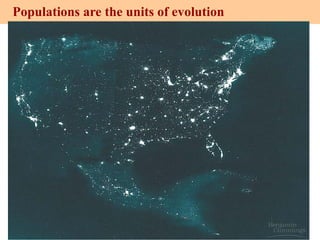
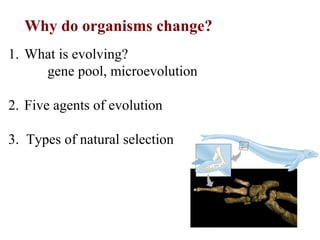
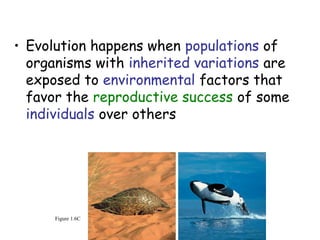
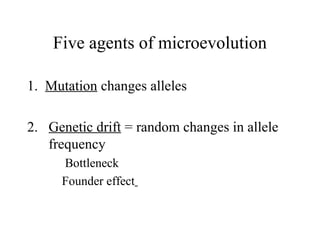
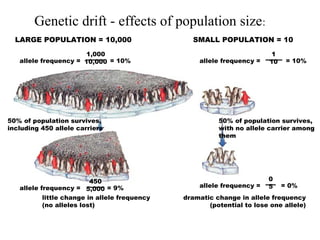
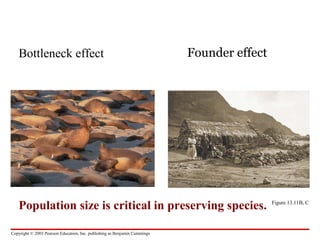
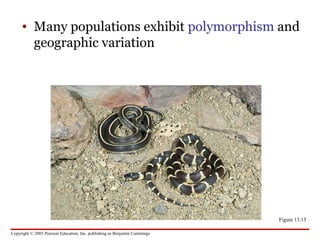
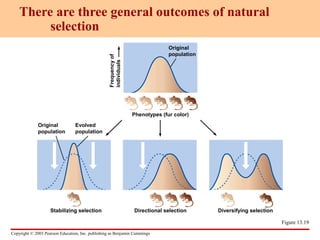
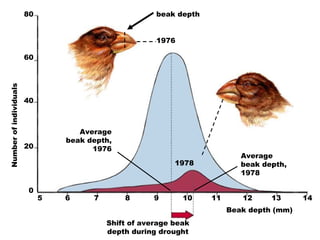


Populations, rather than individuals, are the units of evolution. A population is a group of interbreeding individuals of the same species living in the same area. Five agents can drive microevolution within a population: mutation, genetic drift, gene flow, non-random mating, and natural selection. Natural selection leads to differential reproductive success and is the only agent that can result in adaptation to the environment.


