Evolution and Gene
 FrequenciesParapatric, and
    Allopatric,
             Sympatric Speciation

By: Levi Webster and Ally Whitacre
Zoo 1 2007-2008
Speciation
Definition

    Reproductive
    Isolation
          Gene Pool
Allopatric Speciation
 Geographic    isolation

    •Barriers

                •Distance


   Tyle
   r
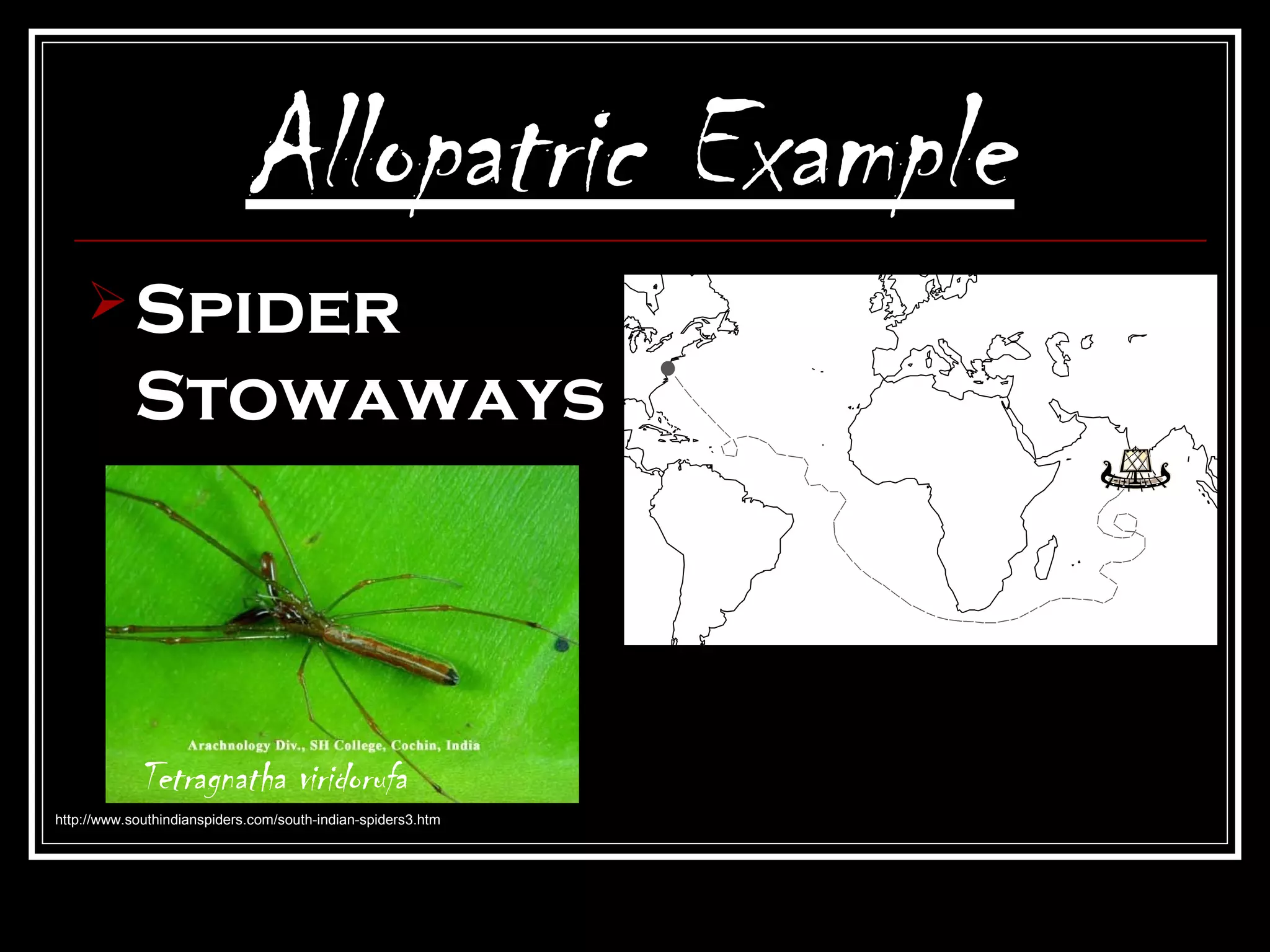
Allopatric Example
     Spider
            Stowaways


            Tetragnatha viridorufa
http://www.southindianspiders.com/south-indian-spiders3.htm
Parapatric Speciation
   Demes-
   subpopulations
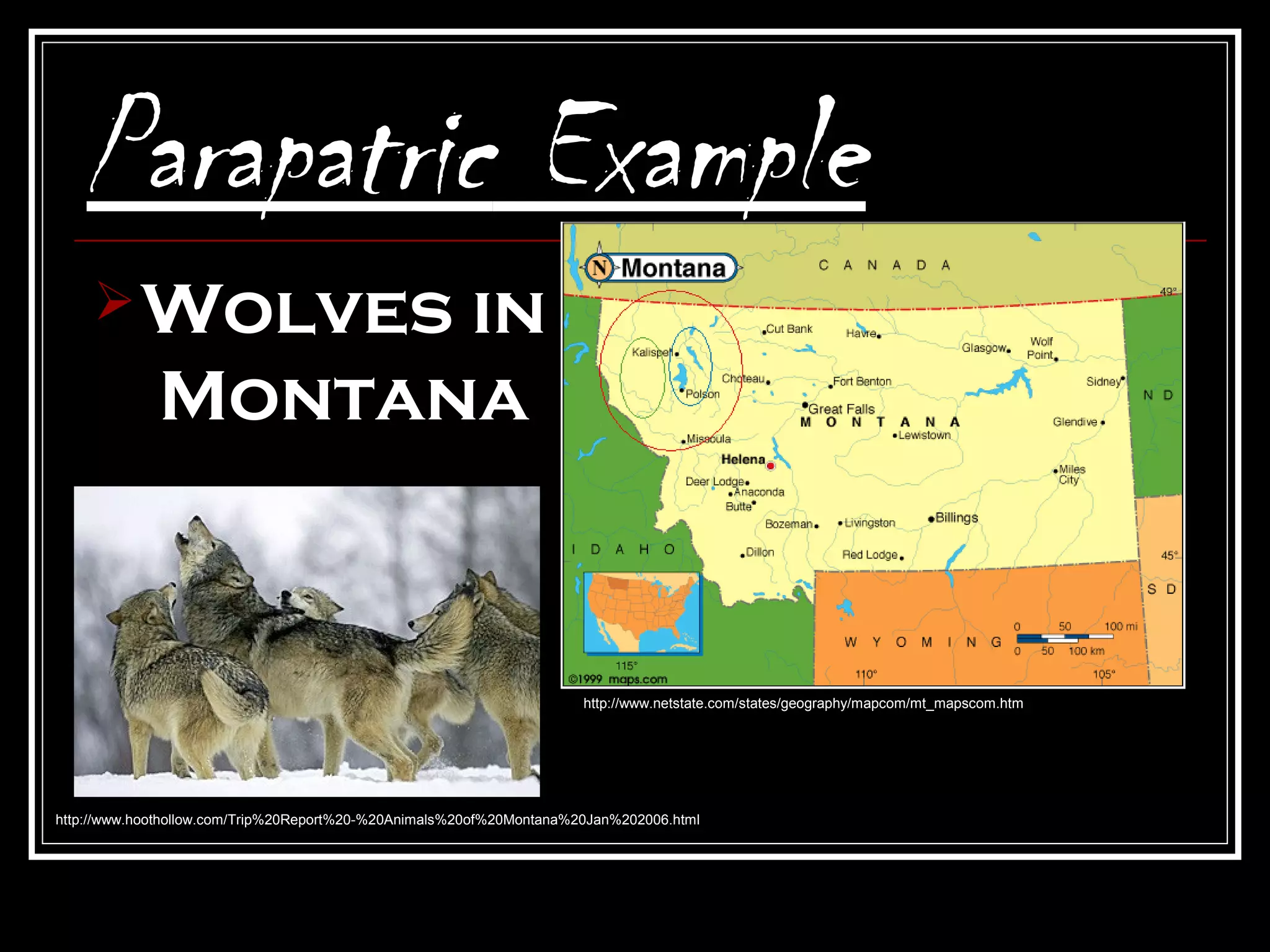
Parapatric Example
      Wolves      in
             Montana


                                                                      http://www.netstate.com/states/geography/mapcom/mt_mapscom.htm


http://www.hoothollow.com/Trip%20Report%20-%20Animals%20of%20Montana%20Jan%202006.html
Sympatric Speciation
                                       Nolarge
                                       scale

                                         Niche
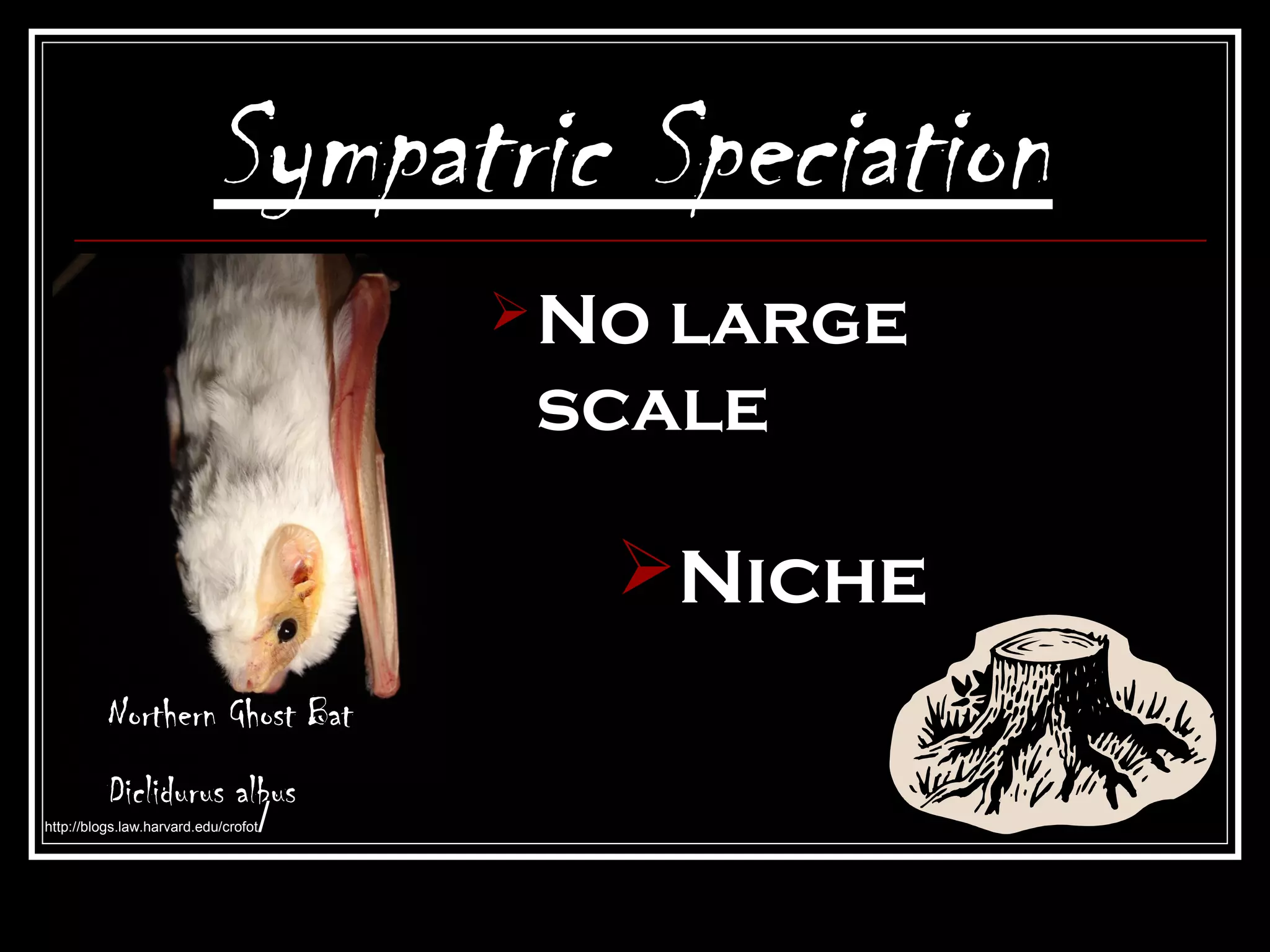
          Northern Ghost Bat
          Diclidurus albus
                       /
http://blogs.law.harvard.edu/crofot
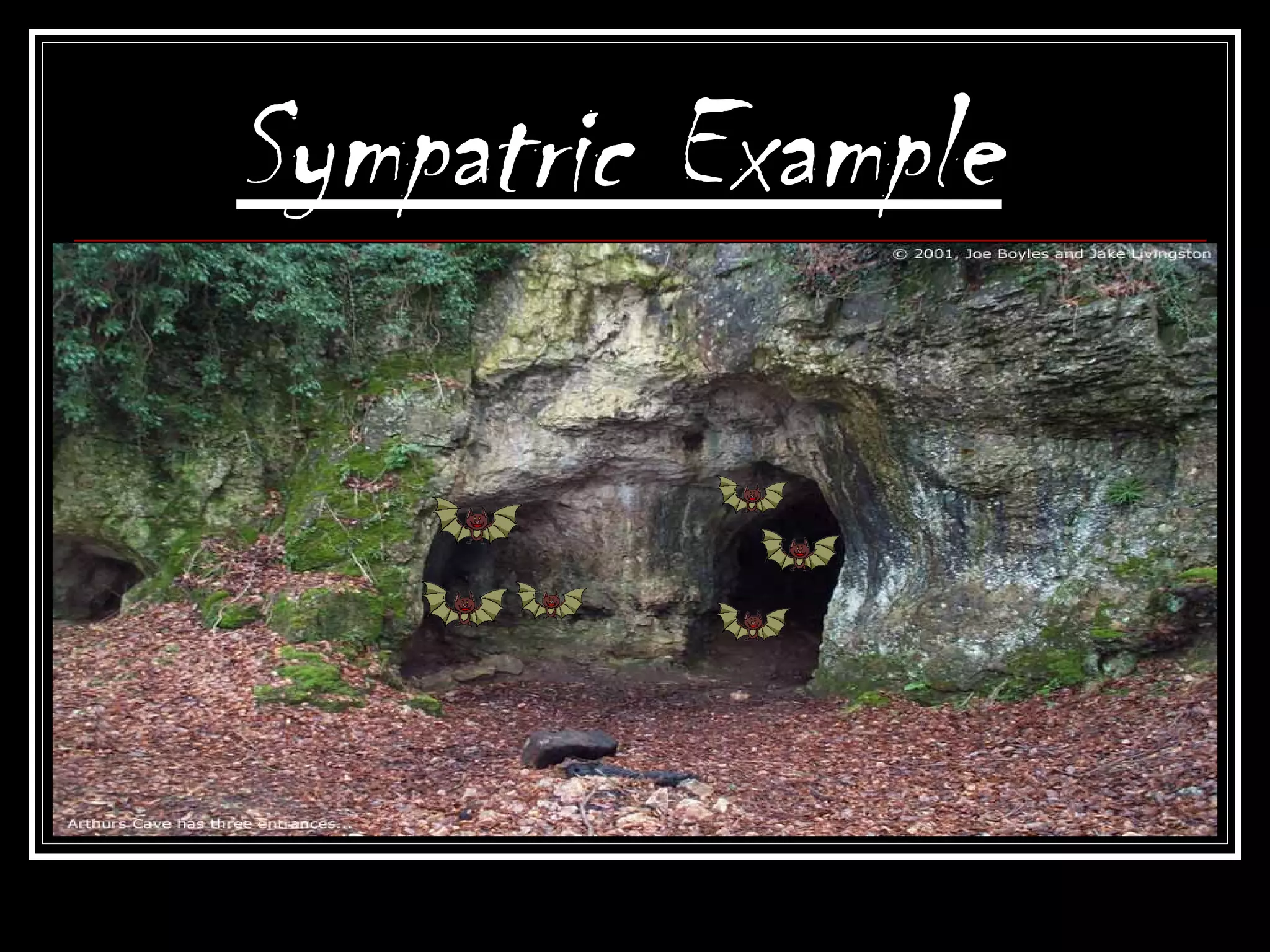
Sympatric Example
Question 1
   Throughout a large coral reef system lives
    a population of clown fish. Some prefer to
    live in a more elevated section of the reef,
    while the others prefer a more secluded
    region. This could result in what type of
    speciation?
A. Allopatric
   B. Parapatric
      C. Sympatric
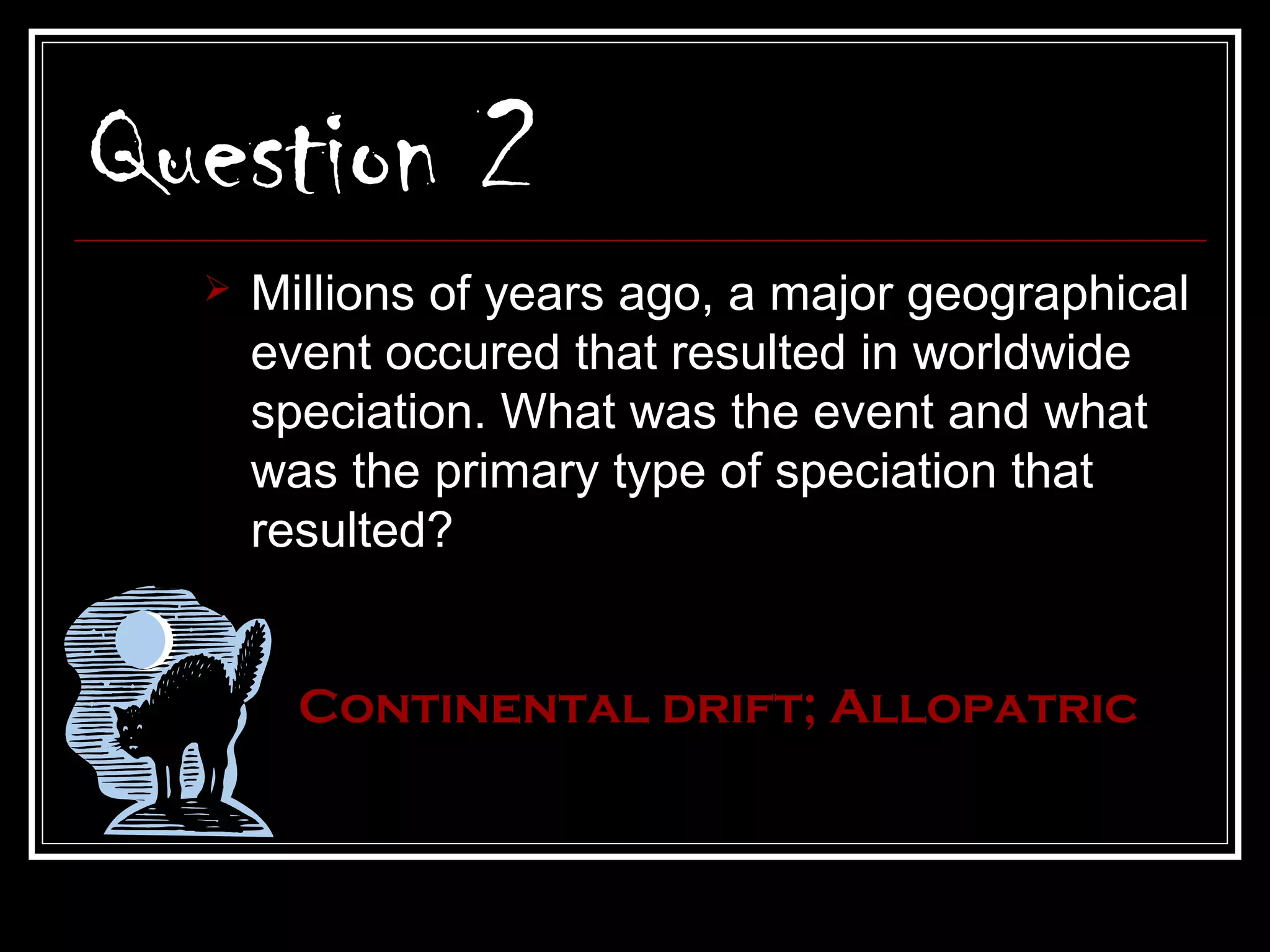
Question 2
     Millions of years ago, a major geographical
      event occured that resulted in worldwide
      speciation. What was the event and what
      was the primary type of speciation that
      resulted?


        Continental drift; Allopatric
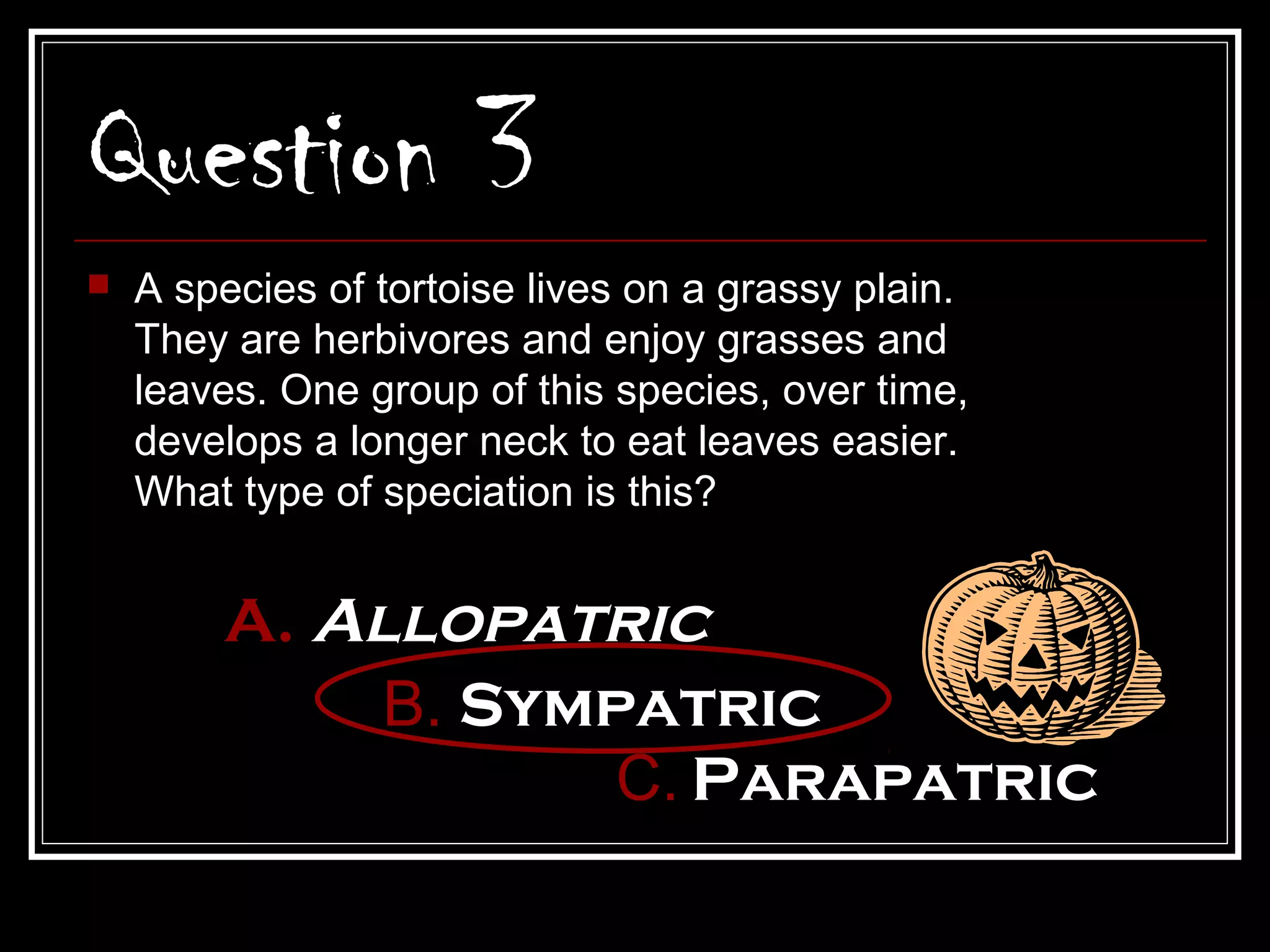
Question 3
   A species of tortoise lives on a grassy plain.
    They are herbivores and enjoy grasses and
    leaves. One group of this species, over time,
    develops a longer neck to eat leaves easier.
    What type of speciation is this?


        A. Allopatric
             B. Sympatric
                    C. Parapatric
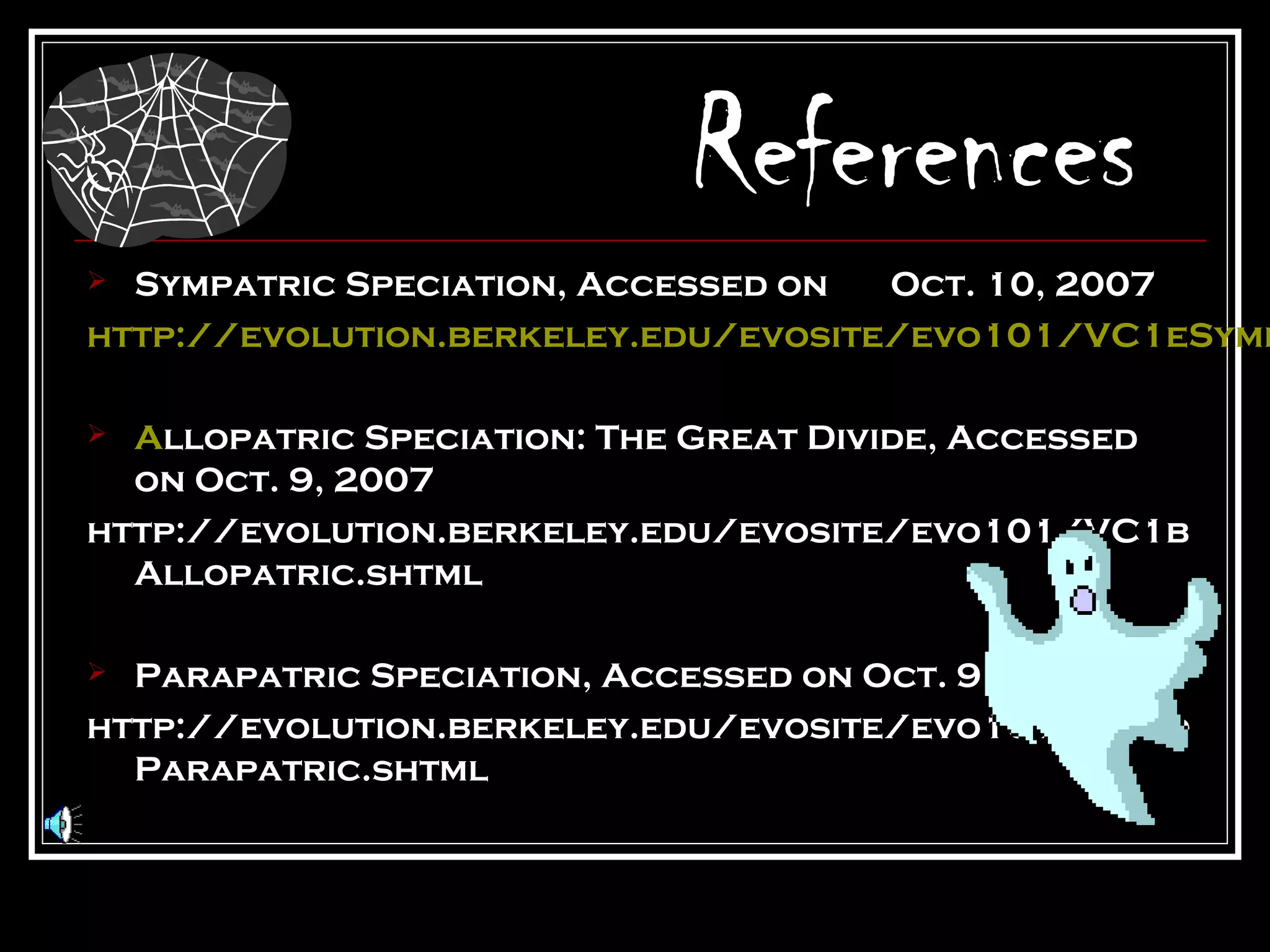
References
 Sympatric Speciation, Accessed on  Oct. 10, 2007
http://evolution.berkeley.edu/evosite/evo101/VC1eSymp

 Allopatric Speciation: The Great Divide, Accessed
  on Oct. 9, 2007
http://evolution.berkeley.edu/evosite/evo101/VC1b
  Allopatric.shtml

 Parapatric Speciation, Accessed on Oct. 9, 2007
http://evolution.berkeley.edu/evosite/evo101/VC1d
  Parapatric.shtml

Cool pp

  • 1.
    Evolution and Gene FrequenciesParapatric, and Allopatric, Sympatric Speciation By: Levi Webster and Ally Whitacre Zoo 1 2007-2008
  • 2.
    Speciation Definition Reproductive Isolation Gene Pool
  • 3.
    Allopatric Speciation  Geographic isolation •Barriers •Distance Tyle r
  • 4.
    Allopatric Example  Spider Stowaways Tetragnatha viridorufa http://www.southindianspiders.com/south-indian-spiders3.htm
  • 5.
    Parapatric Speciation  Demes- subpopulations
  • 6.
    Parapatric Example  Wolves in Montana http://www.netstate.com/states/geography/mapcom/mt_mapscom.htm http://www.hoothollow.com/Trip%20Report%20-%20Animals%20of%20Montana%20Jan%202006.html
  • 7.
    Sympatric Speciation  Nolarge scale Niche Northern Ghost Bat Diclidurus albus / http://blogs.law.harvard.edu/crofot
  • 8.
  • 9.
    Question 1  Throughout a large coral reef system lives a population of clown fish. Some prefer to live in a more elevated section of the reef, while the others prefer a more secluded region. This could result in what type of speciation? A. Allopatric B. Parapatric C. Sympatric
  • 10.
    Question 2  Millions of years ago, a major geographical event occured that resulted in worldwide speciation. What was the event and what was the primary type of speciation that resulted? Continental drift; Allopatric
  • 11.
    Question 3  A species of tortoise lives on a grassy plain. They are herbivores and enjoy grasses and leaves. One group of this species, over time, develops a longer neck to eat leaves easier. What type of speciation is this? A. Allopatric B. Sympatric C. Parapatric
  • 12.
    References  Sympatric Speciation,Accessed on Oct. 10, 2007 http://evolution.berkeley.edu/evosite/evo101/VC1eSymp  Allopatric Speciation: The Great Divide, Accessed on Oct. 9, 2007 http://evolution.berkeley.edu/evosite/evo101/VC1b Allopatric.shtml  Parapatric Speciation, Accessed on Oct. 9, 2007 http://evolution.berkeley.edu/evosite/evo101/VC1d Parapatric.shtml