LYMPHATIC AND IMMUNE
      SYSTEM
        Immunology
     Medical Terminology for Healthcare Professionals
                        HSC 1531
           Florida State College of Jacksonville
            Professor: Michael Whitchurch, MHS
The Lymphatic and Immune Systems at a
Glance

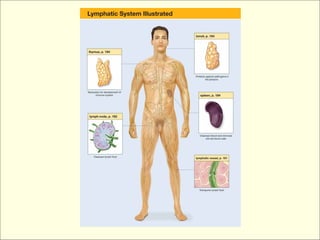
 Functions of the Lymphatic System
   Network   of vessels that picks up excess
    tissue fluid, cleanses it, and returns it to
    circulatory system
   Picks up fats absorbed by digestive system


 Functions of Immune System
   Fights   disease and infections
The Lymphatic and Immune Systems at
a Glance
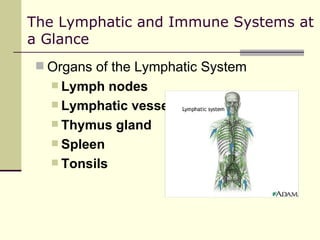
 Organs of the Lymphatic System
   Lymph   nodes
   Lymphatic vessels
   Thymus gland
   Spleen
   Tonsils
Lymphatic & Immune Combining Forms

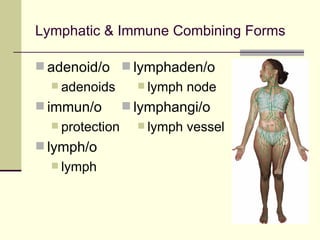
 adenoid/o  lymphaden/o
   adenoids        lymph   node
 immun/o         lymphangi/o
   protection      lymph   vessel
 lymph/o
   lymph
Lymphatic & Immune Combining Forms

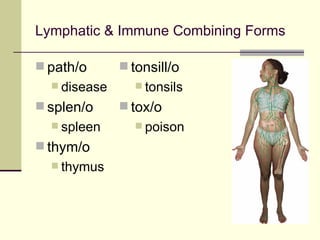
 path/o       tonsill/o
   disease      tonsils

 splen/o      tox/o
   spleen       poison

 thym/o
   thymus
Lymphatic & ImmuneSuffixes

 –globulin
     protein
Anatomy and Physiology

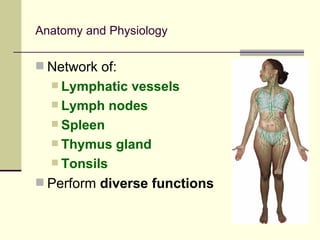
 Network of:
   Lymphatic  vessels
   Lymph nodes
   Spleen
   Thymus gland
   Tonsils

 Perform diverse functions
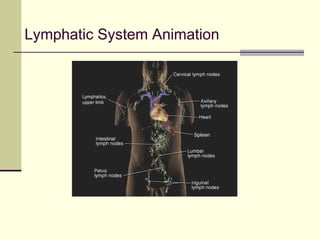
Lymphatic System Animation
Anatomy and Physiology – Lymphatic
System

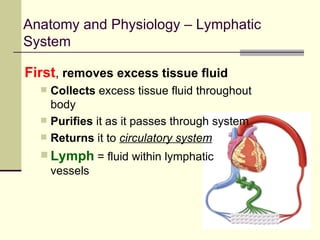
First, removes excess tissue fluid
     Collects excess tissue fluid throughout
      body
     Purifies it as it passes through system
     Returns it to circulatory system
   Lymph = fluid within lymphatic
      vessels
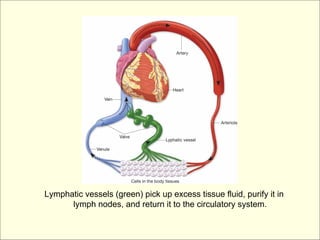
Lymphatic vessels (green) pick up excess tissue fluid, purify it in
      lymph nodes, and return it to the circulatory system.
Anatomy and Physiology – Lymphatic
 System
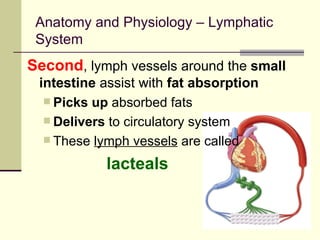
Second, lymph vessels around the small
 intestine assist with fat absorption
   Picks up absorbed fats
   Delivers to circulatory system
   These lymph vessels are called

            lacteals
Anatomy and Physiology – Lymphatic
System
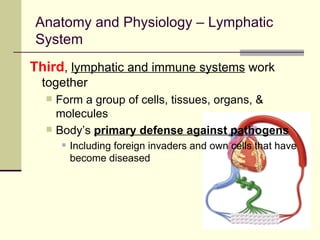
Third, lymphatic and immune systems work
 together
     Form a group of cells, tissues, organs, &
      molecules
     Body’s primary defense against pathogens
          Including foreign invaders and own cells that have
           become diseased
Lymphatic Vessels

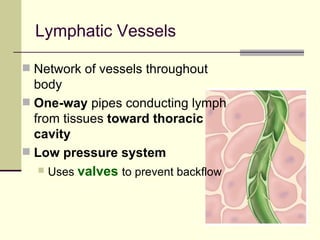
 Network of vessels throughout
  body
 One-way pipes conducting lymph
  from tissues toward thoracic
  cavity
 Low pressure system
    Uses valves to prevent backflow
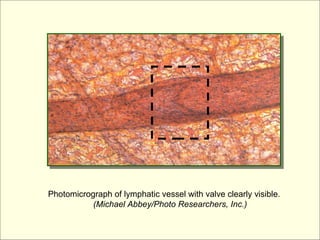
Photomicrograph of lymphatic vessel with valve clearly visible.
           (Michael Abbey/Photo Researchers, Inc.)
Lymphatic Vessels

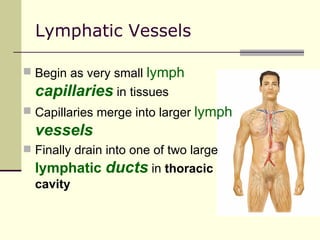
 Begin as very small   lymph
  capillaries in tissues
 Capillaries merge into larger   lymph
  vessels
 Finally drain into one of two large
  lymphatic ducts in thoracic
  cavity
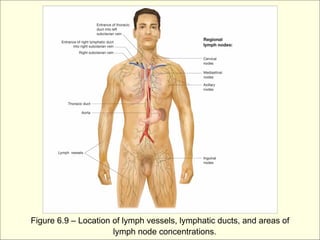
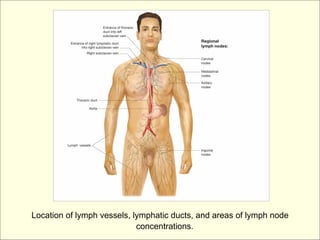
Figure 6.9 – Location of lymph vessels, lymphatic ducts, and areas of
                      lymph node concentrations.
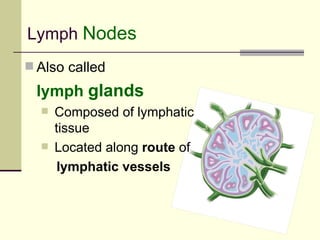
Lymph Nodes
 Also called

 lymph glands
     Composed of lymphatic
      tissue
     Located along route of
       lymphatic vessels
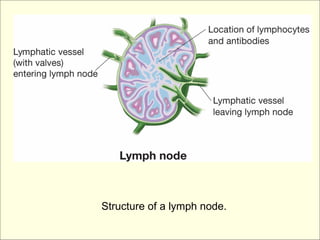
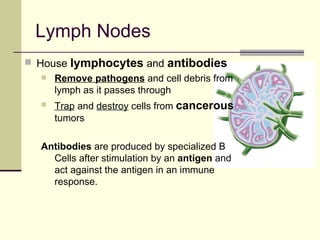
Structure of a lymph node.
Lymph Nodes
 House   lymphocytes and antibodies
     Remove pathogens and cell debris from
      lymph as it passes through
     Trap and destroy cells from cancerous
      tumors

  Antibodies are produced by specialized B
    Cells after stimulation by an antigen and
    act against the antigen in an immune
    response.
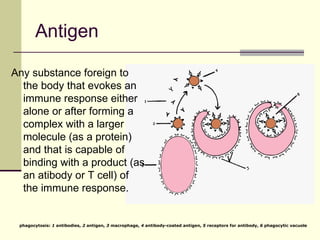
Antigen

Any substance foreign to
  the body that evokes an
  immune response either
  alone or after forming a
  complex with a larger
  molecule (as a protein)
  and that is capable of
  binding with a product (as
  an atibody or T cell) of
  the immune response.


 phagocytosis: 1 antibodies, 2 antigen, 3 macrophage, 4 antibody-coated antigen, 5 receptors for antibody, 6 phagocytic vacuole
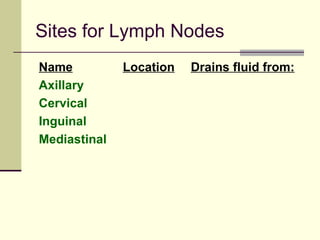
Sites for Lymph Nodes
Name          Location   Drains fluid from:
Axillary
Cervical
Inguinal
Mediastinal
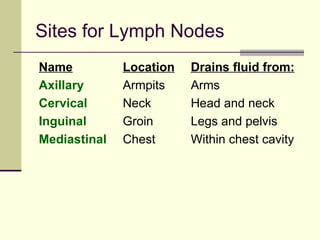
Sites for Lymph Nodes
Name          Location   Drains fluid from:
Axillary      Armpits    Arms
Cervical      Neck       Head and neck
Inguinal      Groin      Legs and pelvis
Mediastinal   Chest      Within chest cavity
Location of lymph vessels, lymphatic ducts, and areas of lymph node
                            concentrations.
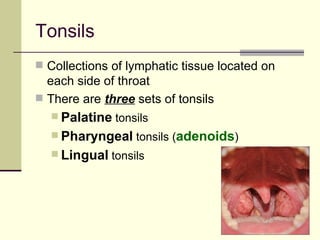
Tonsils
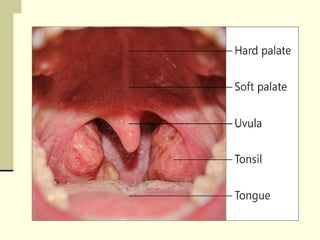
 Collections of lymphatic tissue located on
  each side of throat
 There are three sets of tonsils
   Palatine tonsils
   Pharyngeal tonsils (adenoids)
   Lingual tonsils
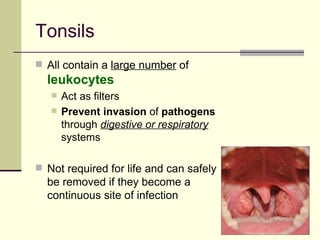
Tonsils
 All contain a large number of
  leukocytes
      Act as filters
      Prevent invasion of pathogens
       through digestive or respiratory
       systems

 Not required for life and can safely
  be removed if they become a
  continuous site of infection
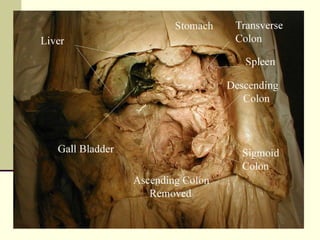
Spleen

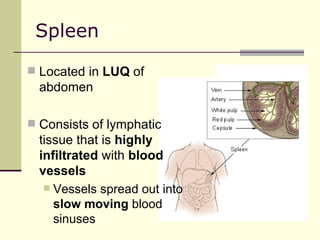
 Located in LUQ of
  abdomen

 Consists of lymphatic
  tissue that is highly
  infiltrated with blood
  vessels
    Vessels spread out into
     slow moving blood
     sinuses
Spleen
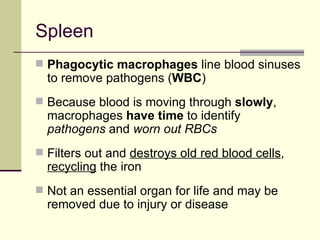
 Phagocytic macrophages line blood sinuses
  to remove pathogens (WBC)
 Because blood is moving through slowly,
  macrophages have time to identify
  pathogens and worn out RBCs
 Filters out and destroys old red blood cells,
  recycling the iron
 Not an essential organ for life and may be
  removed due to injury or disease
Thymus Gland
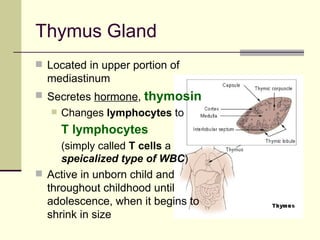
 Located in upper portion of
  mediastinum
 Secretes hormone,   thymosin
      Changes lymphocytes to
       T lymphocytes
       (simply called T cells a
       speicalized type of WBC)
 Active in unborn child and
  throughout childhood until
  adolescence, when it begins to
  shrink in size
Thymus Gland
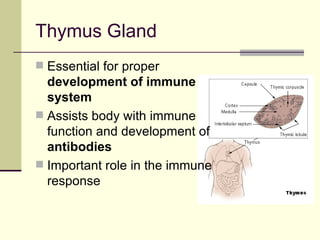
 Essential for proper
  development of immune
  system
 Assists body with immune
  function and development of
  antibodies
 Important role in the immune
  response
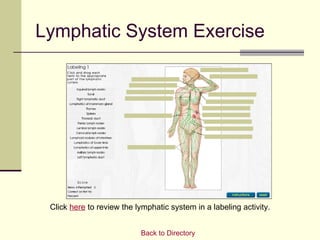
Lymphatic System Exercise


 Click here to review the lymphatic system in a labeling activity.


                           Back to Directory
Immunity
 Body’s ability to defend itself against
  pathogens
      Bacteria, viruses, fungi, protozoans, toxins,
       cancerous tumors
 Two forms
    Naturalimmunity
    Acquired immunity
Natural Immunity
 Also called   innate immunity
 Not specific to a particular disease
 Doesn’t require prior exposure to pathogen
 Example:
    Macrophage
      WBCs that ingest any pathogen encountered
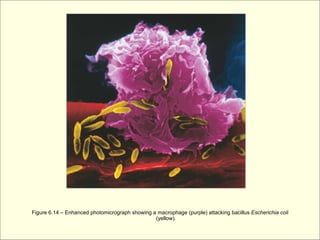
Figure 6.14 – Enhanced photomicrograph showing a macrophage (purple) attacking bacillus Escherichia coli
                                                (yellow).
Acquired Immunity
 Body’s response to a specific pathogen
 May be either:
   Passive acquired immunity
   Active acquired immunity
Acquired Immunity
 Passive acquired immunity
      Results when a person receives protective
       substances produced by another human or animal
      Examples: maternal antibodies, antitoxin
 Active acquired immunity
    Develops following direct exposure to pathogen
    Stimulates immune response – series of mechanisms
     designed to neutralize pathogen
    Immunizations or vaccinations are special
     types of active acquired immunity
Immune Response
 Disease-causing agents called      antigens stimulate
  immune response
 Two distinct and different processes
      Humoral immunity
       (also called antibody-mediated immunity)
         Production of B cells
      Cellular immunity
       (also called cell-mediated immunity)
         Production of T cells and NK cells
Humoral Immunity (Immune response)

 Involves production of   B lymphocytes
     Also called B cells
     Respond to antigens by producing a
      protective protein, an antibody
     Antibodies combine with antigen to form …..
     antigen-antibody complex
   Targets pathogen for phagocytosis

     Prevents infectious agent from damaging
      healthy cells
Cellular Immunity (Immune response)

 Involves production of T cells and …..
       natural killer cells (NK)
 These defense cells are …..
       cytotoxic
     Physically attack and destroy pathogenic cells
Standard Precautions
 There are a large number of pathogens in a hospital
  setting
      Nosocomial infection
        Acquired in the hospital
      Cross infection
        Pathogen acquired from another person
      Reinfection
        Becomes infected again with same pathogen
      Self-inoculation
        Pathogen from one part of patient’s body spreads
        to another part of body
Summary of
Standard Precaution Guidelines
i   Wash hands before putting on and after
    removing gloves and before and after working
    with patient or equipment.
e   Wear gloves when in contact with any body fluid,
    mucous membrane, or non-intact skin or if you
    have chapped hands, a rash, or open sores.
d   Wear non-permeable gown or apron during
    procedures that are likely to expose you to any
    body fluid, mucous membrane, or non-intact skin.
Summary of
Standard Precaution Guidelines
i   Wear mask and protective eyewear or a face
    shield when patients are coughing or if body fluid
    droplets or splashes are likely.

e   Wear face mask and eyewear that seal close to
    the face during procedures that cause body
    tissues to be vaporized.

B   Remove for proper cleaning any shared
    equipment that has come into contact with body
    fluids, mucous membrane, or non-intact skin.
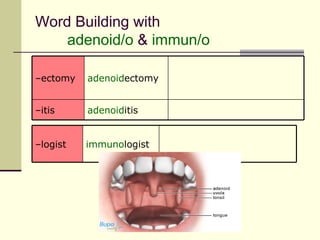
Word Building with
    adenoid/o & immun/o

–ectomy   adenoidectomy


–itis     adenoiditis


–logist   immunologist
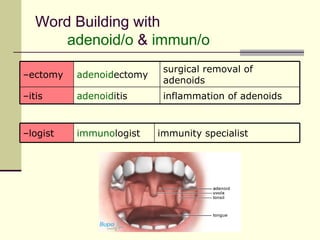
Word Building with
       adenoid/o & immun/o
                           surgical removal of
–ectomy   adenoidectomy
                           adenoids
–itis     adenoiditis      inflammation of adenoids


–logist   immunologist    immunity specialist
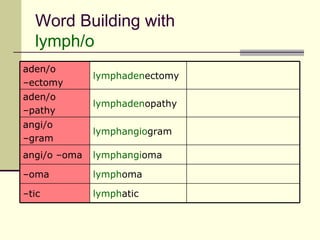
Word Building with
  lymph/o
aden/o
              lymphadenectomy
–ectomy
aden/o
              lymphadenopathy
–pathy
angi/o
              lymphangiogram
–gram
angi/o –oma   lymphangioma

–oma          lymphoma

–tic          lymphatic
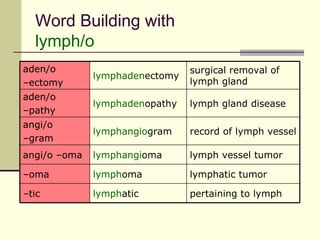
Word Building with
  lymph/o
aden/o                          surgical removal of
              lymphadenectomy
–ectomy                         lymph gland
aden/o
              lymphadenopathy   lymph gland disease
–pathy
angi/o
              lymphangiogram    record of lymph vessel
–gram
angi/o –oma   lymphangioma      lymph vessel tumor

–oma          lymphoma          lymphatic tumor

–tic          lymphatic         pertaining to lymph
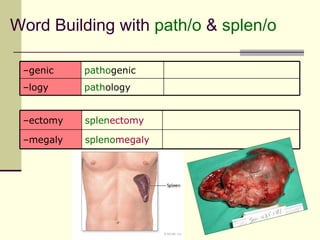
Word Building with path/o & splen/o

 –genic    pathogenic
 –logy     pathology


 –ectomy   splenectomy

 –megaly   splenomegaly
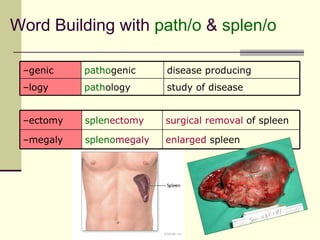
Word Building with path/o & splen/o

 –genic    pathogenic     disease producing
 –logy     pathology      study of disease


 –ectomy   splenectomy    surgical removal of spleen

 –megaly   splenomegaly   enlarged spleen
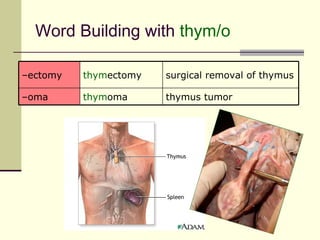
Word Building with thym/o

–ectomy   thymectomy

–oma      thymoma
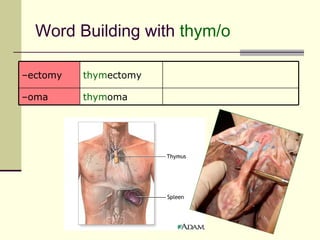
Word Building with thym/o

–ectomy   thymectomy   surgical removal of thymus

–oma      thymoma      thymus tumor
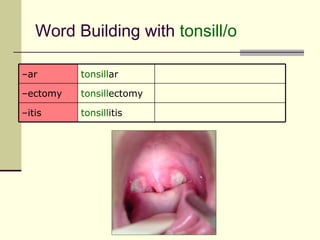
Word Building with tonsill/o

–ar       tonsillar

–ectomy   tonsillectomy

–itis     tonsillitis
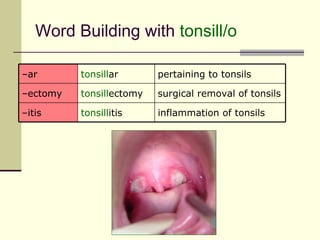
Word Building with tonsill/o

–ar       tonsillar       pertaining to tonsils

–ectomy   tonsillectomy   surgical removal of tonsils

–itis     tonsillitis     inflammation of tonsils
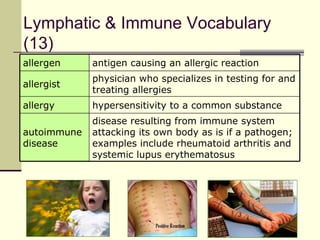
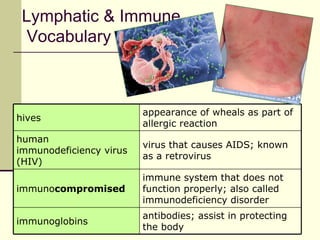
Lymphatic & Immune Vocabulary
(13)
allergen     antigen causing an allergic reaction
             physician who specializes in testing for and
allergist
             treating allergies
allergy      hypersensitivity to a common substance
             disease resulting from immune system
autoimmune   attacking its own body as is if a pathogen;
disease      examples include rheumatoid arthritis and
             systemic lupus erythematosus
Lymphatic & Immune
  Vocabulary


                         appearance of wheals as part of
hives
                         allergic reaction
human
                         virus that causes AIDS; known
immunodeficiency virus
                         as a retrovirus
(HIV)
                         immune system that does not
immunocompromised        function properly; also called
                         immunodeficiency disorder
                         antibodies; assist in protecting
immunoglobins
                         the body
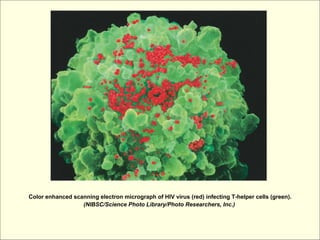
Color enhanced scanning electron micrograph of HIV virus (red) infecting T-helper cells (green).
                  (NIBSC/Science Photo Library/Photo Researchers, Inc.)
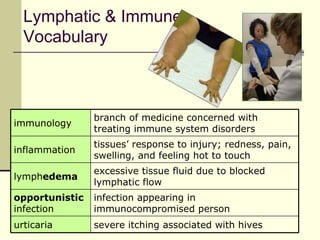
Lymphatic & Immune
  Vocabulary


                branch of medicine concerned with
immunology
                treating immune system disorders
                tissues’ response to injury; redness, pain,
inflammation
                swelling, and feeling hot to touch
                excessive tissue fluid due to blocked
lymphedema
                lymphatic flow
opportunistic   infection appearing in
infection       immunocompromised person
urticaria       severe itching associated with hives
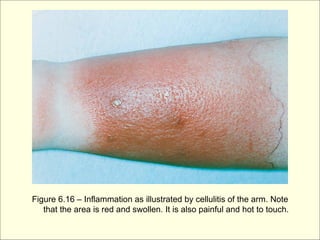
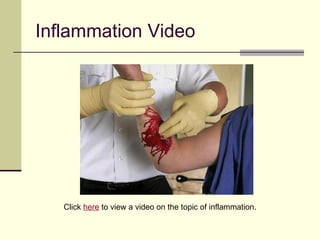
Figure 6.16 – Inflammation as illustrated by cellulitis of the arm. Note
   that the area is red and swollen. It is also painful and hot to touch.
Inflammation Video


   Click here to view a video on the topic of inflammation.
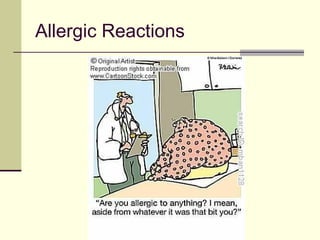
Allergic Reactions
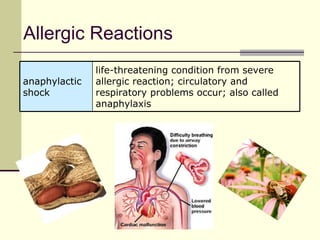
Allergic Reactions
               life-threatening condition from severe
anaphylactic   allergic reaction; circulatory and
shock          respiratory problems occur; also called
               anaphylaxis
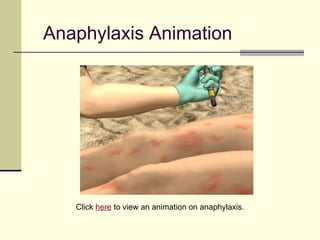
Anaphylaxis Animation


   Click here to view an animation on anaphylaxis.
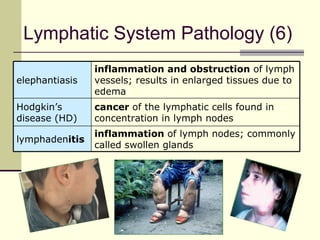
Lymphatic System Pathology (6)
                inflammation and obstruction of lymph
elephantiasis   vessels; results in enlarged tissues due to
                edema
Hodgkin’s       cancer of the lymphatic cells found in
disease (HD)    concentration in lymph nodes
                inflammation of lymph nodes; commonly
lymphadenitis
                called swollen glands
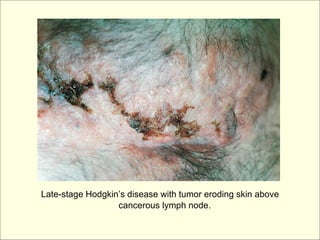
Late-stage Hodgkin’s disease with tumor eroding skin above
                  cancerous lymph node.
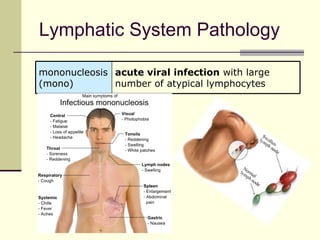
Lymphatic System Pathology

mononucleosis acute viral infection with large
(mono)        number of atypical lymphocytes
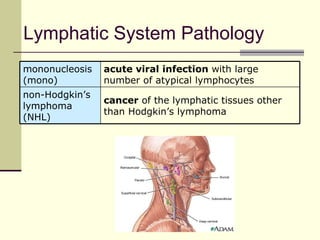
Lymphatic System Pathology
mononucleosis   acute viral infection with large
(mono)          number of atypical lymphocytes
non-Hodgkin’s
                cancer of the lymphatic tissues other
lymphoma
                than Hodgkin’s lymphoma
(NHL)
Immune System Pathology (7)
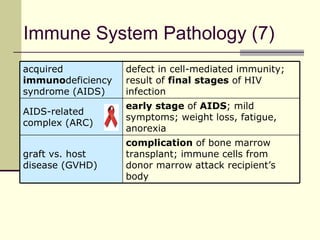
acquired           defect in cell-mediated immunity;
immunodeficiency   result of final stages of HIV
syndrome (AIDS)    infection
                   early stage of AIDS; mild
AIDS-related
                   symptoms; weight loss, fatigue,
complex (ARC)
                   anorexia
                   complication of bone marrow
graft vs. host     transplant; immune cells from
disease (GVHD)     donor marrow attack recipient’s
                   body
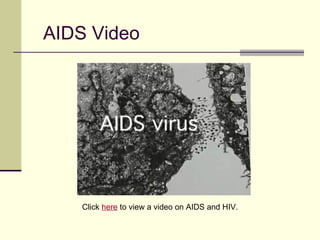
AIDS Video


    Click here to view a video on AIDS and HIV.
Immune System Pathology
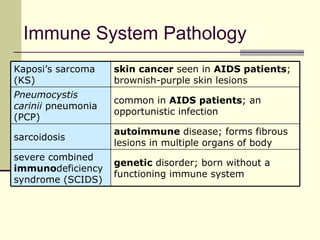
Kaposi’s sarcoma    skin cancer seen in AIDS patients;
(KS)                brownish-purple skin lesions
Pneumocystis
                    common in AIDS patients; an
carinii pneumonia
                    opportunistic infection
(PCP)
                    autoimmune disease; forms fibrous
sarcoidosis
                    lesions in multiple organs of body
severe combined
                    genetic disorder; born without a
immunodeficiency
                    functioning immune system
syndrome (SCIDS)
Clinical Laboratory Tests
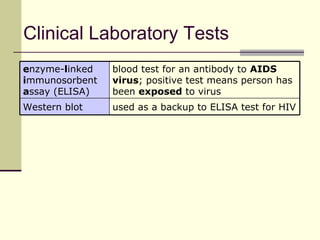
enzyme-linked   blood test for an antibody to AIDS
immunosorbent   virus; positive test means person has
assay (ELISA)   been exposed to virus
Western blot    used as a backup to ELISA test for HIV
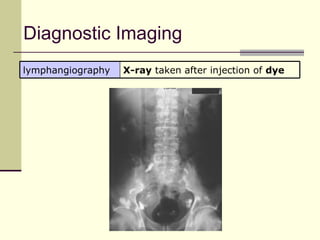
Diagnostic Imaging
lymphangiography   X-ray taken after injection of dye
Additional Diagnostic
Procedures
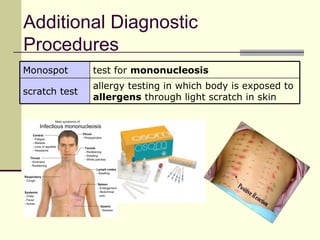
Monospot       test for mononucleosis
               allergy testing in which body is exposed to
scratch test
               allergens through light scratch in skin
B
                                       A

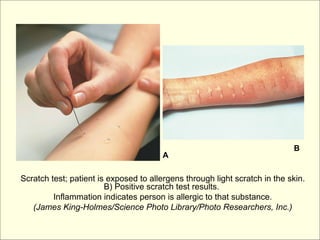
Scratch test; patient is exposed to allergens through light scratch in the skin.
                        B) Positive scratch test results.
         Inflammation indicates person is allergic to that substance.
   (James King-Holmes/Science Photo Library/Photo Researchers, Inc.)
Medical Procedures
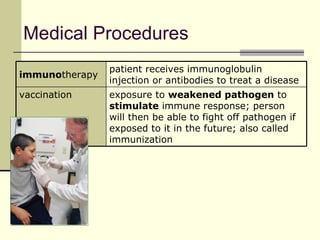
                patient receives immunoglobulin
immunotherapy
                injection or antibodies to treat a disease
vaccination     exposure to weakened pathogen to
                stimulate immune response; person
                will then be able to fight off pathogen if
                exposed to it in the future; also called
                immunization
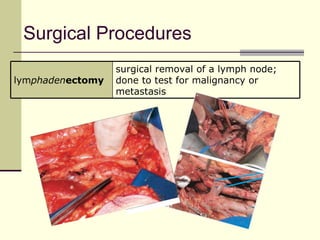
Surgical Procedures
                  surgical removal of a lymph node;
lymphadenectomy   done to test for malignancy or
                  metastasis
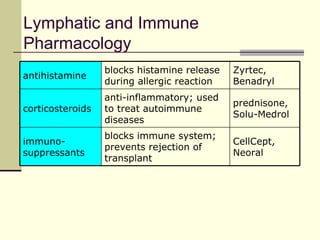
Lymphatic and Immune
Pharmacology
                  blocks histamine release   Zyrtec,
antihistamine
                  during allergic reaction   Benadryl
                  anti-inflammatory; used
                                             prednisone,
corticosteroids   to treat autoimmune
                                             Solu-Medrol
                  diseases
                  blocks immune system;
immuno-                                      CellCept,
                  prevents rejection of
suppressants                                 Neoral
                  transplant
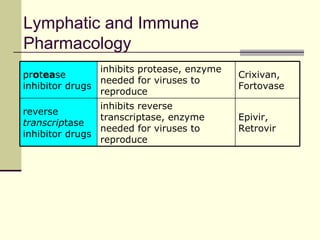
Lymphatic and Immune
Pharmacology
                inhibits protease, enzyme
protease                                    Crixivan,
                needed for viruses to
inhibitor drugs                             Fortovase
                reproduce
                inhibits reverse
reverse
                transcriptase, enzyme       Epivir,
transcriptase
                needed for viruses to       Retrovir
inhibitor drugs
                reproduce
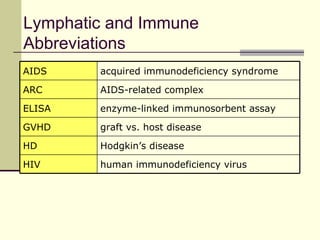
Lymphatic and Immune
Abbreviations
AIDS    acquired immunodeficiency syndrome

ARC     AIDS-related complex

ELISA   enzyme-linked immunosorbent assay

GVHD    graft vs. host disease

HD      Hodgkin’s disease

HIV     human immunodeficiency virus
Lymphatic & Immune
Abbreviations
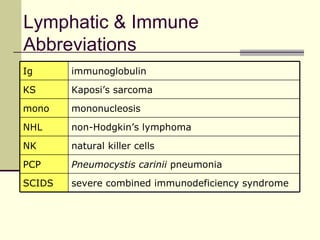
Ig      immunoglobulin

KS      Kaposi’s sarcoma

mono    mononucleosis

NHL     non-Hodgkin’s lymphoma

NK      natural killer cells

PCP     Pneumocystis carinii pneumonia

SCIDS   severe combined immunodeficiency syndrome

Lymphedema immune system_b

  • 1.
    LYMPHATIC AND IMMUNE SYSTEM Immunology Medical Terminology for Healthcare Professionals HSC 1531 Florida State College of Jacksonville Professor: Michael Whitchurch, MHS
  • 2.
    The Lymphatic andImmune Systems at a Glance  Functions of the Lymphatic System  Network of vessels that picks up excess tissue fluid, cleanses it, and returns it to circulatory system  Picks up fats absorbed by digestive system  Functions of Immune System  Fights disease and infections
  • 3.
    The Lymphatic andImmune Systems at a Glance  Organs of the Lymphatic System  Lymph nodes  Lymphatic vessels  Thymus gland  Spleen  Tonsils
  • 5.
    Lymphatic & ImmuneCombining Forms  adenoid/o  lymphaden/o  adenoids  lymph node  immun/o  lymphangi/o  protection  lymph vessel  lymph/o  lymph
  • 6.
    Lymphatic & ImmuneCombining Forms  path/o  tonsill/o  disease  tonsils  splen/o  tox/o  spleen  poison  thym/o  thymus
  • 7.
    Lymphatic & ImmuneSuffixes –globulin  protein
  • 8.
    Anatomy and Physiology Network of:  Lymphatic vessels  Lymph nodes  Spleen  Thymus gland  Tonsils  Perform diverse functions
  • 9.
  • 10.
    Anatomy and Physiology– Lymphatic System First, removes excess tissue fluid  Collects excess tissue fluid throughout body  Purifies it as it passes through system  Returns it to circulatory system  Lymph = fluid within lymphatic vessels
  • 11.
    Lymphatic vessels (green)pick up excess tissue fluid, purify it in lymph nodes, and return it to the circulatory system.
  • 12.
    Anatomy and Physiology– Lymphatic System Second, lymph vessels around the small intestine assist with fat absorption  Picks up absorbed fats  Delivers to circulatory system  These lymph vessels are called lacteals
  • 13.
    Anatomy and Physiology– Lymphatic System Third, lymphatic and immune systems work together  Form a group of cells, tissues, organs, & molecules  Body’s primary defense against pathogens  Including foreign invaders and own cells that have become diseased
  • 14.
    Lymphatic Vessels  Networkof vessels throughout body  One-way pipes conducting lymph from tissues toward thoracic cavity  Low pressure system  Uses valves to prevent backflow
  • 15.
    Photomicrograph of lymphaticvessel with valve clearly visible. (Michael Abbey/Photo Researchers, Inc.)
  • 16.
    Lymphatic Vessels  Beginas very small lymph capillaries in tissues  Capillaries merge into larger lymph vessels  Finally drain into one of two large lymphatic ducts in thoracic cavity
  • 17.
    Figure 6.9 –Location of lymph vessels, lymphatic ducts, and areas of lymph node concentrations.
  • 18.
    Lymph Nodes  Alsocalled lymph glands  Composed of lymphatic tissue  Located along route of lymphatic vessels
  • 19.
    Structure of alymph node.
  • 20.
    Lymph Nodes  House lymphocytes and antibodies  Remove pathogens and cell debris from lymph as it passes through  Trap and destroy cells from cancerous tumors Antibodies are produced by specialized B Cells after stimulation by an antigen and act against the antigen in an immune response.
  • 21.
    Antigen Any substance foreignto the body that evokes an immune response either alone or after forming a complex with a larger molecule (as a protein) and that is capable of binding with a product (as an atibody or T cell) of the immune response. phagocytosis: 1 antibodies, 2 antigen, 3 macrophage, 4 antibody-coated antigen, 5 receptors for antibody, 6 phagocytic vacuole
  • 22.
    Sites for LymphNodes Name Location Drains fluid from: Axillary Cervical Inguinal Mediastinal
  • 23.
    Sites for LymphNodes Name Location Drains fluid from: Axillary Armpits Arms Cervical Neck Head and neck Inguinal Groin Legs and pelvis Mediastinal Chest Within chest cavity
  • 24.
    Location of lymphvessels, lymphatic ducts, and areas of lymph node concentrations.
  • 25.
    Tonsils  Collections oflymphatic tissue located on each side of throat  There are three sets of tonsils  Palatine tonsils  Pharyngeal tonsils (adenoids)  Lingual tonsils
  • 26.
    Tonsils  All containa large number of leukocytes  Act as filters  Prevent invasion of pathogens through digestive or respiratory systems  Not required for life and can safely be removed if they become a continuous site of infection
  • 28.
    Spleen  Located inLUQ of abdomen  Consists of lymphatic tissue that is highly infiltrated with blood vessels  Vessels spread out into slow moving blood sinuses
  • 29.
    Spleen  Phagocytic macrophagesline blood sinuses to remove pathogens (WBC)  Because blood is moving through slowly, macrophages have time to identify pathogens and worn out RBCs  Filters out and destroys old red blood cells, recycling the iron  Not an essential organ for life and may be removed due to injury or disease
  • 30.
    Thymus Gland  Locatedin upper portion of mediastinum  Secretes hormone, thymosin  Changes lymphocytes to T lymphocytes (simply called T cells a speicalized type of WBC)  Active in unborn child and throughout childhood until adolescence, when it begins to shrink in size
  • 31.
    Thymus Gland  Essentialfor proper development of immune system  Assists body with immune function and development of antibodies  Important role in the immune response
  • 32.
    Lymphatic System Exercise Click here to review the lymphatic system in a labeling activity. Back to Directory
  • 33.
    Immunity  Body’s abilityto defend itself against pathogens  Bacteria, viruses, fungi, protozoans, toxins, cancerous tumors  Two forms  Naturalimmunity  Acquired immunity
  • 34.
    Natural Immunity  Alsocalled innate immunity  Not specific to a particular disease  Doesn’t require prior exposure to pathogen  Example:  Macrophage  WBCs that ingest any pathogen encountered
  • 35.
    Figure 6.14 –Enhanced photomicrograph showing a macrophage (purple) attacking bacillus Escherichia coli (yellow).
  • 36.
    Acquired Immunity  Body’sresponse to a specific pathogen  May be either:  Passive acquired immunity  Active acquired immunity
  • 37.
    Acquired Immunity  Passiveacquired immunity  Results when a person receives protective substances produced by another human or animal  Examples: maternal antibodies, antitoxin  Active acquired immunity  Develops following direct exposure to pathogen  Stimulates immune response – series of mechanisms designed to neutralize pathogen  Immunizations or vaccinations are special types of active acquired immunity
  • 38.
    Immune Response  Disease-causingagents called antigens stimulate immune response  Two distinct and different processes  Humoral immunity (also called antibody-mediated immunity) Production of B cells  Cellular immunity (also called cell-mediated immunity) Production of T cells and NK cells
  • 39.
    Humoral Immunity (Immuneresponse)  Involves production of B lymphocytes  Also called B cells  Respond to antigens by producing a protective protein, an antibody  Antibodies combine with antigen to form ….. antigen-antibody complex  Targets pathogen for phagocytosis  Prevents infectious agent from damaging healthy cells
  • 40.
    Cellular Immunity (Immuneresponse)  Involves production of T cells and ….. natural killer cells (NK)  These defense cells are ….. cytotoxic  Physically attack and destroy pathogenic cells
  • 41.
    Standard Precautions  Thereare a large number of pathogens in a hospital setting  Nosocomial infection Acquired in the hospital  Cross infection Pathogen acquired from another person  Reinfection Becomes infected again with same pathogen  Self-inoculation Pathogen from one part of patient’s body spreads to another part of body
  • 42.
    Summary of Standard PrecautionGuidelines i Wash hands before putting on and after removing gloves and before and after working with patient or equipment. e Wear gloves when in contact with any body fluid, mucous membrane, or non-intact skin or if you have chapped hands, a rash, or open sores. d Wear non-permeable gown or apron during procedures that are likely to expose you to any body fluid, mucous membrane, or non-intact skin.
  • 43.
    Summary of Standard PrecautionGuidelines i Wear mask and protective eyewear or a face shield when patients are coughing or if body fluid droplets or splashes are likely. e Wear face mask and eyewear that seal close to the face during procedures that cause body tissues to be vaporized. B Remove for proper cleaning any shared equipment that has come into contact with body fluids, mucous membrane, or non-intact skin.
  • 44.
    Word Building with adenoid/o & immun/o –ectomy adenoidectomy –itis adenoiditis –logist immunologist
  • 45.
    Word Building with adenoid/o & immun/o surgical removal of –ectomy adenoidectomy adenoids –itis adenoiditis inflammation of adenoids –logist immunologist immunity specialist
  • 46.
    Word Building with lymph/o aden/o lymphadenectomy –ectomy aden/o lymphadenopathy –pathy angi/o lymphangiogram –gram angi/o –oma lymphangioma –oma lymphoma –tic lymphatic
  • 47.
    Word Building with lymph/o aden/o surgical removal of lymphadenectomy –ectomy lymph gland aden/o lymphadenopathy lymph gland disease –pathy angi/o lymphangiogram record of lymph vessel –gram angi/o –oma lymphangioma lymph vessel tumor –oma lymphoma lymphatic tumor –tic lymphatic pertaining to lymph
  • 48.
    Word Building withpath/o & splen/o –genic pathogenic –logy pathology –ectomy splenectomy –megaly splenomegaly
  • 49.
    Word Building withpath/o & splen/o –genic pathogenic disease producing –logy pathology study of disease –ectomy splenectomy surgical removal of spleen –megaly splenomegaly enlarged spleen
  • 51.
    Word Building withthym/o –ectomy thymectomy –oma thymoma
  • 52.
    Word Building withthym/o –ectomy thymectomy surgical removal of thymus –oma thymoma thymus tumor
  • 53.
    Word Building withtonsill/o –ar tonsillar –ectomy tonsillectomy –itis tonsillitis
  • 54.
    Word Building withtonsill/o –ar tonsillar pertaining to tonsils –ectomy tonsillectomy surgical removal of tonsils –itis tonsillitis inflammation of tonsils
  • 55.
    Lymphatic & ImmuneVocabulary (13) allergen antigen causing an allergic reaction physician who specializes in testing for and allergist treating allergies allergy hypersensitivity to a common substance disease resulting from immune system autoimmune attacking its own body as is if a pathogen; disease examples include rheumatoid arthritis and systemic lupus erythematosus
  • 56.
    Lymphatic & Immune Vocabulary appearance of wheals as part of hives allergic reaction human virus that causes AIDS; known immunodeficiency virus as a retrovirus (HIV) immune system that does not immunocompromised function properly; also called immunodeficiency disorder antibodies; assist in protecting immunoglobins the body
  • 57.
    Color enhanced scanningelectron micrograph of HIV virus (red) infecting T-helper cells (green). (NIBSC/Science Photo Library/Photo Researchers, Inc.)
  • 58.
    Lymphatic & Immune Vocabulary branch of medicine concerned with immunology treating immune system disorders tissues’ response to injury; redness, pain, inflammation swelling, and feeling hot to touch excessive tissue fluid due to blocked lymphedema lymphatic flow opportunistic infection appearing in infection immunocompromised person urticaria severe itching associated with hives
  • 59.
    Figure 6.16 –Inflammation as illustrated by cellulitis of the arm. Note that the area is red and swollen. It is also painful and hot to touch.
  • 60.
    Inflammation Video Click here to view a video on the topic of inflammation.
  • 61.
  • 62.
    Allergic Reactions life-threatening condition from severe anaphylactic allergic reaction; circulatory and shock respiratory problems occur; also called anaphylaxis
  • 63.
    Anaphylaxis Animation Click here to view an animation on anaphylaxis.
  • 64.
    Lymphatic System Pathology(6) inflammation and obstruction of lymph elephantiasis vessels; results in enlarged tissues due to edema Hodgkin’s cancer of the lymphatic cells found in disease (HD) concentration in lymph nodes inflammation of lymph nodes; commonly lymphadenitis called swollen glands
  • 65.
    Late-stage Hodgkin’s diseasewith tumor eroding skin above cancerous lymph node.
  • 66.
    Lymphatic System Pathology mononucleosisacute viral infection with large (mono) number of atypical lymphocytes
  • 67.
    Lymphatic System Pathology mononucleosis acute viral infection with large (mono) number of atypical lymphocytes non-Hodgkin’s cancer of the lymphatic tissues other lymphoma than Hodgkin’s lymphoma (NHL)
  • 68.
    Immune System Pathology(7) acquired defect in cell-mediated immunity; immunodeficiency result of final stages of HIV syndrome (AIDS) infection early stage of AIDS; mild AIDS-related symptoms; weight loss, fatigue, complex (ARC) anorexia complication of bone marrow graft vs. host transplant; immune cells from disease (GVHD) donor marrow attack recipient’s body
  • 69.
    AIDS Video Click here to view a video on AIDS and HIV.
  • 70.
    Immune System Pathology Kaposi’ssarcoma skin cancer seen in AIDS patients; (KS) brownish-purple skin lesions Pneumocystis common in AIDS patients; an carinii pneumonia opportunistic infection (PCP) autoimmune disease; forms fibrous sarcoidosis lesions in multiple organs of body severe combined genetic disorder; born without a immunodeficiency functioning immune system syndrome (SCIDS)
  • 71.
    Clinical Laboratory Tests enzyme-linked blood test for an antibody to AIDS immunosorbent virus; positive test means person has assay (ELISA) been exposed to virus Western blot used as a backup to ELISA test for HIV
  • 72.
    Diagnostic Imaging lymphangiography X-ray taken after injection of dye
  • 73.
    Additional Diagnostic Procedures Monospot test for mononucleosis allergy testing in which body is exposed to scratch test allergens through light scratch in skin
  • 74.
    B A Scratch test; patient is exposed to allergens through light scratch in the skin. B) Positive scratch test results. Inflammation indicates person is allergic to that substance. (James King-Holmes/Science Photo Library/Photo Researchers, Inc.)
  • 75.
    Medical Procedures patient receives immunoglobulin immunotherapy injection or antibodies to treat a disease vaccination exposure to weakened pathogen to stimulate immune response; person will then be able to fight off pathogen if exposed to it in the future; also called immunization
  • 76.
    Surgical Procedures surgical removal of a lymph node; lymphadenectomy done to test for malignancy or metastasis
  • 77.
    Lymphatic and Immune Pharmacology blocks histamine release Zyrtec, antihistamine during allergic reaction Benadryl anti-inflammatory; used prednisone, corticosteroids to treat autoimmune Solu-Medrol diseases blocks immune system; immuno- CellCept, prevents rejection of suppressants Neoral transplant
  • 78.
    Lymphatic and Immune Pharmacology inhibits protease, enzyme protease Crixivan, needed for viruses to inhibitor drugs Fortovase reproduce inhibits reverse reverse transcriptase, enzyme Epivir, transcriptase needed for viruses to Retrovir inhibitor drugs reproduce
  • 79.
    Lymphatic and Immune Abbreviations AIDS acquired immunodeficiency syndrome ARC AIDS-related complex ELISA enzyme-linked immunosorbent assay GVHD graft vs. host disease HD Hodgkin’s disease HIV human immunodeficiency virus
  • 80.
    Lymphatic & Immune Abbreviations Ig immunoglobulin KS Kaposi’s sarcoma mono mononucleosis NHL non-Hodgkin’s lymphoma NK natural killer cells PCP Pneumocystis carinii pneumonia SCIDS severe combined immunodeficiency syndrome

Editor's Notes

  • #2 Why are we combining these systems into a single unit ? Blood and Lymph are both fluids have functions within the immune system. We will begin with a discussion of the different elements found in blood and the function of each as part of the immune response…. Next slide