THE LYMPHATIC SYSTEM AND
BASIC IMMUNOLOGY
Prepared by: Renz Victor T. Guangco, M.D.
THE LYMPHATIC SYSTEM - AN OVERVIEW
• The lymphatic system consists of two semi-independent parts:
• (1) a meandering network of lymphatic vessels and
• (2) various lymphoid tissues and organs scattered throughout the body
• The lymphatic vessels transport
fl
uids that have escaped from the blood
back to the cardiovascular system.
• The lymphoid tissues and organs house phagocytic cells and lymphocytes,
which play essential roles in body defense and resistance to disease.
THE LYMPHATIC VESSELS
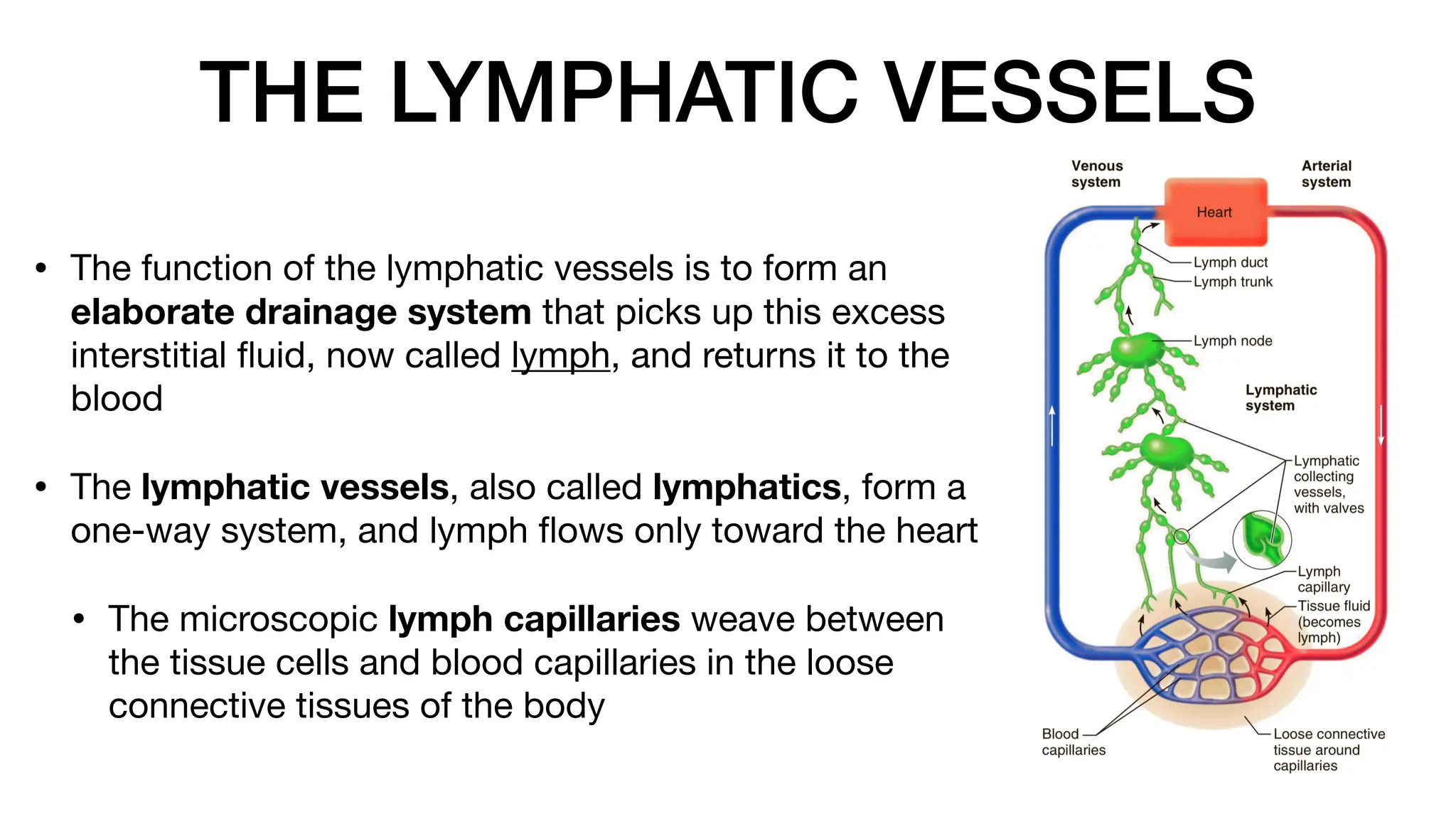
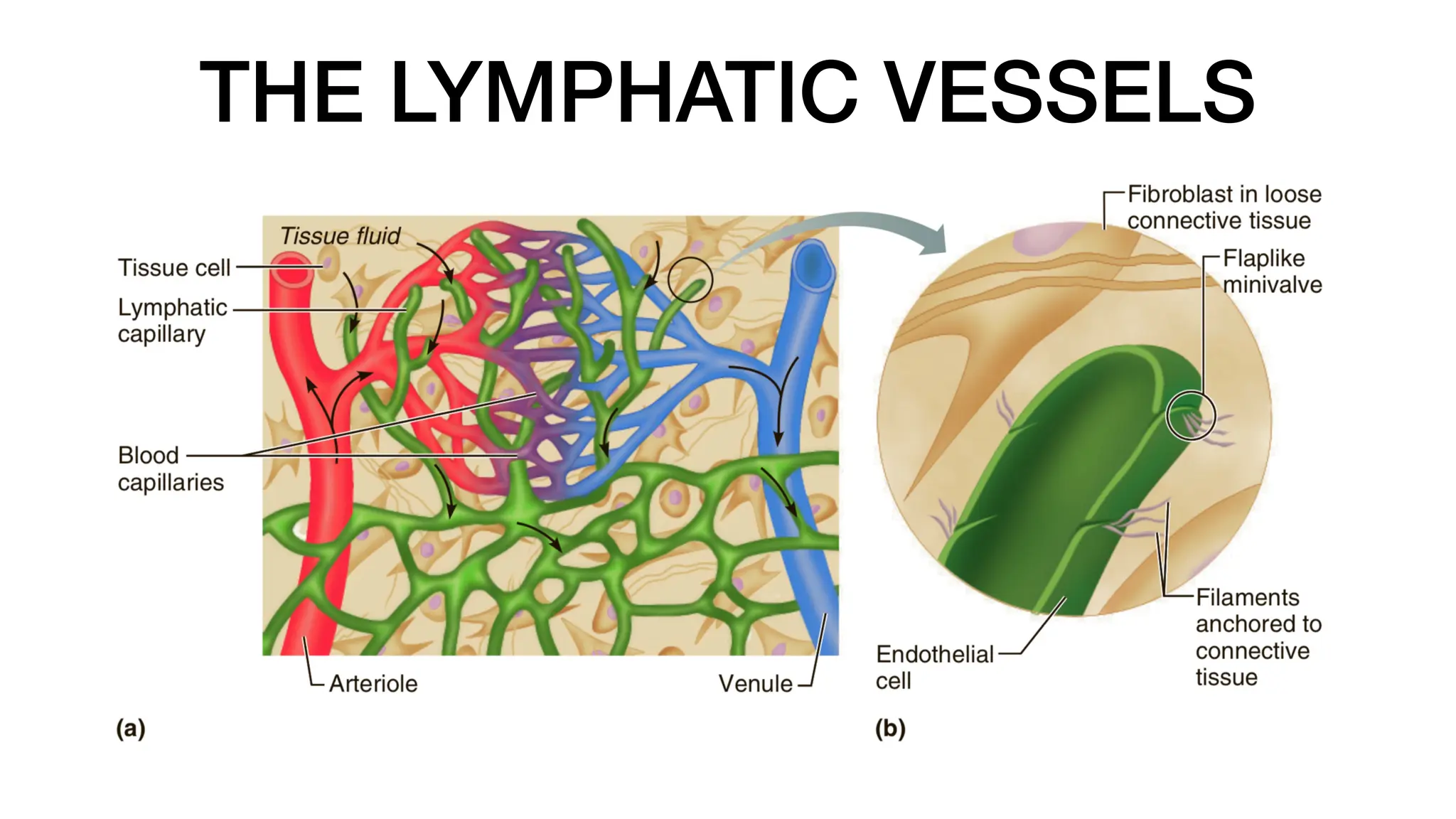
• The function of the lymphatic vessels is to form an
elaborate drainage system that picks up this excess
interstitial
fl
uid, now called lymph, and returns it to the
blood
• The lymphatic vessels, also called lymphatics, form a
one-way system, and lymph
fl
ows only toward the heart
• The microscopic lymph capillaries weave between
the tissue cells and blood capillaries in the loose
connective tissues of the body
THE LYMPHATIC VESSELS
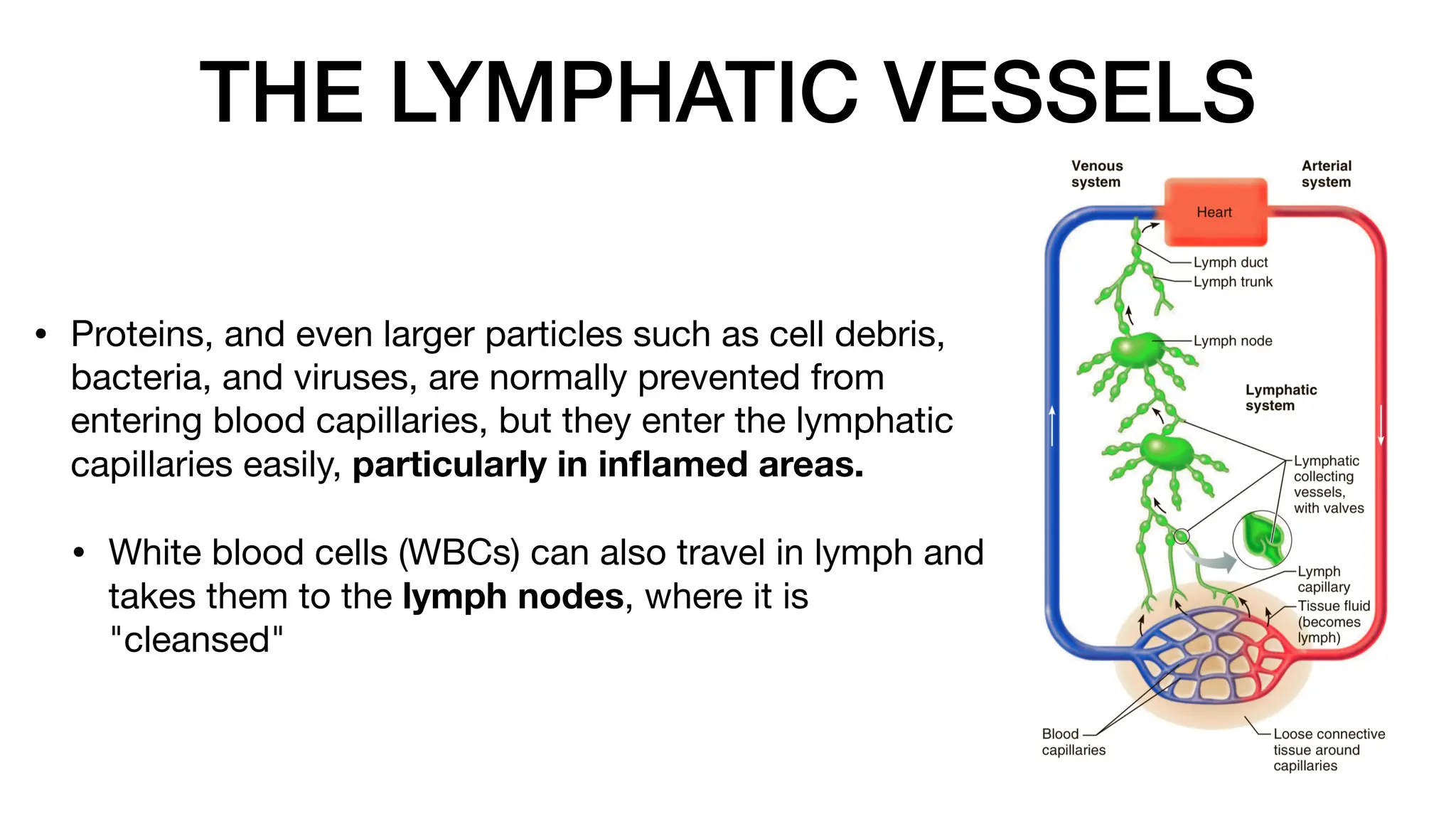
• Proteins, and even larger particles such as cell debris,
bacteria, and viruses, are normally prevented from
entering blood capillaries, but they enter the lymphatic
capillaries easily, particularly in in
fl
amed areas.
• White blood cells (WBCs) can also travel in lymph and
takes them to the lymph nodes, where it is
"cleansed"
THE LYMPHATIC VESSELS
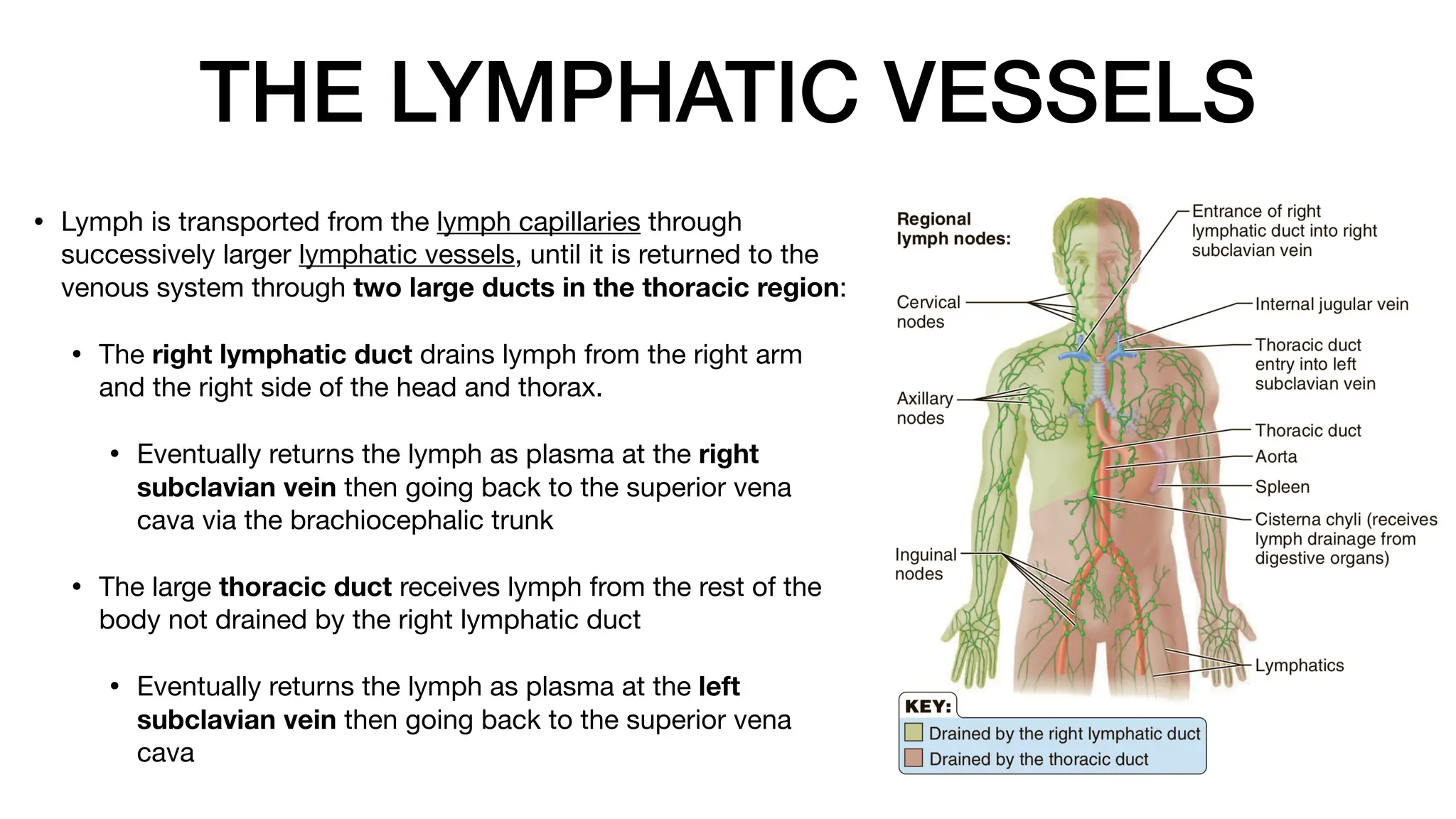
• Lymph is transported from the lymph capillaries through
successively larger lymphatic vessels, until it is returned to the
venous system through two large ducts in the thoracic region:
• The right lymphatic duct drains lymph from the right arm
and the right side of the head and thorax.
• Eventually returns the lymph as plasma at the right
subclavian vein then going back to the superior vena
cava via the brachiocephalic trunk
• The large thoracic duct receives lymph from the rest of the
body not drained by the right lymphatic duct
• Eventually returns the lymph as plasma at the left
subclavian vein then going back to the superior vena
cava
THE LYMPH NODES
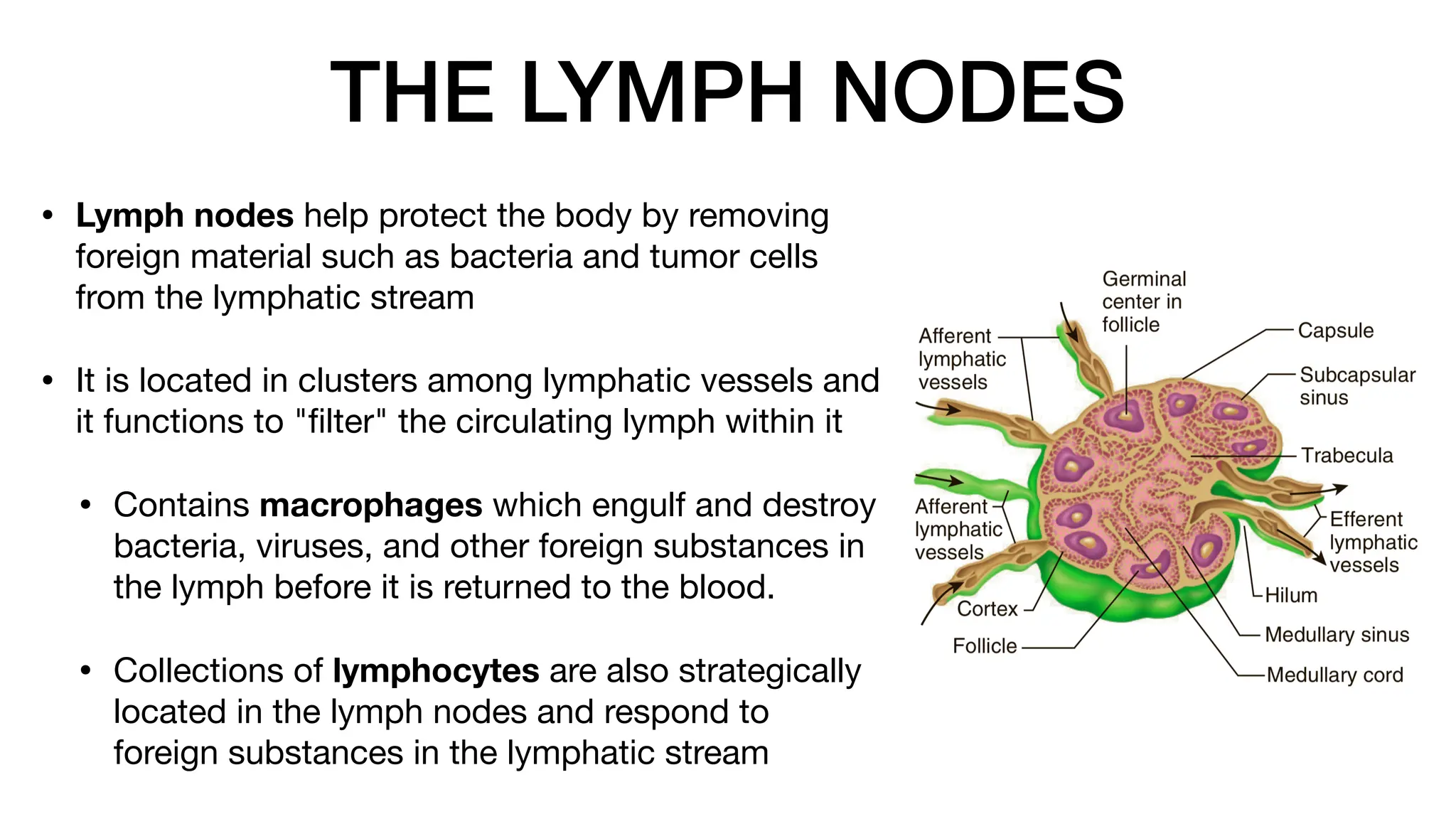
• Lymph nodes help protect the body by removing
foreign material such as bacteria and tumor cells
from the lymphatic stream
• It is located in clusters among lymphatic vessels and
it functions to "
fi
lter" the circulating lymph within it
• Contains macrophages which engulf and destroy
bacteria, viruses, and other foreign substances in
the lymph before it is returned to the blood.
• Collections of lymphocytes are also strategically
located in the lymph nodes and respond to
foreign substances in the lymphatic stream
THE LYMPH NODES
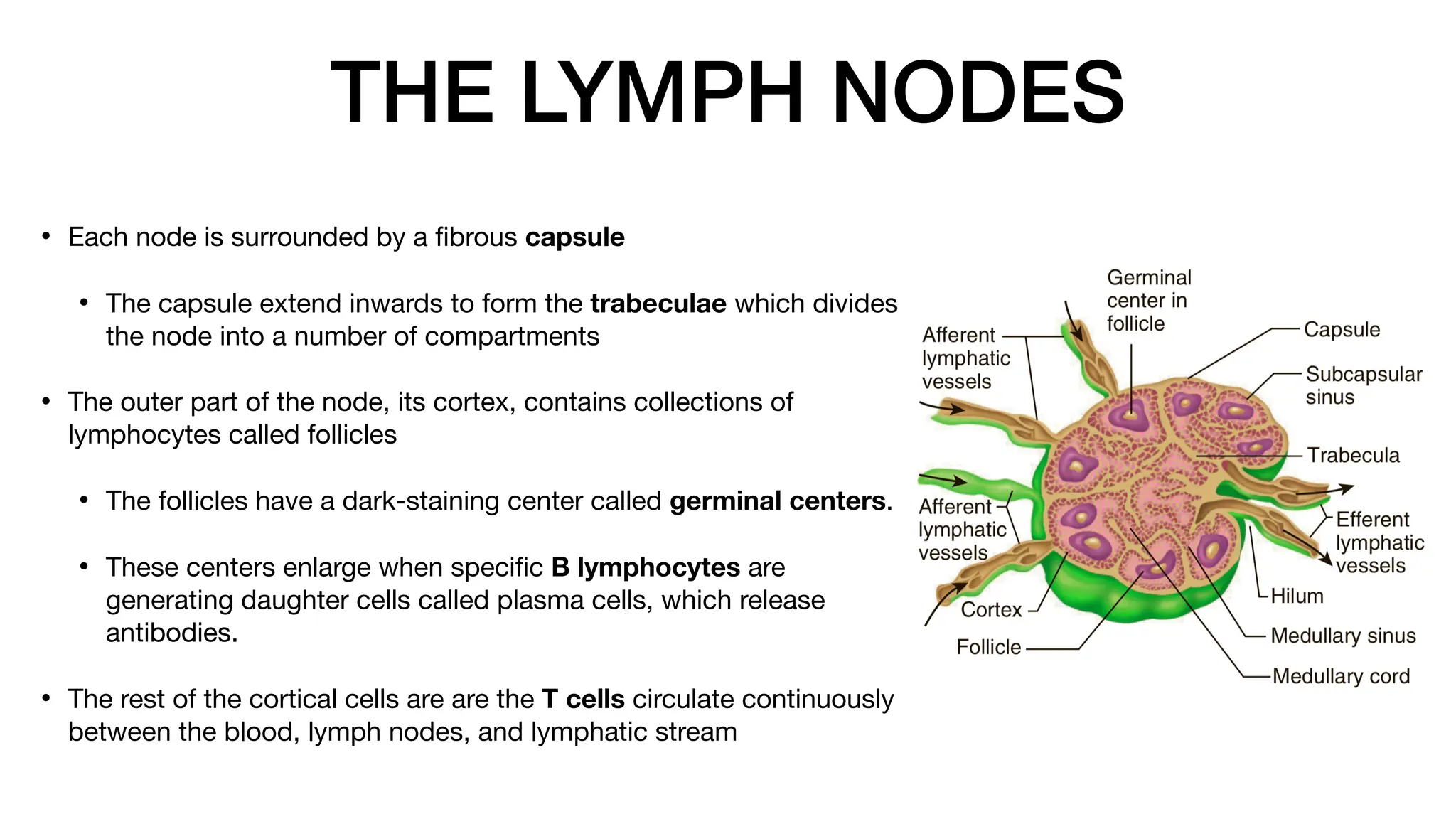
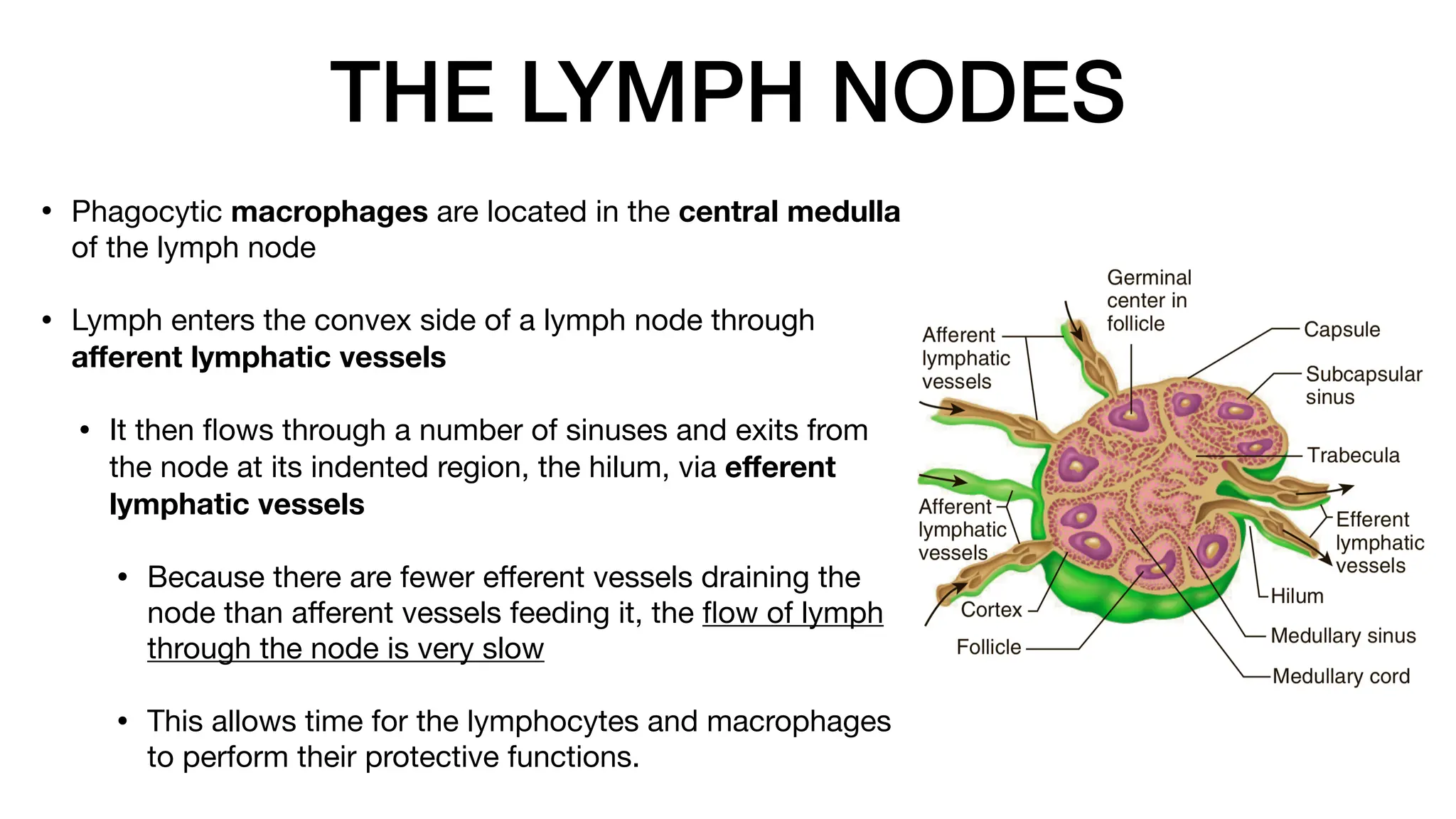
• Each node is surrounded by a
fi
brous capsule
• The capsule extend inwards to form the trabeculae which divides
the node into a number of compartments
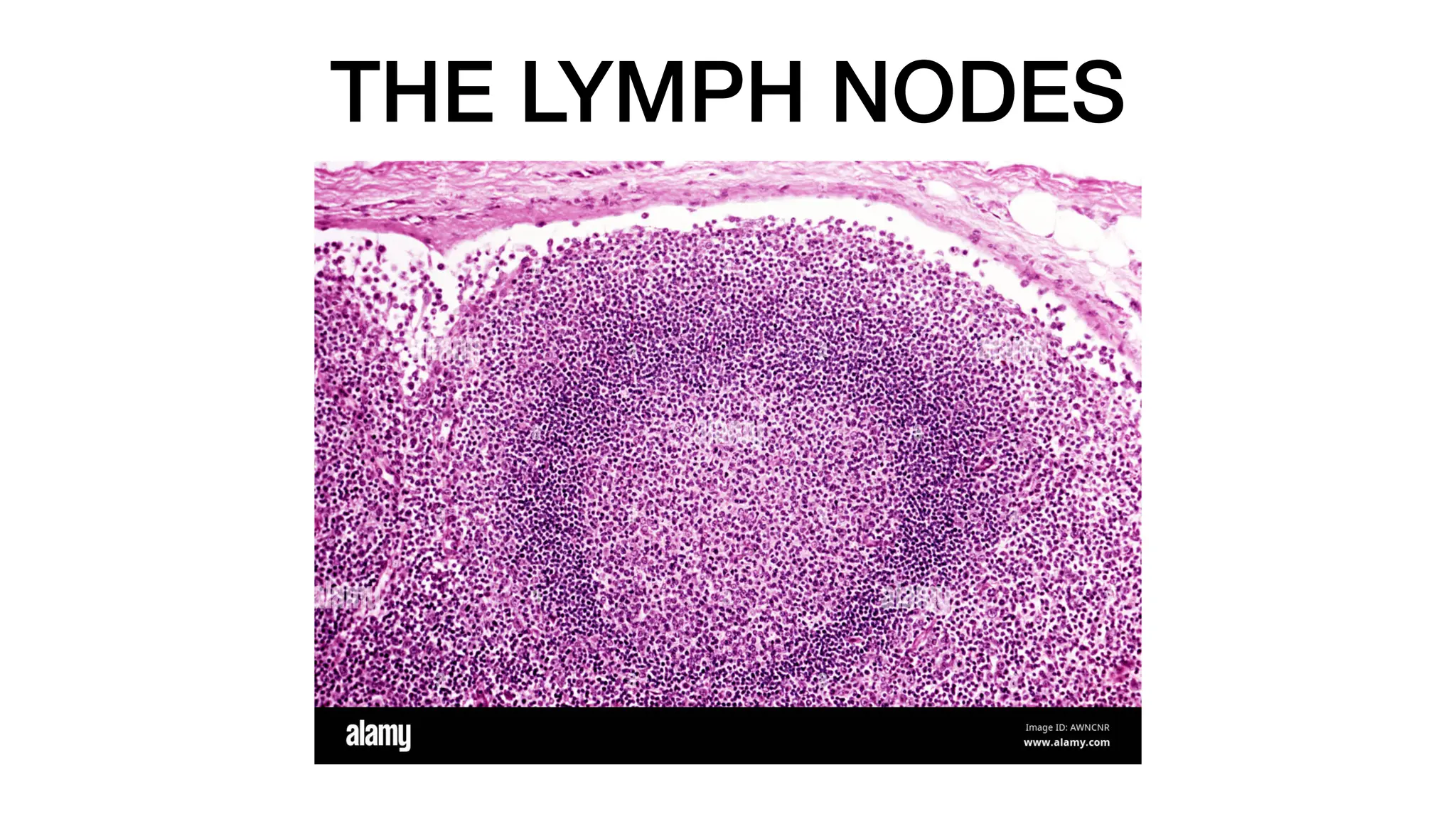
• The outer part of the node, its cortex, contains collections of
lymphocytes called follicles
• The follicles have a dark-staining center called germinal centers.
• These centers enlarge when speci
fi
c B lymphocytes are
generating daughter cells called plasma cells, which release
antibodies.
• The rest of the cortical cells are are the T cells circulate continuously
between the blood, lymph nodes, and lymphatic stream
THE LYMPH NODES
• Phagocytic macrophages are located in the central medulla
of the lymph node
• Lymph enters the convex side of a lymph node through
a
ff
erent lymphatic vessels
• It then
fl
ows through a number of sinuses and exits from
the node at its indented region, the hilum, via e
ff
erent
lymphatic vessels
• Because there are fewer e
ff
erent vessels draining the
node than a
ff
erent vessels feeding it, the
fl
ow of lymph
through the node is very slow
• This allows time for the lymphocytes and macrophages
to perform their protective functions.
THE LYMPH NODES
SPLEEN
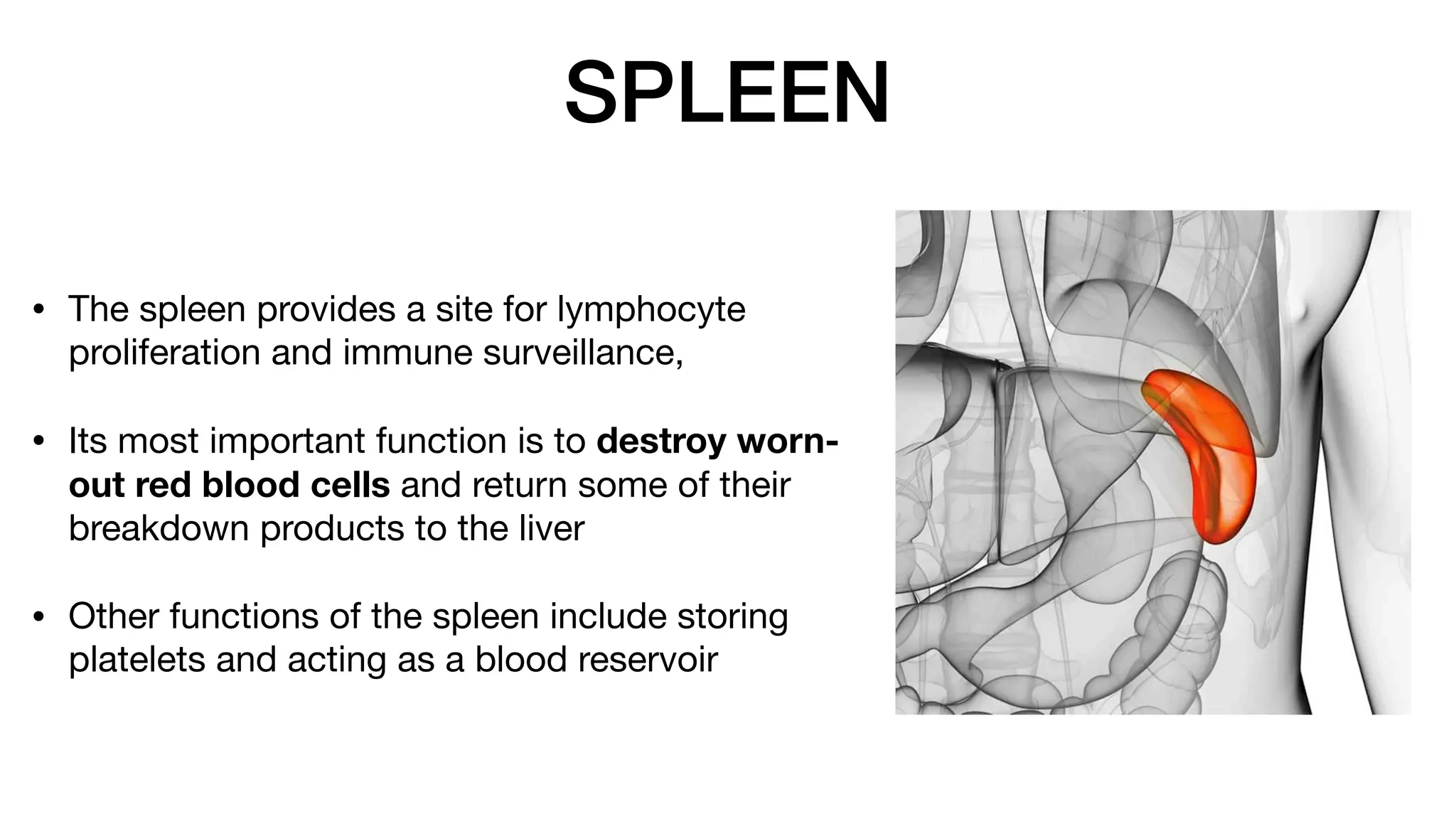
• The spleen provides a site for lymphocyte
proliferation and immune surveillance,
• Its most important function is to destroy worn-
out red blood cells and return some of their
breakdown products to the liver
• Other functions of the spleen include storing
platelets and acting as a blood reservoir
THYMUS
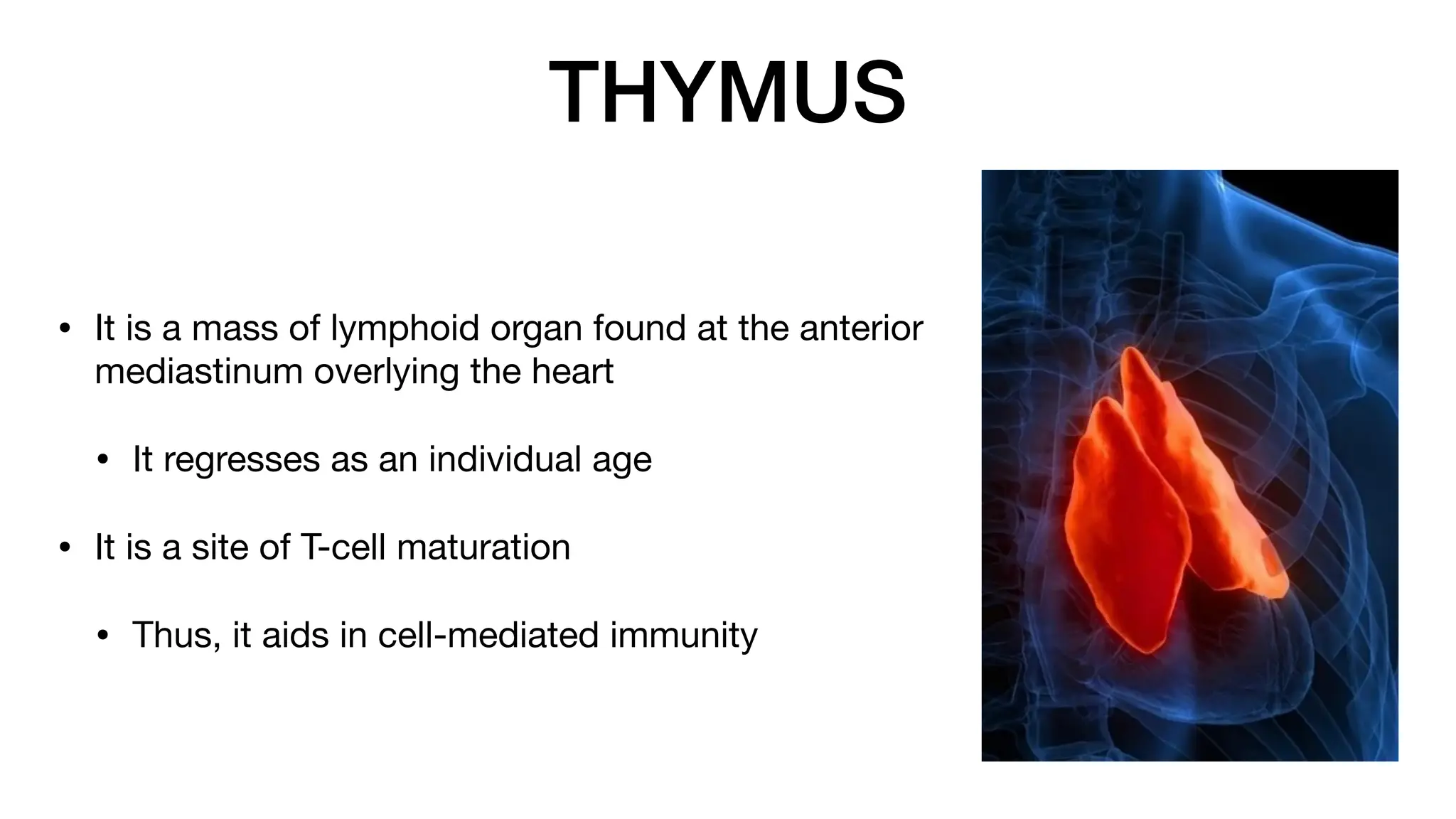
• It is a mass of lymphoid organ found at the anterior
mediastinum overlying the heart
• It regresses as an individual age
• It is a site of T-cell maturation
• Thus, it aids in cell-mediated immunity
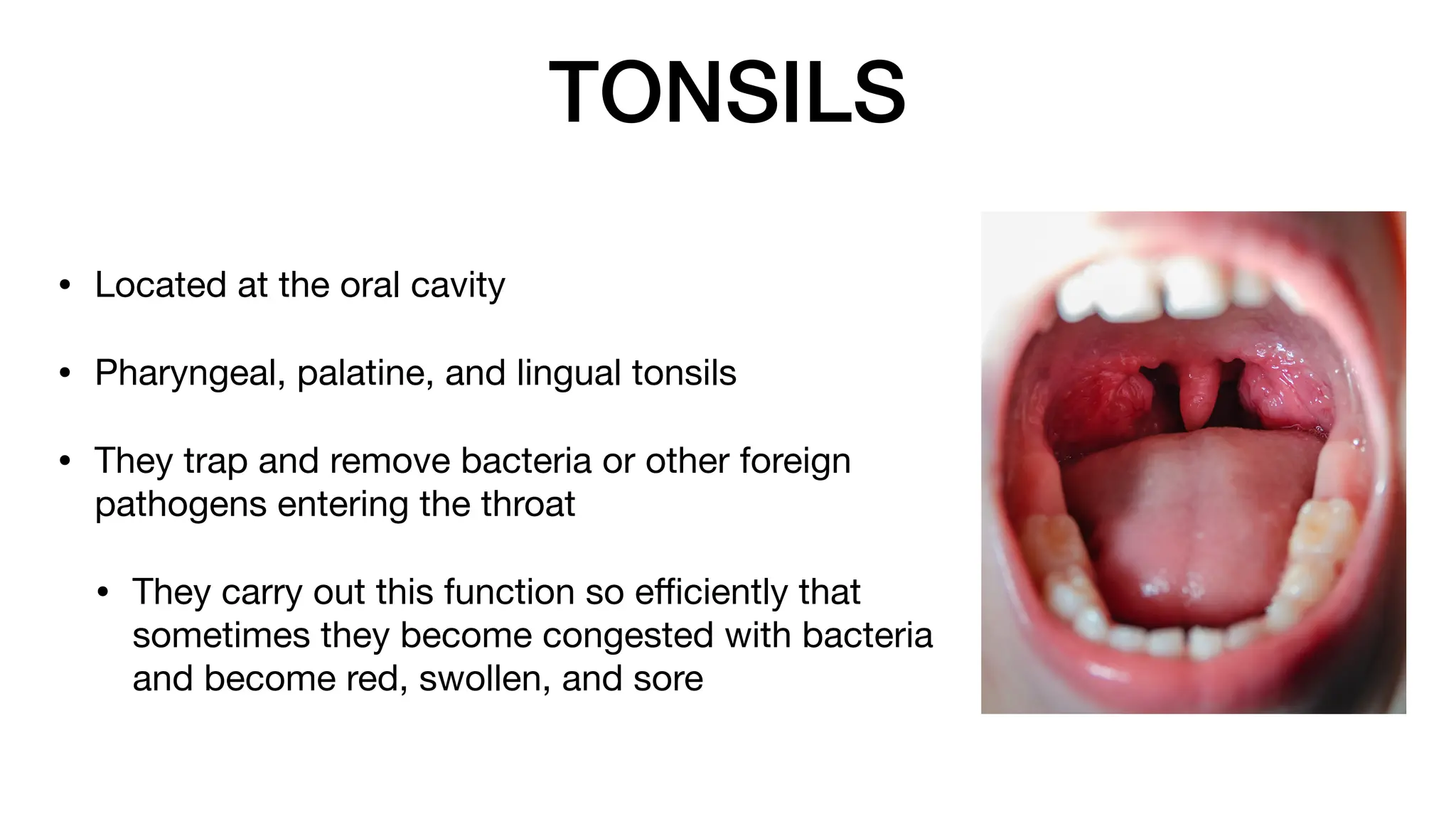
TONSILS
• Located at the oral cavity
• Pharyngeal, palatine, and lingual tonsils
• They trap and remove bacteria or other foreign
pathogens entering the throat
• They carry out this function so e
ffi
ciently that
sometimes they become congested with bacteria
and become red, swollen, and sore
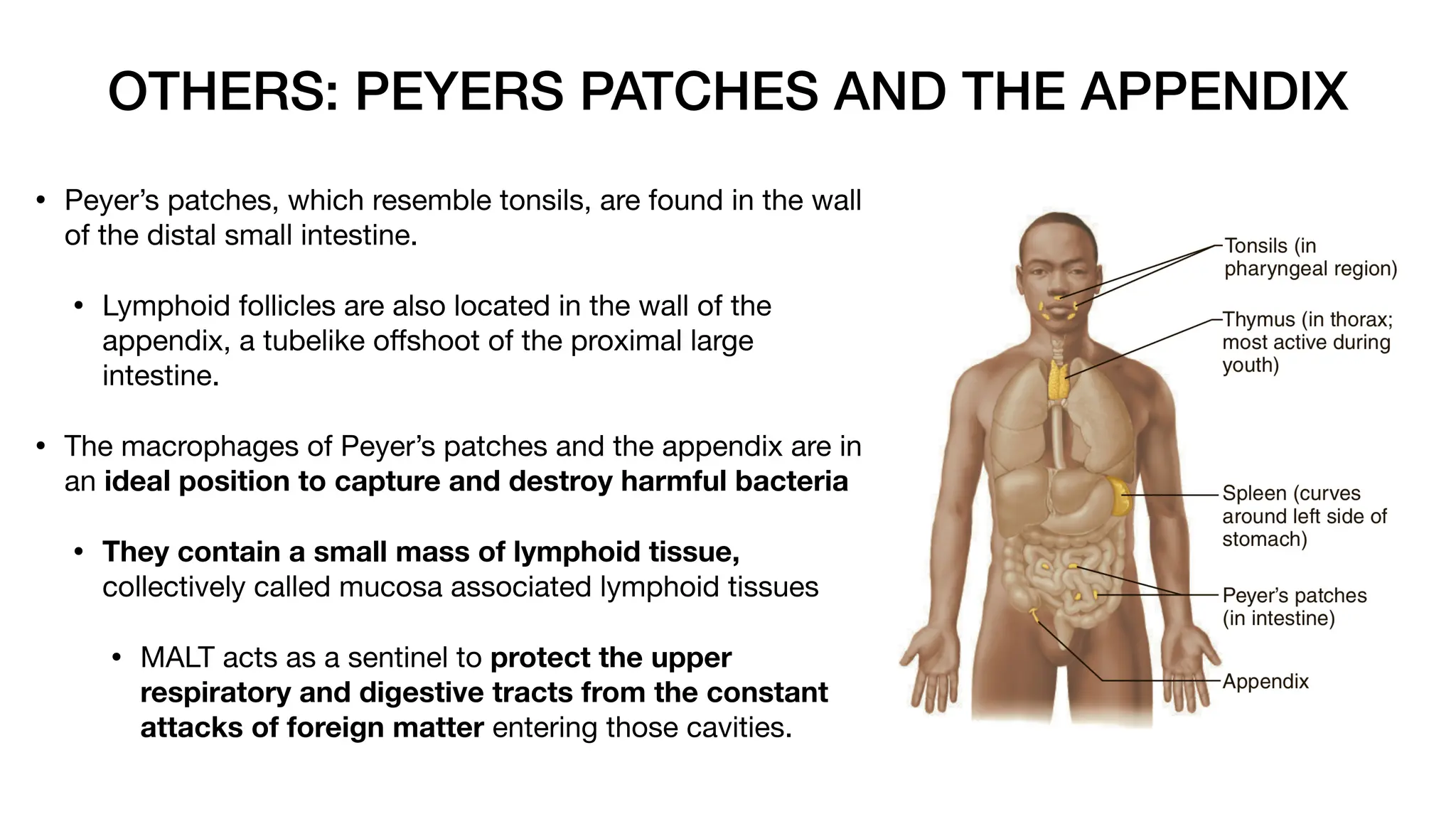
OTHERS: PEYERS PATCHES AND THE APPENDIX
• Peyer’s patches, which resemble tonsils, are found in the wall
of the distal small intestine.
• Lymphoid follicles are also located in the wall of the
appendix, a tubelike o
ff
shoot of the proximal large
intestine.
• The macrophages of Peyer’s patches and the appendix are in
an ideal position to capture and destroy harmful bacteria
• They contain a small mass of lymphoid tissue,
collectively called mucosa associated lymphoid tissues
• MALT acts as a sentinel to protect the upper
respiratory and digestive tracts from the constant
attacks of foreign matter entering those cavities.
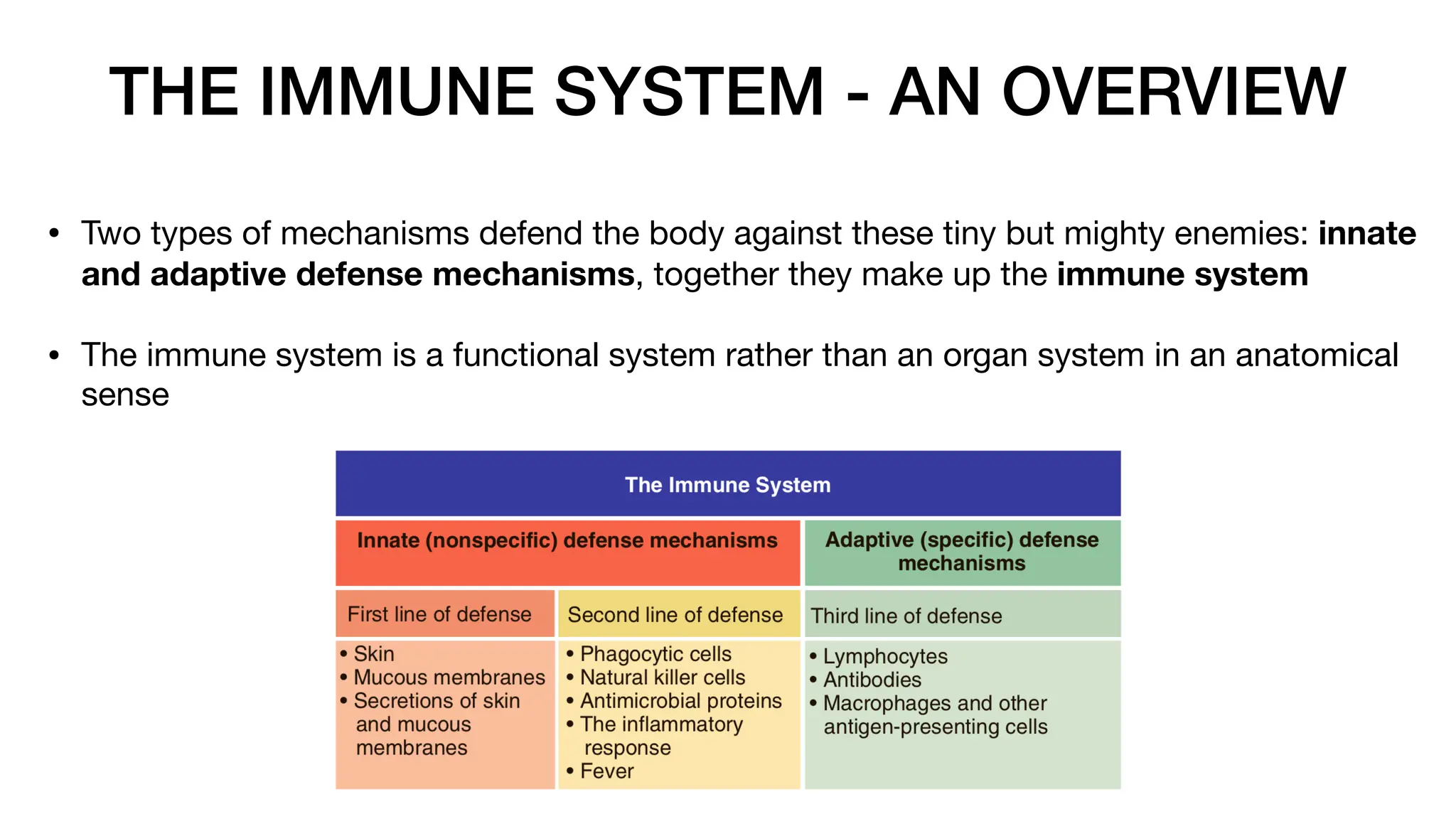
THE IMMUNE SYSTEM - AN OVERVIEW
• Two types of mechanisms defend the body against these tiny but mighty enemies: innate
and adaptive defense mechanisms, together they make up the immune system
• The immune system is a functional system rather than an organ system in an anatomical
sense
THE IMMUNE SYSTEM
• The innate defense system, also called the nonspeci
fi
c defense system, responds
immediately to protect the body from all foreign substances
• These include intact skin and mucous membranes, the in
fl
ammatory response, and a
number of proteins produced by body cells.
• They generally preventing the entry and spread of microorganisms throughout the body.
• The adaptive defense system, or speci
fi
c defense system,
fi
ghts invaders that get past
the innate defenses by mounting an attack against one or more particular foreign
substances
• the adaptive system must
fi
rst be sensitized by, an initial exposure to a foreign
substance (antigen) before it can protect the body against the invader or pathogen
THE INNATE IMMUNITY
• The body’s
fi
rst line of defense against the invasion of disease-causing
microorganisms
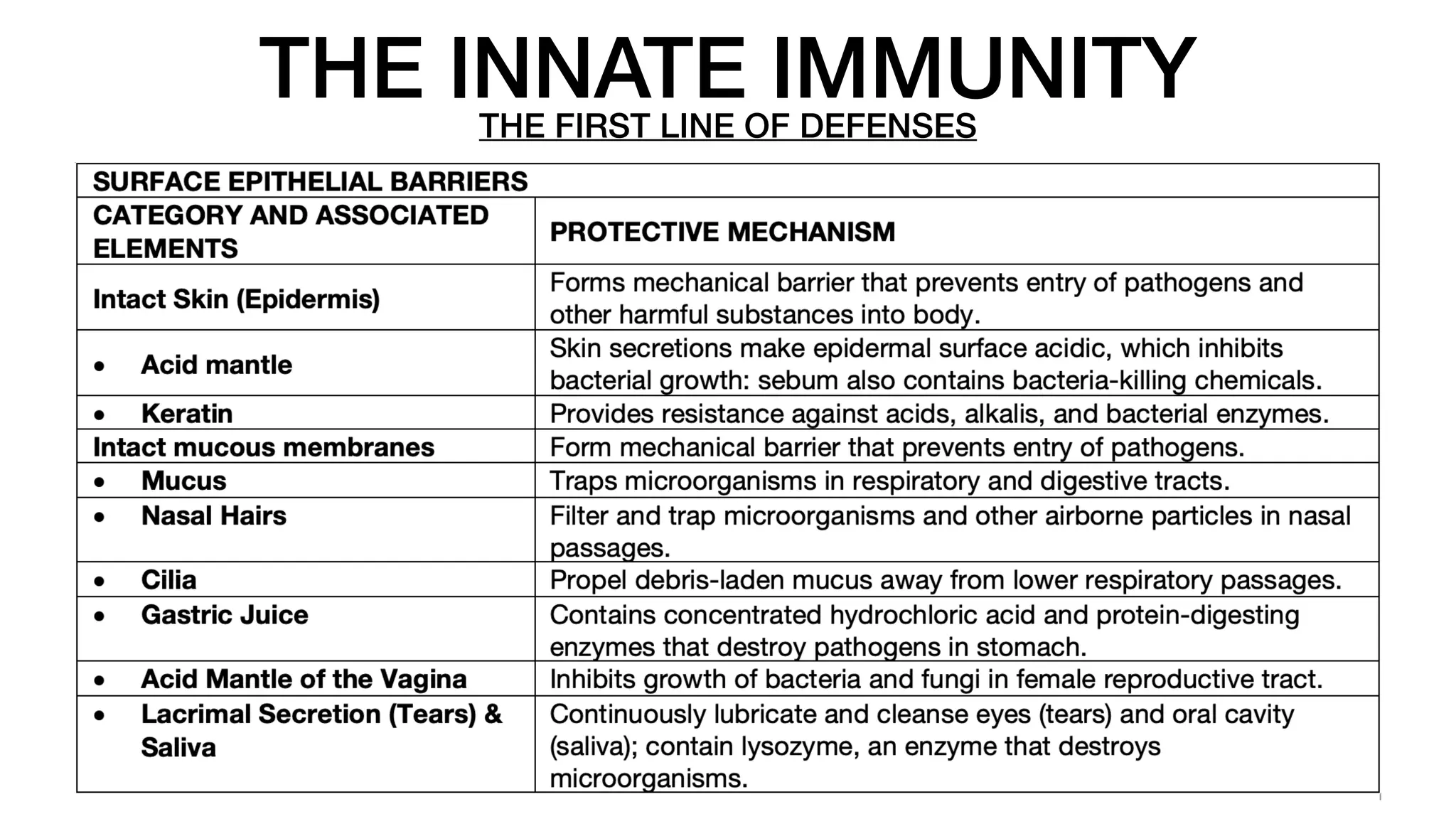
THE INNATE IMMUNITY
THE FIRST LINE OF DEFENSES
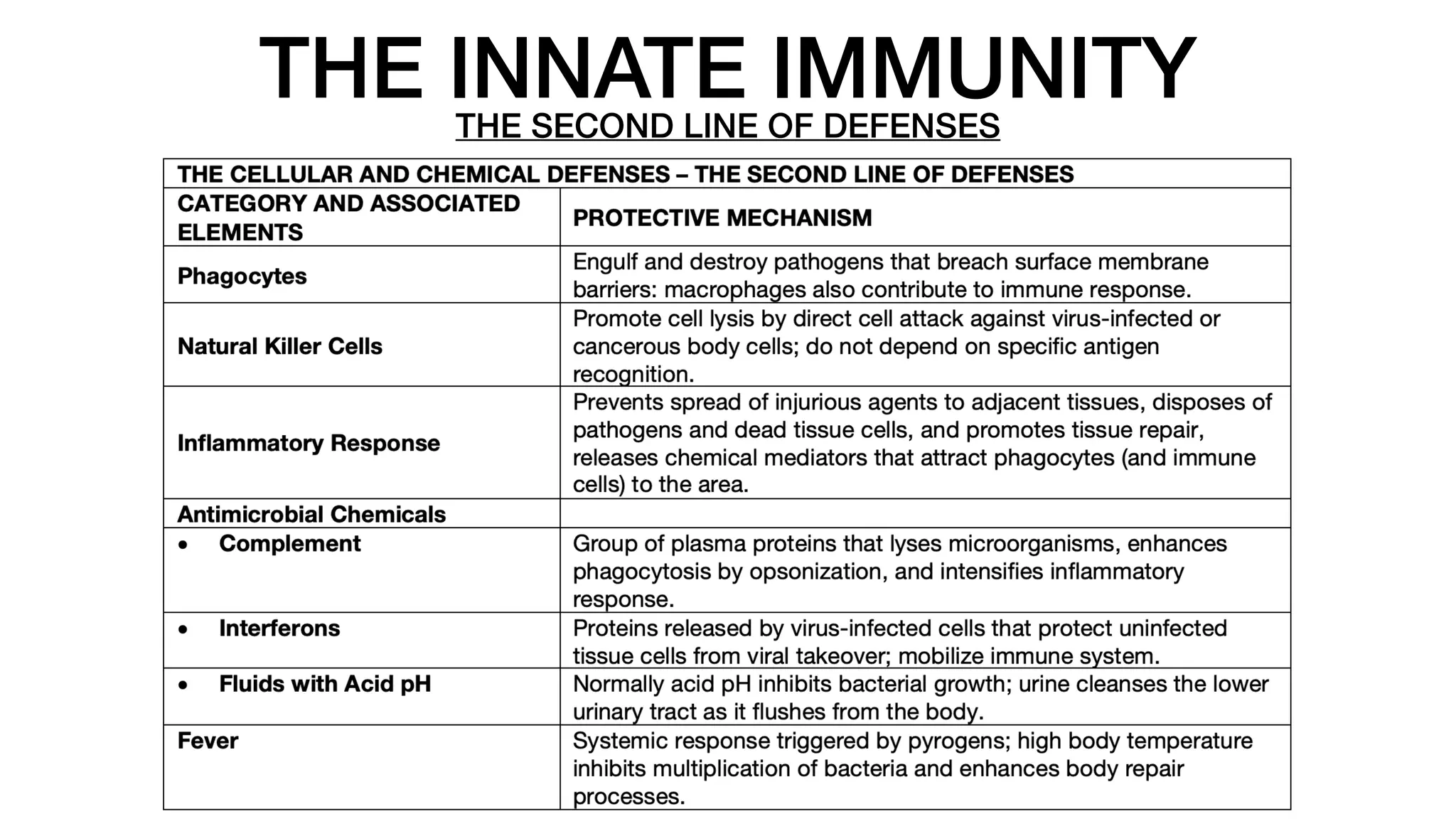
THE INNATE IMMUNITY
THE SECOND LINE OF DEFENSES
THE NATURAL KILLER CELLS
• They freely roam the body in blood and lymph.
• They are a unique group of aggressive lymphocytes that can lyse (burst) and kill
cancer cells, virus-infected body cells, and some other nonspeci
fi
c targets
before the adaptive arm of the immune system is enlisted in the
fi
ght.
• NK cells are not phagocytic, instead, they attack the target cell’s membrane
and release lytic chemicals called perforin and granzymes, which degrade
target cell contents
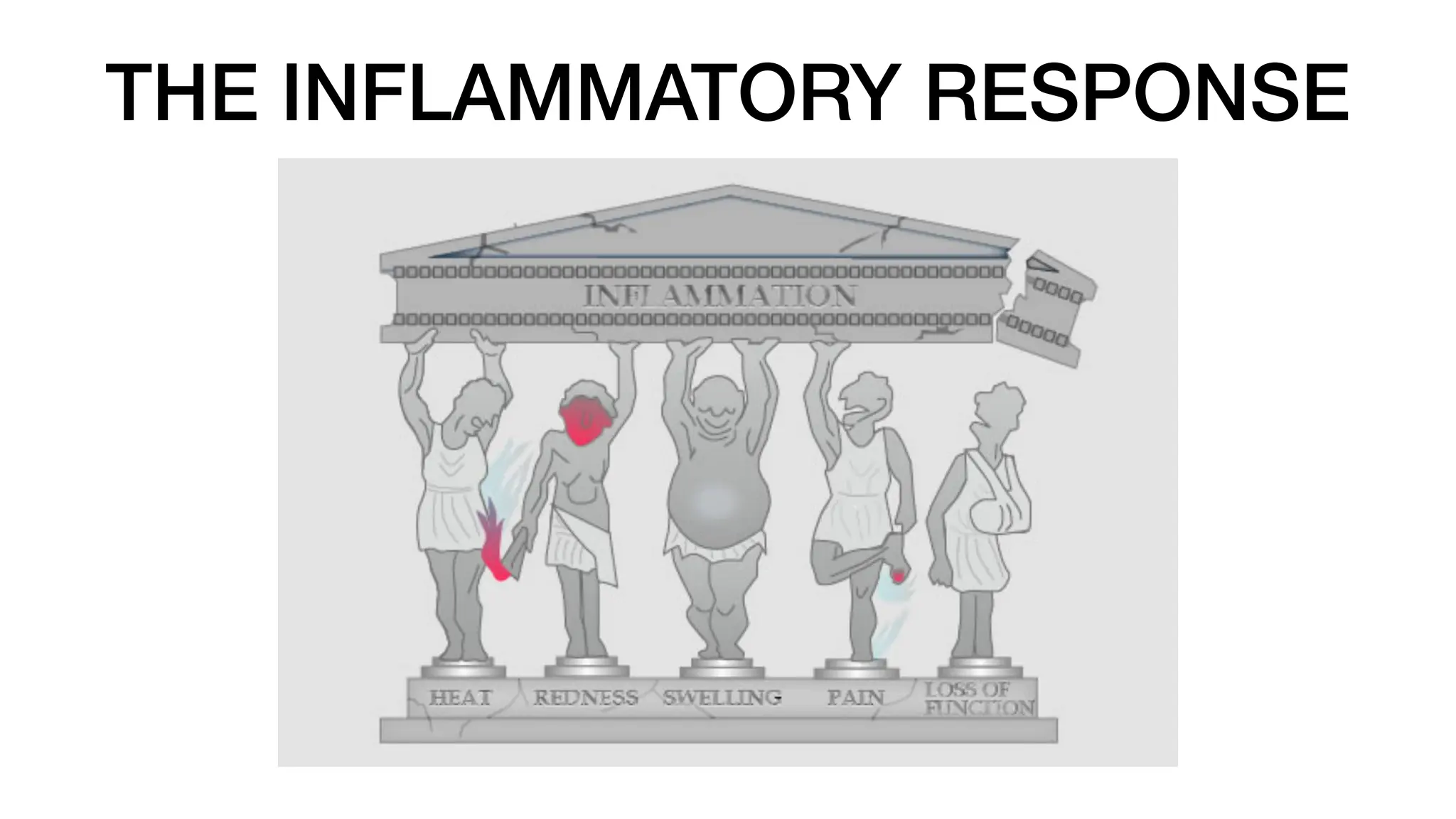
THE INFLAMMATORY RESPONSE
• The in
fl
ammatory response is a nonspeci
fi
c response that is triggered whenever
body tissues are injured
• it occurs in response to physical trauma, intense heat, irritating chemicals, and
infection by viruses and bacteria
• The four most common indicators, or cardinal signs, of acute in
fl
ammation are
redness, heat, swelling, and pain, the
fi
fth cardinal sign being the loss of function
of the a
ff
ected body part (rubor -> tumor -> calor -> dolor -> function laesa)
THE INFLAMMATORY RESPONSE
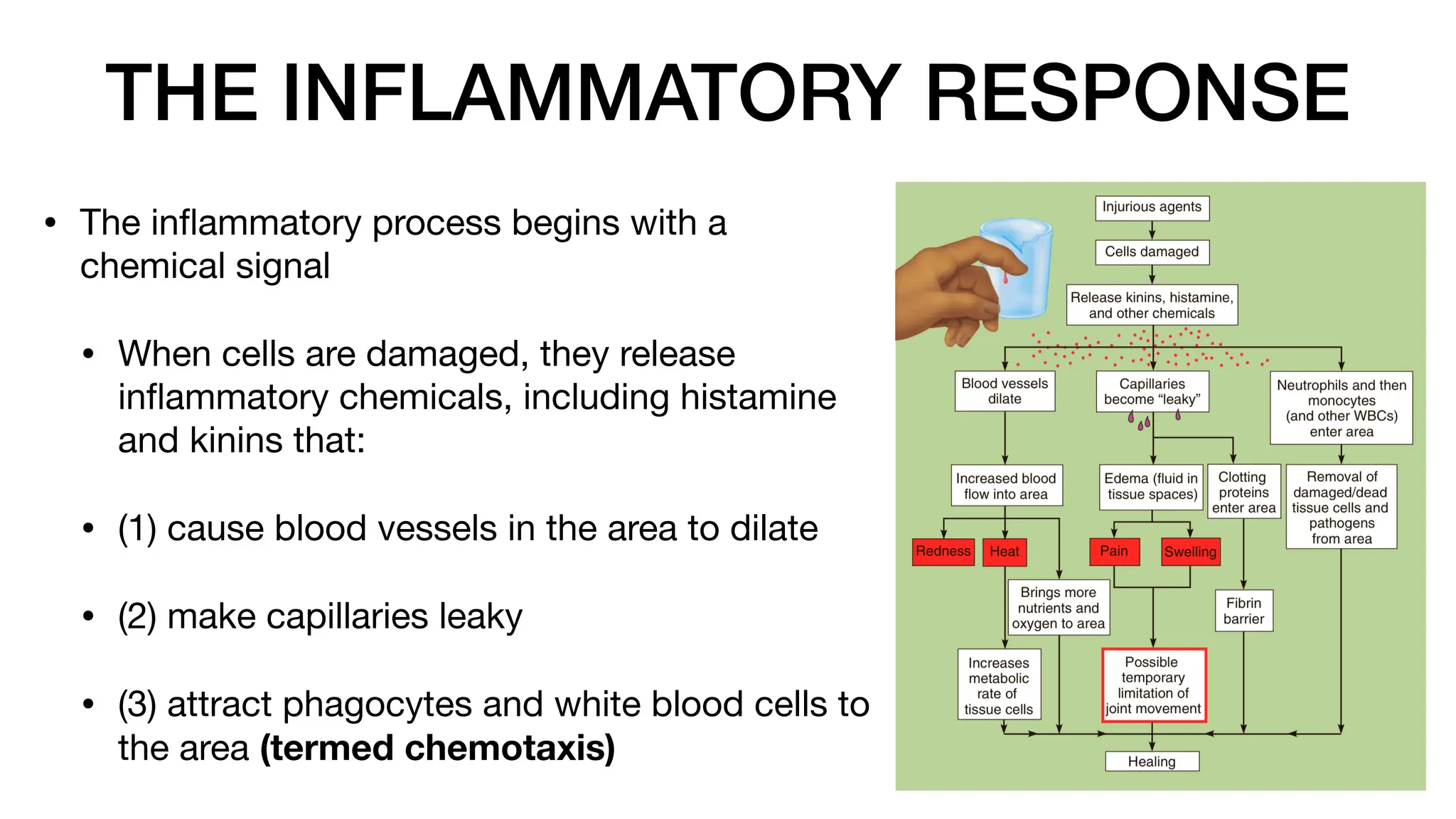
• The in
fl
ammatory process begins with a
chemical signal
• When cells are damaged, they release
in
fl
ammatory chemicals, including histamine
and kinins that:
• (1) cause blood vessels in the area to dilate
• (2) make capillaries leaky
• (3) attract phagocytes and white blood cells to
the area (termed chemotaxis)
THE INFLAMMATORY RESPONSE
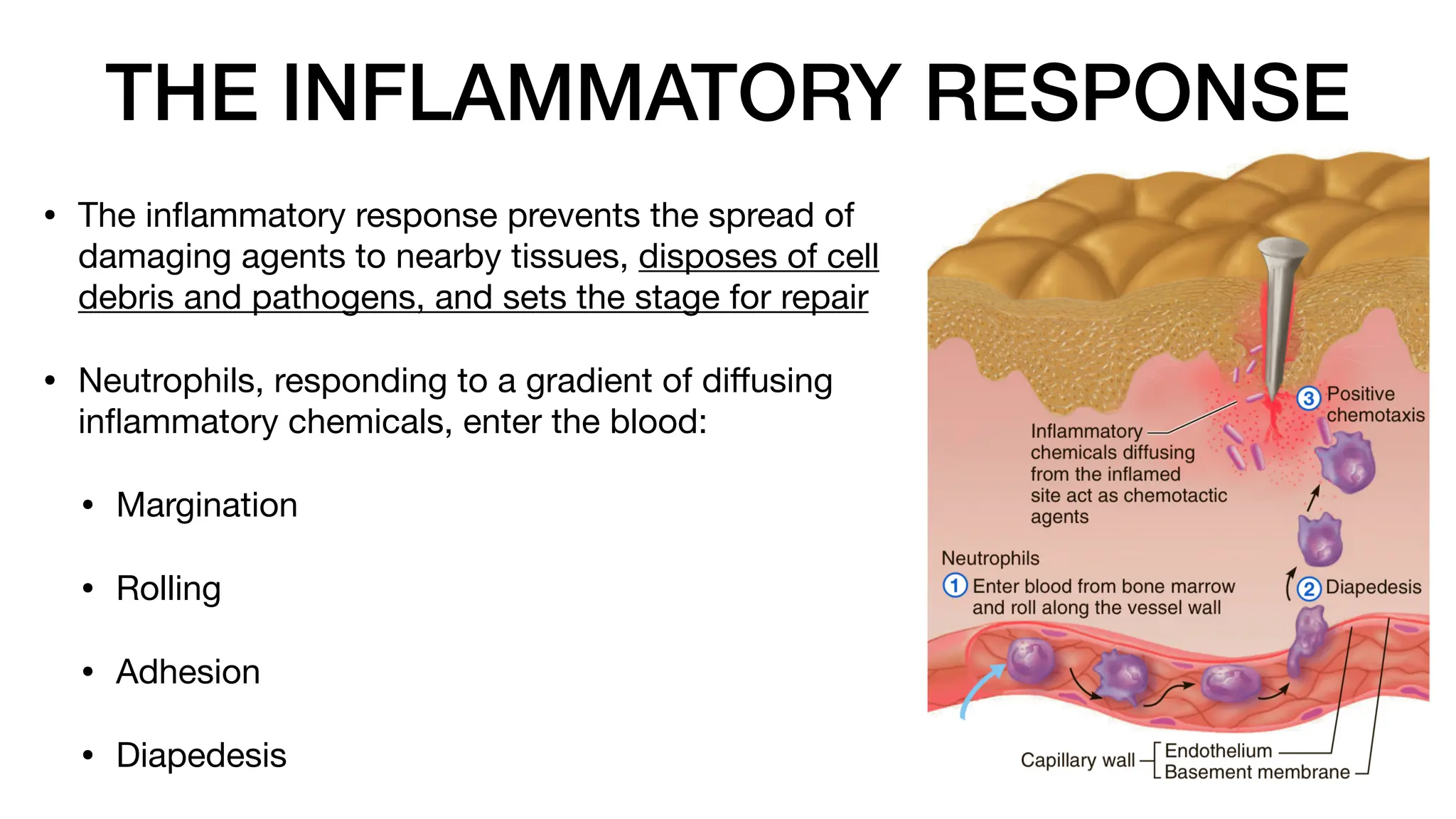
• The in
fl
ammatory response prevents the spread of
damaging agents to nearby tissues, disposes of cell
debris and pathogens, and sets the stage for repair
• Neutrophils, responding to a gradient of di
ff
using
in
fl
ammatory chemicals, enter the blood:
• Margination
• Rolling
• Adhesion
• Diapedesis
THE INFLAMMATORY RESPONSE
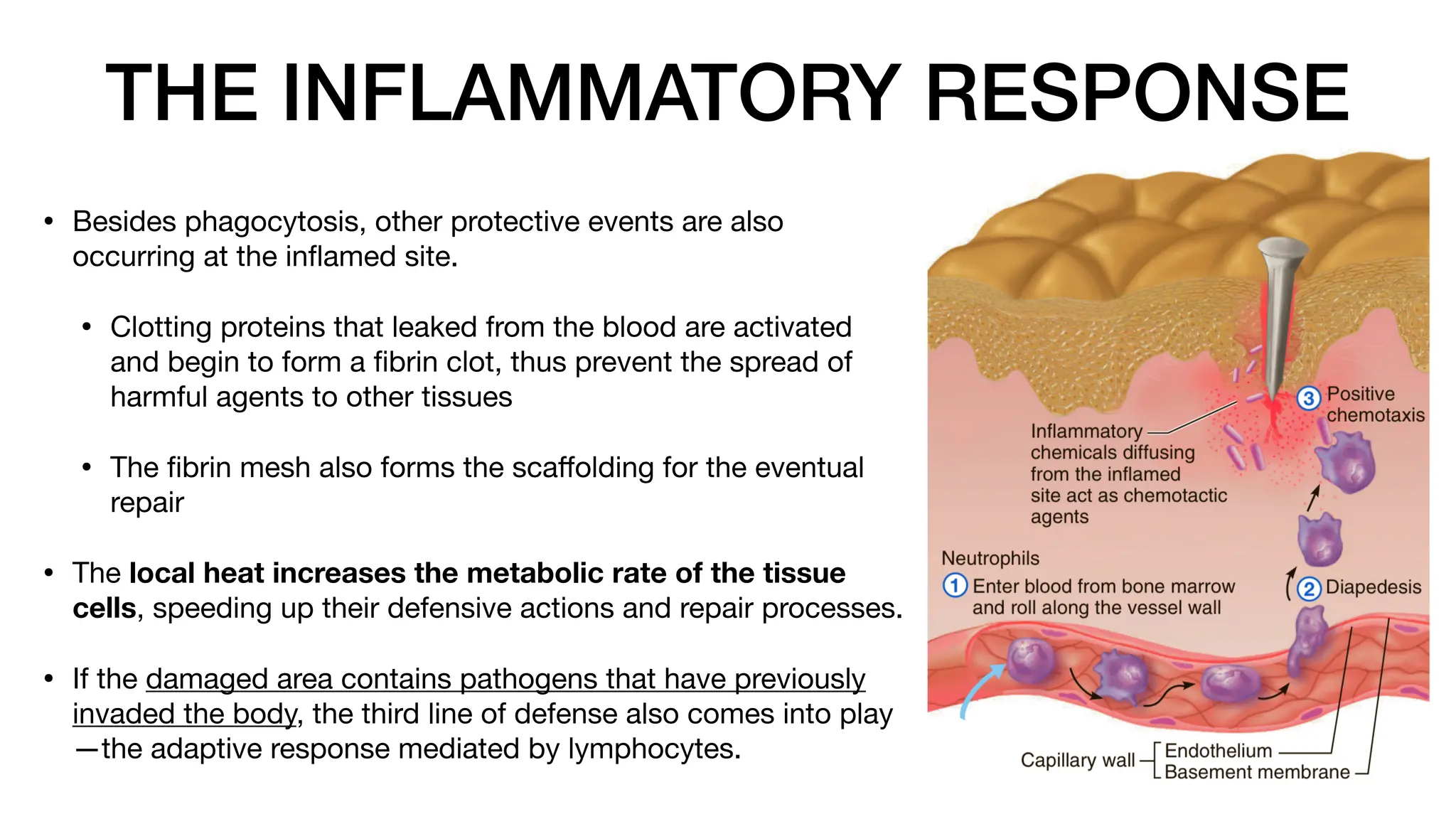
• Besides phagocytosis, other protective events are also
occurring at the in
fl
amed site.
• Clotting proteins that leaked from the blood are activated
and begin to form a
fi
brin clot, thus prevent the spread of
harmful agents to other tissues
• The
fi
brin mesh also forms the sca
ff
olding for the eventual
repair
• The local heat increases the metabolic rate of the tissue
cells, speeding up their defensive actions and repair processes.
• If the damaged area contains pathogens that have previously
invaded the body, the third line of defense also comes into play
—the adaptive response mediated by lymphocytes.
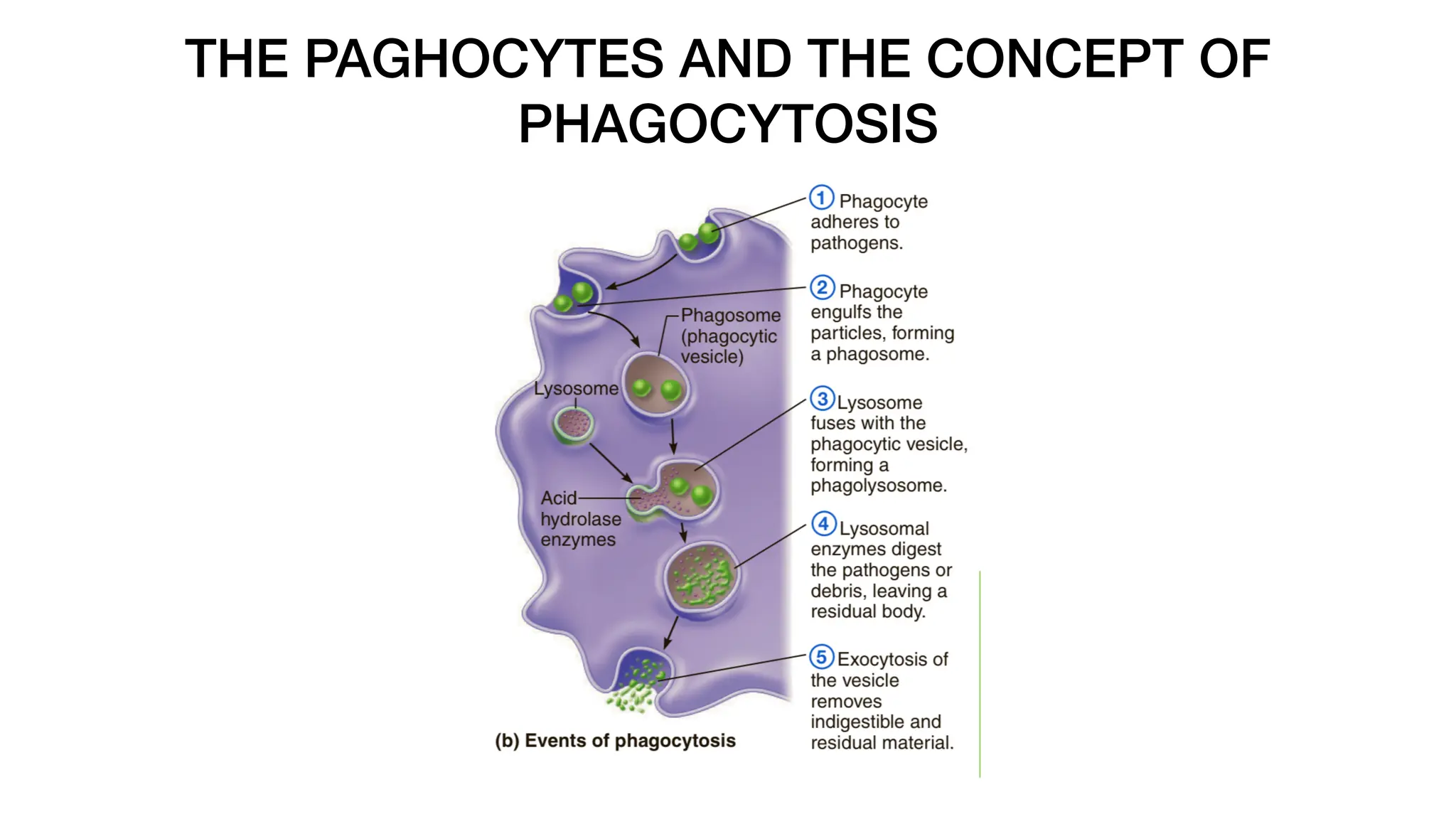
THE PAGHOCYTES AND THE CONCEPT OF
PHAGOCYTOSIS
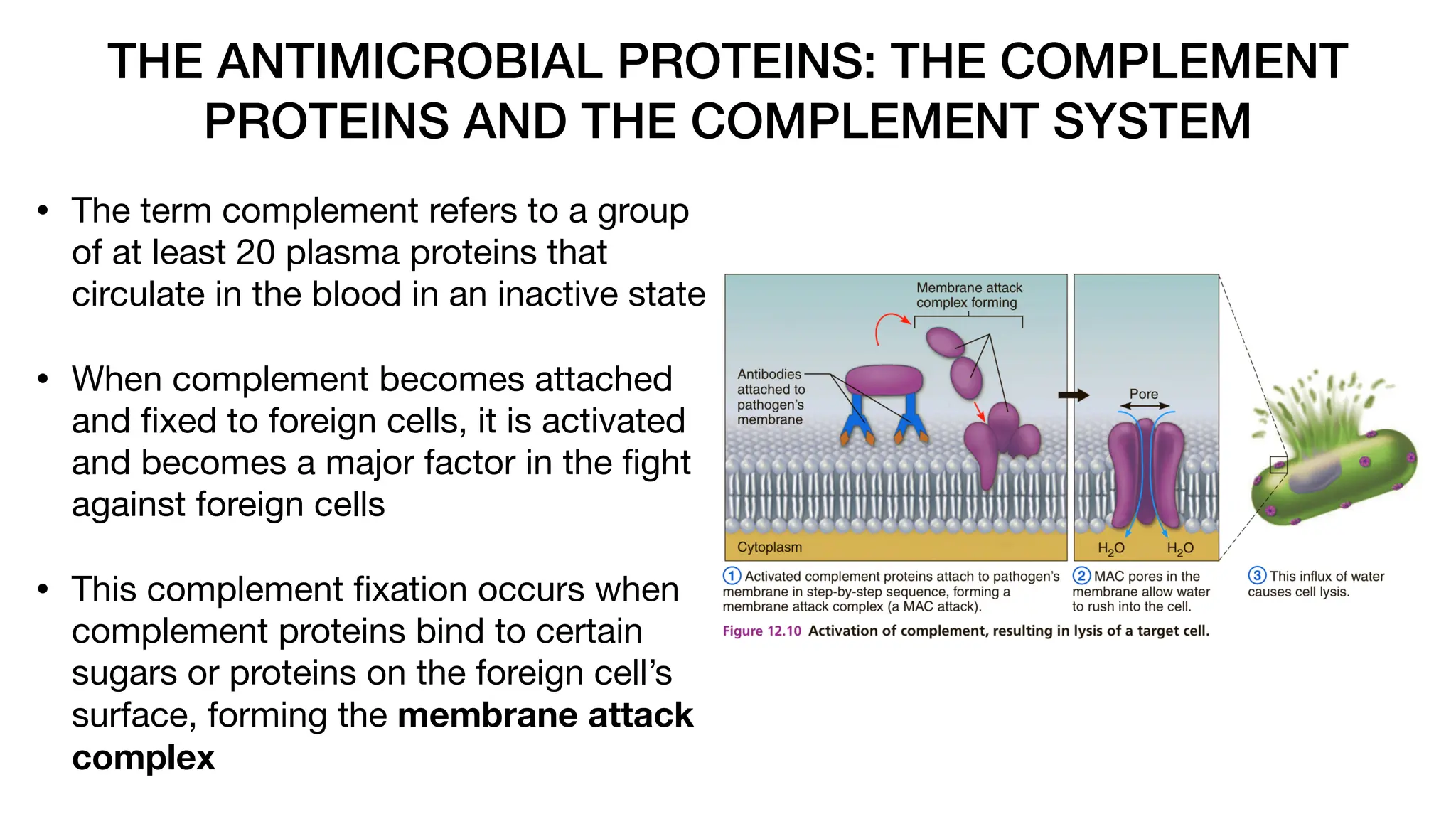
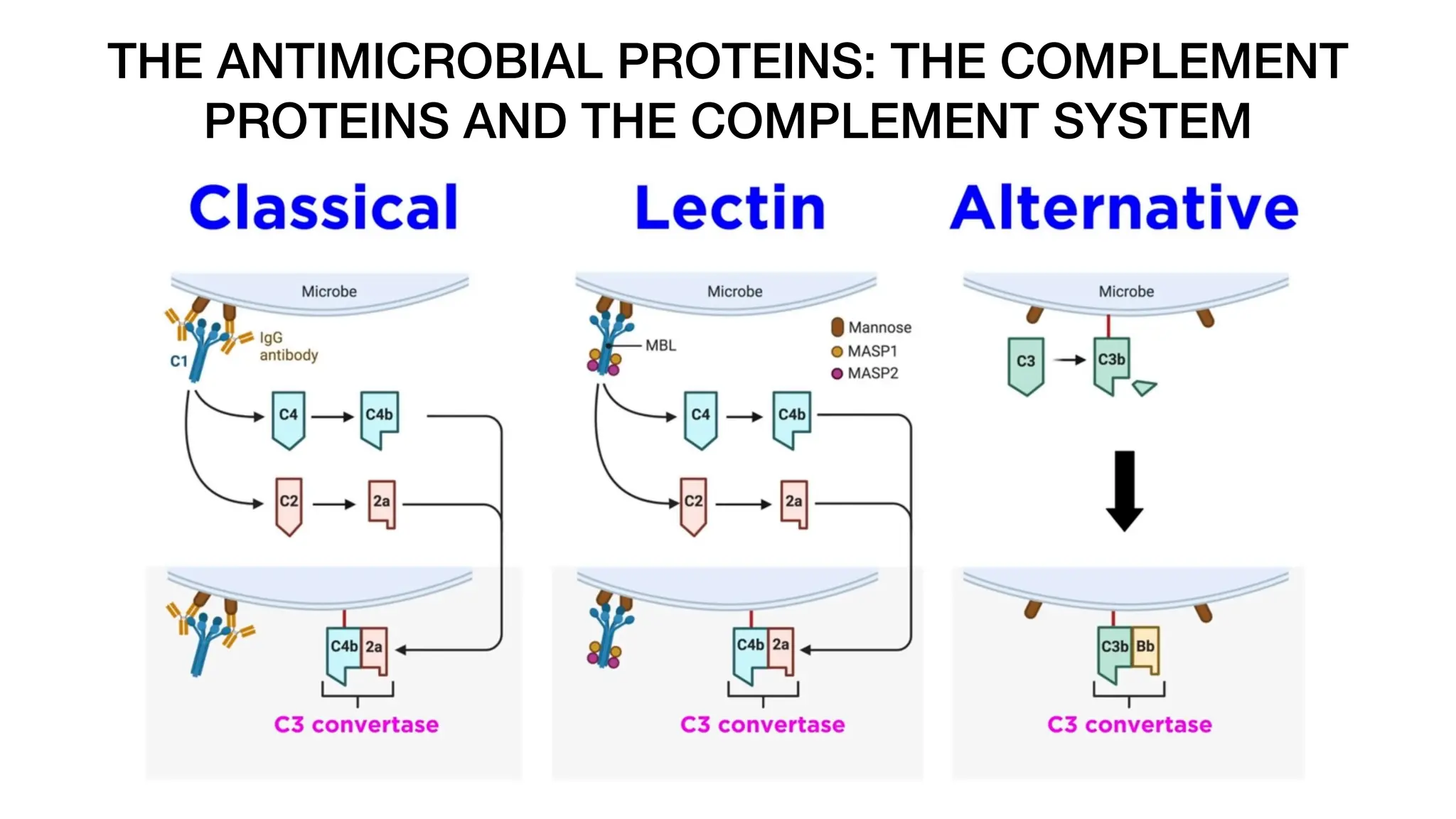
THE ANTIMICROBIAL PROTEINS: THE COMPLEMENT
PROTEINS AND THE COMPLEMENT SYSTEM
• The term complement refers to a group
of at least 20 plasma proteins that
circulate in the blood in an inactive state
• When complement becomes attached
and
fi
xed to foreign cells, it is activated
and becomes a major factor in the
fi
ght
against foreign cells
• This complement
fi
xation occurs when
complement proteins bind to certain
sugars or proteins on the foreign cell’s
surface, forming the membrane attack
complex
THE ANTIMICROBIAL PROTEINS: THE COMPLEMENT
PROTEINS AND THE COMPLEMENT SYSTEM
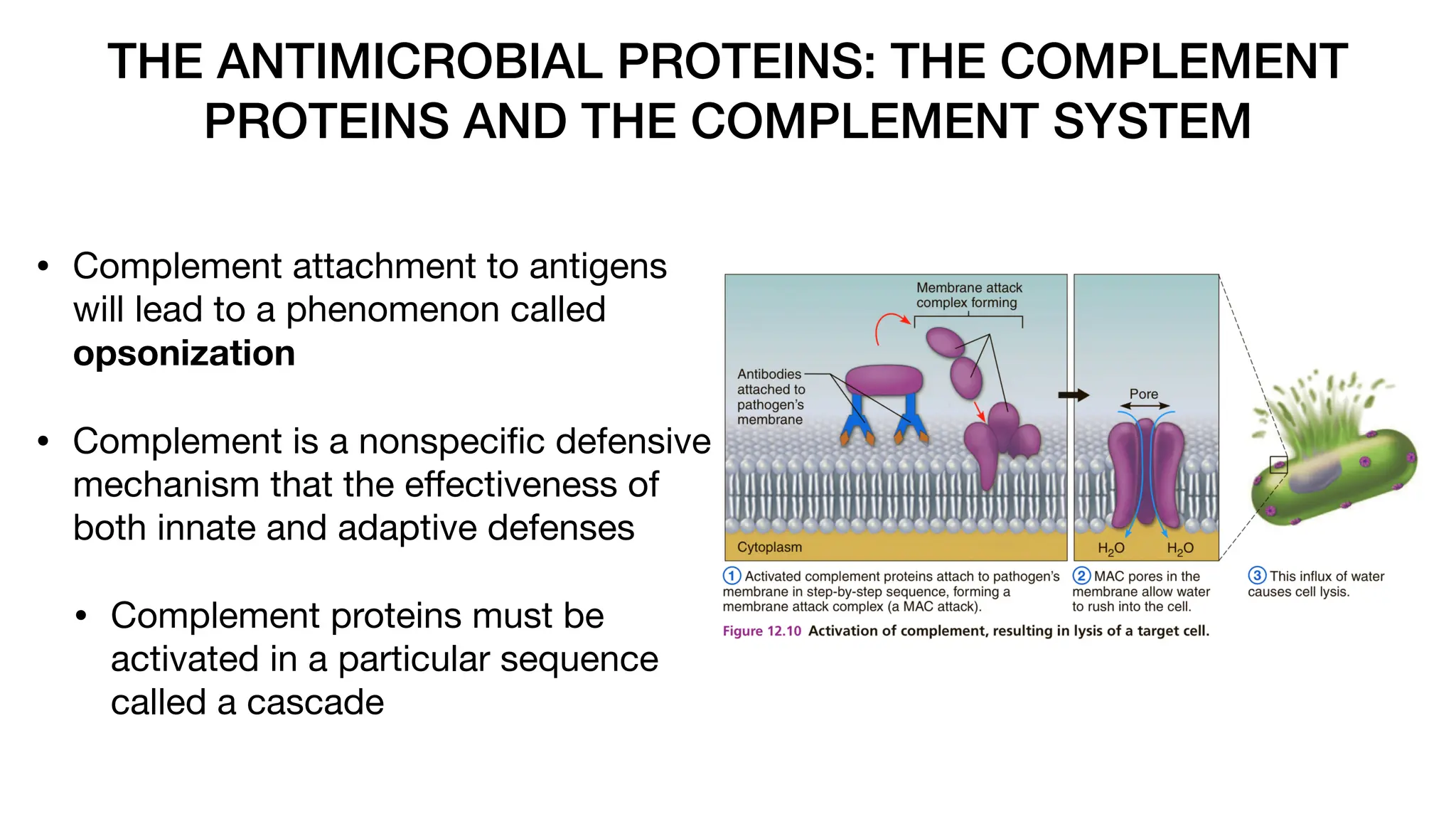
• Complement attachment to antigens
will lead to a phenomenon called
opsonization
• Complement is a nonspeci
fi
c defensive
mechanism that the e
ff
ectiveness of
both innate and adaptive defenses
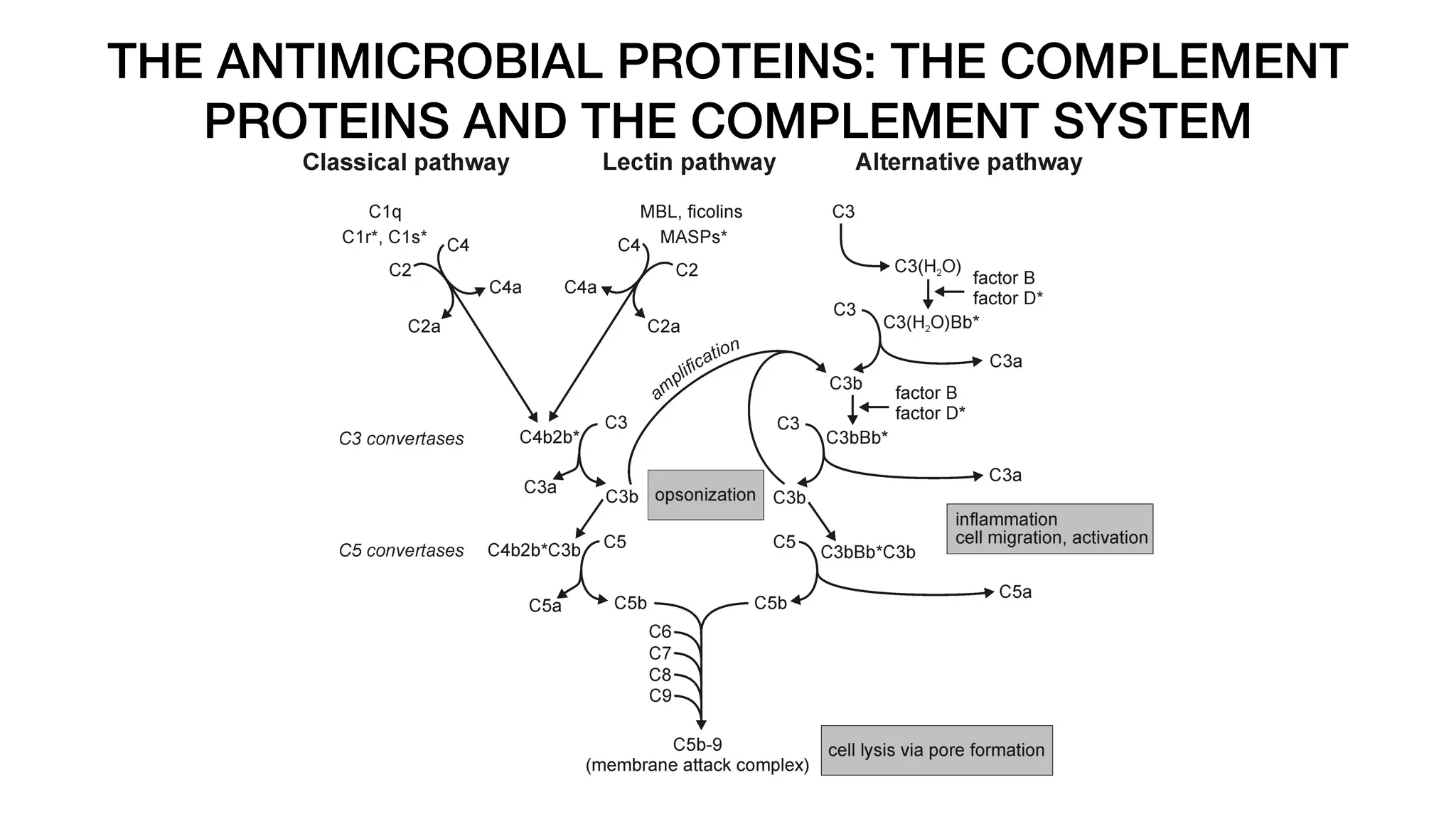
• Complement proteins must be
activated in a particular sequence
called a cascade
THE ANTIMICROBIAL PROTEINS: THE COMPLEMENT
PROTEINS AND THE COMPLEMENT SYSTEM
THE ANTIMICROBIAL PROTEINS: THE COMPLEMENT
PROTEINS AND THE COMPLEMENT SYSTEM
THE ANTIMICROBIAL PROTEINS: THE
INTERFERONS
• Spread of virus infected cells are prevented by proteins called interferons
• Although the virus-infected cells can do little to save themselves, they help defend
cells that have not yet been infected by secreting small proteins called interferons
• The interferon molecules di
ff
use to nearby cells and bind to their membrane
receptors.
• This binding stimulates the synthesis of proteins that “interfere” with the ability
of viruses to multiply within these still-healthy cells, reducing the spread of the
virus.
• Interferons do not assist with
fi
ghting bacterial or fungal infections.
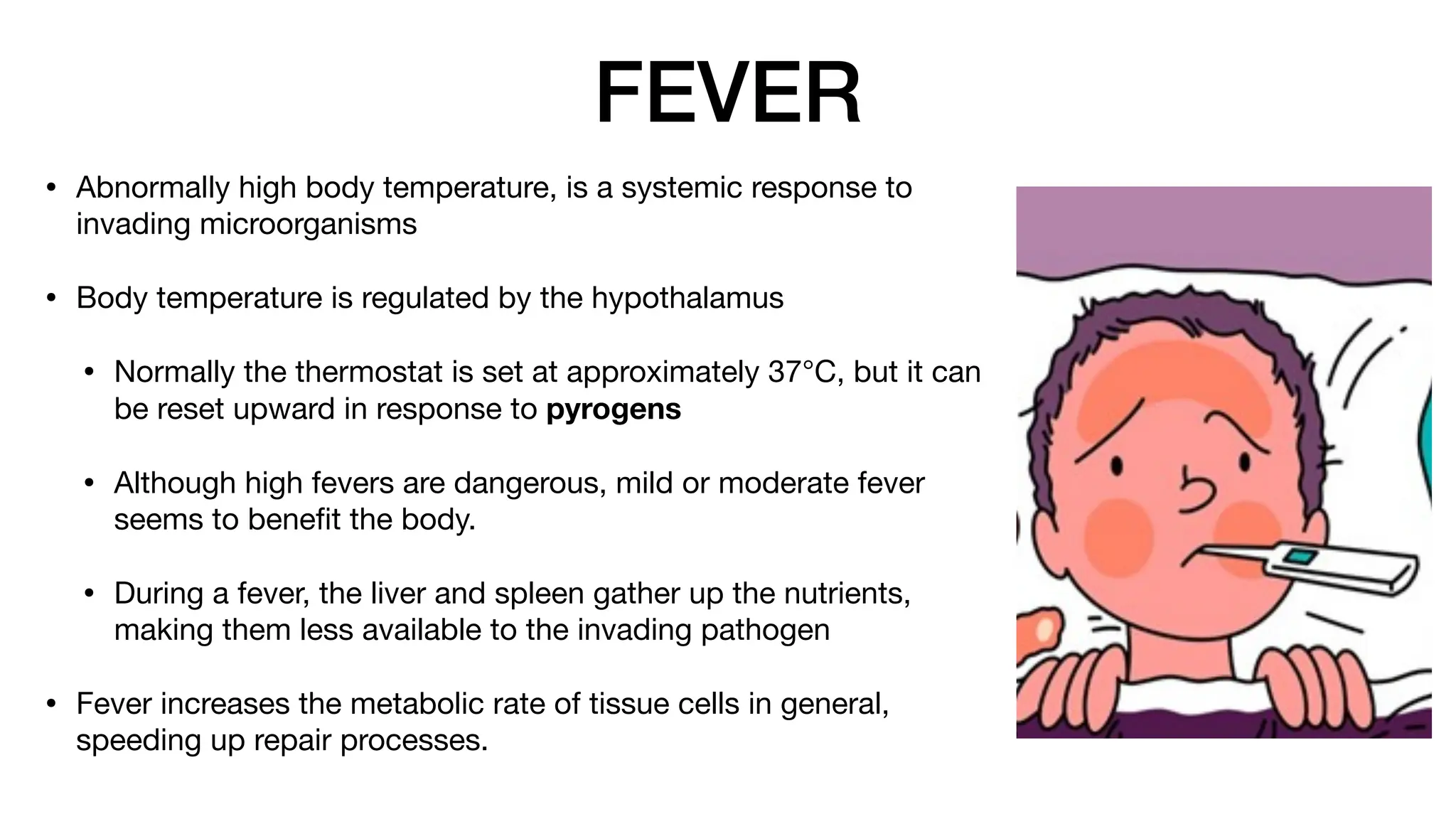
FEVER
• Abnormally high body temperature, is a systemic response to
invading microorganisms
• Body temperature is regulated by the hypothalamus
• Normally the thermostat is set at approximately 37°C, but it can
be reset upward in response to pyrogens
• Although high fevers are dangerous, mild or moderate fever
seems to bene
fi
t the body.
• During a fever, the liver and spleen gather up the nutrients,
making them less available to the invading pathogen
• Fever increases the metabolic rate of tissue cells in general,
speeding up repair processes.
THE ADAPTIVE IMMUNITY
• Referred to as the body’s third line of defense, the adaptive, or speci
fi
c,
defense mechanism is a functional system that recognizes foreign molecules
called antigens and acts to inactivate or destroy them
• Three important aspects of adaptive defense:
• It is antigen speci
fi
c—it recognizes and acts against particular pathogens
or foreign substances
• It is systemic—immunity is not restricted to the initial infection site.
• It has “memory”—it recognizes and mounts even stronger attacks on
previously encountered pathogens.
THE ADAPTIVE IMMUNITY
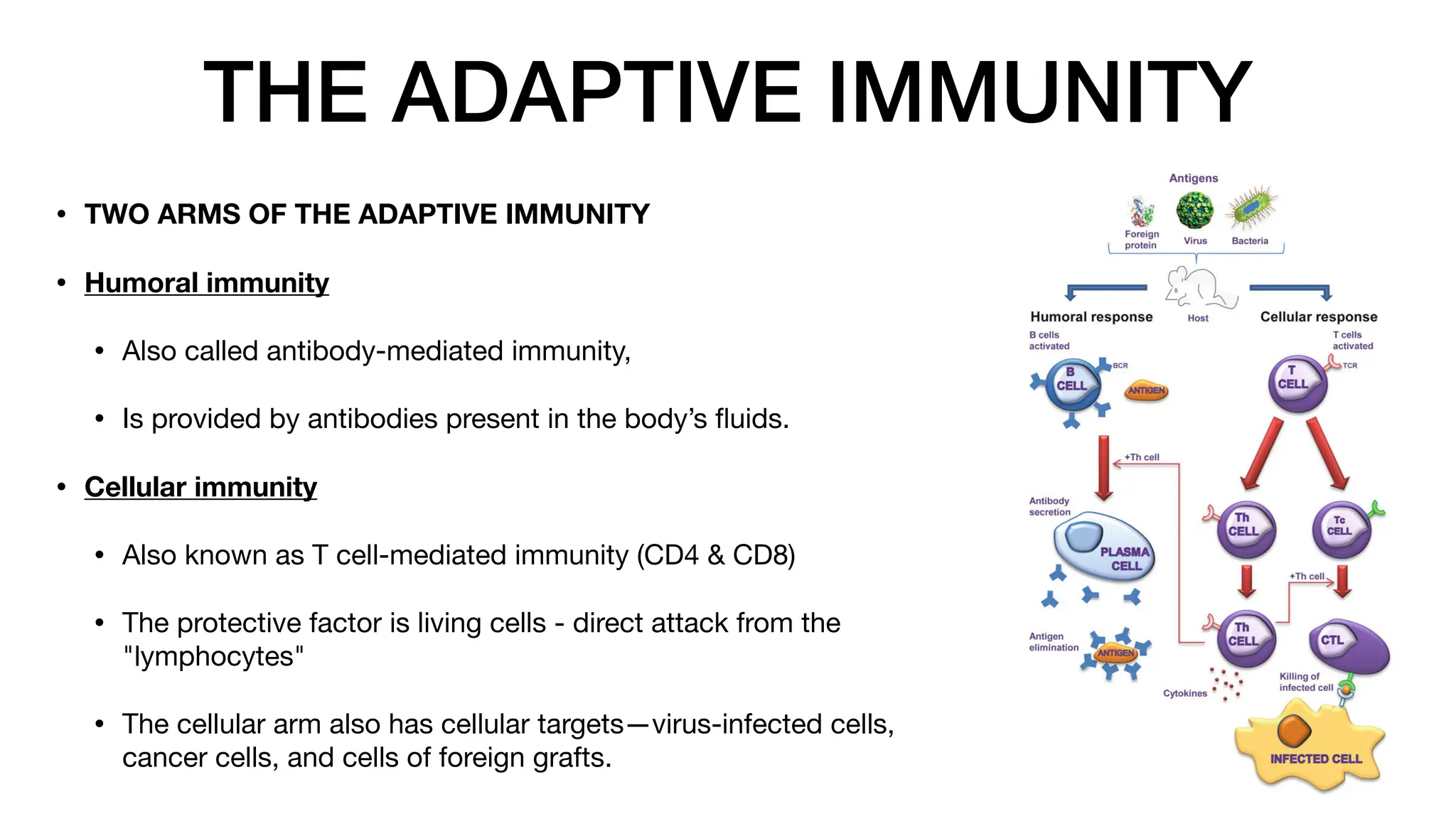
• TWO ARMS OF THE ADAPTIVE IMMUNITY
• Humoral immunity
• Also called antibody-mediated immunity,
• Is provided by antibodies present in the body’s
fl
uids.
• Cellular immunity
• Also known as T cell-mediated immunity (CD4 & CD8)
• The protective factor is living cells - direct attack from the
"lymphocytes"
• The cellular arm also has cellular targets—virus-infected cells,
cancer cells, and cells of foreign grafts.
ANTIGENS - A CONCEPT
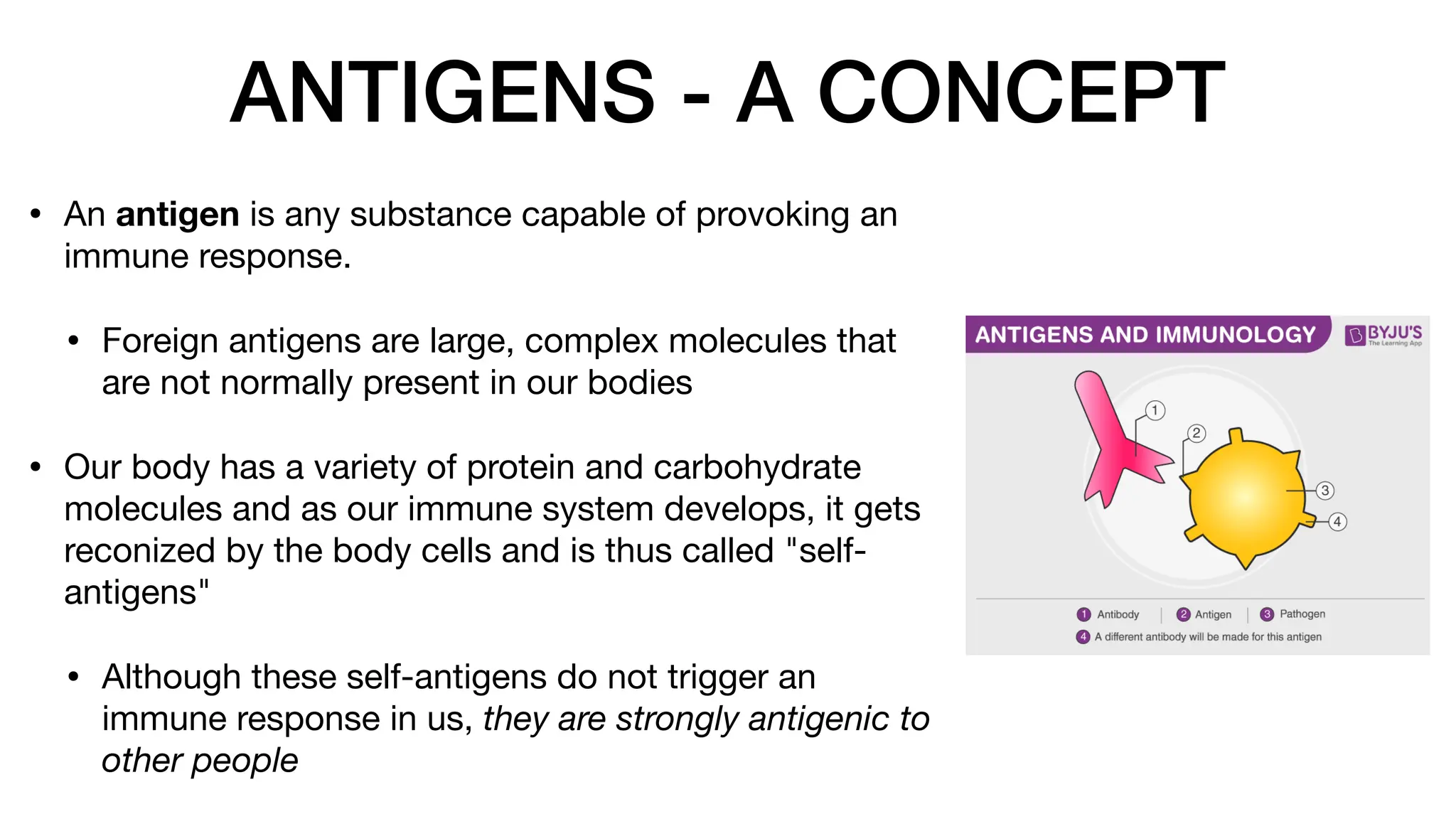
• An antigen is any substance capable of provoking an
immune response.
• Foreign antigens are large, complex molecules that
are not normally present in our bodies
• Our body has a variety of protein and carbohydrate
molecules and as our immune system develops, it gets
reconized by the body cells and is thus called "self-
antigens"
• Although these self-antigens do not trigger an
immune response in us, they are strongly antigenic to
other people
ANTIGENS - A CONCEPT
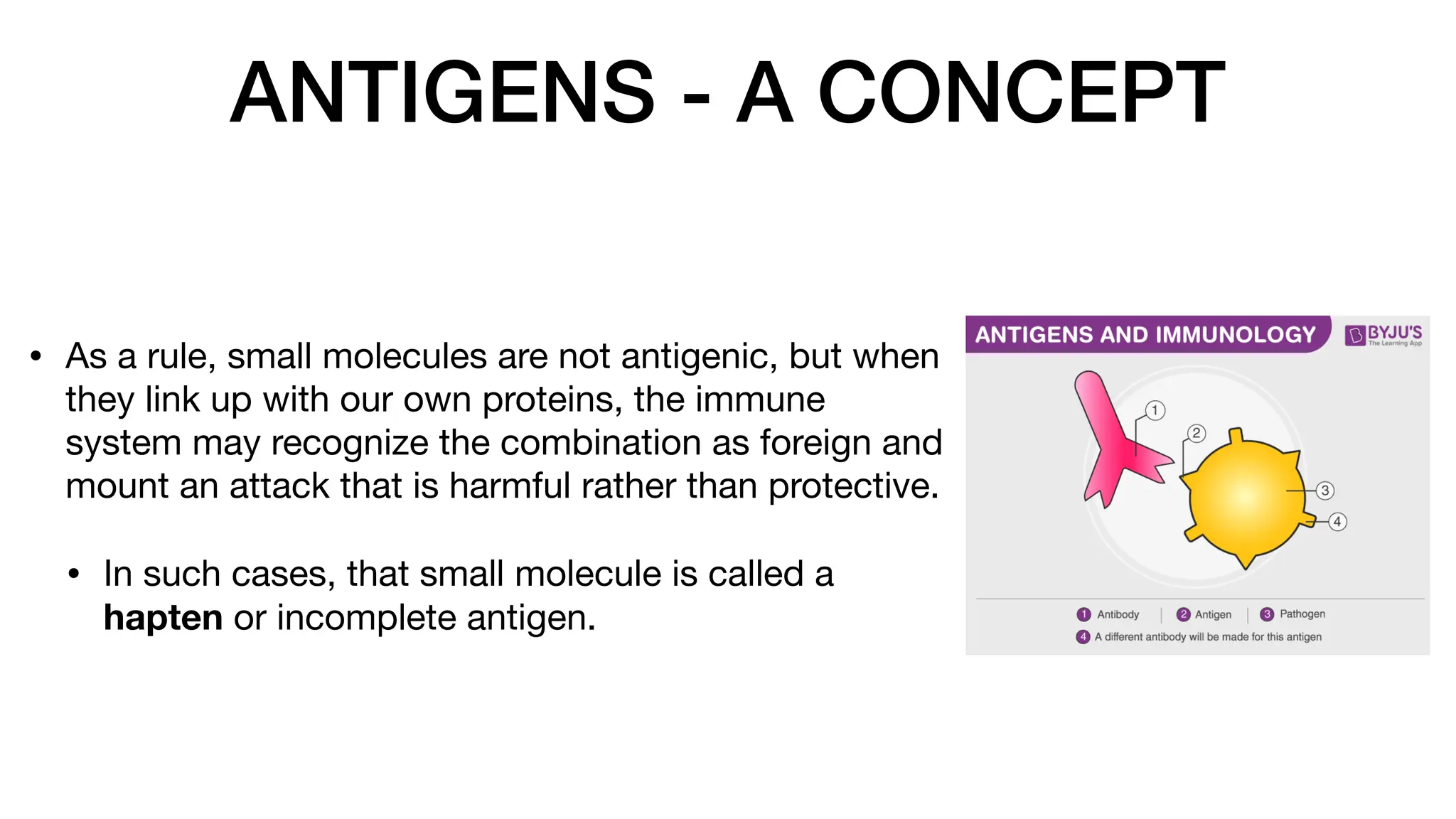
• As a rule, small molecules are not antigenic, but when
they link up with our own proteins, the immune
system may recognize the combination as foreign and
mount an attack that is harmful rather than protective.
• In such cases, that small molecule is called a
hapten or incomplete antigen.
THE CELLS OF THE ADAPTIVE IMMUNITY
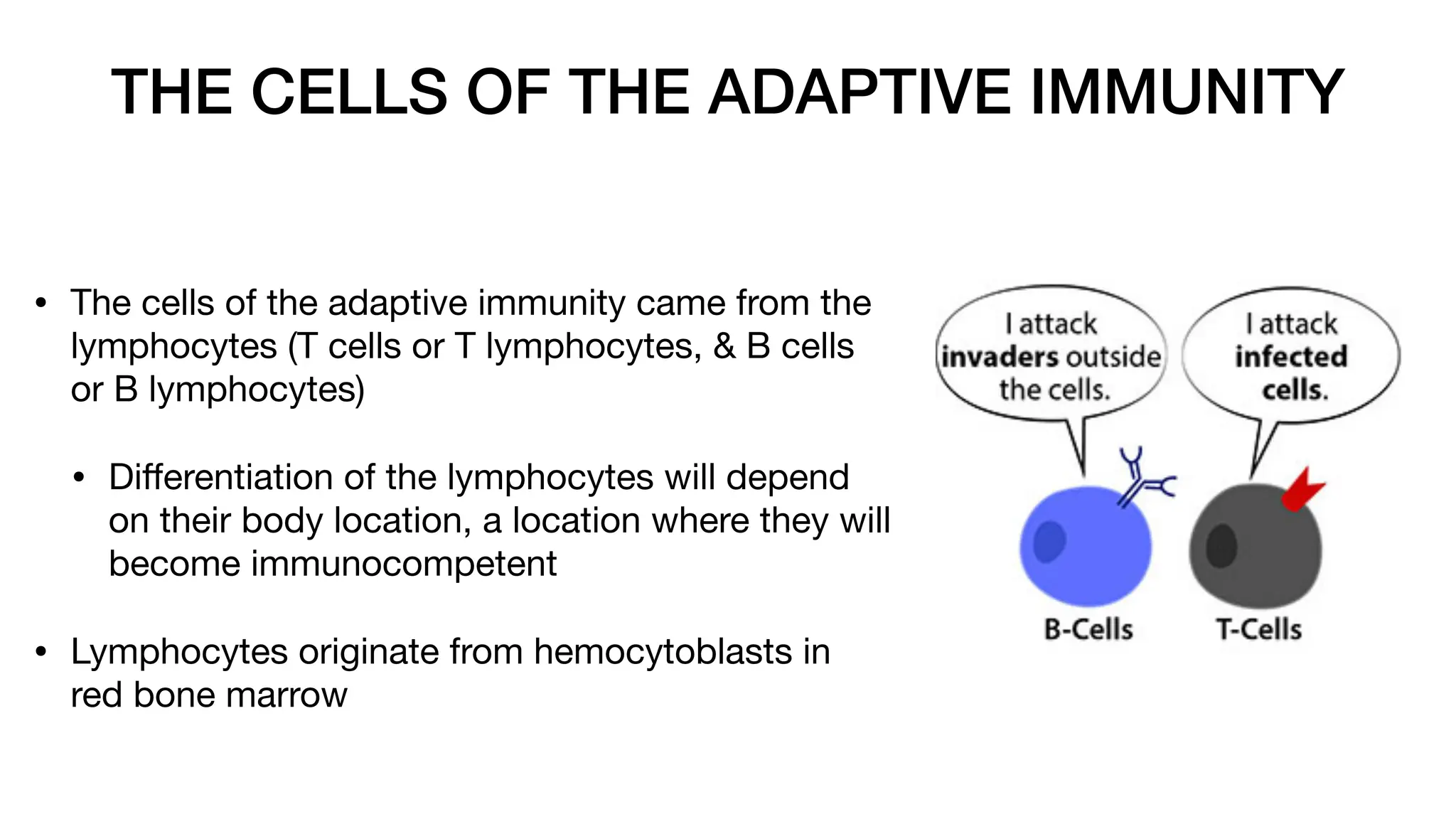
• The cells of the adaptive immunity came from the
lymphocytes (T cells or T lymphocytes, & B cells
or B lymphocytes)
• Di
ff
erentiation of the lymphocytes will depend
on their body location, a location where they will
become immunocompetent
• Lymphocytes originate from hemocytoblasts in
red bone marrow
THE CELLS OF THE ADAPTIVE IMMUNITY
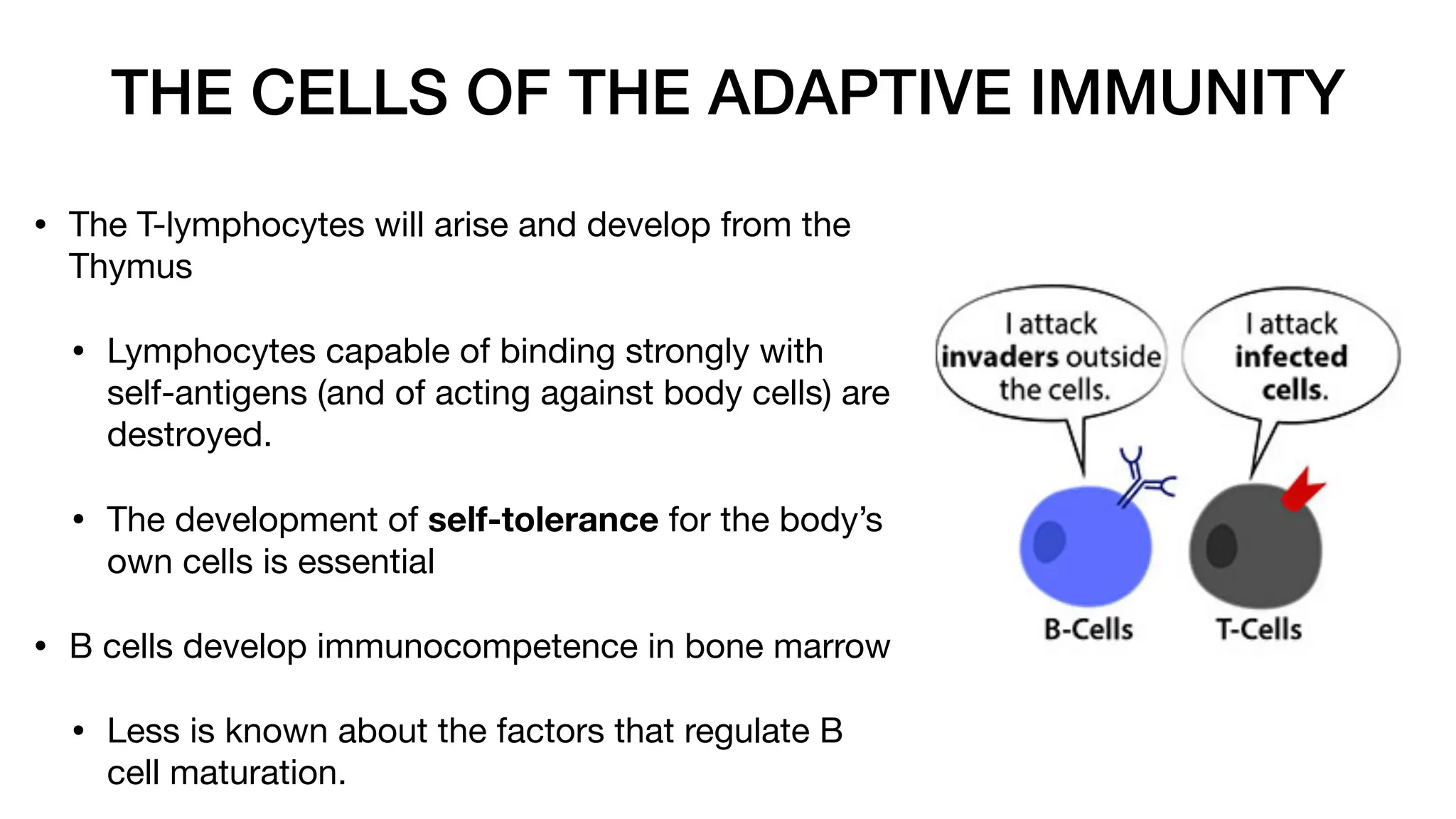
• The T-lymphocytes will arise and develop from the
Thymus
• Lymphocytes capable of binding strongly with
self-antigens (and of acting against body cells) are
destroyed.
• The development of self-tolerance for the body’s
own cells is essential
• B cells develop immunocompetence in bone marrow
• Less is known about the factors that regulate B
cell maturation.
THE CELLS OF THE ADAPTIVE IMMUNITY
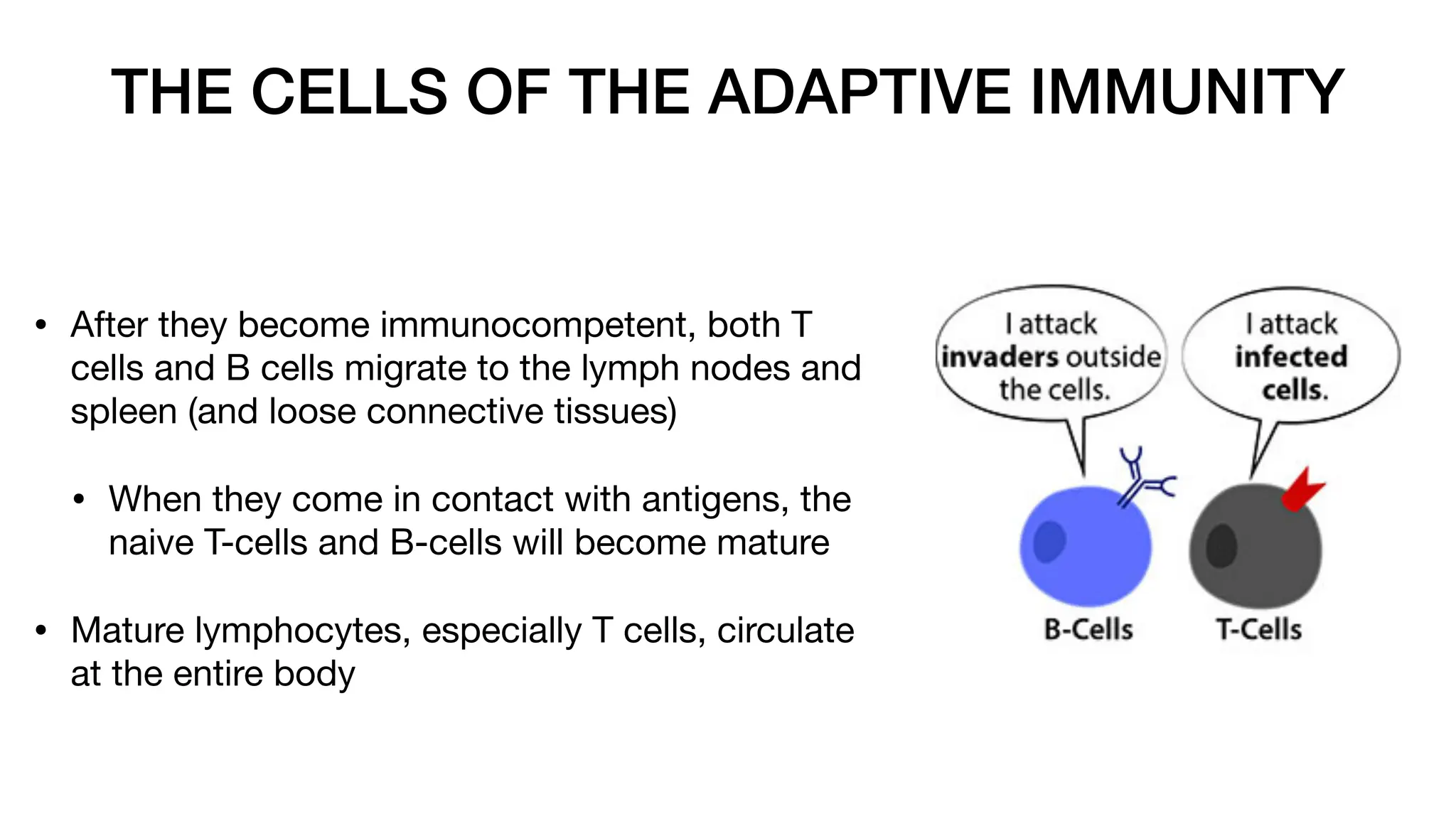
• After they become immunocompetent, both T
cells and B cells migrate to the lymph nodes and
spleen (and loose connective tissues)
• When they come in contact with antigens, the
naive T-cells and B-cells will become mature
• Mature lymphocytes, especially T cells, circulate
at the entire body
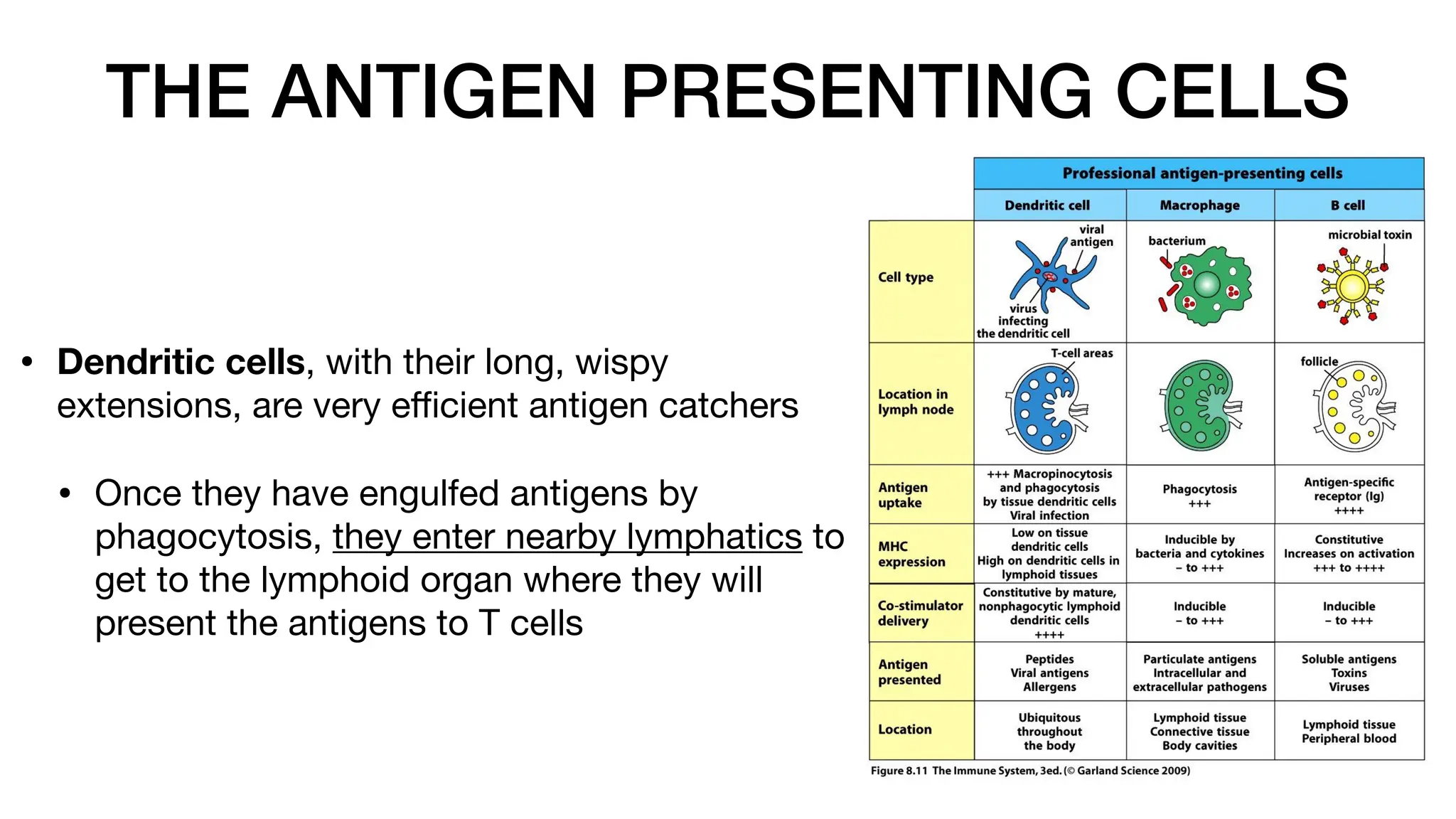
THE ANTIGEN PRESENTING CELLS
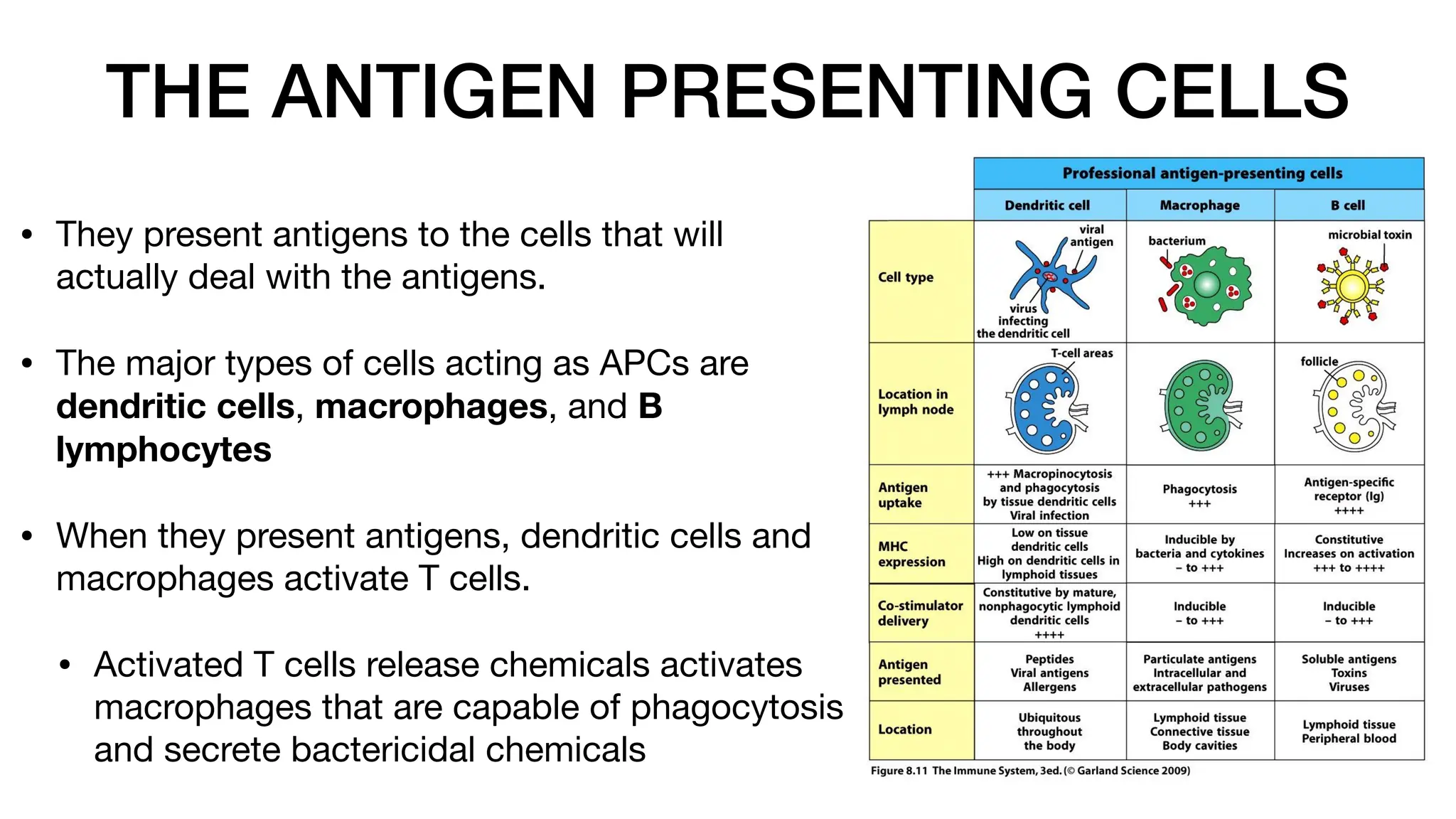
• They present antigens to the cells that will
actually deal with the antigens.
• The major types of cells acting as APCs are
dendritic cells, macrophages, and B
lymphocytes
• When they present antigens, dendritic cells and
macrophages activate T cells.
• Activated T cells release chemicals activates
macrophages that are capable of phagocytosis
and secrete bactericidal chemicals
THE ANTIGEN PRESENTING CELLS
• Dendritic cells, with their long, wispy
extensions, are very e
ffi
cient antigen catchers
• Once they have engulfed antigens by
phagocytosis, they enter nearby lymphatics to
get to the lymphoid organ where they will
present the antigens to T cells
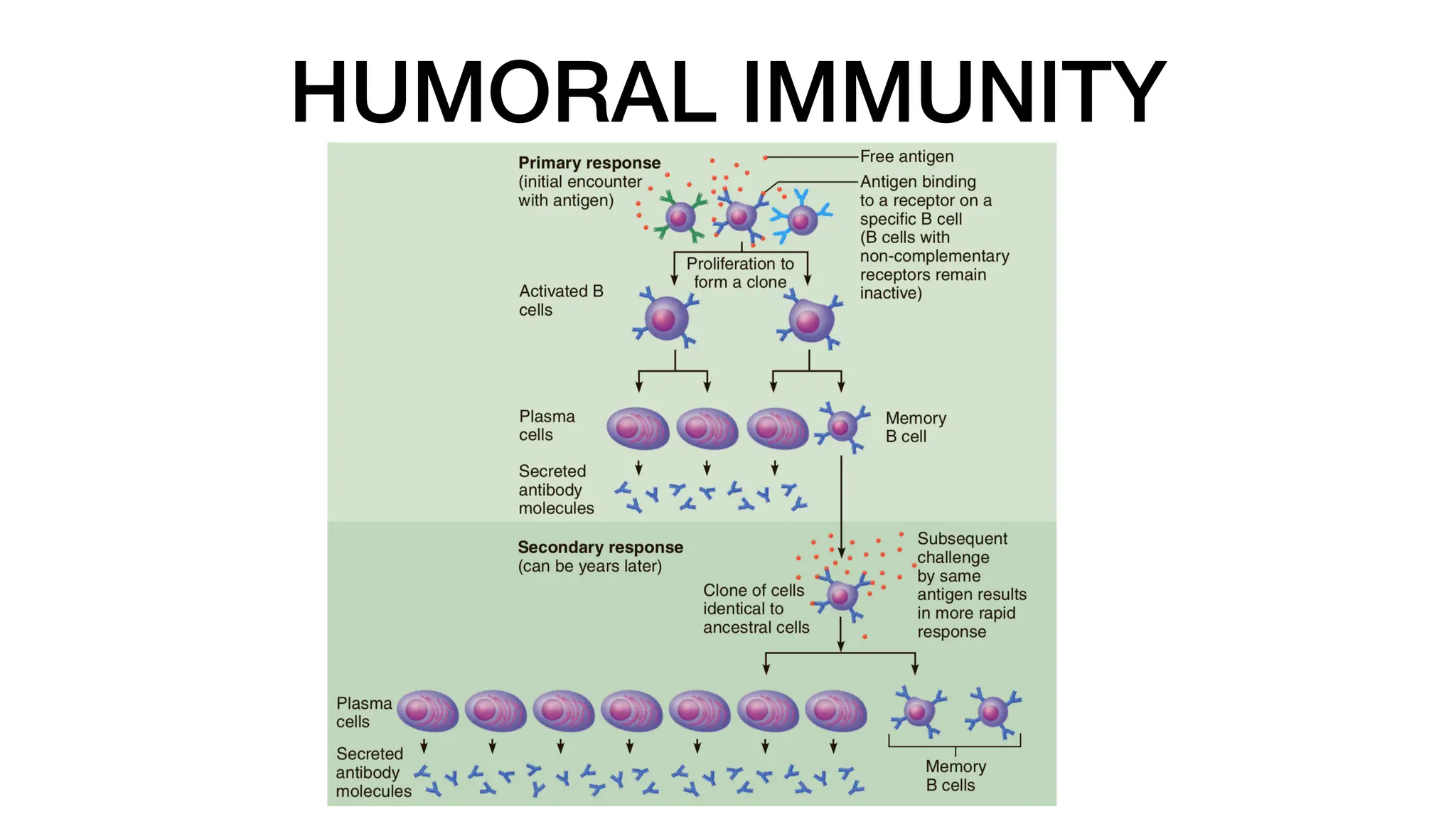
HUMORAL IMMUNITY
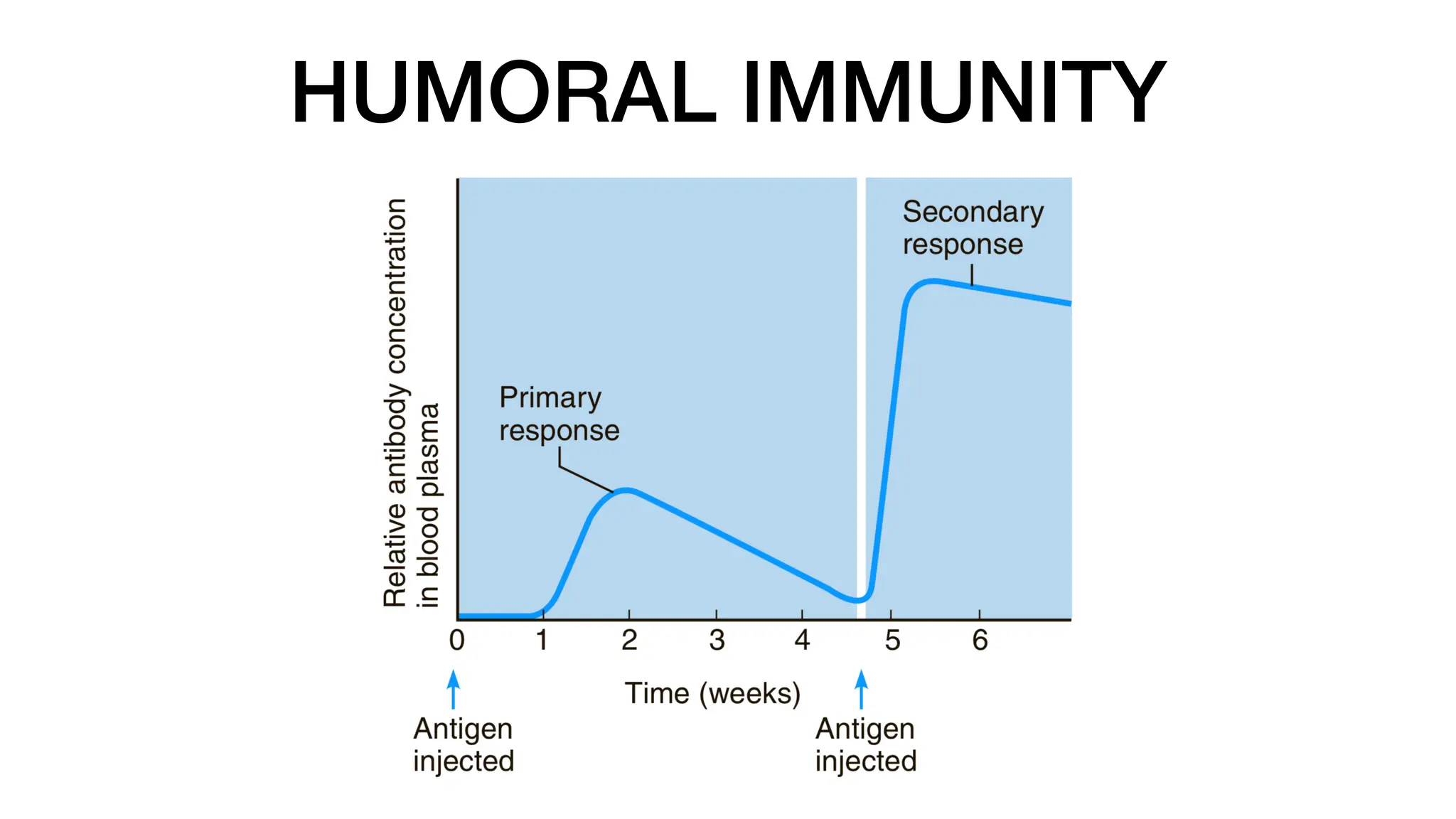
HUMORAL IMMUNITY
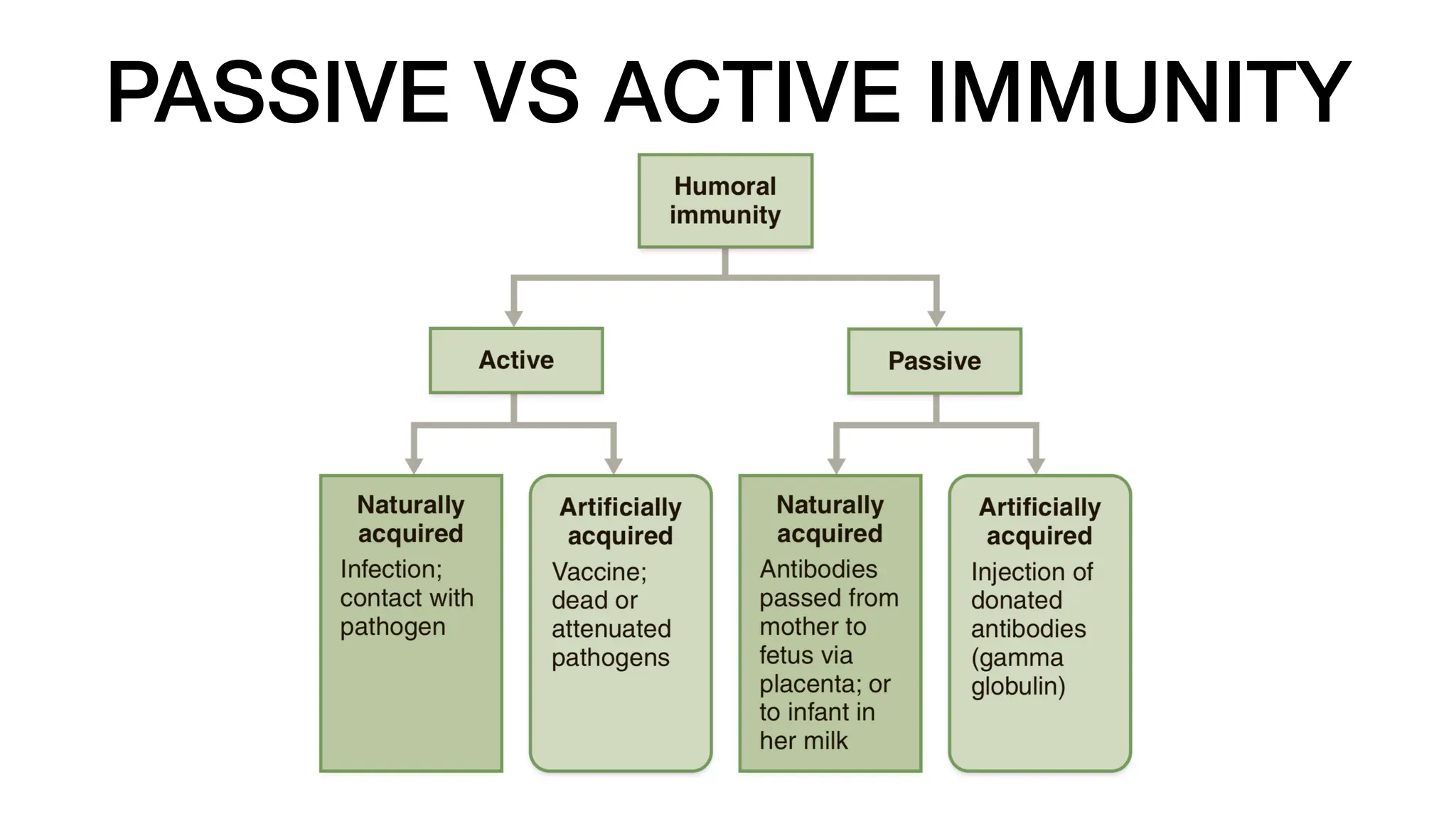
PASSIVE VS ACTIVE IMMUNITY
ANTIBODIES
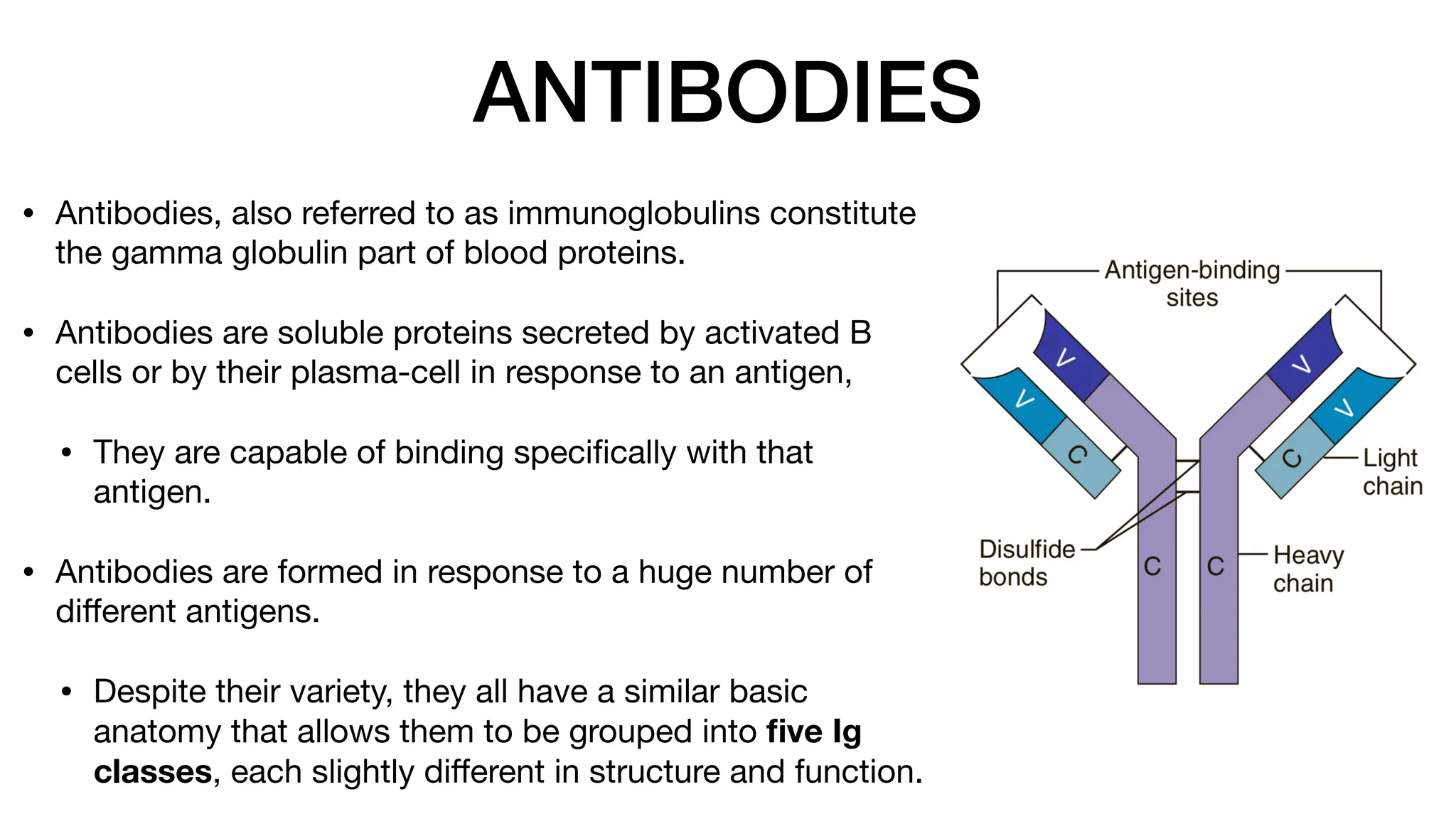
• Antibodies, also referred to as immunoglobulins constitute
the gamma globulin part of blood proteins.
• Antibodies are soluble proteins secreted by activated B
cells or by their plasma-cell in response to an antigen,
• They are capable of binding speci
fi
cally with that
antigen.
• Antibodies are formed in response to a huge number of
di
ff
erent antigens.
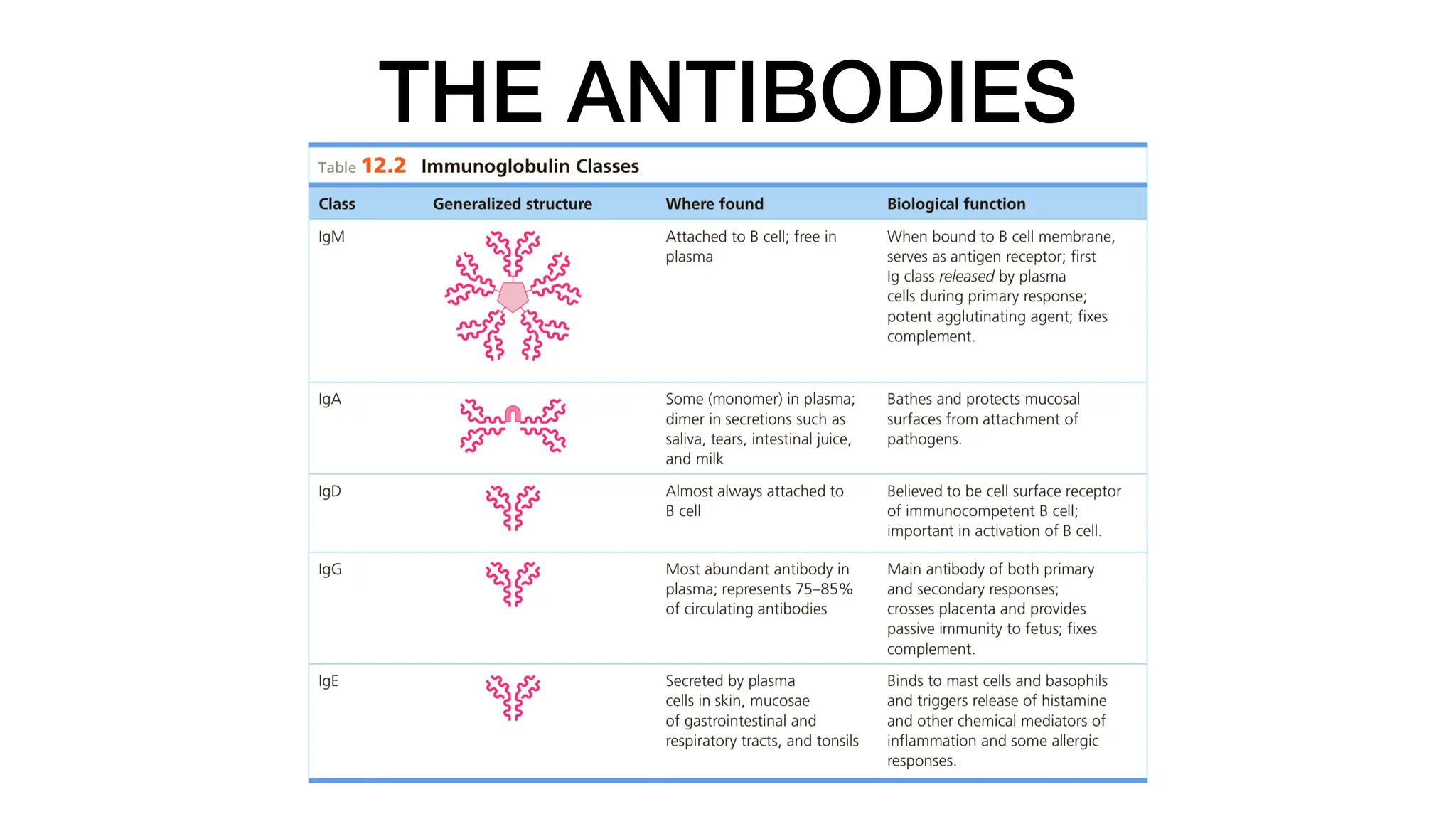
• Despite their variety, they all have a similar basic
anatomy that allows them to be grouped into
fi
ve Ig
classes, each slightly di
ff
erent in structure and function.
ANTIBODIES
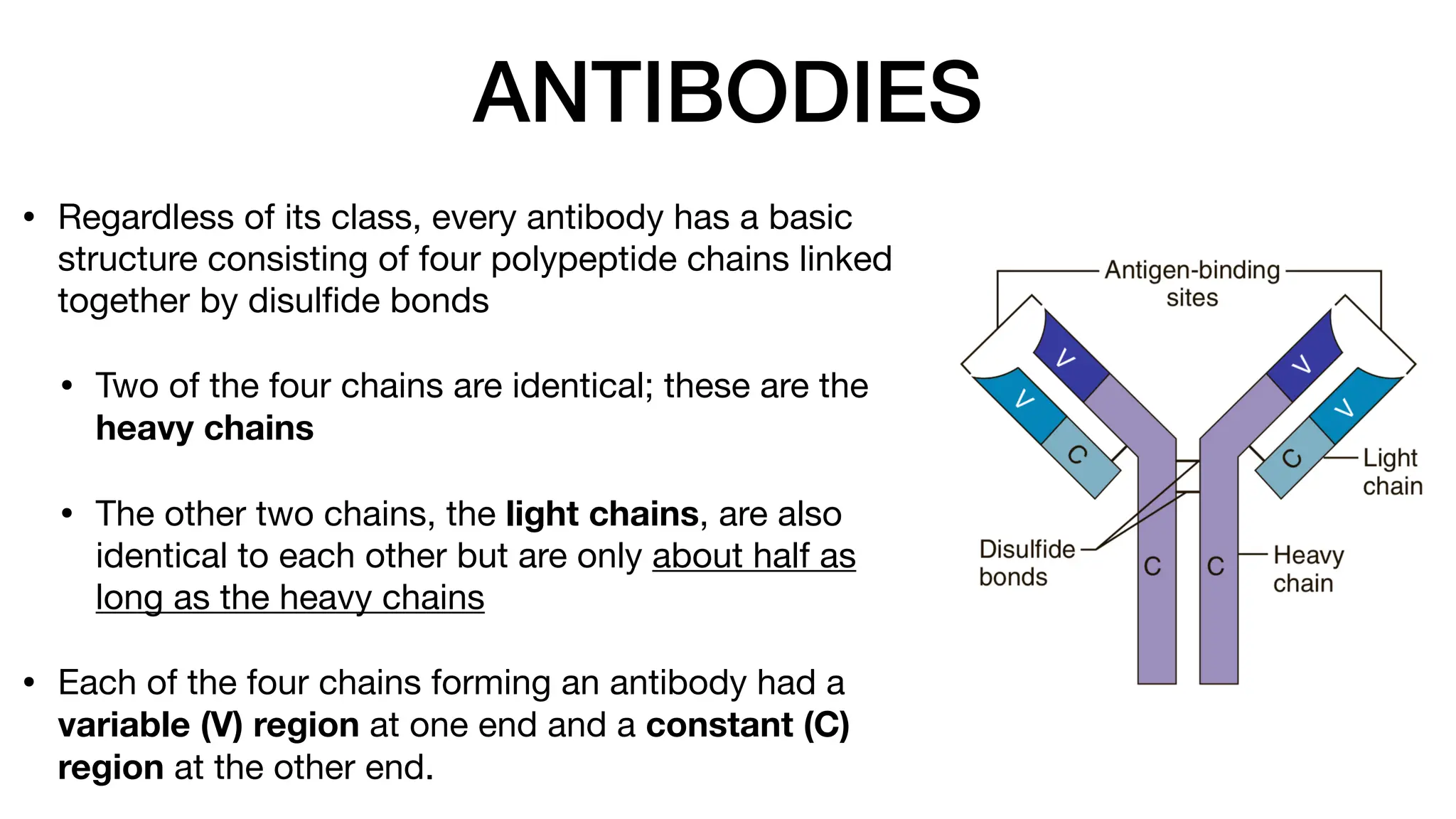
• Regardless of its class, every antibody has a basic
structure consisting of four polypeptide chains linked
together by disul
fi
de bonds
• Two of the four chains are identical; these are the
heavy chains
• The other two chains, the light chains, are also
identical to each other but are only about half as
long as the heavy chains
• Each of the four chains forming an antibody had a
variable (V) region at one end and a constant (C)
region at the other end.
THE ANTIBODIES
ANTIBODY FUNCTIONS
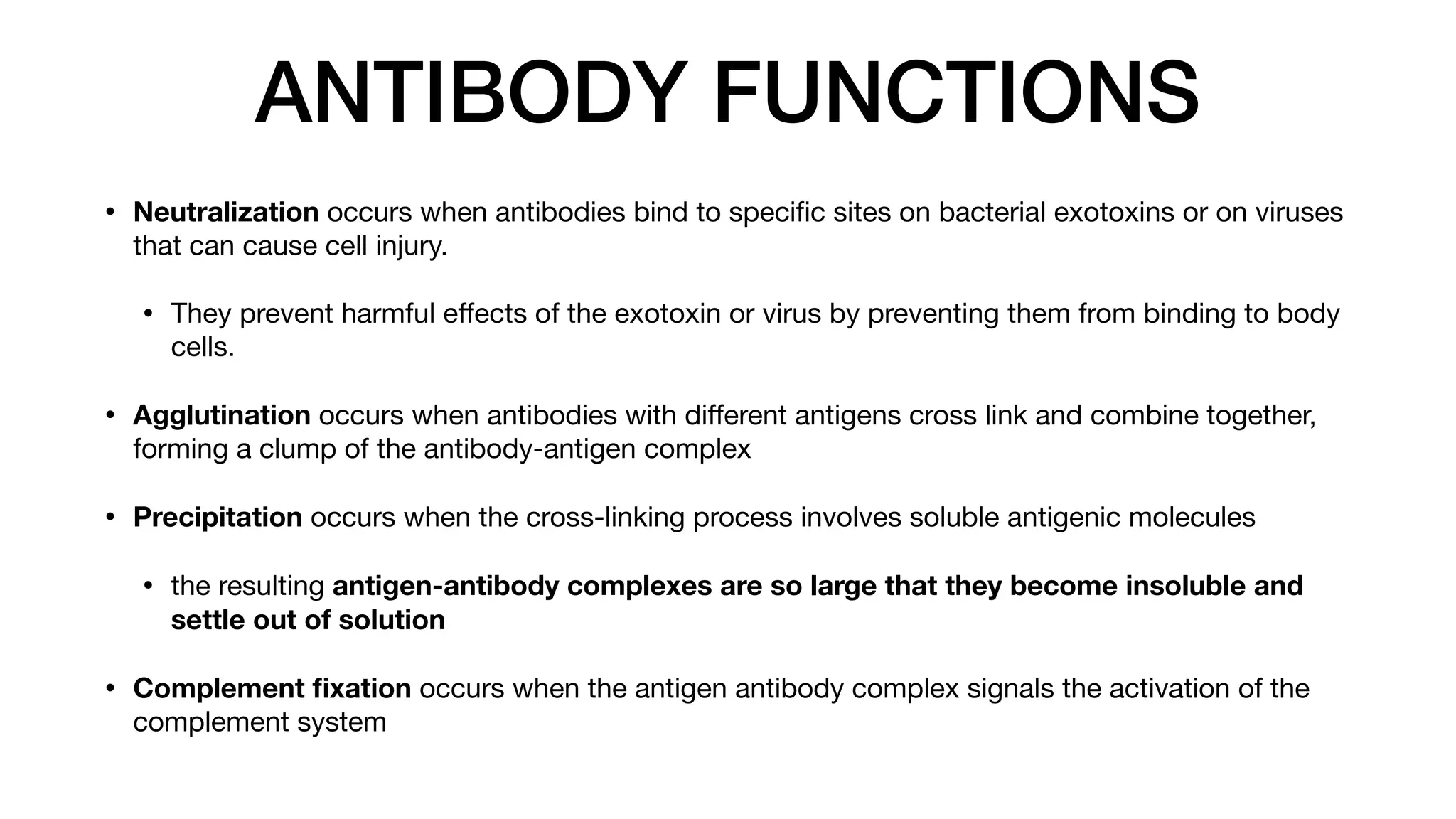
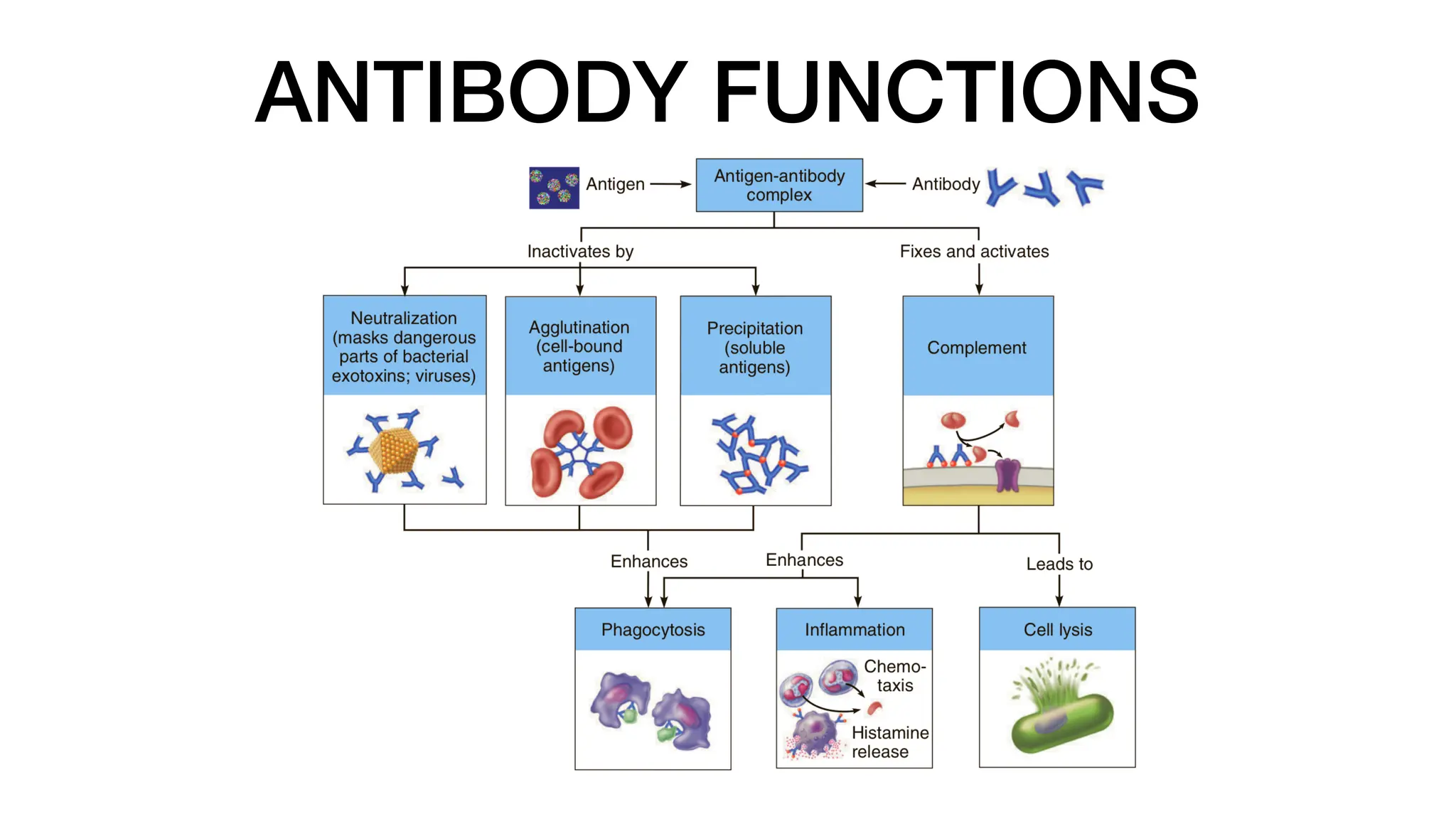
• Neutralization occurs when antibodies bind to speci
fi
c sites on bacterial exotoxins or on viruses
that can cause cell injury.
• They prevent harmful e
ff
ects of the exotoxin or virus by preventing them from binding to body
cells.
• Agglutination occurs when antibodies with di
ff
erent antigens cross link and combine together,
forming a clump of the antibody-antigen complex
• Precipitation occurs when the cross-linking process involves soluble antigenic molecules
• the resulting antigen-antibody complexes are so large that they become insoluble and
settle out of solution
• Complement
fi
xation occurs when the antigen antibody complex signals the activation of the
complement system
ANTIBODY FUNCTIONS
CELL-MEDIATED IMMUNITY
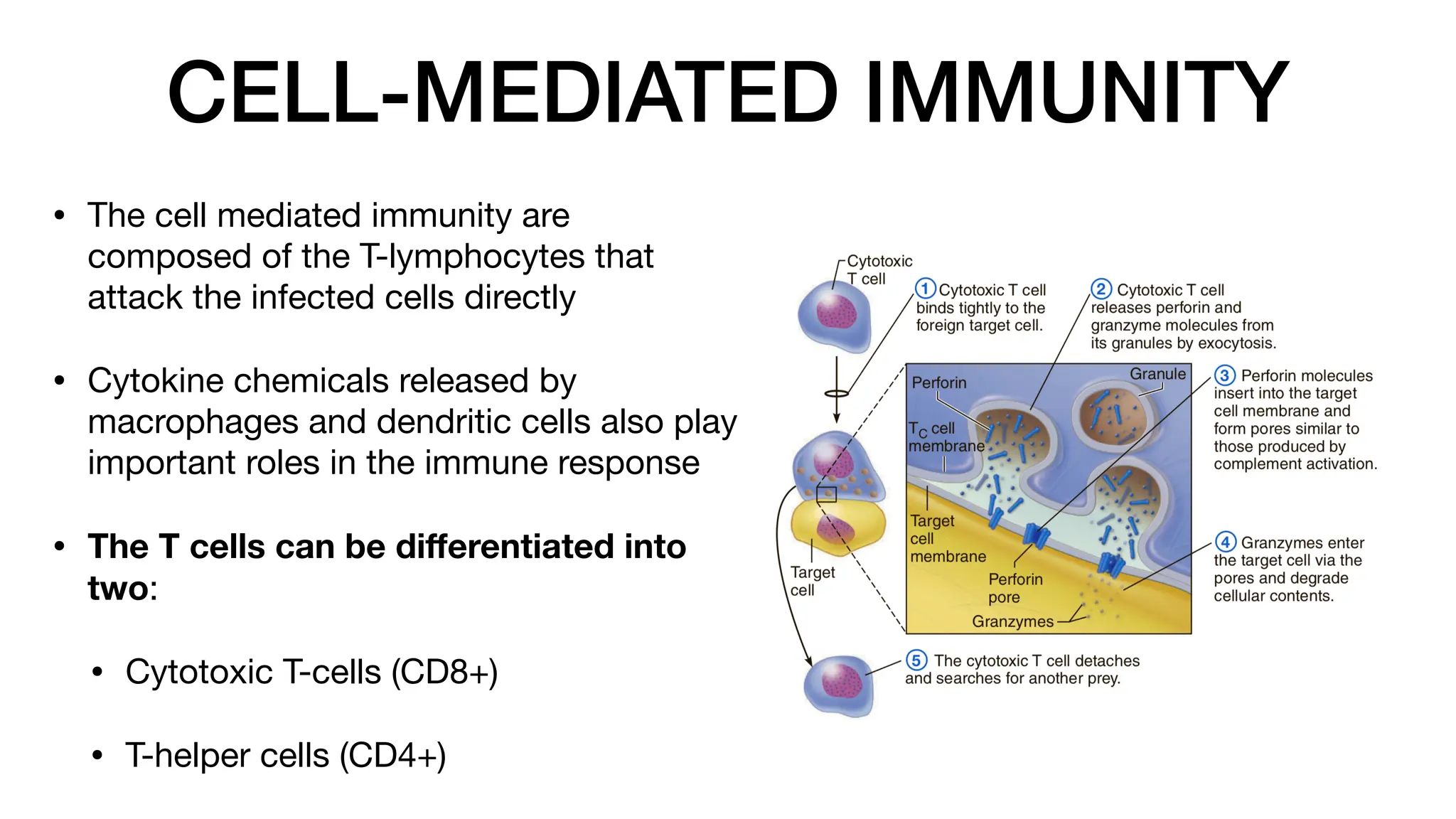
• The cell mediated immunity are
composed of the T-lymphocytes that
attack the infected cells directly
• Cytokine chemicals released by
macrophages and dendritic cells also play
important roles in the immune response
• The T cells can be di
ff
erentiated into
two:
• Cytotoxic T-cells (CD8+)
• T-helper cells (CD4+)
CELL MEDIATED IMMUNITY
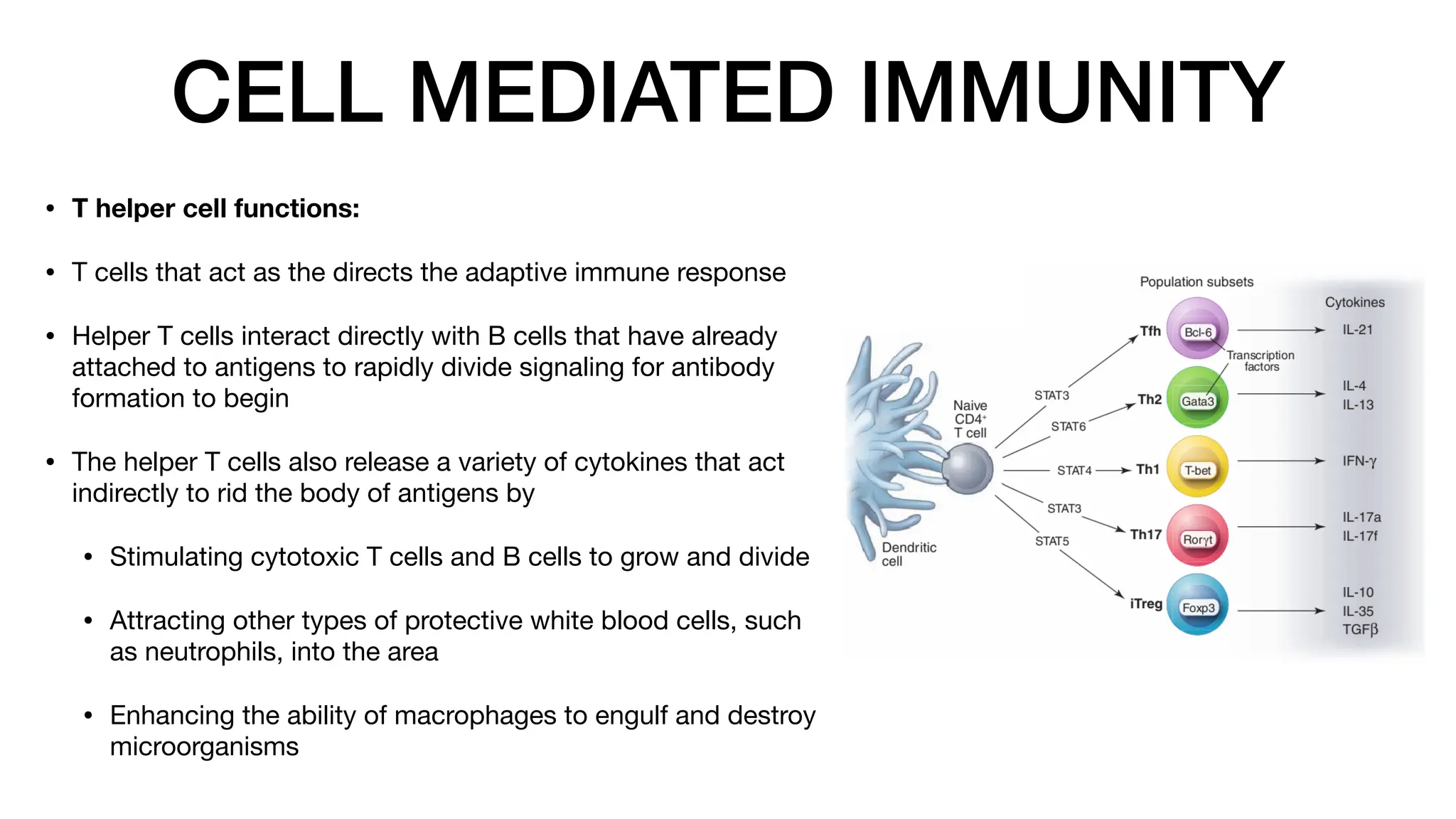
• T helper cell functions:
• T cells that act as the directs the adaptive immune response
• Helper T cells interact directly with B cells that have already
attached to antigens to rapidly divide signaling for antibody
formation to begin
• The helper T cells also release a variety of cytokines that act
indirectly to rid the body of antigens by
• Stimulating cytotoxic T cells and B cells to grow and divide
• Attracting other types of protective white blood cells, such
as neutrophils, into the area
• Enhancing the ability of macrophages to engulf and destroy
microorganisms
CELL MEDIATED IMMUNITY
• Another T cell population, regulatory T cells (formerly called
suppressor T cells), release chemicals that suppress the activity of both
T and B cells.
• Regulatory T cells are vital for suppressing and stopping the immune
response after an antigen has been successfully inactivated or
destroyed
• This helps prevent uncontrolled or unnecessary immune system activity
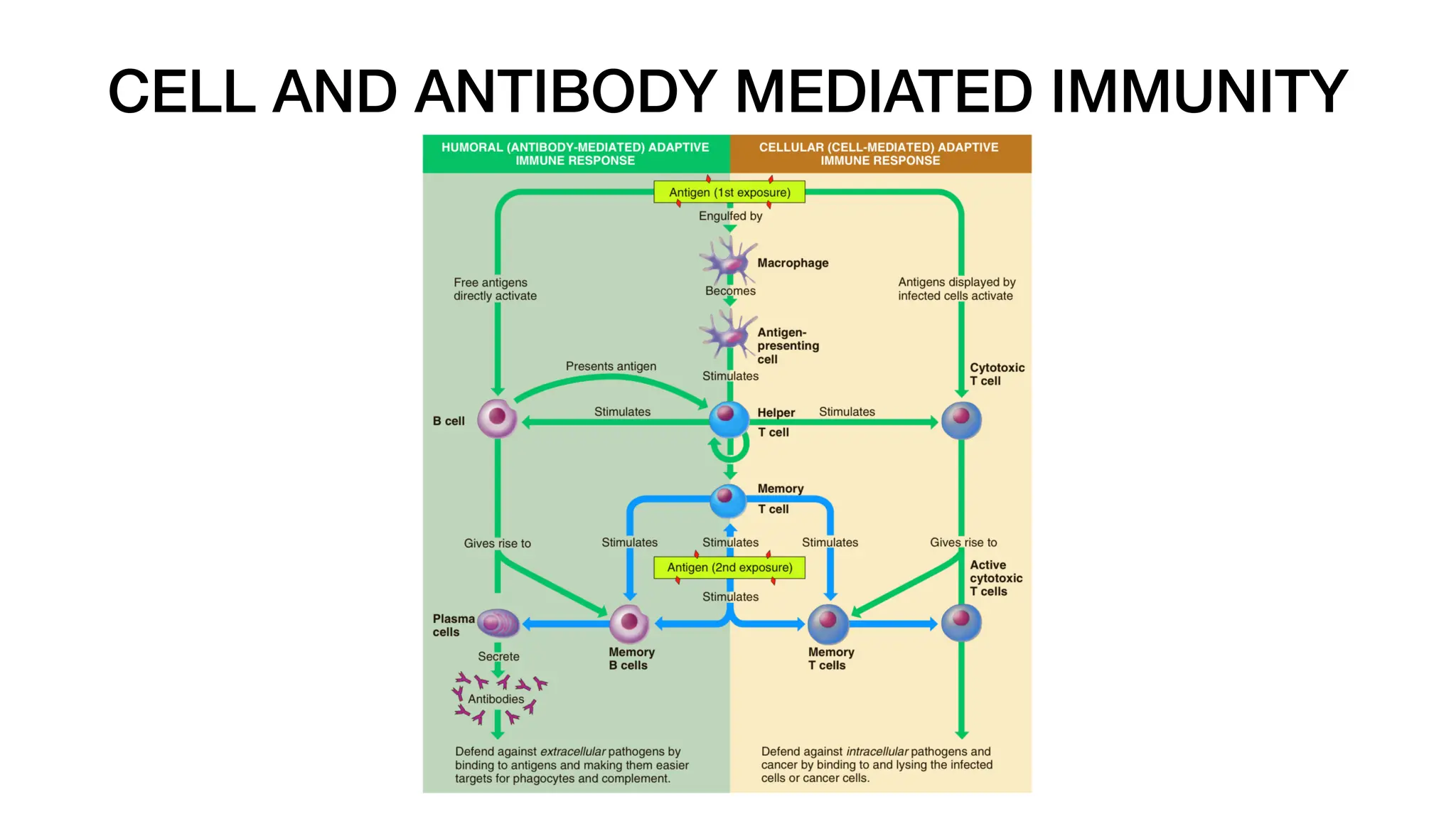
CELL AND ANTIBODY MEDIATED IMMUNITY
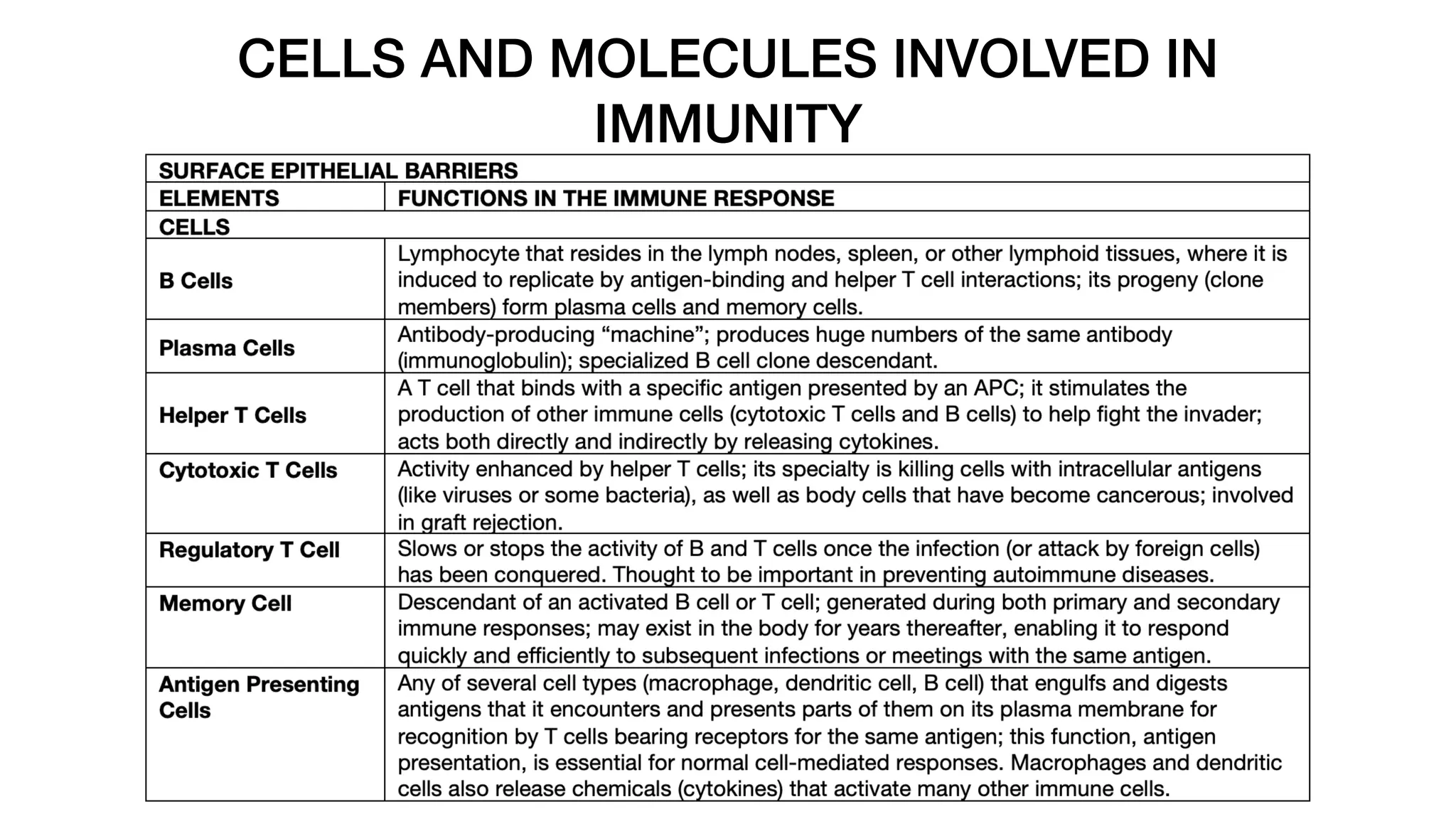
CELLS AND MOLECULES INVOLVED IN
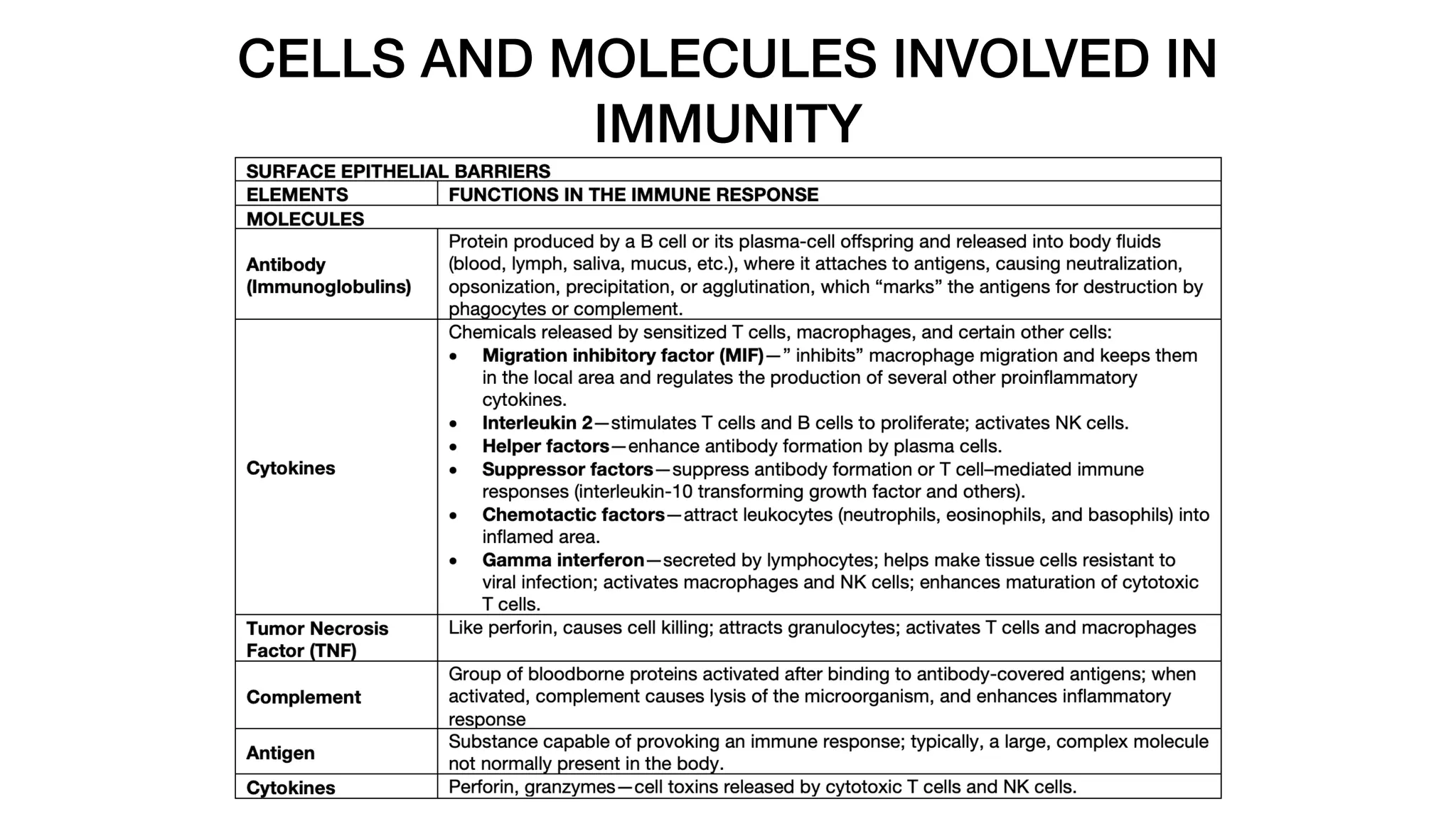
IMMUNITY
CELLS AND MOLECULES INVOLVED IN
IMMUNITY
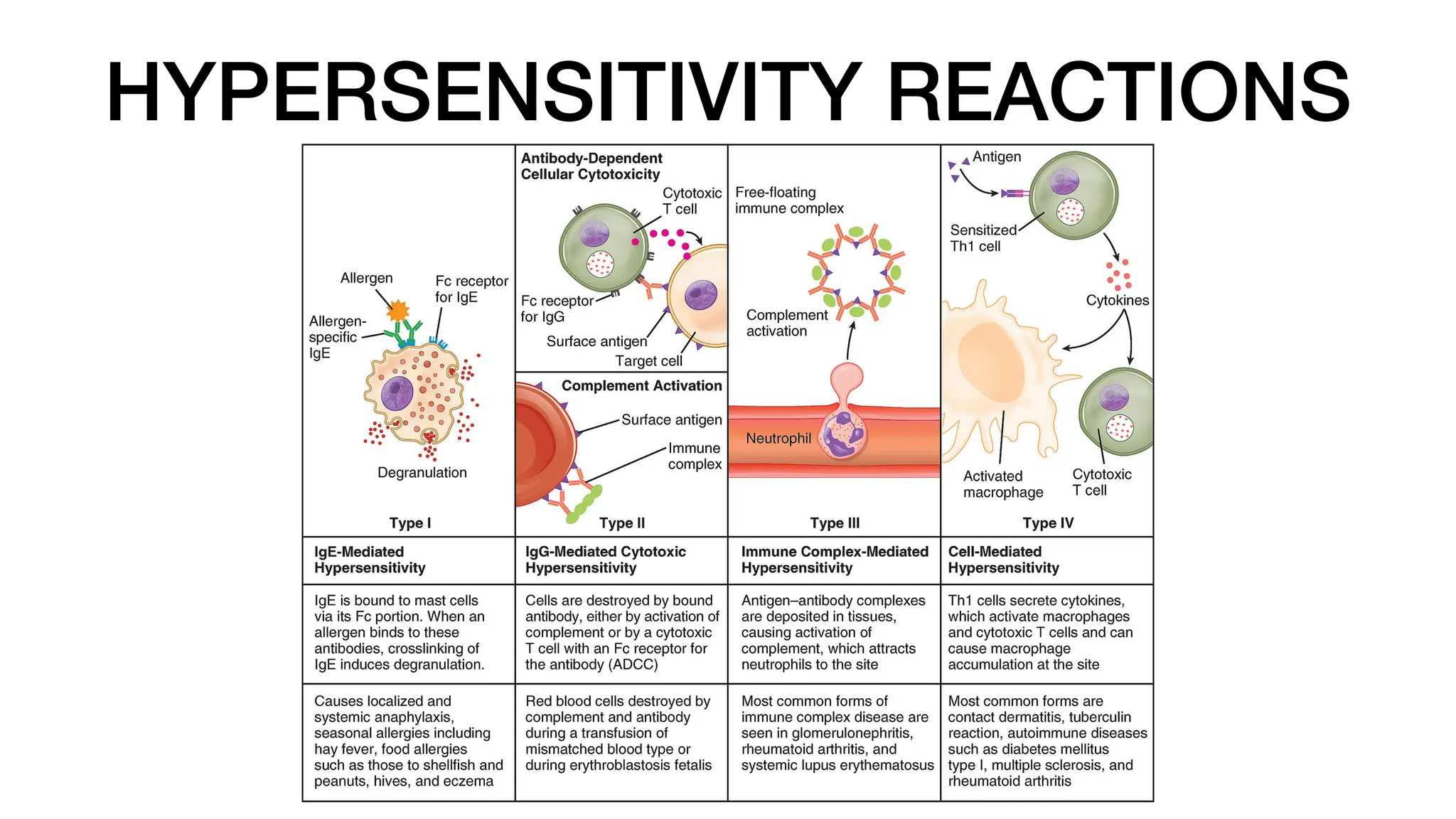
HYPERSENSITIVITY REACTIONS
• END OF DISCUSSION
• Source: Essentials of Anatomy and Physiology, 12th Edition by Marieb
and Keller (2019)
• Guyton and Hall, Textbook of Medical Physiology, 12th Edition

14 - The Lymphatic System & Basic Immunology (2024 Revised).pdf

  • 1.
    THE LYMPHATIC SYSTEMAND BASIC IMMUNOLOGY Prepared by: Renz Victor T. Guangco, M.D.
  • 2.
    THE LYMPHATIC SYSTEM- AN OVERVIEW • The lymphatic system consists of two semi-independent parts: • (1) a meandering network of lymphatic vessels and • (2) various lymphoid tissues and organs scattered throughout the body • The lymphatic vessels transport fl uids that have escaped from the blood back to the cardiovascular system. • The lymphoid tissues and organs house phagocytic cells and lymphocytes, which play essential roles in body defense and resistance to disease.
  • 3.
    THE LYMPHATIC VESSELS •The function of the lymphatic vessels is to form an elaborate drainage system that picks up this excess interstitial fl uid, now called lymph, and returns it to the blood • The lymphatic vessels, also called lymphatics, form a one-way system, and lymph fl ows only toward the heart • The microscopic lymph capillaries weave between the tissue cells and blood capillaries in the loose connective tissues of the body
  • 4.
    THE LYMPHATIC VESSELS •Proteins, and even larger particles such as cell debris, bacteria, and viruses, are normally prevented from entering blood capillaries, but they enter the lymphatic capillaries easily, particularly in in fl amed areas. • White blood cells (WBCs) can also travel in lymph and takes them to the lymph nodes, where it is "cleansed"
  • 5.
  • 6.
    THE LYMPHATIC VESSELS •Lymph is transported from the lymph capillaries through successively larger lymphatic vessels, until it is returned to the venous system through two large ducts in the thoracic region: • The right lymphatic duct drains lymph from the right arm and the right side of the head and thorax. • Eventually returns the lymph as plasma at the right subclavian vein then going back to the superior vena cava via the brachiocephalic trunk • The large thoracic duct receives lymph from the rest of the body not drained by the right lymphatic duct • Eventually returns the lymph as plasma at the left subclavian vein then going back to the superior vena cava
  • 7.
    THE LYMPH NODES •Lymph nodes help protect the body by removing foreign material such as bacteria and tumor cells from the lymphatic stream • It is located in clusters among lymphatic vessels and it functions to " fi lter" the circulating lymph within it • Contains macrophages which engulf and destroy bacteria, viruses, and other foreign substances in the lymph before it is returned to the blood. • Collections of lymphocytes are also strategically located in the lymph nodes and respond to foreign substances in the lymphatic stream
  • 8.
    THE LYMPH NODES •Each node is surrounded by a fi brous capsule • The capsule extend inwards to form the trabeculae which divides the node into a number of compartments • The outer part of the node, its cortex, contains collections of lymphocytes called follicles • The follicles have a dark-staining center called germinal centers. • These centers enlarge when speci fi c B lymphocytes are generating daughter cells called plasma cells, which release antibodies. • The rest of the cortical cells are are the T cells circulate continuously between the blood, lymph nodes, and lymphatic stream
  • 9.
    THE LYMPH NODES •Phagocytic macrophages are located in the central medulla of the lymph node • Lymph enters the convex side of a lymph node through a ff erent lymphatic vessels • It then fl ows through a number of sinuses and exits from the node at its indented region, the hilum, via e ff erent lymphatic vessels • Because there are fewer e ff erent vessels draining the node than a ff erent vessels feeding it, the fl ow of lymph through the node is very slow • This allows time for the lymphocytes and macrophages to perform their protective functions.
  • 10.
  • 11.
    SPLEEN • The spleenprovides a site for lymphocyte proliferation and immune surveillance, • Its most important function is to destroy worn- out red blood cells and return some of their breakdown products to the liver • Other functions of the spleen include storing platelets and acting as a blood reservoir
  • 12.
    THYMUS • It isa mass of lymphoid organ found at the anterior mediastinum overlying the heart • It regresses as an individual age • It is a site of T-cell maturation • Thus, it aids in cell-mediated immunity
  • 13.
    TONSILS • Located atthe oral cavity • Pharyngeal, palatine, and lingual tonsils • They trap and remove bacteria or other foreign pathogens entering the throat • They carry out this function so e ffi ciently that sometimes they become congested with bacteria and become red, swollen, and sore
  • 14.
    OTHERS: PEYERS PATCHESAND THE APPENDIX • Peyer’s patches, which resemble tonsils, are found in the wall of the distal small intestine. • Lymphoid follicles are also located in the wall of the appendix, a tubelike o ff shoot of the proximal large intestine. • The macrophages of Peyer’s patches and the appendix are in an ideal position to capture and destroy harmful bacteria • They contain a small mass of lymphoid tissue, collectively called mucosa associated lymphoid tissues • MALT acts as a sentinel to protect the upper respiratory and digestive tracts from the constant attacks of foreign matter entering those cavities.
  • 15.
    THE IMMUNE SYSTEM- AN OVERVIEW • Two types of mechanisms defend the body against these tiny but mighty enemies: innate and adaptive defense mechanisms, together they make up the immune system • The immune system is a functional system rather than an organ system in an anatomical sense
  • 16.
    THE IMMUNE SYSTEM •The innate defense system, also called the nonspeci fi c defense system, responds immediately to protect the body from all foreign substances • These include intact skin and mucous membranes, the in fl ammatory response, and a number of proteins produced by body cells. • They generally preventing the entry and spread of microorganisms throughout the body. • The adaptive defense system, or speci fi c defense system, fi ghts invaders that get past the innate defenses by mounting an attack against one or more particular foreign substances • the adaptive system must fi rst be sensitized by, an initial exposure to a foreign substance (antigen) before it can protect the body against the invader or pathogen
  • 17.
    THE INNATE IMMUNITY •The body’s fi rst line of defense against the invasion of disease-causing microorganisms
  • 18.
    THE INNATE IMMUNITY THEFIRST LINE OF DEFENSES
  • 19.
    THE INNATE IMMUNITY THESECOND LINE OF DEFENSES
  • 20.
    THE NATURAL KILLERCELLS • They freely roam the body in blood and lymph. • They are a unique group of aggressive lymphocytes that can lyse (burst) and kill cancer cells, virus-infected body cells, and some other nonspeci fi c targets before the adaptive arm of the immune system is enlisted in the fi ght. • NK cells are not phagocytic, instead, they attack the target cell’s membrane and release lytic chemicals called perforin and granzymes, which degrade target cell contents
  • 21.
  • 22.
    THE INFLAMMATORY RESPONSE •The in fl ammatory response is a nonspeci fi c response that is triggered whenever body tissues are injured • it occurs in response to physical trauma, intense heat, irritating chemicals, and infection by viruses and bacteria • The four most common indicators, or cardinal signs, of acute in fl ammation are redness, heat, swelling, and pain, the fi fth cardinal sign being the loss of function of the a ff ected body part (rubor -> tumor -> calor -> dolor -> function laesa)
  • 23.
    THE INFLAMMATORY RESPONSE •The in fl ammatory process begins with a chemical signal • When cells are damaged, they release in fl ammatory chemicals, including histamine and kinins that: • (1) cause blood vessels in the area to dilate • (2) make capillaries leaky • (3) attract phagocytes and white blood cells to the area (termed chemotaxis)
  • 24.
    THE INFLAMMATORY RESPONSE •The in fl ammatory response prevents the spread of damaging agents to nearby tissues, disposes of cell debris and pathogens, and sets the stage for repair • Neutrophils, responding to a gradient of di ff using in fl ammatory chemicals, enter the blood: • Margination • Rolling • Adhesion • Diapedesis
  • 25.
    THE INFLAMMATORY RESPONSE •Besides phagocytosis, other protective events are also occurring at the in fl amed site. • Clotting proteins that leaked from the blood are activated and begin to form a fi brin clot, thus prevent the spread of harmful agents to other tissues • The fi brin mesh also forms the sca ff olding for the eventual repair • The local heat increases the metabolic rate of the tissue cells, speeding up their defensive actions and repair processes. • If the damaged area contains pathogens that have previously invaded the body, the third line of defense also comes into play —the adaptive response mediated by lymphocytes.
  • 26.
    THE PAGHOCYTES ANDTHE CONCEPT OF PHAGOCYTOSIS
  • 27.
    THE ANTIMICROBIAL PROTEINS:THE COMPLEMENT PROTEINS AND THE COMPLEMENT SYSTEM • The term complement refers to a group of at least 20 plasma proteins that circulate in the blood in an inactive state • When complement becomes attached and fi xed to foreign cells, it is activated and becomes a major factor in the fi ght against foreign cells • This complement fi xation occurs when complement proteins bind to certain sugars or proteins on the foreign cell’s surface, forming the membrane attack complex
  • 28.
    THE ANTIMICROBIAL PROTEINS:THE COMPLEMENT PROTEINS AND THE COMPLEMENT SYSTEM • Complement attachment to antigens will lead to a phenomenon called opsonization • Complement is a nonspeci fi c defensive mechanism that the e ff ectiveness of both innate and adaptive defenses • Complement proteins must be activated in a particular sequence called a cascade
  • 29.
    THE ANTIMICROBIAL PROTEINS:THE COMPLEMENT PROTEINS AND THE COMPLEMENT SYSTEM
  • 30.
    THE ANTIMICROBIAL PROTEINS:THE COMPLEMENT PROTEINS AND THE COMPLEMENT SYSTEM
  • 31.
    THE ANTIMICROBIAL PROTEINS:THE INTERFERONS • Spread of virus infected cells are prevented by proteins called interferons • Although the virus-infected cells can do little to save themselves, they help defend cells that have not yet been infected by secreting small proteins called interferons • The interferon molecules di ff use to nearby cells and bind to their membrane receptors. • This binding stimulates the synthesis of proteins that “interfere” with the ability of viruses to multiply within these still-healthy cells, reducing the spread of the virus. • Interferons do not assist with fi ghting bacterial or fungal infections.
  • 32.
    FEVER • Abnormally highbody temperature, is a systemic response to invading microorganisms • Body temperature is regulated by the hypothalamus • Normally the thermostat is set at approximately 37°C, but it can be reset upward in response to pyrogens • Although high fevers are dangerous, mild or moderate fever seems to bene fi t the body. • During a fever, the liver and spleen gather up the nutrients, making them less available to the invading pathogen • Fever increases the metabolic rate of tissue cells in general, speeding up repair processes.
  • 33.
    THE ADAPTIVE IMMUNITY •Referred to as the body’s third line of defense, the adaptive, or speci fi c, defense mechanism is a functional system that recognizes foreign molecules called antigens and acts to inactivate or destroy them • Three important aspects of adaptive defense: • It is antigen speci fi c—it recognizes and acts against particular pathogens or foreign substances • It is systemic—immunity is not restricted to the initial infection site. • It has “memory”—it recognizes and mounts even stronger attacks on previously encountered pathogens.
  • 34.
    THE ADAPTIVE IMMUNITY •TWO ARMS OF THE ADAPTIVE IMMUNITY • Humoral immunity • Also called antibody-mediated immunity, • Is provided by antibodies present in the body’s fl uids. • Cellular immunity • Also known as T cell-mediated immunity (CD4 & CD8) • The protective factor is living cells - direct attack from the "lymphocytes" • The cellular arm also has cellular targets—virus-infected cells, cancer cells, and cells of foreign grafts.
  • 35.
    ANTIGENS - ACONCEPT • An antigen is any substance capable of provoking an immune response. • Foreign antigens are large, complex molecules that are not normally present in our bodies • Our body has a variety of protein and carbohydrate molecules and as our immune system develops, it gets reconized by the body cells and is thus called "self- antigens" • Although these self-antigens do not trigger an immune response in us, they are strongly antigenic to other people
  • 36.
    ANTIGENS - ACONCEPT • As a rule, small molecules are not antigenic, but when they link up with our own proteins, the immune system may recognize the combination as foreign and mount an attack that is harmful rather than protective. • In such cases, that small molecule is called a hapten or incomplete antigen.
  • 37.
    THE CELLS OFTHE ADAPTIVE IMMUNITY • The cells of the adaptive immunity came from the lymphocytes (T cells or T lymphocytes, & B cells or B lymphocytes) • Di ff erentiation of the lymphocytes will depend on their body location, a location where they will become immunocompetent • Lymphocytes originate from hemocytoblasts in red bone marrow
  • 38.
    THE CELLS OFTHE ADAPTIVE IMMUNITY • The T-lymphocytes will arise and develop from the Thymus • Lymphocytes capable of binding strongly with self-antigens (and of acting against body cells) are destroyed. • The development of self-tolerance for the body’s own cells is essential • B cells develop immunocompetence in bone marrow • Less is known about the factors that regulate B cell maturation.
  • 39.
    THE CELLS OFTHE ADAPTIVE IMMUNITY • After they become immunocompetent, both T cells and B cells migrate to the lymph nodes and spleen (and loose connective tissues) • When they come in contact with antigens, the naive T-cells and B-cells will become mature • Mature lymphocytes, especially T cells, circulate at the entire body
  • 40.
    THE ANTIGEN PRESENTINGCELLS • They present antigens to the cells that will actually deal with the antigens. • The major types of cells acting as APCs are dendritic cells, macrophages, and B lymphocytes • When they present antigens, dendritic cells and macrophages activate T cells. • Activated T cells release chemicals activates macrophages that are capable of phagocytosis and secrete bactericidal chemicals
  • 41.
    THE ANTIGEN PRESENTINGCELLS • Dendritic cells, with their long, wispy extensions, are very e ffi cient antigen catchers • Once they have engulfed antigens by phagocytosis, they enter nearby lymphatics to get to the lymphoid organ where they will present the antigens to T cells
  • 42.
  • 43.
  • 44.
  • 45.
    ANTIBODIES • Antibodies, alsoreferred to as immunoglobulins constitute the gamma globulin part of blood proteins. • Antibodies are soluble proteins secreted by activated B cells or by their plasma-cell in response to an antigen, • They are capable of binding speci fi cally with that antigen. • Antibodies are formed in response to a huge number of di ff erent antigens. • Despite their variety, they all have a similar basic anatomy that allows them to be grouped into fi ve Ig classes, each slightly di ff erent in structure and function.
  • 46.
    ANTIBODIES • Regardless ofits class, every antibody has a basic structure consisting of four polypeptide chains linked together by disul fi de bonds • Two of the four chains are identical; these are the heavy chains • The other two chains, the light chains, are also identical to each other but are only about half as long as the heavy chains • Each of the four chains forming an antibody had a variable (V) region at one end and a constant (C) region at the other end.
  • 47.
  • 48.
    ANTIBODY FUNCTIONS • Neutralizationoccurs when antibodies bind to speci fi c sites on bacterial exotoxins or on viruses that can cause cell injury. • They prevent harmful e ff ects of the exotoxin or virus by preventing them from binding to body cells. • Agglutination occurs when antibodies with di ff erent antigens cross link and combine together, forming a clump of the antibody-antigen complex • Precipitation occurs when the cross-linking process involves soluble antigenic molecules • the resulting antigen-antibody complexes are so large that they become insoluble and settle out of solution • Complement fi xation occurs when the antigen antibody complex signals the activation of the complement system
  • 49.
  • 50.
    CELL-MEDIATED IMMUNITY • Thecell mediated immunity are composed of the T-lymphocytes that attack the infected cells directly • Cytokine chemicals released by macrophages and dendritic cells also play important roles in the immune response • The T cells can be di ff erentiated into two: • Cytotoxic T-cells (CD8+) • T-helper cells (CD4+)
  • 51.
    CELL MEDIATED IMMUNITY •T helper cell functions: • T cells that act as the directs the adaptive immune response • Helper T cells interact directly with B cells that have already attached to antigens to rapidly divide signaling for antibody formation to begin • The helper T cells also release a variety of cytokines that act indirectly to rid the body of antigens by • Stimulating cytotoxic T cells and B cells to grow and divide • Attracting other types of protective white blood cells, such as neutrophils, into the area • Enhancing the ability of macrophages to engulf and destroy microorganisms
  • 52.
    CELL MEDIATED IMMUNITY •Another T cell population, regulatory T cells (formerly called suppressor T cells), release chemicals that suppress the activity of both T and B cells. • Regulatory T cells are vital for suppressing and stopping the immune response after an antigen has been successfully inactivated or destroyed • This helps prevent uncontrolled or unnecessary immune system activity
  • 53.
    CELL AND ANTIBODYMEDIATED IMMUNITY
  • 54.
    CELLS AND MOLECULESINVOLVED IN IMMUNITY
  • 55.
    CELLS AND MOLECULESINVOLVED IN IMMUNITY
  • 56.
  • 57.
    • END OFDISCUSSION • Source: Essentials of Anatomy and Physiology, 12th Edition by Marieb and Keller (2019) • Guyton and Hall, Textbook of Medical Physiology, 12th Edition