Lung Protective Strategies: The Effects of Vt, PEEP & Alveolar Recruitment David Grooms BS, RRT Sentara Norfolk General, Leigh & Bayside Hospitals
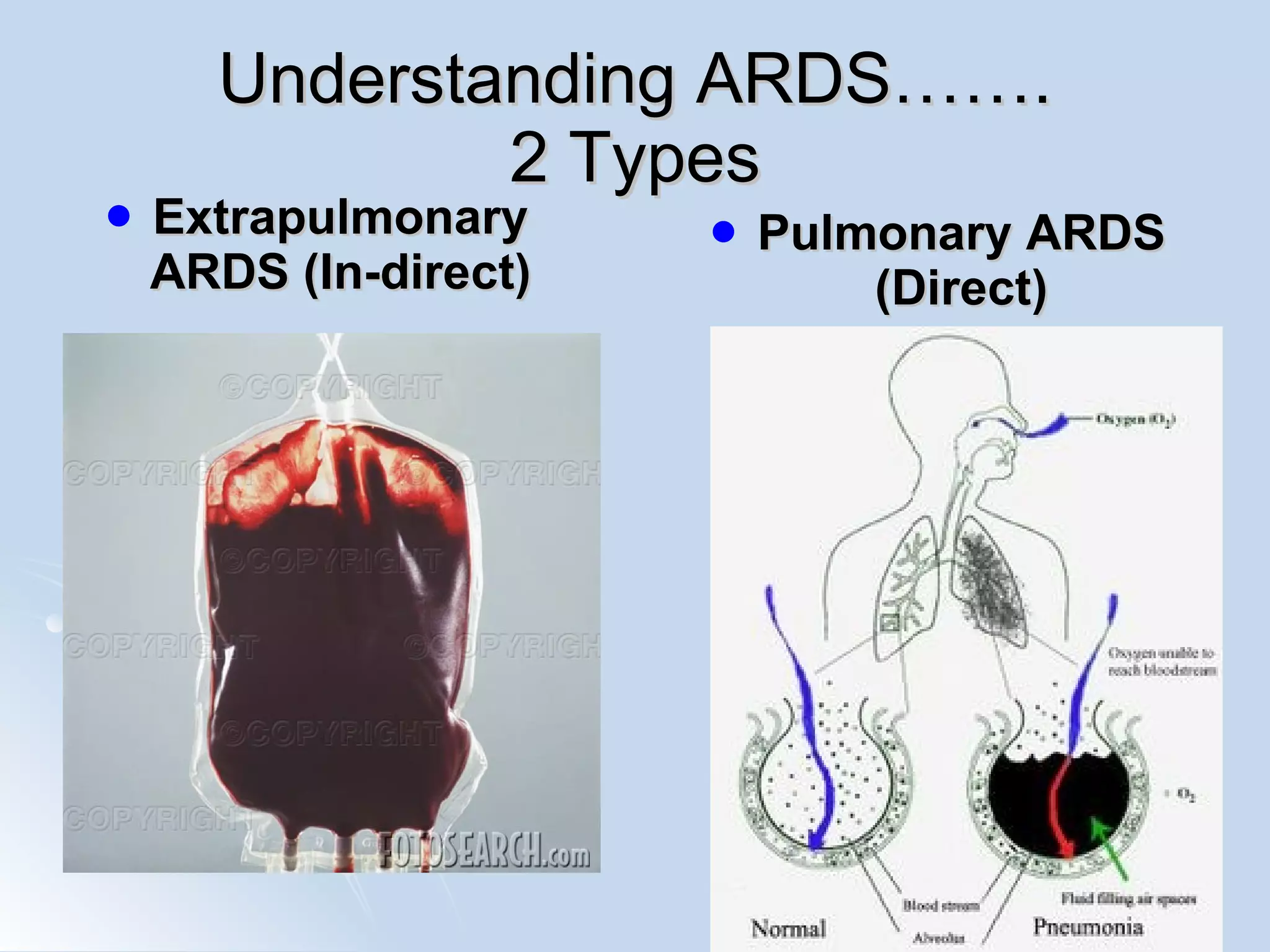
Understanding ARDS……. 2 Types Extrapulmonary ARDS (In-direct) Pulmonary ARDS (Direct)
Identifying ARDS…….2 Types? Pulmonary ARDS (Direct) Pneumonia: Bacterial or Viral Inhalation of noxious agent Aspiration of Gastric Contents Isolated pulmonary contusion Fat Embolus syndrome Extrapulmonary ARDS (In-direct) Multi-system Trauma Transfusion related ALI Acute pancreatitis Sepsis Post- CABG surgery Hemorrahagic shock Kallet, R & Branson, R.  Resp. Care Journal, Apr 2007, Vol 52 No 4
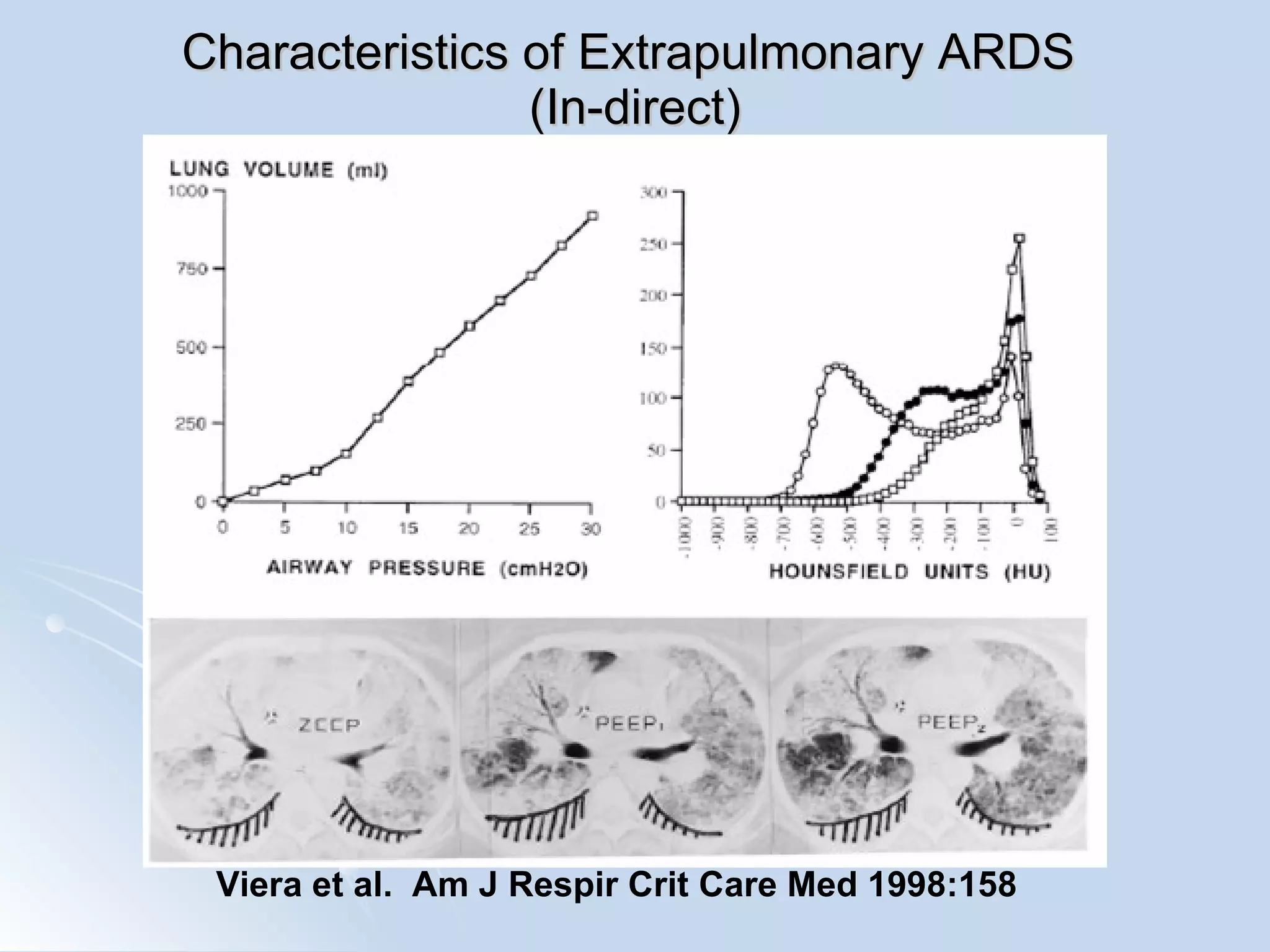
Characteristics of Extrapulmonary ARDS  (In-direct) Viera et al.  Am J Respir Crit Care Med 1998:158
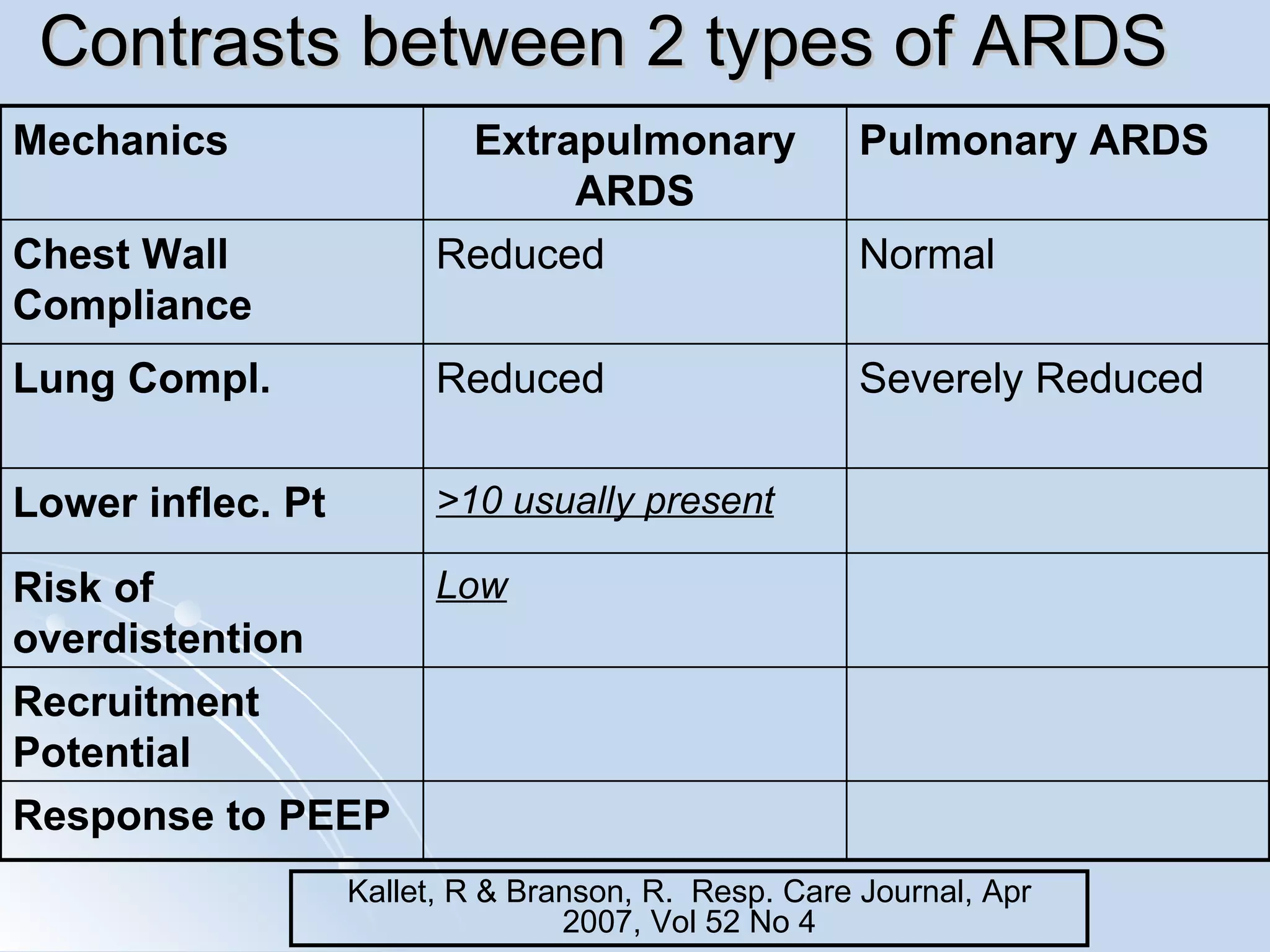
Contrasts between 2 types of ARDS Kallet, R & Branson, R.  Resp. Care Journal, Apr 2007, Vol 52 No 4 >10 usually present Lower inflec. Pt Severely Reduced Reduced Lung Compl. Response to PEEP Recruitment Potential Risk of overdistention Normal Reduced Chest Wall Compliance Pulmonary ARDS Extrapulmonary ARDS Mechanics
Characteristics of Extrapulmonary ARDS  (In-direct) Viera et al.  Am J Respir Crit Care Med 1998:158
Contrasts between 2 types of ARDS Kallet, R & Branson, R.  Resp. Care Journal, Apr 2007, Vol 52 No 4 >10 usually present Lower inflec. Pt Severely Reduced Reduced Lung Compl. Response to PEEP Recruitment Potential Low Risk of overdistention Normal Reduced Chest Wall Compliance Pulmonary ARDS Extrapulmonary ARDS Mechanics
Characteristics of Extrapulmonary ARDS  (In-direct) Viera et al.  Am J Respir Crit Care Med 1998:158
Contrasts between 2 types of ARDS Kallet, R & Branson, R.  Resp. Care Journal, Apr 2007, Vol 52 No 4 >10 usually present Lower inflec. Pt Severely Reduced Reduced Lung Compl. Excellent (10-20 cm) Response to PEEP High Recruitment Potential Low Risk of overdistention Normal Reduced Chest Wall Compliance Pulmonary ARDS Extrapulmonary ARDS Mechanics
Characteristics of Extrapulmonary ARDS  (In-direct) Viera et al.  Am J Respir Crit Care Med 1998:158
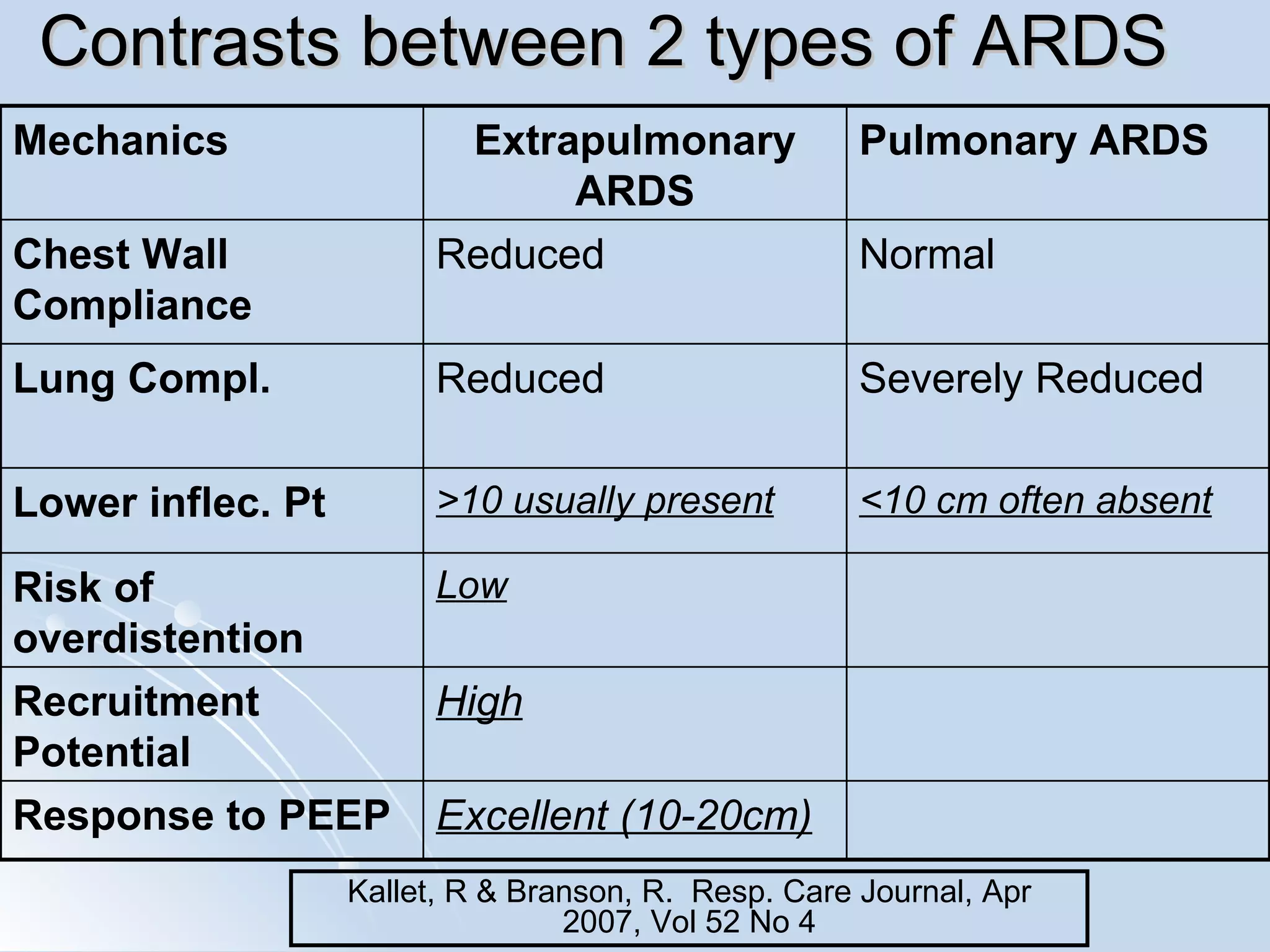
Contrasts between 2 types of ARDS Kallet, R & Branson, R.  Resp. Care Journal, Apr 2007, Vol 52 No 4 <10 cm often absent >10 usually present Lower inflec. Pt Severely Reduced Reduced Lung Compl. Excellent (10-20cm) Response to PEEP High Recruitment Potential Low Risk of overdistention Normal Reduced Chest Wall Compliance Pulmonary ARDS Extrapulmonary ARDS Mechanics
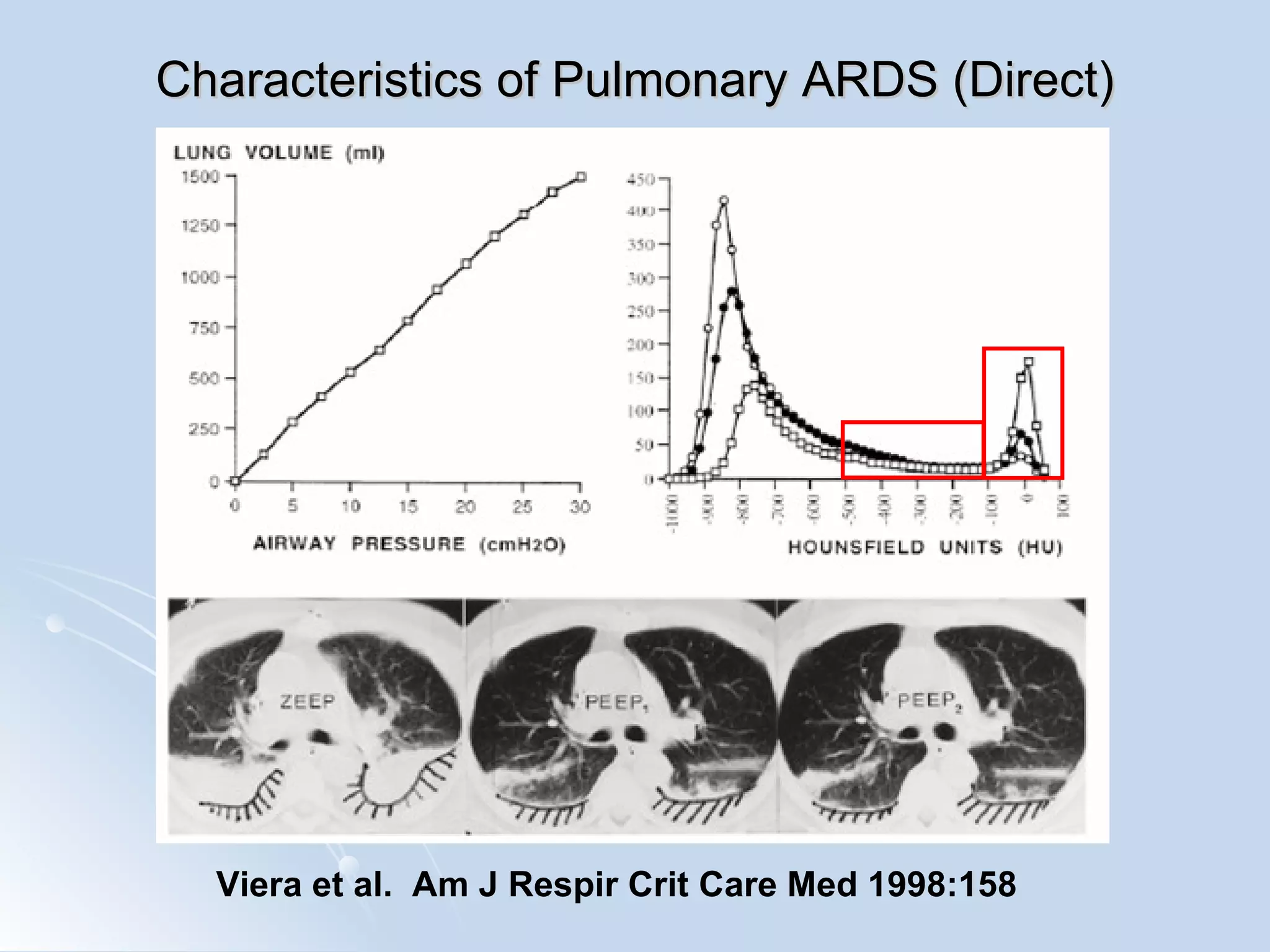
Characteristics of Pulmonary ARDS (Direct) Viera et al.  Am J Respir Crit Care Med 1998:158
Contrasts between 2 types of ARDS Kallet, R & Branson, R.  Resp. Care Journal, Apr 2007, Vol 52 No 4 <10 cm often absent >10 usually present Lower inflec. Pt Severely Reduced Reduced Lung Compl. Excellent (10-20cm) Response to PEEP High Recruitment Potential High Low Risk of overdistention Normal Reduced Chest Wall Compliance Pulmonary ARDS Extrapulmonary ARDS Mechanics
Characteristics of Pulmonary ARDS (Direct) Viera et al.  Am J Respir Crit Care Med 1998:158
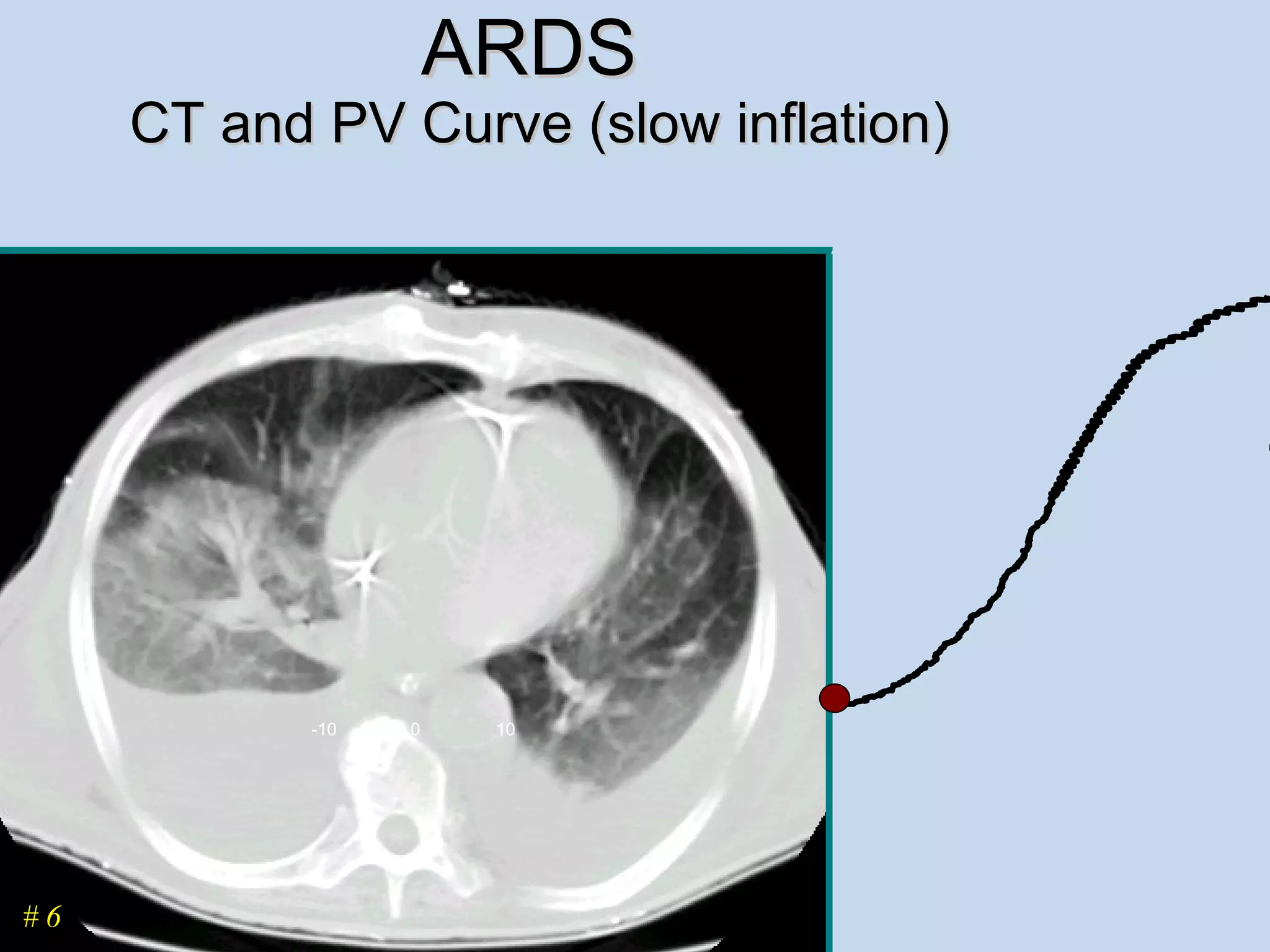
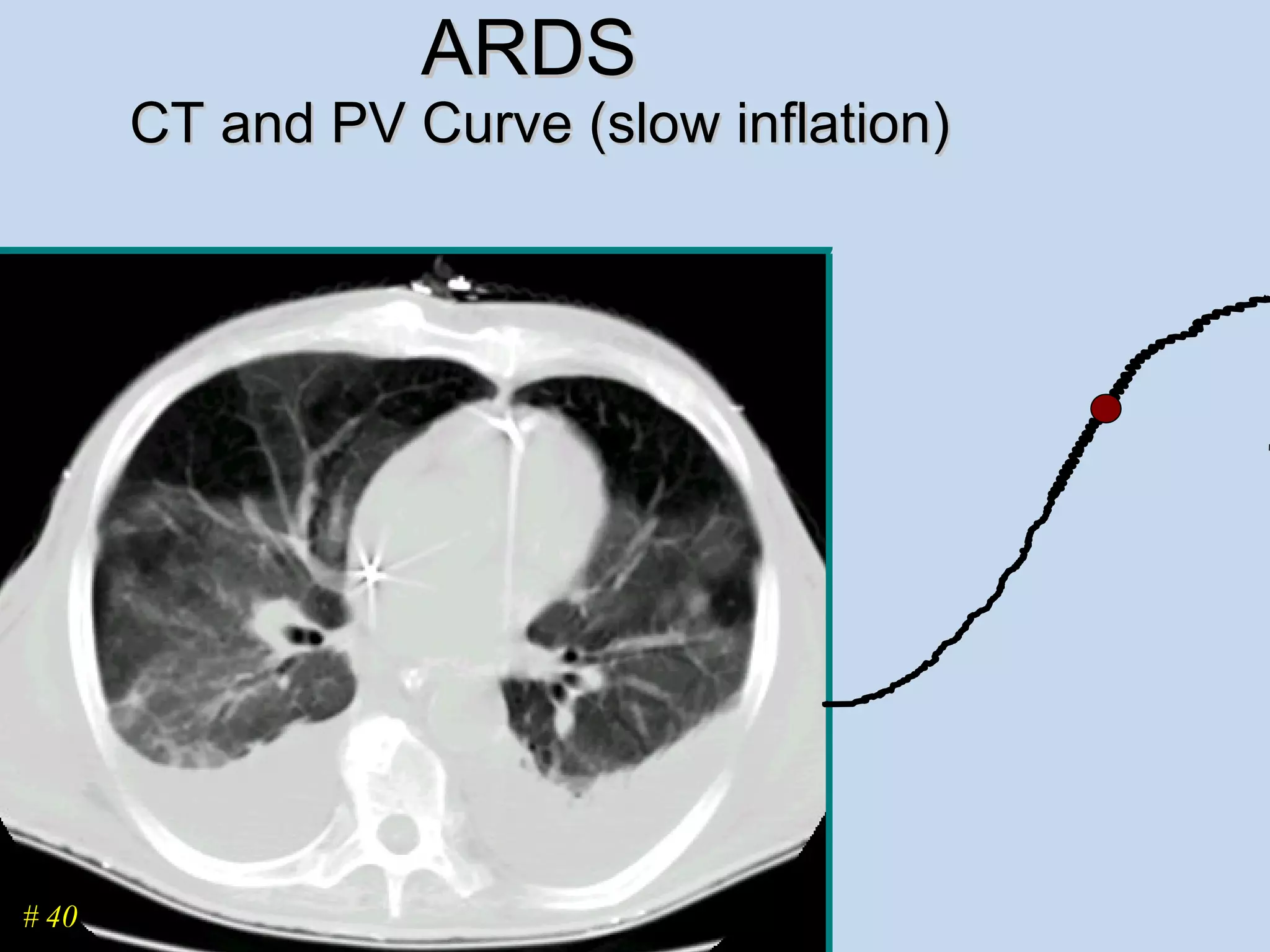
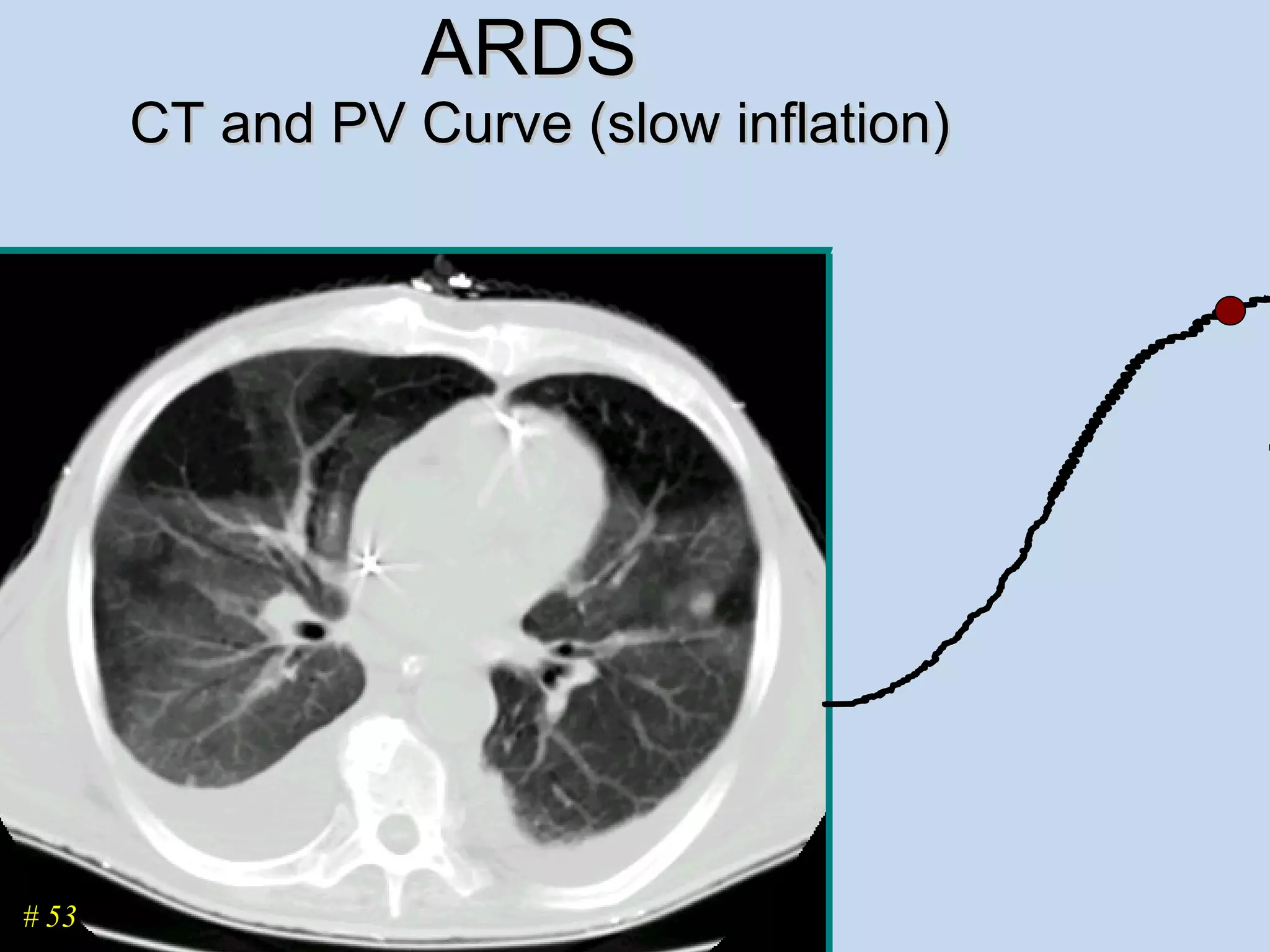
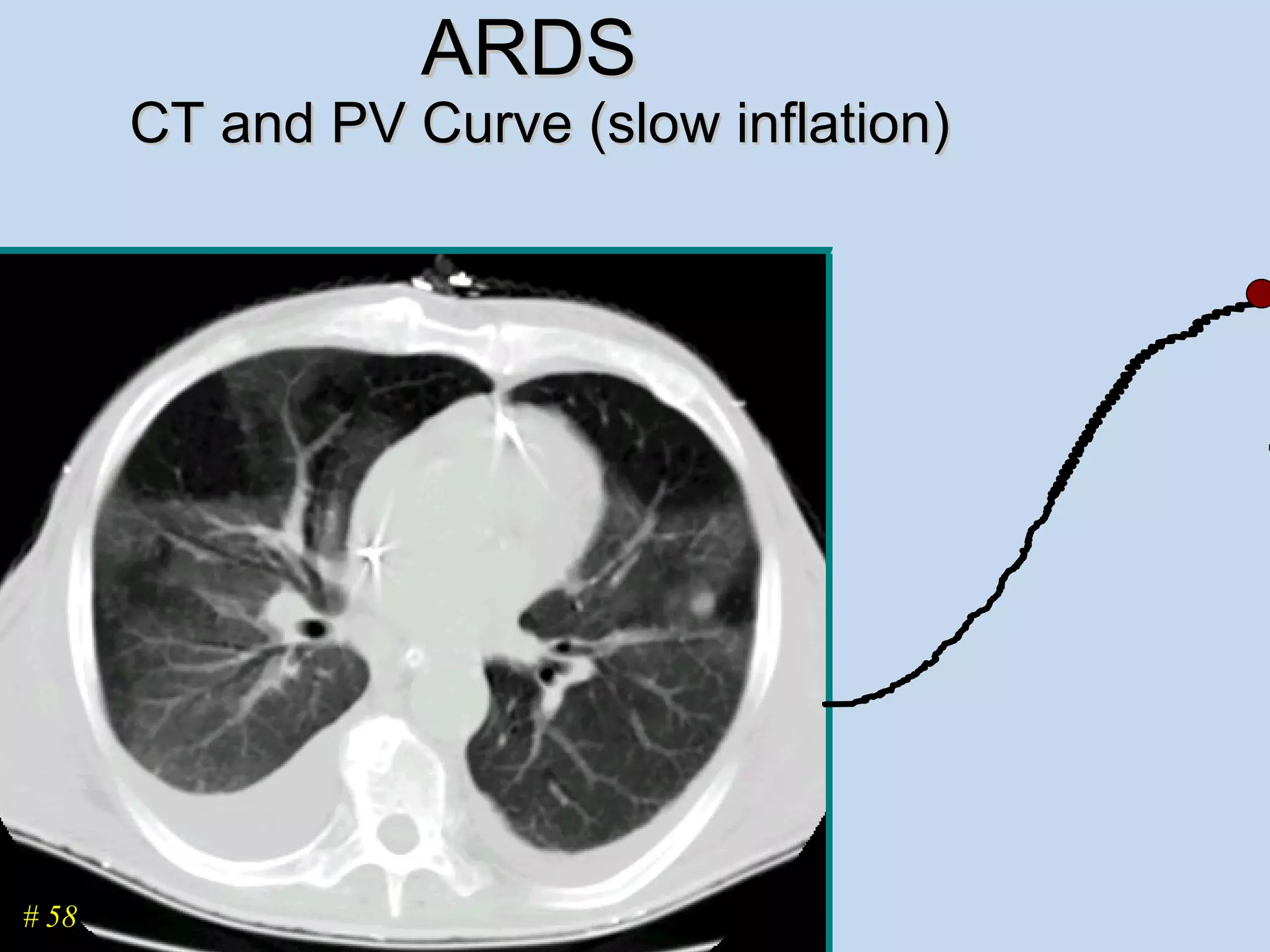
ARDS  CT and PV Curve (slow inflation) # 6 -10 0 10
ARDS  CT and PV Curve (slow inflation) # 7
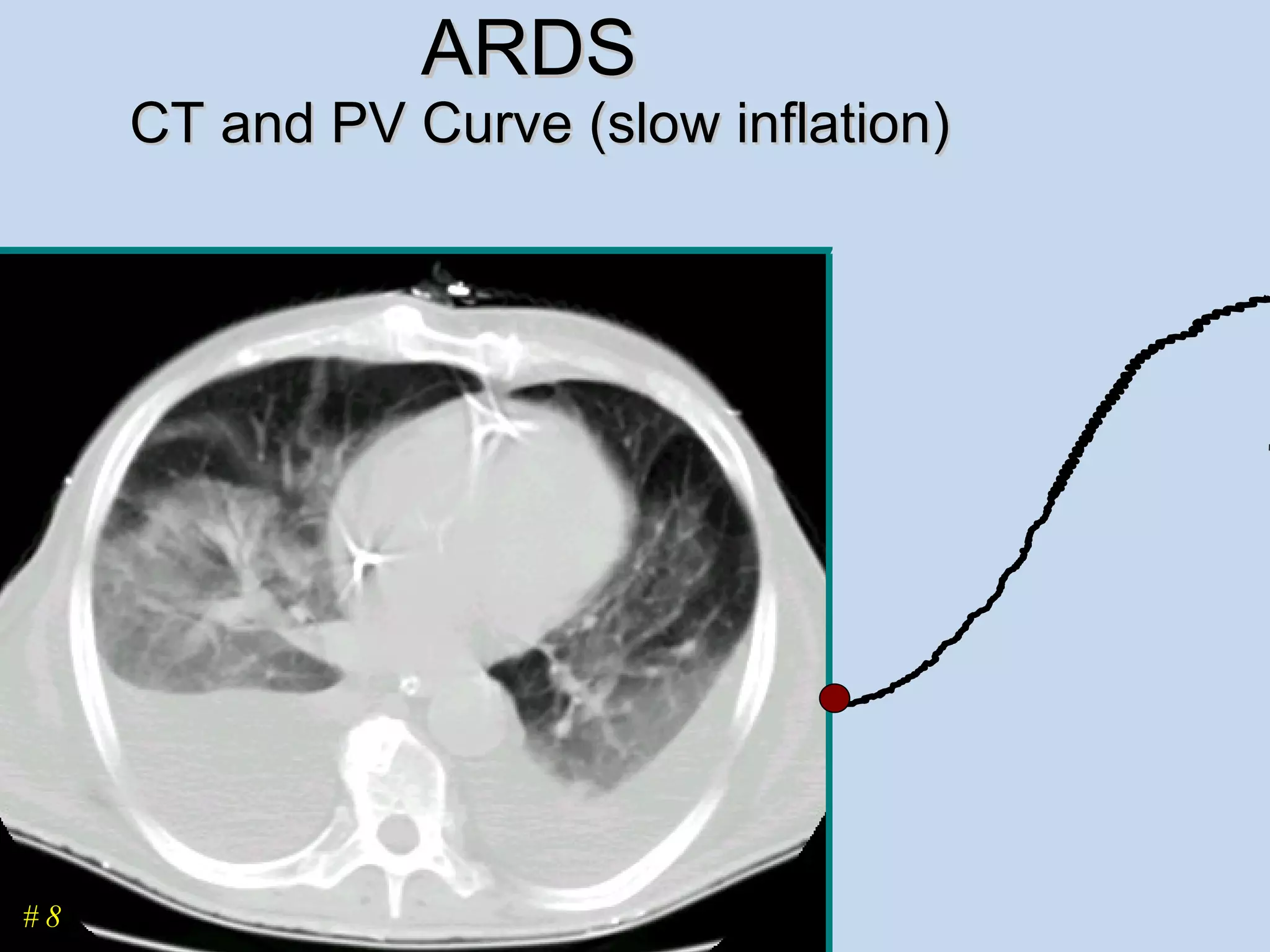
ARDS  CT and PV Curve (slow inflation) # 8
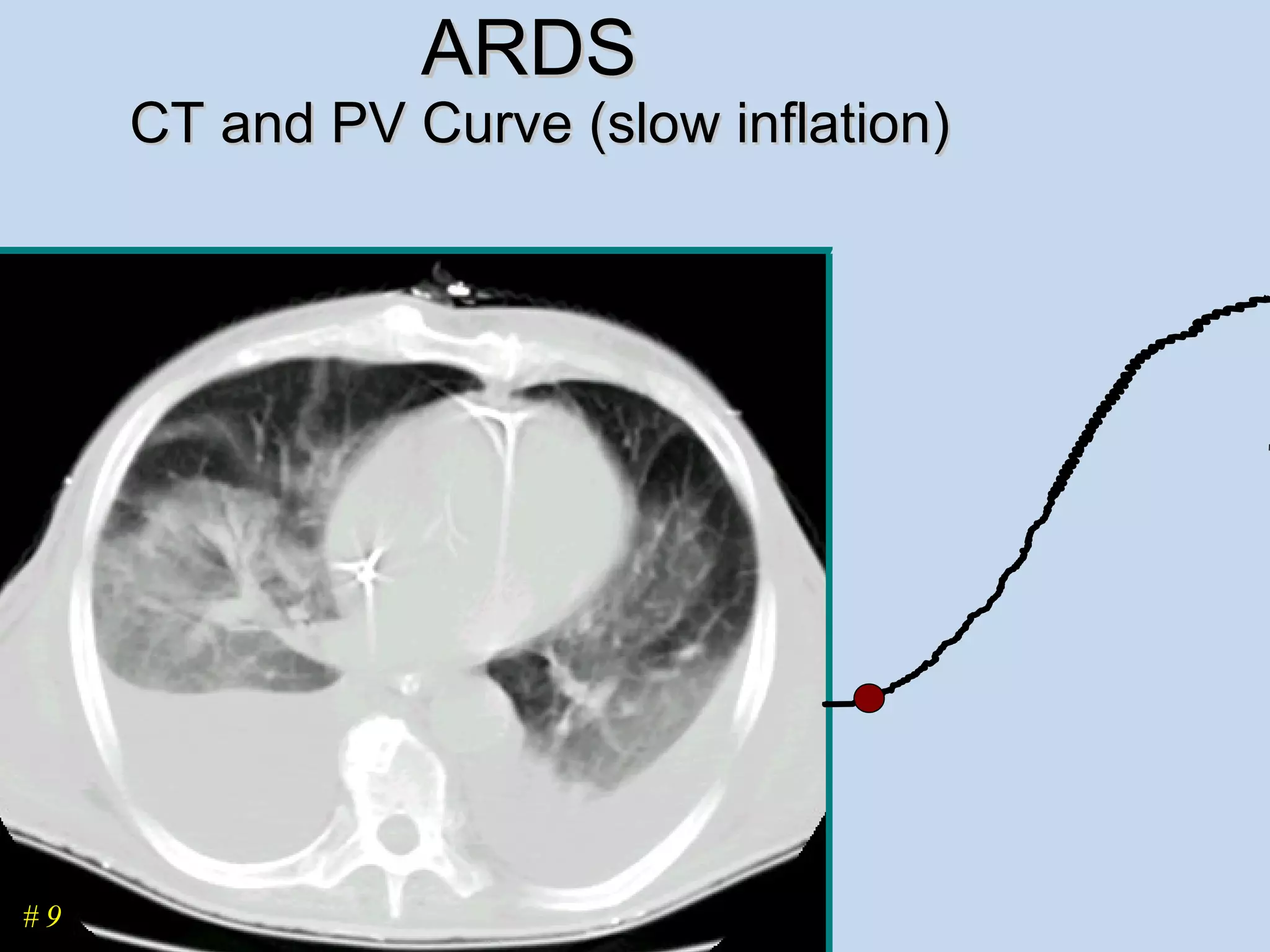
ARDS  CT and PV Curve (slow inflation) # 9
ARDS  CT and PV Curve (slow inflation) # 10
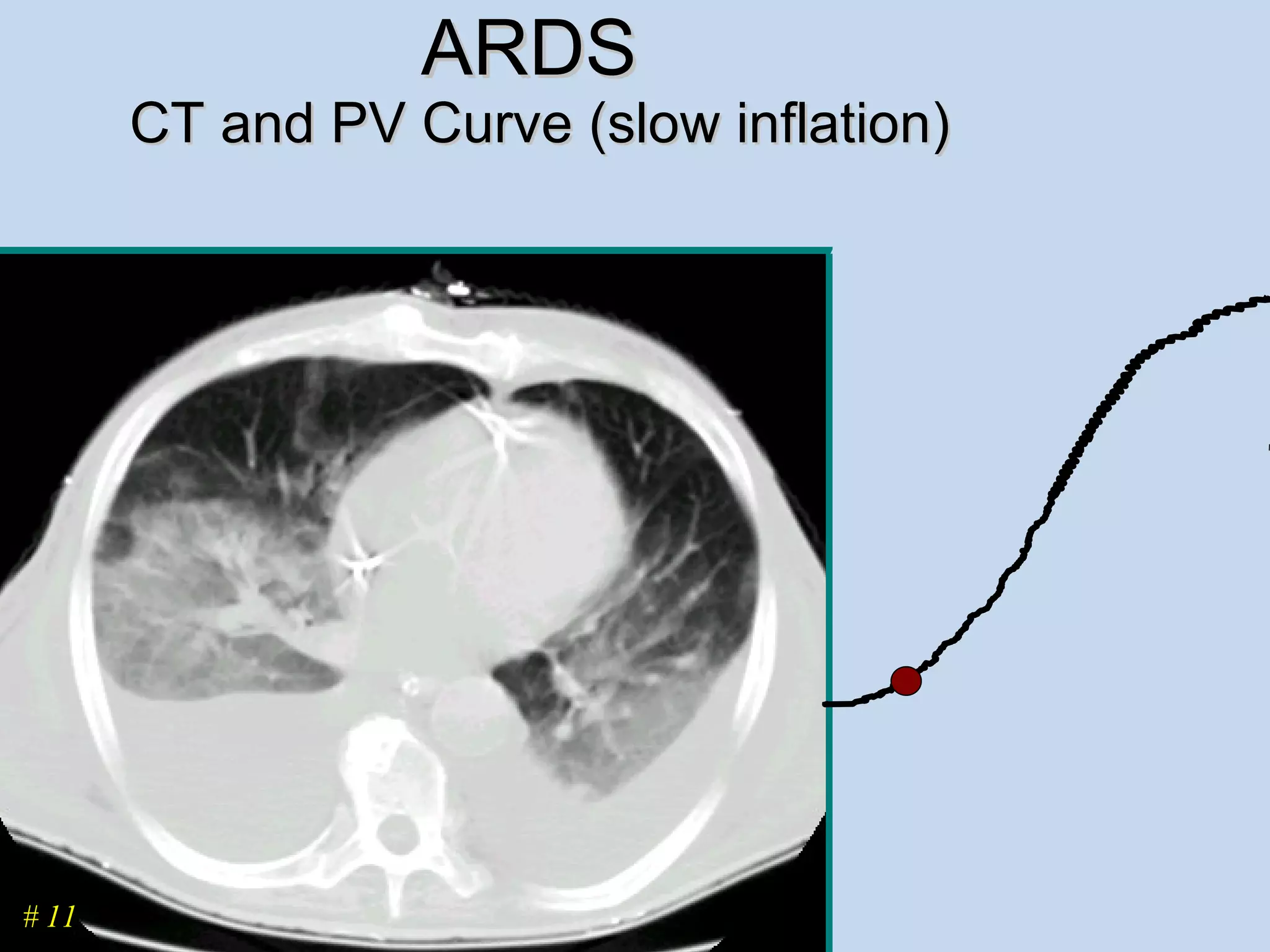
ARDS  CT and PV Curve (slow inflation) # 11
ARDS  CT and PV Curve (slow inflation ) # 12
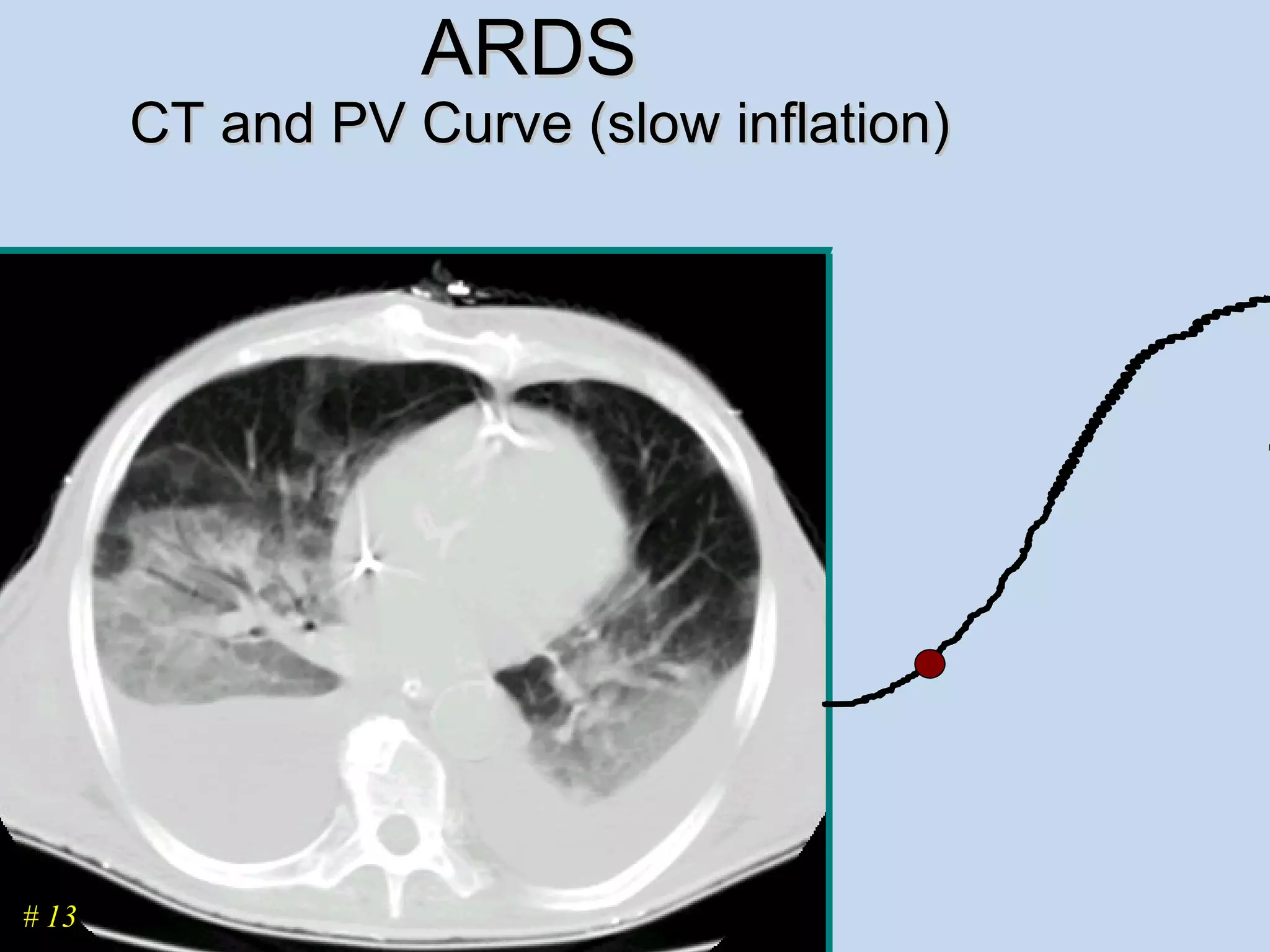
ARDS  CT and PV Curve (slow inflation) # 13
ARDS  CT and PV Curve (slow inflation) # 14
ARDS  CT and PV Curve (slow inflation) # 15
ARDS  CT and PV Curve (slow inflation) # 16
ARDS  CT and PV Curve (slow inflation) # 17
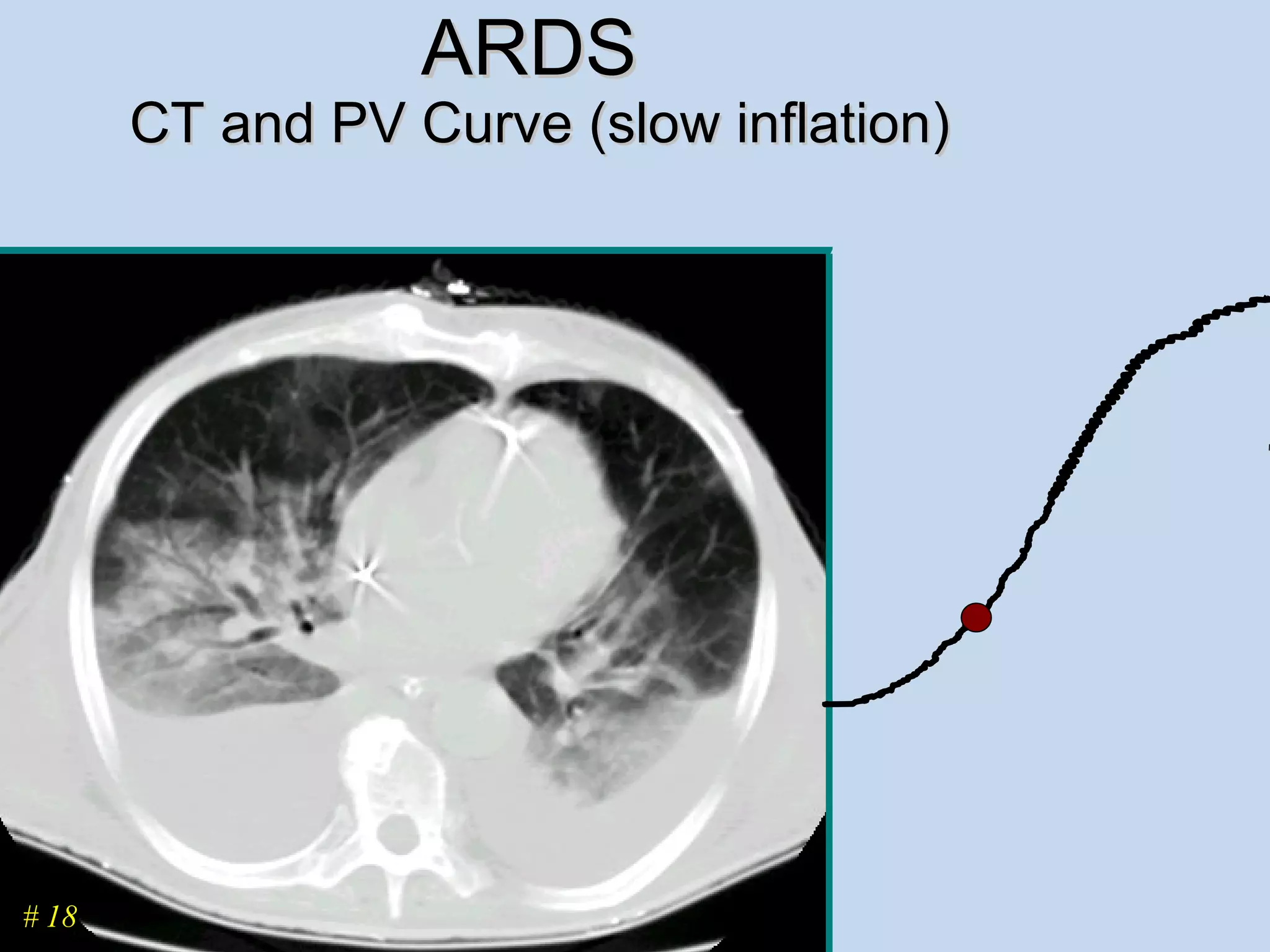
ARDS  CT and PV Curve (slow inflation) # 18
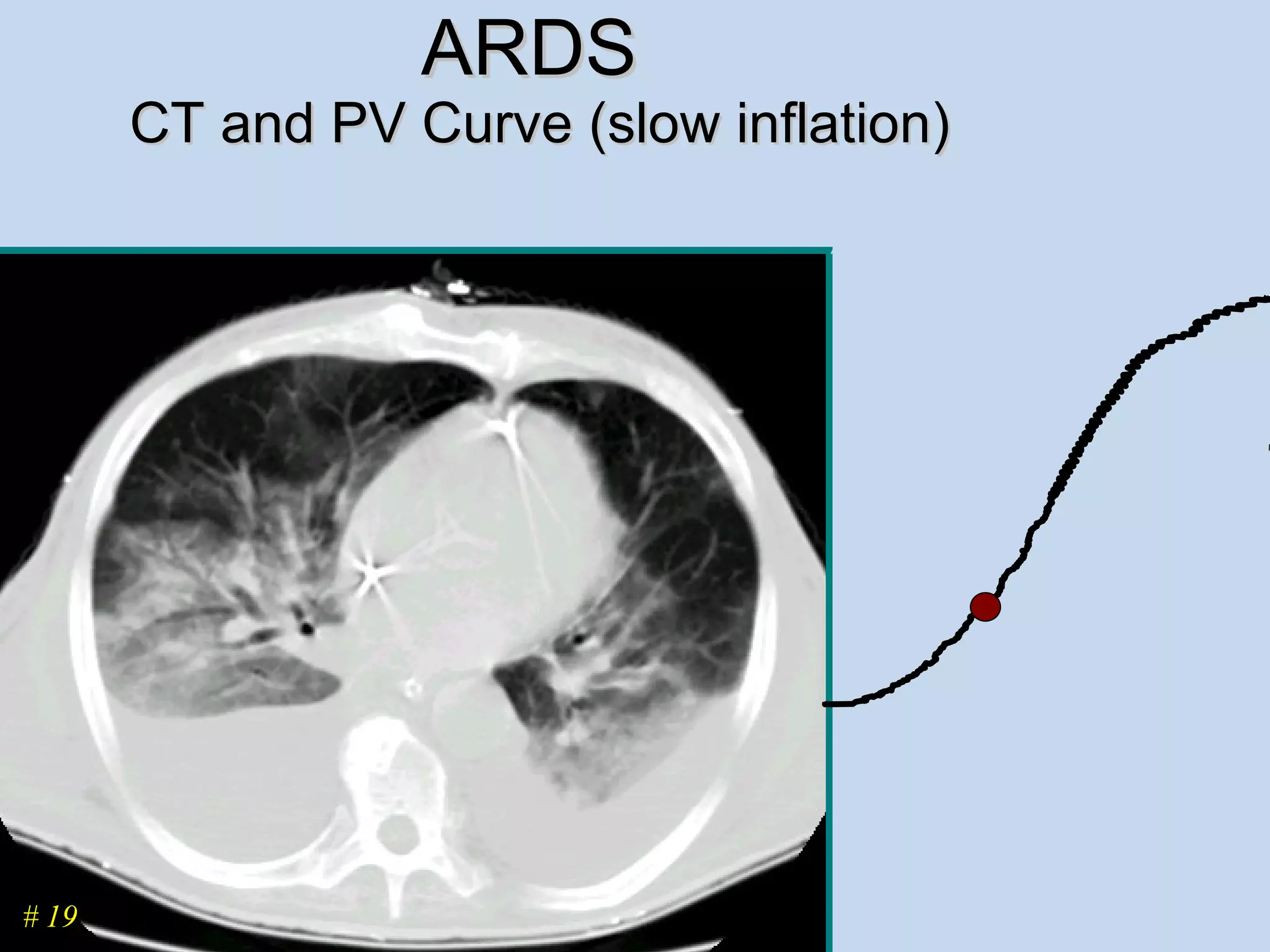
ARDS  CT and PV Curve (slow inflation) # 19
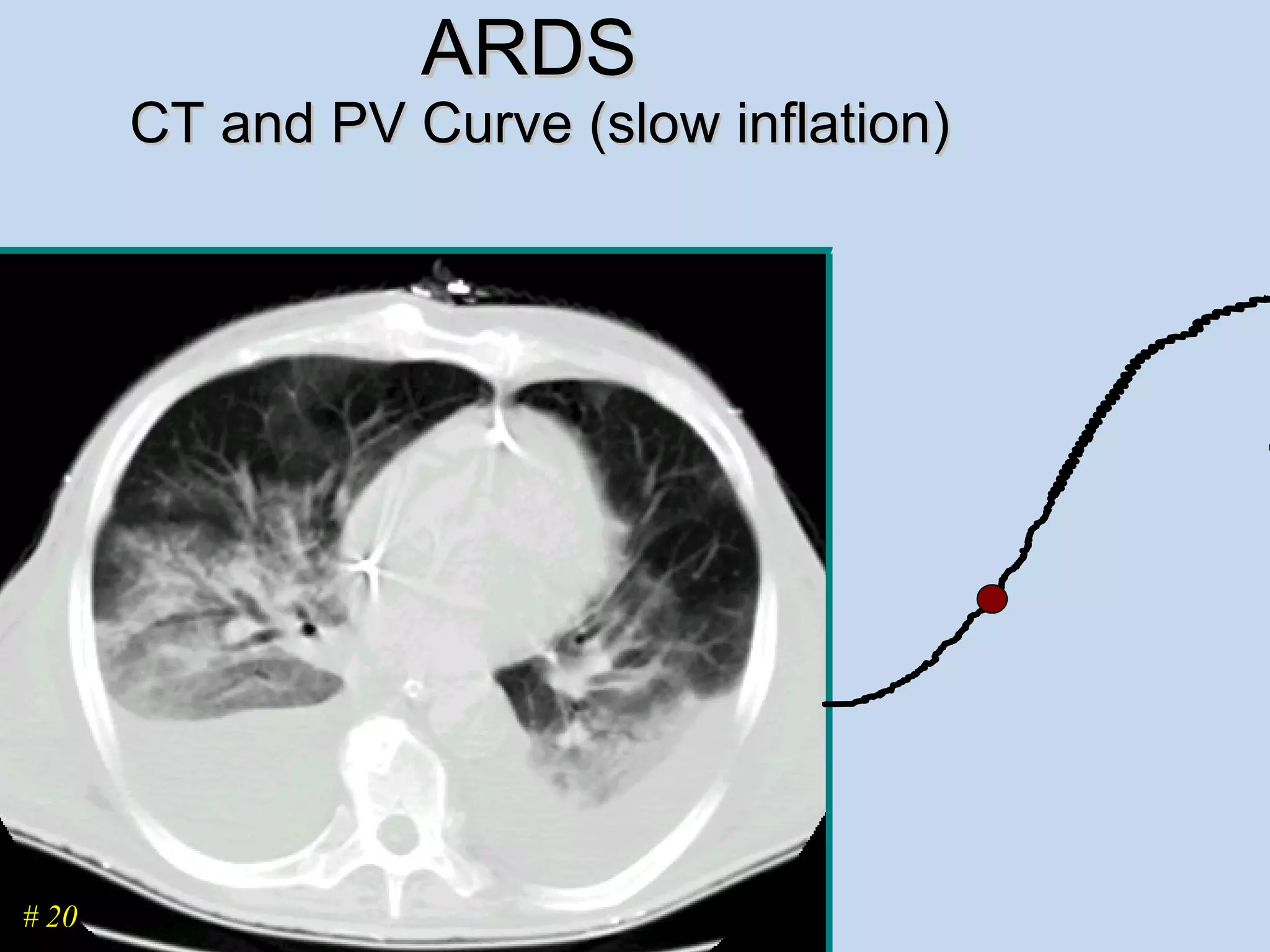
ARDS  CT and PV Curve (slow inflation) # 20
ARDS  CT and PV Curve (slow inflation) # 21
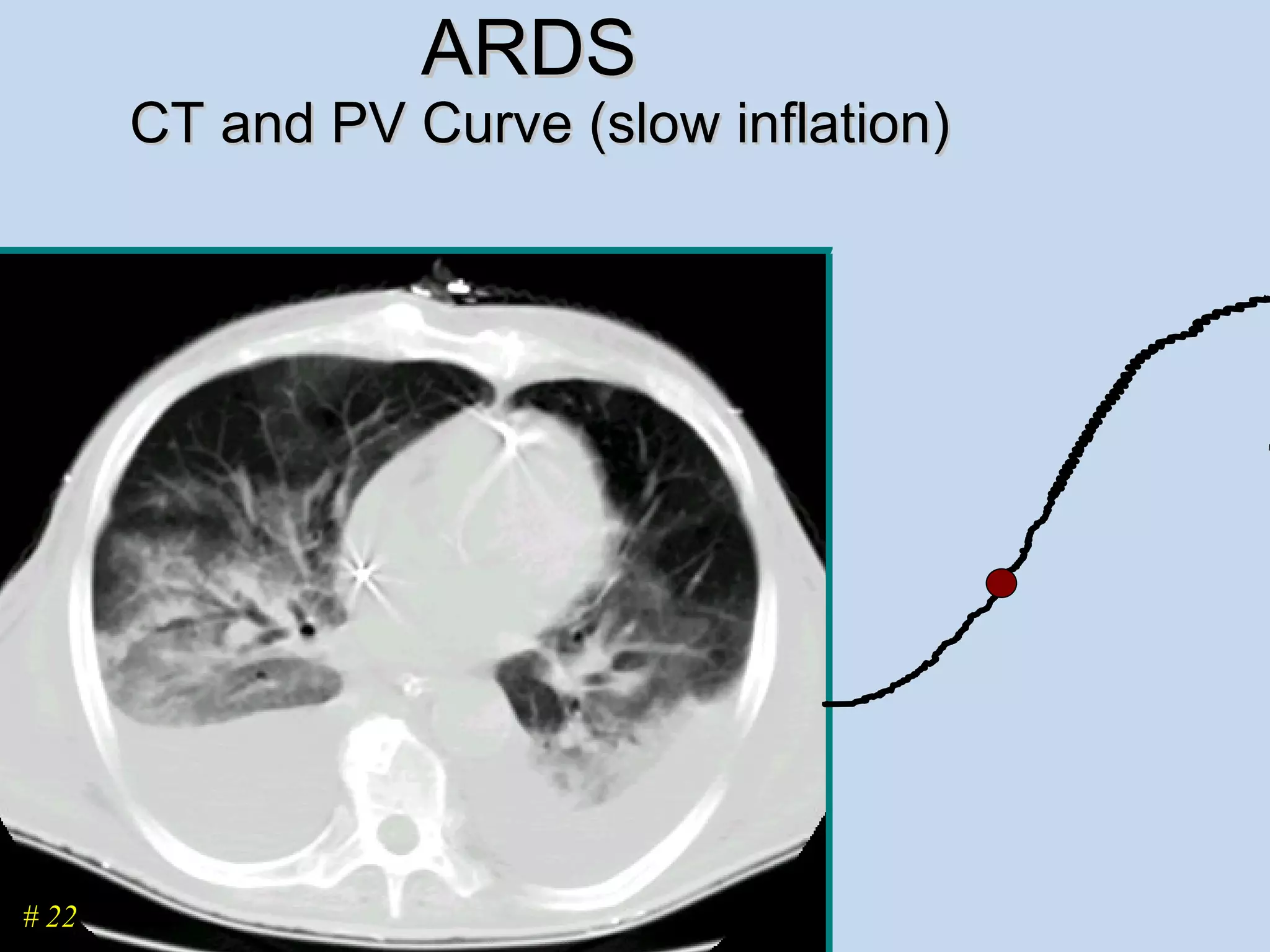
ARDS  CT and PV Curve (slow inflation) # 22
ARDS  CT and PV Curve (slow inflation) # 23
ARDS  CT and PV Curve (slow inflation) # 24
ARDS  CT and PV Curve (slow inflation) # 25
ARDS  CT and PV Curve (slow inflation) # 26
ARDS  CT and PV Curve (slow inflation) # 27
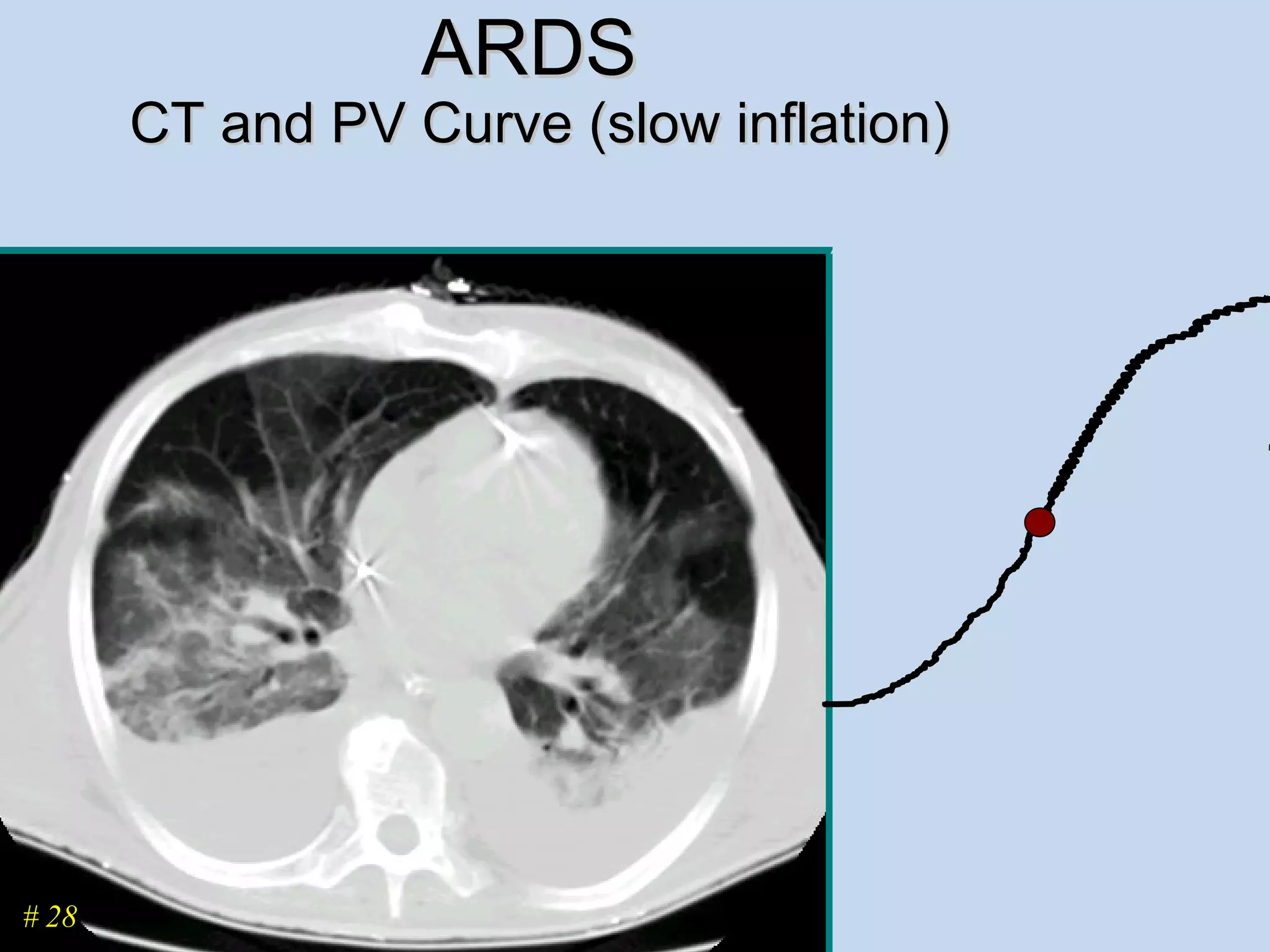
ARDS  CT and PV Curve (slow inflation) # 28
ARDS  CT and PV Curve (slow inflation) # 29
ARDS  CT and PV Curve (slow inflation) # 30
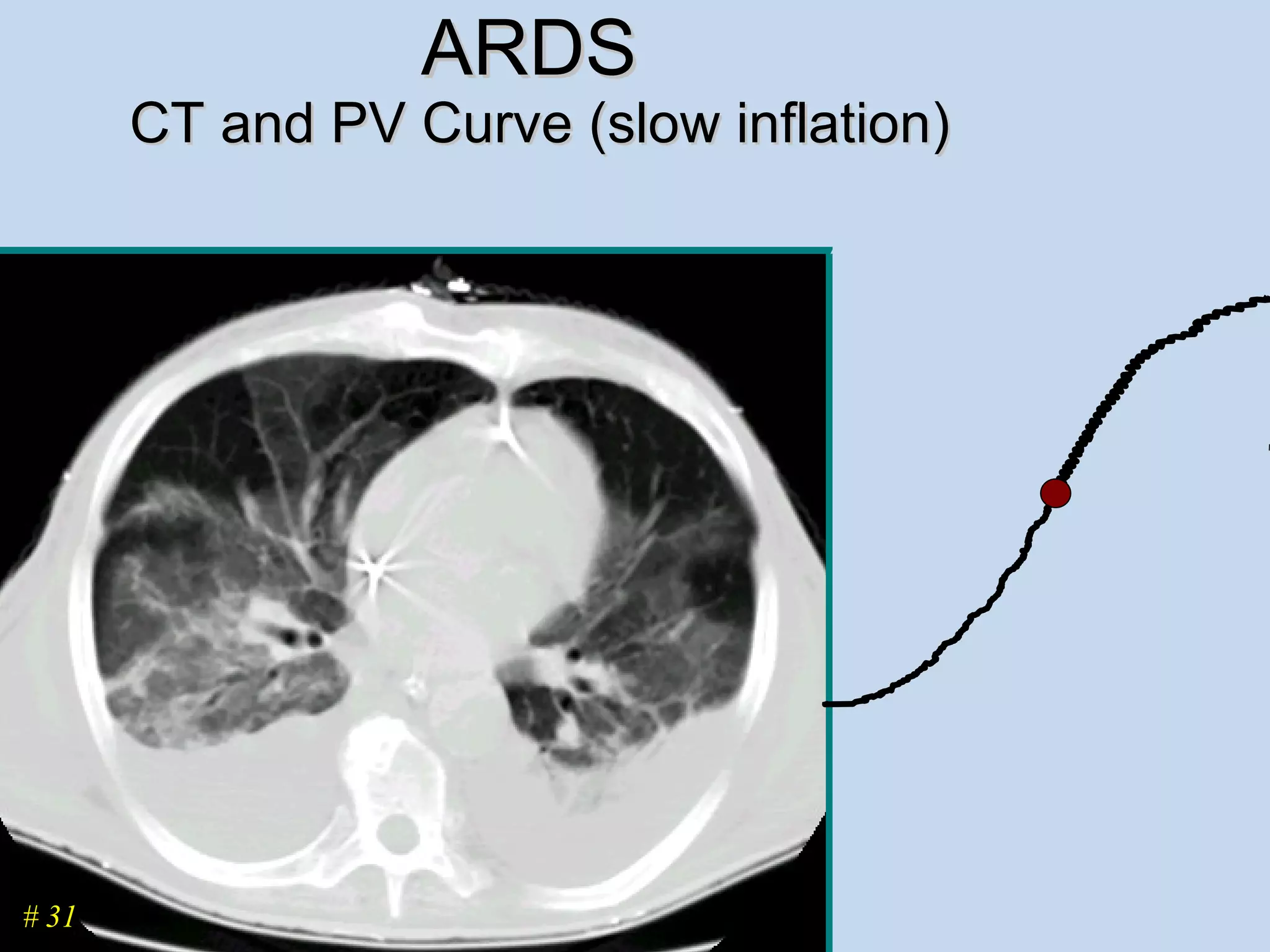
ARDS  CT and PV Curve (slow inflation) # 31
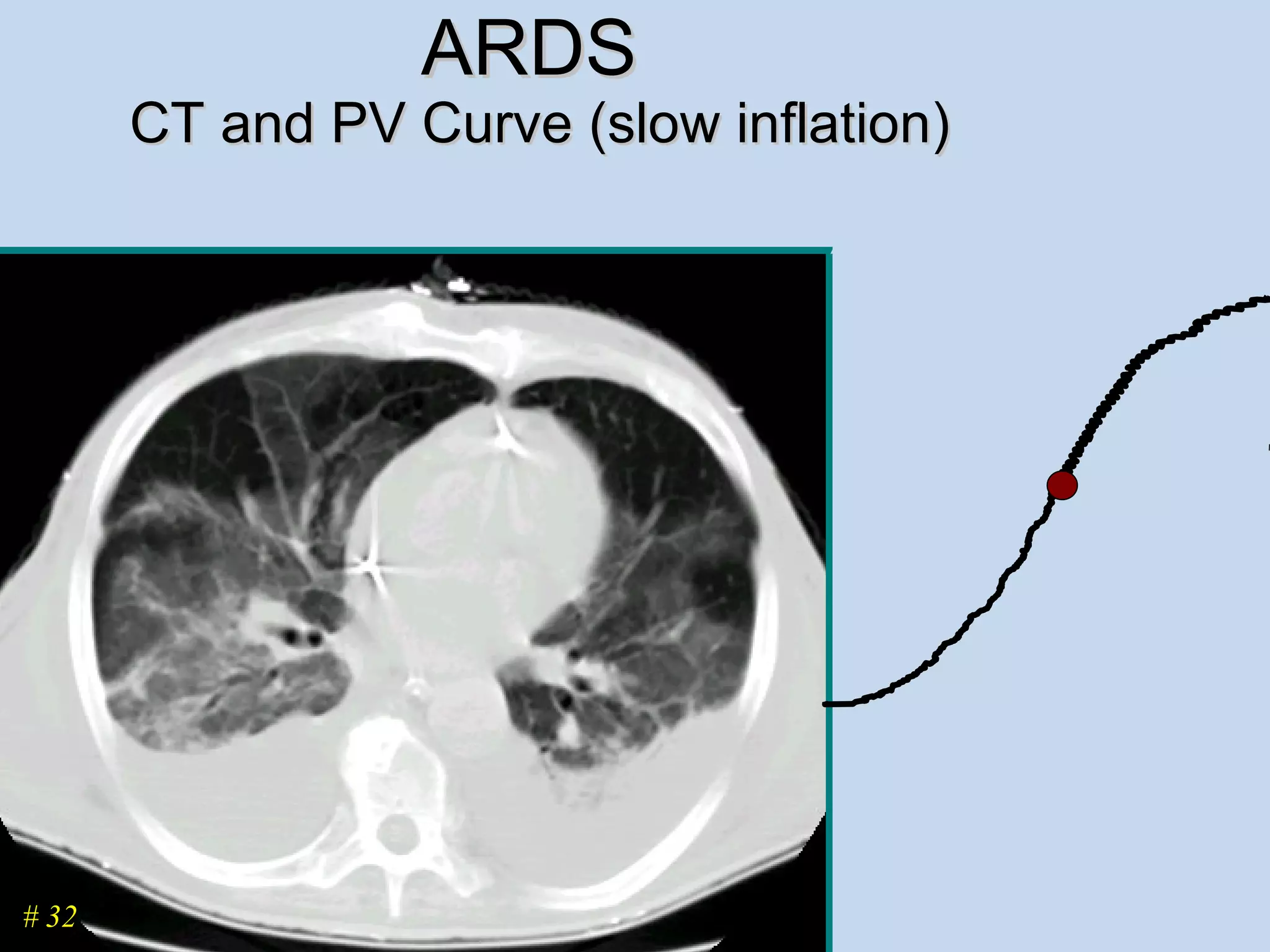
ARDS  CT and PV Curve (slow inflation) # 32
ARDS  CT and PV Curve (slow inflation) # 33
ARDS  CT and PV Curve (slow inflation) # 34
ARDS  CT and PV Curve (slow inflation) # 35
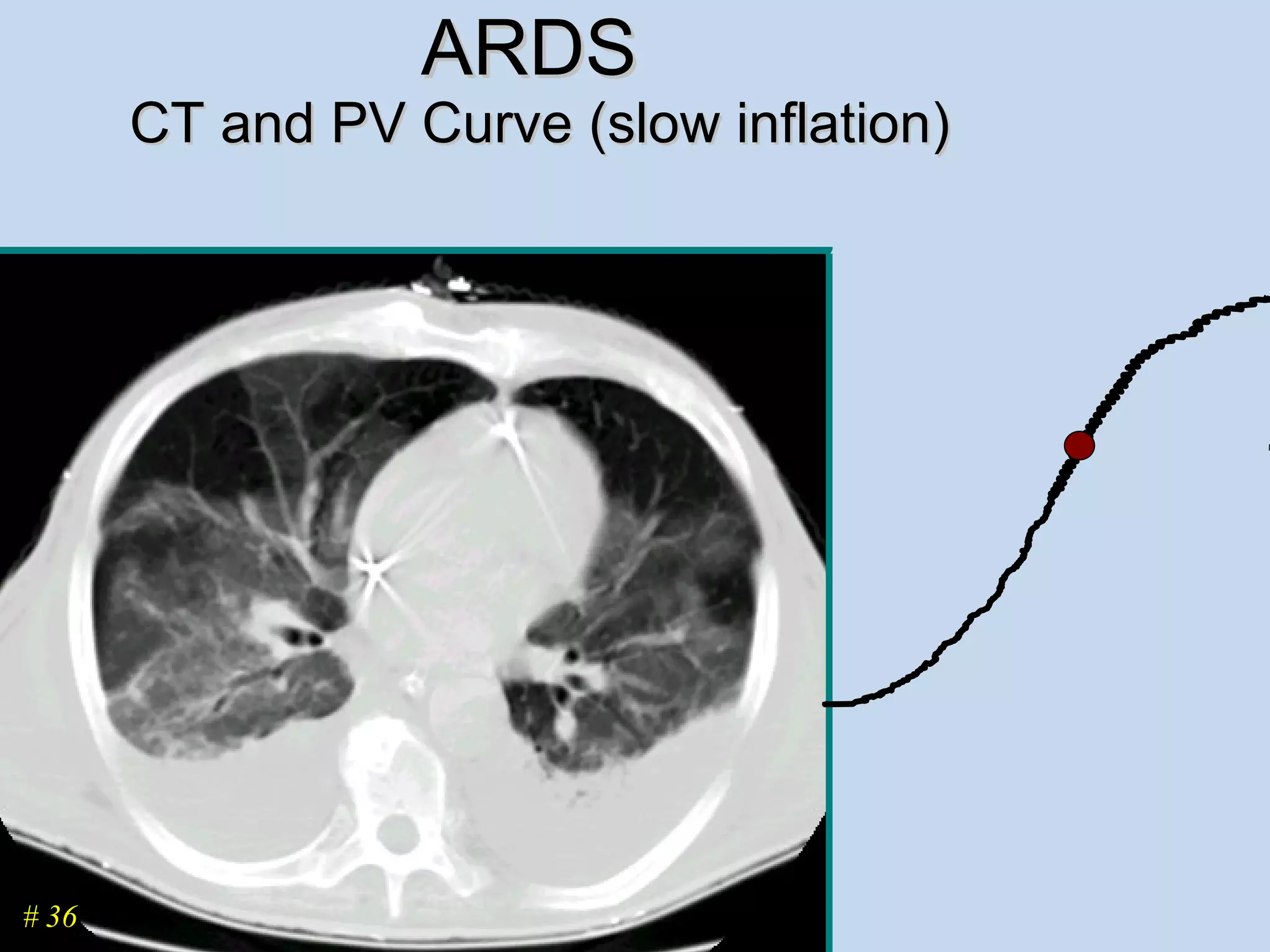
ARDS  CT and PV Curve (slow inflation) # 36
ARDS  CT and PV Curve (slow inflation) # 37
ARDS  CT and PV Curve (slow inflation) # 38
ARDS  CT and PV Curve (slow inflation) # 39
ARDS  CT and PV Curve (slow inflation) # 40
ARDS  CT and PV Curve (slow inflation) # 41
ARDS  CT and PV Curve (slow inflation) # 42
ARDS  CT and PV Curve (slow inflation) # 43
ARDS  CT and PV Curve (slow inflation) # 44
ARDS  CT and PV Curve (slow inflation) # 45
ARDS  CT and PV Curve (slow inflation) # 46
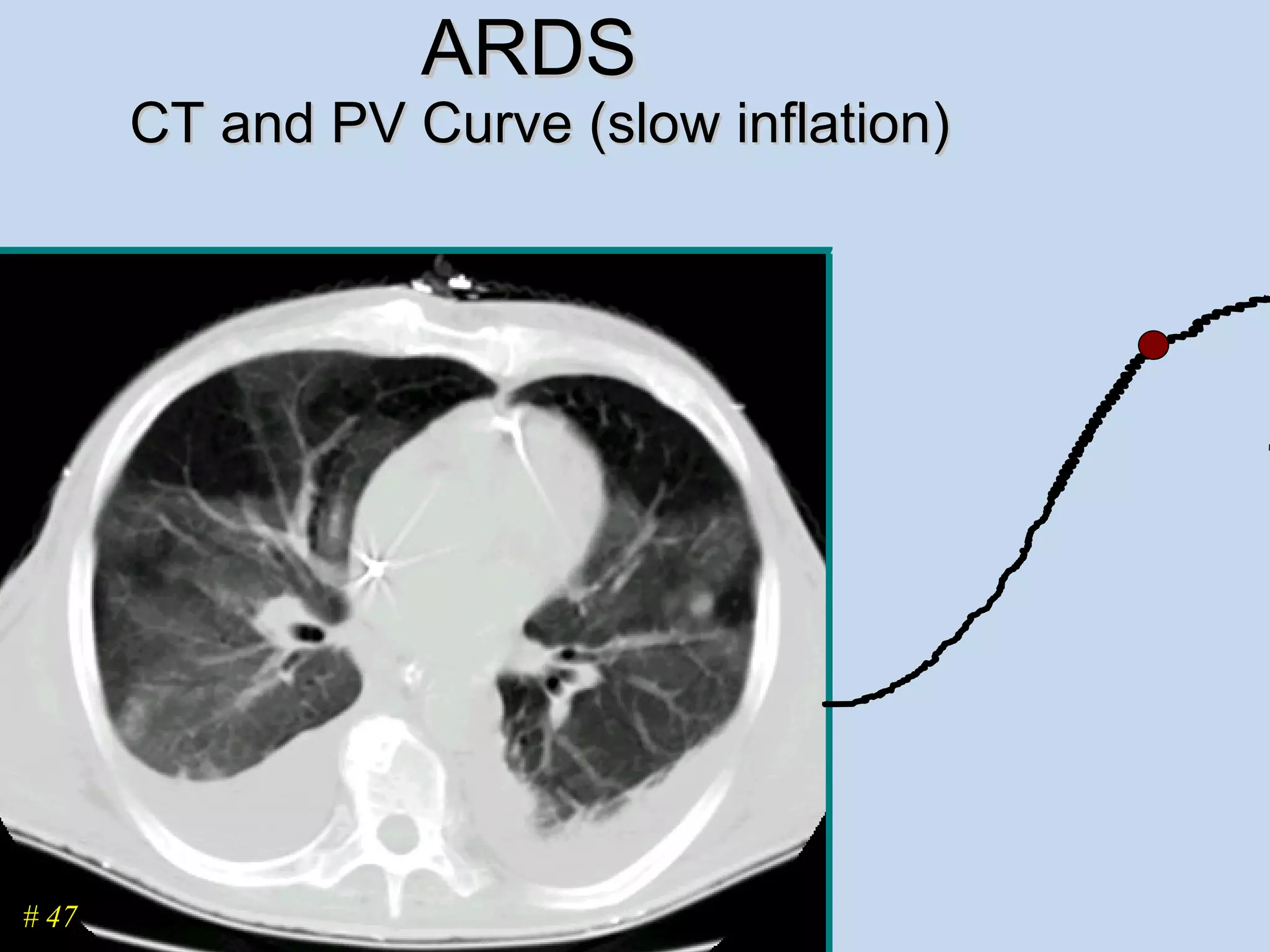
ARDS  CT and PV Curve (slow inflation) # 47
ARDS  CT and PV Curve (slow inflation) # 48
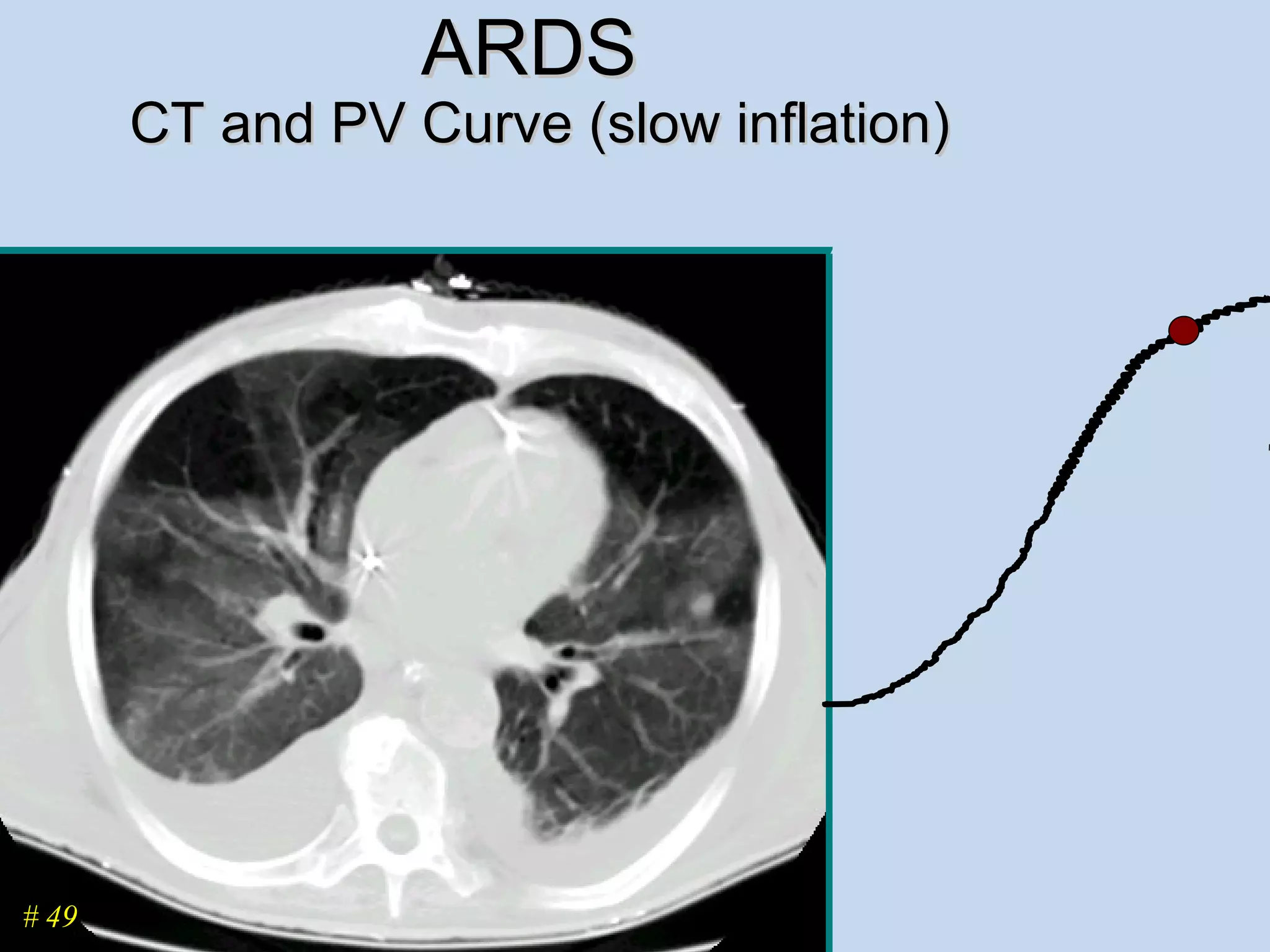
ARDS  CT and PV Curve (slow inflation) # 49
ARDS  CT and PV Curve (slow inflation) # 50
ARDS  CT and PV Curve (slow inflation) # 51
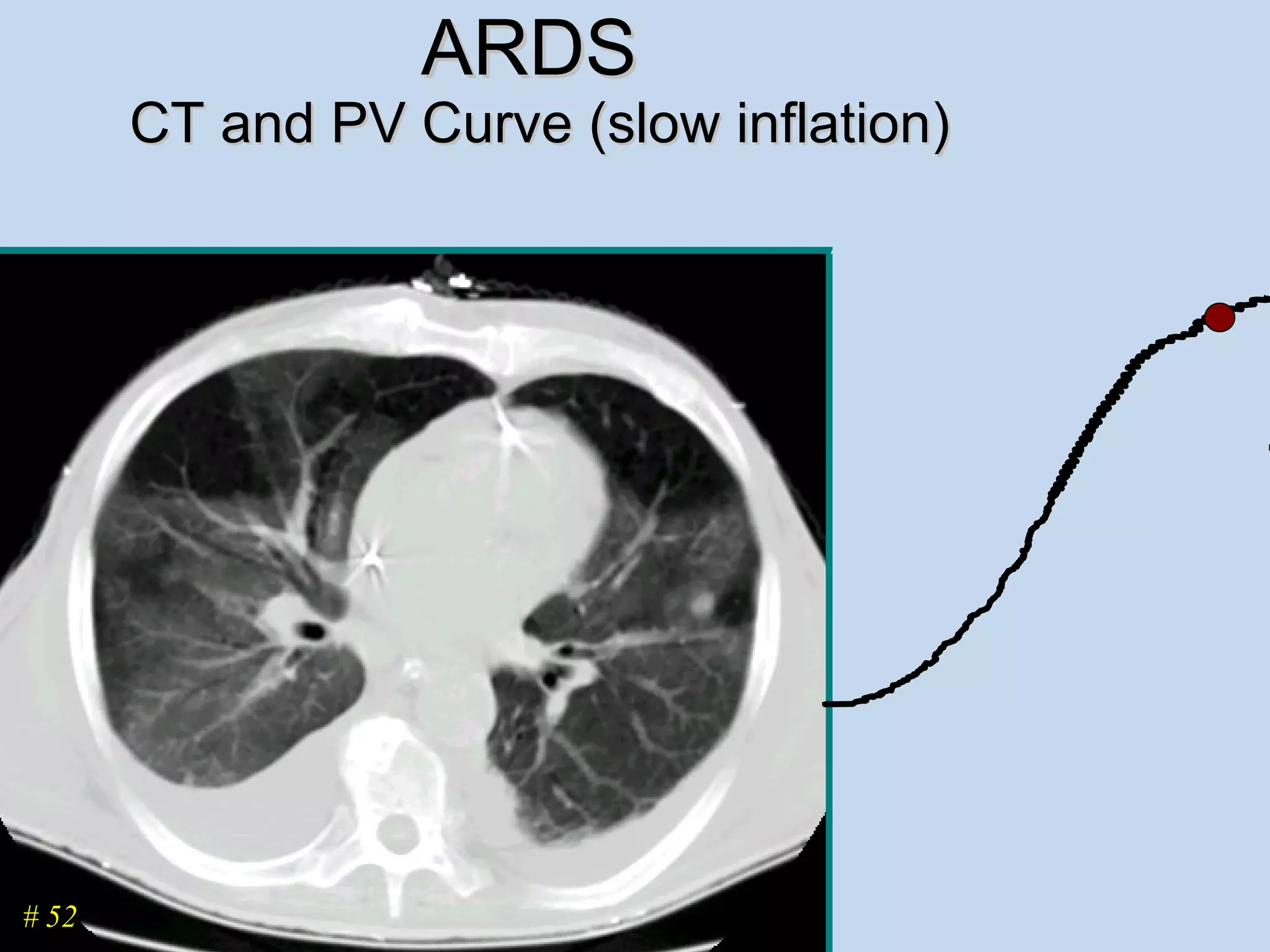
ARDS  CT and PV Curve (slow inflation) # 52
ARDS  CT and PV Curve (slow inflation) # 53
ARDS  CT and PV Curve (slow inflation) # 54
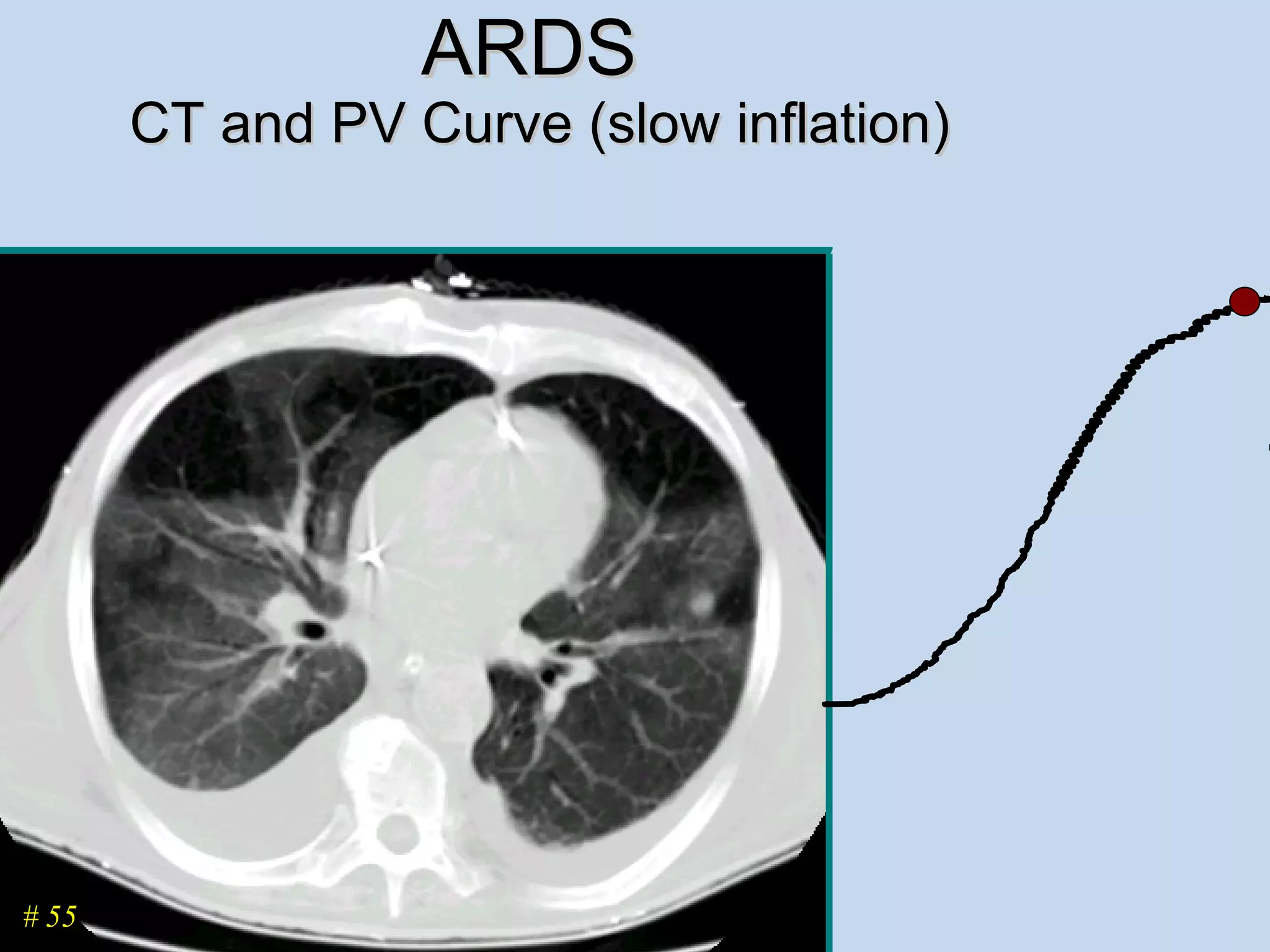
ARDS  CT and PV Curve (slow inflation) # 55
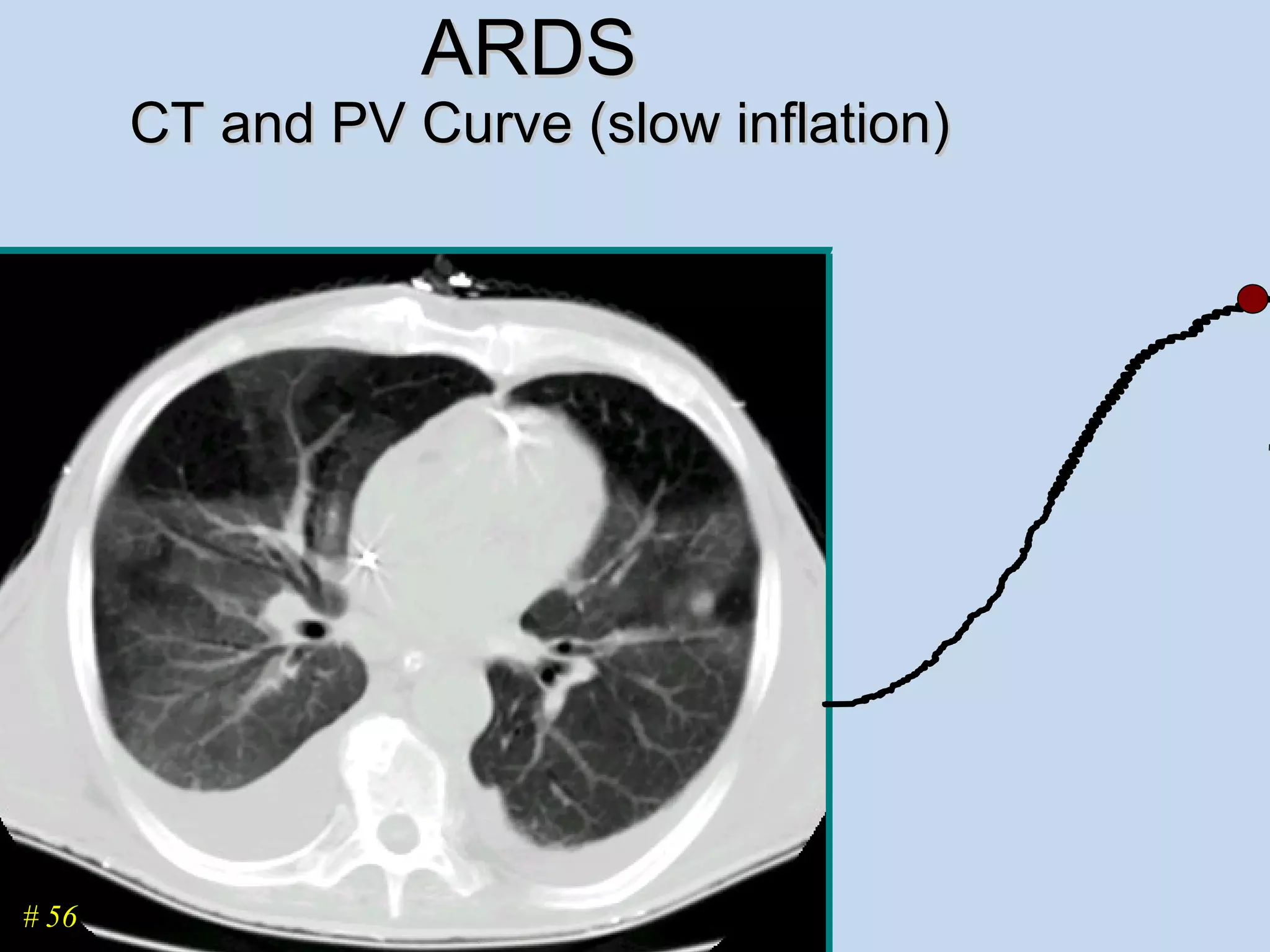
ARDS  CT and PV Curve (slow inflation) # 56
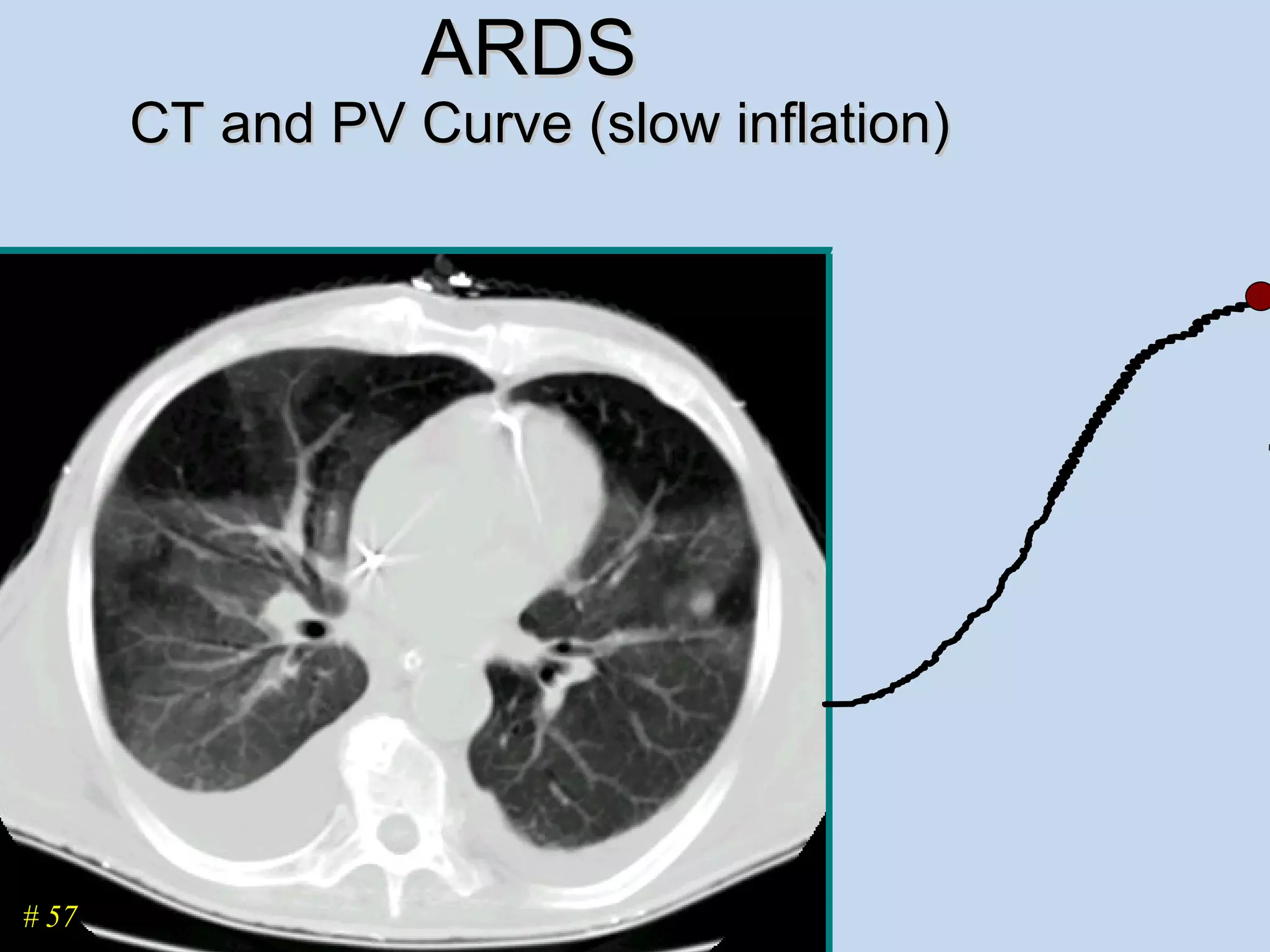
ARDS  CT and PV Curve (slow inflation) # 57
ARDS  CT and PV Curve (slow inflation) # 58
ARDS  CT and PV Curve (slow inflation) # 59
ARDS  CT and PV Curve (slow inflation) # 60
Contrasts between 2 types of ARDS Kallet, R & Branson, R.  Resp. Care Journal, Apr 2007, Vol 52 No 4 <10 cm often absent >10 usually present Lower inflec. Pt Severely Reduced Reduced Lung Compl. Excellent (10-20cm) Response to PEEP Low High Recruitment Potential High Low Risk of overdistention Normal Reduced Chest Wall Compliance Pulmonary ARDS Extrapulmonary ARDS Mechanics
Characteristics of Pulmonary ARDS (Direct) Viera et al.  Am J Respir Crit Care Med 1998:158
Contrasts between 2 types of ARDS Kallet, R & Branson, R.  Resp. Care Journal, Apr 2007, Vol 52 No 4 <10 cm often absent >10 usually present Lower inflec. Pt Severely Reduced Reduced Lung Compl. Good (8-12cm) Excellent (10-20cm) Response to PEEP Low High Recruitment Potential High Low Risk of overdistention Normal Reduced Chest Wall Compliance Pulmonary ARDS Extrapulmonary ARDS Mechanics
Characteristics of Pulmonary ARDS (Direct) Viera et al.  Am J Respir Crit Care Med 1998:158
Effects of Mechanical/Physical Stretch on Rat Alveolar Epithelial Cells Tschumperlin, D et al. Am J Respir Crit Care Med, Vol 162. pp 357-362, 2000 Excised Rat lungs  Placed Alveolar Epithelial Cells in a “cell-stretching device”
Tschumperlin, D et al. Am J Respir Crit Care Med, Vol 162. pp 357-362, 2000
Tschumperlin, D et al. Am J Respir Crit Care Med, Vol 162. pp 357-362, 2000 Both static and single deformations were significantly less injurious than cyclic deformations at each deformation level
Tschumperlin, D et al. Am J Respir Crit Care Med, Vol 162. pp 357-362, 2000 Reducing the amplitude reduced  cell death Cell Death dependent on frequency
ARDS Network
ARDS Network Multicenter, Randomized trial 861 Patients recruited from March 1996 through March 1999 at 10 university centers. Patients enrolled if: 1)  They were receiving  mechanical ventilation  2)  Had acute decrease in the P/F ratio (<300) 3)  Bilateral pulmonary infiltrates on a chest radiograph consistent with the presence of edema 4)  No clinical evidence of left atrial hypertension or if measure a PCWP<18mmHg .
 
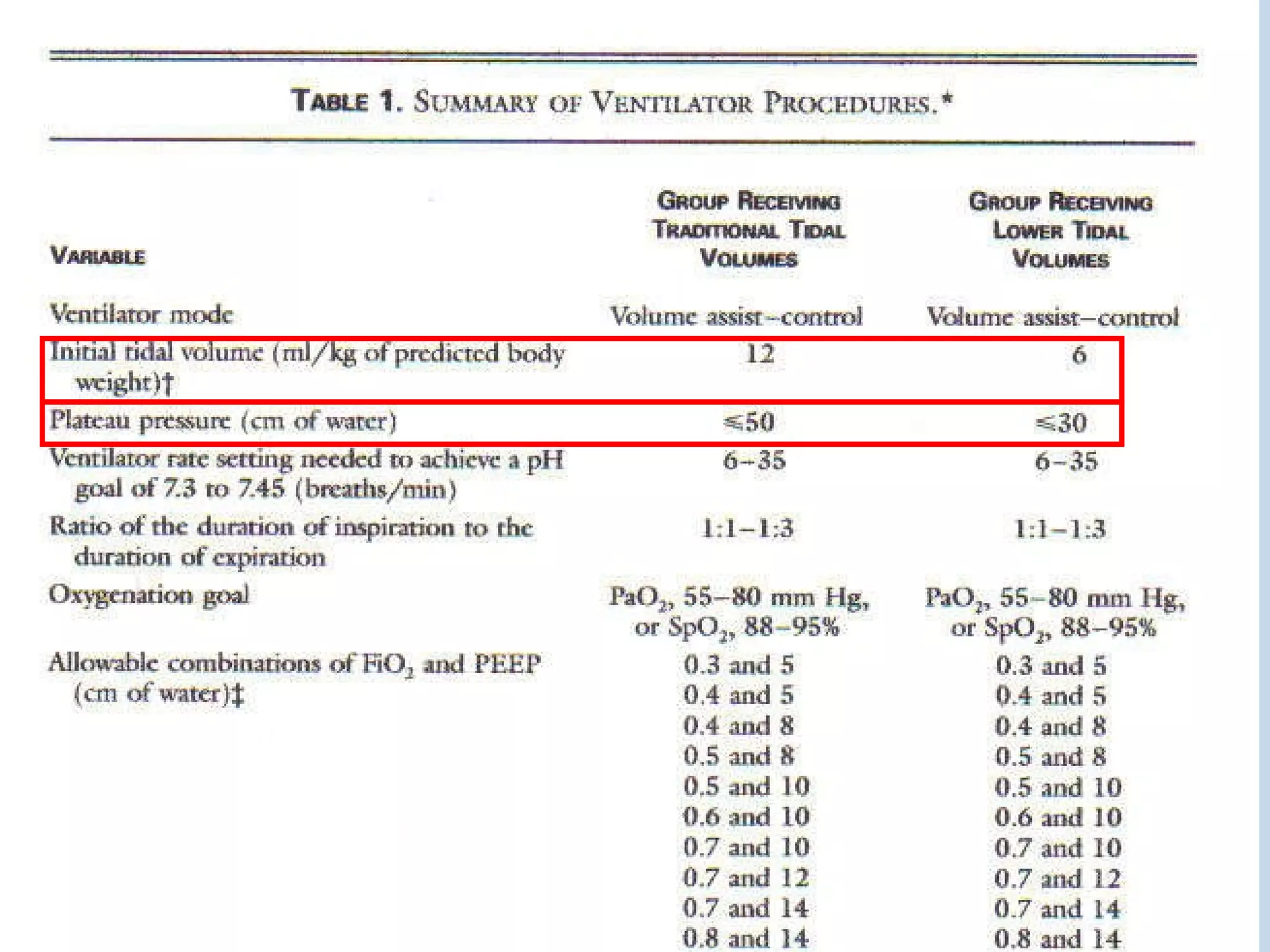
Results Trial was stopped after fourth interim analysis. Mortality rates 12 cc/Kg VT group- 39.8% 6cc/Kg Vt group- 31.0%  Mortality decreased by 22% Vt & Plat were significantly lower Question to you-  What group had better PaO2’s? 12 & they died more often- so better PaO2 does not translate into better outcomes
What did we do then? We were skeptical at the results.  Didn’t like it because Vt was so low.  Also questioned that mortality could have been better if more PEEP was used or use of Recruitment Maneuvers. Did we interpret the results of the studies right???
Lower PEEP/Higher FiO 2 FiO 2   .3  .4  .4  .5  .5  .6  .7  .7  .7  .8  .9  .9  .9  1.0 PEEP  5  5  8  8  10  10  10  12  14  14 14  16  18 18-24 Higher PEEP/Lower FiO 2 FiO 2  .3  .3  .4  .4  .5  .5  .5-.8  .8  .9  1.0  PEEP  12  14  14  16  16  18  20  22  22  22-24 Target enrollment- 750 ALI, ARDS pts.
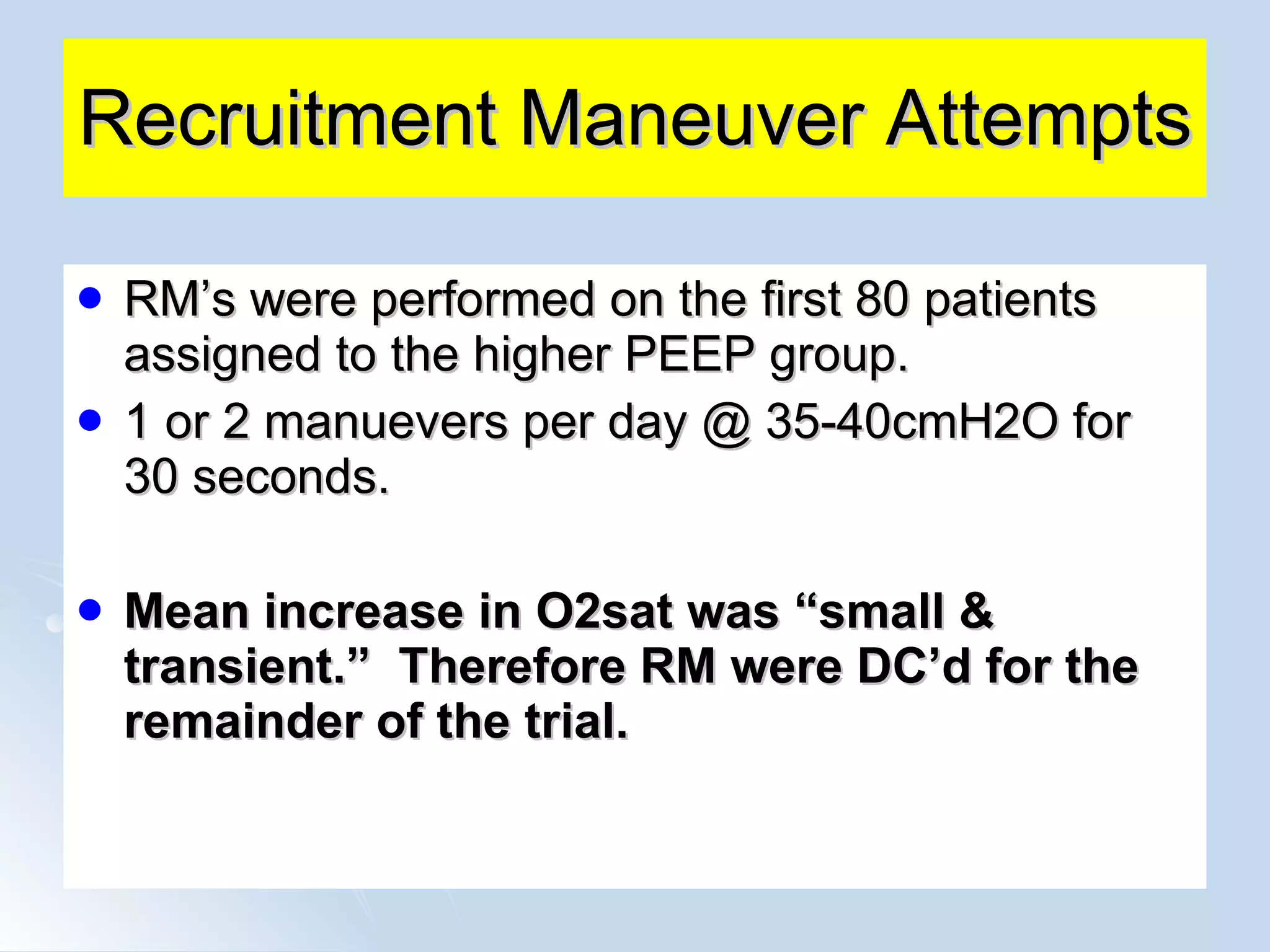
Recruitment Maneuver Attempts RM’s were performed on the first 80 patients assigned to the higher PEEP group. 1 or 2 manuevers per day @ 35-40cmH2O for 30 seconds. Mean increase in O2sat was “small & transient.”  Therefore RM were DC’d for the remainder of the trial.
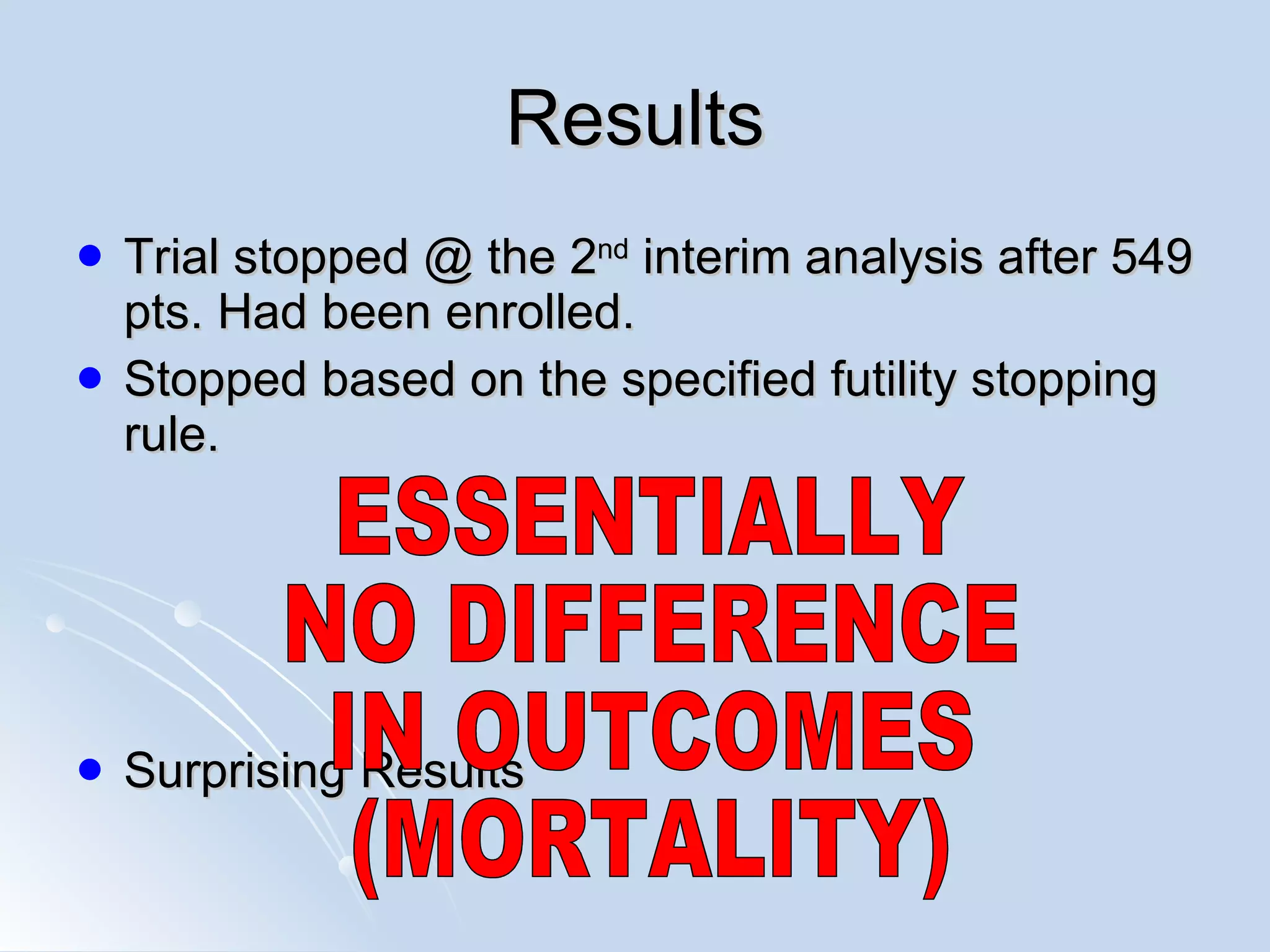
Results Trial stopped @ the 2 nd  interim analysis after 549 pts. Had been enrolled. Stopped based on the specified futility stopping rule. Surprising Results ESSENTIALLY NO DIFFERENCE IN OUTCOMES (MORTALITY)
Interpretation….. PEEP does not improve mortality of ARDS patients.  Added to our own confusion Now what do we do if PEEP doesn’t help survival Instead of developing my own interpretation of the results, I will wait around until someone shows me the right way to do it. Do our dirty work for us!!!
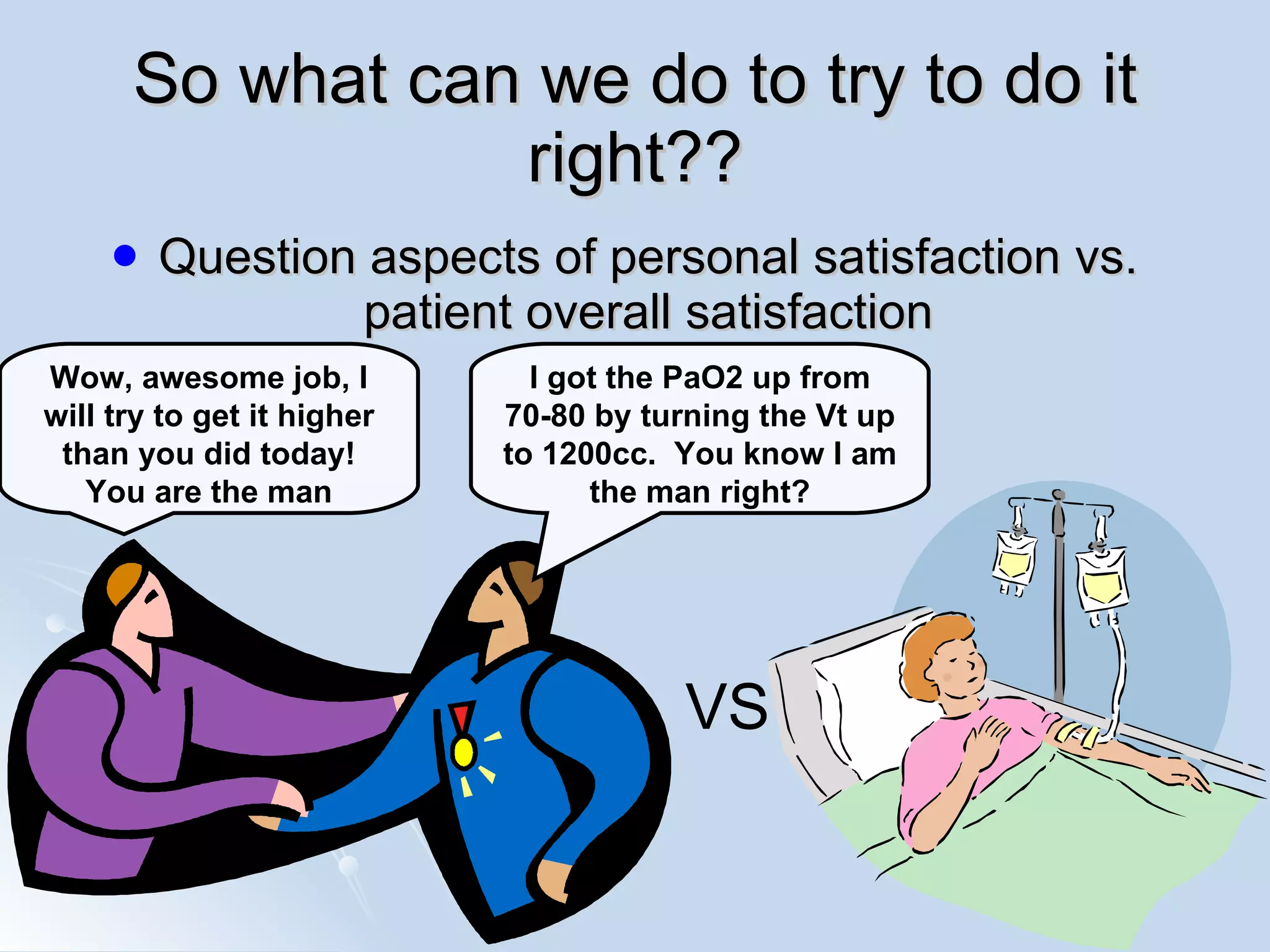
So what can we do to try to do it right?? Question aspects of personal satisfaction vs. patient overall satisfaction VS I got the PaO2 up from 70-80 by turning the Vt up to 1200cc.  You know I am the man right? Wow, awesome job, I will try to get it higher than you did today! You are the man
So what can we do to try to do it right?? Example:  Patient with ALI/ARDS Steps to take to minimize progression of syndrome Minimize FIO2, make all attempts to decrease FIO2  < 60%.
Oxygen Dissociation Curve ARDSnet Study 88-94% PaO2 55-80
So what can we do to try to do it right?? Example:  Patient with ALI/ARDS Steps to minimize progression of disease/syndrome Minimize FIO2, make all attempts to decrease FIO2  < 60%.  Management and consideration of Vt
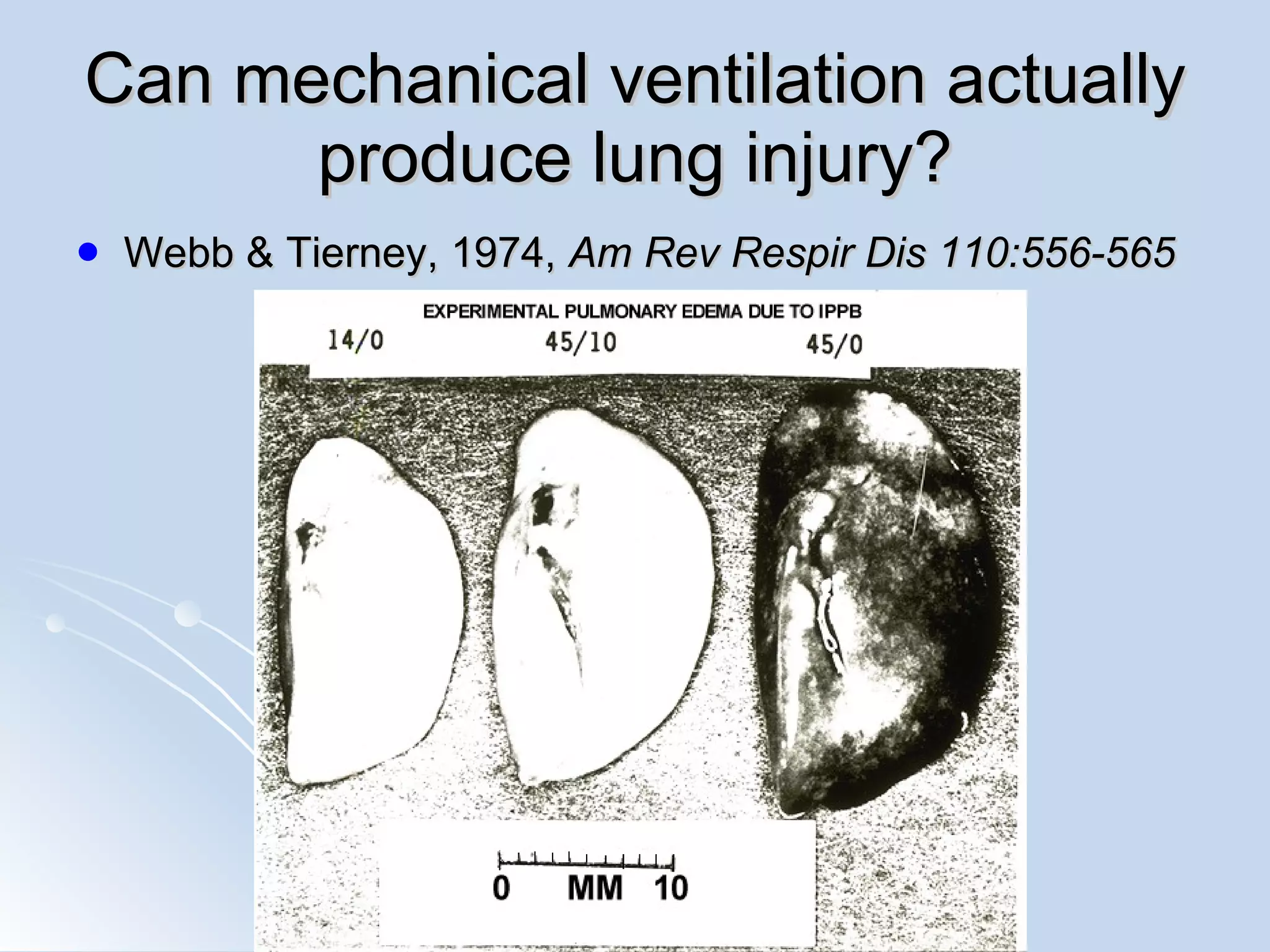
Can mechanical ventilation actually produce lung injury? Webb & Tierney, 1974,  Am Rev Respir Dis 110:556-565
Key Findings of the study Healthy Lungs with low PIP does not cause lung injury Ventilation with high PIP (30-45) & no PEEP produces perivascular edema & leads to severe injury. PEEP provides protection from alveolar edema due to high PIP. Webb & Tierney, 1974,  Am Rev Respir Dis  110:556-565
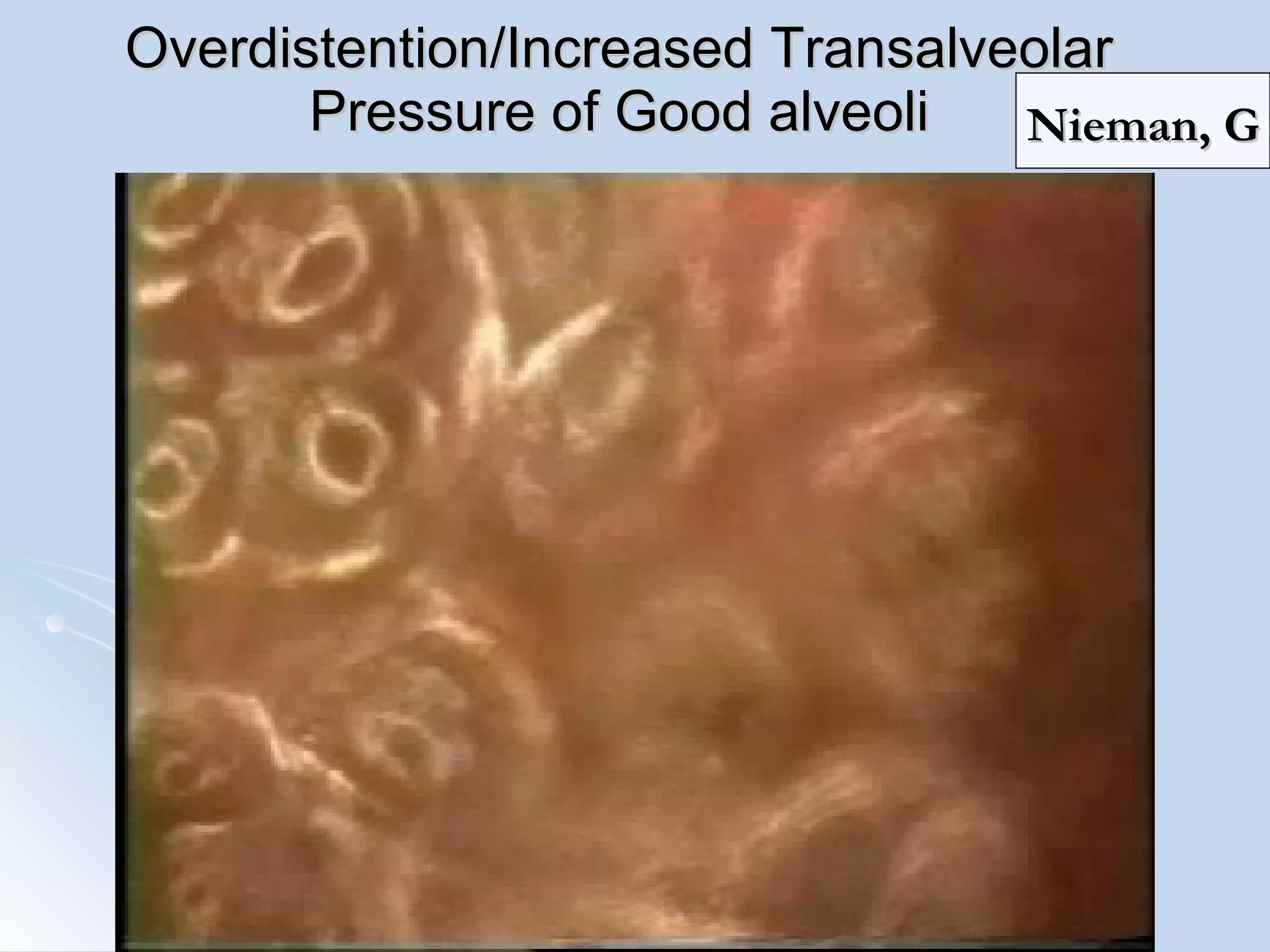
Overdistention/Increased Transalveolar Pressure of Good alveoli Nieman, G
Take Home Minimize Stretching of Healthy Alveoli by reducing Vt or Plat pressure. OK but what about patients that do not have ALI/ARDS??
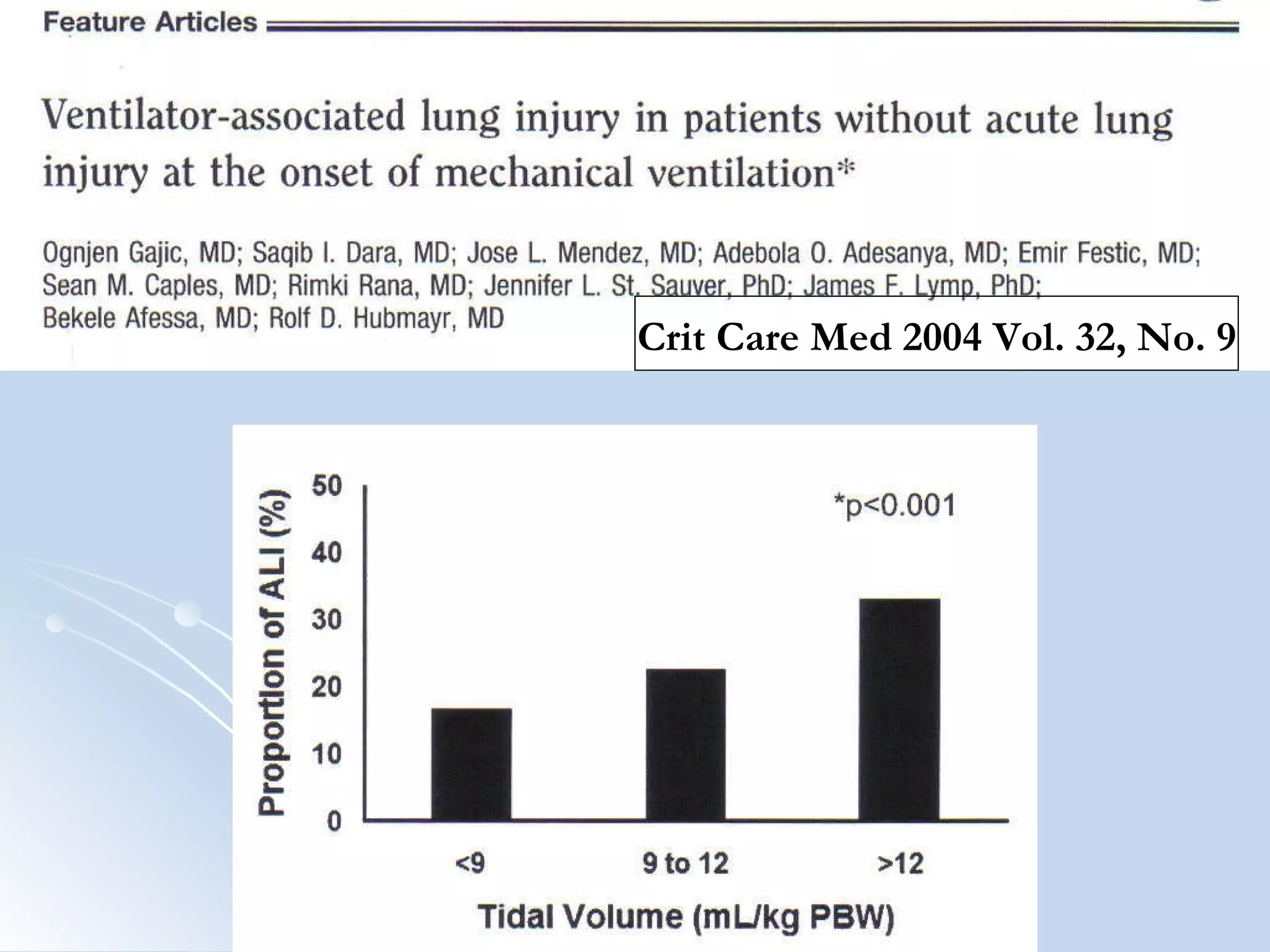
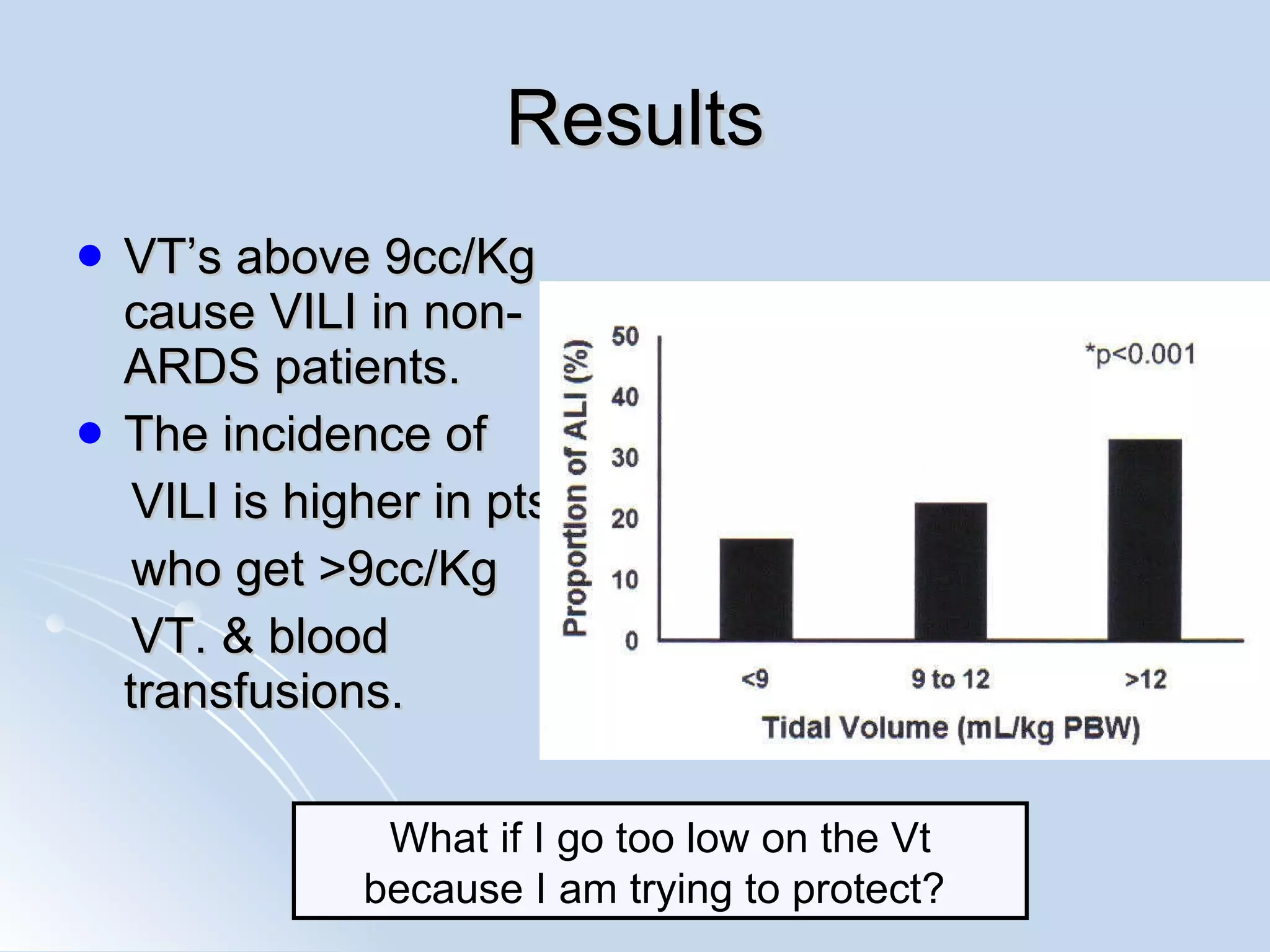
Crit Care Med 2004 Vol. 32, No. 9
Results VT’s above 9cc/Kg cause VILI in non- ARDS patients. The incidence of  VILI is higher in pts. who get >9cc/Kg VT. & blood transfusions. What if I go too low on the Vt because I am trying to protect?
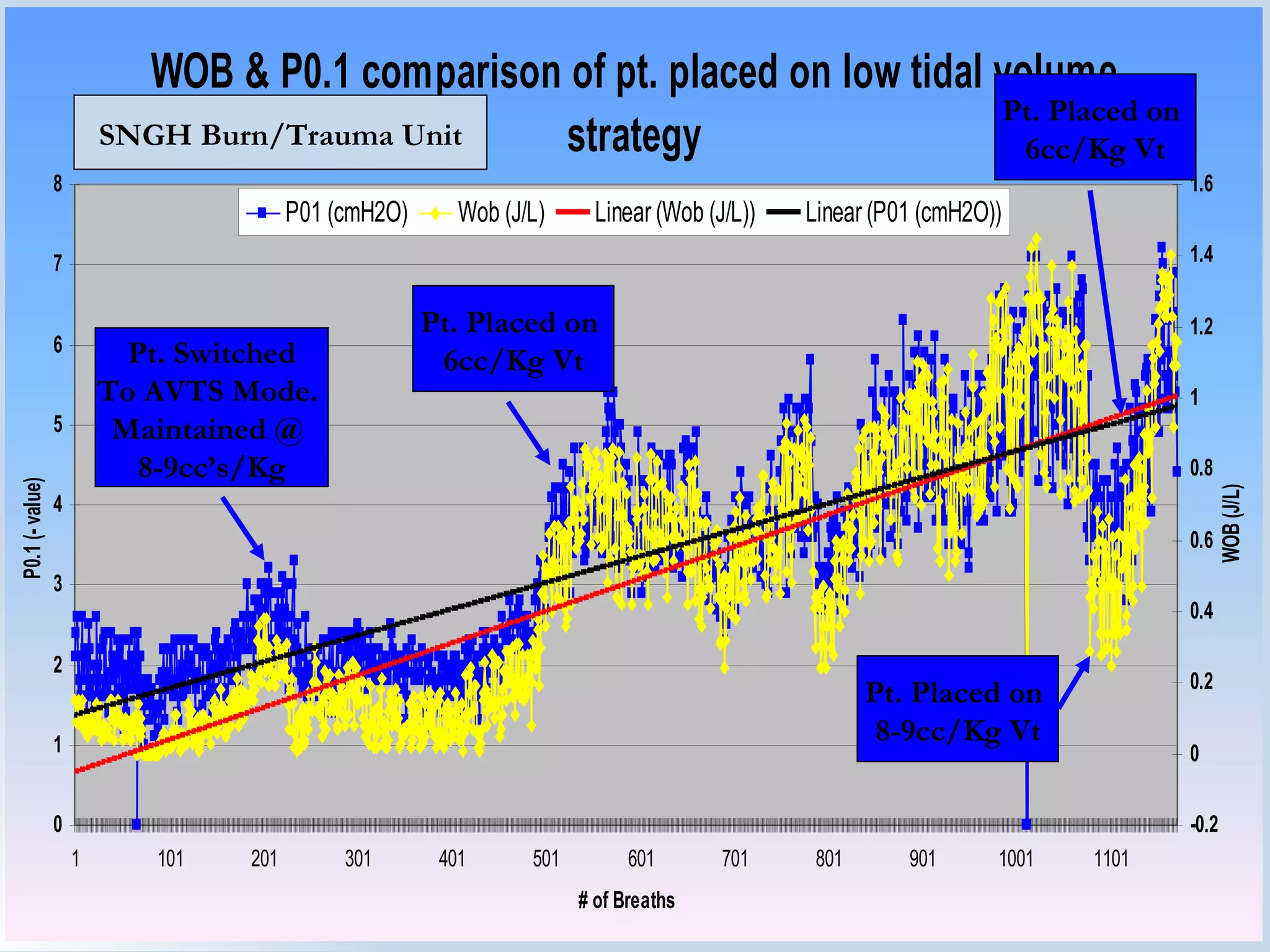
Pt. Switched To AVTS Mode.  Maintained @  8-9cc’s/Kg Pt. Placed on  6cc/Kg Vt Pt. Placed on  8-9cc/Kg Vt Pt. Placed on  6cc/Kg Vt SNGH Burn/Trauma Unit
So what can we do to try to do it right?? Example:  Patient with ALI/ARDS Steps to take to minimize progression of syndrome Minimize FIO2, make all attempts to decrease FIO2  < 60%.  Management and consideration of Vt Management of PEEP
How to set PEEP  Use PEEP FIO2 table from ARDSnet study FiO2  .3  .4  .4  .5  .5  .6  .7  .7  .7  .8  .9  .9  .9  1.0 PEEP  5  5  8  8  10  10  10  12  14  14 14  16  18 18-24 This table is designed to be appropriate for the average patient, but sometimes PEEP needs to be individualized
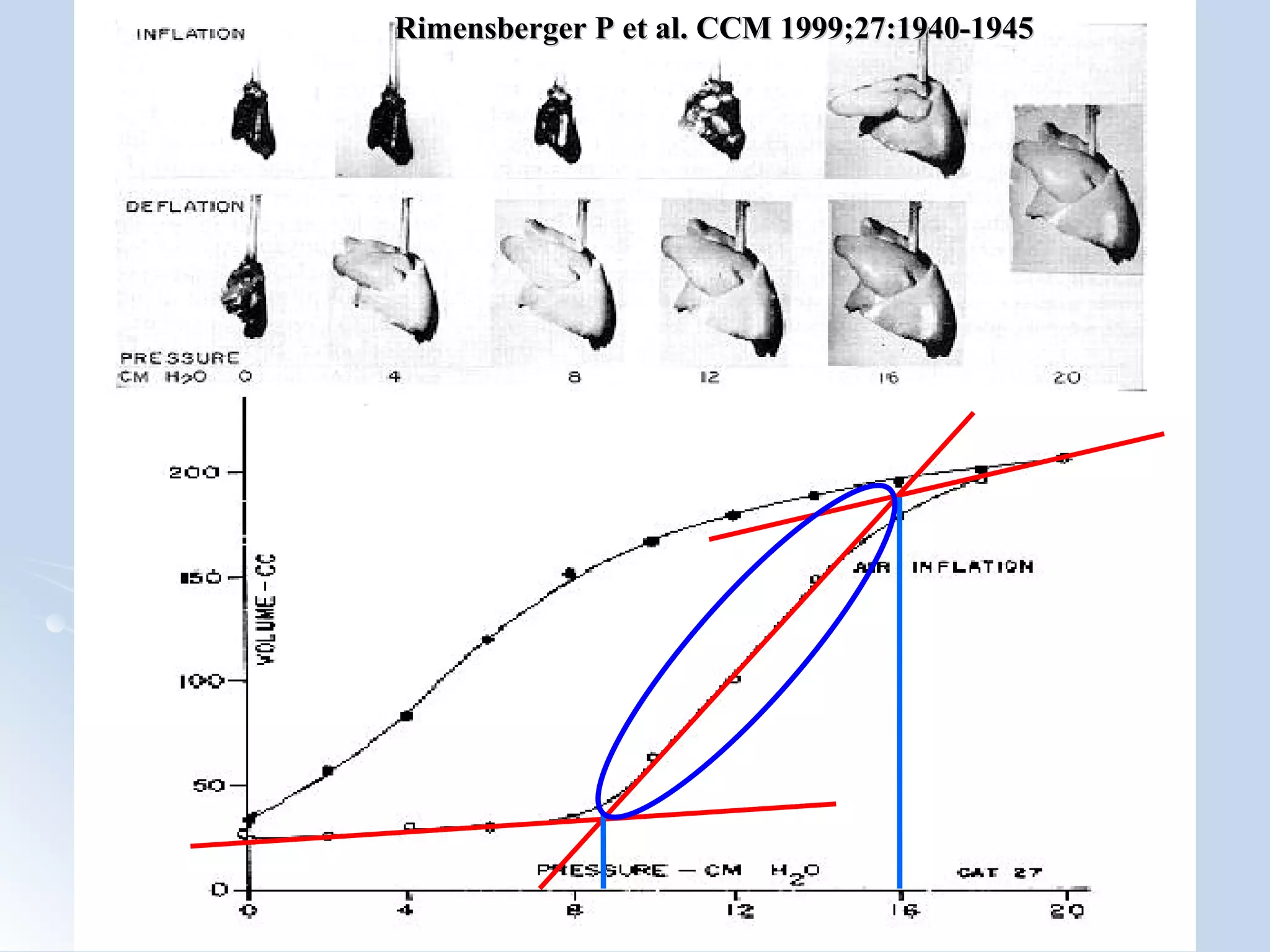
How to set PEEP  Use PEEP FIO2 table from ARDSnet study Set PEEP based off Lower Inflection point (pflex)
Rimensberger P et al. CCM 1999;27:1940-1945
Crit Care Med 2006 Vol. 34, No. 5
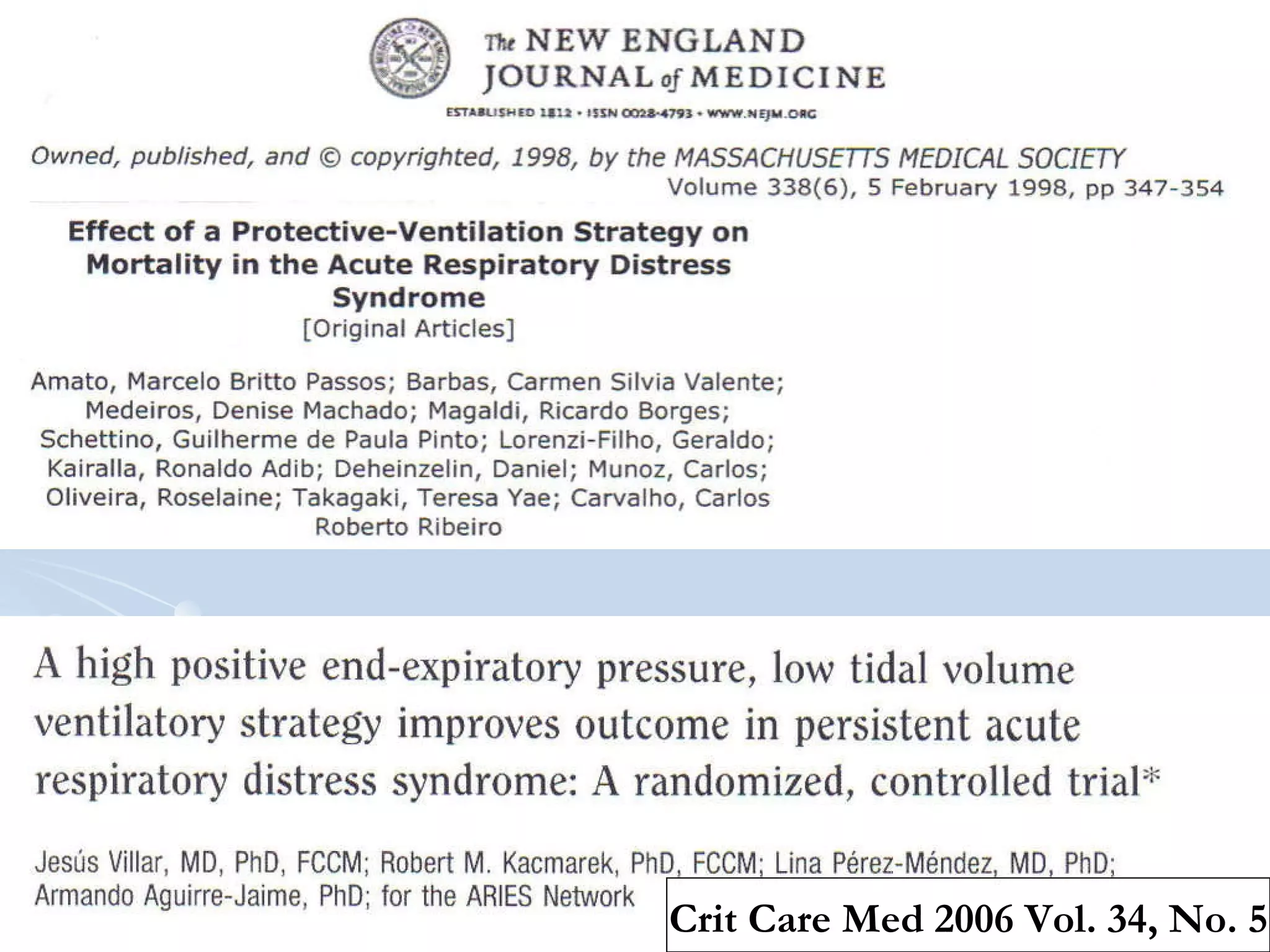
Villar, et al. Crit Care Med 2006  Vol. 34, No. 5 Amato, M. et al. 1998. NEJM
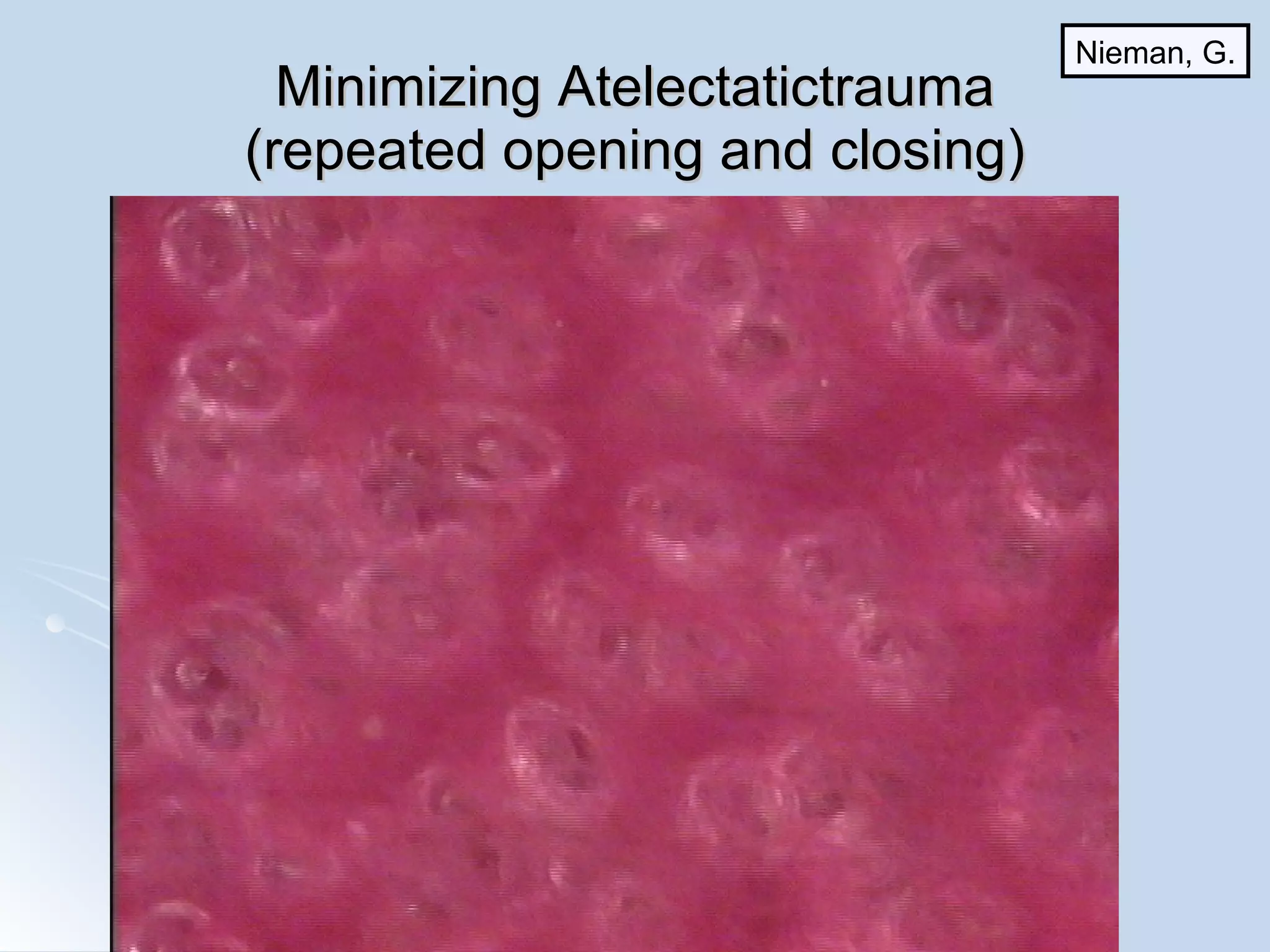
Minimizing Atelectatictrauma (repeated opening and closing) Nieman, G.
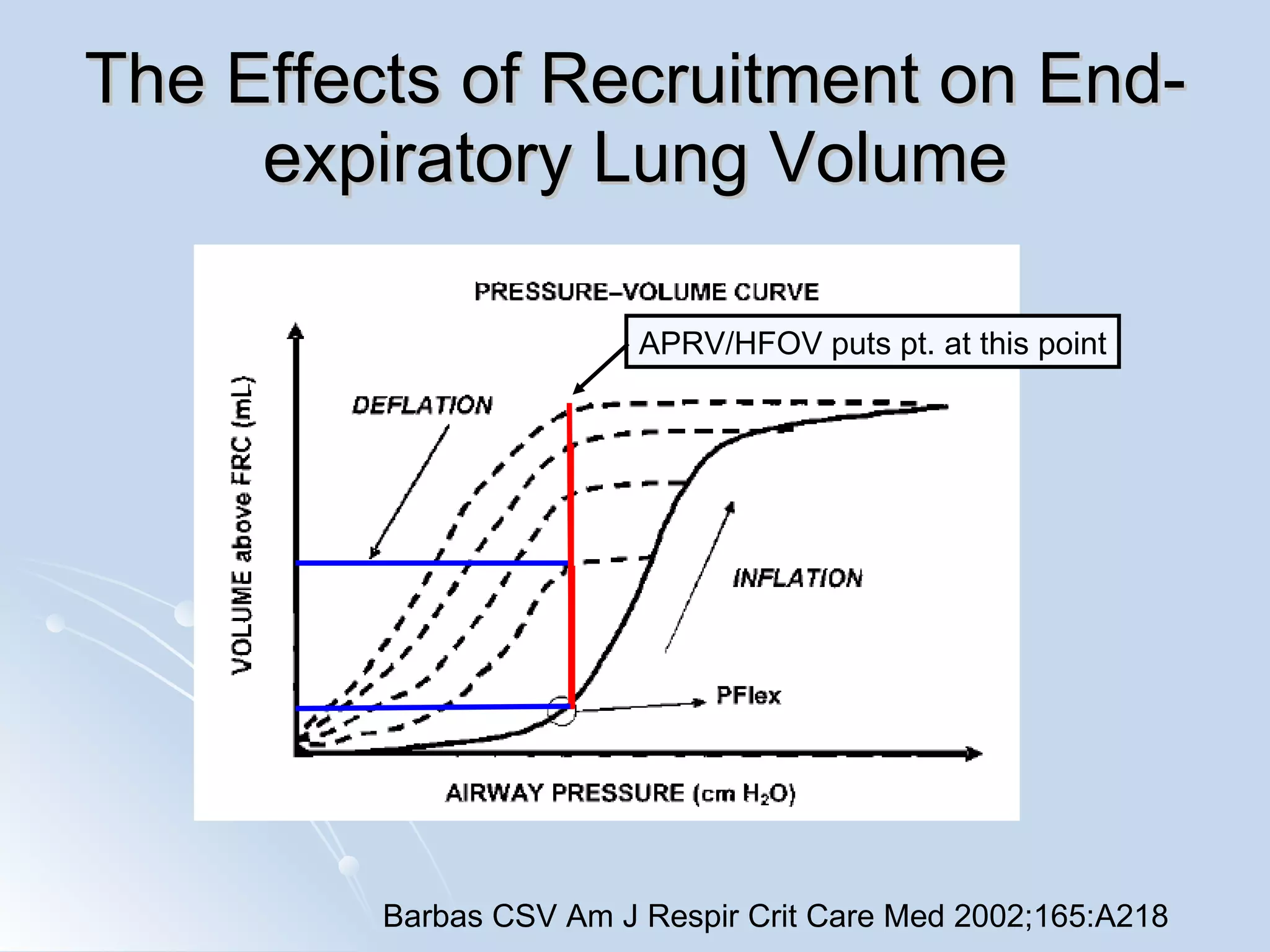
How to manage PEEP  Use PEEP FIO2 table from ARDSnet study Set PEEP based off Lower Inflection point (pflex) +1-2cm Set PEEP based off Point of maximum Curvature or recruitable lung volume via deflation limb of PV curve
The Effects of Recruitment on End-expiratory Lung Volume Barbas CSV Am J Respir Crit Care Med 2002;165:A218 APRV/HFOV puts pt. at this point
Hickling K.  AJRCCM  2001;163:69-78.  APRV/HFOV puts pt. at this point
Rimensberger P et al. CCM 1999;27:1940-1945
+350 cc’s
 
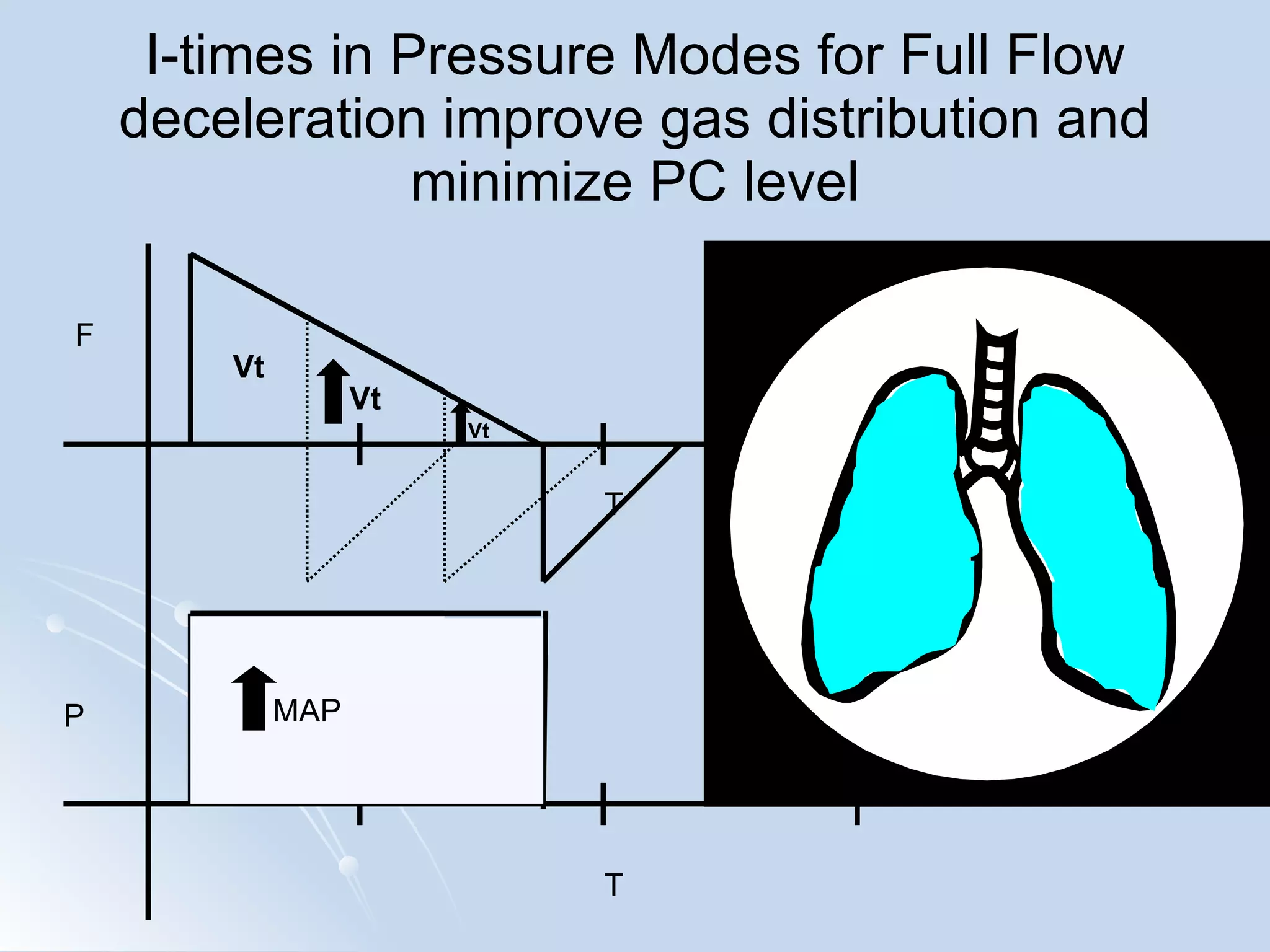
Maximizing a current modality Not how much but HOW! Pressure Modes:  Use of Flow Time pattern for adequate inspiratory phase to improve gas distribution and minimize level of pressure needed for ventilation
I-times in Pressure Modes for Full Flow deceleration improve gas distribution and minimize PC level F T P T MAP MAP Vt Vt
I-times in Pressure Modes for Full Flow deceleration improve gas distribution and minimize PC level F T P T MAP Vt Vt
I-times in Pressure Modes for Full Flow deceleration improve gas distribution and minimize PC level F T P T MAP Vt Min.Insp. Pressure Adjustments  Needed Vt Vt
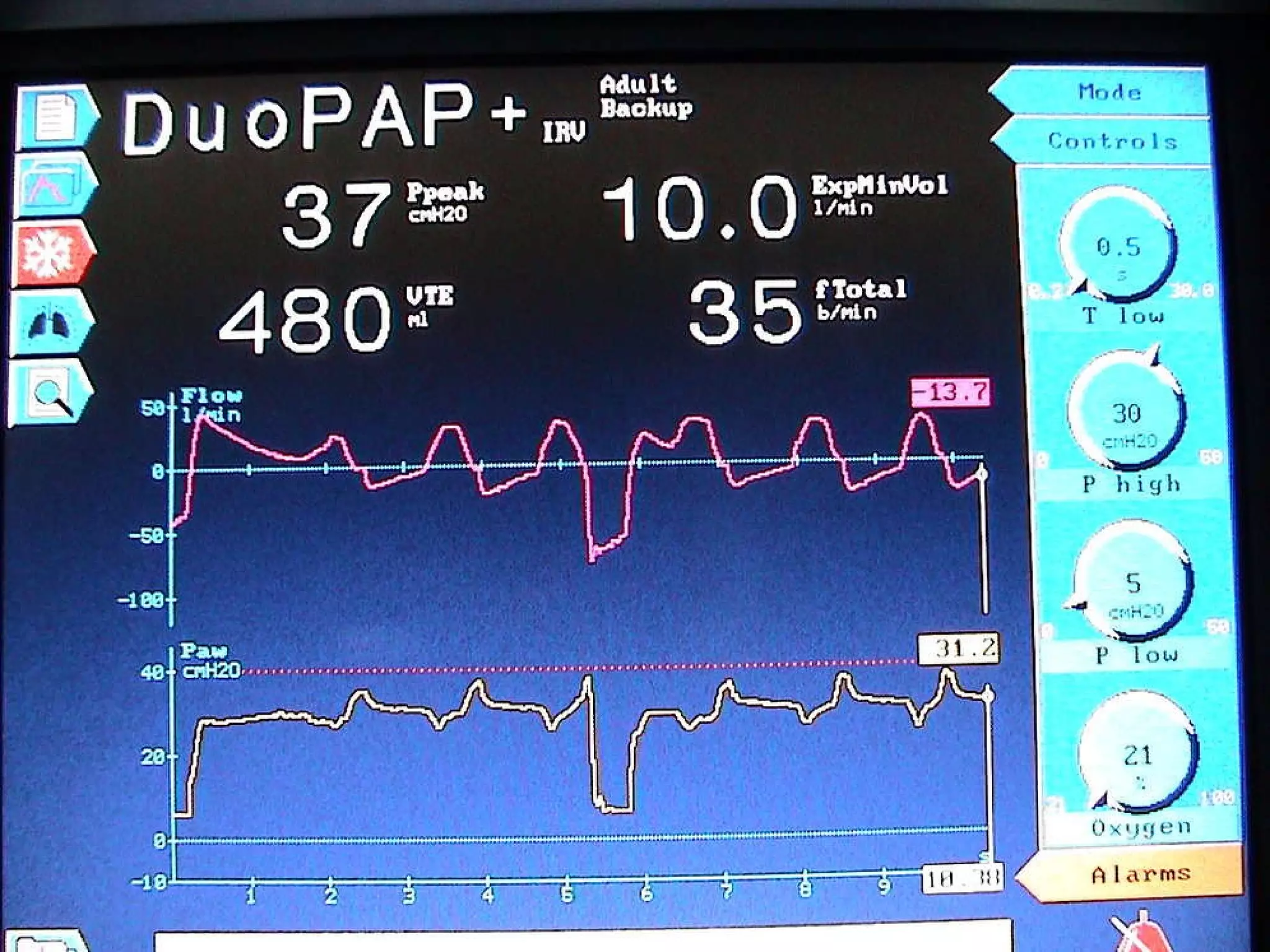
Maximizing a current or alternative modality Not how much but HOW! Pressure Modes:  Use of Flow Time pattern for adequate inspiratory phase to improve gas distribution and minimize level of pressure needed for ventilation Use of Airway Pressure Release Ventilation (APRV), HFOV, Jet Ventilation
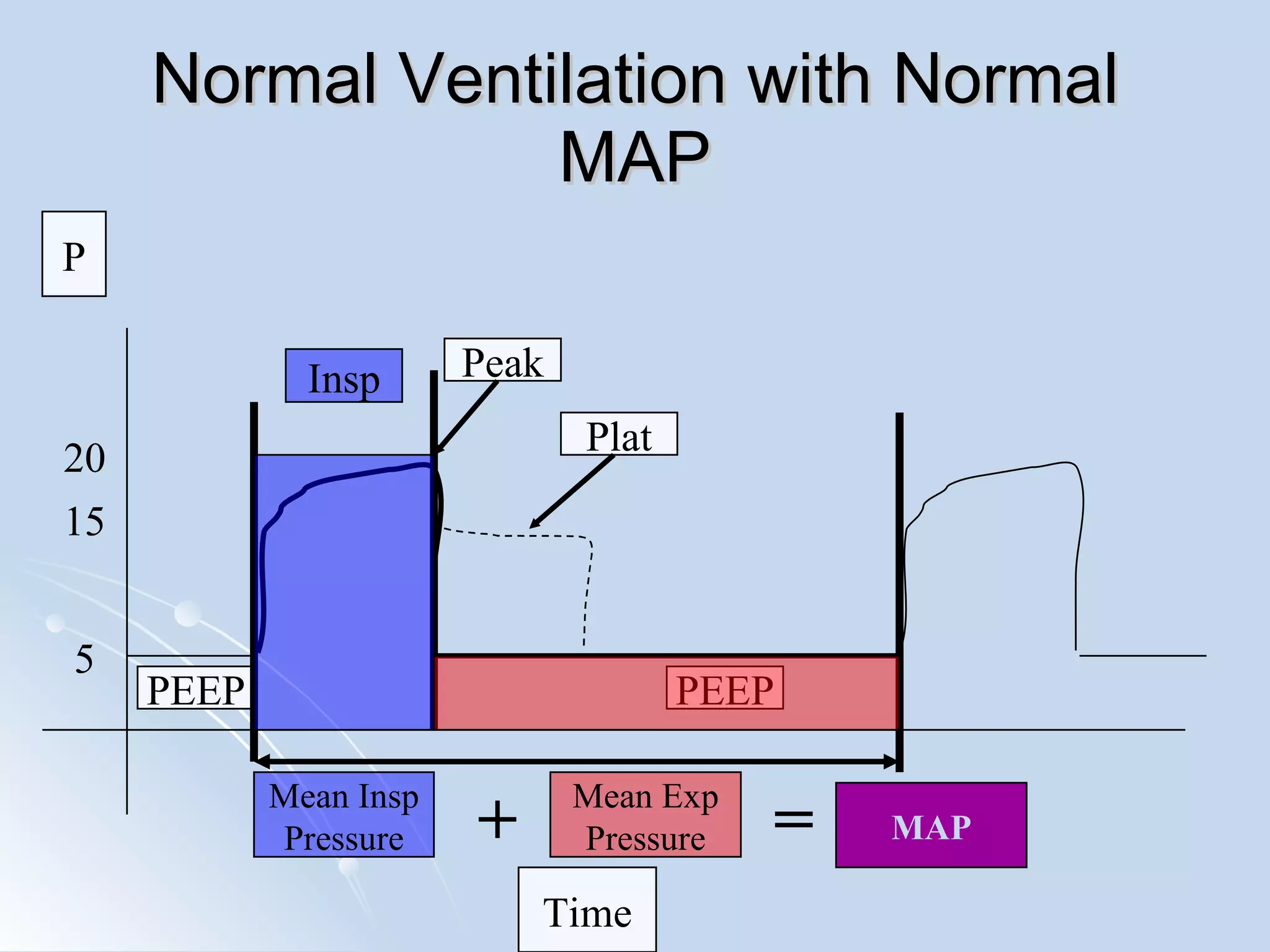
Normal Ventilation with Normal MAP P Time PEEP PEEP Plat Peak Insp Mean Insp Pressure Mean Exp Pressure + = MAP 5 20 15
Increase in Insp. Pressure What will happen to MAP? P Time PEEP PEEP Plat Peak Insp Mean Insp Pressure Mean Exp Pressure + = MAP 5 20 15 25
Increase in Insp. Pressure What will happen to  Plat ? P Time PEEP PEEP Plat Peak Insp Mean Insp Pressure Mean Exp Pressure + = MAP 5 20 15 25
Increase in PEEP, What will happen to MAP & Plat? P Time PEEP PEEP Plat Peak Insp Mean Insp Pressure Mean Exp Pressure + = MAP 5 20 15 10
APRV (Basically inverse Ratio with Spont. Breathing during insp. Phase.)  Can Increase MAP and keep safe Plat. & spont. Breath. P Time PEEP PEEP Plat Peak Insp Mean Insp Pressure Mean Exp Pressure + = MAP 5 20 15 = If Flow is Fully dec. Spontaneous Breaths
 
Summary Understand disease type, what is cause for inflammation of the Lung Manage FIO2  < 60% with PaO2  > 60mmHg & SpO2  > 88% Manage Vt (4-8cc/KgIBW) & Plateau Pressure  < 30cmH2O to minimize stretch on good and bad alveoli.  >9cc/Kg IBW in non ARDS patients increases incidence of ALI developement Commericial Vents actually incorporate an automatic Lung Protective Strategy (Hamilton Galileo/ASV Mode & Drager Evita XL)
Summary PEEP can be managed by multiple options, Goal is to prevent repeated alveolar opening and closing, and proper recruitment of dependent lung units Alternative Modes can improve specific indices, but lack appropriate randomized clinical trials for universal acceptance Optimize settings to improve gas distribution on conventional modes
Thank Y’all for having me!!

Lung protective strategies grooms

  • 1.
    Lung Protective Strategies:The Effects of Vt, PEEP & Alveolar Recruitment David Grooms BS, RRT Sentara Norfolk General, Leigh & Bayside Hospitals
  • 2.
    Understanding ARDS……. 2Types Extrapulmonary ARDS (In-direct) Pulmonary ARDS (Direct)
  • 3.
    Identifying ARDS…….2 Types?Pulmonary ARDS (Direct) Pneumonia: Bacterial or Viral Inhalation of noxious agent Aspiration of Gastric Contents Isolated pulmonary contusion Fat Embolus syndrome Extrapulmonary ARDS (In-direct) Multi-system Trauma Transfusion related ALI Acute pancreatitis Sepsis Post- CABG surgery Hemorrahagic shock Kallet, R & Branson, R. Resp. Care Journal, Apr 2007, Vol 52 No 4
  • 4.
    Characteristics of ExtrapulmonaryARDS (In-direct) Viera et al. Am J Respir Crit Care Med 1998:158
  • 5.
    Contrasts between 2types of ARDS Kallet, R & Branson, R. Resp. Care Journal, Apr 2007, Vol 52 No 4 >10 usually present Lower inflec. Pt Severely Reduced Reduced Lung Compl. Response to PEEP Recruitment Potential Risk of overdistention Normal Reduced Chest Wall Compliance Pulmonary ARDS Extrapulmonary ARDS Mechanics
  • 6.
    Characteristics of ExtrapulmonaryARDS (In-direct) Viera et al. Am J Respir Crit Care Med 1998:158
  • 7.
    Contrasts between 2types of ARDS Kallet, R & Branson, R. Resp. Care Journal, Apr 2007, Vol 52 No 4 >10 usually present Lower inflec. Pt Severely Reduced Reduced Lung Compl. Response to PEEP Recruitment Potential Low Risk of overdistention Normal Reduced Chest Wall Compliance Pulmonary ARDS Extrapulmonary ARDS Mechanics
  • 8.
    Characteristics of ExtrapulmonaryARDS (In-direct) Viera et al. Am J Respir Crit Care Med 1998:158
  • 9.
    Contrasts between 2types of ARDS Kallet, R & Branson, R. Resp. Care Journal, Apr 2007, Vol 52 No 4 >10 usually present Lower inflec. Pt Severely Reduced Reduced Lung Compl. Excellent (10-20 cm) Response to PEEP High Recruitment Potential Low Risk of overdistention Normal Reduced Chest Wall Compliance Pulmonary ARDS Extrapulmonary ARDS Mechanics
  • 10.
    Characteristics of ExtrapulmonaryARDS (In-direct) Viera et al. Am J Respir Crit Care Med 1998:158
  • 11.
    Contrasts between 2types of ARDS Kallet, R & Branson, R. Resp. Care Journal, Apr 2007, Vol 52 No 4 <10 cm often absent >10 usually present Lower inflec. Pt Severely Reduced Reduced Lung Compl. Excellent (10-20cm) Response to PEEP High Recruitment Potential Low Risk of overdistention Normal Reduced Chest Wall Compliance Pulmonary ARDS Extrapulmonary ARDS Mechanics
  • 12.
    Characteristics of PulmonaryARDS (Direct) Viera et al. Am J Respir Crit Care Med 1998:158
  • 13.
    Contrasts between 2types of ARDS Kallet, R & Branson, R. Resp. Care Journal, Apr 2007, Vol 52 No 4 <10 cm often absent >10 usually present Lower inflec. Pt Severely Reduced Reduced Lung Compl. Excellent (10-20cm) Response to PEEP High Recruitment Potential High Low Risk of overdistention Normal Reduced Chest Wall Compliance Pulmonary ARDS Extrapulmonary ARDS Mechanics
  • 14.
    Characteristics of PulmonaryARDS (Direct) Viera et al. Am J Respir Crit Care Med 1998:158
  • 15.
    ARDS CTand PV Curve (slow inflation) # 6 -10 0 10
  • 16.
    ARDS CTand PV Curve (slow inflation) # 7
  • 17.
    ARDS CTand PV Curve (slow inflation) # 8
  • 18.
    ARDS CTand PV Curve (slow inflation) # 9
  • 19.
    ARDS CTand PV Curve (slow inflation) # 10
  • 20.
    ARDS CTand PV Curve (slow inflation) # 11
  • 21.
    ARDS CTand PV Curve (slow inflation ) # 12
  • 22.
    ARDS CTand PV Curve (slow inflation) # 13
  • 23.
    ARDS CTand PV Curve (slow inflation) # 14
  • 24.
    ARDS CTand PV Curve (slow inflation) # 15
  • 25.
    ARDS CTand PV Curve (slow inflation) # 16
  • 26.
    ARDS CTand PV Curve (slow inflation) # 17
  • 27.
    ARDS CTand PV Curve (slow inflation) # 18
  • 28.
    ARDS CTand PV Curve (slow inflation) # 19
  • 29.
    ARDS CTand PV Curve (slow inflation) # 20
  • 30.
    ARDS CTand PV Curve (slow inflation) # 21
  • 31.
    ARDS CTand PV Curve (slow inflation) # 22
  • 32.
    ARDS CTand PV Curve (slow inflation) # 23
  • 33.
    ARDS CTand PV Curve (slow inflation) # 24
  • 34.
    ARDS CTand PV Curve (slow inflation) # 25
  • 35.
    ARDS CTand PV Curve (slow inflation) # 26
  • 36.
    ARDS CTand PV Curve (slow inflation) # 27
  • 37.
    ARDS CTand PV Curve (slow inflation) # 28
  • 38.
    ARDS CTand PV Curve (slow inflation) # 29
  • 39.
    ARDS CTand PV Curve (slow inflation) # 30
  • 40.
    ARDS CTand PV Curve (slow inflation) # 31
  • 41.
    ARDS CTand PV Curve (slow inflation) # 32
  • 42.
    ARDS CTand PV Curve (slow inflation) # 33
  • 43.
    ARDS CTand PV Curve (slow inflation) # 34
  • 44.
    ARDS CTand PV Curve (slow inflation) # 35
  • 45.
    ARDS CTand PV Curve (slow inflation) # 36
  • 46.
    ARDS CTand PV Curve (slow inflation) # 37
  • 47.
    ARDS CTand PV Curve (slow inflation) # 38
  • 48.
    ARDS CTand PV Curve (slow inflation) # 39
  • 49.
    ARDS CTand PV Curve (slow inflation) # 40
  • 50.
    ARDS CTand PV Curve (slow inflation) # 41
  • 51.
    ARDS CTand PV Curve (slow inflation) # 42
  • 52.
    ARDS CTand PV Curve (slow inflation) # 43
  • 53.
    ARDS CTand PV Curve (slow inflation) # 44
  • 54.
    ARDS CTand PV Curve (slow inflation) # 45
  • 55.
    ARDS CTand PV Curve (slow inflation) # 46
  • 56.
    ARDS CTand PV Curve (slow inflation) # 47
  • 57.
    ARDS CTand PV Curve (slow inflation) # 48
  • 58.
    ARDS CTand PV Curve (slow inflation) # 49
  • 59.
    ARDS CTand PV Curve (slow inflation) # 50
  • 60.
    ARDS CTand PV Curve (slow inflation) # 51
  • 61.
    ARDS CTand PV Curve (slow inflation) # 52
  • 62.
    ARDS CTand PV Curve (slow inflation) # 53
  • 63.
    ARDS CTand PV Curve (slow inflation) # 54
  • 64.
    ARDS CTand PV Curve (slow inflation) # 55
  • 65.
    ARDS CTand PV Curve (slow inflation) # 56
  • 66.
    ARDS CTand PV Curve (slow inflation) # 57
  • 67.
    ARDS CTand PV Curve (slow inflation) # 58
  • 68.
    ARDS CTand PV Curve (slow inflation) # 59
  • 69.
    ARDS CTand PV Curve (slow inflation) # 60
  • 70.
    Contrasts between 2types of ARDS Kallet, R & Branson, R. Resp. Care Journal, Apr 2007, Vol 52 No 4 <10 cm often absent >10 usually present Lower inflec. Pt Severely Reduced Reduced Lung Compl. Excellent (10-20cm) Response to PEEP Low High Recruitment Potential High Low Risk of overdistention Normal Reduced Chest Wall Compliance Pulmonary ARDS Extrapulmonary ARDS Mechanics
  • 71.
    Characteristics of PulmonaryARDS (Direct) Viera et al. Am J Respir Crit Care Med 1998:158
  • 72.
    Contrasts between 2types of ARDS Kallet, R & Branson, R. Resp. Care Journal, Apr 2007, Vol 52 No 4 <10 cm often absent >10 usually present Lower inflec. Pt Severely Reduced Reduced Lung Compl. Good (8-12cm) Excellent (10-20cm) Response to PEEP Low High Recruitment Potential High Low Risk of overdistention Normal Reduced Chest Wall Compliance Pulmonary ARDS Extrapulmonary ARDS Mechanics
  • 73.
    Characteristics of PulmonaryARDS (Direct) Viera et al. Am J Respir Crit Care Med 1998:158
  • 74.
    Effects of Mechanical/PhysicalStretch on Rat Alveolar Epithelial Cells Tschumperlin, D et al. Am J Respir Crit Care Med, Vol 162. pp 357-362, 2000 Excised Rat lungs Placed Alveolar Epithelial Cells in a “cell-stretching device”
  • 75.
    Tschumperlin, D etal. Am J Respir Crit Care Med, Vol 162. pp 357-362, 2000
  • 76.
    Tschumperlin, D etal. Am J Respir Crit Care Med, Vol 162. pp 357-362, 2000 Both static and single deformations were significantly less injurious than cyclic deformations at each deformation level
  • 77.
    Tschumperlin, D etal. Am J Respir Crit Care Med, Vol 162. pp 357-362, 2000 Reducing the amplitude reduced cell death Cell Death dependent on frequency
  • 78.
  • 79.
    ARDS Network Multicenter,Randomized trial 861 Patients recruited from March 1996 through March 1999 at 10 university centers. Patients enrolled if: 1) They were receiving mechanical ventilation 2) Had acute decrease in the P/F ratio (<300) 3) Bilateral pulmonary infiltrates on a chest radiograph consistent with the presence of edema 4) No clinical evidence of left atrial hypertension or if measure a PCWP<18mmHg .
  • 80.
  • 81.
    Results Trial wasstopped after fourth interim analysis. Mortality rates 12 cc/Kg VT group- 39.8% 6cc/Kg Vt group- 31.0% Mortality decreased by 22% Vt & Plat were significantly lower Question to you- What group had better PaO2’s? 12 & they died more often- so better PaO2 does not translate into better outcomes
  • 82.
    What did wedo then? We were skeptical at the results. Didn’t like it because Vt was so low. Also questioned that mortality could have been better if more PEEP was used or use of Recruitment Maneuvers. Did we interpret the results of the studies right???
  • 83.
    Lower PEEP/Higher FiO2 FiO 2 .3 .4 .4 .5 .5 .6 .7 .7 .7 .8 .9 .9 .9 1.0 PEEP 5 5 8 8 10 10 10 12 14 14 14 16 18 18-24 Higher PEEP/Lower FiO 2 FiO 2 .3 .3 .4 .4 .5 .5 .5-.8 .8 .9 1.0 PEEP 12 14 14 16 16 18 20 22 22 22-24 Target enrollment- 750 ALI, ARDS pts.
  • 84.
    Recruitment Maneuver AttemptsRM’s were performed on the first 80 patients assigned to the higher PEEP group. 1 or 2 manuevers per day @ 35-40cmH2O for 30 seconds. Mean increase in O2sat was “small & transient.” Therefore RM were DC’d for the remainder of the trial.
  • 85.
    Results Trial stopped@ the 2 nd interim analysis after 549 pts. Had been enrolled. Stopped based on the specified futility stopping rule. Surprising Results ESSENTIALLY NO DIFFERENCE IN OUTCOMES (MORTALITY)
  • 86.
    Interpretation….. PEEP doesnot improve mortality of ARDS patients. Added to our own confusion Now what do we do if PEEP doesn’t help survival Instead of developing my own interpretation of the results, I will wait around until someone shows me the right way to do it. Do our dirty work for us!!!
  • 87.
    So what canwe do to try to do it right?? Question aspects of personal satisfaction vs. patient overall satisfaction VS I got the PaO2 up from 70-80 by turning the Vt up to 1200cc. You know I am the man right? Wow, awesome job, I will try to get it higher than you did today! You are the man
  • 88.
    So what canwe do to try to do it right?? Example: Patient with ALI/ARDS Steps to take to minimize progression of syndrome Minimize FIO2, make all attempts to decrease FIO2 < 60%.
  • 89.
    Oxygen Dissociation CurveARDSnet Study 88-94% PaO2 55-80
  • 90.
    So what canwe do to try to do it right?? Example: Patient with ALI/ARDS Steps to minimize progression of disease/syndrome Minimize FIO2, make all attempts to decrease FIO2 < 60%. Management and consideration of Vt
  • 91.
    Can mechanical ventilationactually produce lung injury? Webb & Tierney, 1974, Am Rev Respir Dis 110:556-565
  • 92.
    Key Findings ofthe study Healthy Lungs with low PIP does not cause lung injury Ventilation with high PIP (30-45) & no PEEP produces perivascular edema & leads to severe injury. PEEP provides protection from alveolar edema due to high PIP. Webb & Tierney, 1974, Am Rev Respir Dis 110:556-565
  • 93.
  • 94.
    Take Home MinimizeStretching of Healthy Alveoli by reducing Vt or Plat pressure. OK but what about patients that do not have ALI/ARDS??
  • 95.
    Crit Care Med2004 Vol. 32, No. 9
  • 96.
    Results VT’s above9cc/Kg cause VILI in non- ARDS patients. The incidence of VILI is higher in pts. who get >9cc/Kg VT. & blood transfusions. What if I go too low on the Vt because I am trying to protect?
  • 97.
    Pt. Switched ToAVTS Mode. Maintained @ 8-9cc’s/Kg Pt. Placed on 6cc/Kg Vt Pt. Placed on 8-9cc/Kg Vt Pt. Placed on 6cc/Kg Vt SNGH Burn/Trauma Unit
  • 98.
    So what canwe do to try to do it right?? Example: Patient with ALI/ARDS Steps to take to minimize progression of syndrome Minimize FIO2, make all attempts to decrease FIO2 < 60%. Management and consideration of Vt Management of PEEP
  • 99.
    How to setPEEP Use PEEP FIO2 table from ARDSnet study FiO2 .3 .4 .4 .5 .5 .6 .7 .7 .7 .8 .9 .9 .9 1.0 PEEP 5 5 8 8 10 10 10 12 14 14 14 16 18 18-24 This table is designed to be appropriate for the average patient, but sometimes PEEP needs to be individualized
  • 100.
    How to setPEEP Use PEEP FIO2 table from ARDSnet study Set PEEP based off Lower Inflection point (pflex)
  • 101.
    Rimensberger P etal. CCM 1999;27:1940-1945
  • 102.
    Crit Care Med2006 Vol. 34, No. 5
  • 103.
    Villar, et al.Crit Care Med 2006 Vol. 34, No. 5 Amato, M. et al. 1998. NEJM
  • 104.
    Minimizing Atelectatictrauma (repeatedopening and closing) Nieman, G.
  • 105.
    How to managePEEP Use PEEP FIO2 table from ARDSnet study Set PEEP based off Lower Inflection point (pflex) +1-2cm Set PEEP based off Point of maximum Curvature or recruitable lung volume via deflation limb of PV curve
  • 106.
    The Effects ofRecruitment on End-expiratory Lung Volume Barbas CSV Am J Respir Crit Care Med 2002;165:A218 APRV/HFOV puts pt. at this point
  • 107.
    Hickling K. AJRCCM 2001;163:69-78. APRV/HFOV puts pt. at this point
  • 108.
    Rimensberger P etal. CCM 1999;27:1940-1945
  • 109.
  • 110.
  • 111.
    Maximizing a currentmodality Not how much but HOW! Pressure Modes: Use of Flow Time pattern for adequate inspiratory phase to improve gas distribution and minimize level of pressure needed for ventilation
  • 112.
    I-times in PressureModes for Full Flow deceleration improve gas distribution and minimize PC level F T P T MAP MAP Vt Vt
  • 113.
    I-times in PressureModes for Full Flow deceleration improve gas distribution and minimize PC level F T P T MAP Vt Vt
  • 114.
    I-times in PressureModes for Full Flow deceleration improve gas distribution and minimize PC level F T P T MAP Vt Min.Insp. Pressure Adjustments Needed Vt Vt
  • 115.
    Maximizing a currentor alternative modality Not how much but HOW! Pressure Modes: Use of Flow Time pattern for adequate inspiratory phase to improve gas distribution and minimize level of pressure needed for ventilation Use of Airway Pressure Release Ventilation (APRV), HFOV, Jet Ventilation
  • 116.
    Normal Ventilation withNormal MAP P Time PEEP PEEP Plat Peak Insp Mean Insp Pressure Mean Exp Pressure + = MAP 5 20 15
  • 117.
    Increase in Insp.Pressure What will happen to MAP? P Time PEEP PEEP Plat Peak Insp Mean Insp Pressure Mean Exp Pressure + = MAP 5 20 15 25
  • 118.
    Increase in Insp.Pressure What will happen to Plat ? P Time PEEP PEEP Plat Peak Insp Mean Insp Pressure Mean Exp Pressure + = MAP 5 20 15 25
  • 119.
    Increase in PEEP,What will happen to MAP & Plat? P Time PEEP PEEP Plat Peak Insp Mean Insp Pressure Mean Exp Pressure + = MAP 5 20 15 10
  • 120.
    APRV (Basically inverseRatio with Spont. Breathing during insp. Phase.) Can Increase MAP and keep safe Plat. & spont. Breath. P Time PEEP PEEP Plat Peak Insp Mean Insp Pressure Mean Exp Pressure + = MAP 5 20 15 = If Flow is Fully dec. Spontaneous Breaths
  • 121.
  • 122.
    Summary Understand diseasetype, what is cause for inflammation of the Lung Manage FIO2 < 60% with PaO2 > 60mmHg & SpO2 > 88% Manage Vt (4-8cc/KgIBW) & Plateau Pressure < 30cmH2O to minimize stretch on good and bad alveoli. >9cc/Kg IBW in non ARDS patients increases incidence of ALI developement Commericial Vents actually incorporate an automatic Lung Protective Strategy (Hamilton Galileo/ASV Mode & Drager Evita XL)
  • 123.
    Summary PEEP canbe managed by multiple options, Goal is to prevent repeated alveolar opening and closing, and proper recruitment of dependent lung units Alternative Modes can improve specific indices, but lack appropriate randomized clinical trials for universal acceptance Optimize settings to improve gas distribution on conventional modes
  • 124.
    Thank Y’all forhaving me!!

Editor's Notes

  • #84 They even incorporated Recruitment maneuvers into
  • #92 Ventilating Rats