Anesthetic management in
COPD
Presenter-Dr.Mayank Singhal
Moderator-Dr. Virendra Kumar
• COPD is a common condition mainly related to smoking.
• It is characterized by progressive development of airflow limitation
that is not fully reversible.
• Patient with COPD pose a challenge to anesthesiologist because
intraoperative and post operative complications are more common in
this population.
• COPD can cause a increase length of hospital stay and mortality
COPD
• Chronic bronchitis
• Emphysema
• Peripheral airway disease
Not include
• Asthma , asthmaticbronchitis
• Cysticfibrosis
• Bronchiectasis
• Pulmonary fibrosis by other causes
DEFINITIONS
• Chronic Bronchitis: (Clinical Definition)-
Chronic productive cough for 3 months in each of 2 successive years in
a patient in whom other causes of productive chronic cough have been
excluded.
• Emphysema: (Pathological Definition)
The presence of permanent enlargement of the airspaces distal to the
terminal bronchioles, accompanied by destruction of their walls and
without obvious fibrosis.
COPD
Effects
• Pathological deterioration in elasticity or “recoil” within lung parenchyma
which normally maintain airway in an open position.
• Pathologic changes that decreases rigidity of bronchiolar wall and thus
predispose them to collapse during exhalation.
• An increase in gas velocity in narrowed bronchiole which lower pressure
inside bronchioli and further airway collapse.
• Active bronchospasm and obstruction resulting from increased pulmonary
secretions.
• Destruction of lung parenchyma,enlargement of air sacs and development
of emphysema.
Age Related Pulmonary Changes:
Pathological changes Effect Implications
Decreased efficiency of lung
parenchyma
Decreased VC
Increased RV
RespiratoryFailure
Decreased Muscle strength Decreased Compliance,FEV1 Poor cough
Infection
Alveolarseptal destruction Decreased alveolararea Decreased gas exchange
Brohchiolardamage Increased closing volume Air trapping
Decreased PaO2
Dilatedupper airways Increased dead space volume Decreased gas exchange
Decreased reactivity Decreased laryngeal reflexes
Decreased vent response to
hypoxia,hypercarbia
Increased Aspiration
Increased resp. failure
•Closing volume
Volume in the lung at which its smallest airways i.e the
respiratory bronchioles collapse.
Other patient factors
• Poor general condition and nutritional status
• Co morbid conditions
• HTN
• Diabetes
• Heart Disease
• Obesity
• Sleep Apnea
• Problems due to Anaesthesia:
• GA decreases lung volumes, promotes V/Q mismatch
• FRC is reduced during anaesthesia, CC parallels FRC
• Anaesthetic drugs blunt Ventilatory responses to hypoxia & CO2
• Postoperative Atelectasis & hypoxemia
• Postoperative pain limits coughing & lung expansion
• Problems due to Surgery:
• Site : most important predictor of Post op complications e.g. Abdomen or
thoracic surgery or emergency surgery have major risk than other surgeries
• Duration: > 2.5 hours
• Position during surgery
Pre-operative assessment:
History:
• Smoking
• Cough: Type, Progression, Recent RTI
• Sputum: Quantity, color, blood
• Dyspnea
• Poor Exercise tolerance
• Occupation, Allergies
• Symptomsof cardiac or respiratory failure
Pre-operative assessment: Examination
Physical Examination:
Airway obstruction
• hyperinflation of chest, Barrel shaped chest
• Decreased breath sounds
• Expiratory ronchis
• Prolonged expiration
↑WOB
• ↑ RR, ↑HR
• Use of Accessory muscles
• Tracheal tug
• Intercostalindrawing
• Tripod sitting posture
• Body Habitus
Obesity/ Malnourished
• Active infection
• Sputum- change in quantity, nature
• Fever
• Crepitations
Respiratory failure
Hypercapnia
Hypoxia
Cyanosis
Cor Pulmonale and Right heart failure
Dependant edema
tender enlarged liver
Pulmonary hypertension
Loud P2
Right Parasternal heave
Tricuspid regurgitation
Pre-operative assessment: Examination
PULMONARY FUNCTION TEST
• Does not reliably predict the likelihood of post operative pulmonary
complications
• Clinical findings are more predictive of pulmonary complications than
spirometry results
• PFT should be viewed as a management to optimize preoperative
pulmonary function but not as a mean to predict risk
• Patient with mild pulmonary disease undergoing peripheral surgery
do not require PFT.
INDICATIONS of PFT
• Hypoxemia on room air or the need for home oxygen therapy without
a known cause
• A bicarb conc. Of more than 33mEq/l or Pco2 of more than 50mm Hg
in patient whose pulmonary disease has not been previously
evaluated.
• A h/o respiratory failure due to a problem that still exist
• Severe shortness of breath attributed to a respiratory cause
• Planned pneumonectomy
• If there is need to determine response to bronchodilators
• Suspected pulmonary hypertension
• Surgery of upper abdomen, thorax or surgical duration ˃4 hour
Pulmonary Function Tests:
Measuremen
t
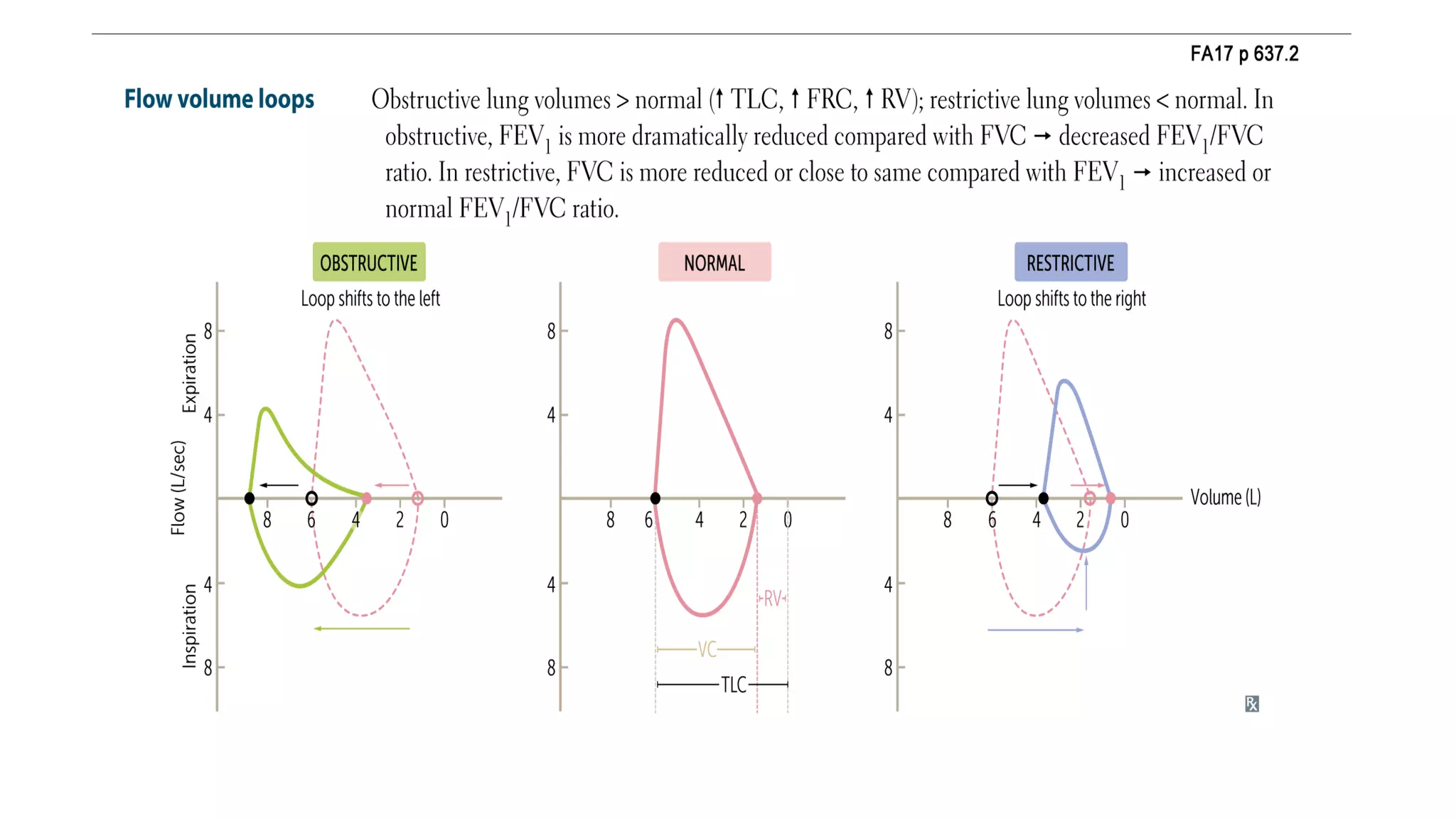
Normal Obstructive Restrictive
FVC (L) 80% of TLC (4800)   
FEV1 (L) 80% of FVC ↓↓ 
FEV1/FVC(%) 75- 85% ↓ N to 
FEV25%-75%(L/sec) 4-5 L/ sec  N to 
PEF(L/sec) 450- 700 L/min  N to 
Slope of FV
curve
 
MVV(L/min) 160-180 L/min  N to 
TLC 6000 ml N to  
RV 1500 mL  
RV/TLC(%) 0.25  N
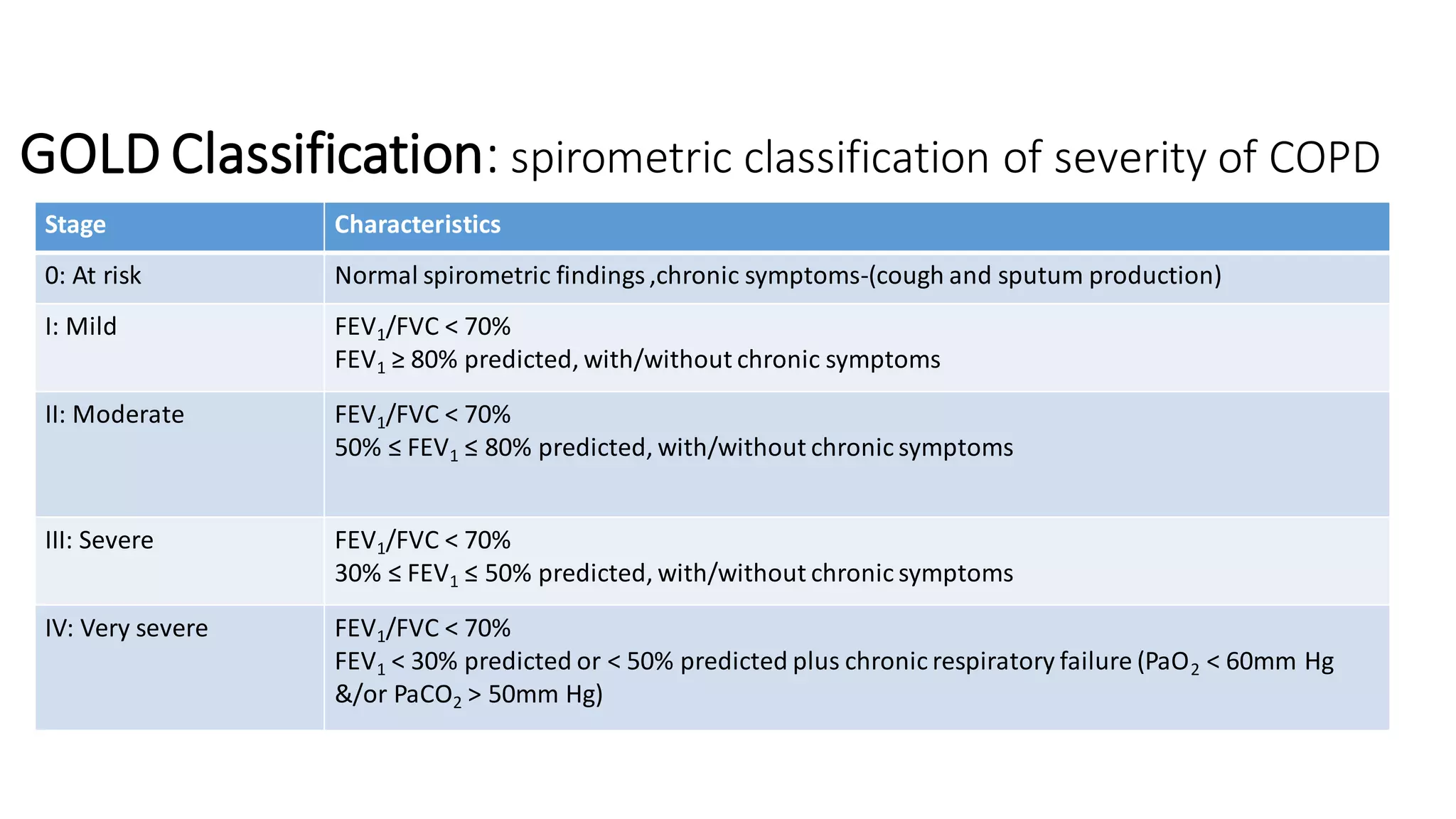
GOLD Classification: spirometric classification of severity of COPD
Stage Characteristics
0: At risk Normal spirometric findings,chronic symptoms-(cough and sputum production)
I: Mild FEV1/FVC < 70%
FEV1 ≥ 80% predicted, with/without chronic symptoms
II: Moderate FEV1/FVC < 70%
50% ≤ FEV1 ≤ 80% predicted, with/without chronic symptoms
III: Severe FEV1/FVC < 70%
30% ≤ FEV1 ≤ 50% predicted, with/without chronic symptoms
IV: Very severe FEV1/FVC < 70%
FEV1 < 30% predicted or < 50% predicted plus chronic respiratory failure (PaO2 < 60mm Hg
&/or PaCO2 > 50mm Hg)
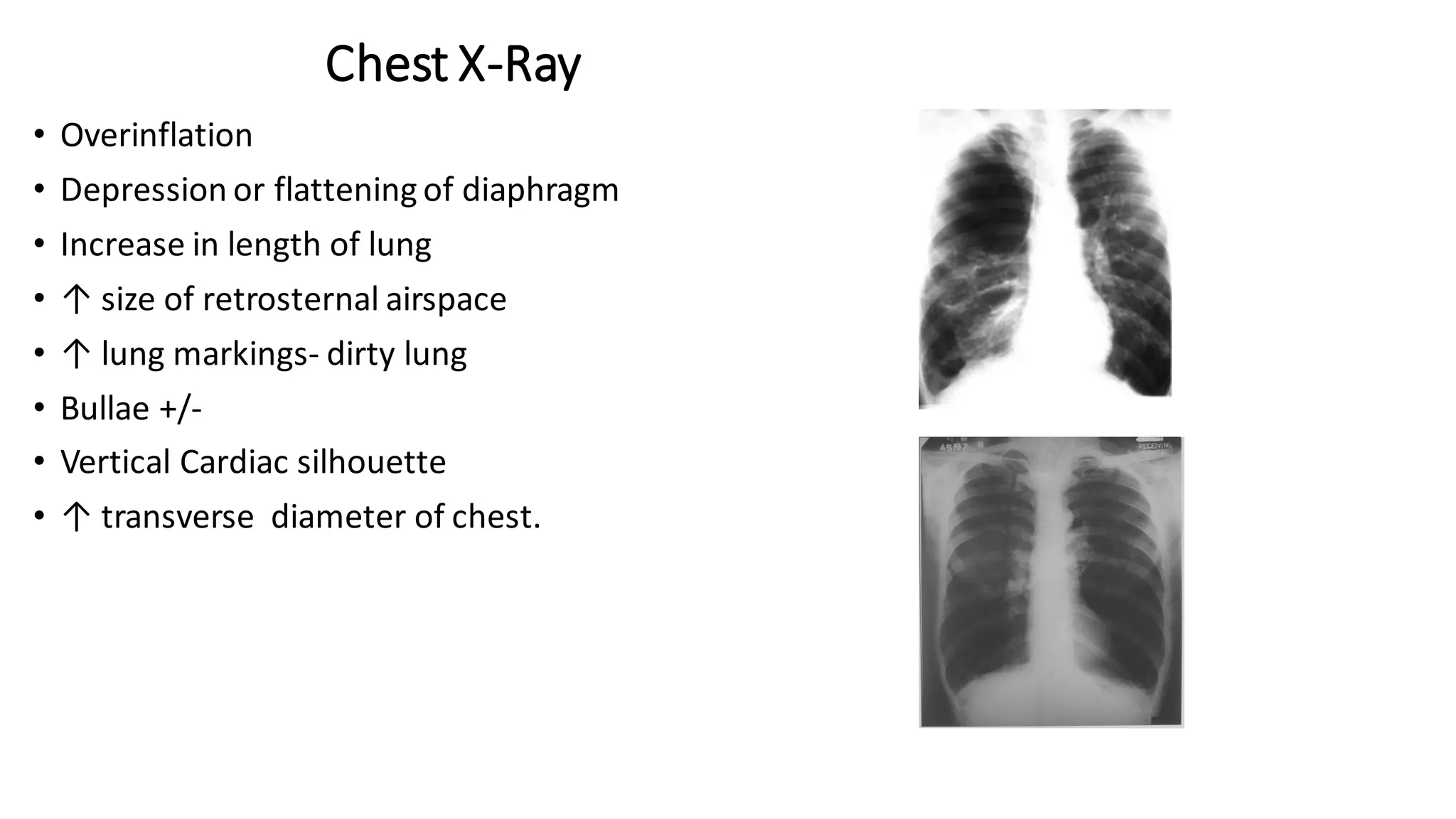
Chest X-Ray
• Overinflation
• Depression or flattening of diaphragm
• Increase in length of lung
• ↑ size of retrosternal airspace
• ↑ lung markings- dirty lung
• Bullae +/-
• Vertical Cardiac silhouette
• ↑ transverse diameter of chest.
ECG
• Signs of RVH:
• RAD
• p Pulmonale in Lead II
• Predominant R wave in V1-3
• RS pattern in precordial leads
Arterial Blood Gases:
• Increased PaCO2 is prognostic marker
ALBUMIN LEVEL <3.5 g/dL
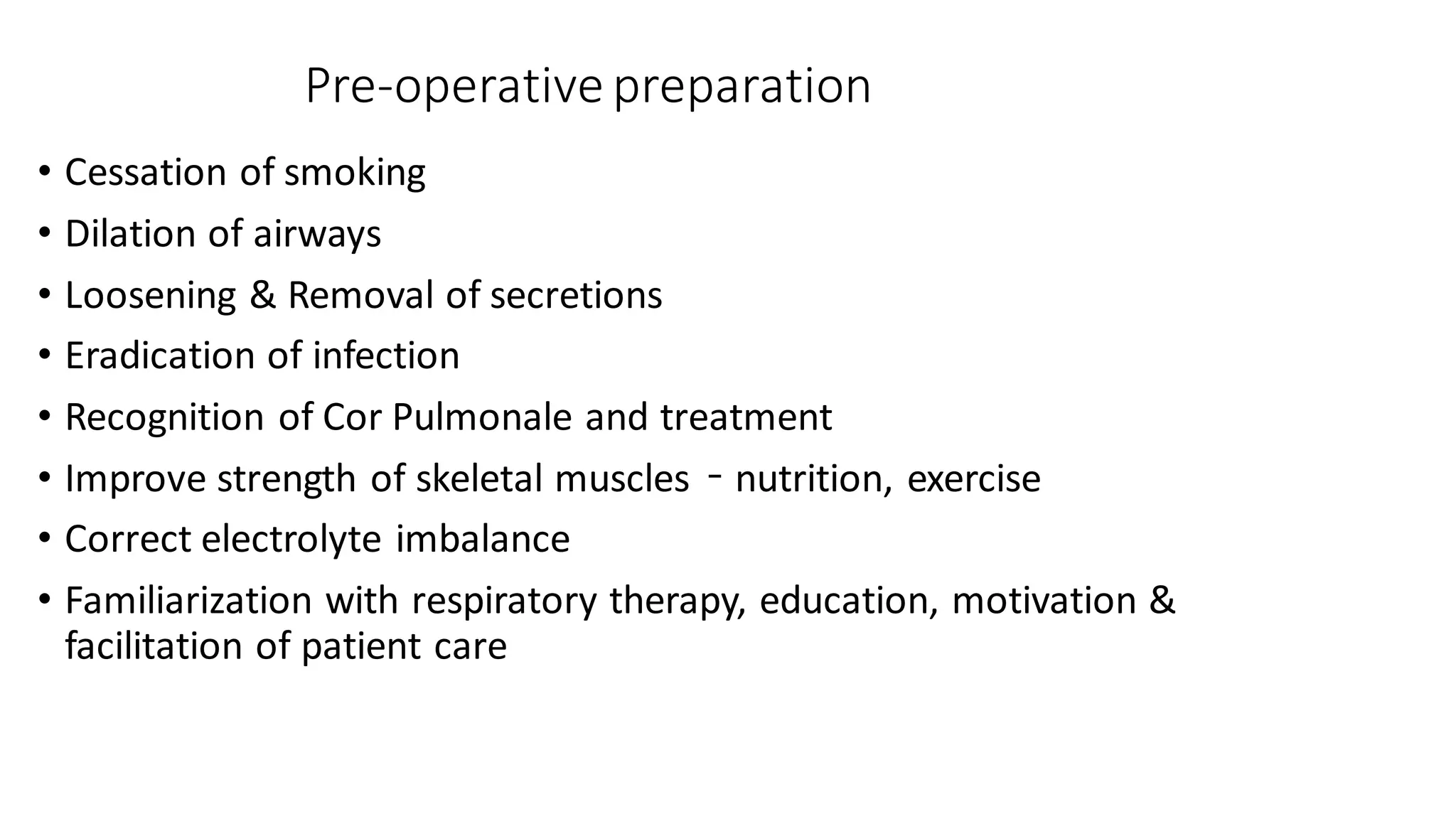
Pre-operative preparation
• Cessation of smoking
• Dilation of airways
• Loosening & Removal of secretions
• Eradication of infection
• Recognition of Cor Pulmonale and treatment
• Improve strength of skeletal muscles – nutrition, exercise
• Correct electrolyte imbalance
• Familiarization with respiratory therapy, education, motivation &
facilitation of patient care
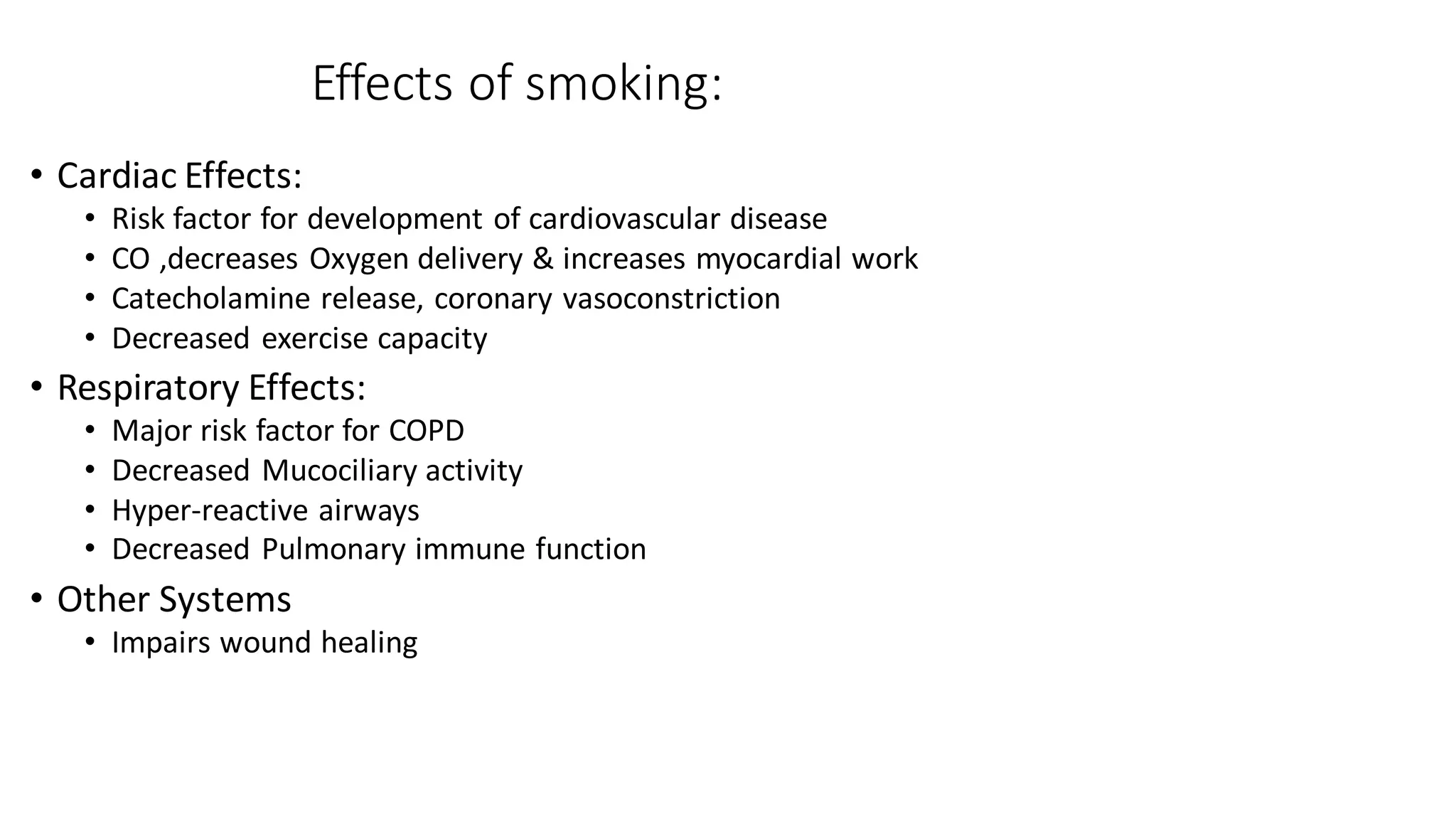
Effects of smoking:
• Cardiac Effects:
• Risk factor for development of cardiovascular disease
• CO ,decreases Oxygen delivery & increases myocardial work
• Catecholamine release, coronary vasoconstriction
• Decreased exercise capacity
• Respiratory Effects:
• Major risk factor for COPD
• Decreased Mucociliary activity
• Hyper-reactive airways
• Decreased Pulmonary immune function
• Other Systems
• Impairs wound healing
• Smoking is the single most imp. Risk factor for development of COPD
and death caused by lung disease
• Predictive factor for development of pulmonary complication is a
lower diffusing capacity and a smoking H/O more than 60 pack-year.
• Who have smoked more than 60 pack-year have double risk of
pulmonary complication and triple risk of pneumonia
• Smoking is associated with higher level of pain.
EFFECT OF SMOKING CESATION
SHORT TERM
(Within 12 hours): not proven to decrease incidence of POPC
p50 increase from 22.9 to 26.4
plasma concentration of COHb decrease from 6.5% to 1%
CO has a negative ionotropic effect
INTERMEDIATE TERM
Improved ciliary and small airway function
decreased sputum production
Return of normal immune function require at least 6 weeks(4-8 weeks)
• Smokers scheduled for surgery in less than 4 weeks should be offered
pharmacotherapy
Eg. Nicotine replacement therapy
bupropion(started 1 to 2 weeks before smoking is stopped)
Dilatation of Airways:
• Bronchodilators:
• Only small increase in FEV1
• Alleviate symptoms by decreasing hyperinflation & dyspnoea
• Improve exercise tolerance
➢Anticholinergics
➢Beta Agonists
➢Methylxanthines
Anticholinergics:
• Block muscarinic receptors
• Onset of action within 30 Min
• Ipratropium –
• 40-80 μg by inhalation
• 20 μg/ puff – 2 puffs X 3-4 times
• 250 μg / ml respirator soln. 0.4- 2 ml X 4 times daily
• Tiotropium - long lasting
• Side Effects:
• Dry Mouth, metallic taste
• Caution in Prostatism & Glaucoma
Beta Agonists:
• Act by increasing cAMP
• Specific β2 agonist –
• Salbutamol :
• oral 2-4 mg/ 0.25 – 0.5 mg i.m /s.c 100-200 μg inhalation
• muscle tremors, palpitations, throat irritation
• Terbutaline :
• oral 5 mg/ 0.25 mg s.c./ 250 μg inhalation
• Salmeterol :
• Long acting (12 hrs)
• 50 μg BD- 200 μg BD
• Formoterol, Bambuterol
Bronchodilators: methylxathines
Oral(Theophyllin) & Intravenous (Aminophylline)
• loading – 5-6 mg/kg
• Previous use – 3 mg/kg
• Maintenace –
• 1.0mg/kg/h for smokers
• 0.5mg/kg/hfor nonsmokers
• 0.3 mg/kg/h for severely ill patients.
Inhaled Corticosteroids:
• Anti-inflammatory
• Restore responsiveness to β2 agonist
• Reduce severity and frequency of exacerbations
• Do not alter rate of decline of FEV1
• Beclomethasone, Budesonide, Fluticasone
• Dose: 200 μg BD ↑ upto 400 μg QID
• > 1600 μg / day- suppression of HPA axis
Anaesthetic Technique
COPD is not a limitation on the choice of anaesthesia.
Type of Anaesthesia doesn’t predictably influence Post op pulmonary
complications.
Neuraxial Techniques benefits:
• No significant effect on Resp function: Level above T6 not
recommended
• No interference with airway → Avoids bronchospasm
• No swings in intrathoracic pressure
• No danger of pneumothorax from N2O
• Sedation reqd. May compromise expiratory fn.
GENERAL ANESTHESIA
Volatile anesthetics
• Desflurane and sevoflurane should be used as are rapidly eliminated
causing less residual ventilator depression in post op period
• Bronchodilation
• But attenuate regional hypoxic pulmonary vasoconstriction-increased
intrapulmonary shunting
• Severe airway obstruction –prolonged emergence(air trapping also
trap inhalational agents)
• Nitrous oxide can escape in pulmonary bullae-pneumothorax
• Nitrous oxide-Limitation on inspired oxygen concentration
• Use low gas flow-humidification of inspired gas
• Tidal volume of 6-8 ml/kg combined with slow inspiratory flow rate(6-
10 breaths per min and decreased I:E-sufficient time for complete
exhalation
• Hyperinflation –increase intra thoracic pres.-inc. pulm. Vascular
resistance-right ventricular strain-right ventricle impinge on left
ventricle- decrease in cardiac output.
• Slow rate allow sufficient time for venous return.
• Apply low level of extrinsic PEEP.
• Aggresively treating bronchospasm.
How to detect air trapping
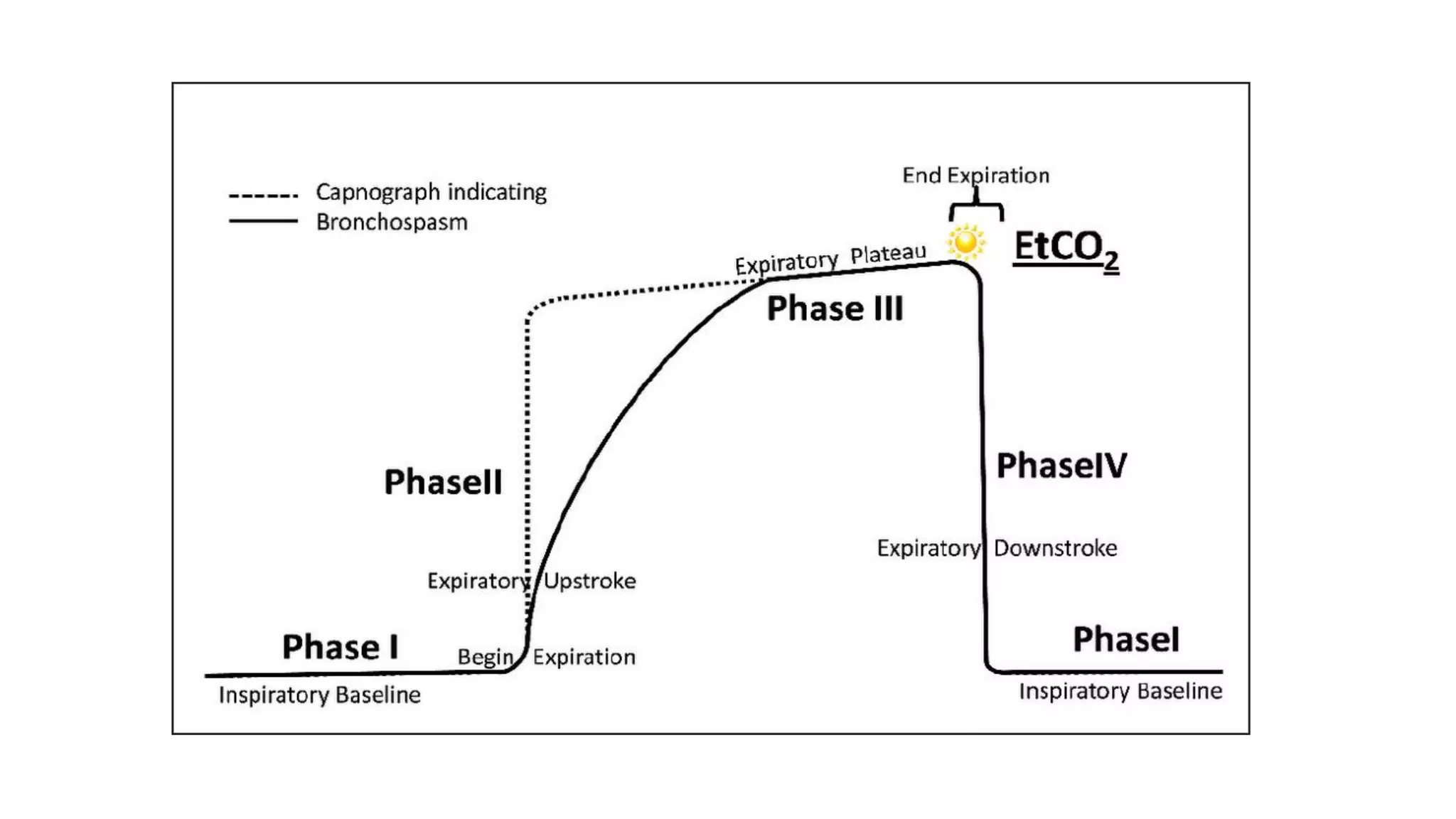
• On capnography CO2 conc. Doesn’t plateau but remain upsloping at
the time of next breath
• Expiratory flow does not reach baseline (zero)
• If patient disconnected from ventilator(PEEP eliminated),blood
pressure increase significantly
MANAGEMENTOF BRONCHOSPASM
• Reflex bronchospasm can be blunted before intubation by
1) additional dose of induction agent
2)ventilating patient with 2-3 MAC of volatile agent for 5min
3)I/V lidocaine (1-2mg/kg)
• Severity of obstruction is inversely related to rate of rise of EtCo2
• Intra-op bronchospasm is usually manifested as wheezing , increased
peak airway pressure ,slow rising waveform on capnography
• Other causes of bronchospasm
tube kinking
secretions
overinflated balloon
bronchial intubation
pulmonary edema/embolism
pneumothorax
Treatment
• Increase FiO2
• Deepening plane of anesthesia
• Relieve mechanical stimulation
• Nebulization with beta agonists or MDI
Or s/c Terbutaline, iv Adrenaline
• intravenous Aminophyline
• Intravenous corticosteroid indicated if severe bronchospasm
• Deep extubation reduce bronchospasm on emergence
Postoperative management
• Lung expansion maneuvers: (deep breathing exercises,incentive
spirometry, chest physiotherapy)-decrease risk of atelectasis
• Post op neuraxial analgesia with opioids may permit early trachial
extubation-early ambulation-increased FRC and improved
oxygenation.
• Breakthrough pain may require treatment with systemic opioids.
• Delayed respiratory depression may be seen when poorly lipid soluble
opioid like morphine are used
Post op mechanical ventilation
• patient with severe COPD with major abdominal ,intrathoracic
surgery.
• Patient with pre-op FEV1/FVC ratio of less than 0.5 or with a pre-op
Paco2 of more than 50 mm Hg
• If Paco2 is increased for long period-don’t correct hypercarbia too
quickly-metabolic alkalosis –cardiac dysrhythmia ,CNS
irritability(seizure)
• Ventilator settings-Pao2 (60-100mm Hg) and Paco2 such that pH
(7.35-7.45)
• Sympathomimetic bronchodilators and inhaled anticholinergics can
improve airflow
Post Operative Pulmonary Complications:
Predictors of
PPCs:
Patient Related:
•Age > 70 yrs
•ASA Class II or above
•CHF
•Pre-existing Pulmonary Disease
•Functionally Dependent
•Cigarette smoking
•Hypoalbuimnemia , 3.5g/dL
Procedure Related:
•Emergency Surgery
•Duration > 2.5 Hrs
•GA
•Abd, Thoracic, Head & Neck,
Nuero, Vascular Surgery
Post Operative Pulmonary Complications:
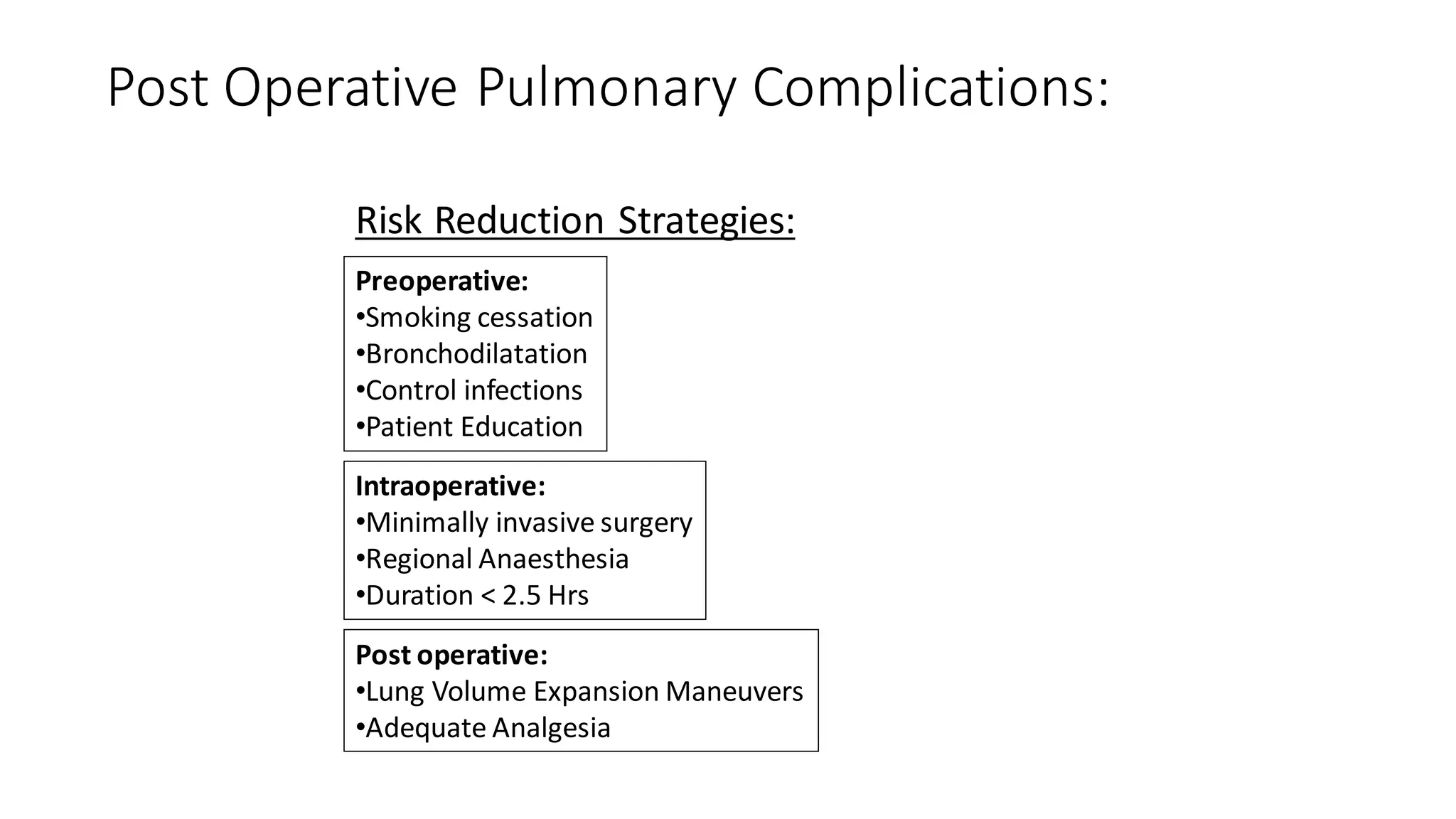
Risk Reduction Strategies:
Preoperative:
•Smoking cessation
•Bronchodilatation
•Control infections
•Patient Education
Intraoperative:
•Minimally invasive surgery
•Regional Anaesthesia
•Duration < 2.5 Hrs
Post operative:
•Lung Volume Expansion Maneuvers
•Adequate Analgesia
Anesthetic management in copd

Anesthetic management in copd

  • 1.
    Anesthetic management in COPD Presenter-Dr.MayankSinghal Moderator-Dr. Virendra Kumar
  • 2.
    • COPD isa common condition mainly related to smoking. • It is characterized by progressive development of airflow limitation that is not fully reversible. • Patient with COPD pose a challenge to anesthesiologist because intraoperative and post operative complications are more common in this population. • COPD can cause a increase length of hospital stay and mortality
  • 3.
    COPD • Chronic bronchitis •Emphysema • Peripheral airway disease Not include • Asthma , asthmaticbronchitis • Cysticfibrosis • Bronchiectasis • Pulmonary fibrosis by other causes
  • 4.
    DEFINITIONS • Chronic Bronchitis:(Clinical Definition)- Chronic productive cough for 3 months in each of 2 successive years in a patient in whom other causes of productive chronic cough have been excluded. • Emphysema: (Pathological Definition) The presence of permanent enlargement of the airspaces distal to the terminal bronchioles, accompanied by destruction of their walls and without obvious fibrosis.
  • 5.
    COPD Effects • Pathological deteriorationin elasticity or “recoil” within lung parenchyma which normally maintain airway in an open position. • Pathologic changes that decreases rigidity of bronchiolar wall and thus predispose them to collapse during exhalation. • An increase in gas velocity in narrowed bronchiole which lower pressure inside bronchioli and further airway collapse. • Active bronchospasm and obstruction resulting from increased pulmonary secretions. • Destruction of lung parenchyma,enlargement of air sacs and development of emphysema.
  • 6.
    Age Related PulmonaryChanges: Pathological changes Effect Implications Decreased efficiency of lung parenchyma Decreased VC Increased RV RespiratoryFailure Decreased Muscle strength Decreased Compliance,FEV1 Poor cough Infection Alveolarseptal destruction Decreased alveolararea Decreased gas exchange Brohchiolardamage Increased closing volume Air trapping Decreased PaO2 Dilatedupper airways Increased dead space volume Decreased gas exchange Decreased reactivity Decreased laryngeal reflexes Decreased vent response to hypoxia,hypercarbia Increased Aspiration Increased resp. failure
  • 7.
    •Closing volume Volume inthe lung at which its smallest airways i.e the respiratory bronchioles collapse.
  • 8.
    Other patient factors •Poor general condition and nutritional status • Co morbid conditions • HTN • Diabetes • Heart Disease • Obesity • Sleep Apnea
  • 9.
    • Problems dueto Anaesthesia: • GA decreases lung volumes, promotes V/Q mismatch • FRC is reduced during anaesthesia, CC parallels FRC • Anaesthetic drugs blunt Ventilatory responses to hypoxia & CO2 • Postoperative Atelectasis & hypoxemia • Postoperative pain limits coughing & lung expansion • Problems due to Surgery: • Site : most important predictor of Post op complications e.g. Abdomen or thoracic surgery or emergency surgery have major risk than other surgeries • Duration: > 2.5 hours • Position during surgery
  • 10.
    Pre-operative assessment: History: • Smoking •Cough: Type, Progression, Recent RTI • Sputum: Quantity, color, blood • Dyspnea • Poor Exercise tolerance • Occupation, Allergies • Symptomsof cardiac or respiratory failure
  • 11.
    Pre-operative assessment: Examination PhysicalExamination: Airway obstruction • hyperinflation of chest, Barrel shaped chest • Decreased breath sounds • Expiratory ronchis • Prolonged expiration ↑WOB • ↑ RR, ↑HR • Use of Accessory muscles • Tracheal tug • Intercostalindrawing • Tripod sitting posture
  • 13.
    • Body Habitus Obesity/Malnourished • Active infection • Sputum- change in quantity, nature • Fever • Crepitations Respiratory failure Hypercapnia Hypoxia Cyanosis Cor Pulmonale and Right heart failure Dependant edema tender enlarged liver Pulmonary hypertension Loud P2 Right Parasternal heave Tricuspid regurgitation Pre-operative assessment: Examination
  • 14.
    PULMONARY FUNCTION TEST •Does not reliably predict the likelihood of post operative pulmonary complications • Clinical findings are more predictive of pulmonary complications than spirometry results • PFT should be viewed as a management to optimize preoperative pulmonary function but not as a mean to predict risk • Patient with mild pulmonary disease undergoing peripheral surgery do not require PFT.
  • 15.
    INDICATIONS of PFT •Hypoxemia on room air or the need for home oxygen therapy without a known cause • A bicarb conc. Of more than 33mEq/l or Pco2 of more than 50mm Hg in patient whose pulmonary disease has not been previously evaluated. • A h/o respiratory failure due to a problem that still exist • Severe shortness of breath attributed to a respiratory cause
  • 16.
    • Planned pneumonectomy •If there is need to determine response to bronchodilators • Suspected pulmonary hypertension • Surgery of upper abdomen, thorax or surgical duration ˃4 hour
  • 17.
    Pulmonary Function Tests: Measuremen t NormalObstructive Restrictive FVC (L) 80% of TLC (4800)    FEV1 (L) 80% of FVC ↓↓  FEV1/FVC(%) 75- 85% ↓ N to  FEV25%-75%(L/sec) 4-5 L/ sec  N to  PEF(L/sec) 450- 700 L/min  N to  Slope of FV curve   MVV(L/min) 160-180 L/min  N to  TLC 6000 ml N to   RV 1500 mL   RV/TLC(%) 0.25  N
  • 19.
    GOLD Classification: spirometricclassification of severity of COPD Stage Characteristics 0: At risk Normal spirometric findings,chronic symptoms-(cough and sputum production) I: Mild FEV1/FVC < 70% FEV1 ≥ 80% predicted, with/without chronic symptoms II: Moderate FEV1/FVC < 70% 50% ≤ FEV1 ≤ 80% predicted, with/without chronic symptoms III: Severe FEV1/FVC < 70% 30% ≤ FEV1 ≤ 50% predicted, with/without chronic symptoms IV: Very severe FEV1/FVC < 70% FEV1 < 30% predicted or < 50% predicted plus chronic respiratory failure (PaO2 < 60mm Hg &/or PaCO2 > 50mm Hg)
  • 20.
    Chest X-Ray • Overinflation •Depression or flattening of diaphragm • Increase in length of lung • ↑ size of retrosternal airspace • ↑ lung markings- dirty lung • Bullae +/- • Vertical Cardiac silhouette • ↑ transverse diameter of chest.
  • 21.
    ECG • Signs ofRVH: • RAD • p Pulmonale in Lead II • Predominant R wave in V1-3 • RS pattern in precordial leads Arterial Blood Gases: • Increased PaCO2 is prognostic marker ALBUMIN LEVEL <3.5 g/dL
  • 22.
    Pre-operative preparation • Cessationof smoking • Dilation of airways • Loosening & Removal of secretions • Eradication of infection • Recognition of Cor Pulmonale and treatment • Improve strength of skeletal muscles – nutrition, exercise • Correct electrolyte imbalance • Familiarization with respiratory therapy, education, motivation & facilitation of patient care
  • 23.
    Effects of smoking: •Cardiac Effects: • Risk factor for development of cardiovascular disease • CO ,decreases Oxygen delivery & increases myocardial work • Catecholamine release, coronary vasoconstriction • Decreased exercise capacity • Respiratory Effects: • Major risk factor for COPD • Decreased Mucociliary activity • Hyper-reactive airways • Decreased Pulmonary immune function • Other Systems • Impairs wound healing
  • 24.
    • Smoking isthe single most imp. Risk factor for development of COPD and death caused by lung disease • Predictive factor for development of pulmonary complication is a lower diffusing capacity and a smoking H/O more than 60 pack-year. • Who have smoked more than 60 pack-year have double risk of pulmonary complication and triple risk of pneumonia • Smoking is associated with higher level of pain.
  • 25.
    EFFECT OF SMOKINGCESATION SHORT TERM (Within 12 hours): not proven to decrease incidence of POPC p50 increase from 22.9 to 26.4 plasma concentration of COHb decrease from 6.5% to 1% CO has a negative ionotropic effect INTERMEDIATE TERM Improved ciliary and small airway function decreased sputum production Return of normal immune function require at least 6 weeks(4-8 weeks)
  • 26.
    • Smokers scheduledfor surgery in less than 4 weeks should be offered pharmacotherapy Eg. Nicotine replacement therapy bupropion(started 1 to 2 weeks before smoking is stopped)
  • 27.
    Dilatation of Airways: •Bronchodilators: • Only small increase in FEV1 • Alleviate symptoms by decreasing hyperinflation & dyspnoea • Improve exercise tolerance ➢Anticholinergics ➢Beta Agonists ➢Methylxanthines
  • 28.
    Anticholinergics: • Block muscarinicreceptors • Onset of action within 30 Min • Ipratropium – • 40-80 μg by inhalation • 20 μg/ puff – 2 puffs X 3-4 times • 250 μg / ml respirator soln. 0.4- 2 ml X 4 times daily • Tiotropium - long lasting • Side Effects: • Dry Mouth, metallic taste • Caution in Prostatism & Glaucoma
  • 29.
    Beta Agonists: • Actby increasing cAMP • Specific β2 agonist – • Salbutamol : • oral 2-4 mg/ 0.25 – 0.5 mg i.m /s.c 100-200 μg inhalation • muscle tremors, palpitations, throat irritation • Terbutaline : • oral 5 mg/ 0.25 mg s.c./ 250 μg inhalation • Salmeterol : • Long acting (12 hrs) • 50 μg BD- 200 μg BD • Formoterol, Bambuterol
  • 30.
    Bronchodilators: methylxathines Oral(Theophyllin) &Intravenous (Aminophylline) • loading – 5-6 mg/kg • Previous use – 3 mg/kg • Maintenace – • 1.0mg/kg/h for smokers • 0.5mg/kg/hfor nonsmokers • 0.3 mg/kg/h for severely ill patients.
  • 31.
    Inhaled Corticosteroids: • Anti-inflammatory •Restore responsiveness to β2 agonist • Reduce severity and frequency of exacerbations • Do not alter rate of decline of FEV1 • Beclomethasone, Budesonide, Fluticasone • Dose: 200 μg BD ↑ upto 400 μg QID • > 1600 μg / day- suppression of HPA axis
  • 32.
    Anaesthetic Technique COPD isnot a limitation on the choice of anaesthesia. Type of Anaesthesia doesn’t predictably influence Post op pulmonary complications. Neuraxial Techniques benefits: • No significant effect on Resp function: Level above T6 not recommended • No interference with airway → Avoids bronchospasm • No swings in intrathoracic pressure • No danger of pneumothorax from N2O • Sedation reqd. May compromise expiratory fn.
  • 33.
    GENERAL ANESTHESIA Volatile anesthetics •Desflurane and sevoflurane should be used as are rapidly eliminated causing less residual ventilator depression in post op period • Bronchodilation • But attenuate regional hypoxic pulmonary vasoconstriction-increased intrapulmonary shunting • Severe airway obstruction –prolonged emergence(air trapping also trap inhalational agents) • Nitrous oxide can escape in pulmonary bullae-pneumothorax • Nitrous oxide-Limitation on inspired oxygen concentration
  • 34.
    • Use lowgas flow-humidification of inspired gas • Tidal volume of 6-8 ml/kg combined with slow inspiratory flow rate(6- 10 breaths per min and decreased I:E-sufficient time for complete exhalation • Hyperinflation –increase intra thoracic pres.-inc. pulm. Vascular resistance-right ventricular strain-right ventricle impinge on left ventricle- decrease in cardiac output. • Slow rate allow sufficient time for venous return. • Apply low level of extrinsic PEEP. • Aggresively treating bronchospasm.
  • 35.
    How to detectair trapping • On capnography CO2 conc. Doesn’t plateau but remain upsloping at the time of next breath • Expiratory flow does not reach baseline (zero) • If patient disconnected from ventilator(PEEP eliminated),blood pressure increase significantly
  • 38.
    MANAGEMENTOF BRONCHOSPASM • Reflexbronchospasm can be blunted before intubation by 1) additional dose of induction agent 2)ventilating patient with 2-3 MAC of volatile agent for 5min 3)I/V lidocaine (1-2mg/kg) • Severity of obstruction is inversely related to rate of rise of EtCo2 • Intra-op bronchospasm is usually manifested as wheezing , increased peak airway pressure ,slow rising waveform on capnography
  • 40.
    • Other causesof bronchospasm tube kinking secretions overinflated balloon bronchial intubation pulmonary edema/embolism pneumothorax Treatment • Increase FiO2 • Deepening plane of anesthesia • Relieve mechanical stimulation • Nebulization with beta agonists or MDI Or s/c Terbutaline, iv Adrenaline
  • 41.
    • intravenous Aminophyline •Intravenous corticosteroid indicated if severe bronchospasm • Deep extubation reduce bronchospasm on emergence
  • 42.
    Postoperative management • Lungexpansion maneuvers: (deep breathing exercises,incentive spirometry, chest physiotherapy)-decrease risk of atelectasis • Post op neuraxial analgesia with opioids may permit early trachial extubation-early ambulation-increased FRC and improved oxygenation. • Breakthrough pain may require treatment with systemic opioids. • Delayed respiratory depression may be seen when poorly lipid soluble opioid like morphine are used
  • 43.
    Post op mechanicalventilation • patient with severe COPD with major abdominal ,intrathoracic surgery. • Patient with pre-op FEV1/FVC ratio of less than 0.5 or with a pre-op Paco2 of more than 50 mm Hg • If Paco2 is increased for long period-don’t correct hypercarbia too quickly-metabolic alkalosis –cardiac dysrhythmia ,CNS irritability(seizure) • Ventilator settings-Pao2 (60-100mm Hg) and Paco2 such that pH (7.35-7.45) • Sympathomimetic bronchodilators and inhaled anticholinergics can improve airflow
  • 44.
    Post Operative PulmonaryComplications: Predictors of PPCs: Patient Related: •Age > 70 yrs •ASA Class II or above •CHF •Pre-existing Pulmonary Disease •Functionally Dependent •Cigarette smoking •Hypoalbuimnemia , 3.5g/dL Procedure Related: •Emergency Surgery •Duration > 2.5 Hrs •GA •Abd, Thoracic, Head & Neck, Nuero, Vascular Surgery
  • 45.
    Post Operative PulmonaryComplications: Risk Reduction Strategies: Preoperative: •Smoking cessation •Bronchodilatation •Control infections •Patient Education Intraoperative: •Minimally invasive surgery •Regional Anaesthesia •Duration < 2.5 Hrs Post operative: •Lung Volume Expansion Maneuvers •Adequate Analgesia