


HEARING VS. LISTENING 
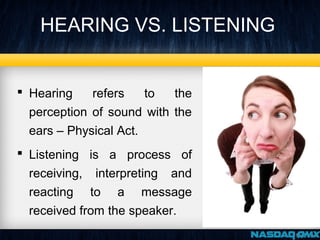
 Hearing refers to the 
perception of sound with the 
ears – Physical Act. 
 Listening is a process of 
receiving, interpreting and 
reacting to a message 
received from the speaker.
Activity: Draw what you hear
LISTENING 
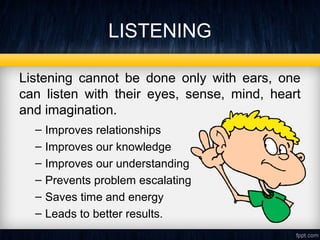
Listening cannot be done only with ears, one 
can listen with their eyes, sense, mind, heart 
and imagination. 
– Improves relationships 
– Improves our knowledge 
– Improves our understanding 
– Prevents problem escalating 
– Saves time and energy 
– Leads to better results.
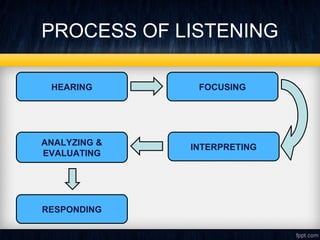
PROCESS OF LISTENING 
HEARING 
FOCUSING 
INTERPRETING 
ANALYZING & 
EVALUATING 
RESPONDING
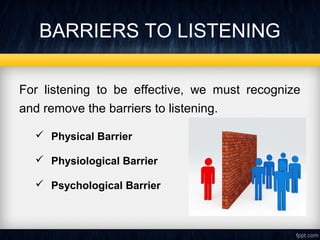
BARRIERS TO LISTENING 
For listening to be effective, we must recognize 
and remove the barriers to listening. 
 Physical Barrier 
 Physiological Barrier 
 Psychological Barrier
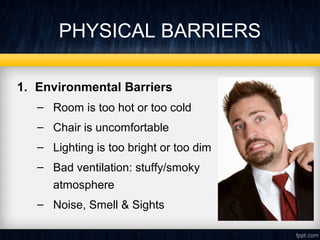
PHYSICAL BARRIERS 
1. Environmental Barriers 
– Room is too hot or too cold 
– Chair is uncomfortable 
– Lighting is too bright or too dim 
– Bad ventilation: stuffy/smoky 
atmosphere 
– Noise, Smell & Sights
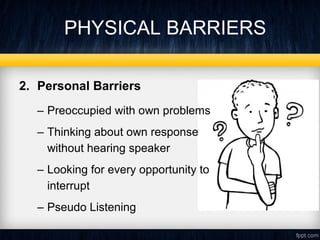
PHYSICAL BARRIERS 
2. Personal Barriers 
– Preoccupied with own problems 
– Thinking about own response 
without hearing speaker 
– Looking for every opportunity to 
interrupt 
– Pseudo Listening
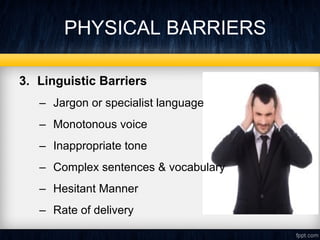
PHYSICAL BARRIERS 
3. Linguistic Barriers 
– Jargon or specialist language 
– Monotonous voice 
– Inappropriate tone 
– Complex sentences & vocabulary 
– Hesitant Manner 
– Rate of delivery
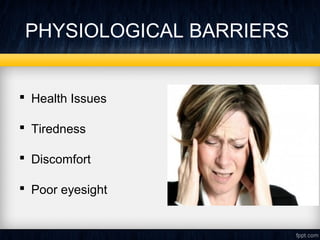
PHYSIOLOGICAL BARRIERS 
 Health Issues 
 Tiredness 
 Discomfort 
 Poor eyesight
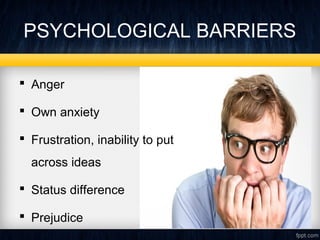
PSYCHOLOGICAL BARRIERS 
 Anger 
 Own anxiety 
 Frustration, inability to put 
across ideas 
 Status difference 
 Prejudice
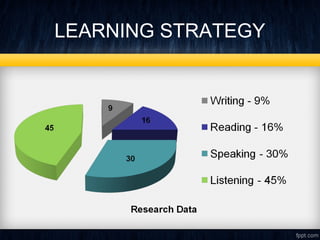
LEARNING STRATEGY
RULES OF GOOD LISTENING 
 Stop talking 
 Stop thinking 
 Remove distractions 
 Do not let your mind wander 
 Do not pre-judge 
 Be Patient 
 Empathize with the speaker 
 Take notes
BENEFITS OF EFFECTIVE 
LISTENING IN AN 
ORGANIZATION 
At work place: 
– Effective listening skill leads 
effective communication 
– Reduce misunderstandings 
– Strong interpersonal relationship 
– Faster work rate 
– Personal growth
VIDEO 
https://www.youtube.com/watch? 
v=ENkwUBPhMJw
Listening Skill Development

Listening Skill Development

  • 2.
    HEARING VS. LISTENING  Hearing refers to the perception of sound with the ears – Physical Act.  Listening is a process of receiving, interpreting and reacting to a message received from the speaker.
  • 3.
  • 4.
    LISTENING Listening cannotbe done only with ears, one can listen with their eyes, sense, mind, heart and imagination. – Improves relationships – Improves our knowledge – Improves our understanding – Prevents problem escalating – Saves time and energy – Leads to better results.
  • 5.
    PROCESS OF LISTENING HEARING FOCUSING INTERPRETING ANALYZING & EVALUATING RESPONDING
  • 6.
    BARRIERS TO LISTENING For listening to be effective, we must recognize and remove the barriers to listening.  Physical Barrier  Physiological Barrier  Psychological Barrier
  • 7.
    PHYSICAL BARRIERS 1.Environmental Barriers – Room is too hot or too cold – Chair is uncomfortable – Lighting is too bright or too dim – Bad ventilation: stuffy/smoky atmosphere – Noise, Smell & Sights
  • 8.
    PHYSICAL BARRIERS 2.Personal Barriers – Preoccupied with own problems – Thinking about own response without hearing speaker – Looking for every opportunity to interrupt – Pseudo Listening
  • 9.
    PHYSICAL BARRIERS 3.Linguistic Barriers – Jargon or specialist language – Monotonous voice – Inappropriate tone – Complex sentences & vocabulary – Hesitant Manner – Rate of delivery
  • 10.
    PHYSIOLOGICAL BARRIERS Health Issues  Tiredness  Discomfort  Poor eyesight
  • 11.
    PSYCHOLOGICAL BARRIERS Anger  Own anxiety  Frustration, inability to put across ideas  Status difference  Prejudice
  • 12.
  • 13.
    RULES OF GOODLISTENING  Stop talking  Stop thinking  Remove distractions  Do not let your mind wander  Do not pre-judge  Be Patient  Empathize with the speaker  Take notes
  • 14.
    BENEFITS OF EFFECTIVE LISTENING IN AN ORGANIZATION At work place: – Effective listening skill leads effective communication – Reduce misunderstandings – Strong interpersonal relationship – Faster work rate – Personal growth
  • 15.