WELCOME
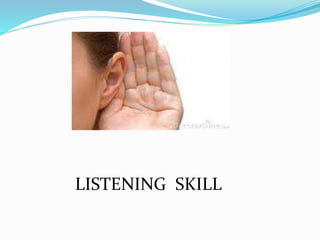
LISTENING SKILL
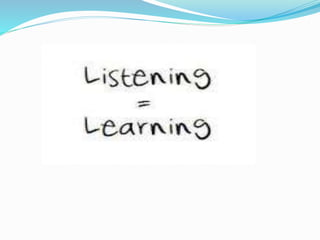
LISTENING
 Key to all effective communications.
 The ability to accurately receive and interpret
messages in the communication process is called
Listening.
 Journey of language learning starts from listening.
 We listen, we imitate and thus develops language
Listening- A Skill
Real listening is an active process that has three basic
steps.
 Hearing:
Listening enough to catch what the speaker is saying.
 Understanding:
Intake of what one has heard and understood in
one’s own way.
 Judging: Think about perceived item whether it
makes sense or not.
Types of listening
Casual Listening : Listening to radio or TV.
Focused Listening : Listening in the class.
Intensive Listening: Listening to the description,
pertaining to a targeted destination to travel.
Extensive Listening: Listening to weather reports.
Tips for being a good listener
 Give full attention to the speaker and concentrate
on the spoken words. Let the speaker finish before
you begin to talk.
 Let yourself finish listening before you begin to
speak
 Listen for main ideas.
.Pay special attention to statements that begin
with phrases such as "My point is..." or “ The thing
to remember is...”
 Ask questions.
 Give feedback.
 Think fast
 Remember: Thoughts move about four times as
fast as speech. With practice, while you are
listening you will also be able to think about what
you are hearing, really understand it, and give
feedback to the speaker.
Teaching Listening
 Listening is the language modality that is used most
frequently.
 Language learners should recognize the level of effort
that goes into developing listening ability.
 Listening leads us to actively involve ourselves in the
interpretation of what we hear, bringing our own
background knowledge and linguistic knowledge to
bear on the information contained in the aural text.
 Language learning requires intentional listening that
employs strategies for identifying sounds and making
meaning from them.
 Listening involves a sender (a person, radio,
television), a message, and a receiver (the listener).
 Provide listening practice in authentic situations
when learners are likely to encounter difficulty
whenever they use the language outside the
classroom.
 Language teachers must help their students become
effective listeners
Thank You

Listening Skill

  • 1.
  • 2.
  • 3.
    LISTENING  Key toall effective communications.  The ability to accurately receive and interpret messages in the communication process is called Listening.  Journey of language learning starts from listening.  We listen, we imitate and thus develops language
  • 5.
    Listening- A Skill Reallistening is an active process that has three basic steps.  Hearing: Listening enough to catch what the speaker is saying.  Understanding: Intake of what one has heard and understood in one’s own way.  Judging: Think about perceived item whether it makes sense or not.
  • 6.
    Types of listening CasualListening : Listening to radio or TV. Focused Listening : Listening in the class. Intensive Listening: Listening to the description, pertaining to a targeted destination to travel. Extensive Listening: Listening to weather reports.
  • 8.
    Tips for beinga good listener  Give full attention to the speaker and concentrate on the spoken words. Let the speaker finish before you begin to talk.  Let yourself finish listening before you begin to speak  Listen for main ideas. .Pay special attention to statements that begin with phrases such as "My point is..." or “ The thing to remember is...”
  • 9.
     Ask questions. Give feedback.  Think fast  Remember: Thoughts move about four times as fast as speech. With practice, while you are listening you will also be able to think about what you are hearing, really understand it, and give feedback to the speaker.
  • 11.
    Teaching Listening  Listeningis the language modality that is used most frequently.  Language learners should recognize the level of effort that goes into developing listening ability.  Listening leads us to actively involve ourselves in the interpretation of what we hear, bringing our own background knowledge and linguistic knowledge to bear on the information contained in the aural text.
  • 12.
     Language learningrequires intentional listening that employs strategies for identifying sounds and making meaning from them.  Listening involves a sender (a person, radio, television), a message, and a receiver (the listener).  Provide listening practice in authentic situations when learners are likely to encounter difficulty whenever they use the language outside the classroom.  Language teachers must help their students become effective listeners
  • 13.