Conflict Management 
SIVATHANU N, TRAINER
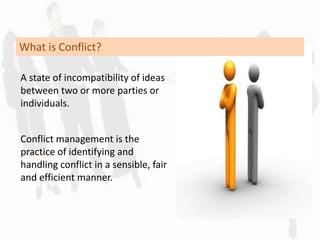
What is Conflict? 
A state of incompatibility of ideas 
between two or more parties or 
individuals. 
Conflict management is the 
practice of identifying and 
handling conflict in a sensible, fair 
and efficient manner.
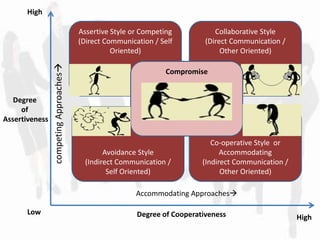
Avoidance Style 
(Indirect Communication / 
Self Oriented) 
Co-operative Style or 
Accommodating 
(Indirect Communication / 
Other Oriented) 
Assertive Style or Competing 
(Direct Communication / Self 
Oriented) 
Collaborative Style 
(Direct Communication / 
Other Oriented) 
Degree 
of 
Assertiveness 
Accommodating Approaches 
Degree of Cooperativeness 
competing Approaches 
Low 
High 
High 
Compromise
Conflict Management Model 
• Assertive Style or Competing 
- Work to get your way, rather than clarifying and addressing the issue. 
• Collaborative Style 
- Focus on working together. 
• Compromise 
- Mutual give-and-take. 
• Avoidance Style 
- Pretend it is not there or ignore it. 
• Cooperative Style or Accommodating 
- Give in to others, sometimes to the extent that you compromise yourself.
Why Compromise or Collaborate? 
The goal of collaboration is to add, not subtract. Creating something that is more 
than each involved has to offer alone. 
On the other hand, compromising usually ends with dividing something, giving up 
this for that, or taking turns. 
Four guidelines to use when collaborating: 
• Usually takes longer than Compromising 
• Everyone must be included. Collaboration must take 
into account all views from those involved in the 
decision. 
• Utilize differences: Take advantage of diversity and 
see differences as an asset. This comes down to 
attitude and perspective. 
• No one gives up, everyone gives input. 
• Everyone is satisfied.
Causes of conflicts 
• Poorly defined goals 
• Divergent personal values 
• Lack of cooperation/trust 
• Competition of scarce resources 
• Unclear roles/lack of job description
Effects of conflict in organizations 
• Stress 
• Absenteeism 
• Staff turnover 
• De-motivation 
• Non-productivity
Steps to resolve conflicts 
• Assure privacy 
• Empathize than sympathize 
• Listen actively 
• Maintain equity 
• Focus on issue, not on personality 
• Avoid blame 
• Identify key theme 
• Re-state key theme frequently 
• Encourage feedback 
• Identify alternate solutions 
• Give your positive feedback 
• Agree on an action plan
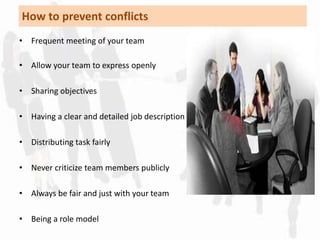
How to prevent conflicts 
• Frequent meeting of your team 
• Allow your team to express openly 
• Sharing objectives 
• Having a clear and detailed job description 
• Distributing task fairly 
• Never criticize team members publicly 
• Always be fair and just with your team 
• Being a role model
Conclusion 
• Complexity of organizational relationship 
• Interaction among workers 
• Dependence of workers on one another 
• Conflict is a healthy sign not a negative process 
• It reflects dynamics 
Poorly managed conflicts 
• Unfavorable with counter productive results 
• Problems and negative attitude 
Well managed conflicts 
• Stimulate competition 
• Identify legitimate differences 
• Powerful source of motivation

Conflict Management

  • 1.
  • 2.
    What is Conflict? A state of incompatibility of ideas between two or more parties or individuals. Conflict management is the practice of identifying and handling conflict in a sensible, fair and efficient manner.
  • 3.
    Avoidance Style (IndirectCommunication / Self Oriented) Co-operative Style or Accommodating (Indirect Communication / Other Oriented) Assertive Style or Competing (Direct Communication / Self Oriented) Collaborative Style (Direct Communication / Other Oriented) Degree of Assertiveness Accommodating Approaches Degree of Cooperativeness competing Approaches Low High High Compromise
  • 4.
    Conflict Management Model • Assertive Style or Competing - Work to get your way, rather than clarifying and addressing the issue. • Collaborative Style - Focus on working together. • Compromise - Mutual give-and-take. • Avoidance Style - Pretend it is not there or ignore it. • Cooperative Style or Accommodating - Give in to others, sometimes to the extent that you compromise yourself.
  • 5.
    Why Compromise orCollaborate? The goal of collaboration is to add, not subtract. Creating something that is more than each involved has to offer alone. On the other hand, compromising usually ends with dividing something, giving up this for that, or taking turns. Four guidelines to use when collaborating: • Usually takes longer than Compromising • Everyone must be included. Collaboration must take into account all views from those involved in the decision. • Utilize differences: Take advantage of diversity and see differences as an asset. This comes down to attitude and perspective. • No one gives up, everyone gives input. • Everyone is satisfied.
  • 6.
    Causes of conflicts • Poorly defined goals • Divergent personal values • Lack of cooperation/trust • Competition of scarce resources • Unclear roles/lack of job description
  • 7.
    Effects of conflictin organizations • Stress • Absenteeism • Staff turnover • De-motivation • Non-productivity
  • 8.
    Steps to resolveconflicts • Assure privacy • Empathize than sympathize • Listen actively • Maintain equity • Focus on issue, not on personality • Avoid blame • Identify key theme • Re-state key theme frequently • Encourage feedback • Identify alternate solutions • Give your positive feedback • Agree on an action plan
  • 9.
    How to preventconflicts • Frequent meeting of your team • Allow your team to express openly • Sharing objectives • Having a clear and detailed job description • Distributing task fairly • Never criticize team members publicly • Always be fair and just with your team • Being a role model
  • 10.
    Conclusion • Complexityof organizational relationship • Interaction among workers • Dependence of workers on one another • Conflict is a healthy sign not a negative process • It reflects dynamics Poorly managed conflicts • Unfavorable with counter productive results • Problems and negative attitude Well managed conflicts • Stimulate competition • Identify legitimate differences • Powerful source of motivation