Lisa’s Research 2012-3


         Lisa Harris
     10th October 2012
About me…
• 10 years in banking industry and MBA @ Oxford
  Brookes makes me a “pracademic”
• PhD @ Brunel, investigating case studies of
  technological change in banking industry
• Teaching @ Brunel and Director of MBA programme
• Teaching @ Soton and development of new MSc
  programme in Digital Marketing
• Qualified tutor University of Liverpool e-MBA
In a nutshell…
• I’m interested in the innovative applications of
  technology on education, business and society
• In particular, I’m currently involved in projects
  investigating:
   –   Digital literacy
   –   Social activism
   –   Social CRM
   –   Social shopping
   –   Social learning

• But first, a bit of background…
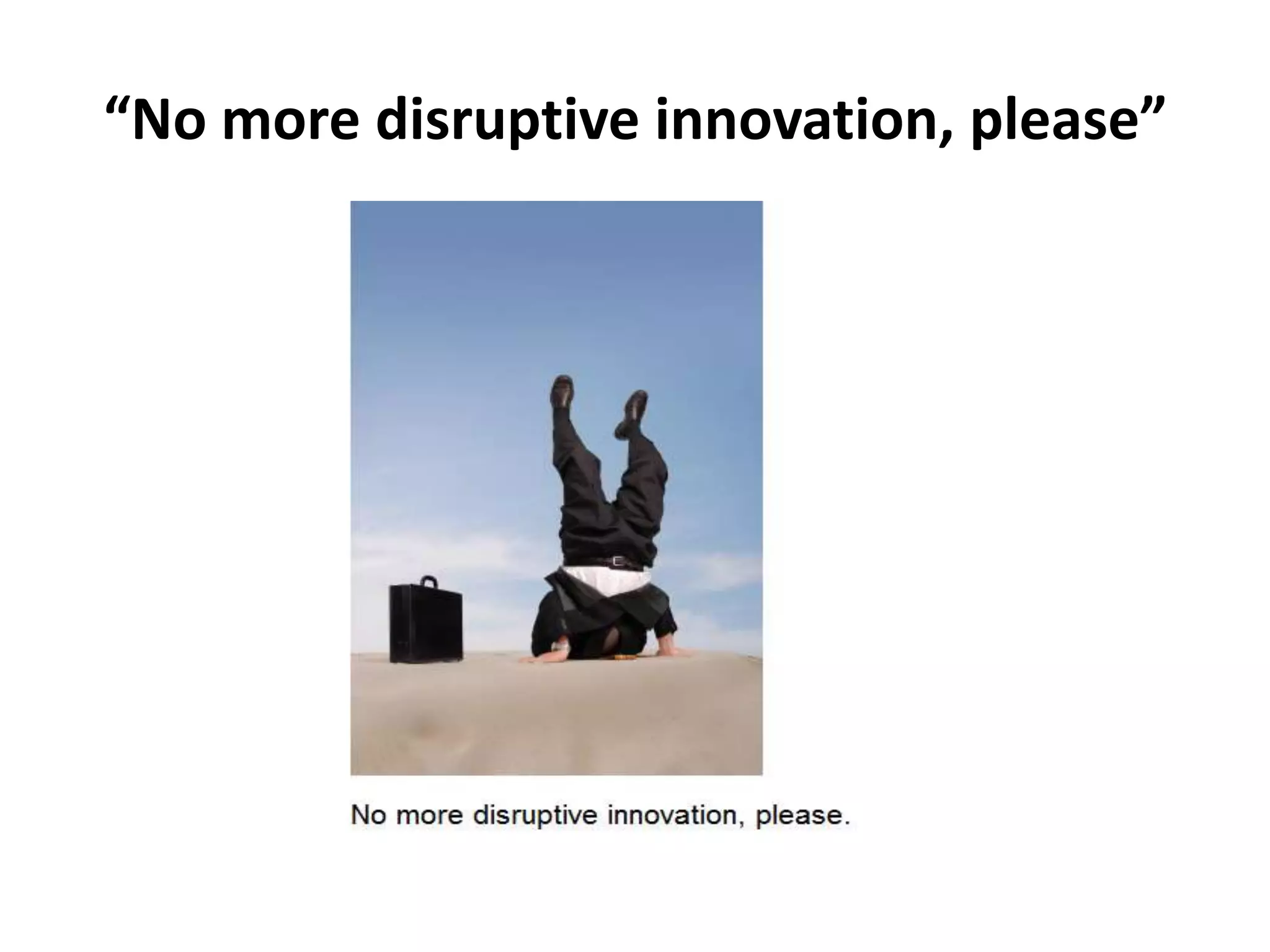
“No more disruptive innovation, please”
I like these quotes…
“…alternatively, you can ignore this advice, close the
 blinds and gaze lovingly at your peer-reviewed papers.
 All I would say is: remember Betamax.”
 (Dan Stern in Times Higher , warning of the need for
 innovation in universities)

“If you don’t like change, you’re going to like irrelevance
  even less”
 (General Eric Shineski, US Army Chief of Staff)

 Eric Qualmann (video, 4 mins)
What technologies are being discussed here?

• “The modern world overwhelms people with data and this is
  confusing and harmful to the mind” (Conrad Gessner, 1565)
• “It will create forgetfulness in the learners' souls, because
  they will not use their memories.“ (Socrates, 469-399BC)
• “It socially isolates readers and detracts from the spiritually
  uplifting group practice of getting news from the pulpit”
  (Malesherbes, 1787)
• “It  might hurt radio, conversation, reading, and the patterns
  of family living and result in the further vulgarisation of
  American culture“ (Ellen Wartella, 1962)
• “It’s making us stupid” (Nicholas Carr, 2008)
The times they are a changing…
•   Availability of free content (e.g. video of lectures) by global experts both in
    education and industry from the likes of MIT, Stanford, Harvard, Oxford
•   University reliance upon the ‘Russell Group’ arrogance – but this is a 20th
    century brand.
•   Expectation from students of flexible evening/weekend/online learning
    options, as they seek to maintain job and family commitments
•   Accessibility and breadth of information now available online alters the

    traditional role of the lecturer as gatekeeper to relevant knowledge
•   Difficult economic conditions and higher fees adjust the risk/reward
    calculation of attending university
•   Student profile increasingly international and with a wide range of ages and
    work experience
•   Princeton Uni now prohibits staff from signing away the copyright of their
    papers to academic publishers
•   Currently there are calls to boycott reviewing for non-open journals
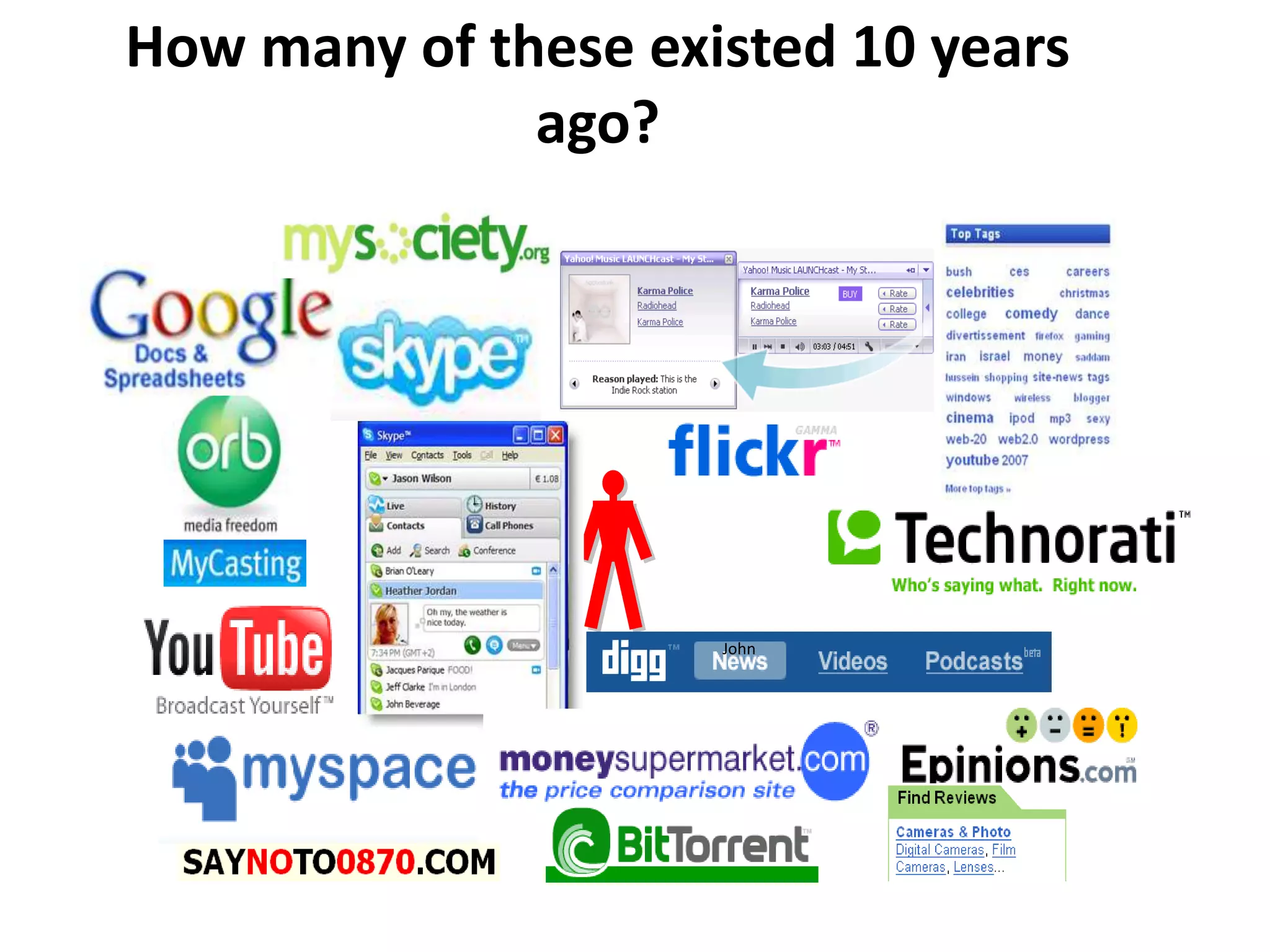
How many of these existed 10 years
              ago?


                     John
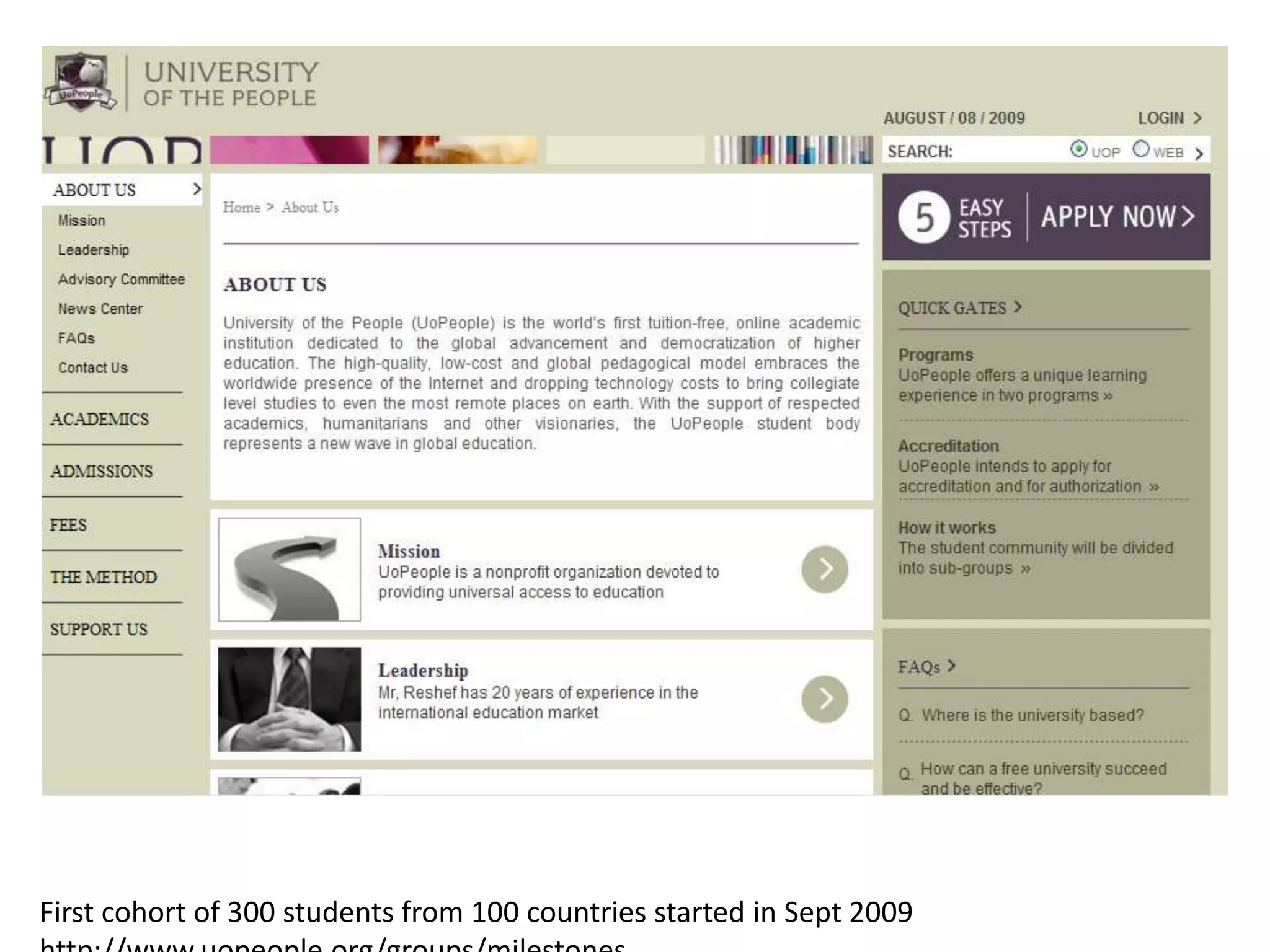
First cohort of 300 students from 100 countries started in Sept 2009
Open Scholars (Anderson, 2009)

• Archive their own work in a public space (eg
  ePrints repository)
• Filter, curate and share content with others
  (via blogs, social networks etc)
• Publish in open access journals
• Write open textbooks or lead open courses
• Lobby for copyright reform
• Act as change agents in their institutions
My current work
1. Social Media in Live Events (SMiLE)
2. CIP module development
     Living and Working on the Web
     Online Social Networks
3. Promoting multi-disciplinary work via Digital Economy
   USRG
4. Growth of social shopping (Facebook project, with
   Charles Dennis)
5. Challenges of social CRM for small businesses (with
   Paul Harrigan)
6. The role of social technologies in activism (with
   Thanassis Tiropanis and Chris Phethean, ECS)
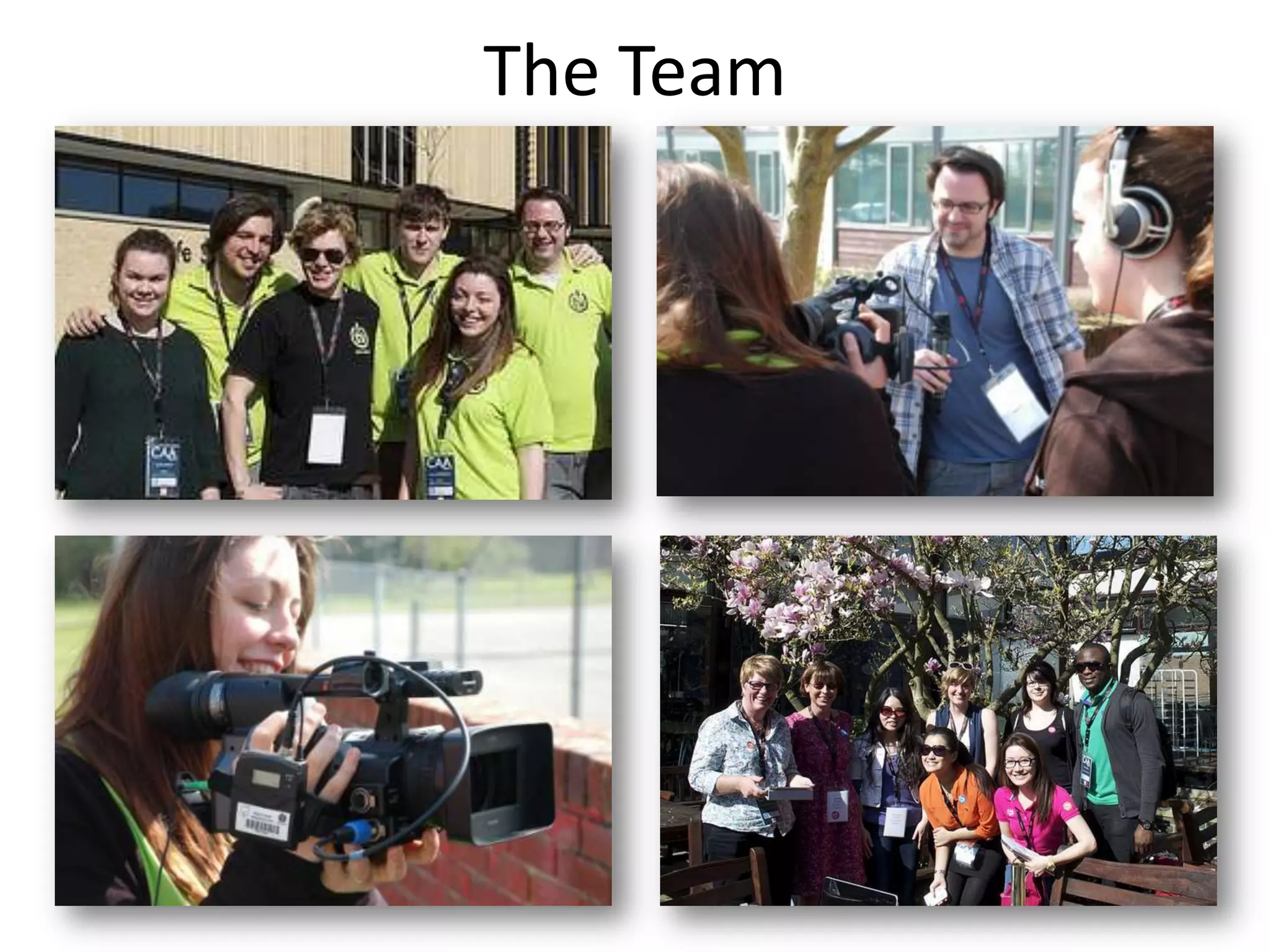
The Team
#caasoton
• Project details are available from the Digital Economy USRG
  website
• 13,000 tweets using the #caasoton hashtag
• 430 photos on Flickr
• Our Vimeo videos have been viewed over 2,100 times, with
  viewers from 47 countries.
• Nearly half of the 450 conference delegates used #caasoton
  on Twitter before, during, or after the event
• 70 people registered as ‘virtual attendees’ with some 20
  additional twitter users joining in the conversations at random
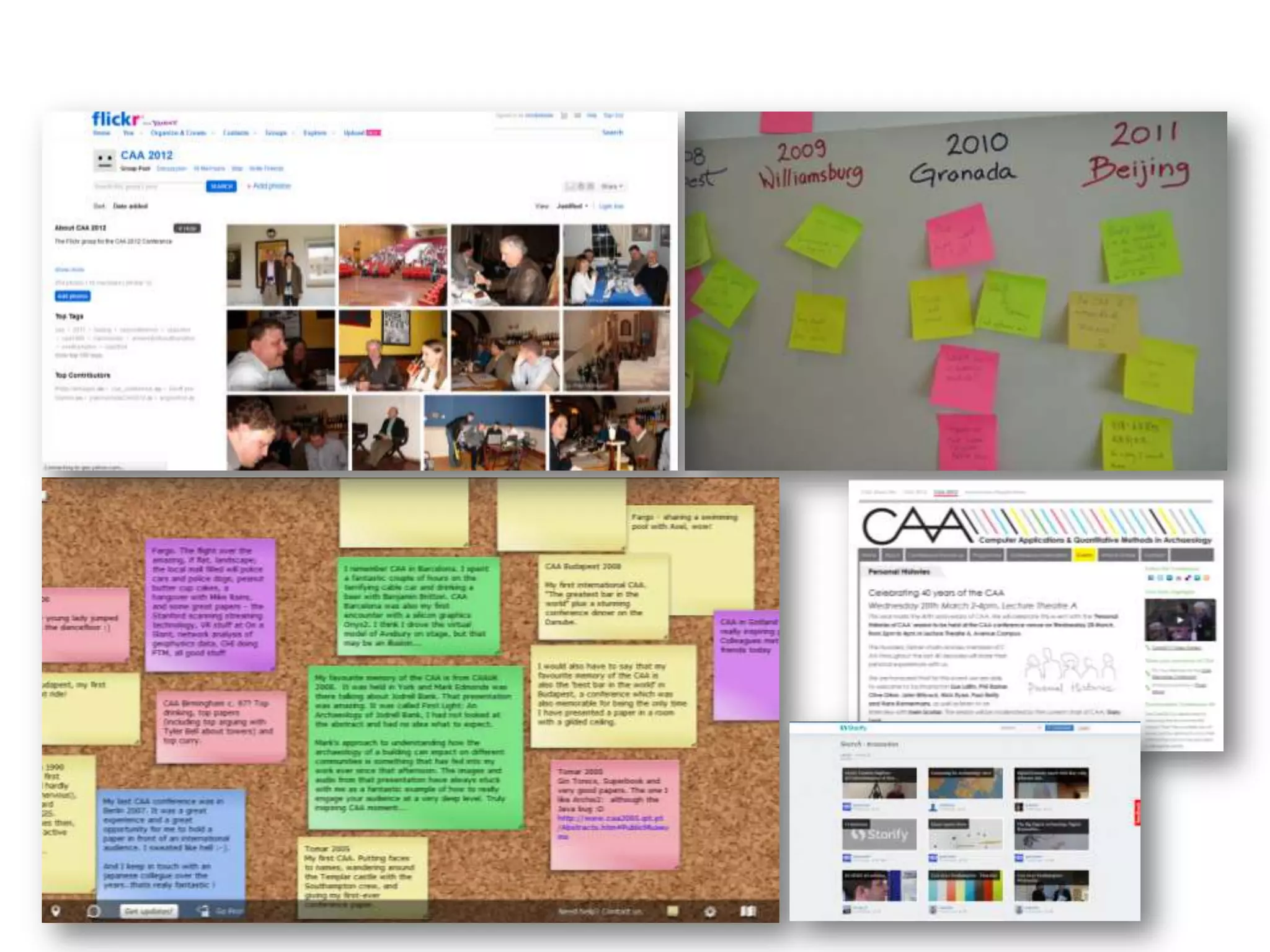
• The CAA Conference website has a round up of social media
  activity
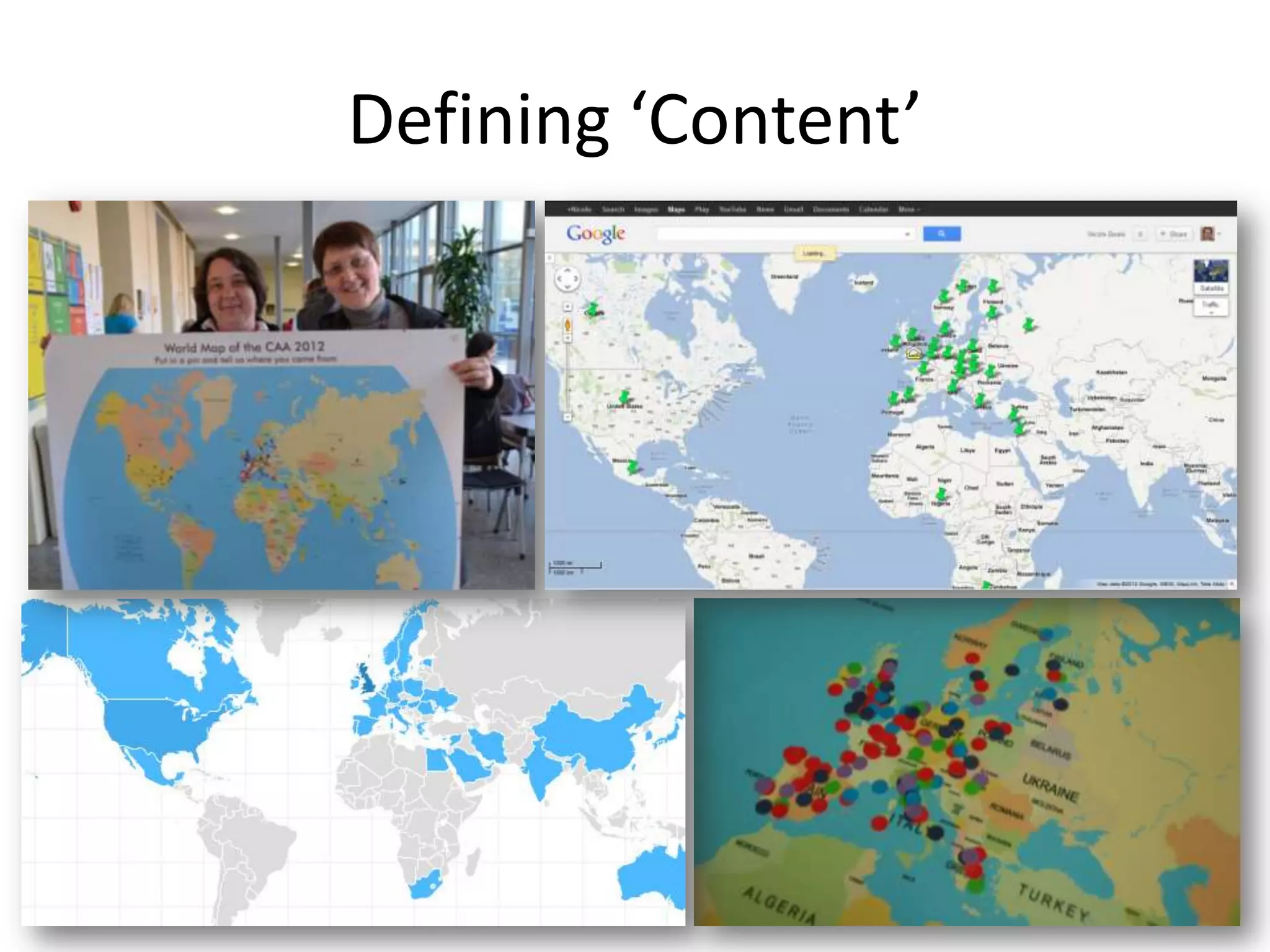
Defining ‘Content’
Networking and building ties
• social media allowed people to ‘meet’ others that they would not
  have had time to meet if those tools were not being so extensively
  supported
• circles of contacts were strengthened and extended through
  conversations occurring on Twitter around a common topic
• they had identified new contacts with whom a connection was not
  apparent before engaging with their social media user profiles
• it provided a way to find out more about delegates who were at the
  conference, in order for new possibilities for connections to be
  explored
• increased interest in sessions being run at the conference therefore
  broadening the group of participants,
Subject knowledge
• Twitter provided a safe environment to ask ‘silly’ questions
  that delegates would not be comfortable asking F2F
• A platform for conversations between individuals who were
  not together physically (because of differing interests)
• Online interactions made the subject matter more accessible
  for newcomers to archaeological computing
• Gaining ideas of topics that others found interesting
• Additional tools and resources were referred to and linked to
• Social media provided opportunities to follow up things that
  were happening at the event and therefore lead to the
  discovery of further information, more quickly
• Individuals could identify relevant sessions and attend the
  most useful parts of the conference
Challenges
• “If you have no social media account you are no
  one...”
• “I think just looking at the twitter stream gives a
  skewed idea of what people really think is
  interesting or noteworthy.”
• “It was hard to follow since so much posting was
  going on. I also felt like some folks were tweeting
  at the expense of hearing the presentations or
  discussion effectively.”
• “…. I just think people aren't good at multi-
  tasking even though they think they are.”
Ethical issues
• Securing permissions - where are the
  public/private boundaries?
• relationship between making thoughts public (i.e.
  tweeting) and making broader interconnected
  narratives and opinions public (i.e. via data
  mining of tweets)
• Should social media data be archived, and how?
Blog posts
• The first outputs from SMiLE have been
  published on the LSE Impact Blog:
  – http://blogs.lse.ac.uk/impactofsocialsciences/201
    2/05/23/social-media-enrich-but-isolate/ (23rd
    May)
  – http://blogs.lse.ac.uk/impactofsocialsciences/201
    2/06/25/smile-archive-visualise-tweets-
    conference/ (25th June)
  – And on Dave Chaffey’s Smart Insights Marketing
    Blog (11th July)
Next steps
• we are exploring possibilities for a University-
  wide system or procedure for archiving tweets.
• investigating new ways of expressing context
  through mechanisms such as timelines and
  network visualisations
• Code of conduct for ethical storage and curation
  of social media (with Oxford E-research Centre)
• Case study for JISC Datapool project
New CIP Modules:
linking research and teaching
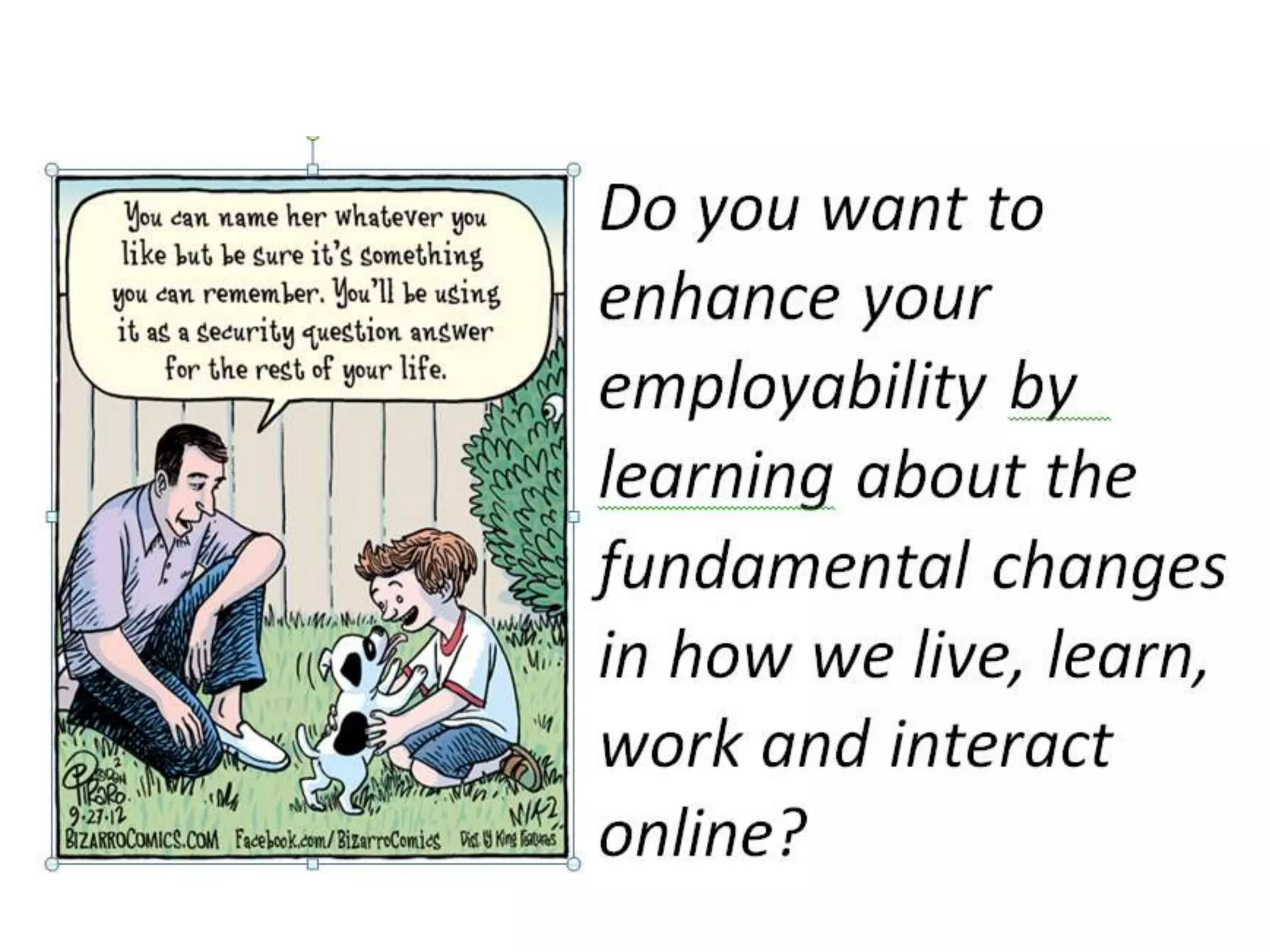
Living and Working on the Web
This module focuses on the development of online identities and networks to
enhance your employability in the digital age.

Specifically, it investigates how the digital world is influencing how we:
• collect, manage and evaluate online information – ideal preparation for
dissertations
• build an effective online identity for personal or career development
• create and curate content via blogging and video production
• interact with others for networking, team-building and project management
purposes
• deal with online privacy, safety and security issues
• participate remotely in live events

Working in small groups, you will develop and deliver your own online
seminars for assessment purposes, and engage in real time with a ‘real’ and
‘virtual’ audience at the University Digital Literacies Conference in May 2013.

For more information check out the module webpage and video or contact:
The “digitally literate” student

• be proactive, confident and flexible adopters of a range of
  technologies for personal, academic and professional use
• use appropriate technology effectively to search for and store high-
  quality information
• curate, reflect and critically evaluate the information obtained
• engage creatively and productively in relevant online communities
• be familiar with the use of collaboration tools to facilitate
  groupwork and project management
• be aware of the challenges inherent in ensuring online privacy and
  security
• Have developed appropriate communication skills for peer and
  tutor interaction within an ‘always on’ environment
• Parody Video (very funny, rather bad language!)
Student Digital Champions
• Help staff and students to learn new tools, build
  their online profiles, and manage social media for
  live events
• Champs to be attached to each USRG next
  academic year
• Digital Economy USRG is funding students to
  participate in relevant events, report back at
  monthly networking lunches and collaborate in
  research/teaching projects
• Supported by Social Media in Live Events (SMiLE)
  project
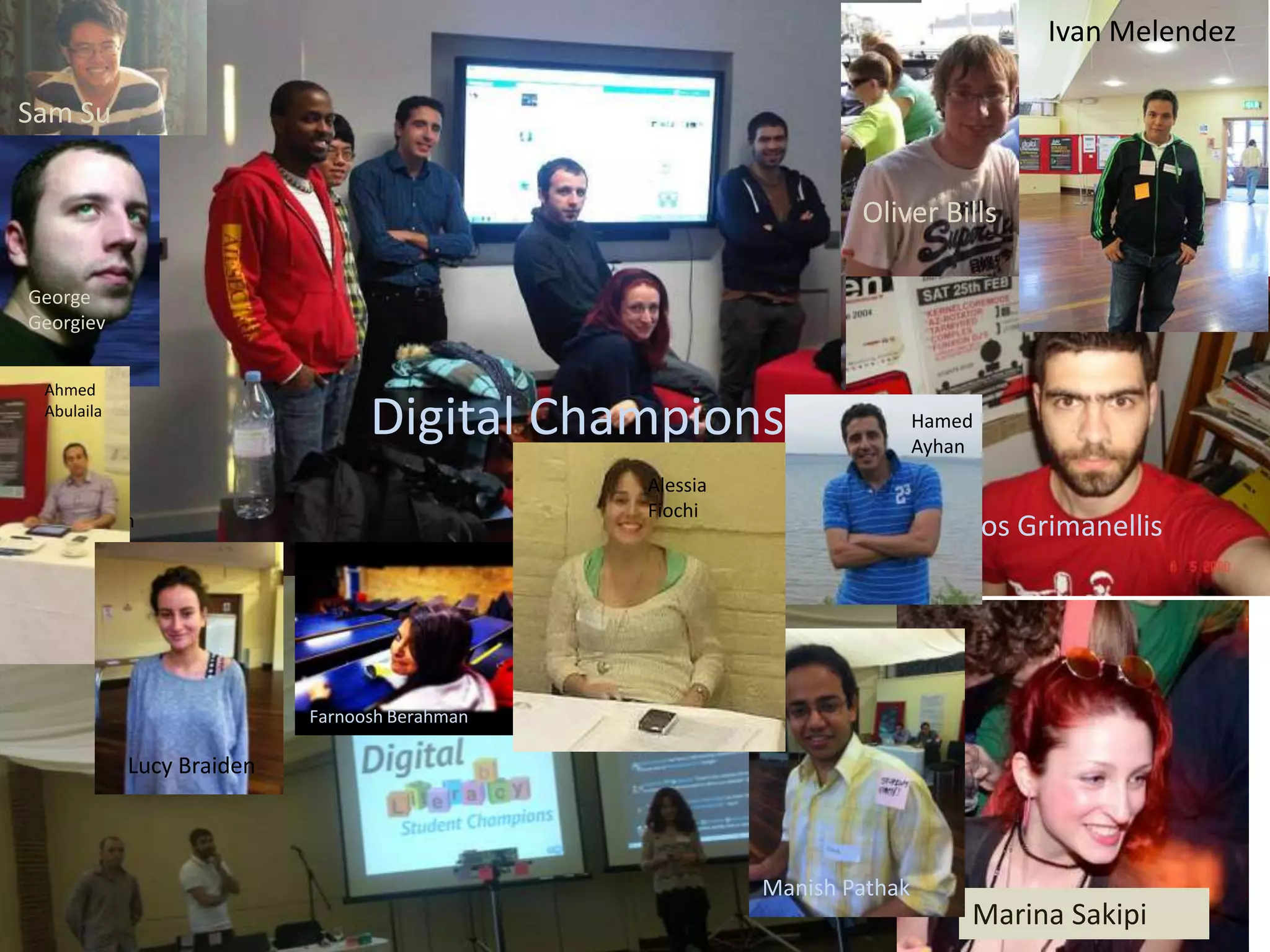
Ivan Melendez

Sam Su


                                                                  Oliver Bills

 George
 Georgiev


  Ahmed
  Abulaila
                                  Digital Champions                       Hamed
                                                                          Ayhan
                                                Alessia
Hamed Ayhan                                     Fiochi
                                                                           Panos Grimanellis


                            Farnoosh Berahman

             Lucy Braiden


                                                          Manish Pathak
                                                                              Marina Sakipi
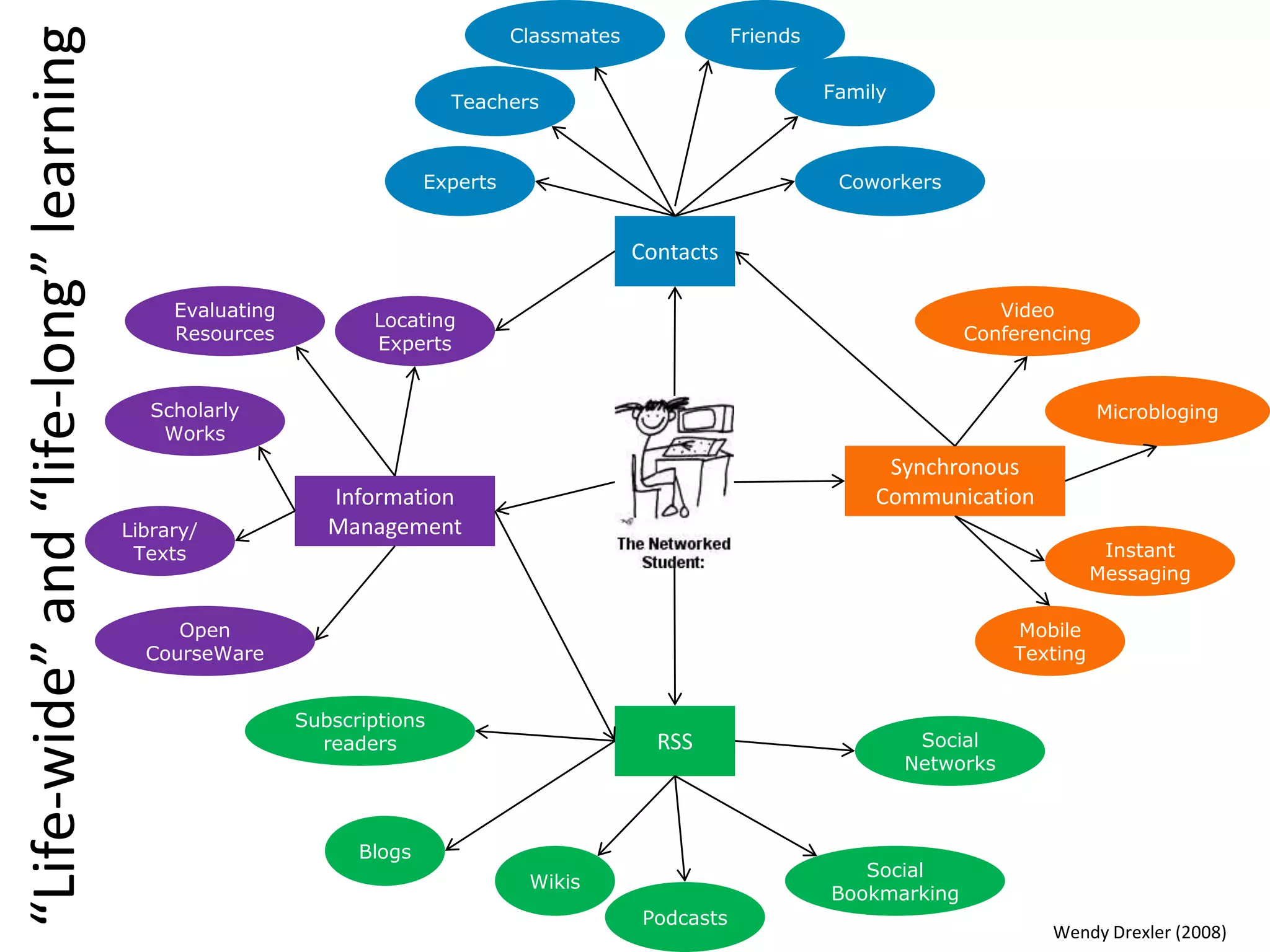
Classmates               Friends
“Life-wide” and “life-long” learning                                                                                Family
                                                                         Teachers


                                                                       Experts                                       Coworkers


                                                                                              Contacts

                                            Evaluating                                                                               Video
                                                                Locating
                                            Resources                                                                             Conferencing
                                                                Experts


                                          Scholarly                                                                                               Microbloging
                                           Works
                                                                                                                         Synchronous
                                                            Information                                                 Communication
                                       Library/             Management
                                        Texts                                                                                                      Instant
                                                                                                                                                  Messaging

                                            Open                                                                                        Mobile
                                         CourseWare                                                                                     Texting


                                                         Subscriptions
                                                           readers                              RSS                           Social
                                                                                                                             Networks


                                                               Blogs
                                                                                                                       Social
                                                                                  Wikis
                                                                                                                    Bookmarking
                                                                                               Podcasts
                                                                                                                                           Wendy Drexler (2008)
Digital Champion Activities
• PianoHAWK launch in London, May 2012
• Digital Literacies Conference
• Support for workshops:
   –   Online Identity
   –   Safety and Security
   –   Developing a Professional Profile
   –   Social Media for Researchers
   –   Professional Identity for International Teachers
• One to one training as required
• Helped set up a Chinese Social Network account for
  Modern Languages
• Digital Champions Presentation
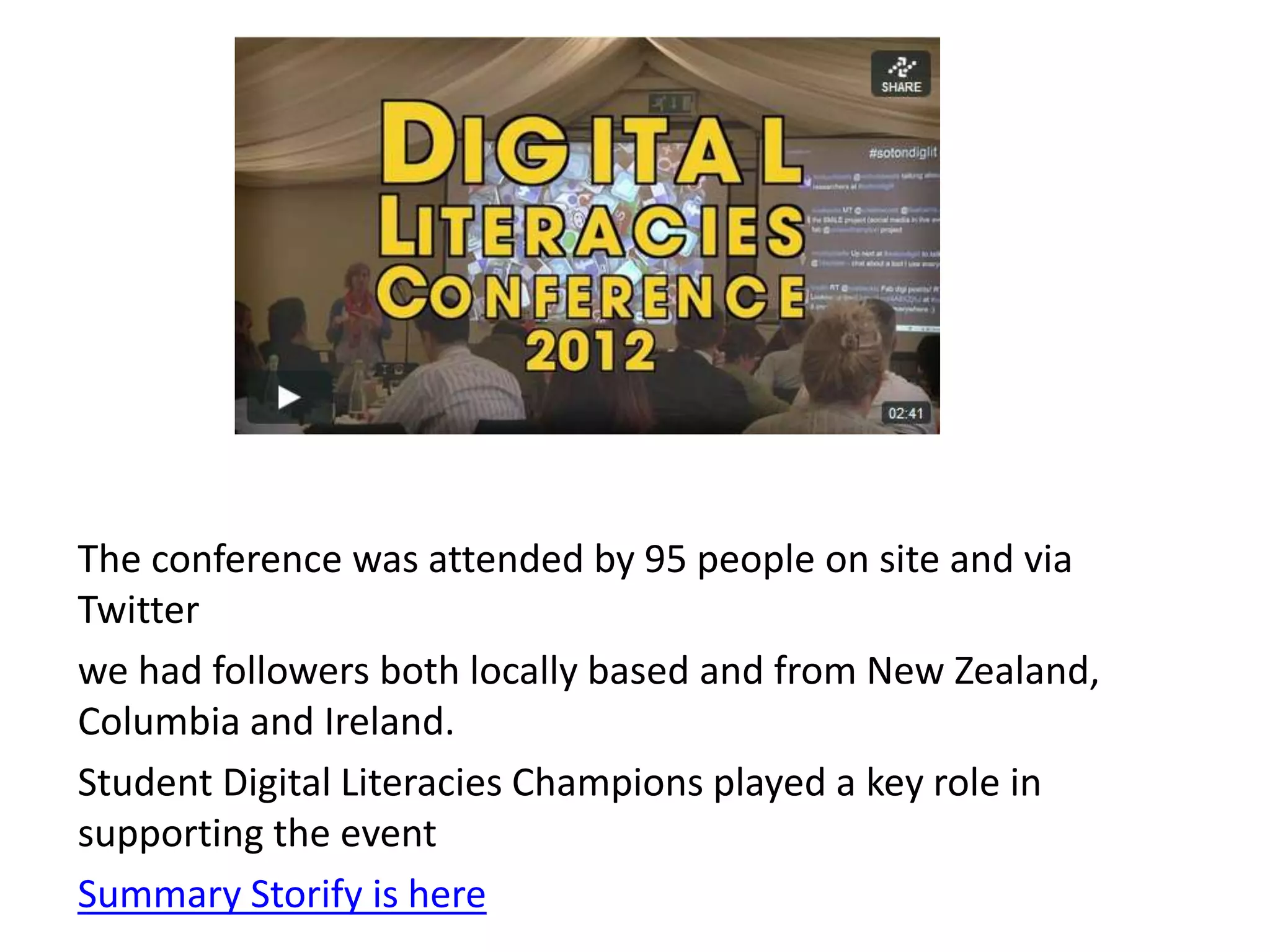
The conference was attended by 95 people on site and via
Twitter
we had followers both locally based and from New Zealand,
Columbia and Ireland.
Student Digital Literacies Champions played a key role in
supporting the event
Summary Storify is here
Creative Digifest #SXSC2: tomorrow!!!
FREE Afternoon Session: 2.00pm - 5:00pm, 11th October 2012
Location: Garden Court, Please book your place here.


How are digital networks transforming our lives? What can the latest
technologies do for you? If you’re not online, are you out of the game?

Workshops
•    Introduction to Social Media for Small Business by Dr Alan Rae
•    Introduction to Interactive Technologies and customer experience - by Tom Chapman (Headstream)
•    Social Media for Researchers by Nicole Beale (UoS)
•    How businesses can benefit from building a profile on Sina Weibo, by Ring Xu, (UoS)
•    The times they are a changing: the Live Web and the Like Economy” by Paul Caplan, (UoS)
Talks/ Demos
•    Jeremy Frey: Introducing the ‘IT as a utility’ network
•    Paul Walland (IT Innovation): where social networks meet media networks
•    AbuBakr Bahaj: Transforming energy demand through digital innovation
•    Benjamin Mawson: Locative Audio & Music You Can Walk Inside
•    Alex Rogers: The ORCHID project – interactions between humans and computerised agents
•    Toby Beresford: Creating social data leaderboards
•    Joe Lambert & Steve Cross : FormAgent: Data collection evolved, (Rareloop Ltd)
Unconference #SXSC2

SXSC is an ad hoc informal gathering aimed at people in the creative
industries/digital media who want to share their knowledge and learn about
new developments. It is a combination of discussions, demos, participation
and interaction. You can offer a talk, or a demo in one of the informal slots,
or just come along and watch, talk to people, or demonstrate kit informally in
the bar area. The idea is to get people talking and build up an informal
network in the region, where beginners and experts can learn from each
other, and make new connections.

mobile/smartphone • social media • visual media • visualisation • gaming •
augmented & mixed reality • design • metadata • webscience • linked data •
motion capture • arduino • architecture •digital humanities • advertising •
creative & performing arts • TV • raspberry pi • film & video • publishing •
video games • collaborative working

For the latest information follow us on twitter @SXSC or visit the Digital
Economy website.
Thank you!
    You are welcome to follow me on any of my social media
     sites:
•    www.lisaharrismarketing.com
•    www.delicious.com/lisaharris1
•    www.twitter.com/lisaharris
•    www.linkedin.com/in/lisajaneharris
•    www.slideshare.net/lisaharris
•    www.netvibes.com/ljharris
Lisa's research 10th oct 2012

Lisa's research 10th oct 2012

  • 1.
    Lisa’s Research 2012-3 Lisa Harris 10th October 2012
  • 3.
    About me… • 10years in banking industry and MBA @ Oxford Brookes makes me a “pracademic” • PhD @ Brunel, investigating case studies of technological change in banking industry • Teaching @ Brunel and Director of MBA programme • Teaching @ Soton and development of new MSc programme in Digital Marketing • Qualified tutor University of Liverpool e-MBA
  • 4.
    In a nutshell… •I’m interested in the innovative applications of technology on education, business and society • In particular, I’m currently involved in projects investigating: – Digital literacy – Social activism – Social CRM – Social shopping – Social learning • But first, a bit of background…
  • 5.
    “No more disruptiveinnovation, please”
  • 6.
    I like thesequotes… “…alternatively, you can ignore this advice, close the blinds and gaze lovingly at your peer-reviewed papers. All I would say is: remember Betamax.” (Dan Stern in Times Higher , warning of the need for innovation in universities) “If you don’t like change, you’re going to like irrelevance even less” (General Eric Shineski, US Army Chief of Staff) Eric Qualmann (video, 4 mins)
  • 7.
    What technologies arebeing discussed here? • “The modern world overwhelms people with data and this is confusing and harmful to the mind” (Conrad Gessner, 1565) • “It will create forgetfulness in the learners' souls, because they will not use their memories.“ (Socrates, 469-399BC) • “It socially isolates readers and detracts from the spiritually uplifting group practice of getting news from the pulpit” (Malesherbes, 1787) • “It might hurt radio, conversation, reading, and the patterns of family living and result in the further vulgarisation of American culture“ (Ellen Wartella, 1962) • “It’s making us stupid” (Nicholas Carr, 2008)
  • 8.
    The times theyare a changing… • Availability of free content (e.g. video of lectures) by global experts both in education and industry from the likes of MIT, Stanford, Harvard, Oxford • University reliance upon the ‘Russell Group’ arrogance – but this is a 20th century brand. • Expectation from students of flexible evening/weekend/online learning options, as they seek to maintain job and family commitments • Accessibility and breadth of information now available online alters the traditional role of the lecturer as gatekeeper to relevant knowledge • Difficult economic conditions and higher fees adjust the risk/reward calculation of attending university • Student profile increasingly international and with a wide range of ages and work experience • Princeton Uni now prohibits staff from signing away the copyright of their papers to academic publishers • Currently there are calls to boycott reviewing for non-open journals
  • 9.
    How many ofthese existed 10 years ago? John
  • 10.
    First cohort of300 students from 100 countries started in Sept 2009
  • 11.
    Open Scholars (Anderson,2009) • Archive their own work in a public space (eg ePrints repository) • Filter, curate and share content with others (via blogs, social networks etc) • Publish in open access journals • Write open textbooks or lead open courses • Lobby for copyright reform • Act as change agents in their institutions
  • 12.
    My current work 1.Social Media in Live Events (SMiLE) 2. CIP module development Living and Working on the Web Online Social Networks 3. Promoting multi-disciplinary work via Digital Economy USRG 4. Growth of social shopping (Facebook project, with Charles Dennis) 5. Challenges of social CRM for small businesses (with Paul Harrigan) 6. The role of social technologies in activism (with Thanassis Tiropanis and Chris Phethean, ECS)
  • 14.
  • 15.
    #caasoton • Project detailsare available from the Digital Economy USRG website • 13,000 tweets using the #caasoton hashtag • 430 photos on Flickr • Our Vimeo videos have been viewed over 2,100 times, with viewers from 47 countries. • Nearly half of the 450 conference delegates used #caasoton on Twitter before, during, or after the event • 70 people registered as ‘virtual attendees’ with some 20 additional twitter users joining in the conversations at random • The CAA Conference website has a round up of social media activity
  • 16.
  • 18.
    Networking and buildingties • social media allowed people to ‘meet’ others that they would not have had time to meet if those tools were not being so extensively supported • circles of contacts were strengthened and extended through conversations occurring on Twitter around a common topic • they had identified new contacts with whom a connection was not apparent before engaging with their social media user profiles • it provided a way to find out more about delegates who were at the conference, in order for new possibilities for connections to be explored • increased interest in sessions being run at the conference therefore broadening the group of participants,
  • 19.
    Subject knowledge • Twitterprovided a safe environment to ask ‘silly’ questions that delegates would not be comfortable asking F2F • A platform for conversations between individuals who were not together physically (because of differing interests) • Online interactions made the subject matter more accessible for newcomers to archaeological computing • Gaining ideas of topics that others found interesting • Additional tools and resources were referred to and linked to • Social media provided opportunities to follow up things that were happening at the event and therefore lead to the discovery of further information, more quickly • Individuals could identify relevant sessions and attend the most useful parts of the conference
  • 20.
    Challenges • “If youhave no social media account you are no one...” • “I think just looking at the twitter stream gives a skewed idea of what people really think is interesting or noteworthy.” • “It was hard to follow since so much posting was going on. I also felt like some folks were tweeting at the expense of hearing the presentations or discussion effectively.” • “…. I just think people aren't good at multi- tasking even though they think they are.”
  • 21.
    Ethical issues • Securingpermissions - where are the public/private boundaries? • relationship between making thoughts public (i.e. tweeting) and making broader interconnected narratives and opinions public (i.e. via data mining of tweets) • Should social media data be archived, and how?
  • 22.
    Blog posts • Thefirst outputs from SMiLE have been published on the LSE Impact Blog: – http://blogs.lse.ac.uk/impactofsocialsciences/201 2/05/23/social-media-enrich-but-isolate/ (23rd May) – http://blogs.lse.ac.uk/impactofsocialsciences/201 2/06/25/smile-archive-visualise-tweets- conference/ (25th June) – And on Dave Chaffey’s Smart Insights Marketing Blog (11th July)
  • 23.
    Next steps • weare exploring possibilities for a University- wide system or procedure for archiving tweets. • investigating new ways of expressing context through mechanisms such as timelines and network visualisations • Code of conduct for ethical storage and curation of social media (with Oxford E-research Centre) • Case study for JISC Datapool project
  • 24.
    New CIP Modules: linkingresearch and teaching
  • 26.
    Living and Workingon the Web This module focuses on the development of online identities and networks to enhance your employability in the digital age. Specifically, it investigates how the digital world is influencing how we: • collect, manage and evaluate online information – ideal preparation for dissertations • build an effective online identity for personal or career development • create and curate content via blogging and video production • interact with others for networking, team-building and project management purposes • deal with online privacy, safety and security issues • participate remotely in live events Working in small groups, you will develop and deliver your own online seminars for assessment purposes, and engage in real time with a ‘real’ and ‘virtual’ audience at the University Digital Literacies Conference in May 2013. For more information check out the module webpage and video or contact:
  • 27.
    The “digitally literate”student • be proactive, confident and flexible adopters of a range of technologies for personal, academic and professional use • use appropriate technology effectively to search for and store high- quality information • curate, reflect and critically evaluate the information obtained • engage creatively and productively in relevant online communities • be familiar with the use of collaboration tools to facilitate groupwork and project management • be aware of the challenges inherent in ensuring online privacy and security • Have developed appropriate communication skills for peer and tutor interaction within an ‘always on’ environment • Parody Video (very funny, rather bad language!)
  • 28.
    Student Digital Champions •Help staff and students to learn new tools, build their online profiles, and manage social media for live events • Champs to be attached to each USRG next academic year • Digital Economy USRG is funding students to participate in relevant events, report back at monthly networking lunches and collaborate in research/teaching projects • Supported by Social Media in Live Events (SMiLE) project
  • 29.
    Ivan Melendez Sam Su Oliver Bills George Georgiev Ahmed Abulaila Digital Champions Hamed Ayhan Alessia Hamed Ayhan Fiochi Panos Grimanellis Farnoosh Berahman Lucy Braiden Manish Pathak Marina Sakipi
  • 31.
    Classmates Friends “Life-wide” and “life-long” learning Family Teachers Experts Coworkers Contacts Evaluating Video Locating Resources Conferencing Experts Scholarly Microbloging Works Synchronous Information Communication Library/ Management Texts Instant Messaging Open Mobile CourseWare Texting Subscriptions readers RSS Social Networks Blogs Social Wikis Bookmarking Podcasts Wendy Drexler (2008)
  • 32.
    Digital Champion Activities •PianoHAWK launch in London, May 2012 • Digital Literacies Conference • Support for workshops: – Online Identity – Safety and Security – Developing a Professional Profile – Social Media for Researchers – Professional Identity for International Teachers • One to one training as required • Helped set up a Chinese Social Network account for Modern Languages • Digital Champions Presentation
  • 33.
    The conference wasattended by 95 people on site and via Twitter we had followers both locally based and from New Zealand, Columbia and Ireland. Student Digital Literacies Champions played a key role in supporting the event Summary Storify is here
  • 34.
    Creative Digifest #SXSC2:tomorrow!!! FREE Afternoon Session: 2.00pm - 5:00pm, 11th October 2012 Location: Garden Court, Please book your place here. How are digital networks transforming our lives? What can the latest technologies do for you? If you’re not online, are you out of the game? Workshops • Introduction to Social Media for Small Business by Dr Alan Rae • Introduction to Interactive Technologies and customer experience - by Tom Chapman (Headstream) • Social Media for Researchers by Nicole Beale (UoS) • How businesses can benefit from building a profile on Sina Weibo, by Ring Xu, (UoS) • The times they are a changing: the Live Web and the Like Economy” by Paul Caplan, (UoS) Talks/ Demos • Jeremy Frey: Introducing the ‘IT as a utility’ network • Paul Walland (IT Innovation): where social networks meet media networks • AbuBakr Bahaj: Transforming energy demand through digital innovation • Benjamin Mawson: Locative Audio & Music You Can Walk Inside • Alex Rogers: The ORCHID project – interactions between humans and computerised agents • Toby Beresford: Creating social data leaderboards • Joe Lambert & Steve Cross : FormAgent: Data collection evolved, (Rareloop Ltd)
  • 35.
    Unconference #SXSC2 SXSC isan ad hoc informal gathering aimed at people in the creative industries/digital media who want to share their knowledge and learn about new developments. It is a combination of discussions, demos, participation and interaction. You can offer a talk, or a demo in one of the informal slots, or just come along and watch, talk to people, or demonstrate kit informally in the bar area. The idea is to get people talking and build up an informal network in the region, where beginners and experts can learn from each other, and make new connections. mobile/smartphone • social media • visual media • visualisation • gaming • augmented & mixed reality • design • metadata • webscience • linked data • motion capture • arduino • architecture •digital humanities • advertising • creative & performing arts • TV • raspberry pi • film & video • publishing • video games • collaborative working For the latest information follow us on twitter @SXSC or visit the Digital Economy website.
  • 36.
    Thank you! You are welcome to follow me on any of my social media sites: • www.lisaharrismarketing.com • www.delicious.com/lisaharris1 • www.twitter.com/lisaharris • www.linkedin.com/in/lisajaneharris • www.slideshare.net/lisaharris • www.netvibes.com/ljharris