Lisa’s Research 
Lisa Harris 
3rd October 2014
About.me/lisa.harris 
2
About me… 
• 10 years in banking industry and MBA @ Oxford Brookes 
makes me a “pracademic” 
• PhD @ Brunel, investigating technological change in 
banking 
• Teaching @ Brunel and Director of MBA programme 
• Teaching @ Soton and course leader of MSc Digital 
Marketing 
• Qualified tutor University of Liverpool e-MBA 
• Student Digital Champions 
• Associate Director of CITE and Chair of Digital Economy 
Research Group 
• Deputy Director of Web Science Institute
In a nutshell… 
• I’m interested in the innovative applications of 
technology on education, business and society 
• In particular, I’m currently involved in projects 
investigating social learning and social activism 
“Educational innovator & disruptor at University of 
Southampton. I champion Web Science, Digital 
Literacies, Student DigiChamps & MOOCs. I make stuff 
happen.”
I aspire to “Open Scholarship” 
(Anderson, 2009) 
• Archive my own work in a public space (eg ePrints 
repository, blog) 
• Filter, curate and share content with others (via 
blogs, social networks etc) 
• Present at conferences where the work is freely 
shared online 
• Publish in open access journals 
• Write open textbooks or lead open courses 
• Act as change agents in traditional institutions
What technologies are referred to here? 
“It will create forgetfulness in the learners' souls, because 
they will not use their memories.“ (Socrates, 469-399BC) 
“The modern world overwhelms people with data and 
this is confusing and harmful to the mind” (Conrad 
Gessner, 1565) 
Technology will kill… 
And the latest from Erik Qualman 
7
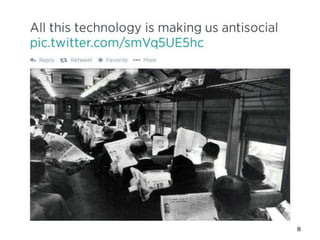
8
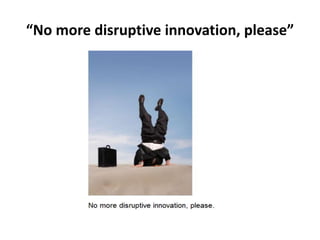
“No more disruptive innovation, please”
The times they are a changing… 
• Availability of free content (e.g. video of lectures) by global experts 
• University reliance upon ‘Russell Group’ arrogance – but this is a 
20th century brand. 
• Expectation from students of flexible evening/weekend/online 
learning options, as they seek to maintain job and family 
commitments 
• Accessibility and breadth of information online alters the traditional 
role of the lecturer as gatekeeper to relevant knowledge 
• Difficult economic conditions and higher fees adjust the risk/reward 
calculation of attending university 
• Student profile increasingly international and with a wide range of 
ages and work experience
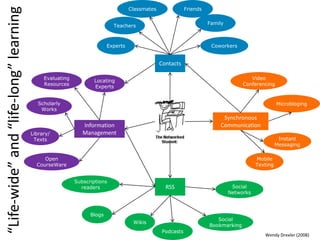
“Life-wide” and “life-long” learning 
Contacts 
Teachers 
Experts 
Classmates Friends 
Family 
Coworkers 
Video 
Conferencing 
Synchronous 
Communication 
Mobile 
Texting 
Microbloging 
Instant 
Messaging 
RSS 
Wikis 
Subscriptions 
readers 
Blogs 
Podcasts 
Social 
Networks 
Social 
Bookmarking 
Information 
Evaluating 
Resources 
Scholarly 
Works 
Library/ Management 
Texts 
Open 
CourseWare 
Locating 
Experts 
Wendy Drexler (2008)
My collaborative projects 
• Curriculum Innovation 
• MOOCS 
– Web Science 
– Digital Marketing 
• Blog.soton.ac.uk 
• Student Digital Champions 
Digital Literacy (satire by The Onion)
MOOCs 
• Showcase the university’s teaching/research 
/student contributions to encourage enrolments 
on campus courses and inspire innovation there 
• Sharing of participants’ intentions/experiences 
via social media is integral to the package 
• these interactions carry an authenticity that 
traditional promotional materials lack. 
• Mobile/tablet access to course is crucial 
• Full range of Southampton MOOCs
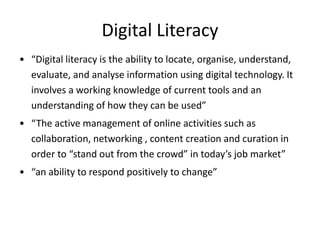
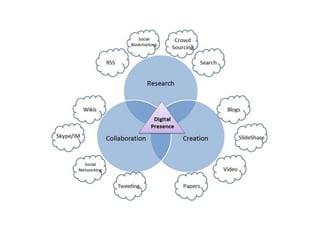
Digital Literacy 
• “Digital literacy is the ability to locate, organise, understand, 
evaluate, and analyse information using digital technology. It 
involves a working knowledge of current tools and an 
understanding of how they can be used” 
• “The active management of online activities such as 
collaboration, networking , content creation and curation in 
order to “stand out from the crowd” in today’s job market” 
• “an ability to respond positively to change”
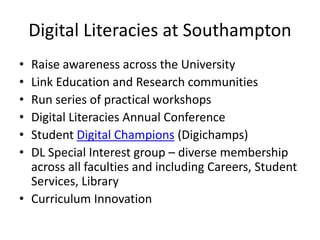
Digital Literacies at Southampton 
• Raise awareness across the University 
• Link Education and Research communities 
• Run series of practical workshops 
• Digital Literacies Annual Conference 
• Student Digital Champions (Digichamps) 
• DL Special Interest group – diverse membership 
across all faculties and including Careers, Student 
Services, Library 
• Curriculum Innovation
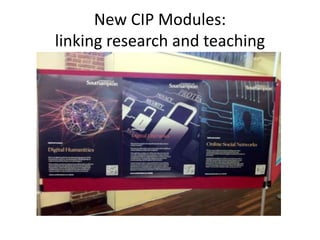
New CIP Modules: 
linking research and teaching
“The new media environment can be disruptive to our 
current teaching methods and philosophies. As we 
increasingly move toward an environment of instant and 
infinite information, it becomes less important for 
students to know, memorize, or recall information and 
more important for them to be able to find, sort, analyze, 
share, discuss, critique, and create information and 
knowledge. They need to move from being simply 
knowledgeable to being knowledge-able.” 
Wesch, M., 2011. From Knowledgeable to Knowledge-able: 
Building New Learning Environments for New Media 
Environments | UM Events | University of Michigan.
Blogs: pulling it all together 
• Use the blog framework as a central point pulling in your other social 
media content: Digital Economy Blog or to aggregate a series of blogs as 
per Multidisciplinary Research 
• Tweets – Flickr – LinkedIn – Vimeo - Slideshare – Pinterest - Soundcloud - 
YouTube 
• You can also embed other social media within individual blog posts 
• Video is increasingly important, especially authentic user generated 
content 
• Provide sharing buttons so that your readers can share your content on 
their own networks 
• These activities provide a regular supply of googlejuice to the blog 
• Start your own blog
What does Google like? 
• Social media interaction with web content is 
the *biggest influence* on its search visibility: 
1. Facebook shares 
2. Facebook comments 
3. Facebook likes 
4. Tweets 
http://www.socialmediastrategist.co.uk/blog/ 
1-news/175-social-media-seo
Living and Working on the Web 
This module focuses on the development of online identities and 
networks to enhance employability in the digital age. 
It investigates how the digital world is influencing how we: 
• collect, manage and evaluate online information – ideal 
preparation for dissertations 
• build an online identity for personal or career development 
• create and curate content via blogging and video production 
• interact with others for networking, team-building and project 
management purposes 
• deal with online privacy, safety and security issues 
• participate remotely in live events 
For more information check out the module webpage and video 
and the students’ feedback video
Successes 
• Employability advantages 
• Raised awareness of digital literacy and blended 
learning across University 
• Digitally proficient students can mentor less 
confident colleagues 
• Active rather than passive learning 
• Flexibility of timing/location of learning for 
students and tutors 
• Study recommendations were made between 
levels and disciplines
Web Science Institute 
• The Web Science Institute brings together world-leading 
multidisciplinary expertise to tackle the 
most pressing global challenges facing the World 
Wide Web and wider society today. 
• Events 
– Barry Wellman 31st October 6pm @unisouthampton 
• Funded PhD opportunities 
• WSI Blog 
• WSI website 
25
Student Digital Champions: 
Flo Broderick 
• Met at SXSC2 in October 2012 
• Took Digital Marketing and CI modules, learned 
interviewing skills and video editing 
• Helped out in a big way at Digital Media Europe 
• Masterminded student contribution to Digital 
Literacies Conference 
• Provided student perspective on our research into 
online learning MOOCs 
• Visited Italy to carry out MOOC filming in Portus 
• Now in Madrid working for Telefonica Digital
Joining the Digichamps 
• More information: 
– Digichamps Blog 
– Facebook Group 
– What do the Digichamps do? (video) 
• Digichamps help staff and students with educational 
applications of new technologies, build professional online 
profiles, and manage social media for live events. 
• Students from all University Faculties & all levels of study 
• Send a note to Lisa explaining why you would like to join 
the Digichamps and highlighting the skills you offer / would 
like to develop 
27

Lisa's research oct 2014

  • 1.
    Lisa’s Research LisaHarris 3rd October 2014
  • 2.
  • 3.
    About me… •10 years in banking industry and MBA @ Oxford Brookes makes me a “pracademic” • PhD @ Brunel, investigating technological change in banking • Teaching @ Brunel and Director of MBA programme • Teaching @ Soton and course leader of MSc Digital Marketing • Qualified tutor University of Liverpool e-MBA • Student Digital Champions • Associate Director of CITE and Chair of Digital Economy Research Group • Deputy Director of Web Science Institute
  • 4.
    In a nutshell… • I’m interested in the innovative applications of technology on education, business and society • In particular, I’m currently involved in projects investigating social learning and social activism “Educational innovator & disruptor at University of Southampton. I champion Web Science, Digital Literacies, Student DigiChamps & MOOCs. I make stuff happen.”
  • 5.
    I aspire to“Open Scholarship” (Anderson, 2009) • Archive my own work in a public space (eg ePrints repository, blog) • Filter, curate and share content with others (via blogs, social networks etc) • Present at conferences where the work is freely shared online • Publish in open access journals • Write open textbooks or lead open courses • Act as change agents in traditional institutions
  • 7.
    What technologies arereferred to here? “It will create forgetfulness in the learners' souls, because they will not use their memories.“ (Socrates, 469-399BC) “The modern world overwhelms people with data and this is confusing and harmful to the mind” (Conrad Gessner, 1565) Technology will kill… And the latest from Erik Qualman 7
  • 8.
  • 9.
    “No more disruptiveinnovation, please”
  • 10.
    The times theyare a changing… • Availability of free content (e.g. video of lectures) by global experts • University reliance upon ‘Russell Group’ arrogance – but this is a 20th century brand. • Expectation from students of flexible evening/weekend/online learning options, as they seek to maintain job and family commitments • Accessibility and breadth of information online alters the traditional role of the lecturer as gatekeeper to relevant knowledge • Difficult economic conditions and higher fees adjust the risk/reward calculation of attending university • Student profile increasingly international and with a wide range of ages and work experience
  • 11.
    “Life-wide” and “life-long”learning Contacts Teachers Experts Classmates Friends Family Coworkers Video Conferencing Synchronous Communication Mobile Texting Microbloging Instant Messaging RSS Wikis Subscriptions readers Blogs Podcasts Social Networks Social Bookmarking Information Evaluating Resources Scholarly Works Library/ Management Texts Open CourseWare Locating Experts Wendy Drexler (2008)
  • 12.
    My collaborative projects • Curriculum Innovation • MOOCS – Web Science – Digital Marketing • Blog.soton.ac.uk • Student Digital Champions Digital Literacy (satire by The Onion)
  • 13.
    MOOCs • Showcasethe university’s teaching/research /student contributions to encourage enrolments on campus courses and inspire innovation there • Sharing of participants’ intentions/experiences via social media is integral to the package • these interactions carry an authenticity that traditional promotional materials lack. • Mobile/tablet access to course is crucial • Full range of Southampton MOOCs
  • 15.
    Digital Literacy •“Digital literacy is the ability to locate, organise, understand, evaluate, and analyse information using digital technology. It involves a working knowledge of current tools and an understanding of how they can be used” • “The active management of online activities such as collaboration, networking , content creation and curation in order to “stand out from the crowd” in today’s job market” • “an ability to respond positively to change”
  • 17.
    Digital Literacies atSouthampton • Raise awareness across the University • Link Education and Research communities • Run series of practical workshops • Digital Literacies Annual Conference • Student Digital Champions (Digichamps) • DL Special Interest group – diverse membership across all faculties and including Careers, Student Services, Library • Curriculum Innovation
  • 18.
    New CIP Modules: linking research and teaching
  • 19.
    “The new mediaenvironment can be disruptive to our current teaching methods and philosophies. As we increasingly move toward an environment of instant and infinite information, it becomes less important for students to know, memorize, or recall information and more important for them to be able to find, sort, analyze, share, discuss, critique, and create information and knowledge. They need to move from being simply knowledgeable to being knowledge-able.” Wesch, M., 2011. From Knowledgeable to Knowledge-able: Building New Learning Environments for New Media Environments | UM Events | University of Michigan.
  • 20.
    Blogs: pulling itall together • Use the blog framework as a central point pulling in your other social media content: Digital Economy Blog or to aggregate a series of blogs as per Multidisciplinary Research • Tweets – Flickr – LinkedIn – Vimeo - Slideshare – Pinterest - Soundcloud - YouTube • You can also embed other social media within individual blog posts • Video is increasingly important, especially authentic user generated content • Provide sharing buttons so that your readers can share your content on their own networks • These activities provide a regular supply of googlejuice to the blog • Start your own blog
  • 21.
    What does Googlelike? • Social media interaction with web content is the *biggest influence* on its search visibility: 1. Facebook shares 2. Facebook comments 3. Facebook likes 4. Tweets http://www.socialmediastrategist.co.uk/blog/ 1-news/175-social-media-seo
  • 23.
    Living and Workingon the Web This module focuses on the development of online identities and networks to enhance employability in the digital age. It investigates how the digital world is influencing how we: • collect, manage and evaluate online information – ideal preparation for dissertations • build an online identity for personal or career development • create and curate content via blogging and video production • interact with others for networking, team-building and project management purposes • deal with online privacy, safety and security issues • participate remotely in live events For more information check out the module webpage and video and the students’ feedback video
  • 24.
    Successes • Employabilityadvantages • Raised awareness of digital literacy and blended learning across University • Digitally proficient students can mentor less confident colleagues • Active rather than passive learning • Flexibility of timing/location of learning for students and tutors • Study recommendations were made between levels and disciplines
  • 25.
    Web Science Institute • The Web Science Institute brings together world-leading multidisciplinary expertise to tackle the most pressing global challenges facing the World Wide Web and wider society today. • Events – Barry Wellman 31st October 6pm @unisouthampton • Funded PhD opportunities • WSI Blog • WSI website 25
  • 26.
    Student Digital Champions: Flo Broderick • Met at SXSC2 in October 2012 • Took Digital Marketing and CI modules, learned interviewing skills and video editing • Helped out in a big way at Digital Media Europe • Masterminded student contribution to Digital Literacies Conference • Provided student perspective on our research into online learning MOOCs • Visited Italy to carry out MOOC filming in Portus • Now in Madrid working for Telefonica Digital
  • 27.
    Joining the Digichamps • More information: – Digichamps Blog – Facebook Group – What do the Digichamps do? (video) • Digichamps help staff and students with educational applications of new technologies, build professional online profiles, and manage social media for live events. • Students from all University Faculties & all levels of study • Send a note to Lisa explaining why you would like to join the Digichamps and highlighting the skills you offer / would like to develop 27