Harnessing the power of new media
for learning, teaching and research

  Gráinne Conole, Leicester University
        12th June 2012, UNISA
Outline
• Characteristics of
  new media
• Harnessing the net
  for research
• A new approach to
  design
• Reflections and
  implications
Activity

• What are the
  characteristics of new
  technologies?
• What are their
  implications for
  learning, teaching and
  research?
New media
Characteristics        Implications


                            Conole and Alevizou, 2010
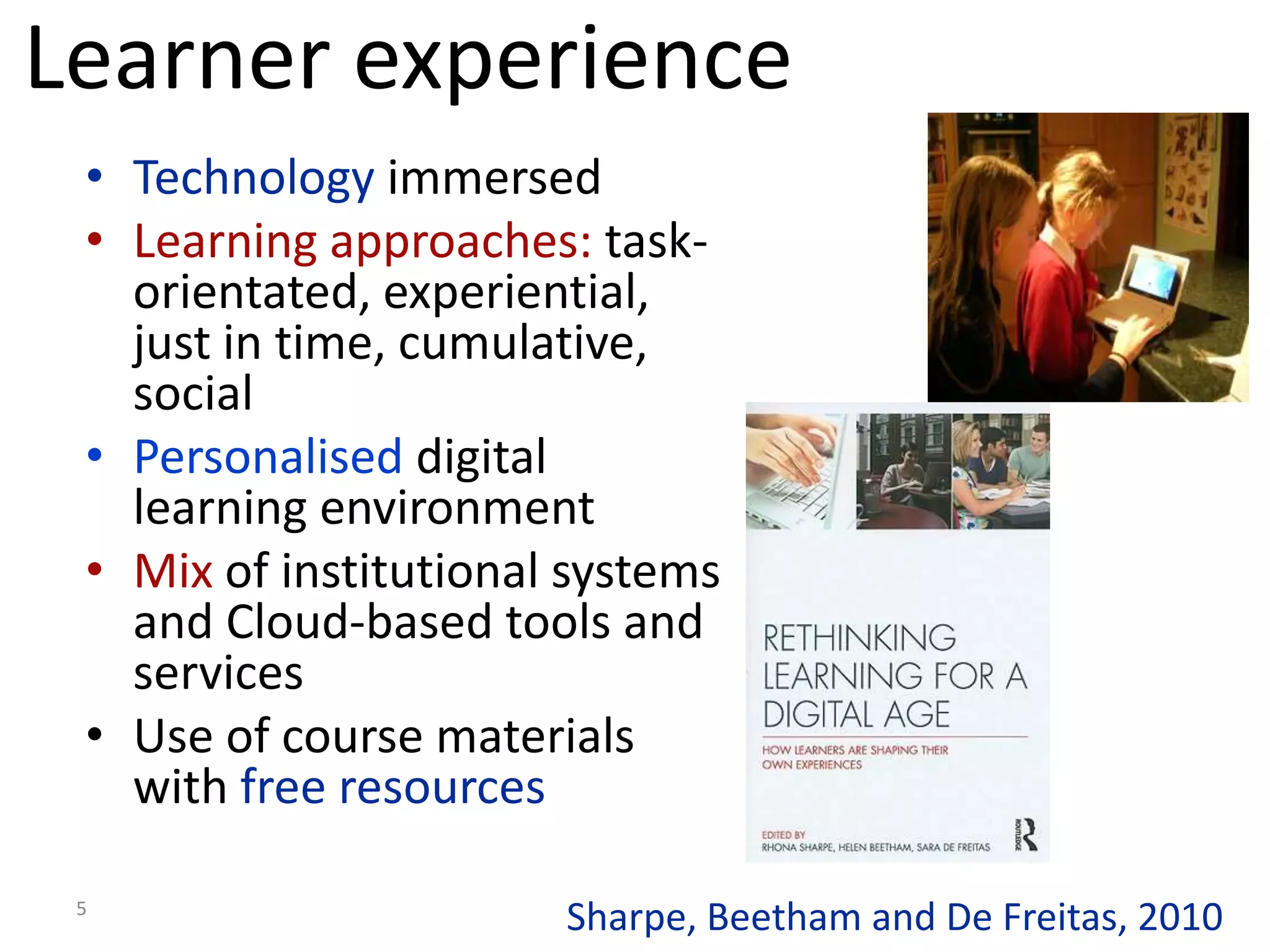
Learner experience
 • Technology immersed
 • Learning approaches: task-
   orientated, experiential,
   just in time, cumulative,
   social
 • Personalised digital
   learning environment
 • Mix of institutional systems
   and Cloud-based tools and
   services
 • Use of course materials
   with free resources

 5
                       Sharpe, Beetham and De Freitas, 2010
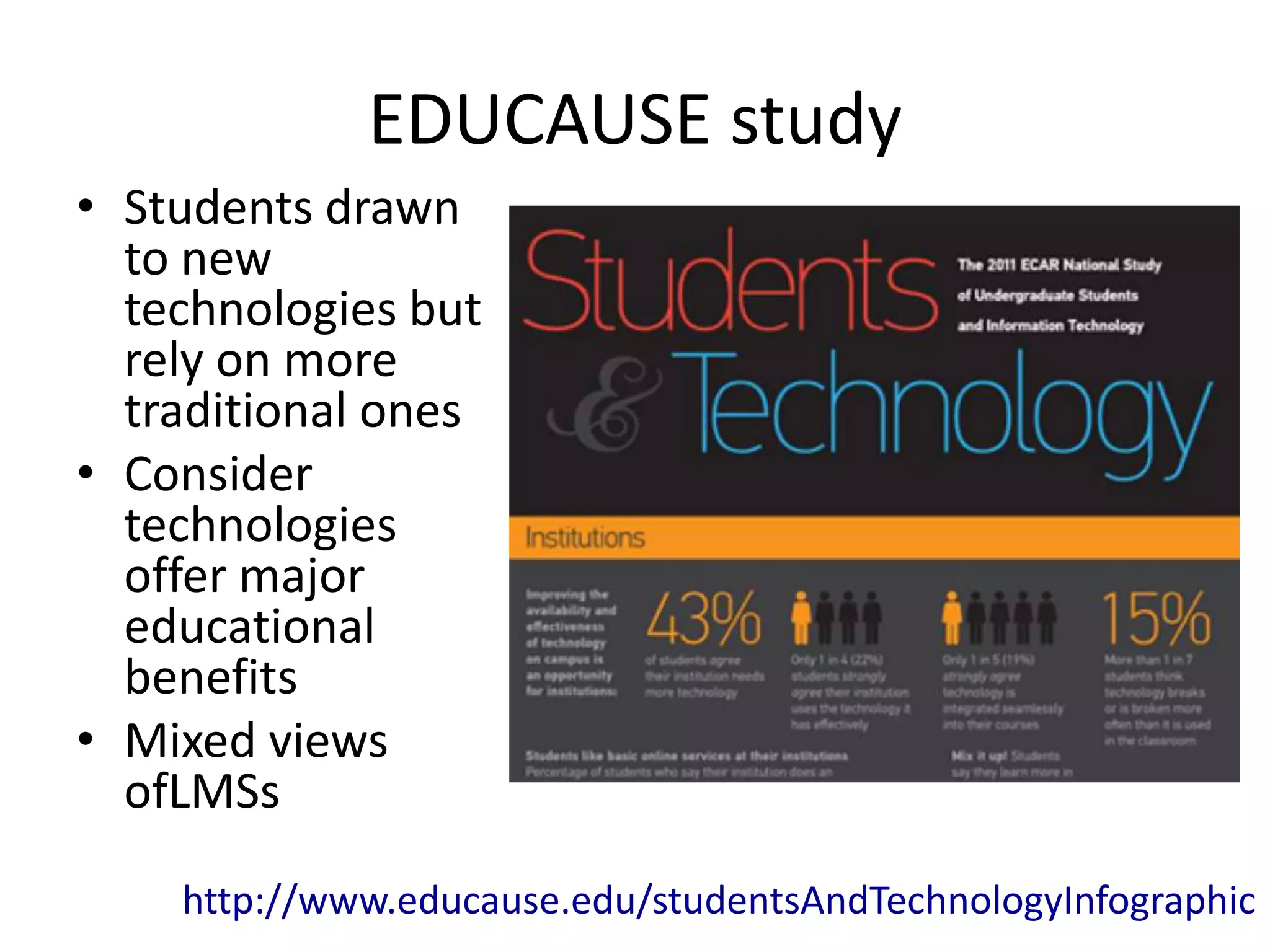
EDUCAUSE study
• Students drawn
  to new
  technologies but
  rely on more
  traditional ones
• Consider
  technologies
  offer major
  educational
  benefits
• Mixed views
  ofLMSs

    http://www.educause.edu/studentsAndTechnologyInfographic
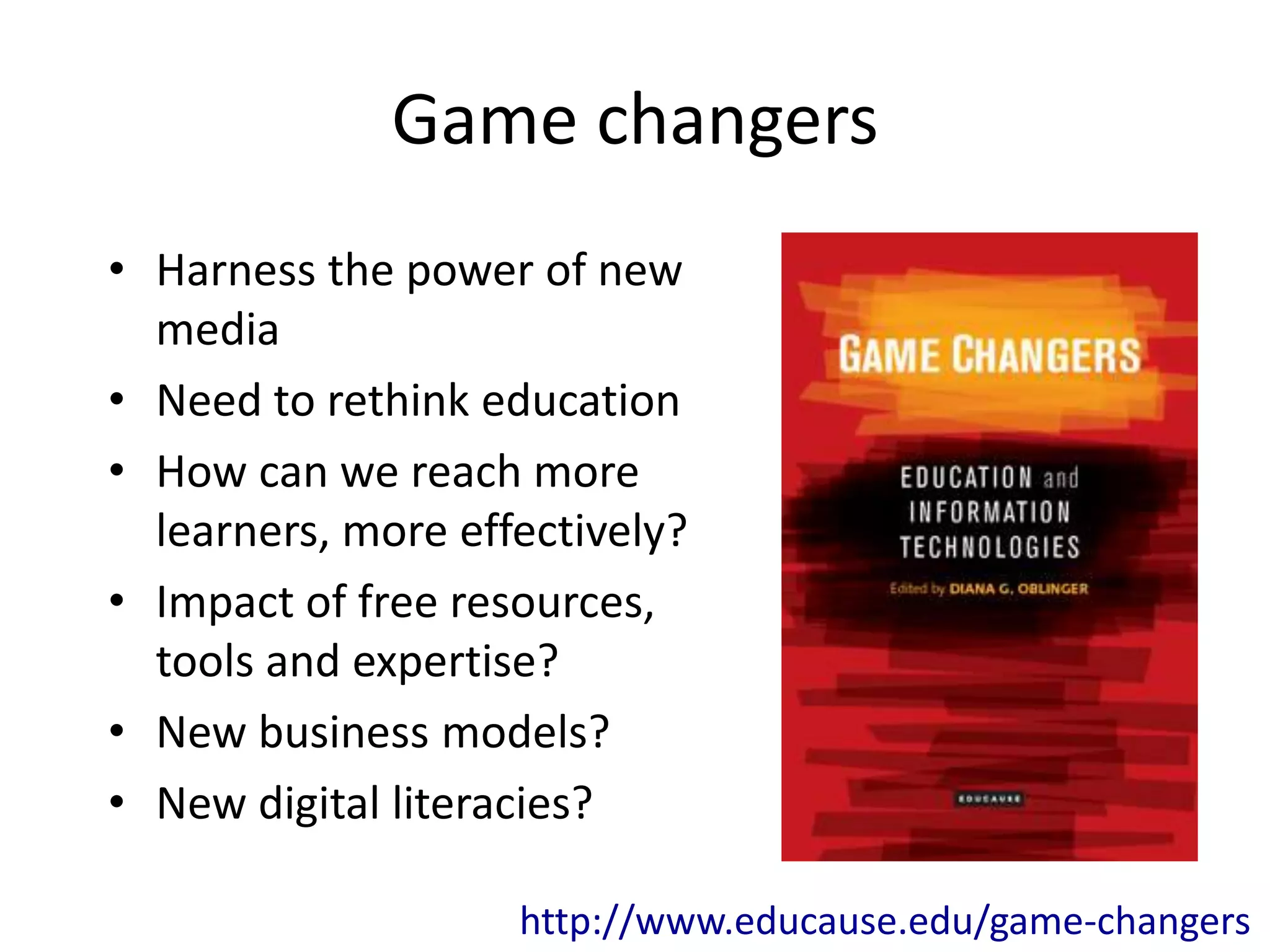
Game changers
• Harness the power of new
  media
• Need to rethink education
• How can we reach more
  learners, more effectively?
• Impact of free resources,
  tools and expertise?
• New business models?
• New digital literacies?

                    http://www.educause.edu/game-changers
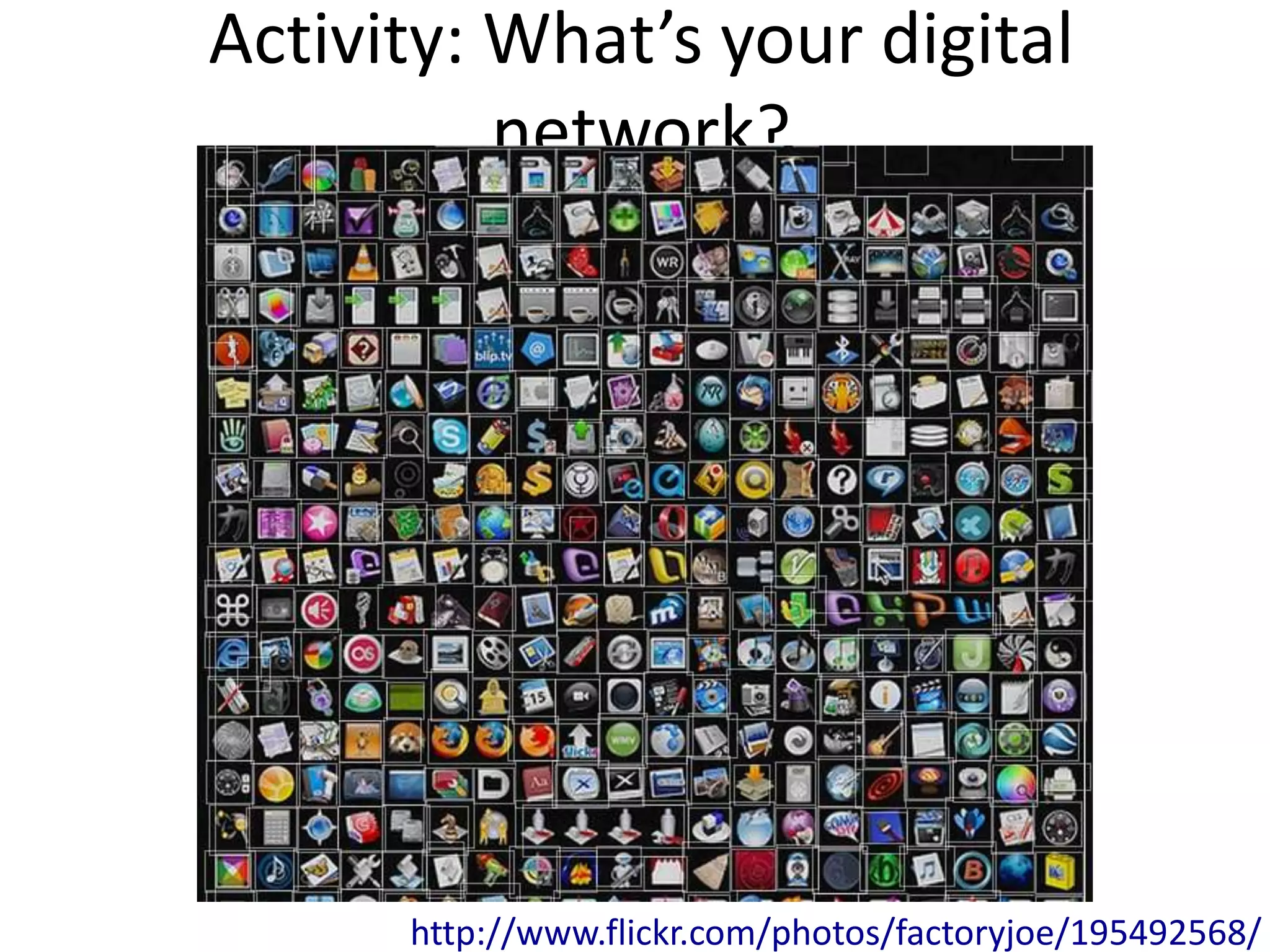
Activity: What’s your digital
          network?


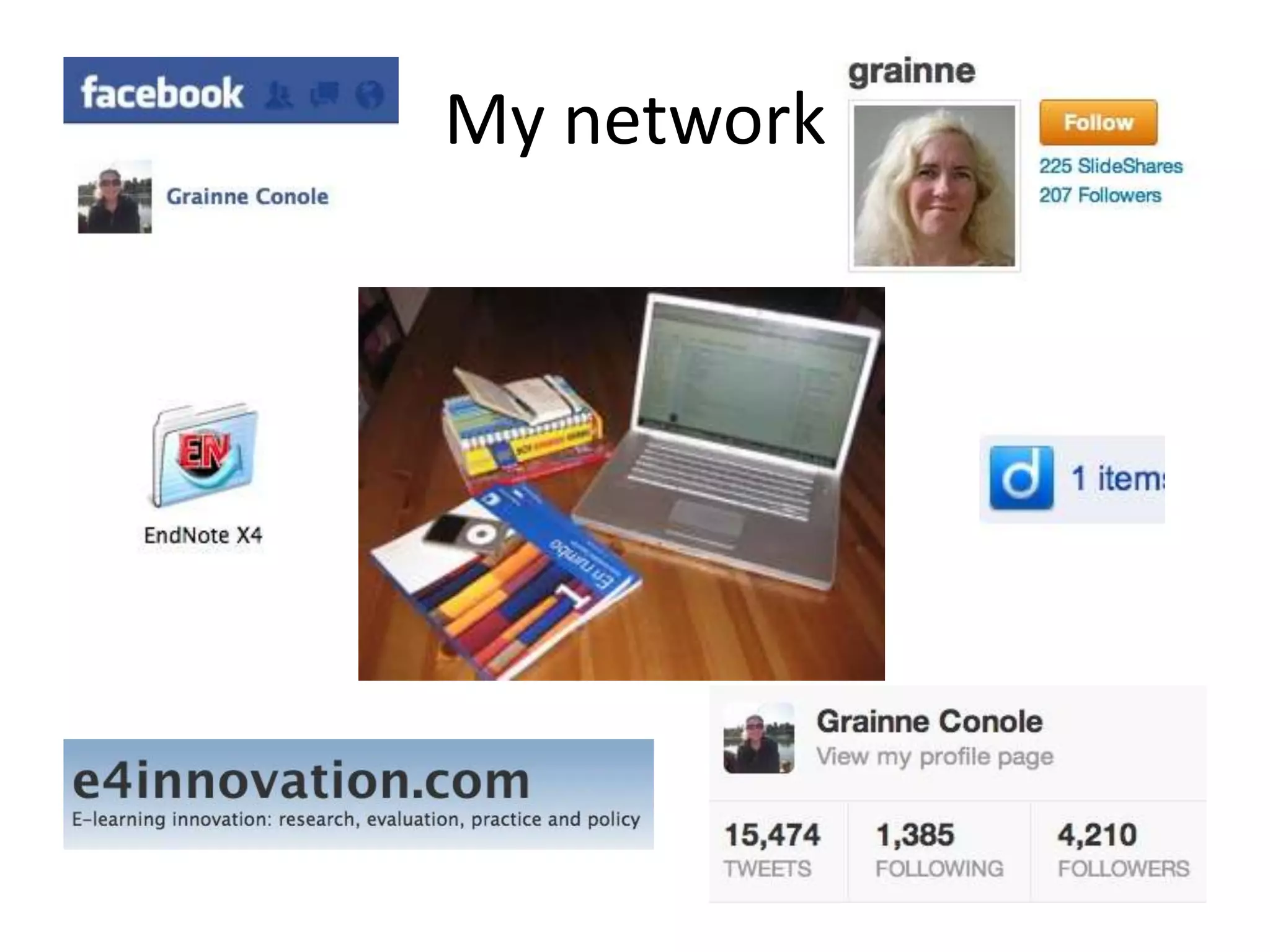
      http://www.flickr.com/photos/factoryjoe/195492568/
My network
Activity: fb love it or hate it?
Pros                            Cons
• Overseas family, fun, quick   • In your face, not sharing
  updates, time zones, search     everything, not preferred
  on names!!, snooping,           tool for many things, friends
  contact with people you         reunited, inappropriate,
  wouldn’t be in touch with       quality vs. quantity,
  otherwise                       overload, emotional
                                  outbursts,
Activity: using new media for research
• How would you use the following for research (i.e. data
  collection, dissemination, discussion)?
   – Blogs
   – Facebook
   – Google+
   – LinkedIn
   – Academia.edu
   – Twitter
   – Flickr and Youtube
   – Diigo
   – Mandeley
   – Dropbox
   – Others?
What tools do you use for research?
• TereseiTunesU analysis
  of tweets about
  iTunesU in different
  languages
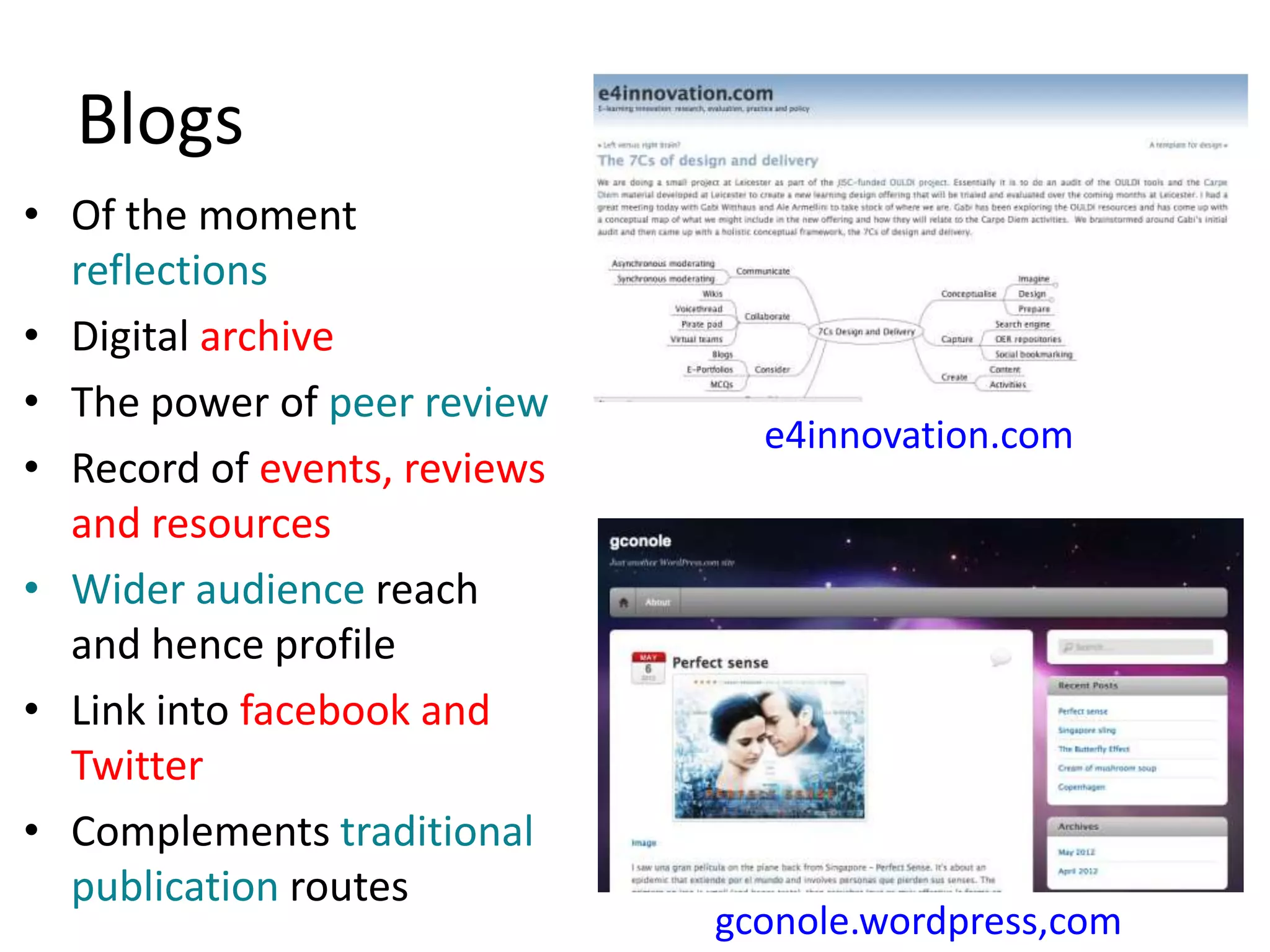
Blogs
• Of the moment
  reflections
• Digital archive
• The power of peer review
                                e4innovation.com
• Record of events, reviews
  and resources
• Wider audience reach
  and hence profile
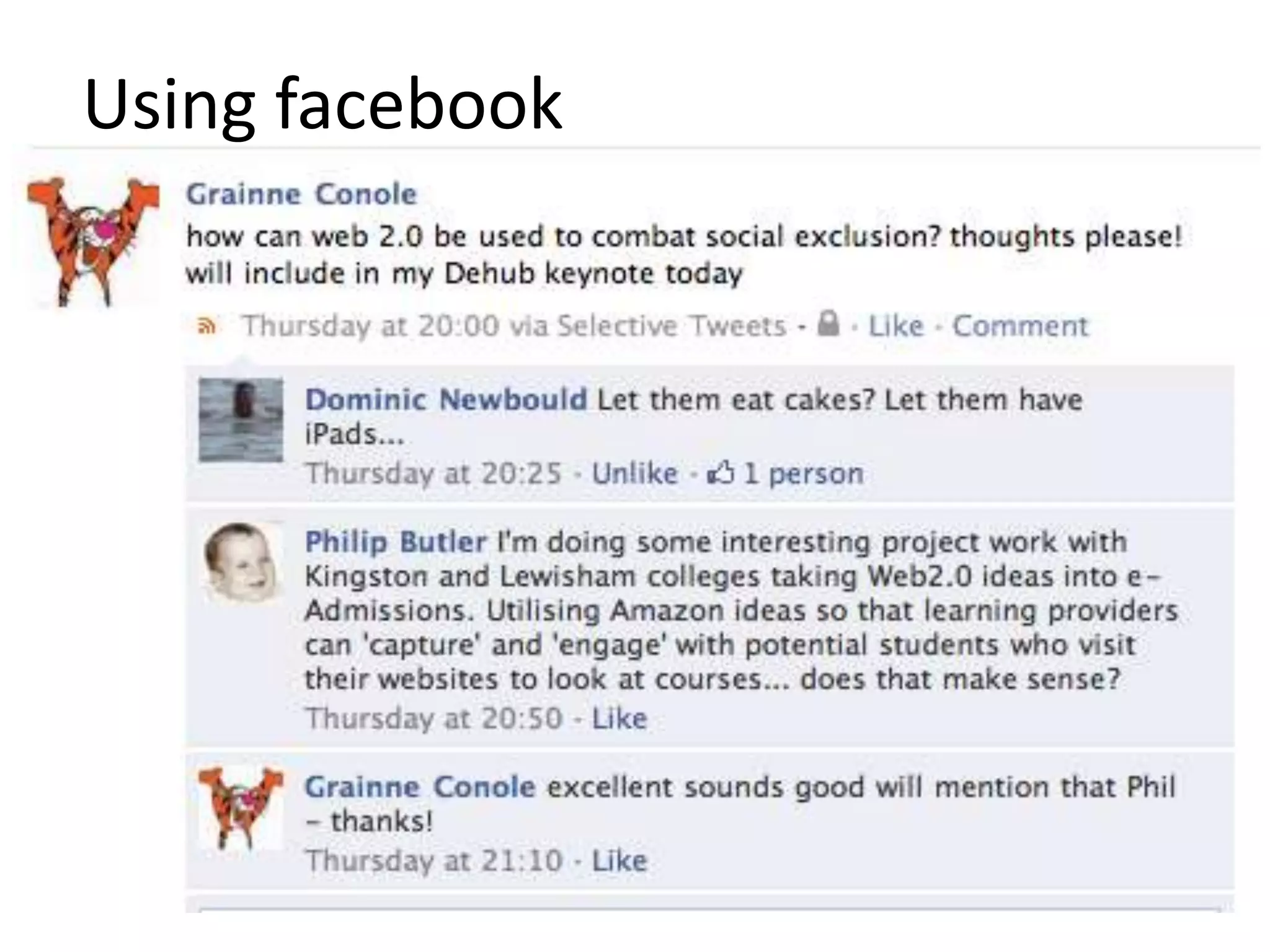
• Link into facebook and
  Twitter
• Complements traditional
  publication routes
                              gconole.wordpress,com
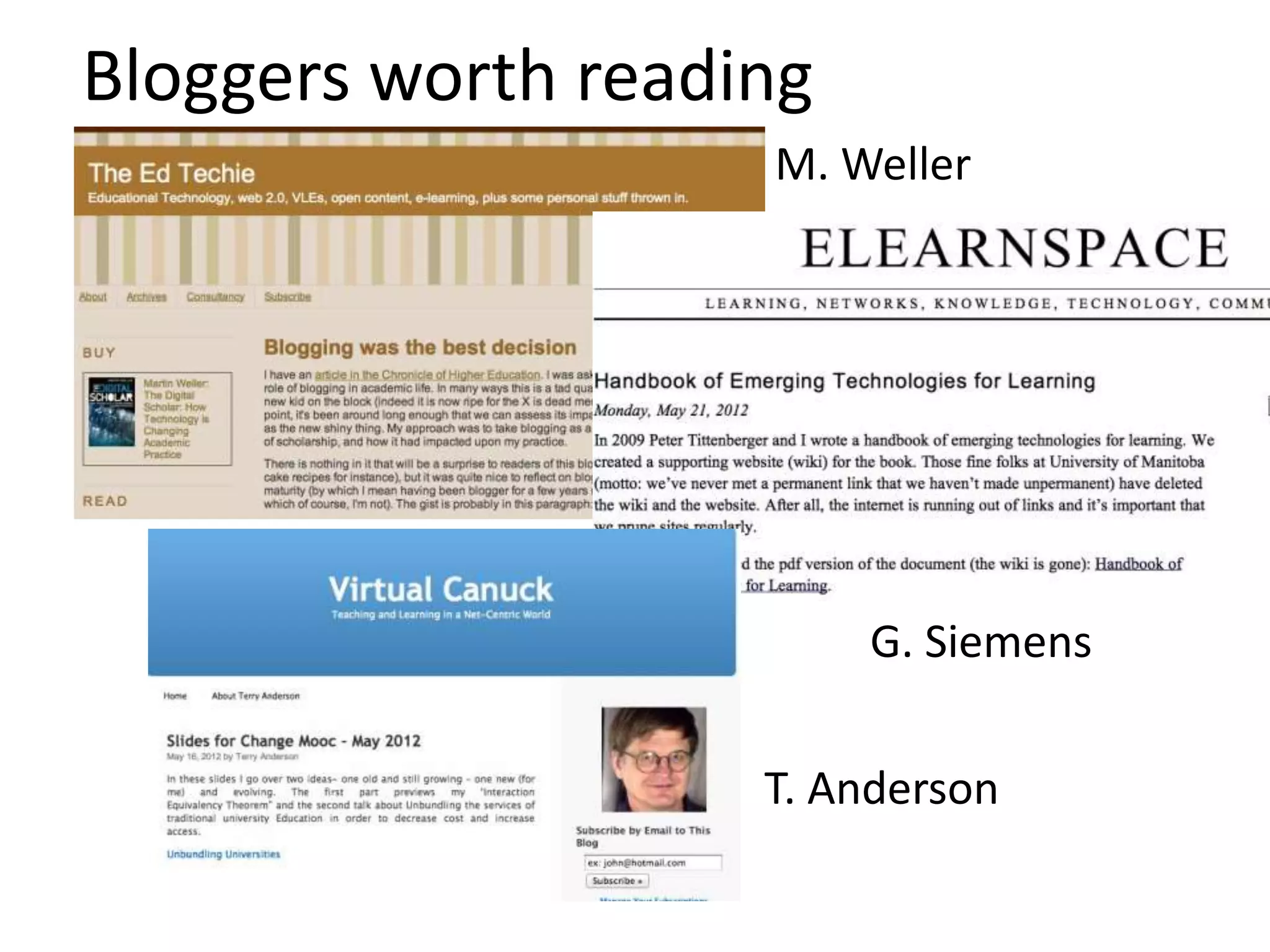
Bloggers worth reading
                    M. Weller


                         G. Siemens

                    T. Anderson
Using facebook
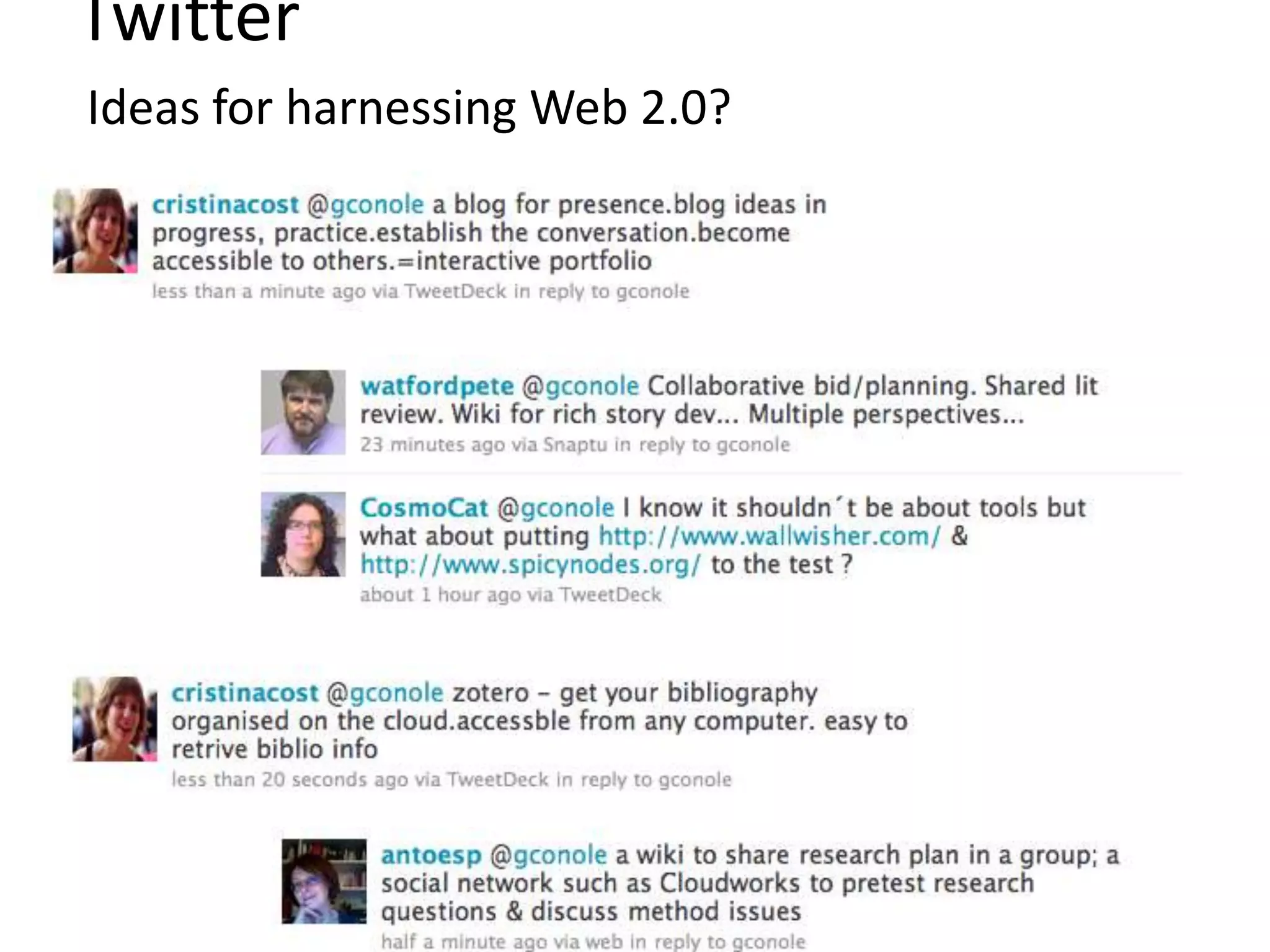
Twitter
Ideas for harnessing Web 2.0?
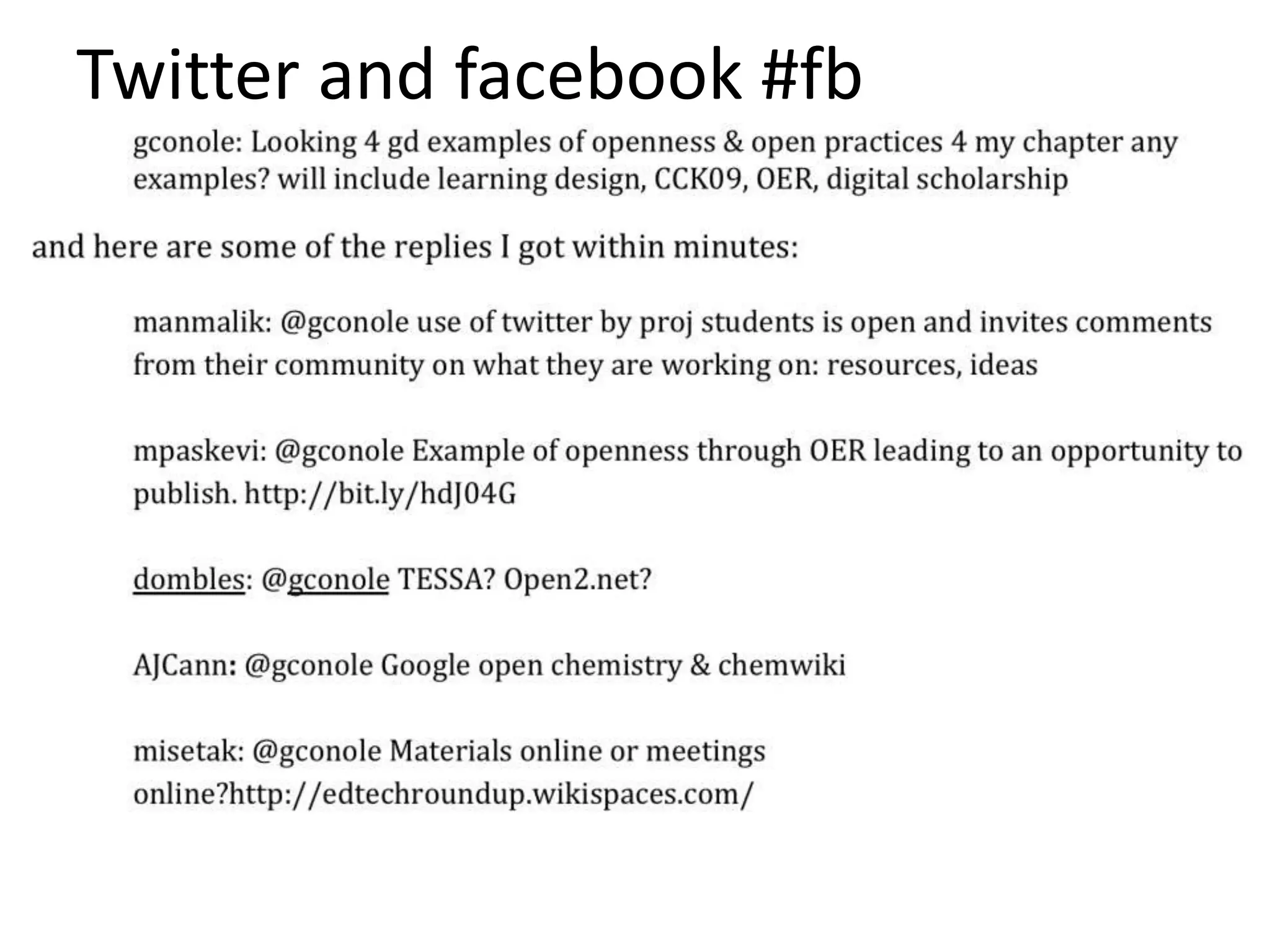
Twitter and facebook #fb
Blending real and virtual
• Think about strategies to make the most of each
  of the following and then think about how you
  can do this both in a face-to-face and virtual
  context
  – Conferences
  – Networking
  – Publishing
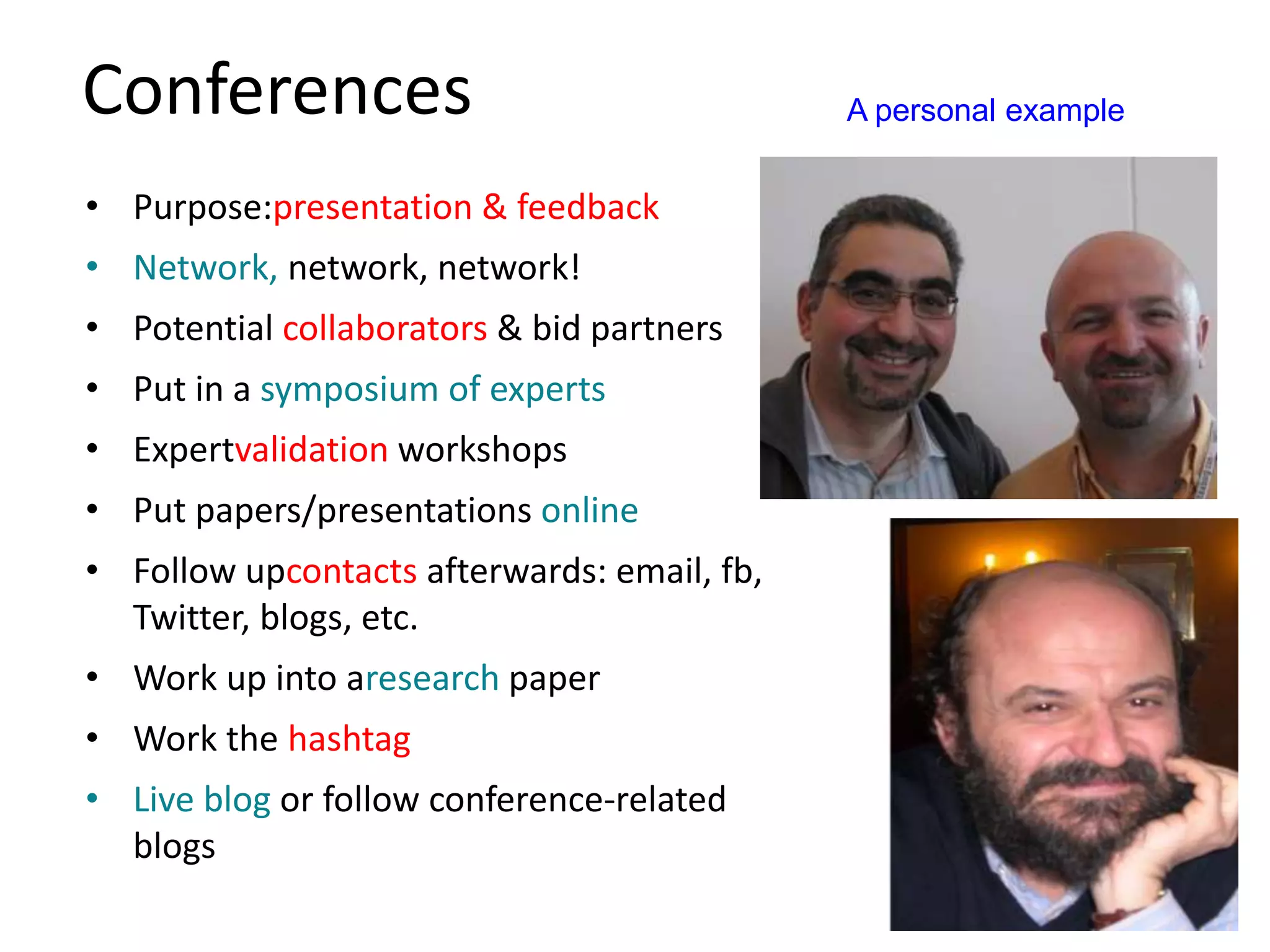
Conferences                                  A personal example


• Purpose:presentation & feedback
• Network, network, network!
• Potential collaborators & bid partners
• Put in a symposium of experts
• Expertvalidation workshops
• Put papers/presentations online
• Follow upcontacts afterwards: email, fb,
  Twitter, blogs, etc.
• Work up into aresearch paper
• Work the hashtag
• Live blog or follow conference-related
  blogs
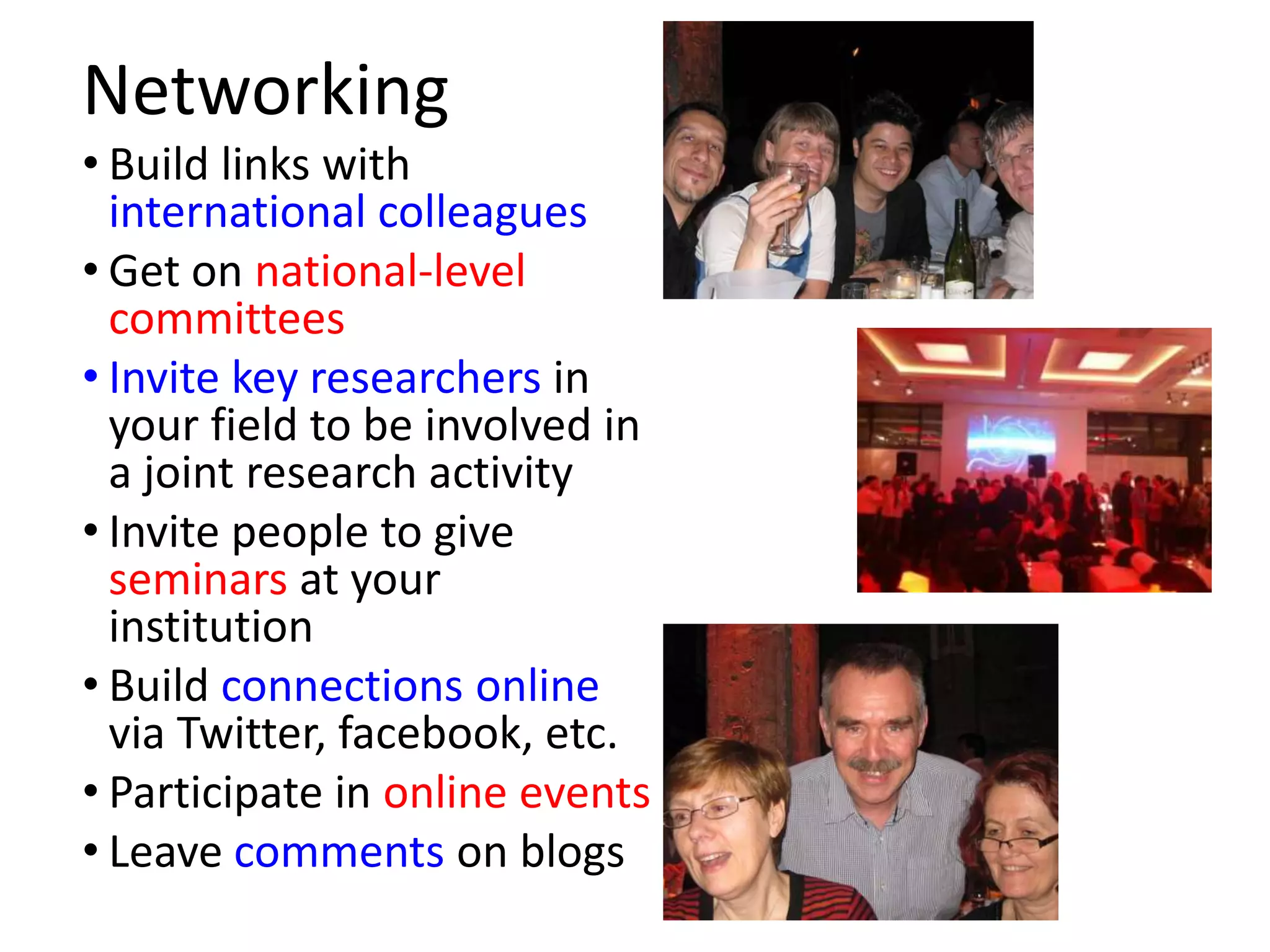
Networking
• Build links with
  international colleagues
• Get on national-level
  committees
• Invite key researchers in
  your field to be involved in
  a joint research activity
• Invite people to give
  seminars at your
  institution
• Build connections online
  via Twitter, facebook, etc.
• Participate in online events
• Leave comments on blogs
Publishing
• Write books - edited or single authored (post drafts)
• Become an editor for a special issue of an online
  journal
• Keep publication list up to date in your research
  repository
• Set up a writing group or workshop (real/virtual)
• Co-write with lots of different people (using a wiki)
• Disseminate publications via Tweet, fb etc
• Post up drafts for comment on blogs etc
• See Twitter, blogs, journals, books as complementary
                      GO OPEN!!!!
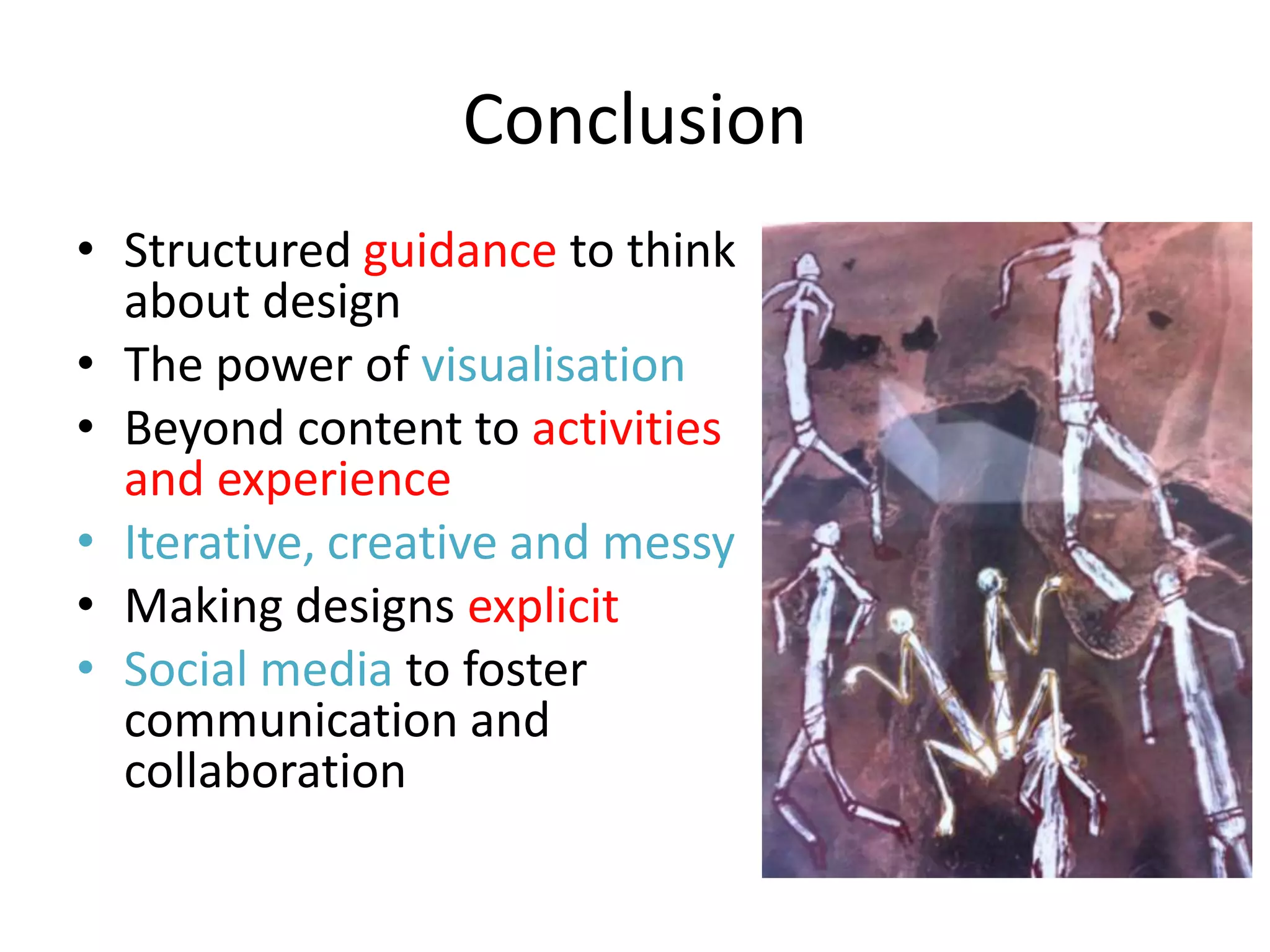
Conclusion
• Structured guidance to think
  about design
• The power of visualisation
• Beyond content to activities
  and experience
• Iterative, creative and messy
• Making designs explicit
• Social media to foster
  communication and
  collaboration
Final thoughts
• Participatory and social media enable new forms of
  communication and collaboration
• Communities in these spaces are complex and
  distributed
• Learners and teachers need to develop new digital
  literacy skills to harness their potential
• We need to rethinkhow we design, support and assess
  learning
• Open, participatory and social media can provide
  mechanisms for us to share and discuss teaching and
  research ideas in new ways
• We are seeing a blurring of boundaries:
  teachers/learners, teaching/research, real/virtual
  spaces, formal/informal modes of communication and
http://www.slideshare.net/GrainneConole/conole-workshop-jtelss
Conole, G. (forthcoming), Designing for learning in an open world, New York: Springer
                           Chapters available on dropbox
                              grainne.conole@le.ac.uk

Conole harnessing media

  • 1.
    Harnessing the powerof new media for learning, teaching and research Gráinne Conole, Leicester University 12th June 2012, UNISA
  • 2.
    Outline • Characteristics of new media • Harnessing the net for research • A new approach to design • Reflections and implications
  • 3.
    Activity • What arethe characteristics of new technologies? • What are their implications for learning, teaching and research?
  • 4.
    New media Characteristics Implications Conole and Alevizou, 2010
  • 5.
    Learner experience •Technology immersed • Learning approaches: task- orientated, experiential, just in time, cumulative, social • Personalised digital learning environment • Mix of institutional systems and Cloud-based tools and services • Use of course materials with free resources 5 Sharpe, Beetham and De Freitas, 2010
  • 6.
    EDUCAUSE study • Studentsdrawn to new technologies but rely on more traditional ones • Consider technologies offer major educational benefits • Mixed views ofLMSs http://www.educause.edu/studentsAndTechnologyInfographic
  • 7.
    Game changers • Harnessthe power of new media • Need to rethink education • How can we reach more learners, more effectively? • Impact of free resources, tools and expertise? • New business models? • New digital literacies? http://www.educause.edu/game-changers
  • 8.
    Activity: What’s yourdigital network? http://www.flickr.com/photos/factoryjoe/195492568/
  • 9.
  • 10.
    Activity: fb loveit or hate it? Pros Cons • Overseas family, fun, quick • In your face, not sharing updates, time zones, search everything, not preferred on names!!, snooping, tool for many things, friends contact with people you reunited, inappropriate, wouldn’t be in touch with quality vs. quantity, otherwise overload, emotional outbursts,
  • 11.
    Activity: using newmedia for research • How would you use the following for research (i.e. data collection, dissemination, discussion)? – Blogs – Facebook – Google+ – LinkedIn – Academia.edu – Twitter – Flickr and Youtube – Diigo – Mandeley – Dropbox – Others?
  • 12.
    What tools doyou use for research? • TereseiTunesU analysis of tweets about iTunesU in different languages
  • 13.
    Blogs • Of themoment reflections • Digital archive • The power of peer review e4innovation.com • Record of events, reviews and resources • Wider audience reach and hence profile • Link into facebook and Twitter • Complements traditional publication routes gconole.wordpress,com
  • 14.
    Bloggers worth reading M. Weller G. Siemens T. Anderson
  • 15.
  • 16.
  • 17.
  • 18.
    Blending real andvirtual • Think about strategies to make the most of each of the following and then think about how you can do this both in a face-to-face and virtual context – Conferences – Networking – Publishing
  • 19.
    Conferences A personal example • Purpose:presentation & feedback • Network, network, network! • Potential collaborators & bid partners • Put in a symposium of experts • Expertvalidation workshops • Put papers/presentations online • Follow upcontacts afterwards: email, fb, Twitter, blogs, etc. • Work up into aresearch paper • Work the hashtag • Live blog or follow conference-related blogs
  • 20.
    Networking • Build linkswith international colleagues • Get on national-level committees • Invite key researchers in your field to be involved in a joint research activity • Invite people to give seminars at your institution • Build connections online via Twitter, facebook, etc. • Participate in online events • Leave comments on blogs
  • 21.
    Publishing • Write books- edited or single authored (post drafts) • Become an editor for a special issue of an online journal • Keep publication list up to date in your research repository • Set up a writing group or workshop (real/virtual) • Co-write with lots of different people (using a wiki) • Disseminate publications via Tweet, fb etc • Post up drafts for comment on blogs etc • See Twitter, blogs, journals, books as complementary GO OPEN!!!!
  • 22.
    Conclusion • Structured guidanceto think about design • The power of visualisation • Beyond content to activities and experience • Iterative, creative and messy • Making designs explicit • Social media to foster communication and collaboration
  • 23.
    Final thoughts • Participatoryand social media enable new forms of communication and collaboration • Communities in these spaces are complex and distributed • Learners and teachers need to develop new digital literacy skills to harness their potential • We need to rethinkhow we design, support and assess learning • Open, participatory and social media can provide mechanisms for us to share and discuss teaching and research ideas in new ways • We are seeing a blurring of boundaries: teachers/learners, teaching/research, real/virtual spaces, formal/informal modes of communication and
  • 24.
    http://www.slideshare.net/GrainneConole/conole-workshop-jtelss Conole, G. (forthcoming),Designing for learning in an open world, New York: Springer Chapters available on dropbox grainne.conole@le.ac.uk