Digital Business
Intro Session
#BEMM129
Lisa Harris
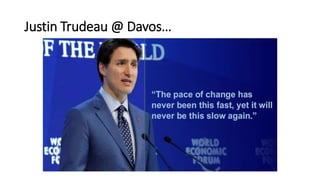
Justin Trudeau @ Davos…
My Digital Profile
Lisa Harris, Digital Educator. Connect via
@lisaharris / L.J.Harris@exeter.ac.uk
Finding me online:
Twitter
LinkedIn
Slideshare
Innovation in Education blog
About.me
HaikuDecks
My motto
Ahead of the curve, or just bonkers? 
• My key projects:
• The first inter-disciplinary BSc in e-Commerce, Brunel University (1999)
• The first UK MSc degree in Digital Marketing, University of Southampton
(2009)
• Embedding an active social learning pedagogy within modules (2012)
• One of the first FutureLearn MOOCs: Web Science (2013)
• The first integration of a FutureLearn MOOC and a University module, (2015)
• The first live broadcast via Periscope to an online course (2015)
• “Education-led research” with the Learning in the Network Age MOOC, (2018)
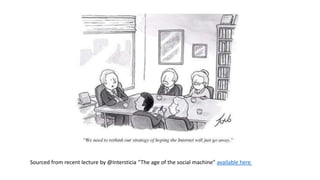
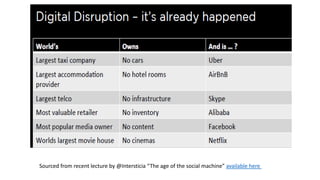
Sourced from recent lecture by @Intersticia “The age of the social machine” available here
Plan for the session
• What are the key module themes?
• The “big picture” of digital change in society – it’s about culture and
innovation, NOT about technology.
• New types of organisation – FAANG
• Transformation of traditional business models
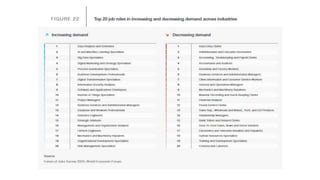
• Implications for employees/entrepreneurs
• How does the module work? (**See Module Handbook**)
• Online and based on asynchronous interactions by design (pre-pandemic)
• Real time sessions are “extra” and focused on peer collaboration around
preparation for assessed tasks
• Q&A
The module is structured around three
levels…
1. The “big picture” - we will reflect upon the role of the evolving digital
economy in the sustainability of society as a whole.
2. The organisation - we will examine the business models of new and
established organisations. We will cover the conversion of digital
opportunities into competitive advantage and the role of culture change
in successful transformation.
3. The individual - you will be guided in developing your own digital
literacies in preparation for your working lives. You will evaluate online
sources of information, curate your own digital lives, and communicate
effectively with others for learning and professional purposes.
Waves of Disruption
“Digital is not technology; it’s empowering people, organisational
culture and new behaviours”
1. The digital “front end” – adding a new layer to existing systems to
engage with customers
2. Digital transformation – changing the whole business in response to
new competitive pressures
3. The third wave – still at a very early stage…think AI, 5G, big data…
Read “Why digital leadership rocks the boat”
Sourced from recent lecture by @Intersticia “The age of the social machine” available here
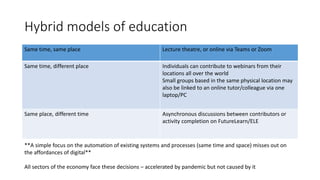
Hybrid models of education
Same time, same place Lecture theatre, or online via Teams or Zoom
Same time, different place Individuals can contribute to webinars from their
locations all over the world
Small groups based in the same physical location may
also be linked to an online tutor/colleague via one
laptop/PC
Same place, different time Asynchronous discussions between contributors or
activity completion on FutureLearn/ELE
**A simple focus on the automation of existing systems and processes (same time and space) misses out on
the affordances of digital**
All sectors of the economy face these decisions – accelerated by pandemic but not caused by it
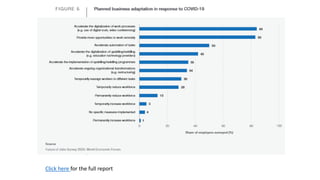
Click here for the full report
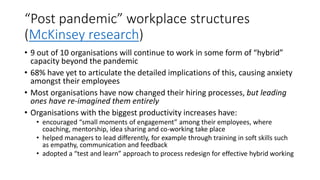
“Post pandemic” workplace structures
(McKinsey research)
• 9 out of 10 organisations will continue to work in some form of “hybrid”
capacity beyond the pandemic
• 68% have yet to articulate the detailed implications of this, causing anxiety
amongst their employees
• Most organisations have now changed their hiring processes, but leading
ones have re-imagined them entirely
• Organisations with the biggest productivity increases have:
• encouraged “small moments of engagement” among their employees, where
coaching, mentorship, idea sharing and co-working take place
• helped managers to lead differently, for example through training in soft skills such
as empathy, communication and feedback
• adopted a “test and learn” approach to process redesign for effective hybrid working
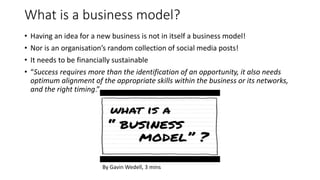
What is a business model?
• Having an idea for a new business is not in itself a business model!
• Nor is an organisation’s random collection of social media posts!
• It needs to be financially sustainable
• “Success requires more than the identification of an opportunity, it also needs
optimum alignment of the appropriate skills within the business or its networks,
and the right timing.”
By Gavin Wedell, 3 mins
Our expectations of you
• You are encouraged to
• focus on the set tasks in a way that is most useful for you
• collaborate with your fellow learners for mutual benefit
• You have (almost!) total flexibility in where/when you study
• Please read the materials provided and take part in the discussions =
collective resource for all to draw upon
• Take a CRITICAL approach to your work for high marks
Week 1 Overview
• Attend real time session on 9th May (recording will be posted on ELE)
• Join the MOOC where you will be working for the next 2 weeks
• Check out the Module Information and Week 1 sections on ELE
• Complete the Week 1 Activity in ELE (based on the interview with
Professor Mark Thompson from INDEX)
• Consider being a PEER MENTOR volunteer and contact Lisa to find out
more!!!!!
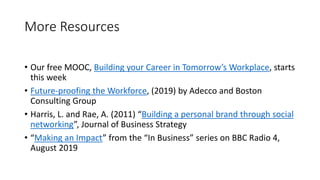
More Resources
• Our free MOOC, Building your Career in Tomorrow’s Workplace, starts
this week
• Future-proofing the Workforce, (2019) by Adecco and Boston
Consulting Group
• Harris, L. and Rae, A. (2011) “Building a personal brand through social
networking”, Journal of Business Strategy
• “Making an Impact” from the “In Business” series on BBC Radio 4,
August 2019
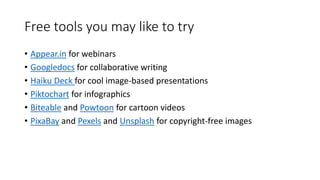
Free tools you may like to try
• Appear.in for webinars
• Googledocs for collaborative writing
• Haiku Deck for cool image-based presentations
• Piktochart for infographics
• Biteable and Powtoon for cartoon videos
• PixaBay and Pexels and Unsplash for copyright-free images

Digital Business Intro.pptx

  • 1.
  • 2.
  • 3.
    My Digital Profile LisaHarris, Digital Educator. Connect via @lisaharris / L.J.Harris@exeter.ac.uk Finding me online: Twitter LinkedIn Slideshare Innovation in Education blog About.me HaikuDecks My motto
  • 4.
    Ahead of thecurve, or just bonkers?  • My key projects: • The first inter-disciplinary BSc in e-Commerce, Brunel University (1999) • The first UK MSc degree in Digital Marketing, University of Southampton (2009) • Embedding an active social learning pedagogy within modules (2012) • One of the first FutureLearn MOOCs: Web Science (2013) • The first integration of a FutureLearn MOOC and a University module, (2015) • The first live broadcast via Periscope to an online course (2015) • “Education-led research” with the Learning in the Network Age MOOC, (2018)
  • 5.
    Sourced from recentlecture by @Intersticia “The age of the social machine” available here
  • 6.
    Plan for thesession • What are the key module themes? • The “big picture” of digital change in society – it’s about culture and innovation, NOT about technology. • New types of organisation – FAANG • Transformation of traditional business models • Implications for employees/entrepreneurs • How does the module work? (**See Module Handbook**) • Online and based on asynchronous interactions by design (pre-pandemic) • Real time sessions are “extra” and focused on peer collaboration around preparation for assessed tasks • Q&A
  • 7.
    The module isstructured around three levels… 1. The “big picture” - we will reflect upon the role of the evolving digital economy in the sustainability of society as a whole. 2. The organisation - we will examine the business models of new and established organisations. We will cover the conversion of digital opportunities into competitive advantage and the role of culture change in successful transformation. 3. The individual - you will be guided in developing your own digital literacies in preparation for your working lives. You will evaluate online sources of information, curate your own digital lives, and communicate effectively with others for learning and professional purposes.
  • 8.
    Waves of Disruption “Digitalis not technology; it’s empowering people, organisational culture and new behaviours” 1. The digital “front end” – adding a new layer to existing systems to engage with customers 2. Digital transformation – changing the whole business in response to new competitive pressures 3. The third wave – still at a very early stage…think AI, 5G, big data… Read “Why digital leadership rocks the boat”
  • 9.
    Sourced from recentlecture by @Intersticia “The age of the social machine” available here
  • 10.
    Hybrid models ofeducation Same time, same place Lecture theatre, or online via Teams or Zoom Same time, different place Individuals can contribute to webinars from their locations all over the world Small groups based in the same physical location may also be linked to an online tutor/colleague via one laptop/PC Same place, different time Asynchronous discussions between contributors or activity completion on FutureLearn/ELE **A simple focus on the automation of existing systems and processes (same time and space) misses out on the affordances of digital** All sectors of the economy face these decisions – accelerated by pandemic but not caused by it
  • 11.
    Click here forthe full report
  • 13.
    “Post pandemic” workplacestructures (McKinsey research) • 9 out of 10 organisations will continue to work in some form of “hybrid” capacity beyond the pandemic • 68% have yet to articulate the detailed implications of this, causing anxiety amongst their employees • Most organisations have now changed their hiring processes, but leading ones have re-imagined them entirely • Organisations with the biggest productivity increases have: • encouraged “small moments of engagement” among their employees, where coaching, mentorship, idea sharing and co-working take place • helped managers to lead differently, for example through training in soft skills such as empathy, communication and feedback • adopted a “test and learn” approach to process redesign for effective hybrid working
  • 14.
    What is abusiness model? • Having an idea for a new business is not in itself a business model! • Nor is an organisation’s random collection of social media posts! • It needs to be financially sustainable • “Success requires more than the identification of an opportunity, it also needs optimum alignment of the appropriate skills within the business or its networks, and the right timing.” By Gavin Wedell, 3 mins
  • 15.
    Our expectations ofyou • You are encouraged to • focus on the set tasks in a way that is most useful for you • collaborate with your fellow learners for mutual benefit • You have (almost!) total flexibility in where/when you study • Please read the materials provided and take part in the discussions = collective resource for all to draw upon • Take a CRITICAL approach to your work for high marks
  • 16.
    Week 1 Overview •Attend real time session on 9th May (recording will be posted on ELE) • Join the MOOC where you will be working for the next 2 weeks • Check out the Module Information and Week 1 sections on ELE • Complete the Week 1 Activity in ELE (based on the interview with Professor Mark Thompson from INDEX) • Consider being a PEER MENTOR volunteer and contact Lisa to find out more!!!!!
  • 17.
    More Resources • Ourfree MOOC, Building your Career in Tomorrow’s Workplace, starts this week • Future-proofing the Workforce, (2019) by Adecco and Boston Consulting Group • Harris, L. and Rae, A. (2011) “Building a personal brand through social networking”, Journal of Business Strategy • “Making an Impact” from the “In Business” series on BBC Radio 4, August 2019
  • 18.
    Free tools youmay like to try • Appear.in for webinars • Googledocs for collaborative writing • Haiku Deck for cool image-based presentations • Piktochart for infographics • Biteable and Powtoon for cartoon videos • PixaBay and Pexels and Unsplash for copyright-free images