Digital Business
Intro Session
#BEMM129
Lisa Harris and Stavros Polykarpou
Plan for the session
• What are the key module themes?
• FlipGrid demo – Andrew Munslow
• How does the module work?
• Module weekly resources/activities (ELE Demo)
• Q&A
My Digital Profile
Lisa Harris, Digital Educator. Connect via
@lisaharris / L.J.Harris@exeter.ac.uk
Finding me online:
Twitter
LinkedIn
Slideshare
Innovation in Education blog
About.me
HaikuDecks
Ahead of the curve, or just bonkers? 
• I led teams of staff/students/business partners to develop:
• The first inter-disciplinary BSc in e-Commerce, Brunel University (1999)
• The first UK MSc degree in Digital Marketing, University of Southampton
(2009)
• The first integration of a FutureLearn MOOC and a University module, (2015)
• The first live broadcast via Periscope to an online course (2015)
• “Education-led research” with the Learning in the Network Age MOOC, (2017)
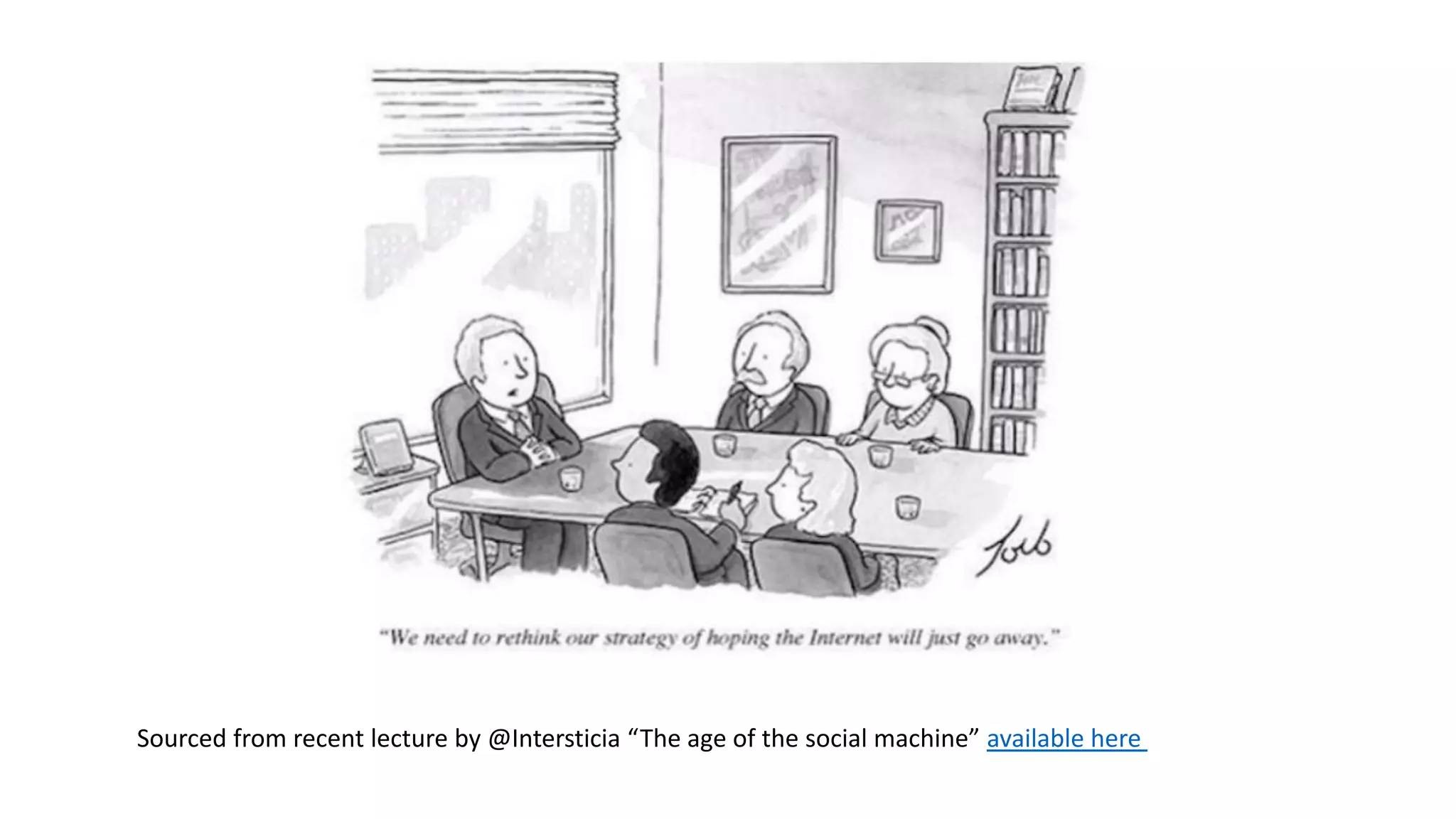
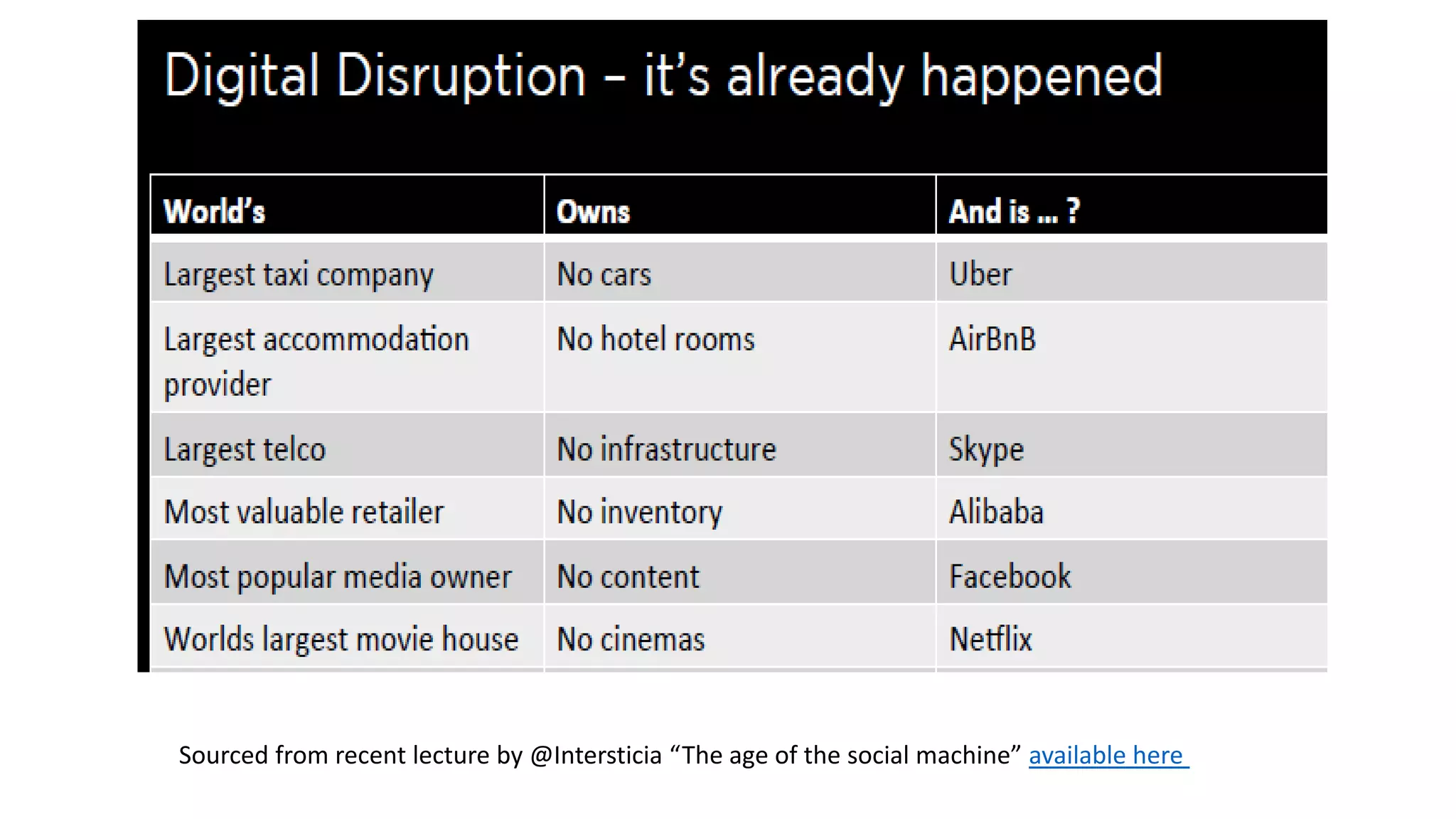
Sourced from recent lecture by @Intersticia “The age of the social machine” available here
In a nutshell…
“a dawning realisation in modern boardrooms that capitalising on new
technology demands a wholesale review of business models and core
value propositions based on what you can achieve with digital
technology and services; and that the new wave of emerging
technologies – AI, virtual reality etc. – will only accelerate the need to
throw off the shackles of old practices.”
(Prof Mark Thompson, INDEX)
“Throw off the shackles…”
…but how?
• Reconfigure everything around the customer via
“SMAC”: Social, Mobile, Analytics and Cloud.
• Outsource digital platforms (AWS, Salesforce etc) for the infrastructure of
corporate service delivery.
• Most importantly, it requires a dramatic transformation of culture.
We will be addressing these issues in future weeks of the module…
What is a business model?
• Having an idea for a new business is not in itself a business model!
• “Success requires more than the identification of an opportunity, it
also needs optimum alignment of the appropriate skills within the
business or its networks, and the right timing.”
By Gavin Wedell, 3 mins
Waves of Disruption
“Digital is not technology; it’s empowering people, organisational
culture and new behaviours”
1. The digital “front end” – adding a new layer to existing systems to
engage with customers
2. Digital transformation – changing the whole business in response to
new competitive pressures
3. The third wave – still at a very early stage…think AI, 5G, big data…
Read “Why digital leadership rocks the boat”
Sourced from recent lecture by @Intersticia “The age of the social machine” available here
Mark Thompson’s Interview by Soldo
“To me, digital transformation conversations come down to one thing: the
arrival of mature services that have been developed around the shared
infrastructure of the internet. Digital transformation is nothing to do with
websites or front ends, although they’re important of course; it’s about the
shared plumbing.”
“I was speaking with a pharmaceuticals executive recently who advocated
“sticking to the knitting”: he said “We make drugs, and the minute we take
our eye of that, we’re dead in the water”. But we now live in a health data
economy which focuses on keeping people well rather than curing them
when they are ill. Businesses like Amazon are outspending pharma in the
healthcare sector exponentially.”
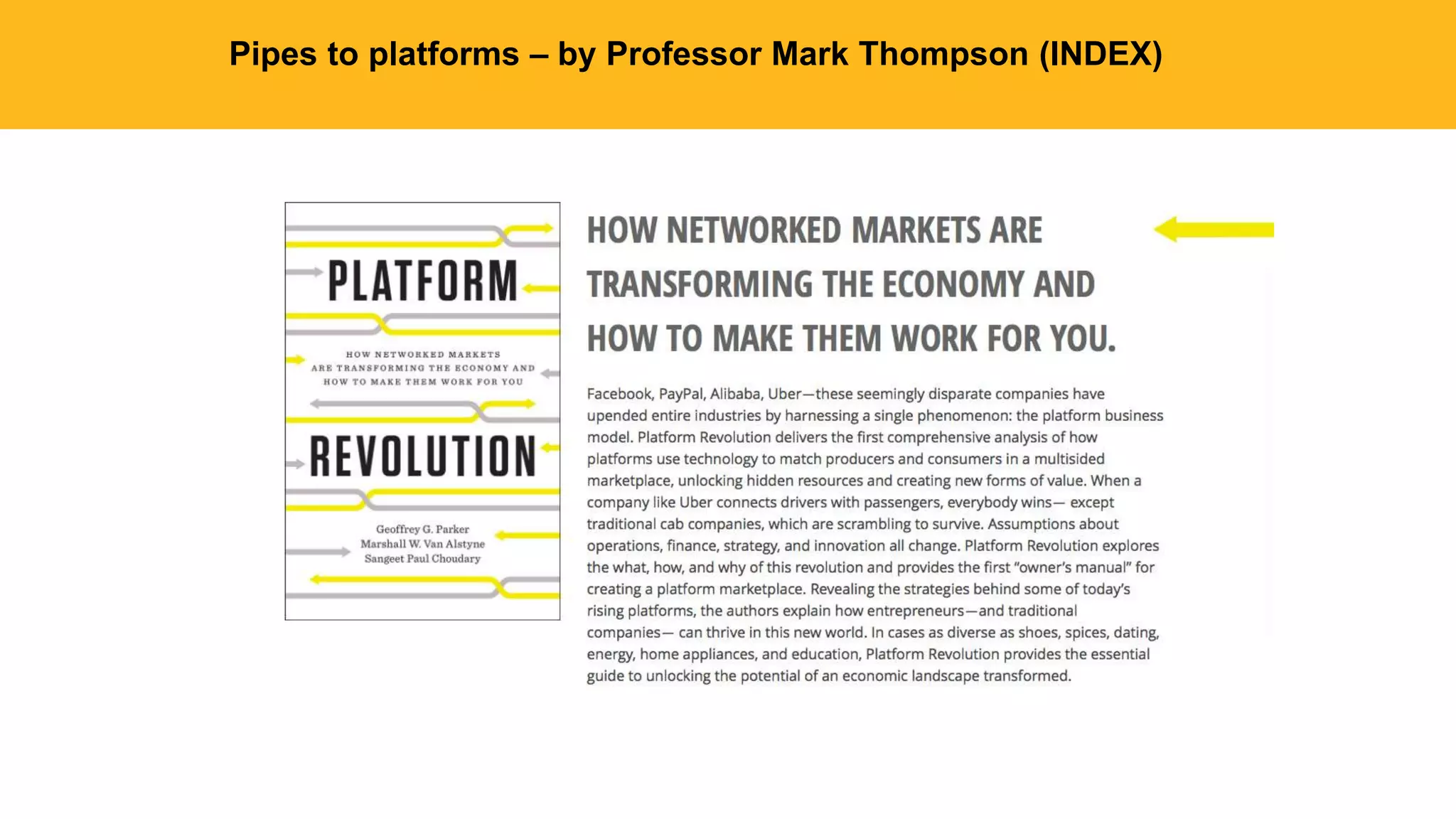
Pipes to platforms – by Professor Mark Thompson (INDEX)
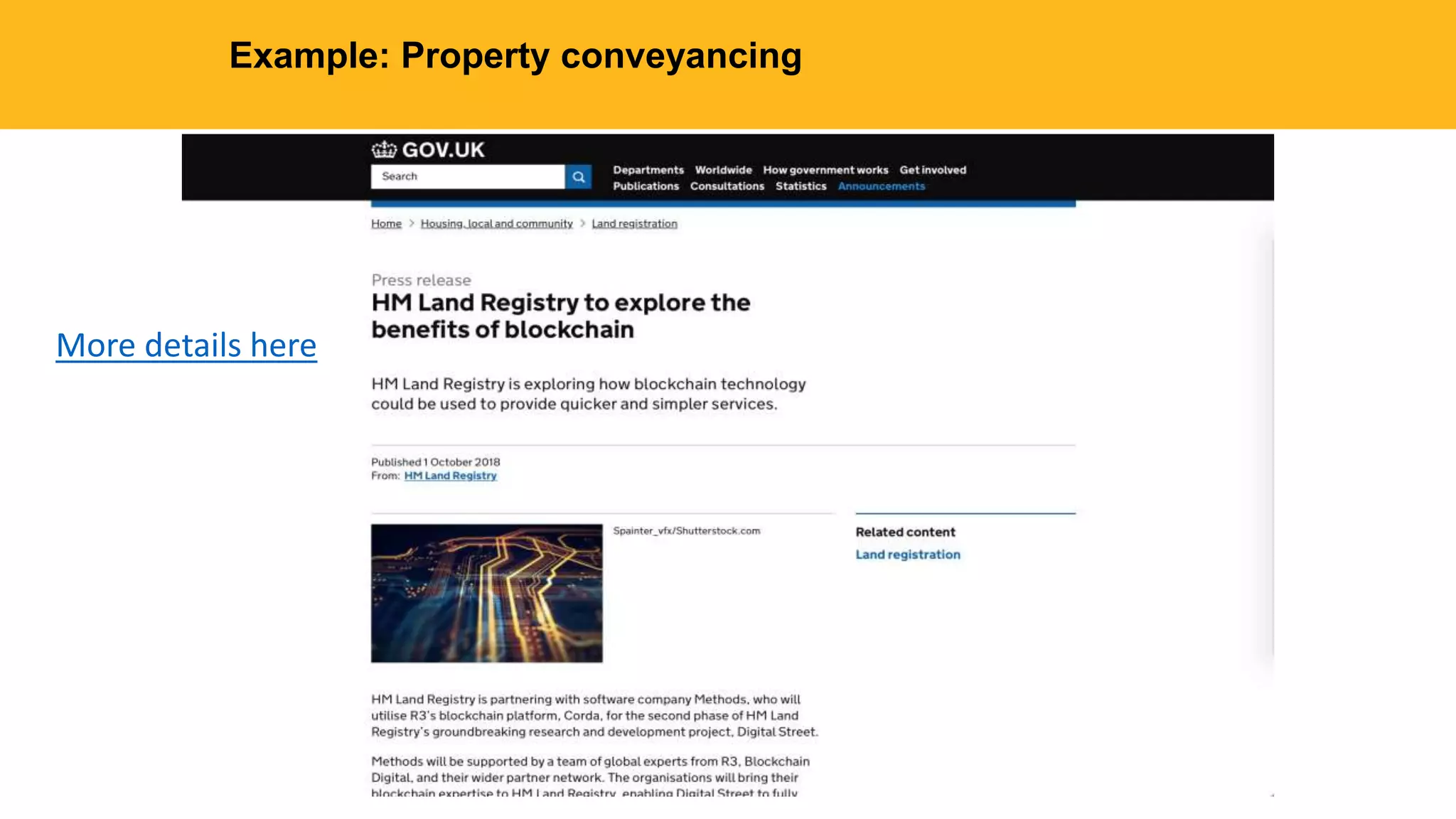
Example: Property conveyancing
More details here
Jobs where demand is increasing
• To satisfy increasing demand for consumer goods
• Healthcare needs related to ageing populations
• Developing and providing information technology services
• Construction industry and associated services to meet rising demand
for housing
• Development and installation of renewable energies
• Domestic and caring services for the very young and the very old
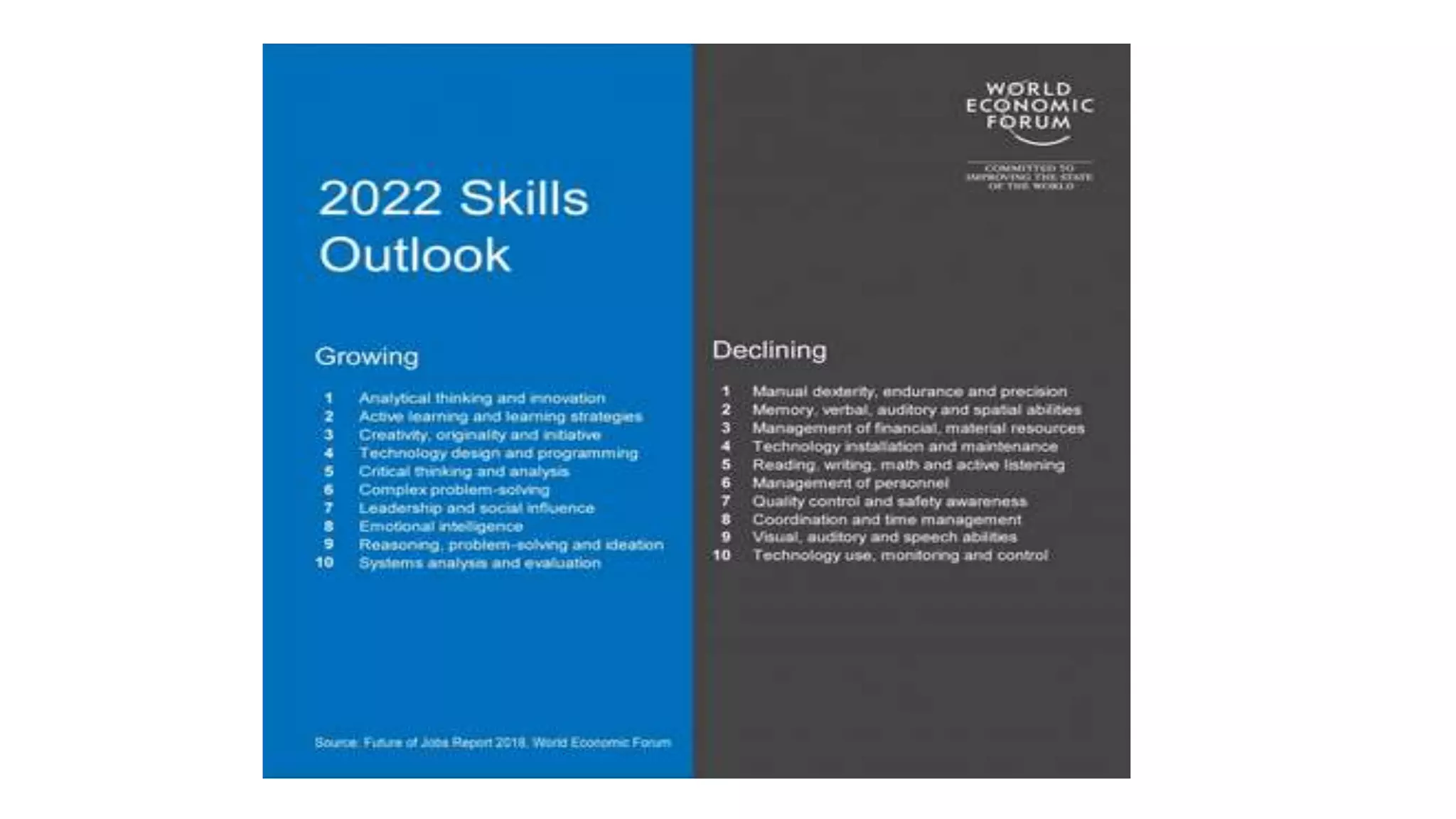
• What are the key skills you would associate with these jobs?
Our expectations of you
• You are encouraged to
• focus the set tasks in a way that is most useful for you
• collaborate with your fellow learners for mutual benefit
• You have (almost!) total flexibility in where/when you study
• Please read the materials provided and take part in the discussions =
collective resource for all to draw upon
• Take a CRITICAL approach to your work for high marks
More Resources
• Our free MOOC, Building your Career in Tomorrow’s Workplace, runs
again on 27th January 2020 for 2 weeks.
• Future-proofing the Workforce, (2019) by Adecco and Boston
Consulting Group
• Harris, L. and Rae, A. (2011) “Building a personal brand through social
networking”, Journal of Business Strategy
• “Making an Impact” from the “In Business” series on BBC Radio 4,
August 2019
Free tools you may like to try
• Appear.in for webinars
• Googledocs for collaborative writing
• Haiku Deck for cool image-based presentations
• Piktochart for infographics
• Biteable and Powtoon for cartoon videos
• PixaBay and Pexels and Unsplash for copyright-free images

Digital Business intro

  • 1.
    Digital Business Intro Session #BEMM129 LisaHarris and Stavros Polykarpou
  • 2.
    Plan for thesession • What are the key module themes? • FlipGrid demo – Andrew Munslow • How does the module work? • Module weekly resources/activities (ELE Demo) • Q&A
  • 3.
    My Digital Profile LisaHarris, Digital Educator. Connect via @lisaharris / L.J.Harris@exeter.ac.uk Finding me online: Twitter LinkedIn Slideshare Innovation in Education blog About.me HaikuDecks
  • 4.
    Ahead of thecurve, or just bonkers?  • I led teams of staff/students/business partners to develop: • The first inter-disciplinary BSc in e-Commerce, Brunel University (1999) • The first UK MSc degree in Digital Marketing, University of Southampton (2009) • The first integration of a FutureLearn MOOC and a University module, (2015) • The first live broadcast via Periscope to an online course (2015) • “Education-led research” with the Learning in the Network Age MOOC, (2017)
  • 6.
    Sourced from recentlecture by @Intersticia “The age of the social machine” available here
  • 7.
    In a nutshell… “adawning realisation in modern boardrooms that capitalising on new technology demands a wholesale review of business models and core value propositions based on what you can achieve with digital technology and services; and that the new wave of emerging technologies – AI, virtual reality etc. – will only accelerate the need to throw off the shackles of old practices.” (Prof Mark Thompson, INDEX)
  • 8.
    “Throw off theshackles…” …but how? • Reconfigure everything around the customer via “SMAC”: Social, Mobile, Analytics and Cloud. • Outsource digital platforms (AWS, Salesforce etc) for the infrastructure of corporate service delivery. • Most importantly, it requires a dramatic transformation of culture. We will be addressing these issues in future weeks of the module…
  • 9.
    What is abusiness model? • Having an idea for a new business is not in itself a business model! • “Success requires more than the identification of an opportunity, it also needs optimum alignment of the appropriate skills within the business or its networks, and the right timing.” By Gavin Wedell, 3 mins
  • 10.
    Waves of Disruption “Digitalis not technology; it’s empowering people, organisational culture and new behaviours” 1. The digital “front end” – adding a new layer to existing systems to engage with customers 2. Digital transformation – changing the whole business in response to new competitive pressures 3. The third wave – still at a very early stage…think AI, 5G, big data… Read “Why digital leadership rocks the boat”
  • 11.
    Sourced from recentlecture by @Intersticia “The age of the social machine” available here
  • 12.
    Mark Thompson’s Interviewby Soldo “To me, digital transformation conversations come down to one thing: the arrival of mature services that have been developed around the shared infrastructure of the internet. Digital transformation is nothing to do with websites or front ends, although they’re important of course; it’s about the shared plumbing.” “I was speaking with a pharmaceuticals executive recently who advocated “sticking to the knitting”: he said “We make drugs, and the minute we take our eye of that, we’re dead in the water”. But we now live in a health data economy which focuses on keeping people well rather than curing them when they are ill. Businesses like Amazon are outspending pharma in the healthcare sector exponentially.”
  • 13.
    Pipes to platforms– by Professor Mark Thompson (INDEX)
  • 14.
  • 15.
    Jobs where demandis increasing • To satisfy increasing demand for consumer goods • Healthcare needs related to ageing populations • Developing and providing information technology services • Construction industry and associated services to meet rising demand for housing • Development and installation of renewable energies • Domestic and caring services for the very young and the very old • What are the key skills you would associate with these jobs?
  • 17.
    Our expectations ofyou • You are encouraged to • focus the set tasks in a way that is most useful for you • collaborate with your fellow learners for mutual benefit • You have (almost!) total flexibility in where/when you study • Please read the materials provided and take part in the discussions = collective resource for all to draw upon • Take a CRITICAL approach to your work for high marks
  • 18.
    More Resources • Ourfree MOOC, Building your Career in Tomorrow’s Workplace, runs again on 27th January 2020 for 2 weeks. • Future-proofing the Workforce, (2019) by Adecco and Boston Consulting Group • Harris, L. and Rae, A. (2011) “Building a personal brand through social networking”, Journal of Business Strategy • “Making an Impact” from the “In Business” series on BBC Radio 4, August 2019
  • 19.
    Free tools youmay like to try • Appear.in for webinars • Googledocs for collaborative writing • Haiku Deck for cool image-based presentations • Piktochart for infographics • Biteable and Powtoon for cartoon videos • PixaBay and Pexels and Unsplash for copyright-free images

Editor's Notes

  • #14 Curing the sick or keeping people well? The Gubbins of Government https://www.youtube.com/watch?v=02__3UTqXmU To me, digital transformation conversations come down to one thing: the arrival of mature services that have been developed around the shared infrastructure of the internet. Digital transformation is nothing to do with websites or front ends, although they’re important of course; it’s about the shared plumbing.