Facebook in the Classroom


                                  Liz Bennett
                    MSc Multimedia and elearning
                                  Course Leader
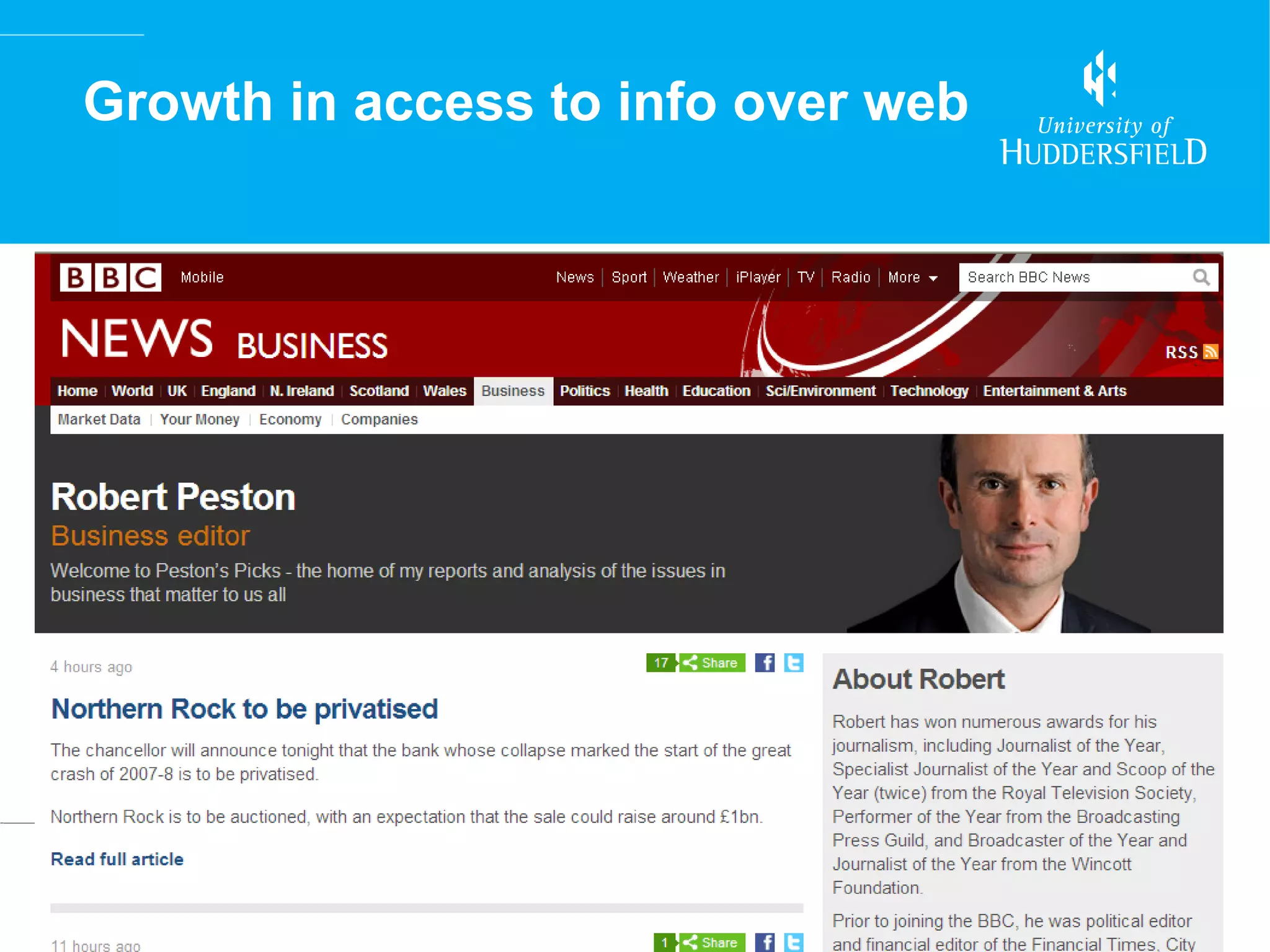
Growth in access to info over web
Figures for user generated content;


•   35 hours of video footage is uploaded to the Youtube every
    minute.
•   Over 2 billion videos are viewed every day
•   Corporate bloggers receive 312,783 on average visitors per
    month:
•   460k new Twitter accounts set up in Feb 2011
•   Average Tweet per day (TPD) in March 2010 was 50M, in Feb
    2011 140M 280% increase in a year.
•   More than 500 million active Facebook users, 50% of our
    active users log on to Facebook in any given day
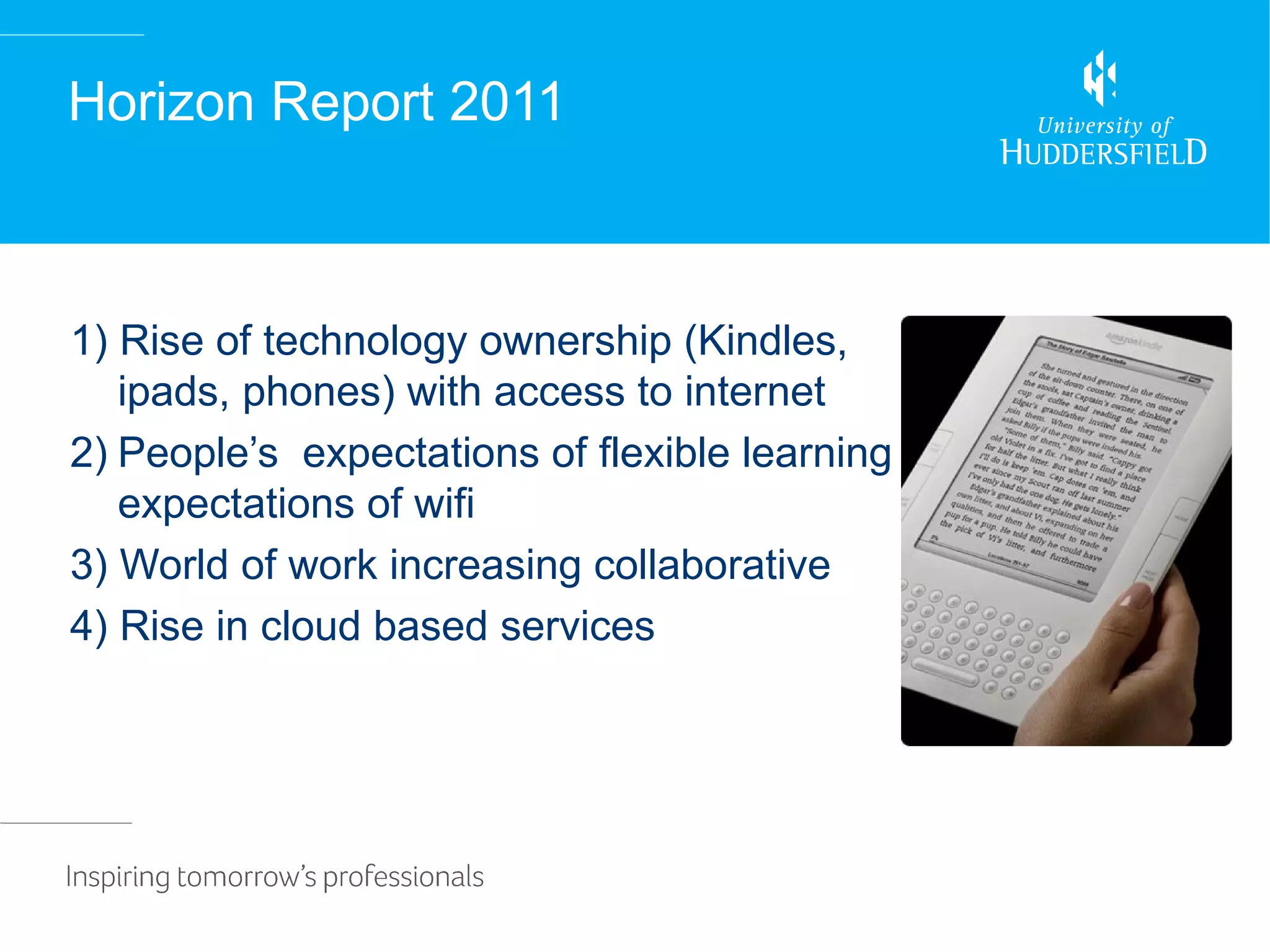
Horizon Report 2011


1) Rise of technology ownership (Kindles,
   ipads, phones) with access to internet
2) People’s expectations of flexible learning
   expectations of wifi
3) World of work increasing collaborative
4) Rise in cloud based services
Horizon Report


 The abundance of resources and relationships made
 easily accessible via the Internet is increasingly
 challenging us to revisit our roles as educators in sense-
 making, coaching, and credentialing.
New ways of knowing


Transfer of attention from print to screen
Multiplicity of media: hyperlinked and hybrid media
Blurred boundaries of information/communication
Ubiquitous access to information and to connected others
Routine surveillance and capture of processes/events
Networked societies and interest groups
Power of the crowd (web 2.0, massive social data sets)
Offloading of cognitive tasks onto digital tools and networks
Presentation of self in digital contexts
Open scholarship and open publishing
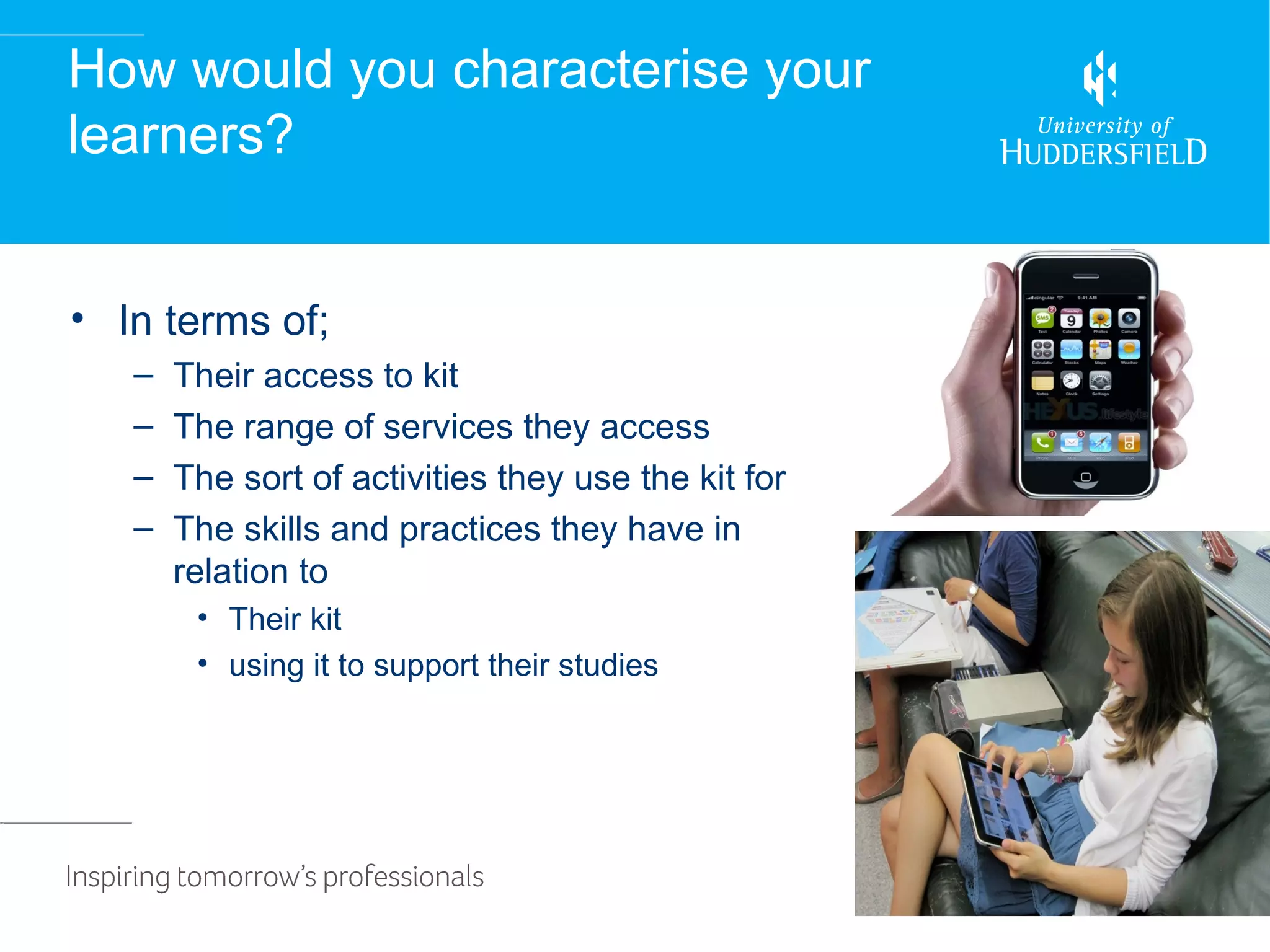
How would you characterise your
learners?


• In terms of;
   –   Their access to kit
   –   The range of services they access
   –   The sort of activities they use the kit for
   –   The skills and practices they have in
       relation to
        • Their kit
        • using it to support their studies
Digital Natives Debate


•   Learners’ ICT skills are less advanced than educators and learners
    think (Nicholas et al. 2008, JISC 2008-9)
•   Characterisation of young people as ‘digital natives’ hides many
    contradictions in their experiences (Luckin et al. 2009)
•   Learners’ engagement with digital medias complex and
    differentiated (Bennet et al. 2008, Hargittai, 2009)
•   Learners experience many difficulties in transposing practices from
    social contexts into formal learning (Cranmer 2006)
•   Active knowledge building and sharing are minority activities which
    they are introduced to by educators (Selwyn 2009)
•   Can be clashes between everyday practice and academic practice
    (Beetham 2009)
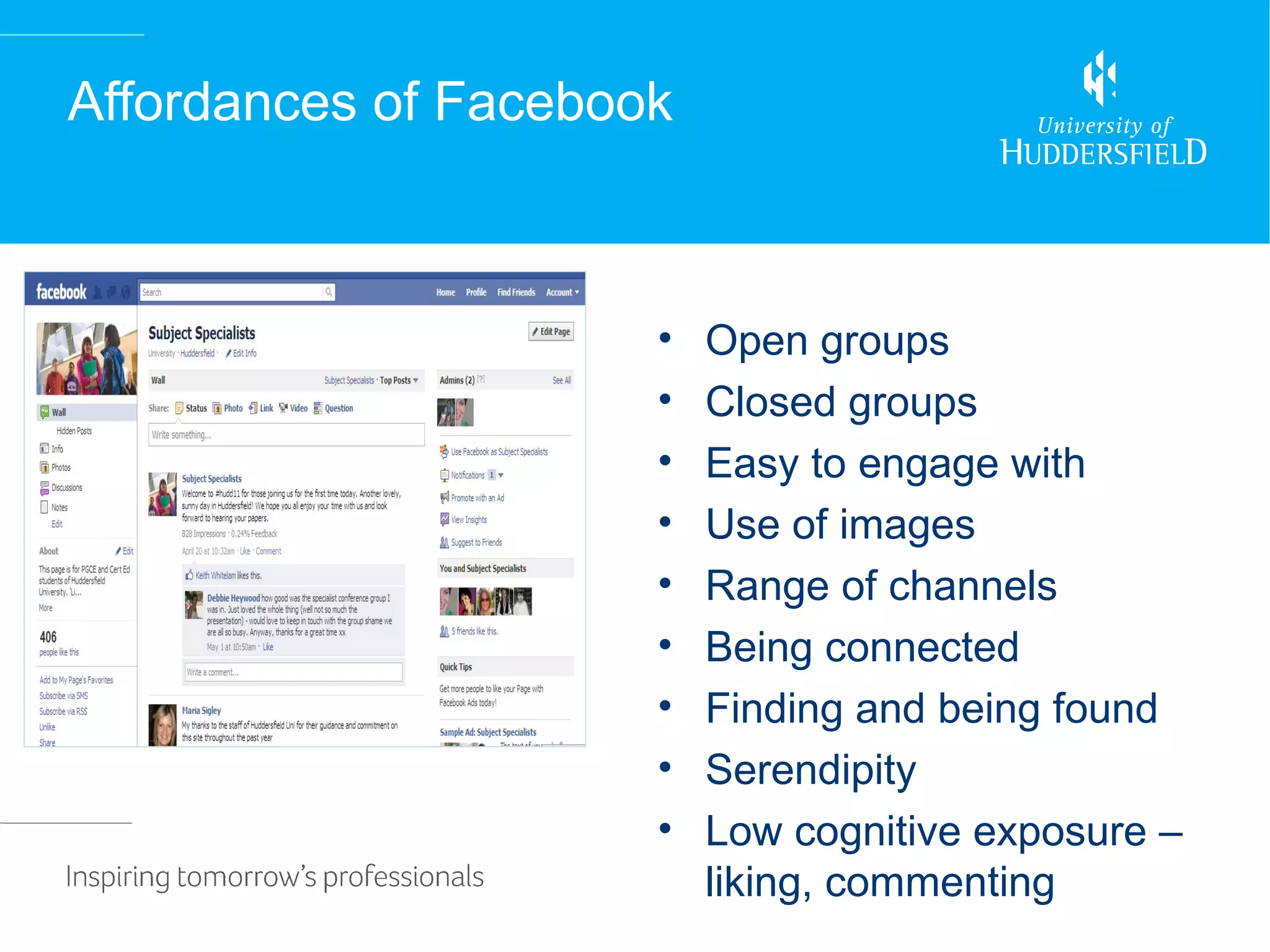
Affordances of Facebook


                      •   Open groups
                      •   Closed groups
                      •   Easy to engage with
                      •   Use of images
                      •   Range of channels
                      •   Being connected
                      •   Finding and being found
                      •   Serendipity
                      •   Low cognitive exposure –
                          liking, commenting
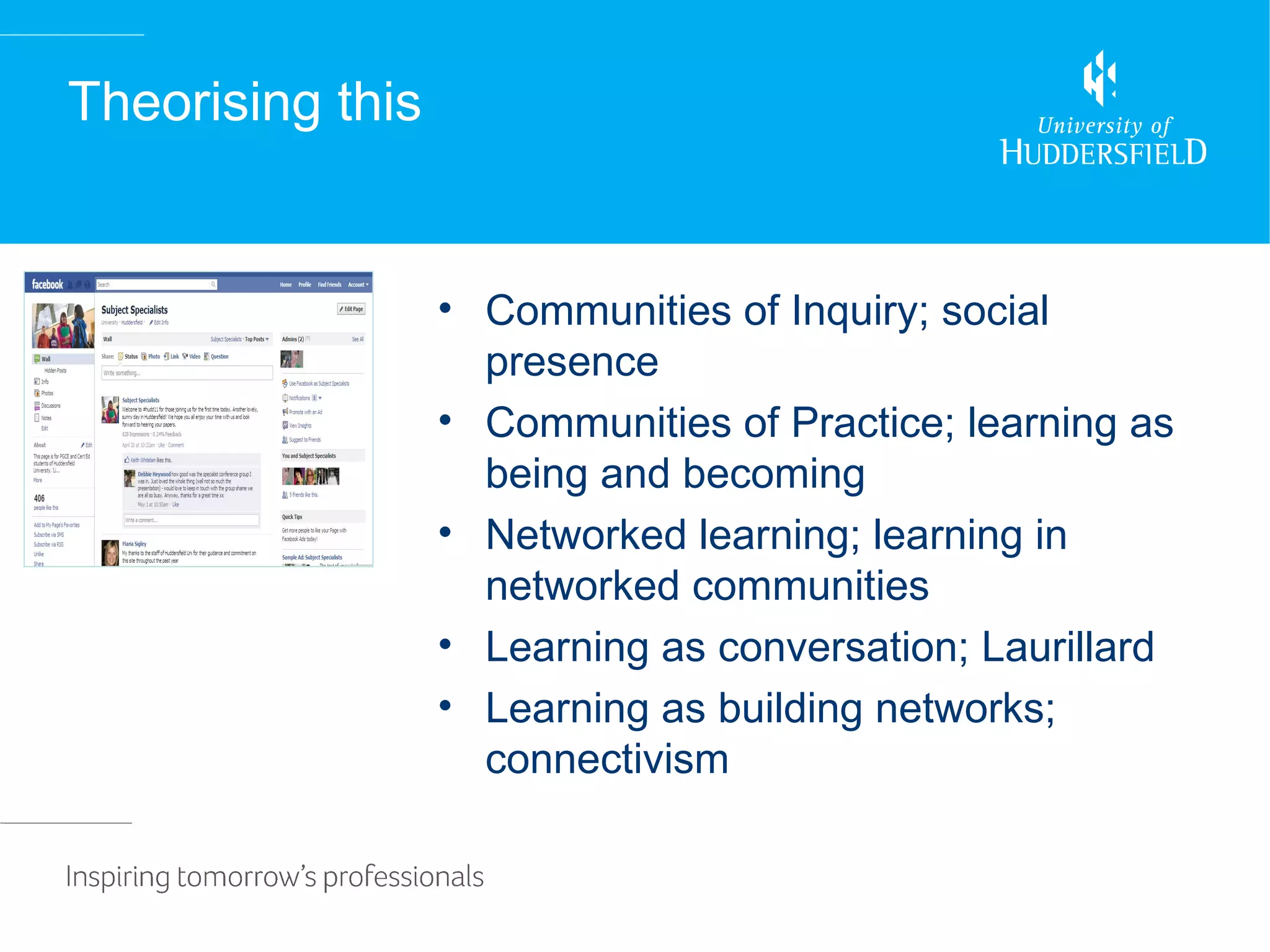
Theorising this


                  • Communities of Inquiry; social
                    presence
                  • Communities of Practice; learning as
                    being and becoming
                  • Networked learning; learning in
                    networked communities
                  • Learning as conversation; Laurillard
                  • Learning as building networks;
                    connectivism
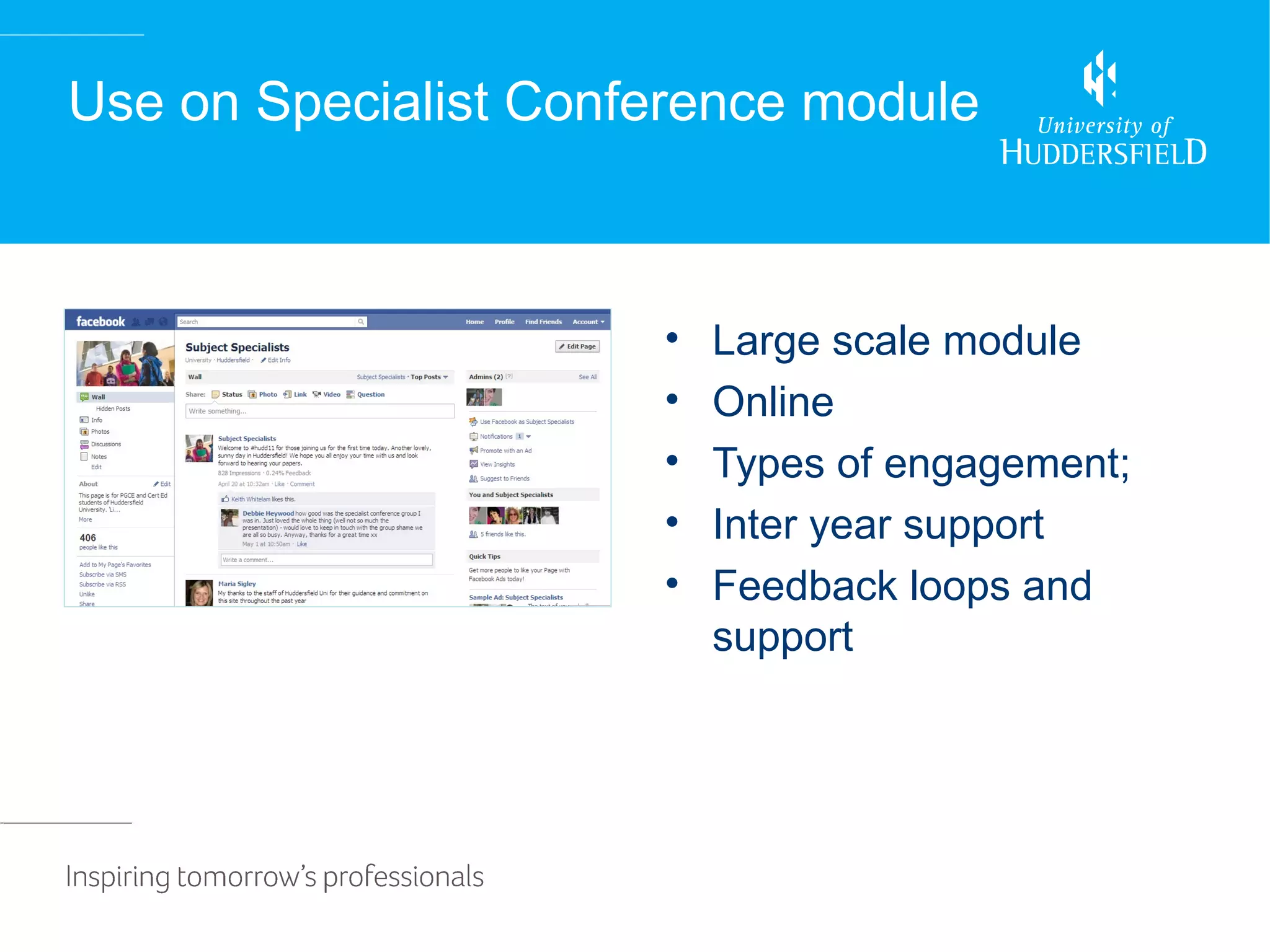
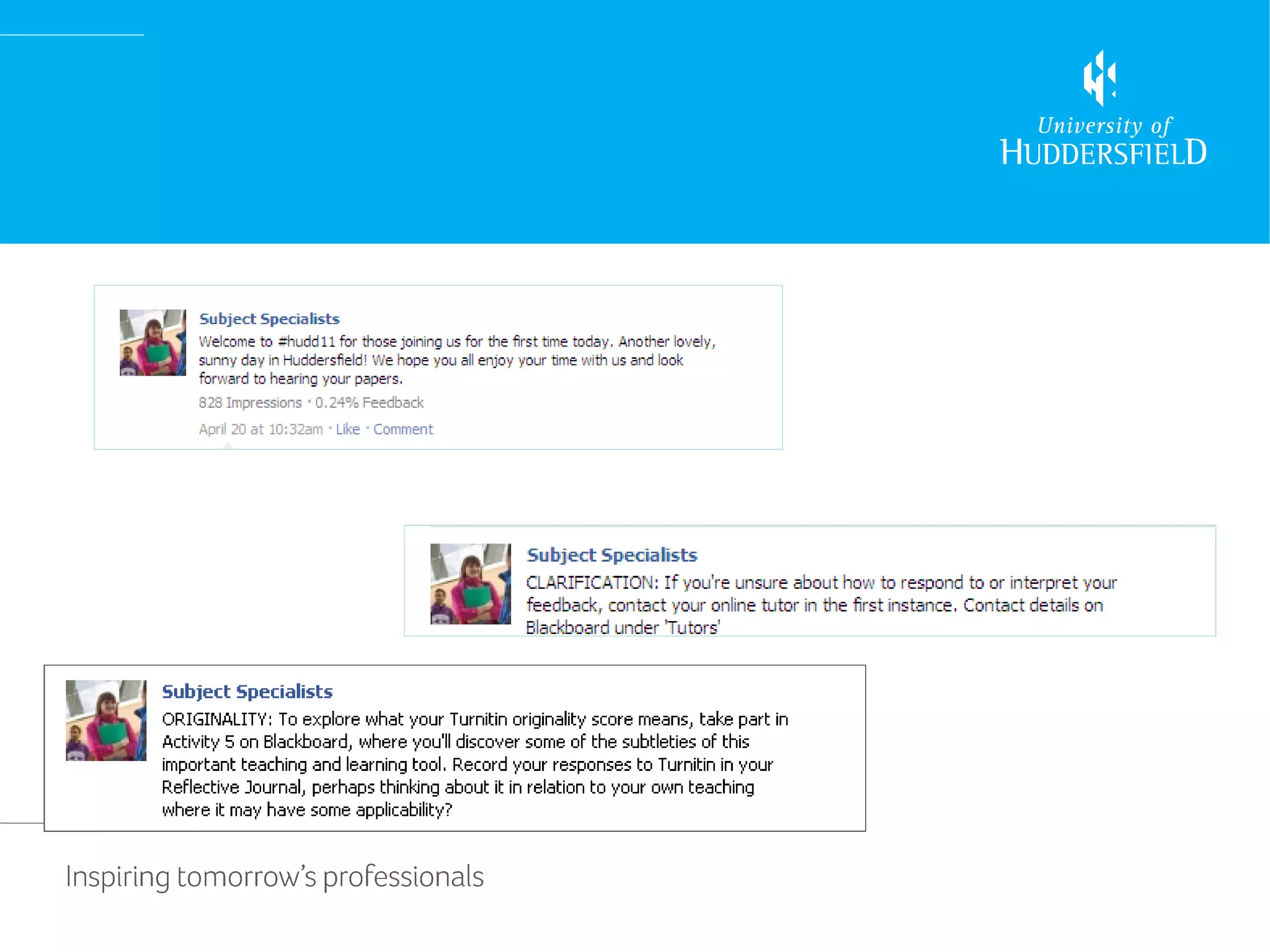
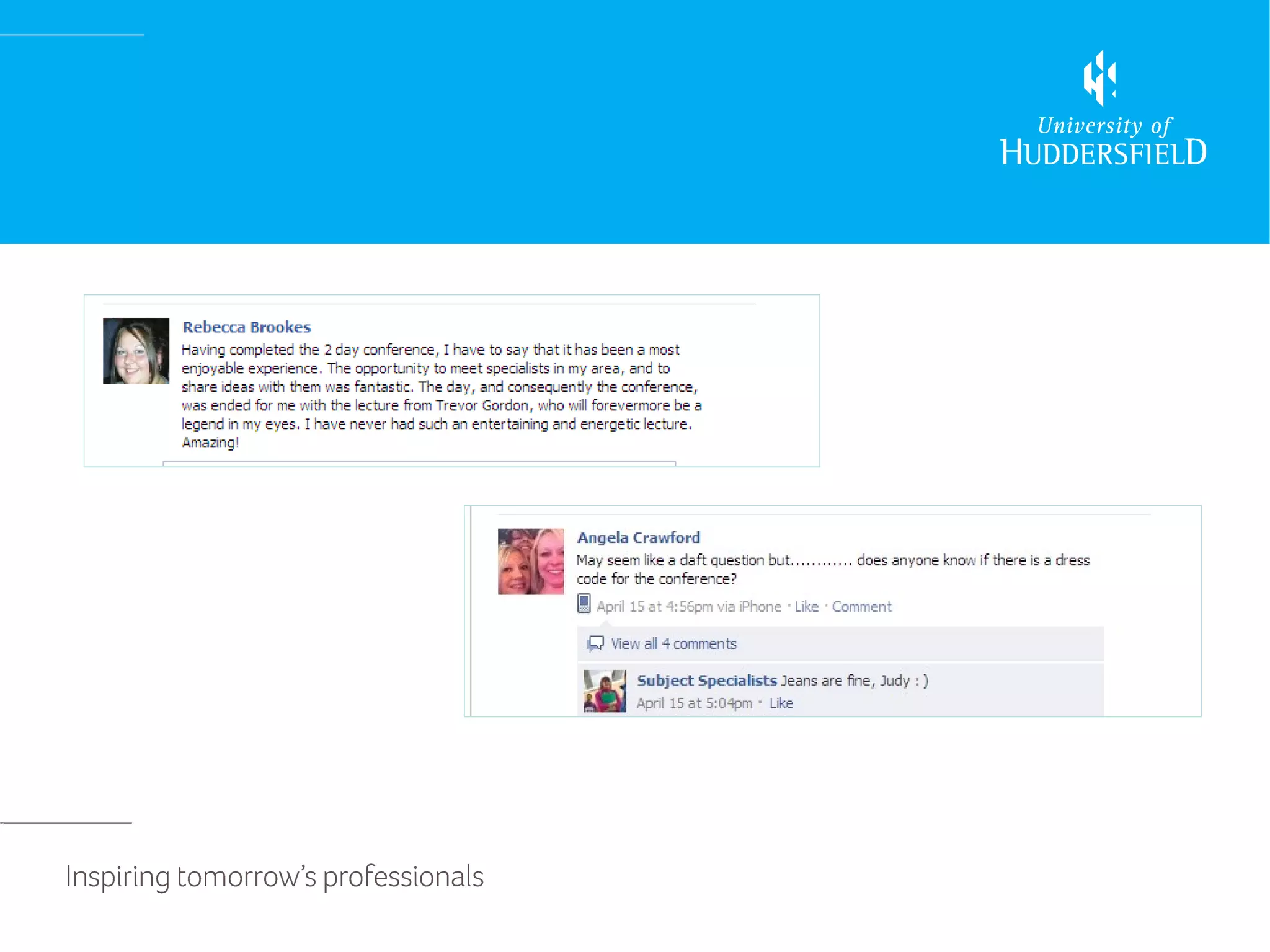
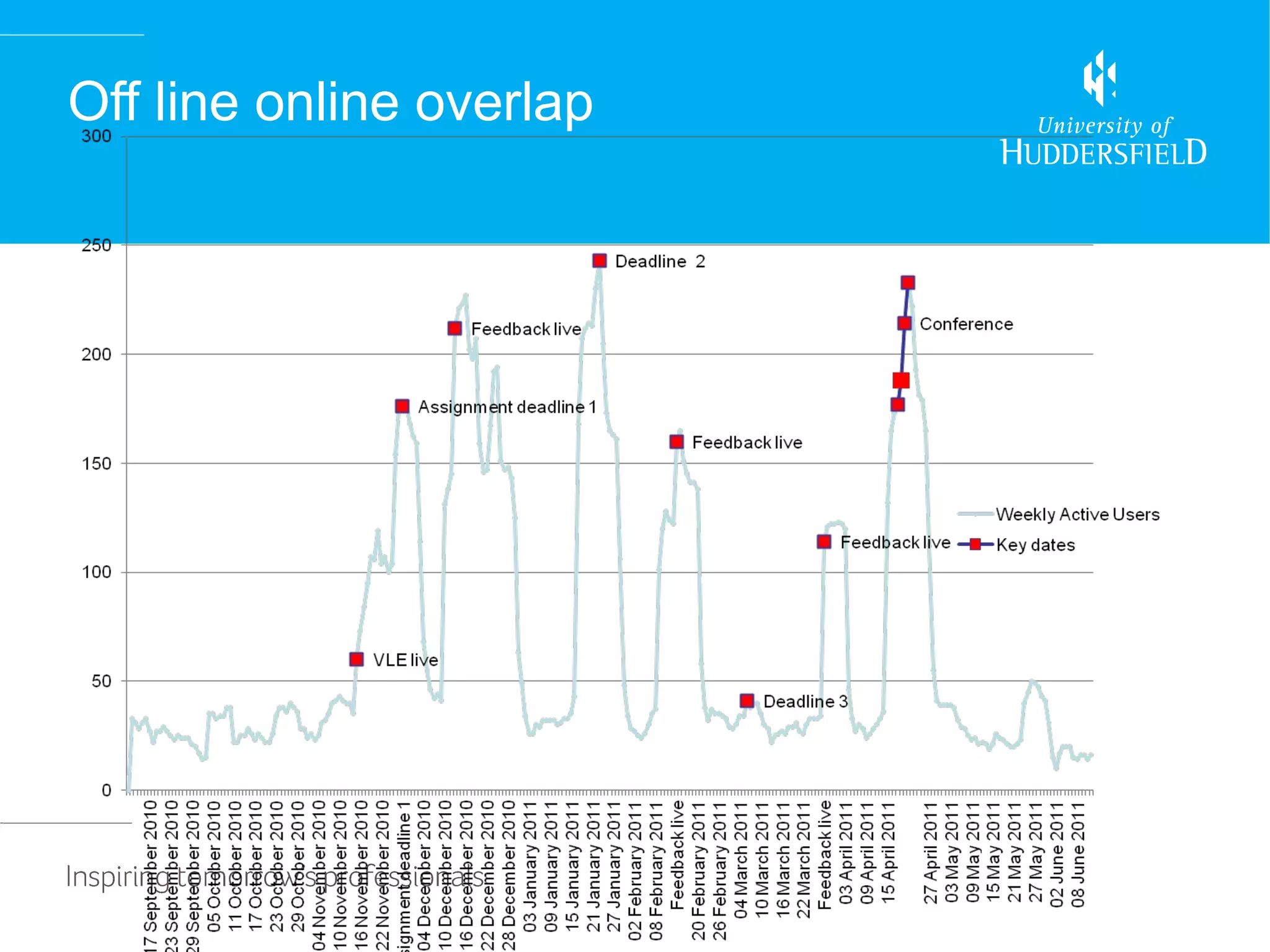
Use on Specialist Conference module


                      •   Large scale module
                      •   Online
                      •   Types of engagement;
                      •   Inter year support
                      •   Feedback loops and
                          support
Use on Hospitality Management


• Placements for 1
  year
• Across the world
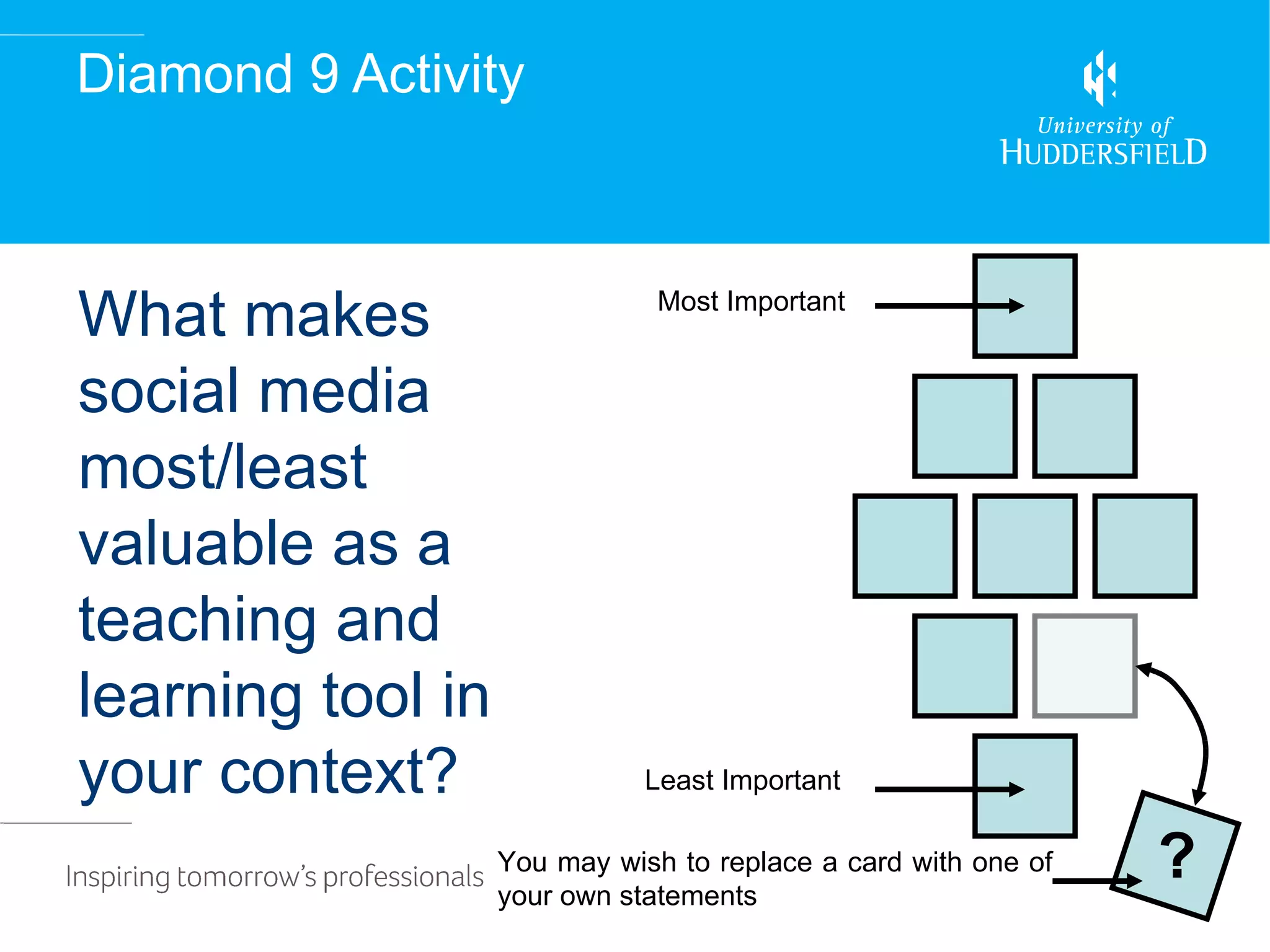
Diamond 9 Activity


What makes                     Most Important


social media
most/least
valuable as a
teaching and
learning tool in
your context?                 Least Important

                   You may wish to replace a card with one of
                   your own statements
                                                                ?
Off line online overlap
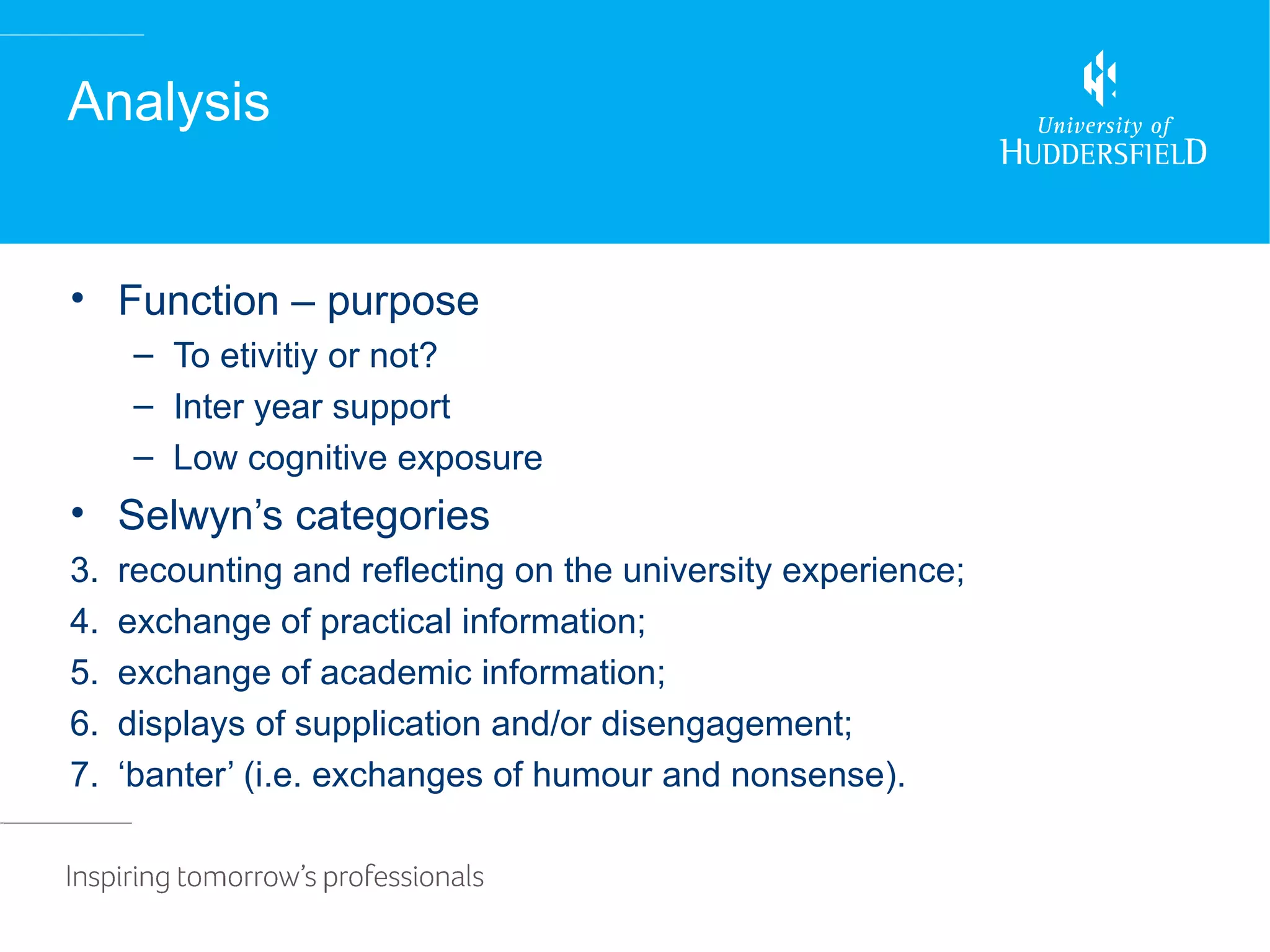
Analysis


• Function – purpose
      – To etivitiy or not?
      – Inter year support
      – Low cognitive exposure
• Selwyn’s categories
3.   recounting and reflecting on the university experience;
4.   exchange of practical information;
5.   exchange of academic information;
6.   displays of supplication and/or disengagement;
7.   ‘banter’ (i.e. exchanges of humour and nonsense).
Tutoring with Facebook


• Profiles
• Etiquette and privacy
• Reputational issues


• Managing constraints (troll behaviour)
MSc Multimedia and Elearning


• Prezi
• Liz Bennett
• E.bennett@hud.ac.uk
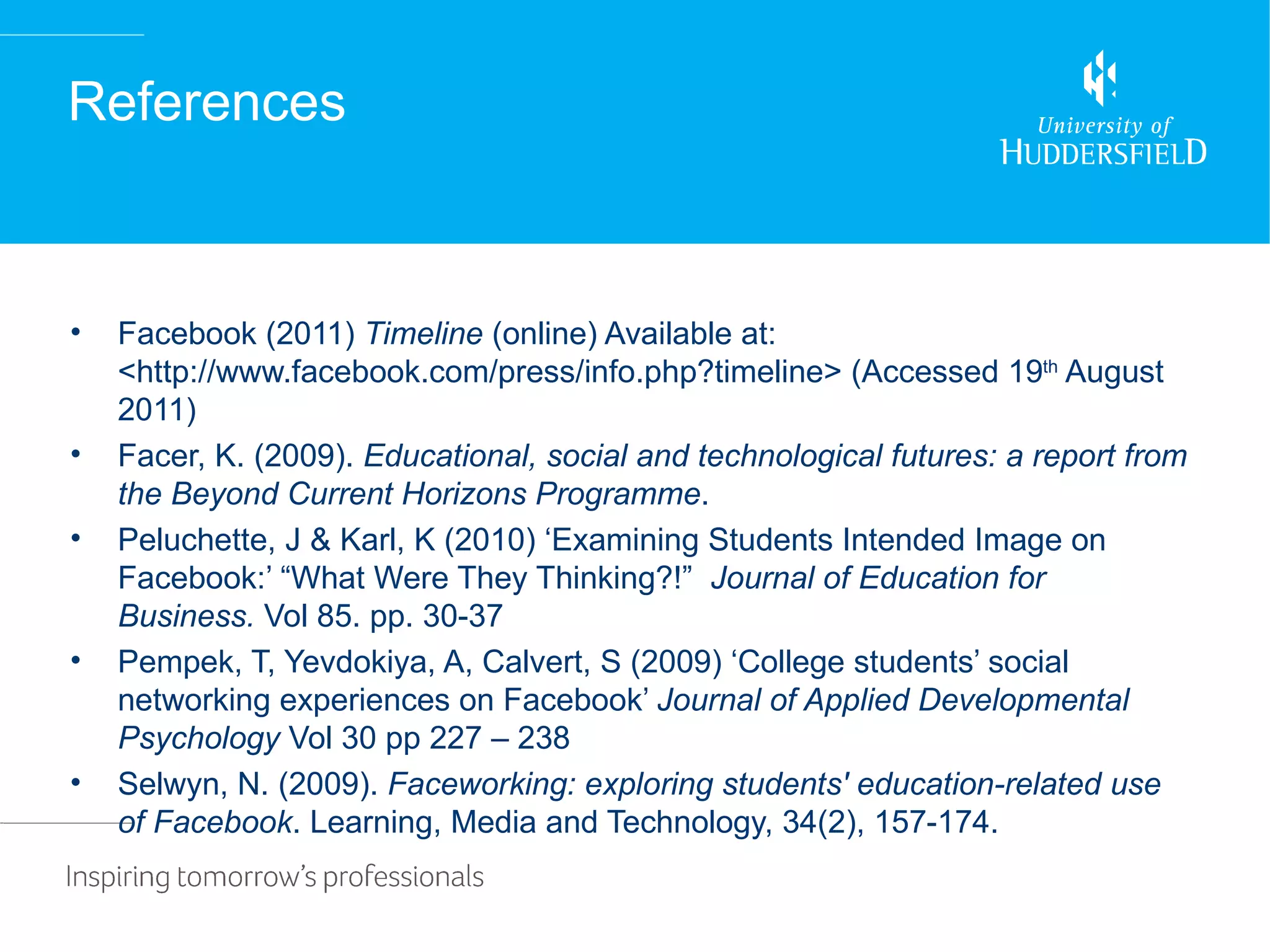
References


•   Facebook (2011) Timeline (online) Available at:
    <http://www.facebook.com/press/info.php?timeline> (Accessed 19th August
    2011)
•   Facer, K. (2009). Educational, social and technological futures: a report from
    the Beyond Current Horizons Programme.
•   Peluchette, J & Karl, K (2010) ‘Examining Students Intended Image on
    Facebook:’ “What Were They Thinking?!” Journal of Education for
    Business. Vol 85. pp. 30-37
•   Pempek, T, Yevdokiya, A, Calvert, S (2009) ‘College students’ social
    networking experiences on Facebook’ Journal of Applied Developmental
    Psychology Vol 30 pp 227 – 238
•   Selwyn, N. (2009). Faceworking: exploring students' education-related use
    of Facebook. Learning, Media and Technology, 34(2), 157-174.

Facebook in the Classroom

  • 1.
    Facebook in theClassroom Liz Bennett MSc Multimedia and elearning Course Leader
  • 2.
    Growth in accessto info over web
  • 3.
    Figures for usergenerated content; • 35 hours of video footage is uploaded to the Youtube every minute. • Over 2 billion videos are viewed every day • Corporate bloggers receive 312,783 on average visitors per month: • 460k new Twitter accounts set up in Feb 2011 • Average Tweet per day (TPD) in March 2010 was 50M, in Feb 2011 140M 280% increase in a year. • More than 500 million active Facebook users, 50% of our active users log on to Facebook in any given day
  • 4.
    Horizon Report 2011 1)Rise of technology ownership (Kindles, ipads, phones) with access to internet 2) People’s expectations of flexible learning expectations of wifi 3) World of work increasing collaborative 4) Rise in cloud based services
  • 5.
    Horizon Report Theabundance of resources and relationships made easily accessible via the Internet is increasingly challenging us to revisit our roles as educators in sense- making, coaching, and credentialing.
  • 6.
    New ways ofknowing Transfer of attention from print to screen Multiplicity of media: hyperlinked and hybrid media Blurred boundaries of information/communication Ubiquitous access to information and to connected others Routine surveillance and capture of processes/events Networked societies and interest groups Power of the crowd (web 2.0, massive social data sets) Offloading of cognitive tasks onto digital tools and networks Presentation of self in digital contexts Open scholarship and open publishing
  • 7.
    How would youcharacterise your learners? • In terms of; – Their access to kit – The range of services they access – The sort of activities they use the kit for – The skills and practices they have in relation to • Their kit • using it to support their studies
  • 8.
    Digital Natives Debate • Learners’ ICT skills are less advanced than educators and learners think (Nicholas et al. 2008, JISC 2008-9) • Characterisation of young people as ‘digital natives’ hides many contradictions in their experiences (Luckin et al. 2009) • Learners’ engagement with digital medias complex and differentiated (Bennet et al. 2008, Hargittai, 2009) • Learners experience many difficulties in transposing practices from social contexts into formal learning (Cranmer 2006) • Active knowledge building and sharing are minority activities which they are introduced to by educators (Selwyn 2009) • Can be clashes between everyday practice and academic practice (Beetham 2009)
  • 9.
    Affordances of Facebook • Open groups • Closed groups • Easy to engage with • Use of images • Range of channels • Being connected • Finding and being found • Serendipity • Low cognitive exposure – liking, commenting
  • 10.
    Theorising this • Communities of Inquiry; social presence • Communities of Practice; learning as being and becoming • Networked learning; learning in networked communities • Learning as conversation; Laurillard • Learning as building networks; connectivism
  • 11.
    Use on SpecialistConference module • Large scale module • Online • Types of engagement; • Inter year support • Feedback loops and support
  • 14.
    Use on HospitalityManagement • Placements for 1 year • Across the world
  • 15.
    Diamond 9 Activity Whatmakes Most Important social media most/least valuable as a teaching and learning tool in your context? Least Important You may wish to replace a card with one of your own statements ?
  • 16.
  • 17.
    Analysis • Function –purpose – To etivitiy or not? – Inter year support – Low cognitive exposure • Selwyn’s categories 3. recounting and reflecting on the university experience; 4. exchange of practical information; 5. exchange of academic information; 6. displays of supplication and/or disengagement; 7. ‘banter’ (i.e. exchanges of humour and nonsense).
  • 18.
    Tutoring with Facebook •Profiles • Etiquette and privacy • Reputational issues • Managing constraints (troll behaviour)
  • 19.
    MSc Multimedia andElearning • Prezi • Liz Bennett • E.bennett@hud.ac.uk
  • 20.
    References • Facebook (2011) Timeline (online) Available at: <http://www.facebook.com/press/info.php?timeline> (Accessed 19th August 2011) • Facer, K. (2009). Educational, social and technological futures: a report from the Beyond Current Horizons Programme. • Peluchette, J & Karl, K (2010) ‘Examining Students Intended Image on Facebook:’ “What Were They Thinking?!” Journal of Education for Business. Vol 85. pp. 30-37 • Pempek, T, Yevdokiya, A, Calvert, S (2009) ‘College students’ social networking experiences on Facebook’ Journal of Applied Developmental Psychology Vol 30 pp 227 – 238 • Selwyn, N. (2009). Faceworking: exploring students' education-related use of Facebook. Learning, Media and Technology, 34(2), 157-174.

Editor's Notes

  • #17 physical location as a marker for identity from new horizones