Fit for Purpose: placing the PLE at the centre of marketing educationLisa Harris and Paul HarriganUniversity of SouthamptonPresentation for 2nd International PLE Conference, Southampton, July 2011
Author InformationPaul Harrigan @drpaulharriganLisa Harris @lisaharrisLecturer in MarketingProgramme Director for the BSc in International MarketingResearch on impact of technology on marketing curriculumCurrent research project investigating use of Web 2.0 (e.g. social networks, blogs, web analytics) technologies on customer relationships in marketingTeaches Digital Marketing at the University of Southampton  Programme Director for the MSc in Digital Marketing. Qualified e-tutor for the University of Liverpool online MBA. Currently developing workshops encouraging the growth of digital presence for career or business development.
BackgroundAt Southampton our research focuses on: how developments in technology are driving new marketing theory and practicehow marketing education should respond to these changesThis paper evaluates how marketing education should develop both appropriate curriculum content and the supportive personal learning environments (PLEs) made possible by developments in technology.
21st Century Careers (JISC, 2009)Competition for employment in a global knowledge economyIncreased levels of self-employment and portfolio workingGrowth of multi-disciplinary teams focused on specific tasks whose members might be physically located anywhere in the world Life within a networked society Blurring of boundaries between ‘real’ and ‘virtual’, public and privateIncreasingly ubiquitous use of digital technologies.
The big picturethe digital sector directly employs 2.5 million people in the UK the vast majority of graduate jobs require effective use of ICT as an integral aspect of professionalism and performance. The UK Government has indicated that student satisfaction will be taken as a critical measure of how higher education is performing. learners have high expectations and their experiences of technology-supported learning are largely determined by the level of staff e-learning skills.
Digital Literacy“Digital literacy is the ability to locate, organise, understand, evaluate, and analyse information using digital technology. It involves a working knowledge of current tools and an understanding of how they can be used”
“The active management of online activities such as collaboration, networking , reviewing, content creation and curation in order to “stand out from the crowd” in today’s job market”
“an ability to respond positively to change”www.lisaharrismarketing.comwww.delicious.com/lisaharris1www.twitter.com/lisaharriswww.slideshare.net/lisaharriswww.uk.linkedin.com/in/lisajaneharris
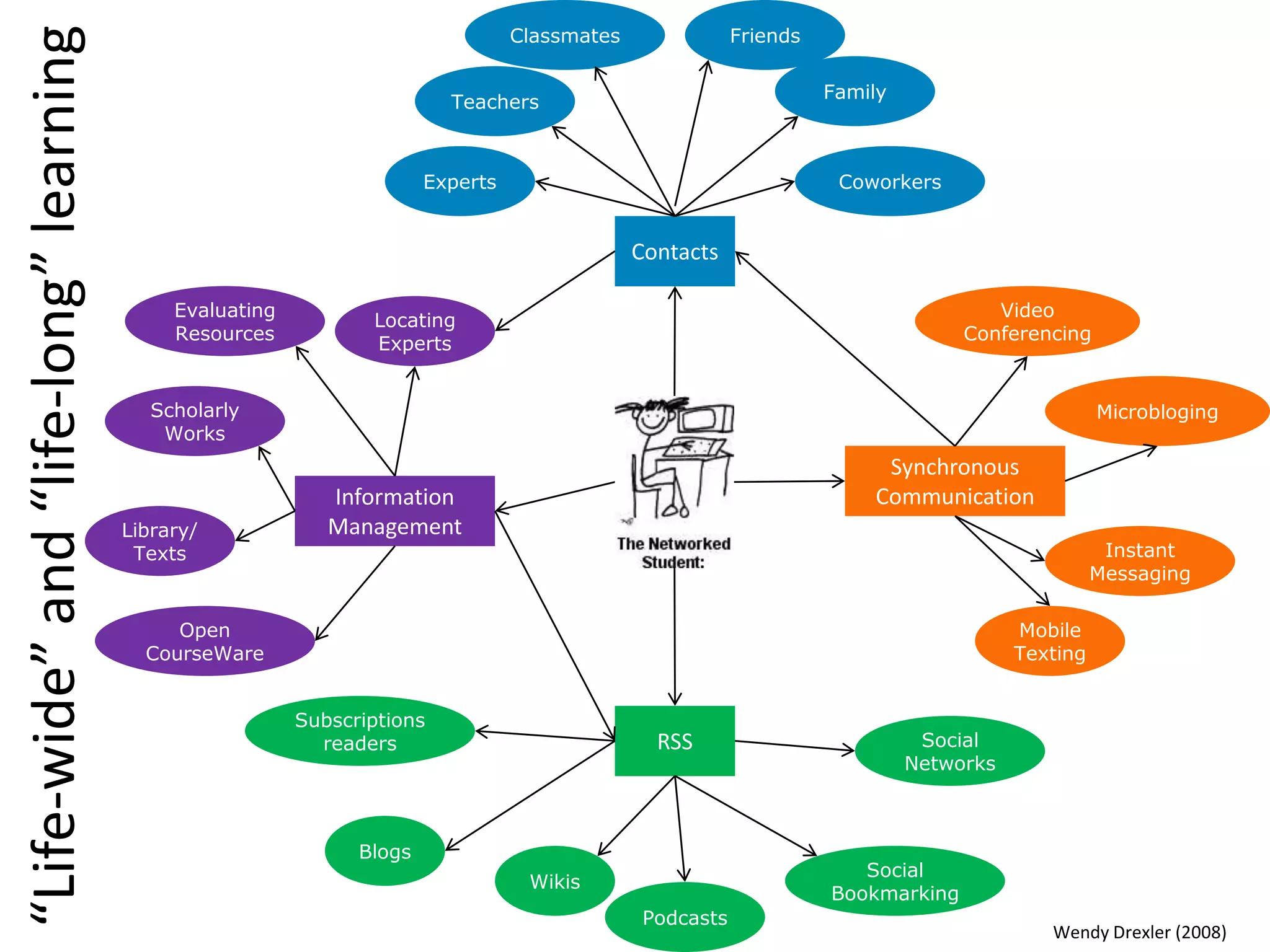
ClassmatesFriendsFamilyTeachersExpertsCoworkersContactsVideo ConferencingEvaluating ResourcesLocating ExpertsMicroblogingScholarly Works“Life-wide” and “life-long” learningSynchronous CommunicationInformation ManagementLibrary/TextsInstant MessagingMobile TextingOpen CourseWareSubscriptions readersRSSSocial NetworksBlogsWikisSocial  BookmarkingPodcastsWendy Drexler (2008)
The PLE SpectrumPLEs can be conceptualised in terms of: 1) the technology choices available to individuals to help them manage their learning 2) the features of the study programme which help to formalise this approach3) the technological infrastructure provided by the university as a whole (ie providing adequate wifi, secure web access etc) 4) the culture changes that are required for staff to operate effectively within this environment
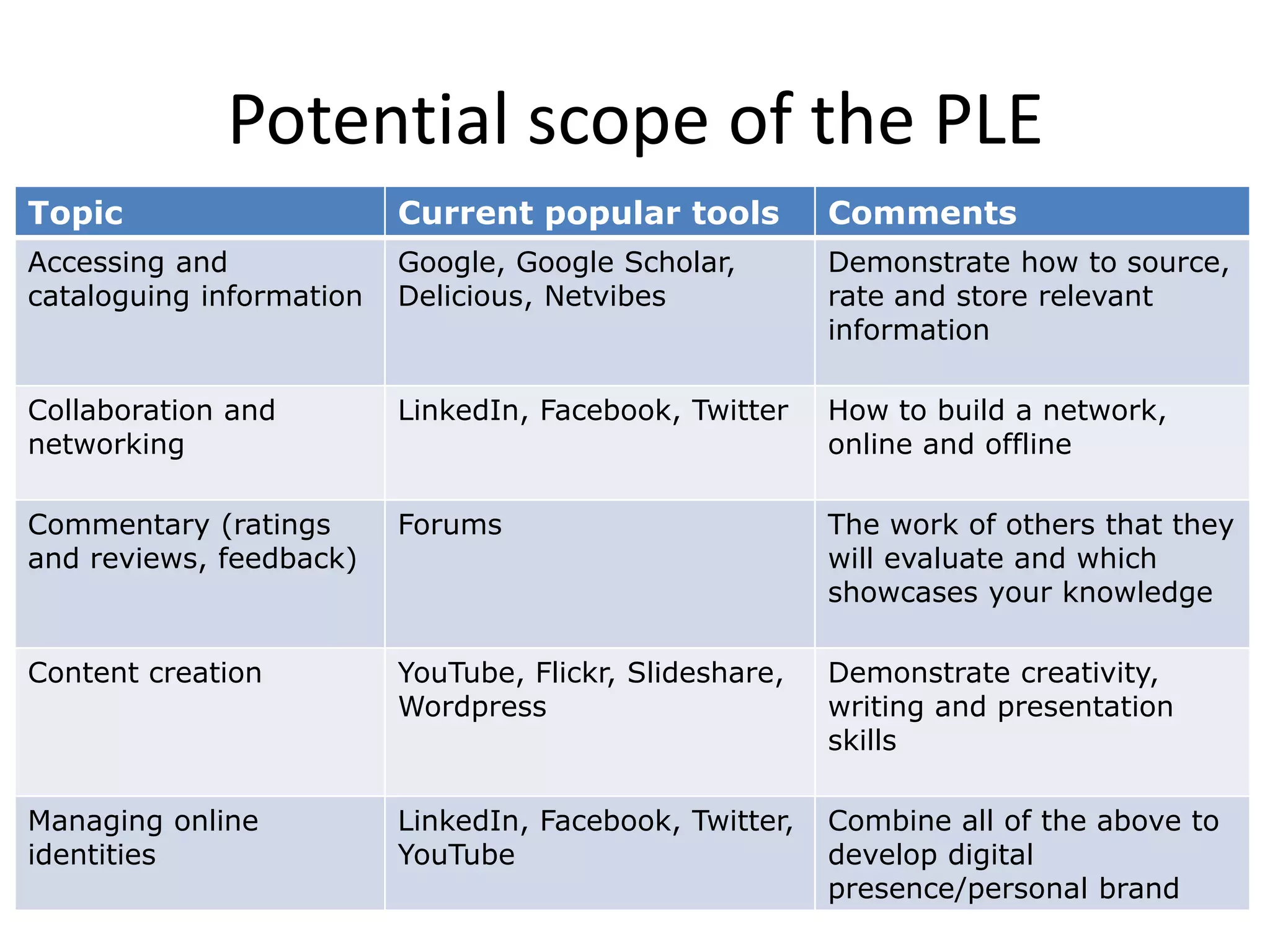
Potential scope of the PLE
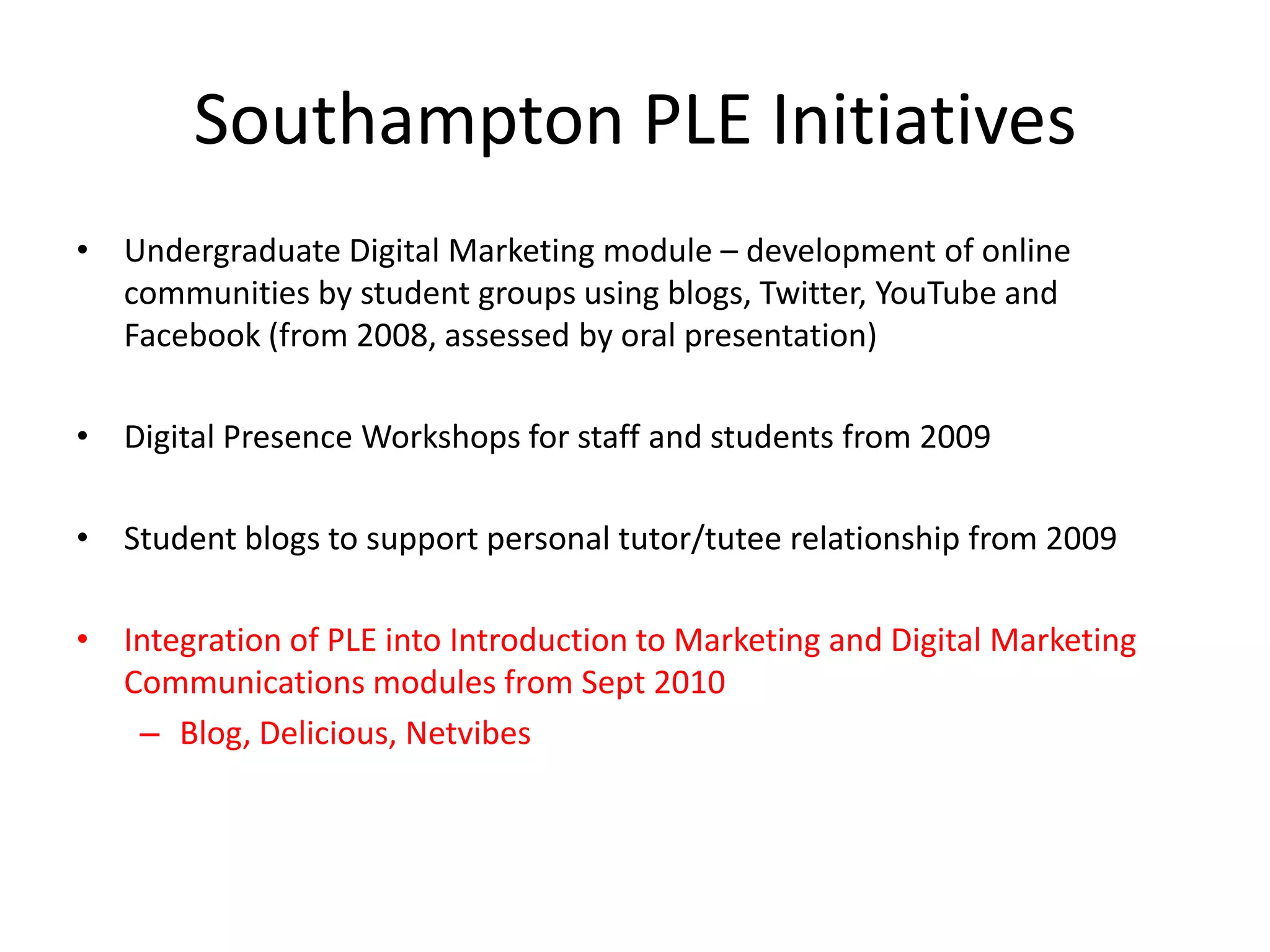
Southampton PLE InitiativesUndergraduate Digital Marketing module – development of online communities by student groups using blogs, Twitter, YouTube and Facebook (from 2008, assessed by oral presentation)Digital Presence Workshops for staff and students from 2009Student blogs to support personal tutor/tutee relationship from 2009Integration of PLE into Introduction to Marketing and Digital Marketing Communications modules from Sept 2010Blog, Delicious, Netvibes
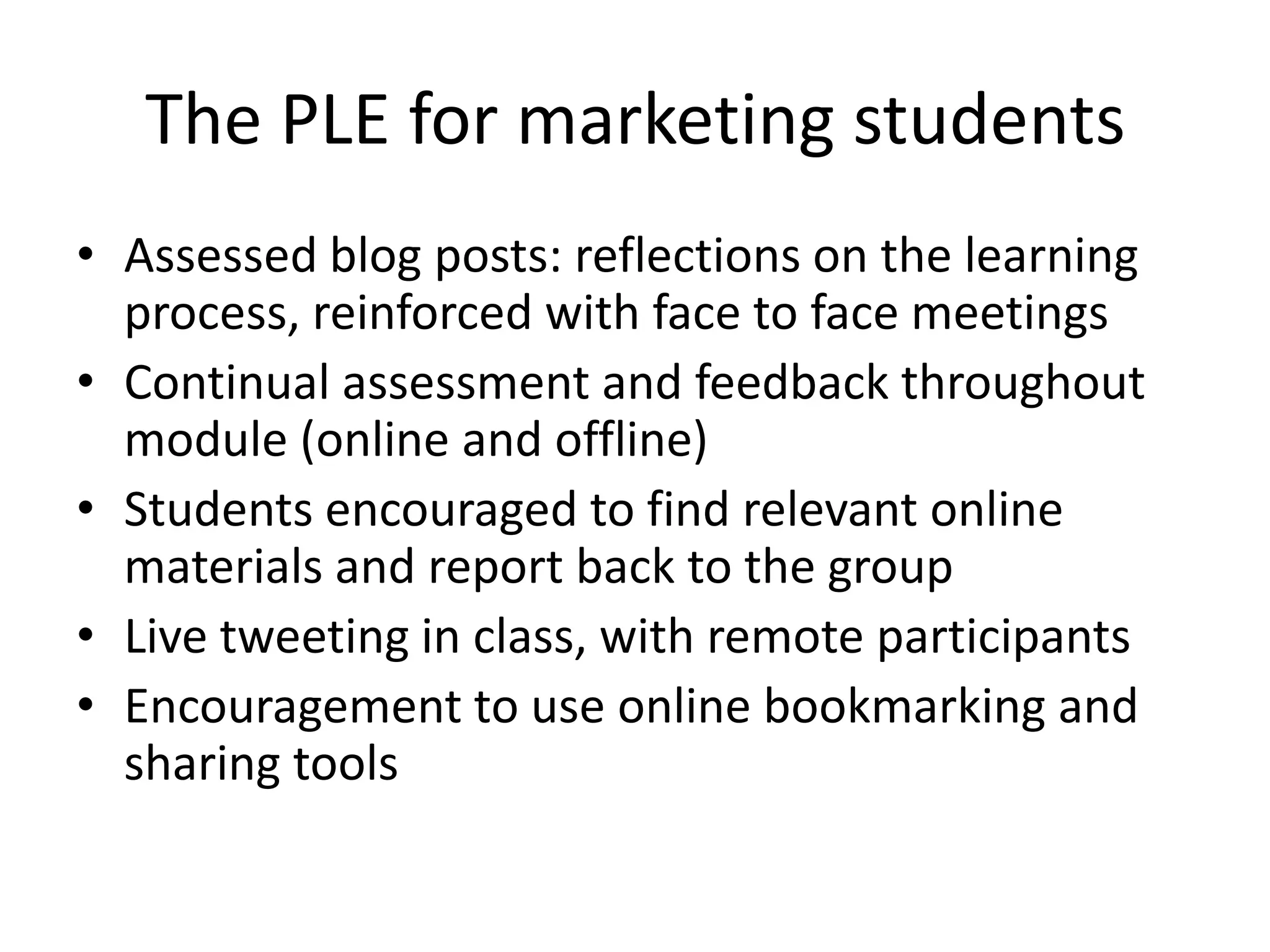
The PLE for marketing studentsAssessed blog posts: reflections on the learning process, reinforced with face to face meetingsContinual assessment and feedback throughout module (online and offline)Students encouraged to find relevant online materials and report back to the groupLive tweeting in class, with remote participants Encouragement to use online bookmarking and sharing tools
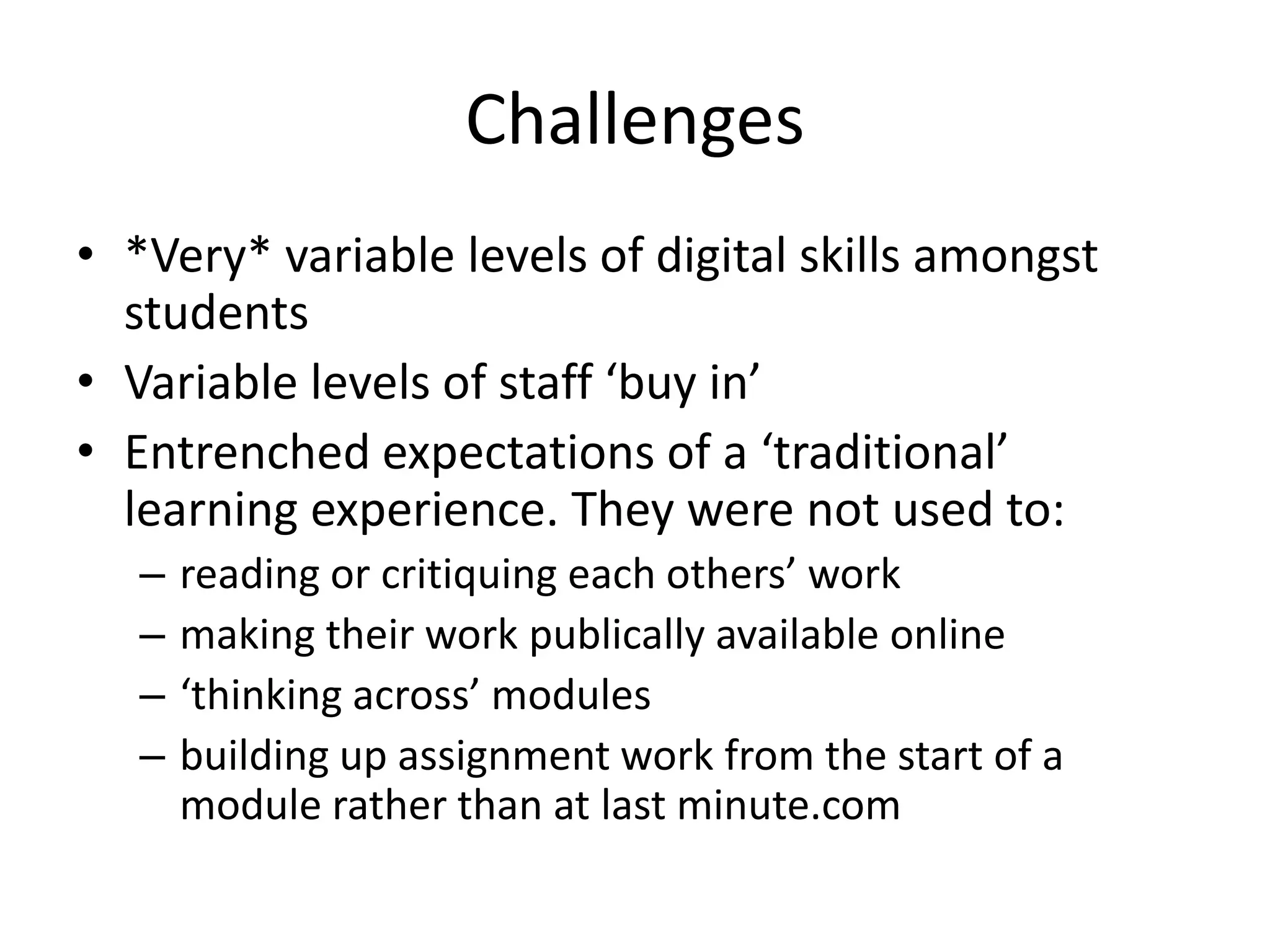
Challenges*Very* variable levels of digital skills amongst studentsVariable levels of staff ‘buy in’Entrenched expectations of a ‘traditional’ learning experience. They were not used to:reading or critiquing each others’ workmaking their work publically available online‘thinking across’ modulesbuilding up assignment work from the start of a module rather than at last minute.com

Fit for Purpose? @ #PLE_SOU

  • 1.
    Fit for Purpose:placing the PLE at the centre of marketing educationLisa Harris and Paul HarriganUniversity of SouthamptonPresentation for 2nd International PLE Conference, Southampton, July 2011
  • 2.
    Author InformationPaul Harrigan@drpaulharriganLisa Harris @lisaharrisLecturer in MarketingProgramme Director for the BSc in International MarketingResearch on impact of technology on marketing curriculumCurrent research project investigating use of Web 2.0 (e.g. social networks, blogs, web analytics) technologies on customer relationships in marketingTeaches Digital Marketing at the University of Southampton Programme Director for the MSc in Digital Marketing. Qualified e-tutor for the University of Liverpool online MBA. Currently developing workshops encouraging the growth of digital presence for career or business development.
  • 3.
    BackgroundAt Southampton ourresearch focuses on: how developments in technology are driving new marketing theory and practicehow marketing education should respond to these changesThis paper evaluates how marketing education should develop both appropriate curriculum content and the supportive personal learning environments (PLEs) made possible by developments in technology.
  • 4.
    21st Century Careers(JISC, 2009)Competition for employment in a global knowledge economyIncreased levels of self-employment and portfolio workingGrowth of multi-disciplinary teams focused on specific tasks whose members might be physically located anywhere in the world Life within a networked society Blurring of boundaries between ‘real’ and ‘virtual’, public and privateIncreasingly ubiquitous use of digital technologies.
  • 5.
    The big picturethedigital sector directly employs 2.5 million people in the UK the vast majority of graduate jobs require effective use of ICT as an integral aspect of professionalism and performance. The UK Government has indicated that student satisfaction will be taken as a critical measure of how higher education is performing. learners have high expectations and their experiences of technology-supported learning are largely determined by the level of staff e-learning skills.
  • 6.
    Digital Literacy“Digital literacyis the ability to locate, organise, understand, evaluate, and analyse information using digital technology. It involves a working knowledge of current tools and an understanding of how they can be used”
  • 7.
    “The active managementof online activities such as collaboration, networking , reviewing, content creation and curation in order to “stand out from the crowd” in today’s job market”
  • 8.
    “an ability torespond positively to change”www.lisaharrismarketing.comwww.delicious.com/lisaharris1www.twitter.com/lisaharriswww.slideshare.net/lisaharriswww.uk.linkedin.com/in/lisajaneharris
  • 9.
    ClassmatesFriendsFamilyTeachersExpertsCoworkersContactsVideo ConferencingEvaluating ResourcesLocatingExpertsMicroblogingScholarly Works“Life-wide” and “life-long” learningSynchronous CommunicationInformation ManagementLibrary/TextsInstant MessagingMobile TextingOpen CourseWareSubscriptions readersRSSSocial NetworksBlogsWikisSocial BookmarkingPodcastsWendy Drexler (2008)
  • 10.
    The PLE SpectrumPLEscan be conceptualised in terms of: 1) the technology choices available to individuals to help them manage their learning 2) the features of the study programme which help to formalise this approach3) the technological infrastructure provided by the university as a whole (ie providing adequate wifi, secure web access etc) 4) the culture changes that are required for staff to operate effectively within this environment
  • 11.
  • 12.
    Southampton PLE InitiativesUndergraduateDigital Marketing module – development of online communities by student groups using blogs, Twitter, YouTube and Facebook (from 2008, assessed by oral presentation)Digital Presence Workshops for staff and students from 2009Student blogs to support personal tutor/tutee relationship from 2009Integration of PLE into Introduction to Marketing and Digital Marketing Communications modules from Sept 2010Blog, Delicious, Netvibes
  • 13.
    The PLE formarketing studentsAssessed blog posts: reflections on the learning process, reinforced with face to face meetingsContinual assessment and feedback throughout module (online and offline)Students encouraged to find relevant online materials and report back to the groupLive tweeting in class, with remote participants Encouragement to use online bookmarking and sharing tools
  • 14.
    Challenges*Very* variable levelsof digital skills amongst studentsVariable levels of staff ‘buy in’Entrenched expectations of a ‘traditional’ learning experience. They were not used to:reading or critiquing each others’ workmaking their work publically available online‘thinking across’ modulesbuilding up assignment work from the start of a module rather than at last minute.com
  • 15.
    PLE Success storiesSomestudents volunteered to present their work to the whole groupFor examples of students who have really embraced the approach, see Natasha’s blog and Maria’s blog.Summary video of student experiences through the whole programme: Http://www.tinyurl.com/mastervideo2
  • 16.
    Thank you forparticipating!Any questions, comments, suggestions???