Saad Rashid usmani
N 32
Nuclear Medicine and radiotherapy
Linear Accelerator
Definition:
Treatment machine that uses
high-frequency electromagnetic
waves to accelerate charged
particles such as electrons to high
energies via a linear tube
Accelerator Generations
Early Accelerators (1953-1961
Second Generations (1962-1982)
Third generation accelerators:
Early Accelerators (1953-1961):
• Extremely large and
bulky
• Limited gantry motion
Second Generations (1962-1982):
• 360 degree rotational
• Allow treatment to a patent
from any gantry angle
• Improvement in accuracy and
dose delivery
Third generation accelerators:
• Improved accelerator guide
• Magnet systems
• Beam-modifying systems to provide wide ranges of
beam energy, dose rate, field size
• Operating modes with improved beam
characteristics
• Highly reliable
• Compact design
• May include: dual photon energies, multileaf
collimation, several electron energies & electronic
portal verification systems
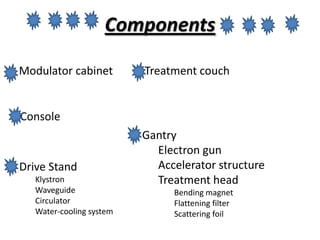
Components
Modulator cabinet
Console
Drive Stand
Klystron
Waveguide
Circulator
Water-cooling system
Gantry
Electron gun
Accelerator structure
Treatment head
Bending magnet
Flattening filter
Scattering foil
Treatment couch
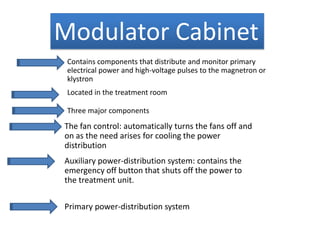
Modulator Cabinet
Contains components that distribute and monitor primary
electrical power and high-voltage pulses to the magnetron or
klystron
Located in the treatment room
Three major components
The fan control: automatically turns the fans off and
on as the need arises for cooling the power
distribution
Auxiliary power-distribution system: contains the
emergency off button that shuts off the power to
the treatment unit.
Primary power-distribution system
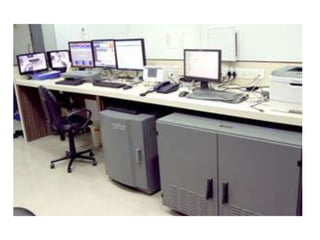
Console
Provides a central
location for
monitoring and
controlling the linac
Drive Stand
A stand containing the
apparatus that drives
the linear accelerator
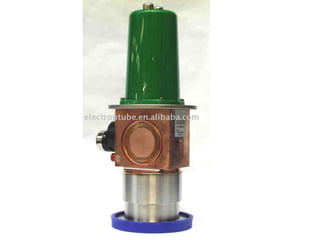
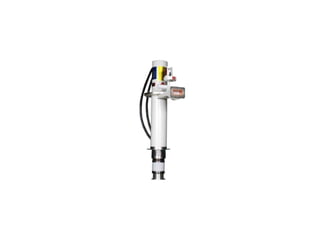
Klystron/Magnetron:
power source used to
generate
electromagnetic waves
for the accelerator
guides
Waveguide:
hollow tube-like structure
that guide the
electromagnetic waves from
the magnetron to the
accelerating guide where
electrons are accelerated
Circulator:
directs the energy into the
waveguide and prevents any
reflected microwaves from
returning to the klystron
Water-cooling system:
allows many components in the
gantry and drive stand to
operate at a constant
temperature
Klystron
A linear beam microwave amplifier requiring
an external oscillator or radiofrequency (RF)
source driver
Microwave frequencies needed for linear
accelerator operation are about three
billion cycles per second
A form of radiowave amplifier, multiplies
the amount of introduced radiowaves
greatly.
Magnetron
Device that provides high-frequency
microwave power that is used to accelerate
the electrons in the accelerating waveguide.
Electrons are emitted from the cathode and
spiral in the perpendicular magnetic field. The
interaction of the spiraling electrons with the
cavities in the anode creates the high-
frequency EM waves.
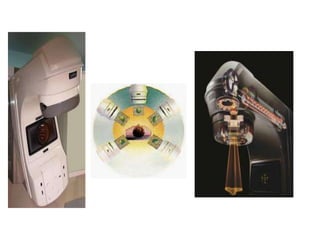
Gantry
Responsible for directing the
photon (x-ray) energy or
electron beam at a patients
tumor.
Electron gun:
Produce electrons and injects them into
the accelerator structure
Treatment head:
Components designed to shape and
monitor the treatment beam
Treatment head
Following are the components of
treatment head
Bending magnet
X-ray target
Primary collimator
Beam flattening filter
Ion chamber
Secondary collimators
Field light
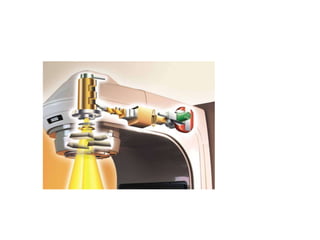
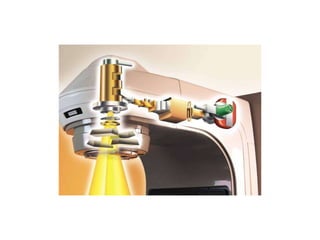
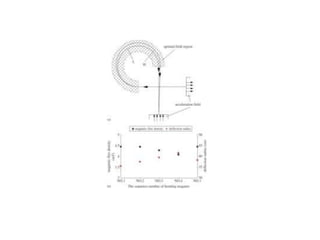
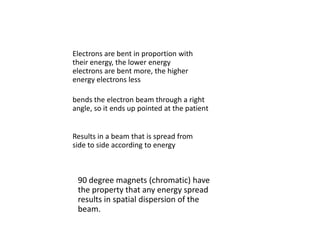
Bending magnet
bends the electron beam through a right
angle, so it ends up pointed at the patient
90 degree magnets (chromatic) have
the property that any energy spread
results in spatial dispersion of the
beam.
Electrons are bent in proportion with
their energy, the lower energy
electrons are bent more, the higher
energy electrons less
Results in a beam that is spread from
side to side according to energy
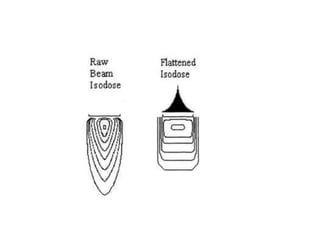
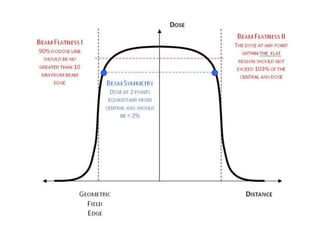
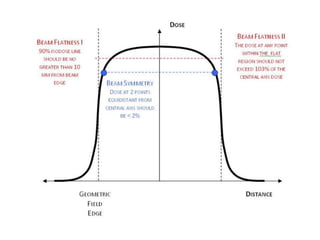
Flattening Filter
Flatness
Symmetry
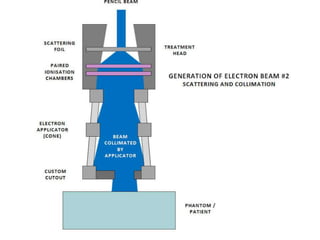
Scattering foil
: thin metal sheets provide electrons with
which they can scatter, expanding the useful
size of the beam
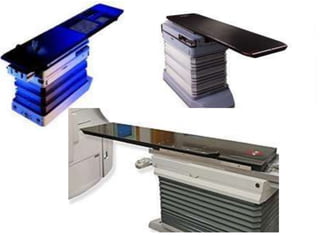
Treatment Couch
Mounted on a rotational axis
around the isocenter
Move mechanically in a
horizontal and lengthwise
direction- must be smooth and
accurate allowing for precise
and exact positioning of the
isocenter during treatment
positioning
Range in width from 45-50 cm
Th ank
o

linear accelerator

  • 1.
    Saad Rashid usmani N32 Nuclear Medicine and radiotherapy
  • 2.
  • 3.
    Definition: Treatment machine thatuses high-frequency electromagnetic waves to accelerate charged particles such as electrons to high energies via a linear tube
  • 4.
    Accelerator Generations Early Accelerators(1953-1961 Second Generations (1962-1982) Third generation accelerators:
  • 5.
    Early Accelerators (1953-1961): •Extremely large and bulky • Limited gantry motion
  • 6.
    Second Generations (1962-1982): •360 degree rotational • Allow treatment to a patent from any gantry angle • Improvement in accuracy and dose delivery
  • 7.
    Third generation accelerators: •Improved accelerator guide • Magnet systems • Beam-modifying systems to provide wide ranges of beam energy, dose rate, field size • Operating modes with improved beam characteristics • Highly reliable • Compact design • May include: dual photon energies, multileaf collimation, several electron energies & electronic portal verification systems
  • 8.
    Components Modulator cabinet Console Drive Stand Klystron Waveguide Circulator Water-coolingsystem Gantry Electron gun Accelerator structure Treatment head Bending magnet Flattening filter Scattering foil Treatment couch
  • 9.
    Modulator Cabinet Contains componentsthat distribute and monitor primary electrical power and high-voltage pulses to the magnetron or klystron Located in the treatment room Three major components The fan control: automatically turns the fans off and on as the need arises for cooling the power distribution Auxiliary power-distribution system: contains the emergency off button that shuts off the power to the treatment unit. Primary power-distribution system
  • 10.
  • 12.
    Provides a central locationfor monitoring and controlling the linac
  • 13.
    Drive Stand A standcontaining the apparatus that drives the linear accelerator
  • 14.
    Klystron/Magnetron: power source usedto generate electromagnetic waves for the accelerator guides
  • 17.
    Waveguide: hollow tube-like structure thatguide the electromagnetic waves from the magnetron to the accelerating guide where electrons are accelerated
  • 18.
    Circulator: directs the energyinto the waveguide and prevents any reflected microwaves from returning to the klystron
  • 19.
    Water-cooling system: allows manycomponents in the gantry and drive stand to operate at a constant temperature
  • 20.
    Klystron A linear beammicrowave amplifier requiring an external oscillator or radiofrequency (RF) source driver Microwave frequencies needed for linear accelerator operation are about three billion cycles per second A form of radiowave amplifier, multiplies the amount of introduced radiowaves greatly.
  • 21.
    Magnetron Device that provideshigh-frequency microwave power that is used to accelerate the electrons in the accelerating waveguide. Electrons are emitted from the cathode and spiral in the perpendicular magnetic field. The interaction of the spiraling electrons with the cavities in the anode creates the high- frequency EM waves.
  • 22.
  • 24.
    Responsible for directingthe photon (x-ray) energy or electron beam at a patients tumor.
  • 25.
    Electron gun: Produce electronsand injects them into the accelerator structure
  • 26.
    Treatment head: Components designedto shape and monitor the treatment beam
  • 28.
    Treatment head Following arethe components of treatment head Bending magnet X-ray target Primary collimator Beam flattening filter Ion chamber Secondary collimators Field light
  • 29.
  • 32.
    bends the electronbeam through a right angle, so it ends up pointed at the patient 90 degree magnets (chromatic) have the property that any energy spread results in spatial dispersion of the beam. Electrons are bent in proportion with their energy, the lower energy electrons are bent more, the higher energy electrons less Results in a beam that is spread from side to side according to energy
  • 33.
  • 35.
  • 37.
  • 39.
  • 41.
    : thin metalsheets provide electrons with which they can scatter, expanding the useful size of the beam
  • 42.
  • 44.
    Mounted on arotational axis around the isocenter Move mechanically in a horizontal and lengthwise direction- must be smooth and accurate allowing for precise and exact positioning of the isocenter during treatment positioning Range in width from 45-50 cm
  • 46.