Personality
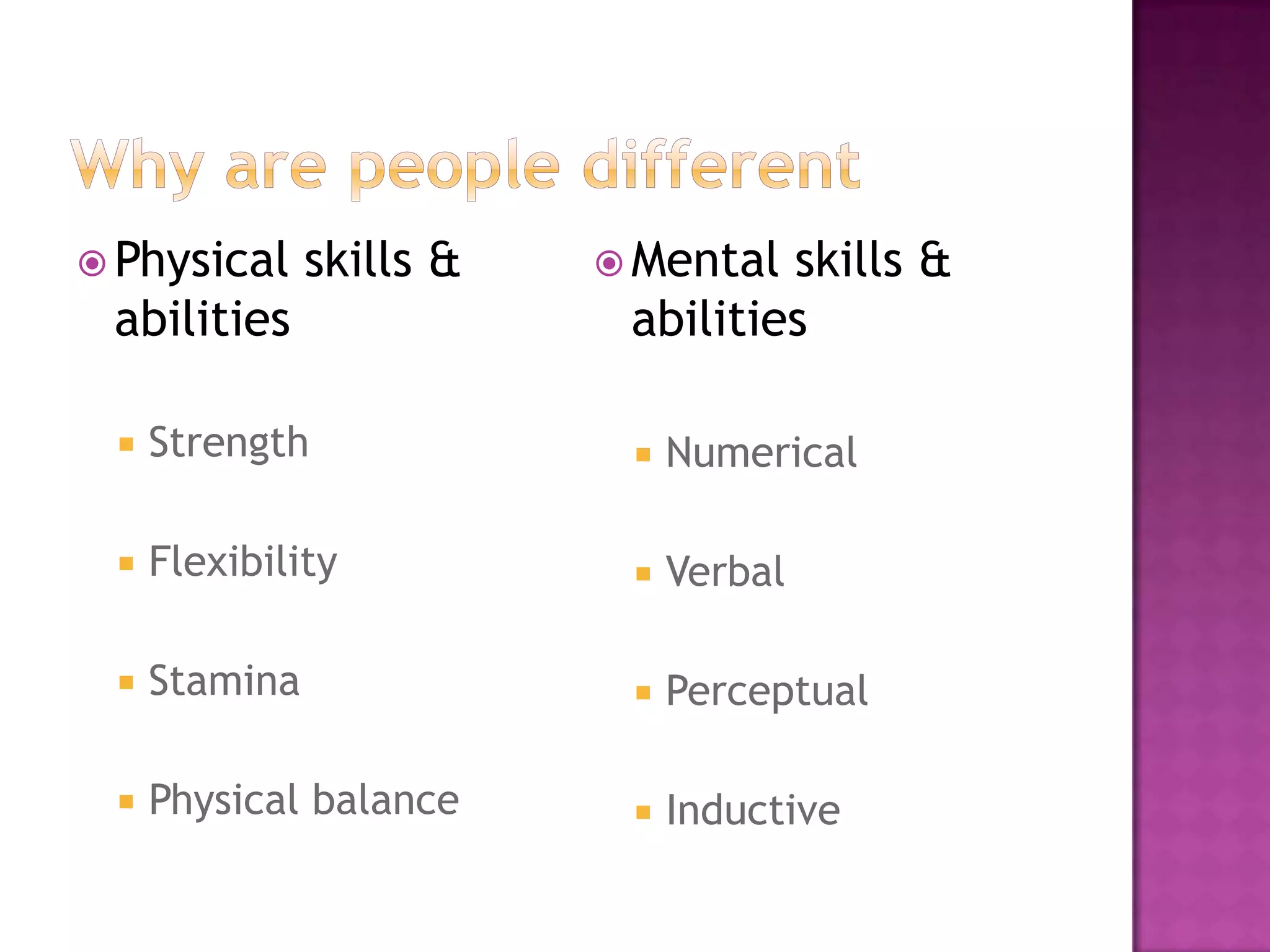
 Physical     skills &    Mental skills &
 abilities                 abilities

    Strength                 Numerical

    Flexibility              Verbal

    Stamina                  Perceptual

    Physical balance         Inductive
 Personality   might mean

    The social appeal and effectiveness of a person

    An individual’s striking characteristic.

    Individual differences
Defining Personality


   “ Characteristic patterns of behavior and

  modes of thinking that determine a person’s

        adjustment to the environment”
 Implies   consistency in individual actions

 People    tend to act or think in different ways.

 E.g.
     one person suppresses anger, the other
 expresses anger without any reason.
 Resultof interaction between personality
 characteristics and the social and physical
 conditions of the environment.

 Internally controlled behavior: determined
 by the characteristics of the individual and is
 fairly consistent

 Externallycontrolled behavior: determined
 by the particular situation in which the
 behavior happens
 The   “you” others observe and listen to.

 Itincludes expressive features, manners
  (speech patterns, the way you carry
  yourself), general disposition (general mood –
  cheery or grumpy), the way you react to
  threatening behaviors, the attitudes you
  express etc.

 Behaviors are different in different social
  gatherings.
 Fantasies,thoughts, and experiences that
 you don’t share with others.

 Special experiences, wishes that seem too
 childish and immature, dreams and memories
 are all part of
 Biological   influences

 Common    experiences

 Unique   experiences
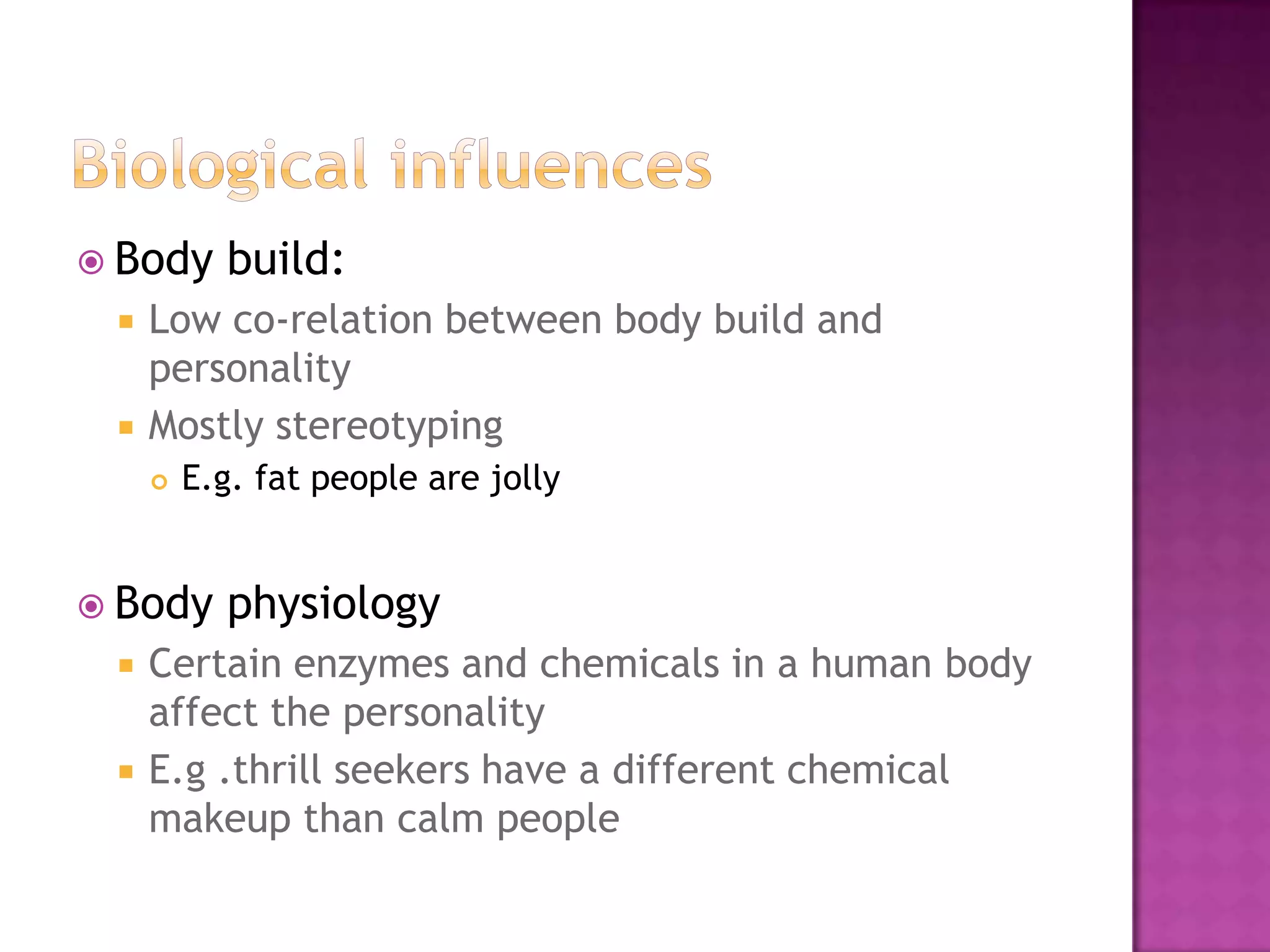
 Body     build:
    Low co-relation between body build and
     personality
    Mostly stereotyping
        E.g. fat people are jolly


 Body     physiology
    Certain enzymes and chemicals in a human body
     affect the personality
    E.g .thrill seekers have a different chemical
     makeup than calm people
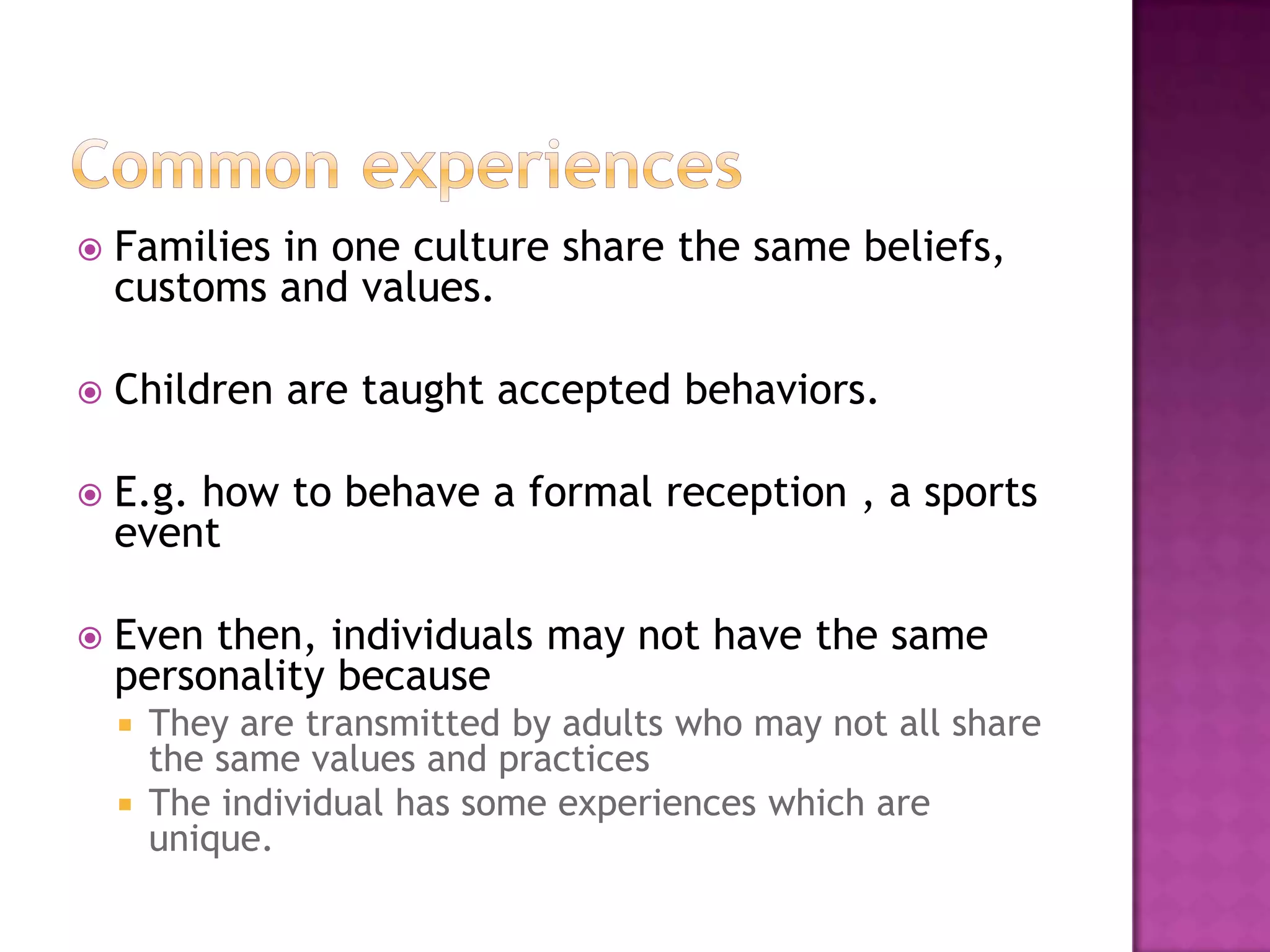
   Families in one culture share the same beliefs,
    customs and values.

   Children are taught accepted behaviors.

   E.g. how to behave a formal reception , a sports
    event

   Even then, individuals may not have the same
    personality because
     They are transmitted by adults who may not all share
      the same values and practices
     The individual has some experiences which are
      unique.
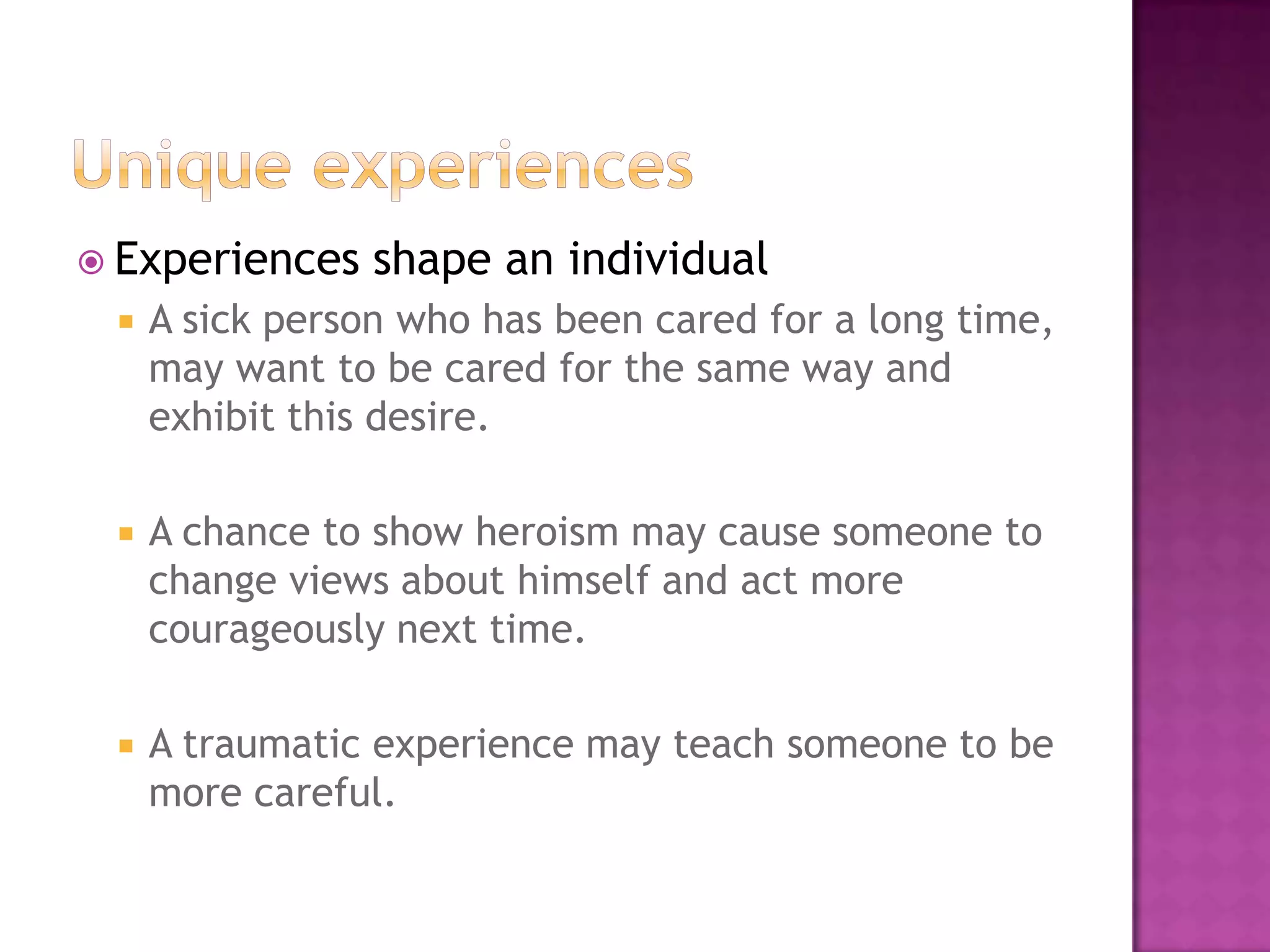
 Experiences    shape an individual
    A sick person who has been cared for a long time,
     may want to be cared for the same way and
     exhibit this desire.

    A chance to show heroism may cause someone to
     change views about himself and act more
     courageously next time.

    A traumatic experience may teach someone to be
     more careful.
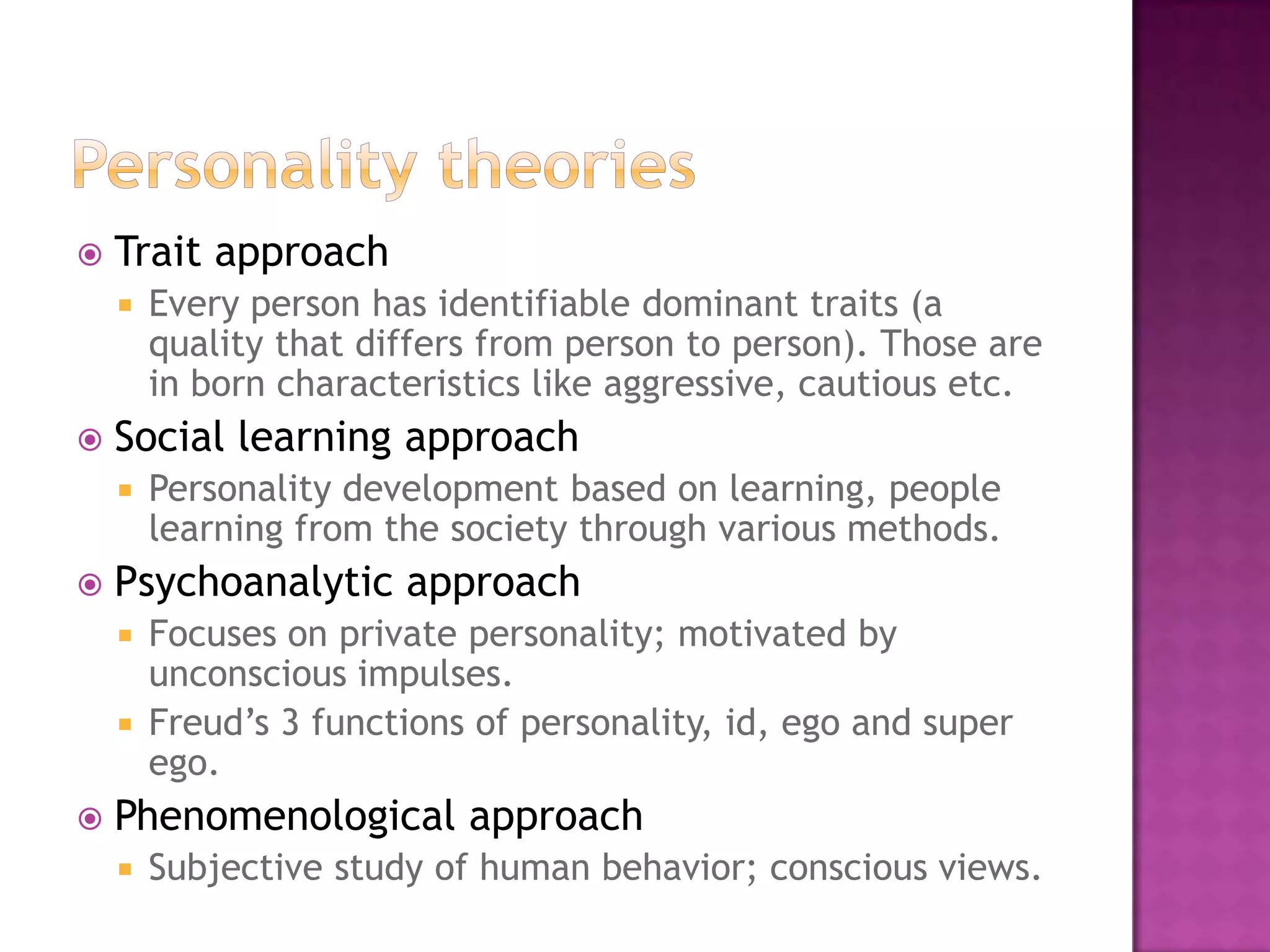
   Trait approach
       Every person has identifiable dominant traits (a
        quality that differs from person to person). Those are
        in born characteristics like aggressive, cautious etc.
   Social learning approach
       Personality development based on learning, people
        learning from the society through various methods.
   Psychoanalytic approach
     Focuses on private personality; motivated by
      unconscious impulses.
     Freud’s 3 functions of personality, id, ego and super
      ego.
   Phenomenological approach
       Subjective study of human behavior; conscious views.
 Regularities    in personalities

     Consistency over time


     Consistency over situations

Lecture 4 personality

  • 1.
  • 2.
     Physical skills &  Mental skills & abilities abilities  Strength  Numerical  Flexibility  Verbal  Stamina  Perceptual  Physical balance  Inductive
  • 3.
     Personality might mean  The social appeal and effectiveness of a person  An individual’s striking characteristic.  Individual differences
  • 4.
    Defining Personality “ Characteristic patterns of behavior and modes of thinking that determine a person’s adjustment to the environment”
  • 5.
     Implies consistency in individual actions  People tend to act or think in different ways.  E.g. one person suppresses anger, the other expresses anger without any reason.
  • 6.
     Resultof interactionbetween personality characteristics and the social and physical conditions of the environment.  Internally controlled behavior: determined by the characteristics of the individual and is fairly consistent  Externallycontrolled behavior: determined by the particular situation in which the behavior happens
  • 7.
     The “you” others observe and listen to.  Itincludes expressive features, manners (speech patterns, the way you carry yourself), general disposition (general mood – cheery or grumpy), the way you react to threatening behaviors, the attitudes you express etc.  Behaviors are different in different social gatherings.
  • 8.
     Fantasies,thoughts, andexperiences that you don’t share with others.  Special experiences, wishes that seem too childish and immature, dreams and memories are all part of
  • 10.
     Biological influences  Common experiences  Unique experiences
  • 11.
     Body build:  Low co-relation between body build and personality  Mostly stereotyping  E.g. fat people are jolly  Body physiology  Certain enzymes and chemicals in a human body affect the personality  E.g .thrill seekers have a different chemical makeup than calm people
  • 12.
    Families in one culture share the same beliefs, customs and values.  Children are taught accepted behaviors.  E.g. how to behave a formal reception , a sports event  Even then, individuals may not have the same personality because  They are transmitted by adults who may not all share the same values and practices  The individual has some experiences which are unique.
  • 13.
     Experiences shape an individual  A sick person who has been cared for a long time, may want to be cared for the same way and exhibit this desire.  A chance to show heroism may cause someone to change views about himself and act more courageously next time.  A traumatic experience may teach someone to be more careful.
  • 14.
    Trait approach  Every person has identifiable dominant traits (a quality that differs from person to person). Those are in born characteristics like aggressive, cautious etc.  Social learning approach  Personality development based on learning, people learning from the society through various methods.  Psychoanalytic approach  Focuses on private personality; motivated by unconscious impulses.  Freud’s 3 functions of personality, id, ego and super ego.  Phenomenological approach  Subjective study of human behavior; conscious views.
  • 15.
     Regularities in personalities  Consistency over time  Consistency over situations