Effective persuasion
 Communication  intended to influence or
 induce a belief or an action
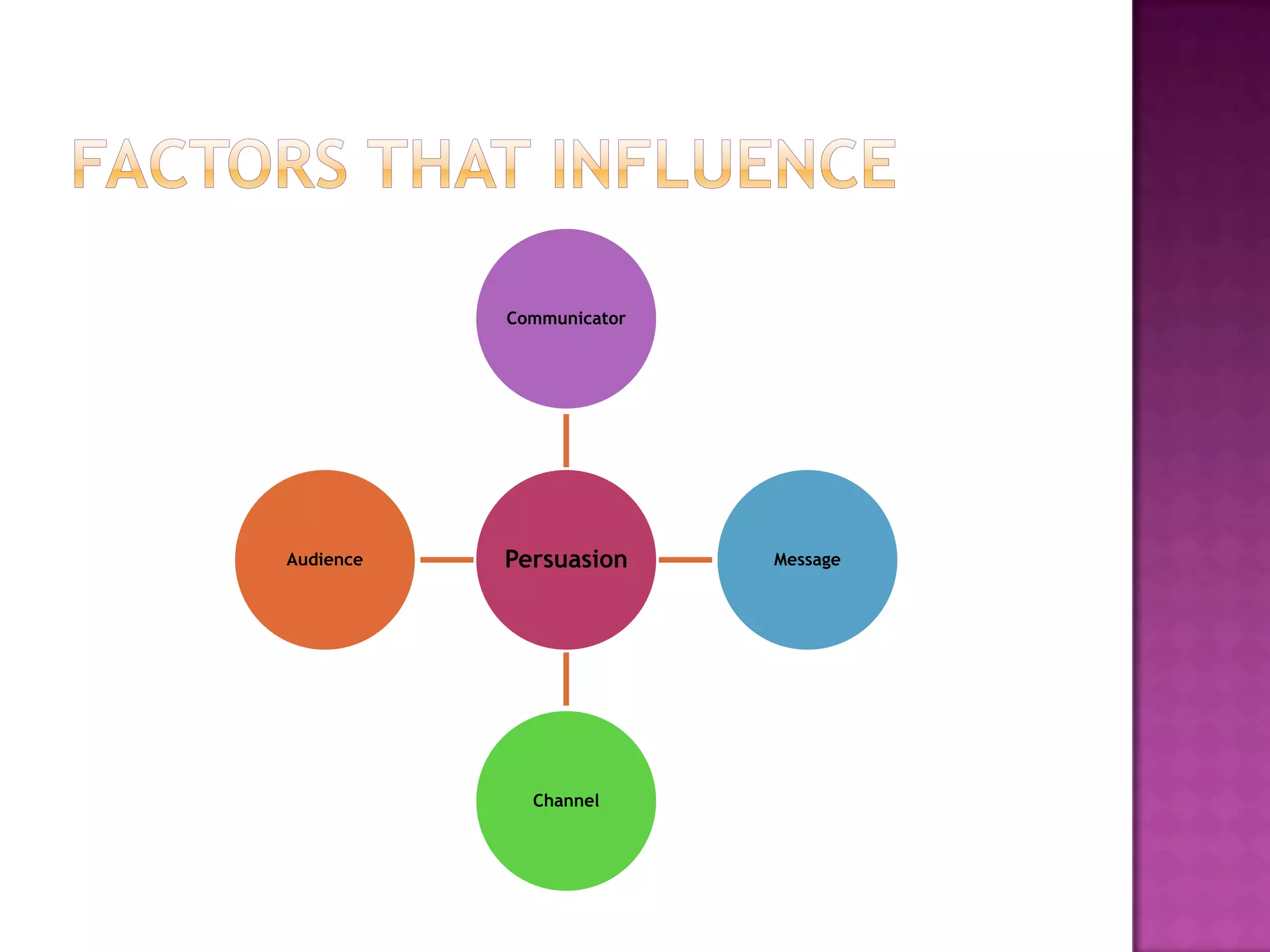
Communicator


Audience   Persuasion     Message


             Channel
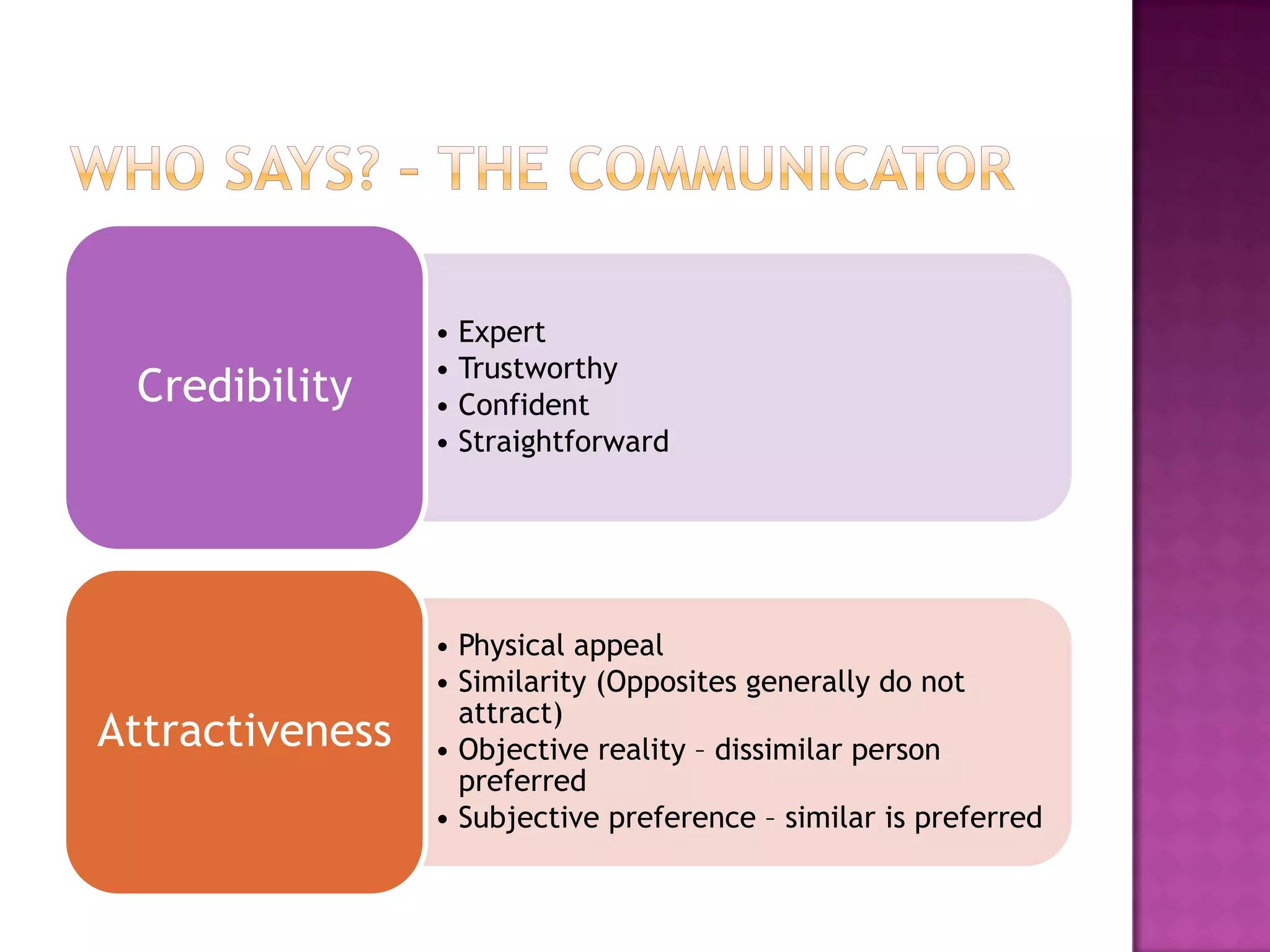
• Expert
                 • Trustworthy
 Credibility     • Confident
                 • Straightforward


                 • Physical appeal
                 • Similarity (Opposites generally do not
                   attract)
Attractiveness   • Objective reality – dissimilar person
                   preferred
                 • Subjective preference – similar is preferred
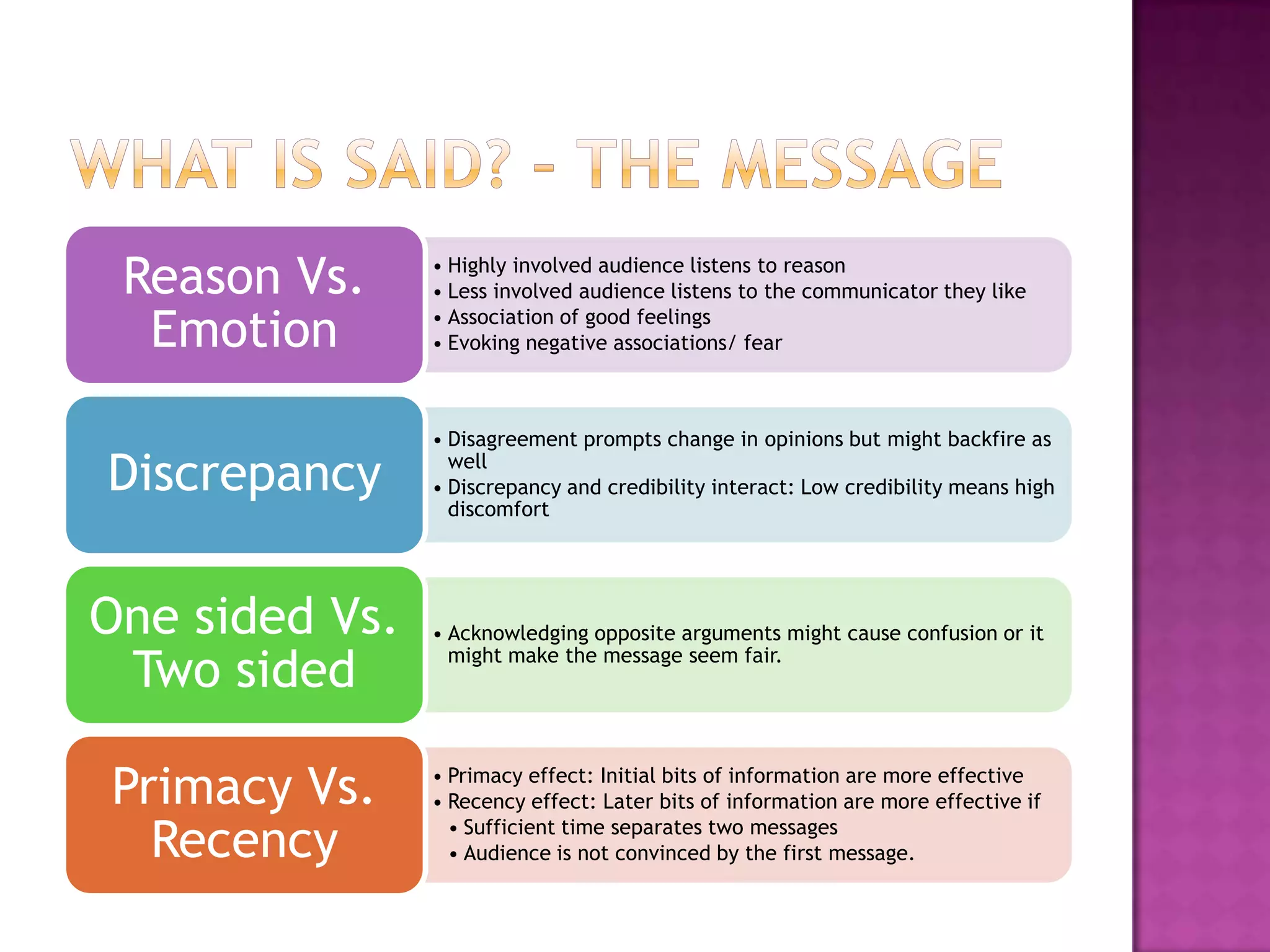
Reason Vs.     • Highly involved audience listens to reason
                • Less involved audience listens to the communicator they like

  Emotion       • Association of good feelings
                • Evoking negative associations/ fear


                • Disagreement prompts change in opinions but might backfire as

Discrepancy       well
                • Discrepancy and credibility interact: Low credibility means high
                  discomfort


One sided Vs.   • Acknowledging opposite arguments might cause confusion or it

 Two sided        might make the message seem fair.


Primacy Vs.     • Primacy effect: Initial bits of information are more effective
                • Recency effect: Later bits of information are more effective if

  Recency         • Sufficient time separates two messages
                  • Audience is not convinced by the first message.
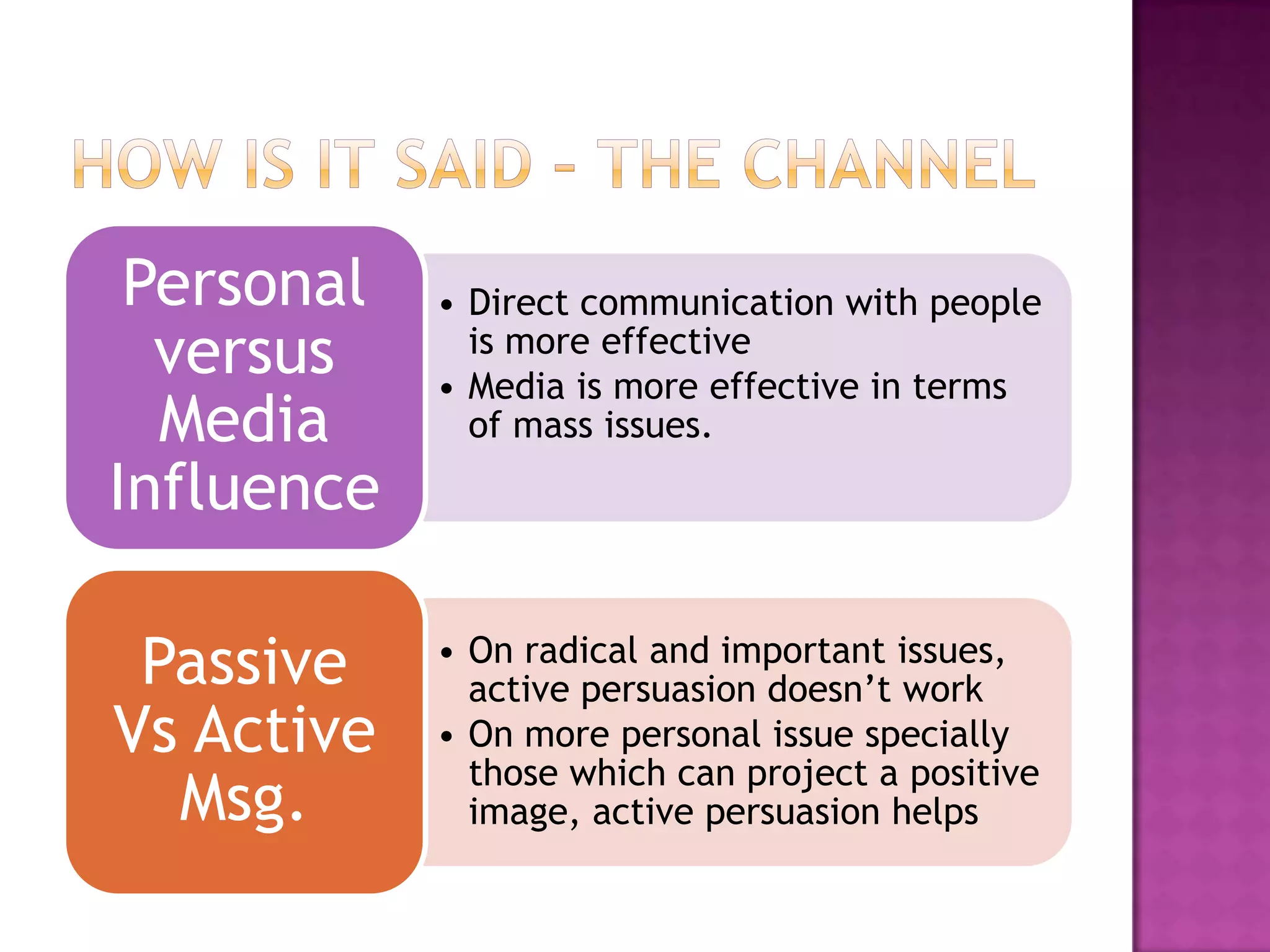
Personal   • Direct communication with people
  versus      is more effective
            • Media is more effective in terms
  Media       of mass issues.
Influence

 Passive    • On radical and important issues,
              active persuasion doesn’t work
Vs Active   • On more personal issue specially
              those which can project a positive
  Msg.        image, active persuasion helps
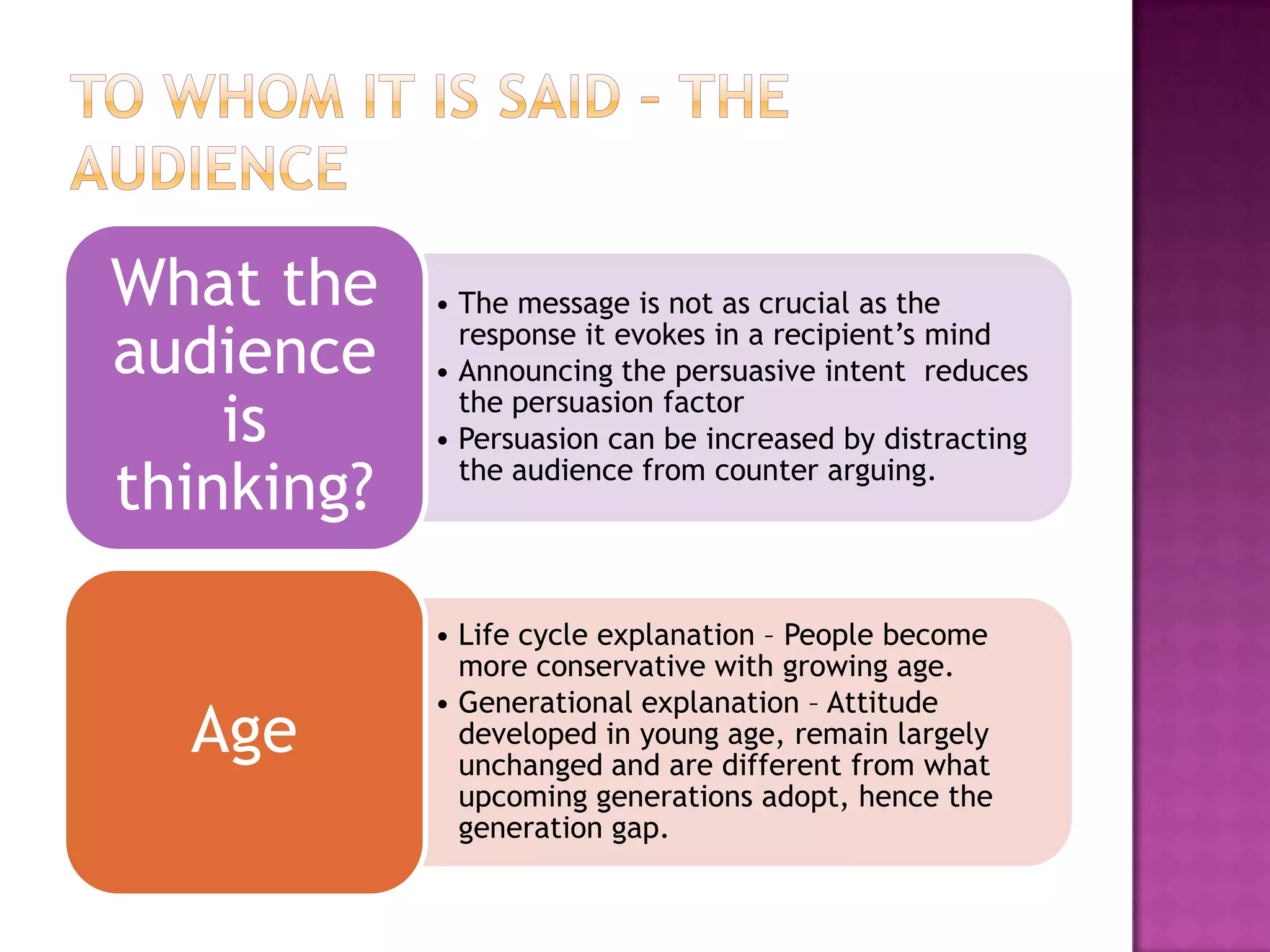
What the    • The message is not as crucial as the
audience      response it evokes in a recipient’s mind
            • Announcing the persuasive intent reduces

    is        the persuasion factor
            • Persuasion can be increased by distracting

thinking?     the audience from counter arguing.


            • Life cycle explanation – People become
              more conservative with growing age.
            • Generational explanation – Attitude
  Age         developed in young age, remain largely
              unchanged and are different from what
              upcoming generations adopt, hence the
              generation gap.

Effective persuasion

  • 1.
  • 2.
     Communication intended to influence or induce a belief or an action
  • 3.
    Communicator Audience Persuasion Message Channel
  • 4.
    • Expert • Trustworthy Credibility • Confident • Straightforward • Physical appeal • Similarity (Opposites generally do not attract) Attractiveness • Objective reality – dissimilar person preferred • Subjective preference – similar is preferred
  • 5.
    Reason Vs. • Highly involved audience listens to reason • Less involved audience listens to the communicator they like Emotion • Association of good feelings • Evoking negative associations/ fear • Disagreement prompts change in opinions but might backfire as Discrepancy well • Discrepancy and credibility interact: Low credibility means high discomfort One sided Vs. • Acknowledging opposite arguments might cause confusion or it Two sided might make the message seem fair. Primacy Vs. • Primacy effect: Initial bits of information are more effective • Recency effect: Later bits of information are more effective if Recency • Sufficient time separates two messages • Audience is not convinced by the first message.
  • 6.
    Personal • Direct communication with people versus is more effective • Media is more effective in terms Media of mass issues. Influence Passive • On radical and important issues, active persuasion doesn’t work Vs Active • On more personal issue specially those which can project a positive Msg. image, active persuasion helps
  • 7.
    What the • The message is not as crucial as the audience response it evokes in a recipient’s mind • Announcing the persuasive intent reduces is the persuasion factor • Persuasion can be increased by distracting thinking? the audience from counter arguing. • Life cycle explanation – People become more conservative with growing age. • Generational explanation – Attitude Age developed in young age, remain largely unchanged and are different from what upcoming generations adopt, hence the generation gap.