ADVANCED
ADVERTISING
TVC - Techniques
TVC - Techniques
   Repetition
     Repeat   message many times. Argument from
      repetition is a false proof of statement by
      repetition.
     Generally used by politicians.

     Extreme form – considered brainwashing.

     Form of propaganda
   Bandwagon
     Implythat the product is widely used.
     Convince people to ride the bandwagon

     Band wagon fallacy is also known as appeal to
      authority of many, appeal to people.
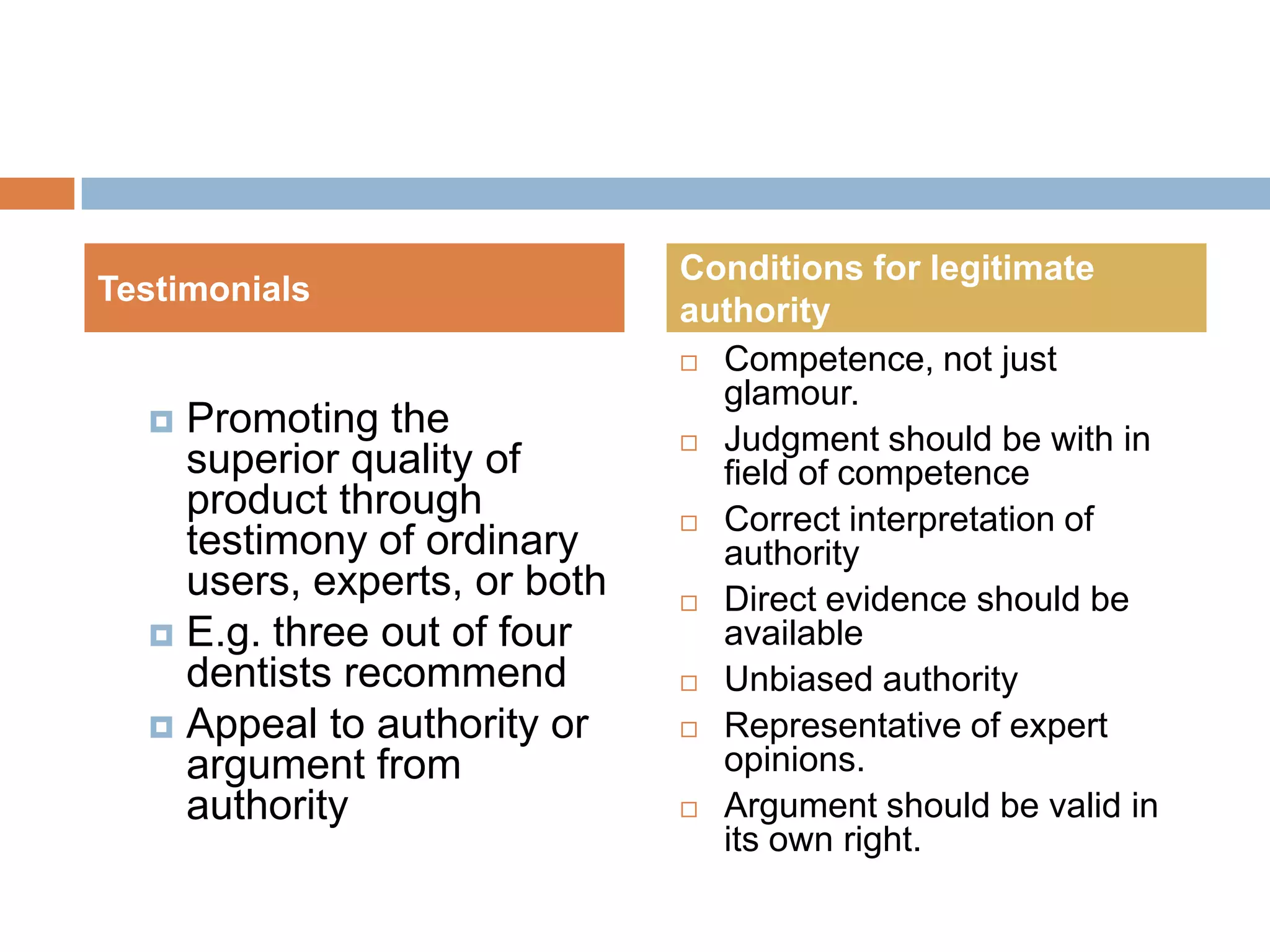
Conditions for legitimate
Testimonials
                              authority
                               Competence, not just
                                glamour.
   Promoting the              Judgment should be with in
    superior quality of         field of competence
    product through            Correct interpretation of
    testimony of ordinary       authority
    users, experts, or both    Direct evidence should be
   E.g. three out of four      available
    dentists recommend         Unbiased authority

   Appeal to authority or     Representative of expert
    argument from               opinions.
    authority                  Argument should be valid in
                                its own right.
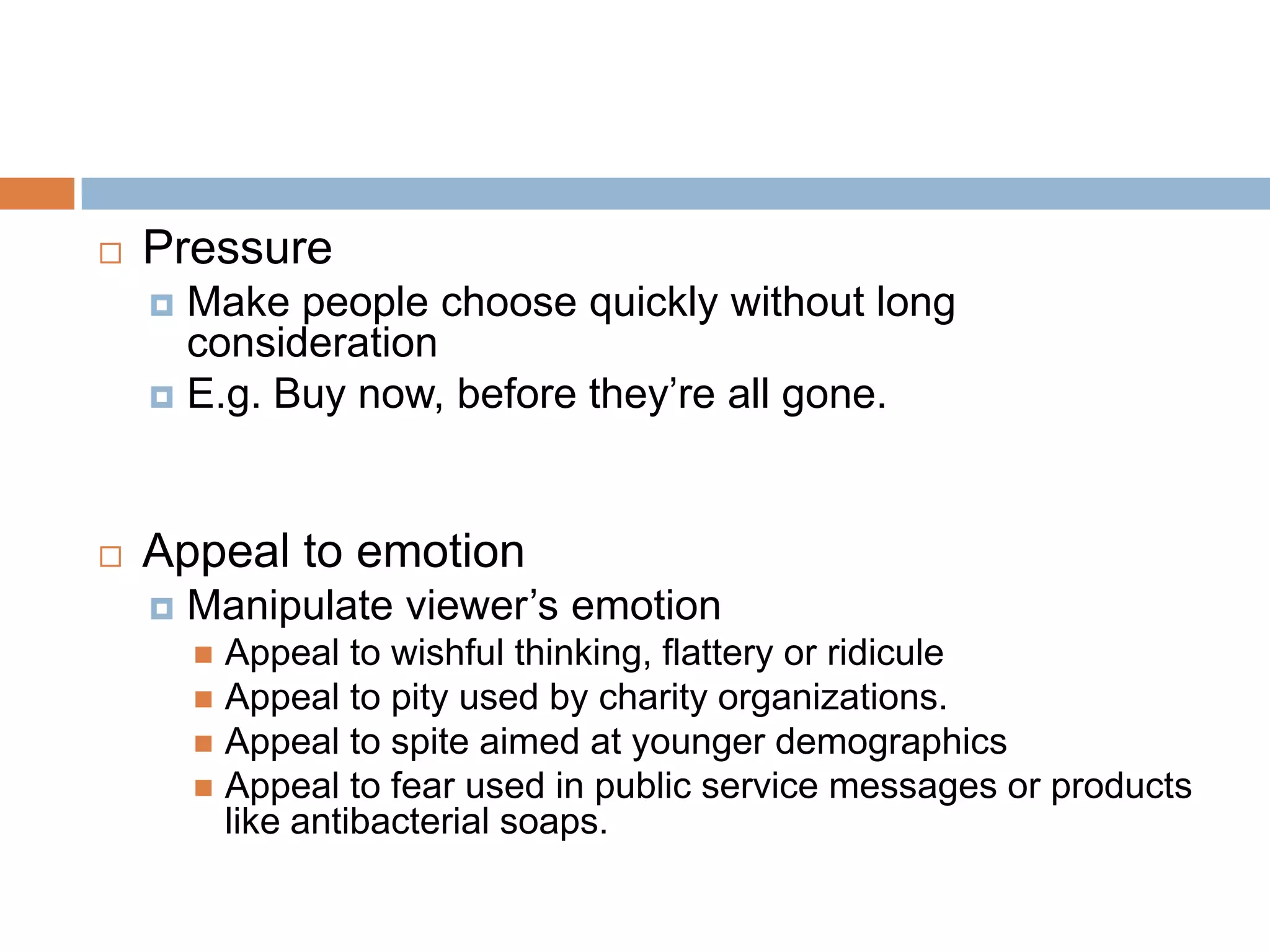
   Pressure
     Make people choose quickly without long
      consideration
     E.g. Buy now, before they’re all gone.


   Appeal to emotion
       Manipulate viewer’s emotion
         Appeal to wishful thinking, flattery or ridicule
         Appeal to pity used by charity organizations.
         Appeal to spite aimed at younger demographics
         Appeal to fear used in public service messages or products
          like antibacterial soaps.
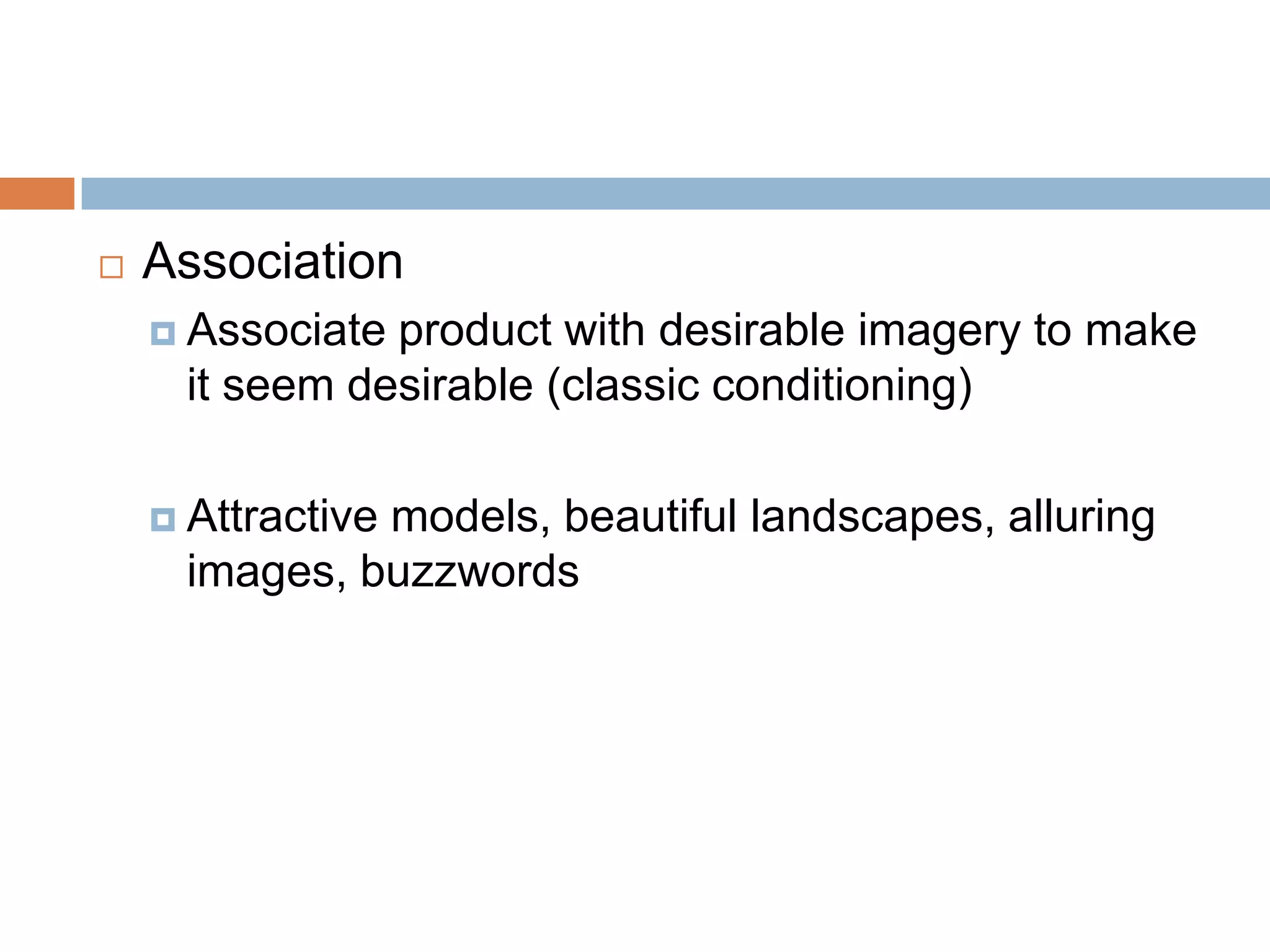
   Association
     Associateproduct with desirable imagery to make
     it seem desirable (classic conditioning)

     Attractive
              models, beautiful landscapes, alluring
     images, buzzwords
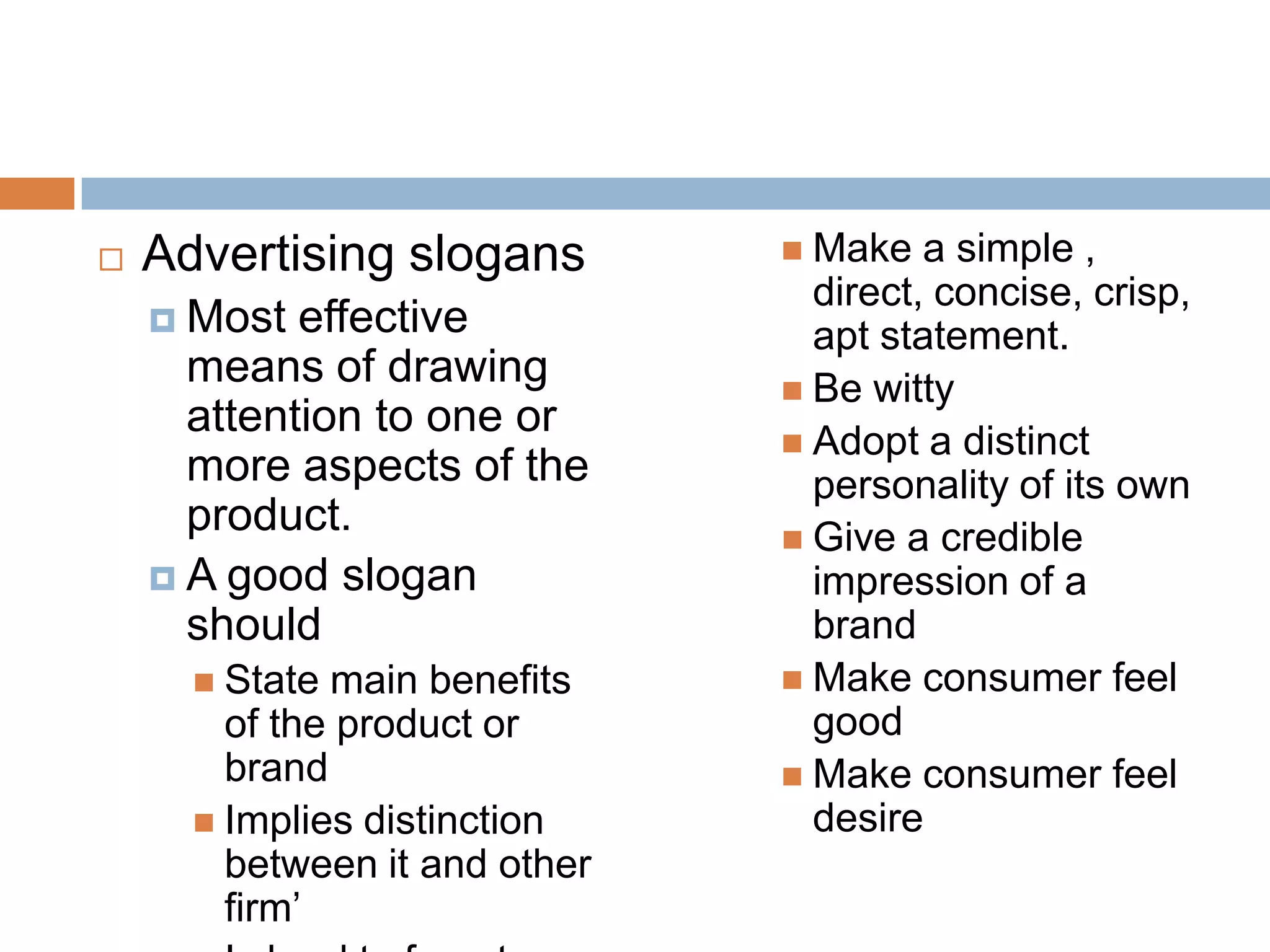
   Advertising slogans         Make   a simple ,
                                 direct, concise, crisp,
     Most  effective            apt statement.
      means of drawing          Be witty
      attention to one or
                                Adopt a distinct
      more aspects of the        personality of its own
      product.                  Give a credible
     A good slogan              impression of a
      should                     brand
       State main benefits     Make consumer feel
        of the product or        good
        brand                   Make consumer feel
       Implies distinction      desire
        between it and other
        firm’
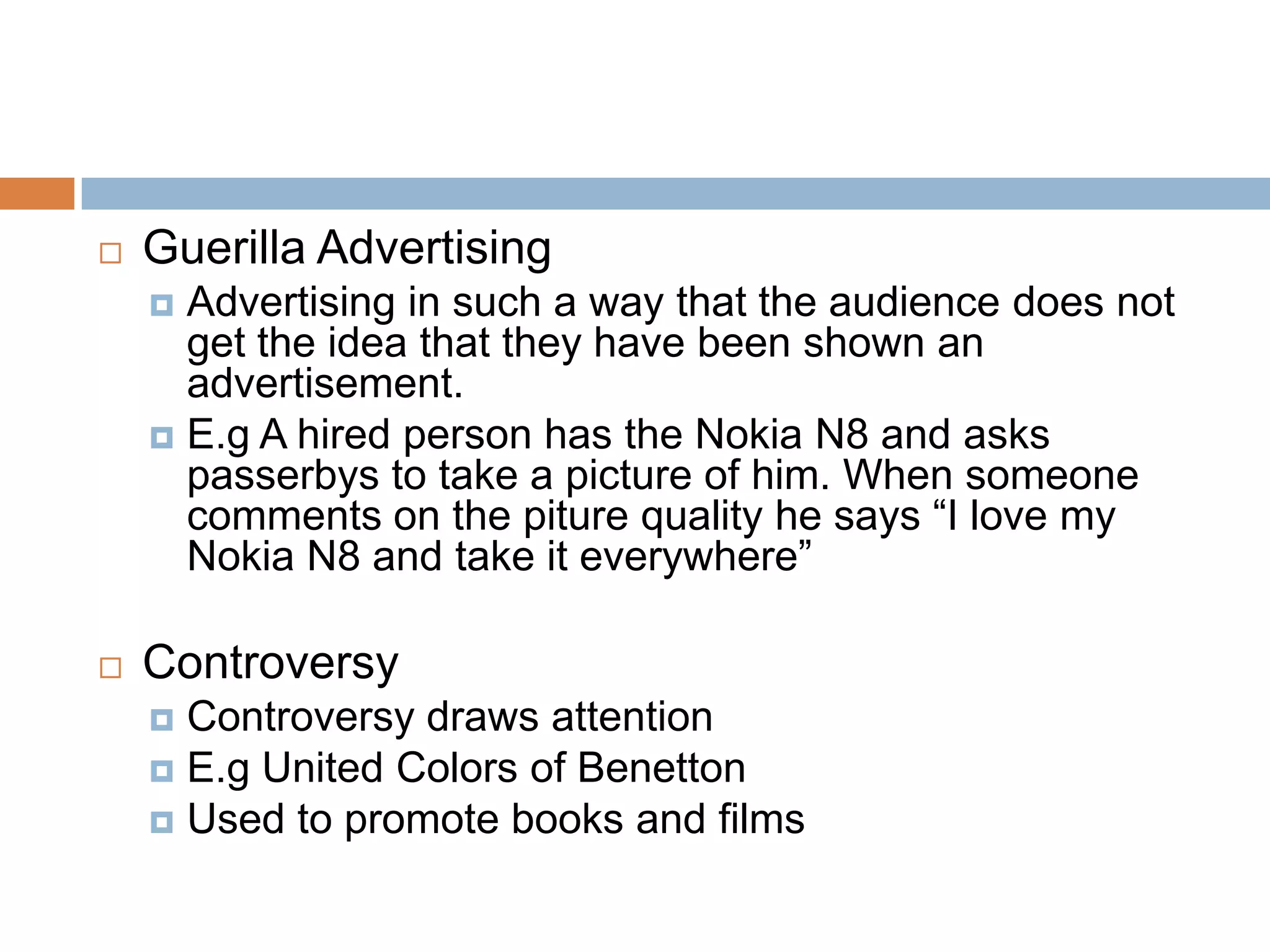
   Guerilla Advertising
     Advertising in such a way that the audience does not
      get the idea that they have been shown an
      advertisement.
     E.g A hired person has the Nokia N8 and asks
      passerbys to take a picture of him. When someone
      comments on the piture quality he says “I love my
      Nokia N8 and take it everywhere”

   Controversy
     Controversy draws attention
     E.g United Colors of Benetton
     Used to promote books and films
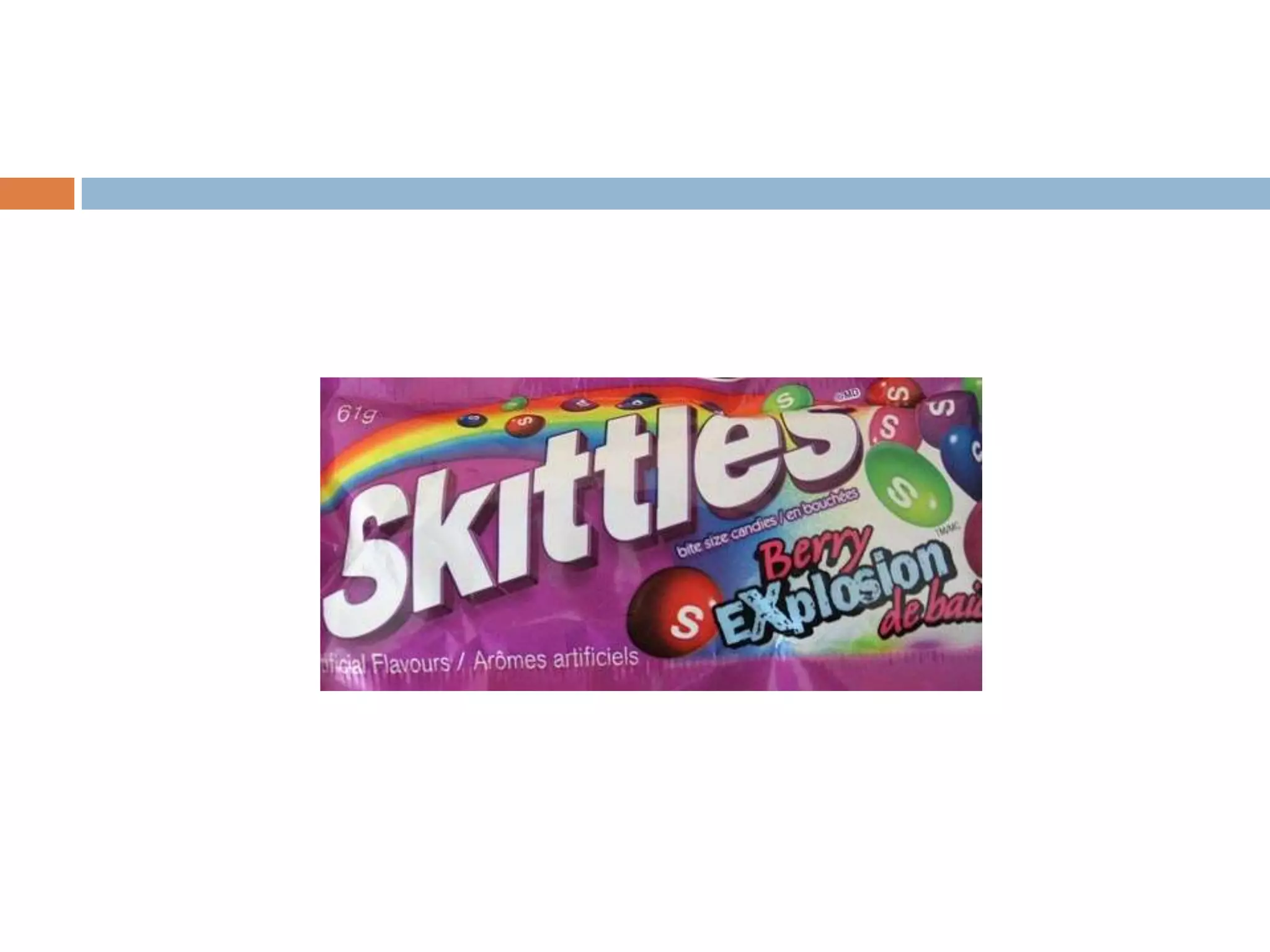
   Subliminal messages
       Hidden messages
       The intention is to appeal to the subconscious mind.
       Generally suggestive in nature.

    Promotional messages the recipient is not aware of,
    such as those played at very low volume or flashed
    on a screen for less than a second, or hidden in the
    text. Its effectiveness is not supported by scientific
    evidence, and its use is considered a deceptive
    business practice in some jurisdictions.
   Public Service advertising

     Using
         commercial advertising techniques for non-
     commercial purposes.

Advanced advertising tvc - techniques

  • 1.
  • 2.
    TVC - Techniques  Repetition  Repeat message many times. Argument from repetition is a false proof of statement by repetition.  Generally used by politicians.  Extreme form – considered brainwashing.  Form of propaganda
  • 3.
    Bandwagon  Implythat the product is widely used.  Convince people to ride the bandwagon  Band wagon fallacy is also known as appeal to authority of many, appeal to people.
  • 4.
    Conditions for legitimate Testimonials authority  Competence, not just glamour.  Promoting the  Judgment should be with in superior quality of field of competence product through  Correct interpretation of testimony of ordinary authority users, experts, or both  Direct evidence should be  E.g. three out of four available dentists recommend  Unbiased authority  Appeal to authority or  Representative of expert argument from opinions. authority  Argument should be valid in its own right.
  • 5.
    Pressure  Make people choose quickly without long consideration  E.g. Buy now, before they’re all gone.  Appeal to emotion  Manipulate viewer’s emotion  Appeal to wishful thinking, flattery or ridicule  Appeal to pity used by charity organizations.  Appeal to spite aimed at younger demographics  Appeal to fear used in public service messages or products like antibacterial soaps.
  • 6.
    Association  Associateproduct with desirable imagery to make it seem desirable (classic conditioning)  Attractive models, beautiful landscapes, alluring images, buzzwords
  • 7.
    Advertising slogans  Make a simple , direct, concise, crisp,  Most effective apt statement. means of drawing  Be witty attention to one or  Adopt a distinct more aspects of the personality of its own product.  Give a credible  A good slogan impression of a should brand  State main benefits  Make consumer feel of the product or good brand  Make consumer feel  Implies distinction desire between it and other firm’
  • 8.
    Guerilla Advertising  Advertising in such a way that the audience does not get the idea that they have been shown an advertisement.  E.g A hired person has the Nokia N8 and asks passerbys to take a picture of him. When someone comments on the piture quality he says “I love my Nokia N8 and take it everywhere”  Controversy  Controversy draws attention  E.g United Colors of Benetton  Used to promote books and films
  • 10.
    Subliminal messages  Hidden messages  The intention is to appeal to the subconscious mind.  Generally suggestive in nature. Promotional messages the recipient is not aware of, such as those played at very low volume or flashed on a screen for less than a second, or hidden in the text. Its effectiveness is not supported by scientific evidence, and its use is considered a deceptive business practice in some jurisdictions.
  • 12.
    Public Service advertising  Using commercial advertising techniques for non- commercial purposes.