ADVERTISING 1
Branding
WHAT IS A BRAND ?
   Personification of an organization?

   Promise to a customer ? Trust mark?

   Source of emotional attachment to the customers?

   Single idea or concept embedded in the customer’s
    mind?
BRAND IS
  Name, term, design, symbol, or any other feature
    that identifies one seller's good or service as
          distinct from those of other sellers.
           American Marketing Association

  The emotional and psychological relationship you
    have with your customers. Strong brands elicit
  thoughts, emotions, and sometimes physiological
             responses from customers.
WHAT DO BRANDS DO ?
   They remind us of a past product/ service experience

   They communicate how we see ourselves

   Brands are fantasy

   Brands are a string connection to world elsewhere.

   They represent the world how it should be, not as how it actually is.

   They represent ideals

   Simplify our world.

   Brands help satisfy our need to belong to something larger than
    ourselves, yet maintain our individuality.
WHAT A BRAND IS NOT
   Trademark (legal property)

   Mission statement (reminder)

   Logo or slogan (signatures)

   Product/ Service (tangibles)

   Advertising (message)
SO BRAND IS
A   complete experience

A   promise you make to the world

A   lifestyle

 The   personality of your organization
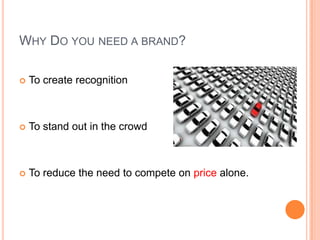
WHY DO YOU NEED A BRAND?

   To create recognition


   To stand out in the crowd


   To reduce the need to compete on price alone.
BRANDING ???
BRANDING
   Is the process of creating a brand

   A brand is not created through advertisement/
    marketing activities

   A brand is created before making it known to the
    world.
WHAT DOES BRANDING DO?
   It creates recognition and loyalty

   It creates an image of size

   It creates an image of quality

   It creates an image of experience and reliability

   It helps link multiple products
DISADVANTAGES OF BRANDING

   Cost

   Impersonal

   Fixed image

   Timescale
TYPES OF BRANDS
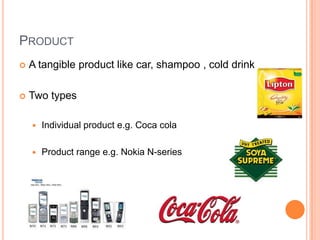
PRODUCT
   A tangible product like car, shampoo , cold drink…

   Two types

       Individual product e.g. Coca cola

       Product range e.g. Nokia N-series
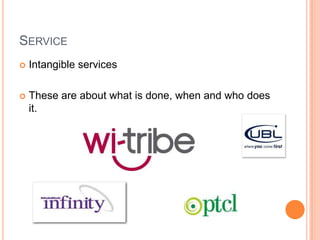
SERVICE
   Intangible services

   These are about what is done, when and who does
    it.
ORGANIZATION
   Represents the organization instead of it’s products

   The organization represents the qualities of the
    organization

   It is a sum of its products and services
PERSON
   Focused on one or a few individuals, where branding is
    associated with personality

   Two types
       Individual – based on one person like an actor, singer,
        politician. It can be the natural person or carefully crafted. E.g.
        Benazir Bhutto, Amitabh Bachan, Noor Jehan

       Group – Same as individual but focused on more than one
        person. Each member of the group can himself be an
        individual brand like Vital Signs, Junoon.

   Organizations can link with person brands like

       Telenor with Ali Zafar, Pepsi with Vital signs, Ufone with Faisal
        Qureshi
EVENT
    Are strongly connected with the experience of the
     people attending the event
      Oscars
      Lux style awards
      Olympics


    Products and services realize the power of event
     brands and seek to be associated with them.
GEOGRAPHY
   Areas of world having specific qualities can also be
    brands

   Countries focus on being brands

   Some become brands based on there appeals e.g.
    dangerous, fun, cultural etc.
       Thailand – tourism hotspot
       Italy – mafia
       Switzerland – Secure banks
       Saudi Arabia – Sacred importance to Muslims
       China – Cheap labor
WHAT COMES IN YOUR MIND FOR THE
FOLLOWING AREAS ?

   Russia             Thar

   Texas              Lahore

   Bombay             France

   Japan              Africa

   Iran               Egypt
TYPES OF BRANDING
CORPORATE BRANDING
   Making the promise of quality products, service,
    and delivery to the consumer.

   Most branding is corporate branding.
EMPLOYER BRANDING

   Focuses on employees to understand the mission,
    vision, goals, products and services of the
    company.


   It is designed to educate employees in order for
    them to uphold the corporate brand to their
    customers.
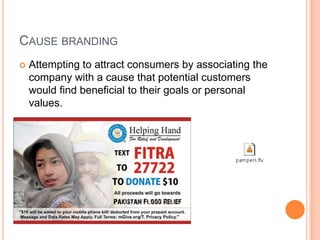
CAUSE BRANDING
   Attempting to attract consumers by associating the
    company with a cause that potential customers
    would find beneficial to their goals or personal
    values.
CO-BRANDING
   Two or more brands co exisiting to provide a better
    consumer experience

   E.g. A bank outlet or atm machine in a shopping
    mall.
       Gul ahmed outlet with makro


   Each brand keeps its identity but co exists.
SPIRIT BRANDING
   “Get a good feeling” with our product approach.

   Usually used with soft drinks
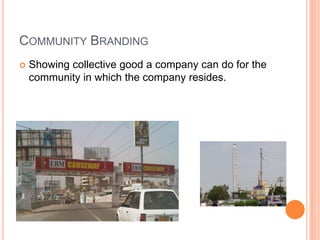
COMMUNITY BRANDING
   Showing collective good a company can do for the
    community in which the company resides.
SONIC BRANDING
   Using sound to support the visuals and create a
    unique sound identity

   <jingle all the way video>

Branding

  • 1.
  • 2.
    WHAT IS ABRAND ?
  • 3.
    Personification of an organization?  Promise to a customer ? Trust mark?  Source of emotional attachment to the customers?  Single idea or concept embedded in the customer’s mind?
  • 4.
    BRAND IS Name, term, design, symbol, or any other feature that identifies one seller's good or service as distinct from those of other sellers. American Marketing Association The emotional and psychological relationship you have with your customers. Strong brands elicit thoughts, emotions, and sometimes physiological responses from customers.
  • 6.
    WHAT DO BRANDSDO ?  They remind us of a past product/ service experience  They communicate how we see ourselves  Brands are fantasy  Brands are a string connection to world elsewhere.  They represent the world how it should be, not as how it actually is.  They represent ideals  Simplify our world.  Brands help satisfy our need to belong to something larger than ourselves, yet maintain our individuality.
  • 7.
    WHAT A BRANDIS NOT  Trademark (legal property)  Mission statement (reminder)  Logo or slogan (signatures)  Product/ Service (tangibles)  Advertising (message)
  • 8.
    SO BRAND IS A complete experience A promise you make to the world A lifestyle  The personality of your organization
  • 9.
    WHY DO YOUNEED A BRAND?  To create recognition  To stand out in the crowd  To reduce the need to compete on price alone.
  • 10.
  • 11.
    BRANDING  Is the process of creating a brand  A brand is not created through advertisement/ marketing activities  A brand is created before making it known to the world.
  • 12.
    WHAT DOES BRANDINGDO?  It creates recognition and loyalty  It creates an image of size  It creates an image of quality  It creates an image of experience and reliability  It helps link multiple products
  • 13.
    DISADVANTAGES OF BRANDING  Cost  Impersonal  Fixed image  Timescale
  • 14.
  • 15.
    PRODUCT  A tangible product like car, shampoo , cold drink…  Two types  Individual product e.g. Coca cola  Product range e.g. Nokia N-series
  • 16.
    SERVICE  Intangible services  These are about what is done, when and who does it.
  • 17.
    ORGANIZATION  Represents the organization instead of it’s products  The organization represents the qualities of the organization  It is a sum of its products and services
  • 18.
    PERSON  Focused on one or a few individuals, where branding is associated with personality  Two types  Individual – based on one person like an actor, singer, politician. It can be the natural person or carefully crafted. E.g. Benazir Bhutto, Amitabh Bachan, Noor Jehan  Group – Same as individual but focused on more than one person. Each member of the group can himself be an individual brand like Vital Signs, Junoon.  Organizations can link with person brands like  Telenor with Ali Zafar, Pepsi with Vital signs, Ufone with Faisal Qureshi
  • 19.
    EVENT  Are strongly connected with the experience of the people attending the event  Oscars  Lux style awards  Olympics  Products and services realize the power of event brands and seek to be associated with them.
  • 20.
    GEOGRAPHY  Areas of world having specific qualities can also be brands  Countries focus on being brands  Some become brands based on there appeals e.g. dangerous, fun, cultural etc.  Thailand – tourism hotspot  Italy – mafia  Switzerland – Secure banks  Saudi Arabia – Sacred importance to Muslims  China – Cheap labor
  • 21.
    WHAT COMES INYOUR MIND FOR THE FOLLOWING AREAS ?  Russia  Thar  Texas  Lahore  Bombay  France  Japan  Africa  Iran  Egypt
  • 22.
  • 23.
    CORPORATE BRANDING  Making the promise of quality products, service, and delivery to the consumer.  Most branding is corporate branding.
  • 24.
    EMPLOYER BRANDING  Focuses on employees to understand the mission, vision, goals, products and services of the company.  It is designed to educate employees in order for them to uphold the corporate brand to their customers.
  • 25.
    CAUSE BRANDING  Attempting to attract consumers by associating the company with a cause that potential customers would find beneficial to their goals or personal values.
  • 26.
    CO-BRANDING  Two or more brands co exisiting to provide a better consumer experience  E.g. A bank outlet or atm machine in a shopping mall.  Gul ahmed outlet with makro  Each brand keeps its identity but co exists.
  • 27.
    SPIRIT BRANDING  “Get a good feeling” with our product approach.  Usually used with soft drinks
  • 28.
    COMMUNITY BRANDING  Showing collective good a company can do for the community in which the company resides.
  • 29.
    SONIC BRANDING  Using sound to support the visuals and create a unique sound identity  <jingle all the way video>