Personality
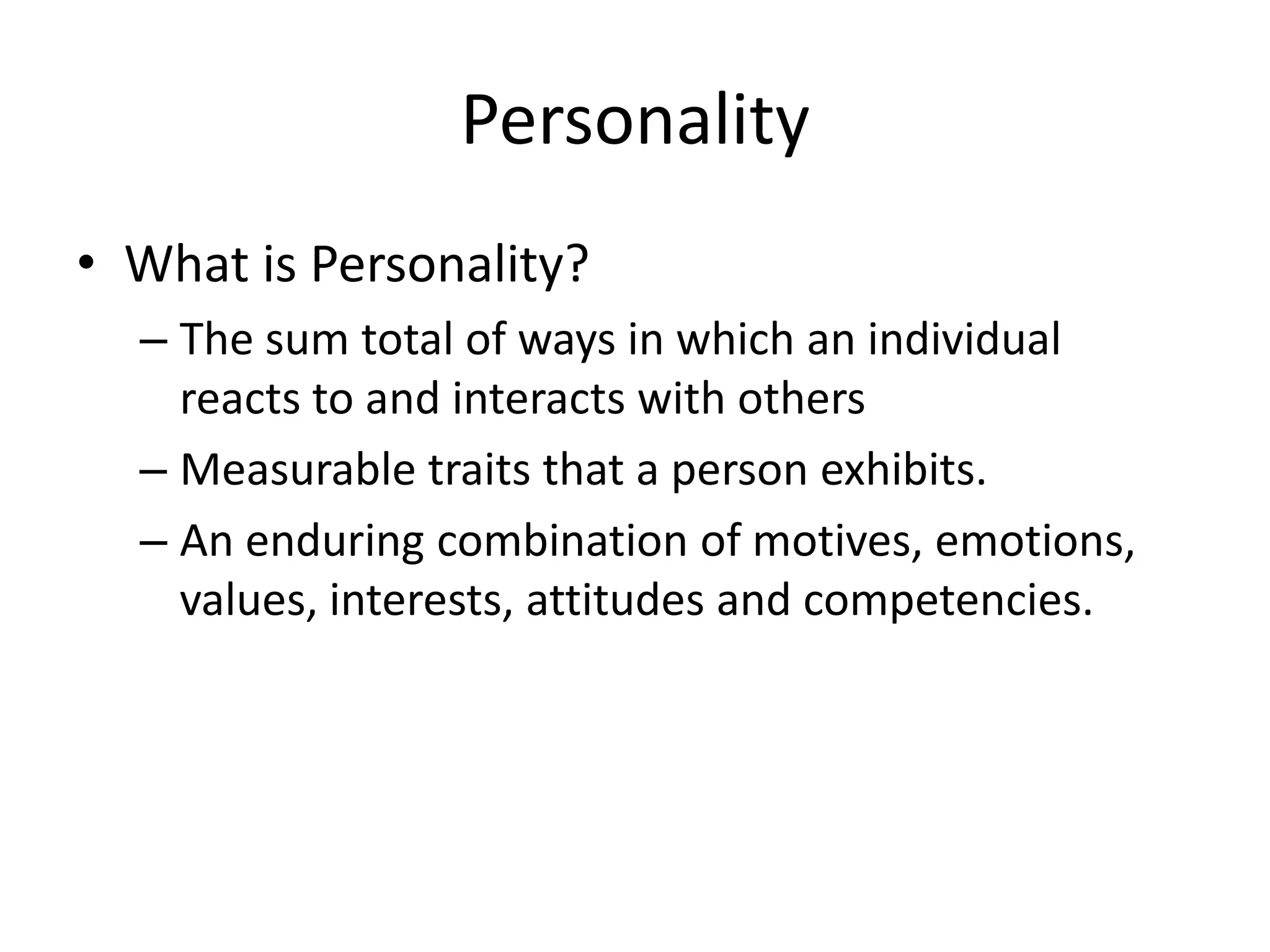
• What is Personality?
  – The sum total of ways in which an individual
    reacts to and interacts with others
  – Measurable traits that a person exhibits.
  – An enduring combination of motives, emotions,
    values, interests, attitudes and competencies.
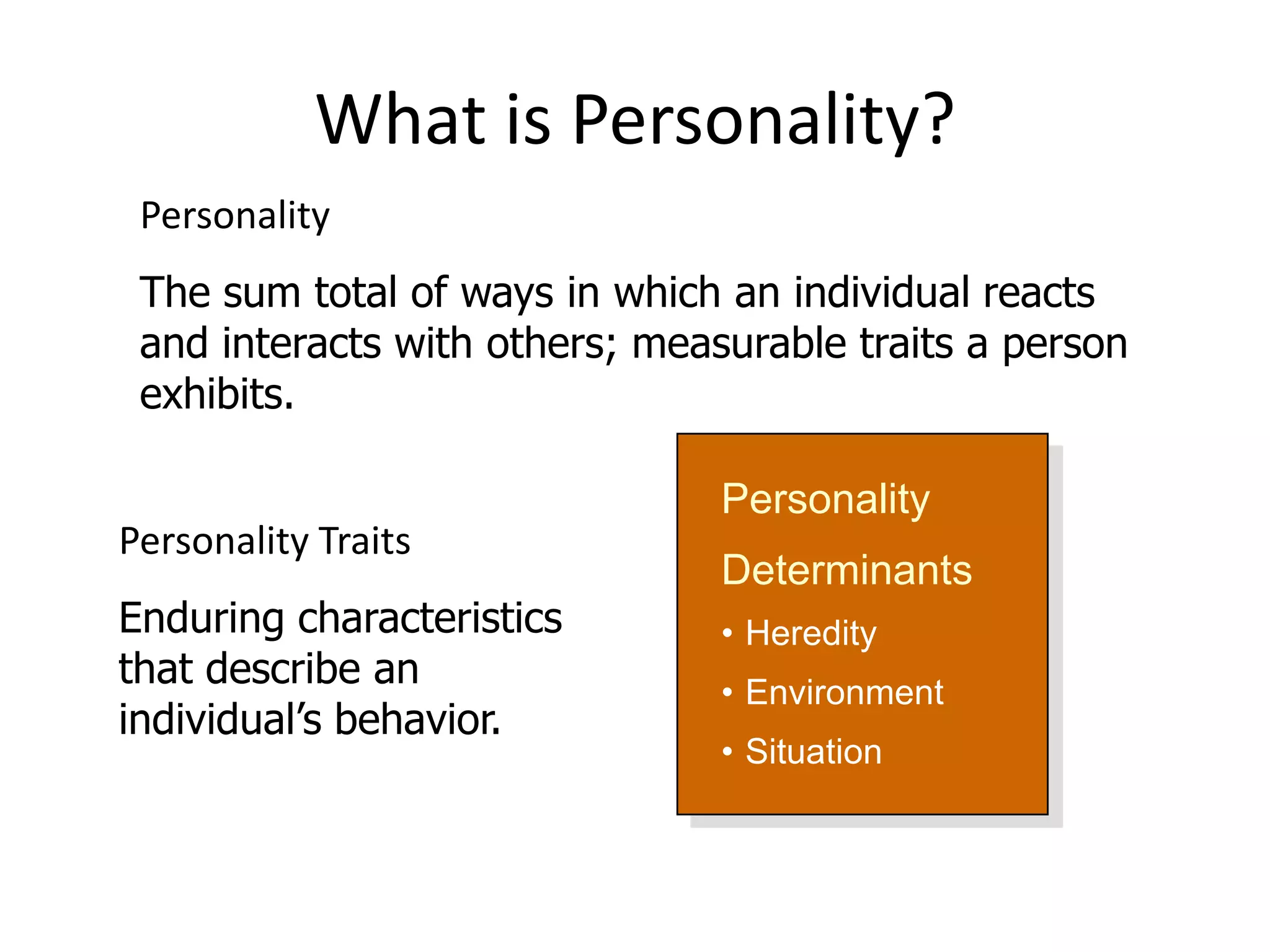
What is Personality?
 Personality
 The sum total of ways in which an individual reacts
 and interacts with others; measurable traits a person
 exhibits.

                                Personality
Personality Traits
                                Determinants
Enduring characteristics        • Heredity
that describe an                • Environment
individual’s behavior.
                                • Situation
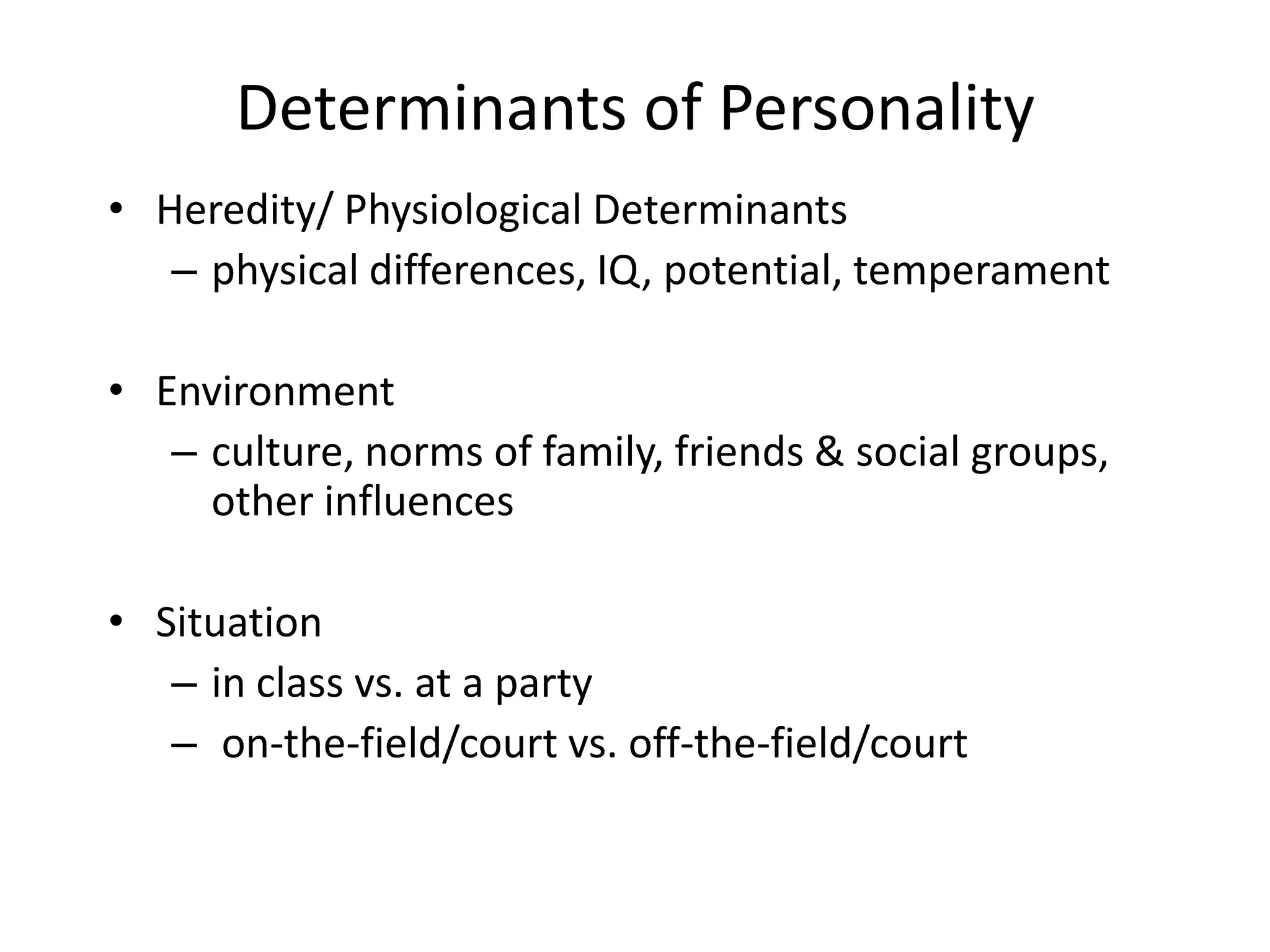
Determinants of Personality
• Heredity/ Physiological Determinants
   – physical differences, IQ, potential, temperament

• Environment
   – culture, norms of family, friends & social groups,
     other influences

• Situation
   – in class vs. at a party
   – on-the-field/court vs. off-the-field/court
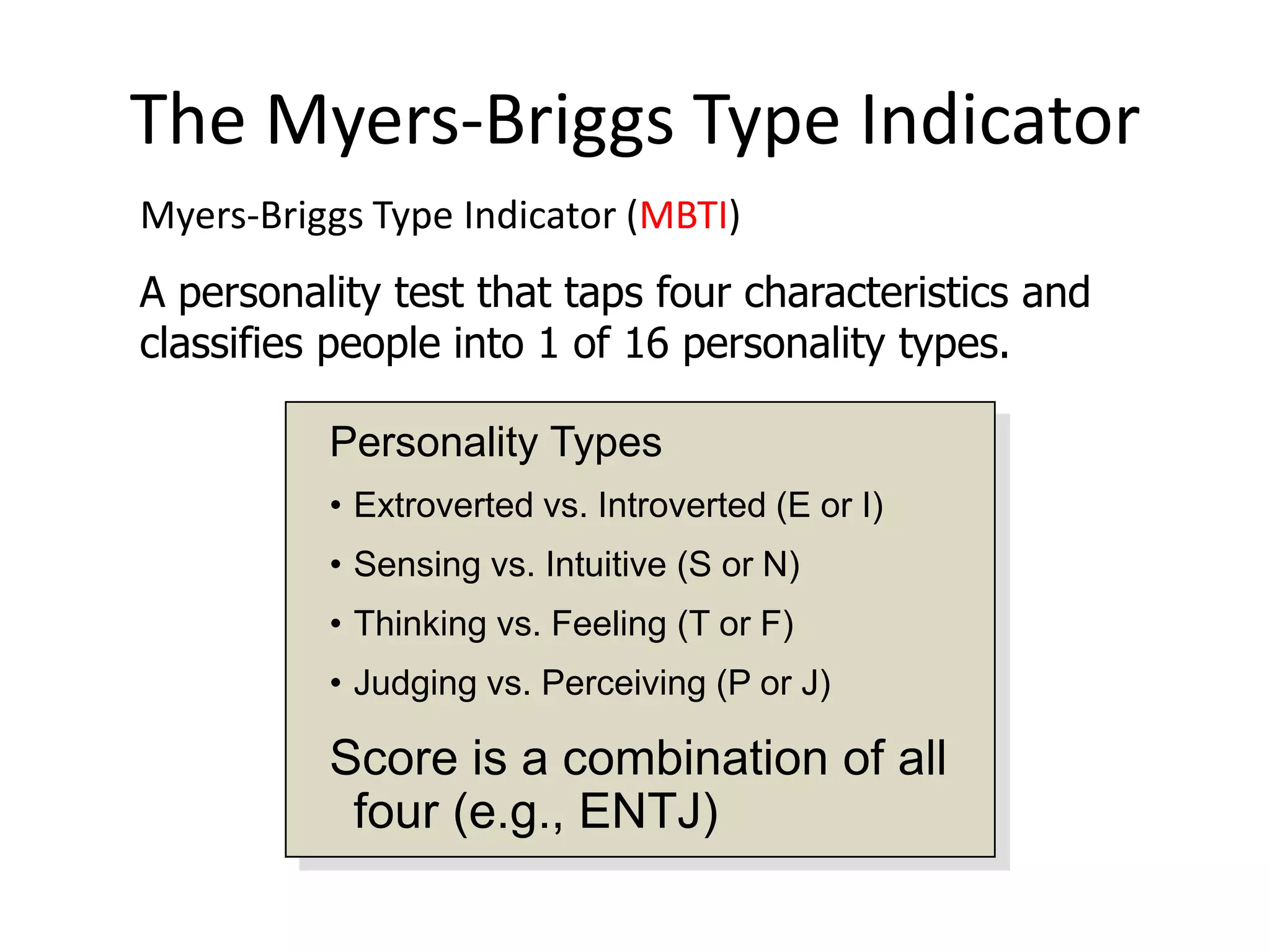
The Myers-Briggs Type Indicator
Myers-Briggs Type Indicator (MBTI)
A personality test that taps four characteristics and
classifies people into 1 of 16 personality types.

          Personality Types
          • Extroverted vs. Introverted (E or I)
          • Sensing vs. Intuitive (S or N)
          • Thinking vs. Feeling (T or F)
          • Judging vs. Perceiving (P or J)

          Score is a combination of all
           four (e.g., ENTJ)
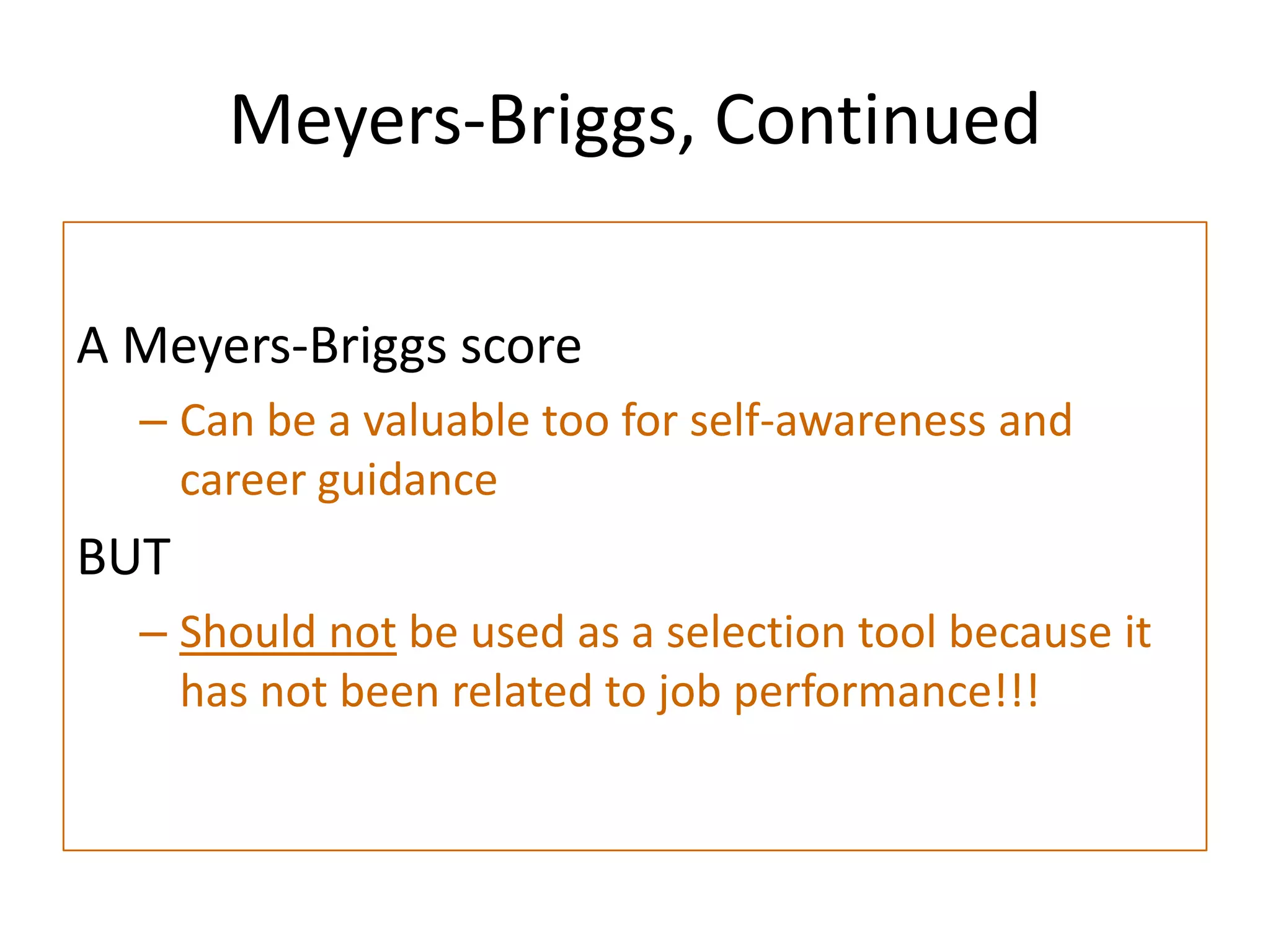
Meyers-Briggs, Continued

A Meyers-Briggs score
  – Can be a valuable too for self-awareness and
    career guidance
BUT
  – Should not be used as a selection tool because it
    has not been related to job performance!!!
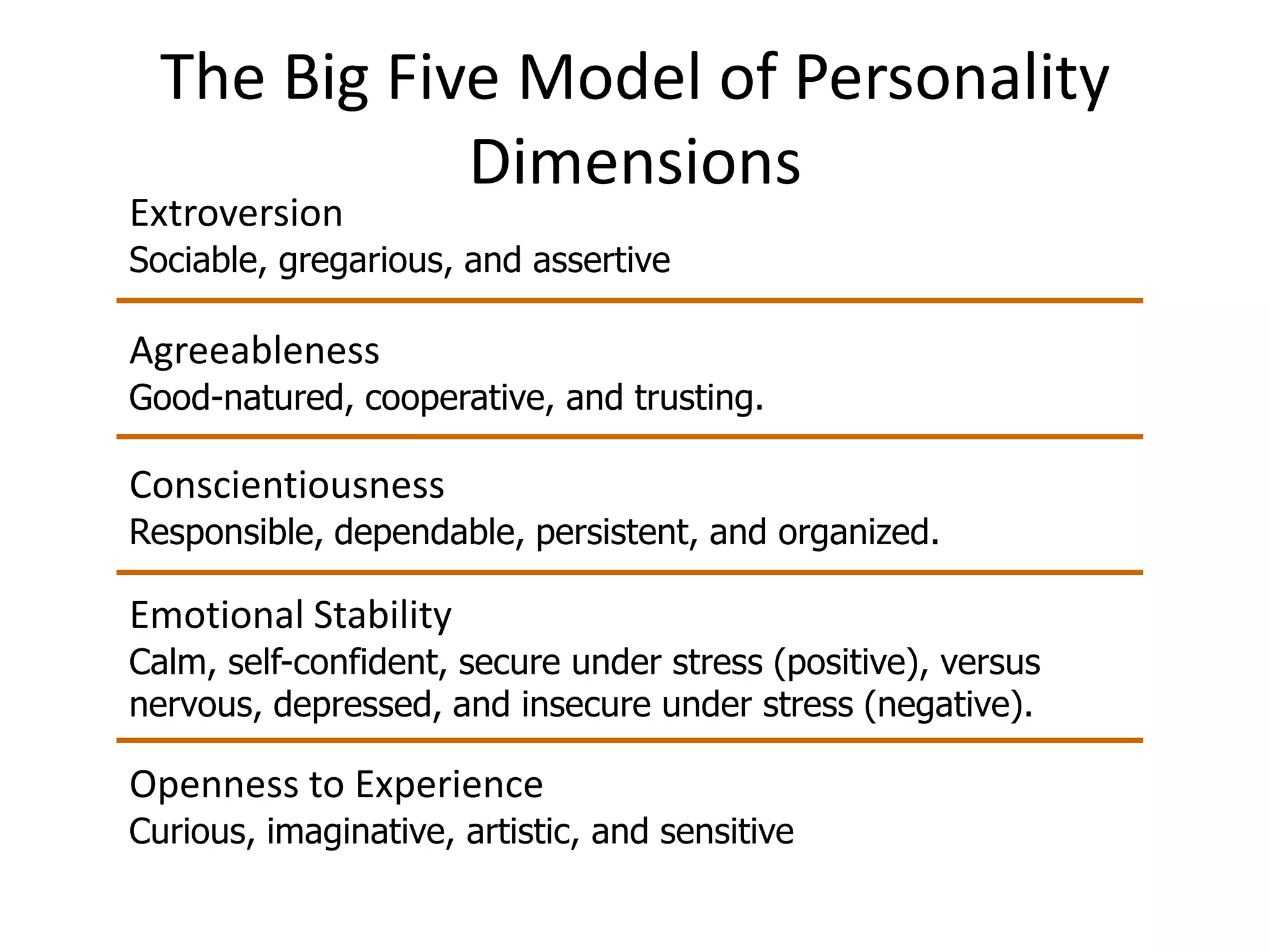
The Big Five Model of Personality
             Dimensions
Extroversion
Sociable, gregarious, and assertive

Agreeableness
Good-natured, cooperative, and trusting.

Conscientiousness
Responsible, dependable, persistent, and organized.

Emotional Stability
Calm, self-confident, secure under stress (positive), versus
nervous, depressed, and insecure under stress (negative).

Openness to Experience
Curious, imaginative, artistic, and sensitive
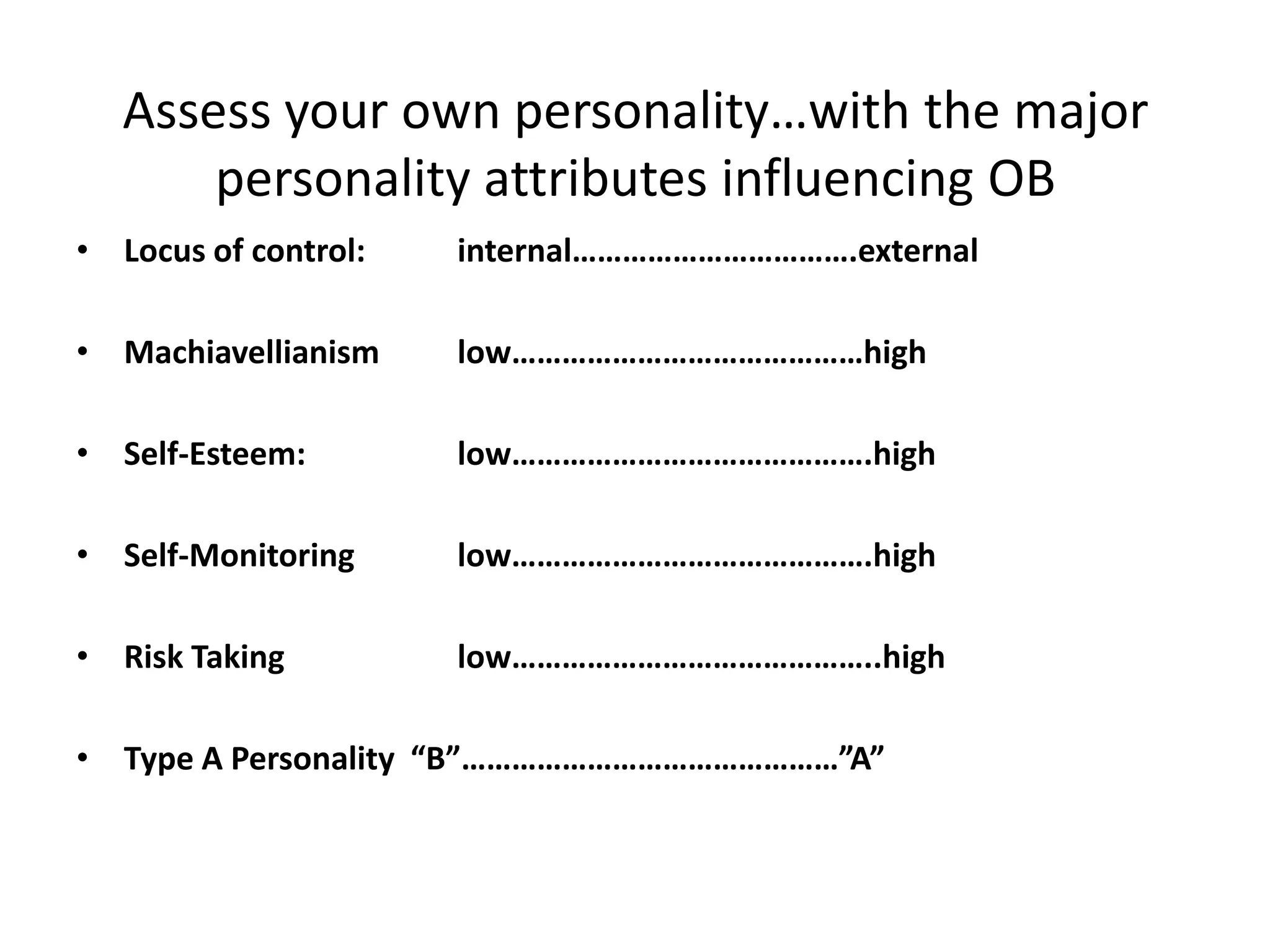
Assess your own personality…with the major
       personality attributes influencing OB
• Locus of control:   internal…………………………….external

• Machiavellianism    low……………………………………high

• Self-Esteem:        low…………………………………….high

• Self-Monitoring     low…………………………………….high

• Risk Taking         low……………………………………..high

• Type A Personality “B”………………………………………”A”
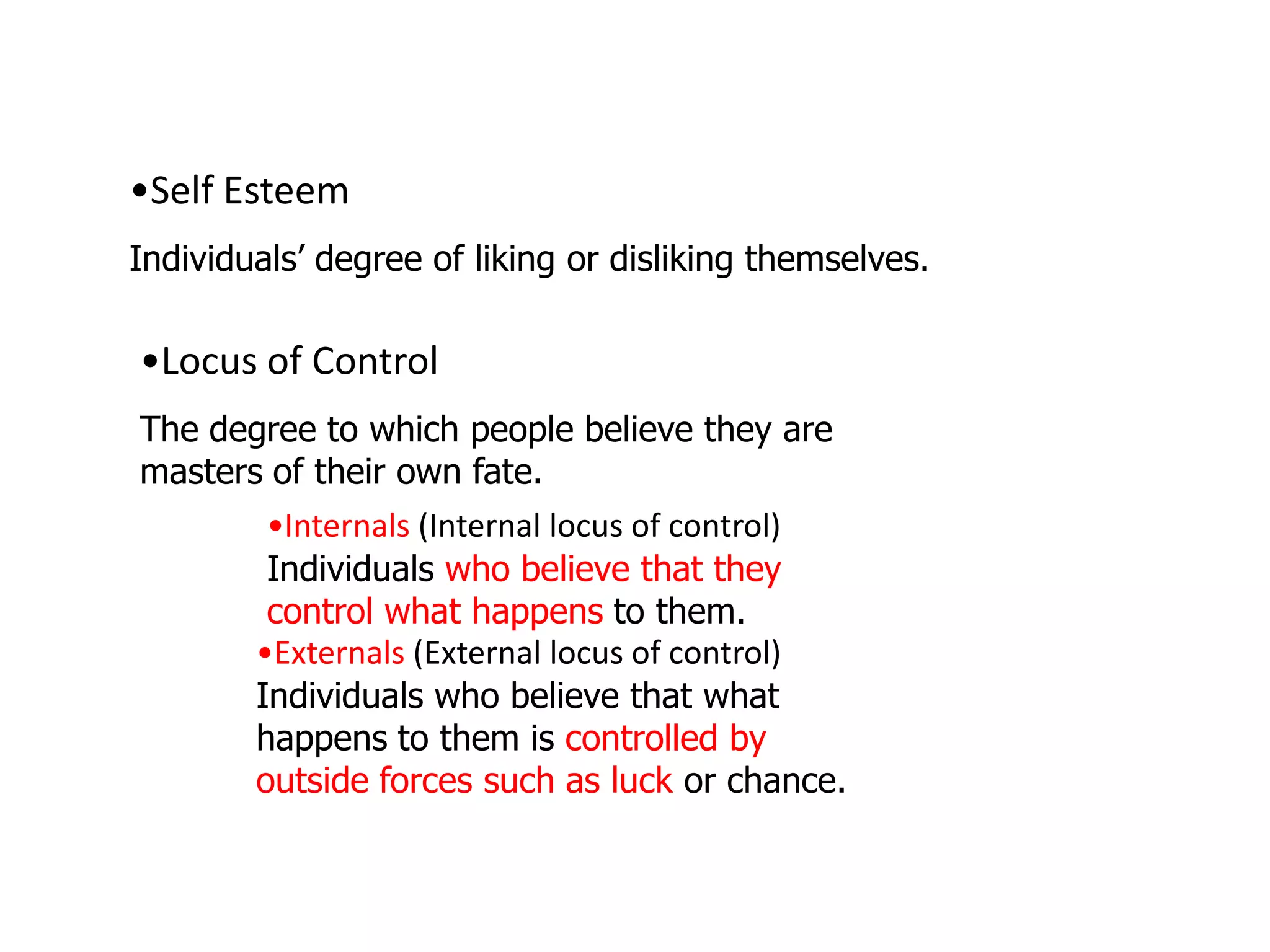
•Self Esteem
Individuals’ degree of liking or disliking themselves.

•Locus of Control
The degree to which people believe they are
masters of their own fate.
        •Internals (Internal locus of control)
        Individuals who believe that they
        control what happens to them.
       •Externals (External locus of control)
       Individuals who believe that what
       happens to them is controlled by
       outside forces such as luck or chance.
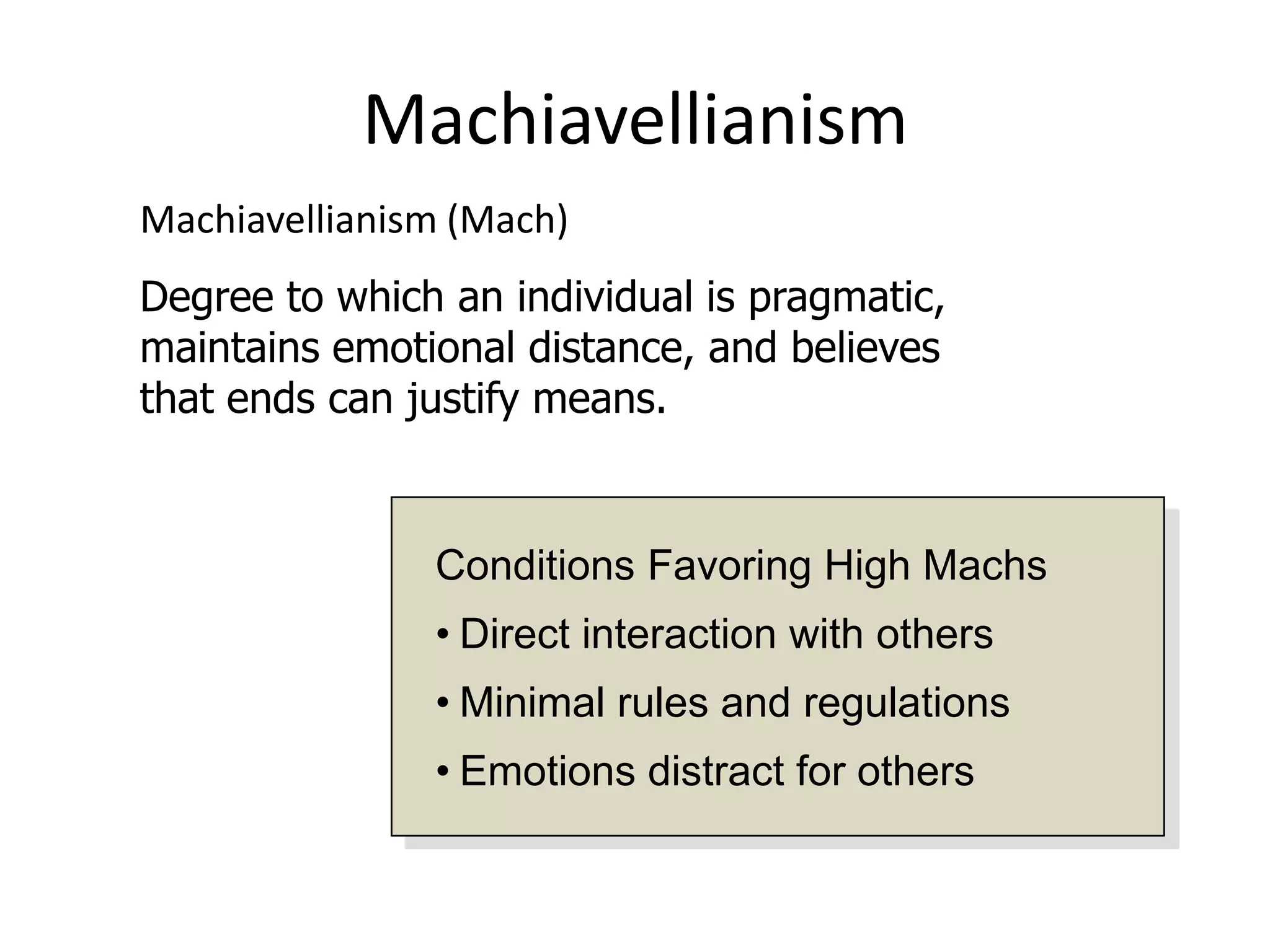
Machiavellianism
Machiavellianism (Mach)
Degree to which an individual is pragmatic,
maintains emotional distance, and believes
that ends can justify means.


               Conditions Favoring High Machs
               • Direct interaction with others
               • Minimal rules and regulations
               • Emotions distract for others
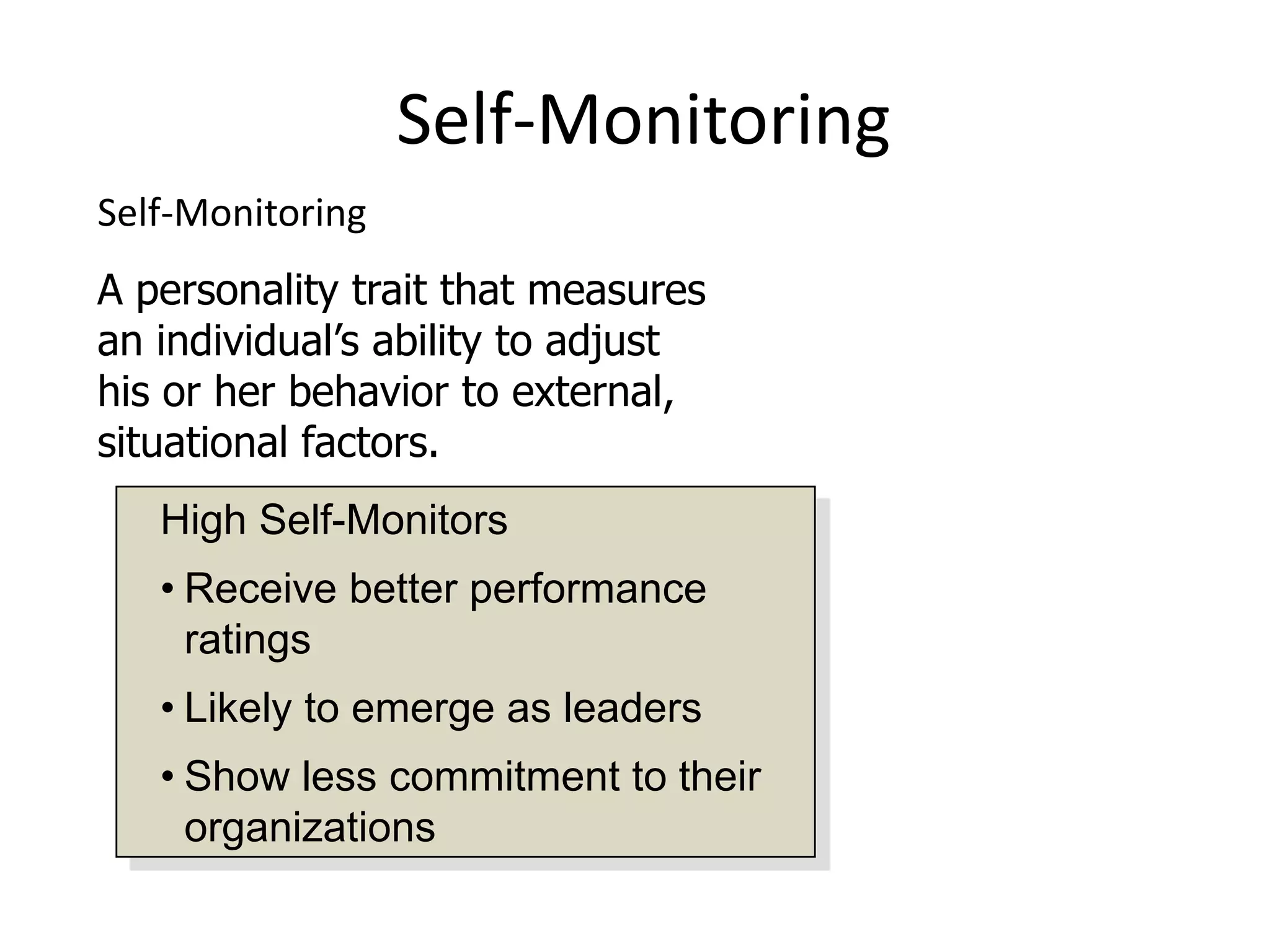
Self-Monitoring
Self-Monitoring
A personality trait that measures
an individual’s ability to adjust
his or her behavior to external,
situational factors.
   High Self-Monitors
   • Receive better performance
     ratings
   • Likely to emerge as leaders
   • Show less commitment to their
     organizations
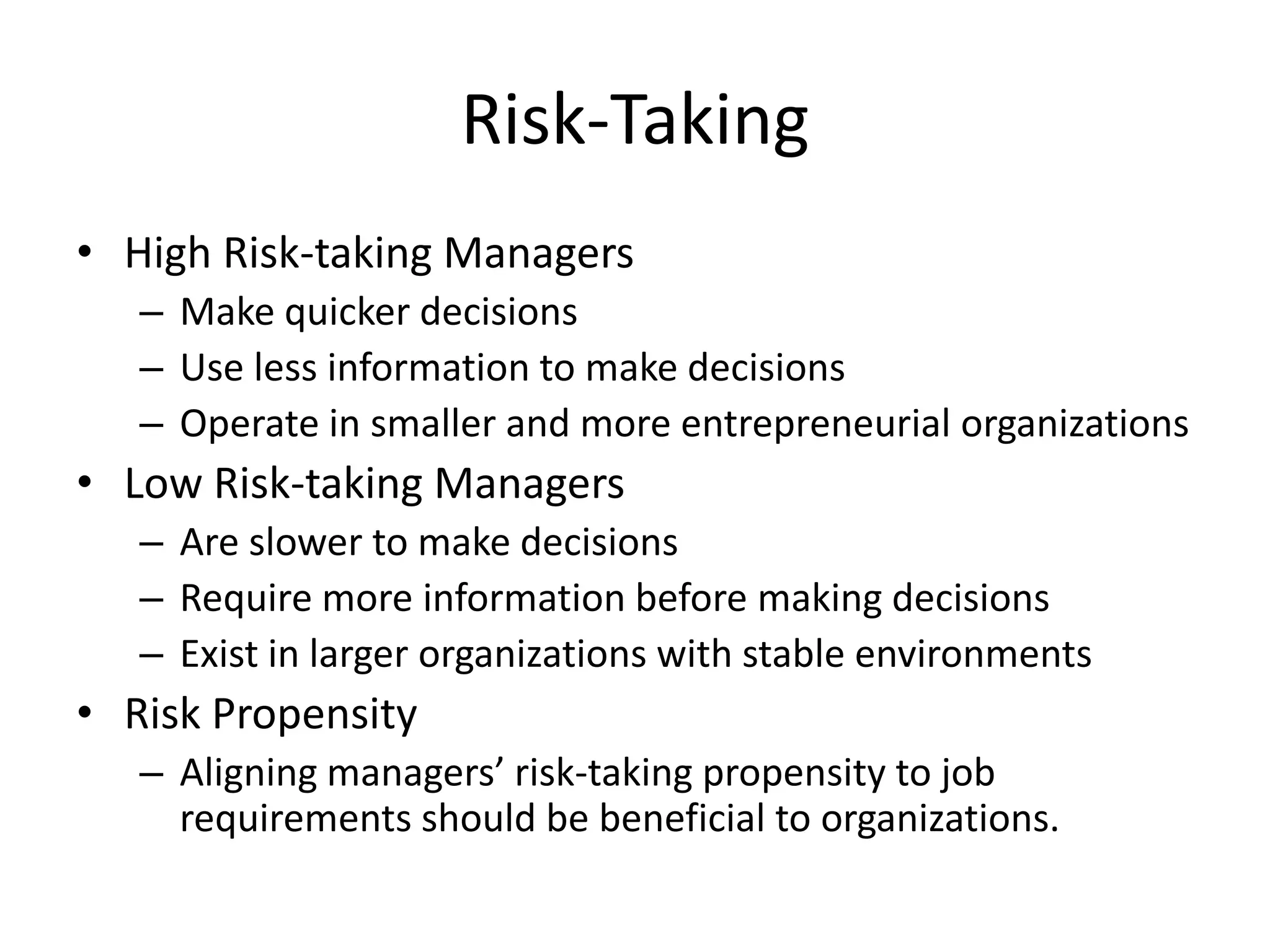
Risk-Taking
• High Risk-taking Managers
   – Make quicker decisions
   – Use less information to make decisions
   – Operate in smaller and more entrepreneurial organizations
• Low Risk-taking Managers
   – Are slower to make decisions
   – Require more information before making decisions
   – Exist in larger organizations with stable environments
• Risk Propensity
   – Aligning managers’ risk-taking propensity to job
     requirements should be beneficial to organizations.
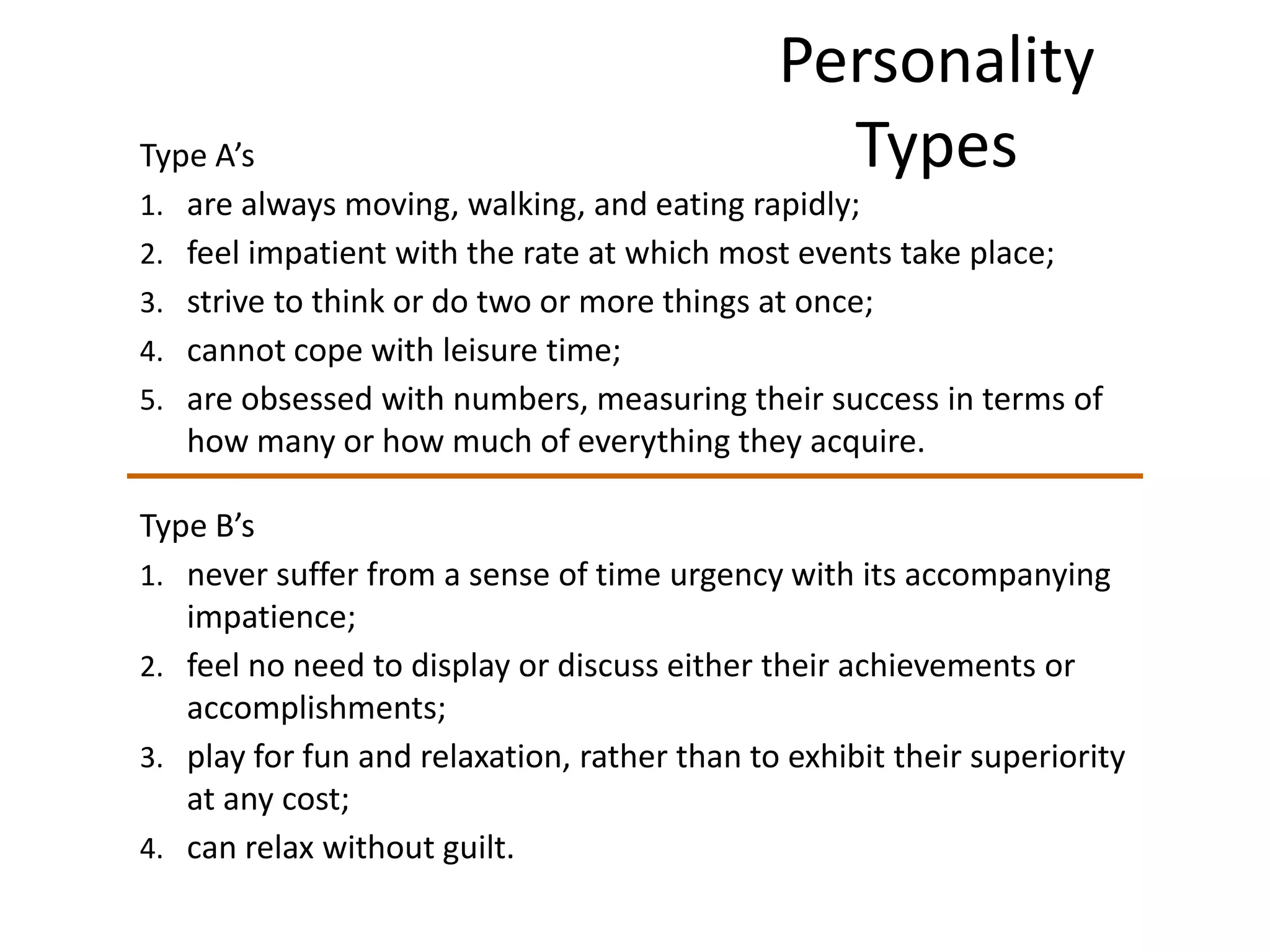
Personality
Type A’s                                        Types
1. are always moving, walking, and eating rapidly;
2. feel impatient with the rate at which most events take place;
3. strive to think or do two or more things at once;
4. cannot cope with leisure time;
5. are obsessed with numbers, measuring their success in terms of
   how many or how much of everything they acquire.

Type B’s
1. never suffer from a sense of time urgency with its accompanying
   impatience;
2. feel no need to display or discuss either their achievements or
   accomplishments;
3. play for fun and relaxation, rather than to exhibit their superiority
   at any cost;
4. can relax without guilt.
Personality Types
Proactive Personality
Identifies opportunities,
shows initiative, takes
action, and perseveres
until meaningful change
occurs.
Creates positive change
in the environment,
regardless or even in
spite of constraints or
obstacles.

Personality lecture

  • 1.
    Personality • What isPersonality? – The sum total of ways in which an individual reacts to and interacts with others – Measurable traits that a person exhibits. – An enduring combination of motives, emotions, values, interests, attitudes and competencies.
  • 2.
    What is Personality? Personality The sum total of ways in which an individual reacts and interacts with others; measurable traits a person exhibits. Personality Personality Traits Determinants Enduring characteristics • Heredity that describe an • Environment individual’s behavior. • Situation
  • 3.
    Determinants of Personality •Heredity/ Physiological Determinants – physical differences, IQ, potential, temperament • Environment – culture, norms of family, friends & social groups, other influences • Situation – in class vs. at a party – on-the-field/court vs. off-the-field/court
  • 4.
    The Myers-Briggs TypeIndicator Myers-Briggs Type Indicator (MBTI) A personality test that taps four characteristics and classifies people into 1 of 16 personality types. Personality Types • Extroverted vs. Introverted (E or I) • Sensing vs. Intuitive (S or N) • Thinking vs. Feeling (T or F) • Judging vs. Perceiving (P or J) Score is a combination of all four (e.g., ENTJ)
  • 5.
    Meyers-Briggs, Continued A Meyers-Briggsscore – Can be a valuable too for self-awareness and career guidance BUT – Should not be used as a selection tool because it has not been related to job performance!!!
  • 6.
    The Big FiveModel of Personality Dimensions Extroversion Sociable, gregarious, and assertive Agreeableness Good-natured, cooperative, and trusting. Conscientiousness Responsible, dependable, persistent, and organized. Emotional Stability Calm, self-confident, secure under stress (positive), versus nervous, depressed, and insecure under stress (negative). Openness to Experience Curious, imaginative, artistic, and sensitive
  • 7.
    Assess your ownpersonality…with the major personality attributes influencing OB • Locus of control: internal…………………………….external • Machiavellianism low……………………………………high • Self-Esteem: low…………………………………….high • Self-Monitoring low…………………………………….high • Risk Taking low……………………………………..high • Type A Personality “B”………………………………………”A”
  • 8.
    •Self Esteem Individuals’ degreeof liking or disliking themselves. •Locus of Control The degree to which people believe they are masters of their own fate. •Internals (Internal locus of control) Individuals who believe that they control what happens to them. •Externals (External locus of control) Individuals who believe that what happens to them is controlled by outside forces such as luck or chance.
  • 9.
    Machiavellianism Machiavellianism (Mach) Degree towhich an individual is pragmatic, maintains emotional distance, and believes that ends can justify means. Conditions Favoring High Machs • Direct interaction with others • Minimal rules and regulations • Emotions distract for others
  • 10.
    Self-Monitoring Self-Monitoring A personality traitthat measures an individual’s ability to adjust his or her behavior to external, situational factors. High Self-Monitors • Receive better performance ratings • Likely to emerge as leaders • Show less commitment to their organizations
  • 11.
    Risk-Taking • High Risk-takingManagers – Make quicker decisions – Use less information to make decisions – Operate in smaller and more entrepreneurial organizations • Low Risk-taking Managers – Are slower to make decisions – Require more information before making decisions – Exist in larger organizations with stable environments • Risk Propensity – Aligning managers’ risk-taking propensity to job requirements should be beneficial to organizations.
  • 12.
    Personality Type A’s Types 1. are always moving, walking, and eating rapidly; 2. feel impatient with the rate at which most events take place; 3. strive to think or do two or more things at once; 4. cannot cope with leisure time; 5. are obsessed with numbers, measuring their success in terms of how many or how much of everything they acquire. Type B’s 1. never suffer from a sense of time urgency with its accompanying impatience; 2. feel no need to display or discuss either their achievements or accomplishments; 3. play for fun and relaxation, rather than to exhibit their superiority at any cost; 4. can relax without guilt.
  • 13.
    Personality Types Proactive Personality Identifiesopportunities, shows initiative, takes action, and perseveres until meaningful change occurs. Creates positive change in the environment, regardless or even in spite of constraints or obstacles.