

APPROACH TO JAUNDICE
JAUNDICE
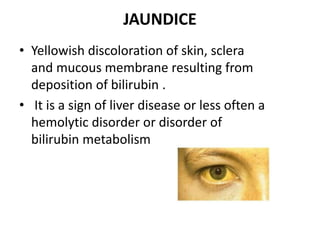
• Yellowish discoloration of skin, sclera
and mucous membrane resulting from
deposition of bilirubin .
• It is a sign of liver disease or less often a
hemolytic disorder or disorder of
bilirubin metabolism
SEQUENTIAL SITES OF JAUNDICE
1st STAGE
Frenulum of tongue(>1.5mgdl)
2nd STAGE
Sclera of eye (>2.5mgdl)
3rd stage
Skin(>3.5 mg/dl)
Differential diagnosis of Yellowing of
skin
• Carotenoderma-yellow color imparted to the
skin because of carotenes prsent in Carrots,
green leafy vegetable, squash, peaches and
oranges.
• Palms, soles, forehead and nasolabial folds.
• Spares the sclera(differentiated from
jaundice)
• Quinacrine an ANTIMALARIAL DRUG- 4-37%
yellowish discoloration of skin, also sclera.
METABOLISM OF BILIRUBIN
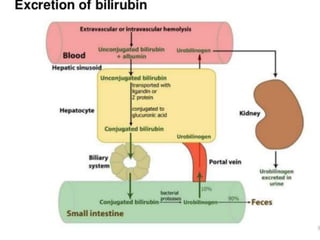
1 . Production of bilirubin
2. Excretion of bilirubin
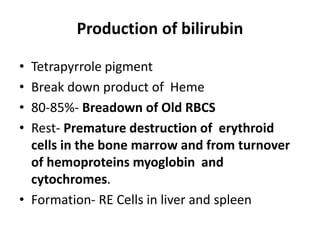
Production of bilirubin
• Tetrapyrrole pigment
• Break down product of Heme
• 80-85%- Breadown of Old RBCS
• Rest- Premature destruction of erythroid
cells in the bone marrow and from turnover
of hemoproteins myoglobin and
cytochromes.
• Formation- RE Cells in liver and spleen
MEASUREMENT OF SERUM BILIRUBIN
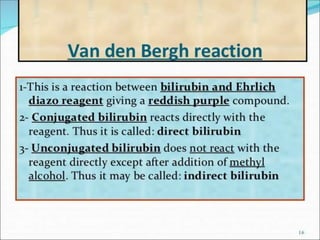
• BASED ON VAN DE BERG REACTION
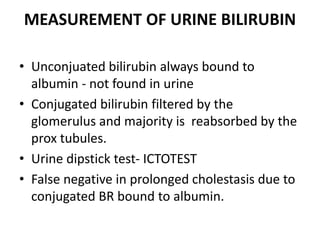
MEASUREMENT OF URINE BILIRUBIN
• Unconjuated bilirubin always bound to
albumin - not found in urine
• Conjugated bilirubin filtered by the
glomerulus and majority is reabsorbed by the
prox tubules.
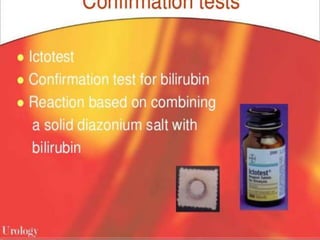
• Urine dipstick test- ICTOTEST
• False negative in prolonged cholestasis due to
conjugated BR bound to albumin.
HOW TO APPROACH
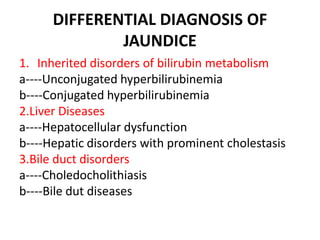
DIFFERENTIAL DIAGNOSIS OF
JAUNDICE
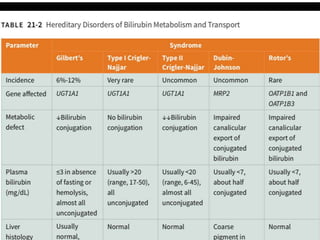
1. Inherited disorders of bilirubin metabolism
a----Unconjugated hyperbilirubinemia
b----Conjugated hyperbilirubinemia
2.Liver Diseases
a----Hepatocellular dysfunction
b----Hepatic disorders with prominent cholestasis
3.Bile duct disorders
a----Choledocholithiasis
b----Bile dut diseases
ISOLATED DISORDER OF BILIRUBIN
METABOLISM
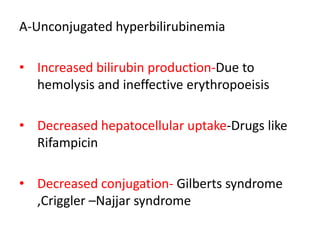
A-Unconjugated hyperbilirubinemia
• Increased bilirubin production-Due to
hemolysis and ineffective erythropoeisis
• Decreased hepatocellular uptake-Drugs like
Rifampicin
• Decreased conjugation- Gilberts syndrome
,Criggler –Najjar syndrome
B. Conjugated or mixed hyperbilirubinemia
• Dubin johnson syndrome
• Rotors syndrome
LIVER DISEASE
A. Hepatocellular dysfunction
• Acute or subacute hepatocellular injury seen
in viral hepatitis , hepatotoxins,, ischaemia
• Chronic hepatocellular disease autoimmune
hepatitis, celiac disease, wilsons disease
B-Hepatic disorders with prominent cholestasis
• Infiltrative disease such as sarcoidosis,
mycobacterial infections
• Cholangiocyte injury due to primary biliary
Cirrhosis
BILE DUCT OBSTRUCTION
A.Choledocholithiasis
B.Bile duct diseases
• Inflammation- primary sclerosing cholangitis
• Pancreatitis
• Neoplasms-Pancreatic carcinoma
• Vascular enlargement-portal cavernoma
TAKE HOME MESSAGE
• Jaundice is a hallmark of liver disease
• Through clinical examination and history
becomes vital in all cases
• Classified as pre hepatic, hepatocellular and
cholestatis although overlaps do occur
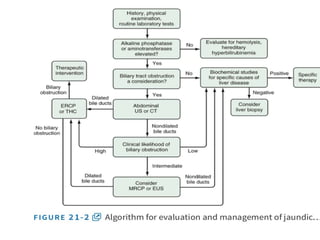
• Biochemical and radiological evaluation helps
in making a diagnosis.
• This is just a overview.
PATIENT A
42YEAR OLD FEMALE WITH HISTORY OF GENERAL
WEAKNESS OF4 MONTHS . SHE WAS FOUND TO
HAVE MODERATE ANEMIA , JAUNDICE AND
MILDSPLENOMEGALY .
Ans. HEMOLYTIC JAUNDICE
Patient B
• 30 YEAR OLD MALE WITH HISTORY OF FEVER
OF 2 WEEKS , NAUSEA AND dark COLORED
URINE . HE HAD PALPABLE , SOFT TENDER
LIVER .
Ans. Hepatic Jaundice
PatientC
• 35YR OLD MALE WITH COMPLAINTS OF PAIN
ABDOMEN , JAUNDICE , ITCHING AND
PASSING CLAY COLORED STOOLS .
• PREVIOUSLY HE WAS DIAGNOSED WITH GALL
BLADDER STONES BUT HAS NOT TAKEN
TREATMENT .
• GALL BLADDER IS NOT PALPABLE .
Ans.OBSTRUCTIVE JAUNDICE
Jaundice

Jaundice

  • 1.
  • 2.
    JAUNDICE • Yellowish discolorationof skin, sclera and mucous membrane resulting from deposition of bilirubin . • It is a sign of liver disease or less often a hemolytic disorder or disorder of bilirubin metabolism
  • 3.
    SEQUENTIAL SITES OFJAUNDICE 1st STAGE Frenulum of tongue(>1.5mgdl) 2nd STAGE Sclera of eye (>2.5mgdl) 3rd stage Skin(>3.5 mg/dl)
  • 4.
    Differential diagnosis ofYellowing of skin • Carotenoderma-yellow color imparted to the skin because of carotenes prsent in Carrots, green leafy vegetable, squash, peaches and oranges. • Palms, soles, forehead and nasolabial folds. • Spares the sclera(differentiated from jaundice) • Quinacrine an ANTIMALARIAL DRUG- 4-37% yellowish discoloration of skin, also sclera.
  • 5.
    METABOLISM OF BILIRUBIN 1. Production of bilirubin 2. Excretion of bilirubin
  • 6.
    Production of bilirubin •Tetrapyrrole pigment • Break down product of Heme • 80-85%- Breadown of Old RBCS • Rest- Premature destruction of erythroid cells in the bone marrow and from turnover of hemoproteins myoglobin and cytochromes. • Formation- RE Cells in liver and spleen
  • 8.
    MEASUREMENT OF SERUMBILIRUBIN • BASED ON VAN DE BERG REACTION
  • 10.
    MEASUREMENT OF URINEBILIRUBIN • Unconjuated bilirubin always bound to albumin - not found in urine • Conjugated bilirubin filtered by the glomerulus and majority is reabsorbed by the prox tubules. • Urine dipstick test- ICTOTEST • False negative in prolonged cholestasis due to conjugated BR bound to albumin.
  • 12.
  • 15.
    DIFFERENTIAL DIAGNOSIS OF JAUNDICE 1.Inherited disorders of bilirubin metabolism a----Unconjugated hyperbilirubinemia b----Conjugated hyperbilirubinemia 2.Liver Diseases a----Hepatocellular dysfunction b----Hepatic disorders with prominent cholestasis 3.Bile duct disorders a----Choledocholithiasis b----Bile dut diseases
  • 16.
    ISOLATED DISORDER OFBILIRUBIN METABOLISM
  • 17.
    A-Unconjugated hyperbilirubinemia • Increasedbilirubin production-Due to hemolysis and ineffective erythropoeisis • Decreased hepatocellular uptake-Drugs like Rifampicin • Decreased conjugation- Gilberts syndrome ,Criggler –Najjar syndrome
  • 18.
    B. Conjugated ormixed hyperbilirubinemia • Dubin johnson syndrome • Rotors syndrome
  • 20.
    LIVER DISEASE A. Hepatocellulardysfunction • Acute or subacute hepatocellular injury seen in viral hepatitis , hepatotoxins,, ischaemia • Chronic hepatocellular disease autoimmune hepatitis, celiac disease, wilsons disease
  • 21.
    B-Hepatic disorders withprominent cholestasis • Infiltrative disease such as sarcoidosis, mycobacterial infections • Cholangiocyte injury due to primary biliary Cirrhosis
  • 22.
    BILE DUCT OBSTRUCTION A.Choledocholithiasis B.Bileduct diseases • Inflammation- primary sclerosing cholangitis • Pancreatitis • Neoplasms-Pancreatic carcinoma • Vascular enlargement-portal cavernoma
  • 23.
    TAKE HOME MESSAGE •Jaundice is a hallmark of liver disease • Through clinical examination and history becomes vital in all cases • Classified as pre hepatic, hepatocellular and cholestatis although overlaps do occur • Biochemical and radiological evaluation helps in making a diagnosis. • This is just a overview.
  • 24.
    PATIENT A 42YEAR OLDFEMALE WITH HISTORY OF GENERAL WEAKNESS OF4 MONTHS . SHE WAS FOUND TO HAVE MODERATE ANEMIA , JAUNDICE AND MILDSPLENOMEGALY .
  • 25.
  • 26.
    Patient B • 30YEAR OLD MALE WITH HISTORY OF FEVER OF 2 WEEKS , NAUSEA AND dark COLORED URINE . HE HAD PALPABLE , SOFT TENDER LIVER .
  • 27.
  • 28.
    PatientC • 35YR OLDMALE WITH COMPLAINTS OF PAIN ABDOMEN , JAUNDICE , ITCHING AND PASSING CLAY COLORED STOOLS . • PREVIOUSLY HE WAS DIAGNOSED WITH GALL BLADDER STONES BUT HAS NOT TAKEN TREATMENT . • GALL BLADDER IS NOT PALPABLE .
  • 29.