DIABETIC KETOACIDOSIS
in Children
Dr C.S.N.Vittal
Occurs in patients with type 1 diabetes more frequently
Usually precipitated by infection, stress and trauma, and
conditions associated with increased insulin requirement and
higher level of counter regulatory hormones.
Diabetic Ketoacidosis
Diabetic ketoacidosis (DKA) is an acute, major, life threatening
complication of diabetes
DKA - Definition
A state of absolute or
relative insulin deficiency
resulting in hyperglycemia
and an accumulation of
ketoacids in the blood with
subsequent metabolic
acidosis
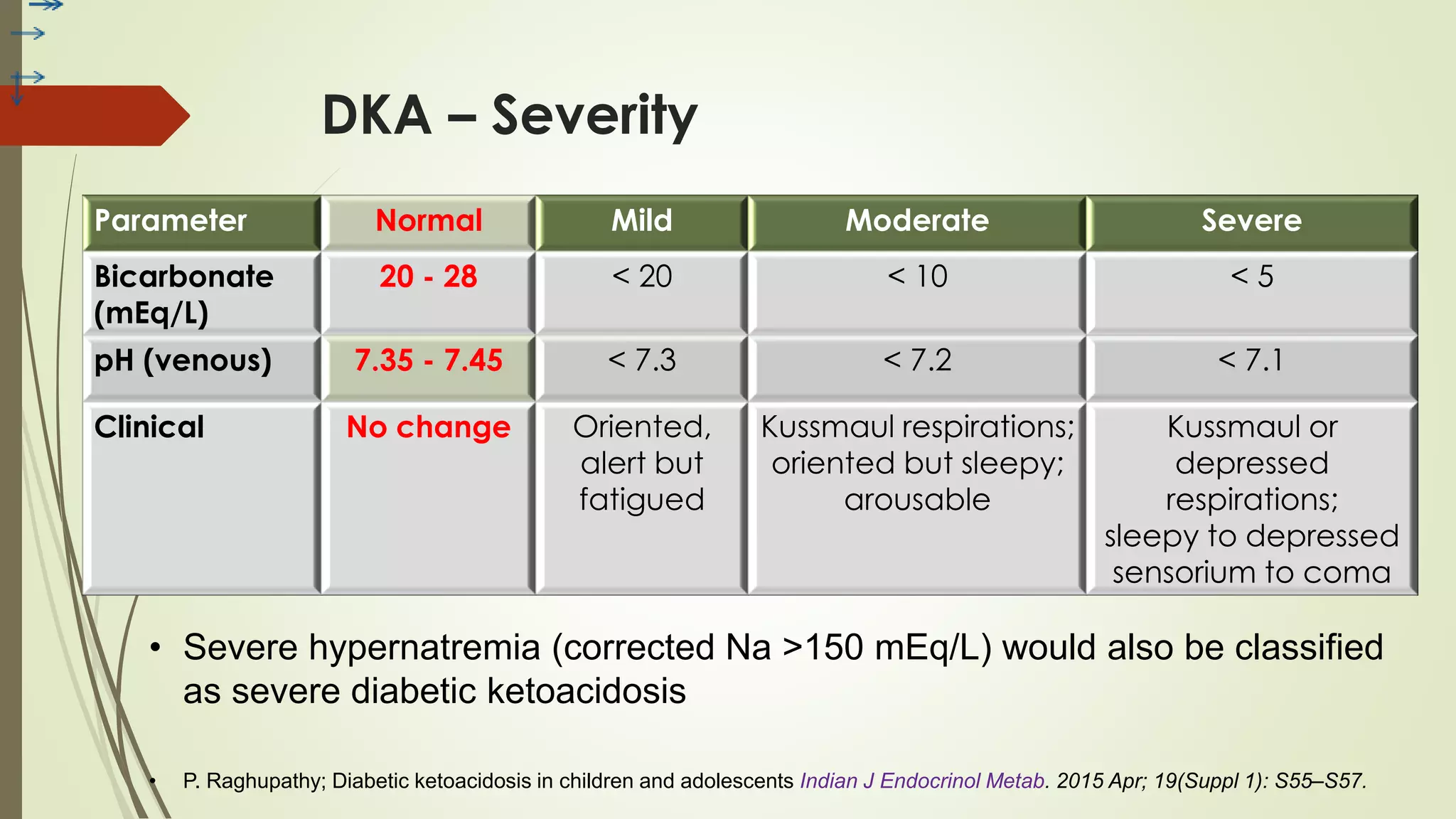
DKA – Severity
Parameter Normal Mild Moderate Severe
Bicarbonate
(mEq/L)
20 - 28 < 20 < 10 < 5
pH (venous) 7.35 - 7.45 < 7.3 < 7.2 < 7.1
Clinical No change Oriented,
alert but
fatigued
Kussmaul respirations;
oriented but sleepy;
arousable
Kussmaul or
depressed
respirations;
sleepy to depressed
sensorium to coma
• Severe hypernatremia (corrected Na >150 mEq/L) would also be classified
as severe diabetic ketoacidosis
• P. Raghupathy; Diabetic ketoacidosis in children and adolescents Indian J Endocrinol Metab. 2015 Apr; 19(Suppl 1): S55–S57.
DKA - Physiological background
• To develop DKA there must be both a relative lack of insulin and
a relative overactivity of counter-regulatory hormones
Insulin
(Anabolic)
Counterregulatory hormones
(Catabolic)
• Glucose : used for
energy substrate OR
stored as glycogen
• Protein : acceleration of
protein formation
• Fats: stored as
triglycerides
• Glycogenolysis
• Proteolysis,
Gluconeogenesis
• Lypolysis – FFAs &
ketone bodies
DKA – When to suspect?
New onset diabetes Type ! (20-40%)
Inadequate insulin treatment
Non compliance
Acute illness / infection
Drugs (Olanzapine, Lithium)
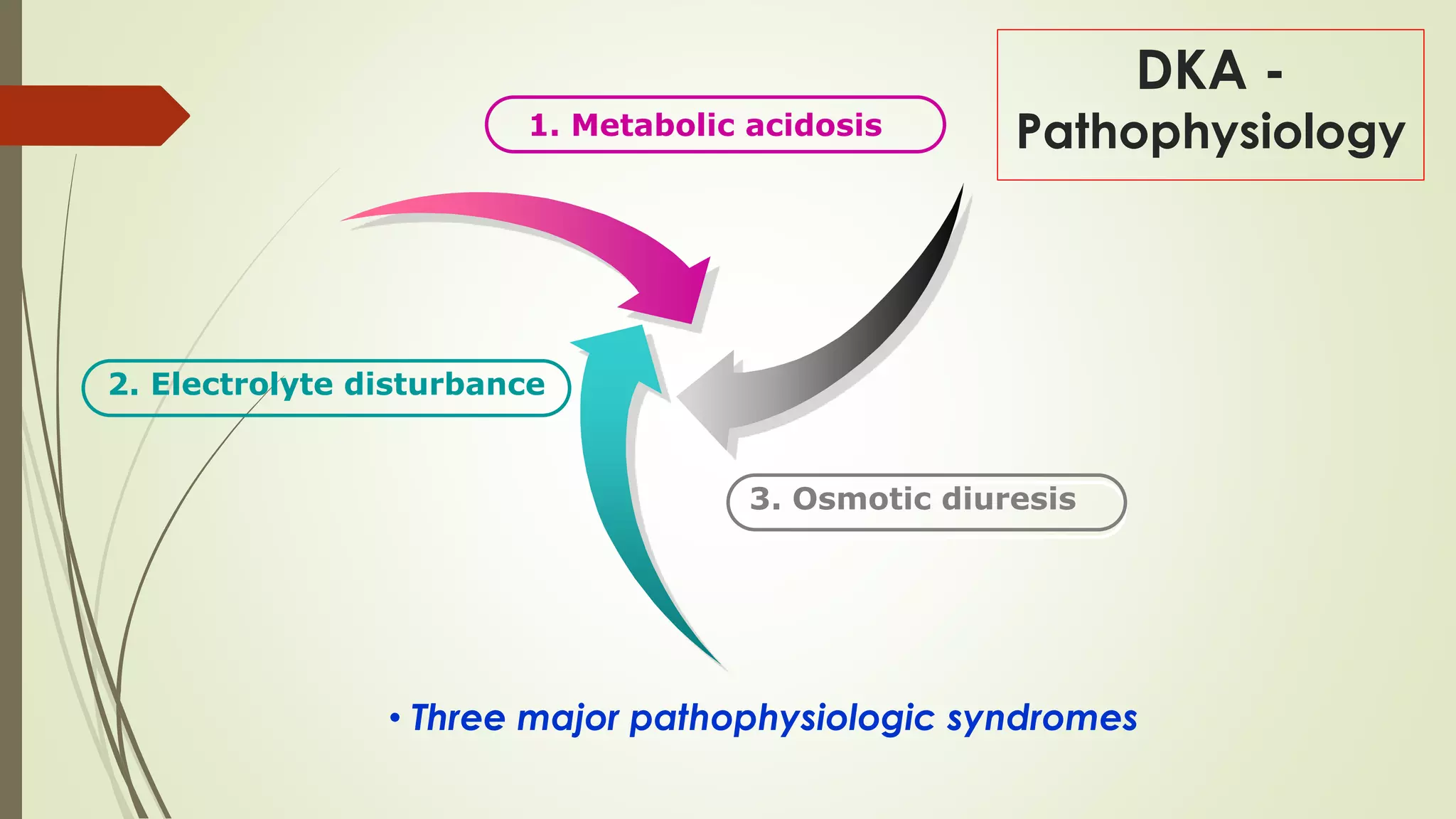
DKA -
Pathophysiology
• Three major pathophysiologic syndromes
1. Metabolic acidosis
2. Electrolyte disturbance
3. Osmotic diuresis
DKA - Pathophysiology
DKA – Pathophysiology – Severe insulinopenia results in a physiologic
cascade of events in 3 general pathways:
• osmotic diuresis
• loss of fluid and electrolytes, dehydration
• activation of the renin– angiotensin –
aldosterone axis - accelerated K+ loss.
• risk of cerebral edema
Excessive glucose production & reduced
glucose utilization > raises serum glucose.
• cellular losses of sodium, potassium, and
phosphate
Increased catabolic processes
• ketoacids accumulate,
• buffer systems are depleted, and
• metabolic acidosis
Increased release of free fatty acids
01
02
03
With prolonged illness & severe DKA…
…losses
from
body
10-13 mEq/kg of Sodium1
5-6 mEq/kg of Potassium2
4-5 mEq/kg of Phosphate3
The combined effects of Serum hyperosmolarity, Dehydration, and Acidosis a Result in
increased osmolarity in brain cells clinically manifests as an altered consciousness.
Hyperkalemia
 Hyperkalemia causes acidosis
 Acidosis causes hyperkalemia
HYPERKALEMIA
H+
H+
H+
H+
H+
H+
H+
H+
K+
K+
K+
K+
K+
K+
K+
K+
ACIDOSIS
Cellular-Extracellular Shifts
 Insulin deficiency predisposes an individual to hyperkalemia
 Cellular uptake of K+ ions is enhanced by insulin, aldosterone
and epinephrine
 Provides protection from extracellular K+ overload
Insulin
K+
K+
K+
K+
K+
K+
Click to view
animation
C
E
L
L
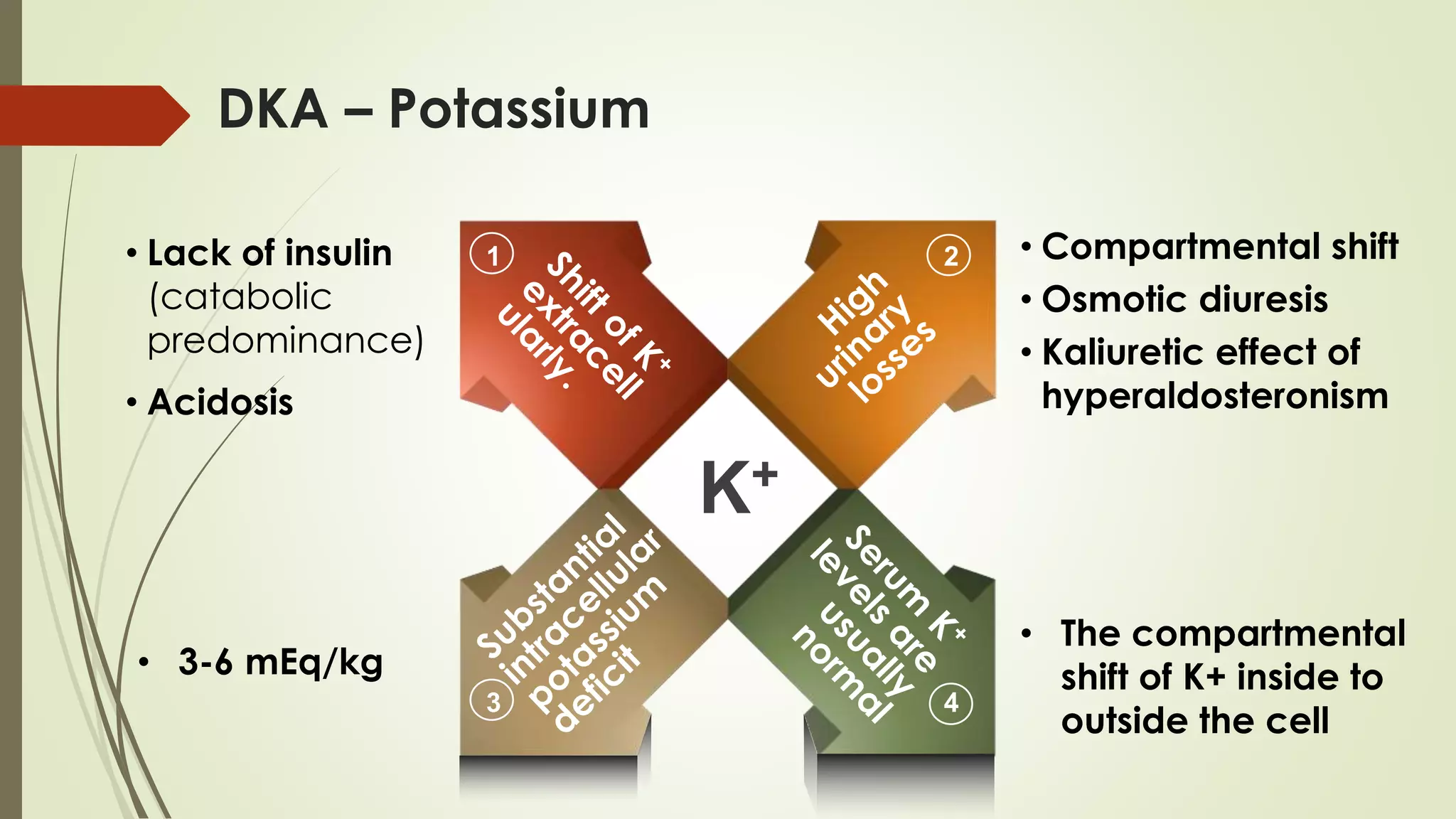
DKA – Potassium
• Compartmental shift
• Osmotic diuresis
• Kaliuretic effect of
hyperaldosteronism
• The compartmental
shift of K+ inside to
outside the cell
• Lack of insulin
(catabolic
predominance)
• Acidosis
• 3-6 mEq/kg
1 2
3 4
K+
DKA – Sodium
Depletion secondary to urinary losses /
vomiting
Rapid decrease in S. Sodium > cerebral edema
Hyperlipidemia displaces > fictitiously
lowering sodium values.
h Glucose a i Sodium
1
2
3
Na+
DKA – Clinical Features
Symptoms:
• Nausea / Vomiting (due to b
hydroxybutyrate)
• Polydipsia / Polyuria / Nocturia
• Abdominal pain
• Shortness of breath (acidosis)
• Weakness (due to decreased
tissue perfusion)
• Fruity breath odour of ketotic
patients.
Signs:
• Dehydration
• Hypotension
• Tachycardia
• Tachypnea / Kussmaul
respirations
• Acetone odour of breath
• Abdominal tenderness
• Lethargy / altered level of
consciousness / possibly coma
DKA – Other Labs & Dx
 Serum amylase - may be due to pancreatitis.
 Serum Creatinine may be falsely elevated due to interference by
ketones in the autoanalyzer methodology.
 Blood Urea Nitrogen (BUN) may be elevated.
 Complete Blood Counts: may reveal possible infectious etiology
 CSF study,
 CXR to rule out other causes for the clinical condition.
Intervene if complications occur
Replace electrolyte losses
Restore normal acid-base balance
Arrest ketogenesis
Restore perfusion
Management of DKA
Therapy must address
both the initiating
event in this cascade
(insulinopenia)
and
the subsequent
physiologic disruptions
Management of DKA - steps
1. Confirm diagnosis (↑ plasma glucose, positive serum ketones, metabolic
acidosis).
2. Admit to hospital; intensive care setting may be necessary for frequent
monitoring or if pH <7.00 or unconscious.
3. Assess:
 Serum electrolytes (K+, Na+, Mg2+, Cl–, bicarbonate, phosphate)
 Acid-base status—pH, HCO3
–, Pco2, β-hydroxybutyrate
 Renal function (creatinine, urine output)
4. Replace fluids: 1st hour ?, remaining 23 hours ?- calculations
5. Administer short-acting regular insulin:
6. Assess patient: What precipitated the episode (noncompliance,
infection, trauma, pregnancy, infarction, cocaine)? Initiate appropriate
workup for precipitating event (cultures, CXR, ECG).
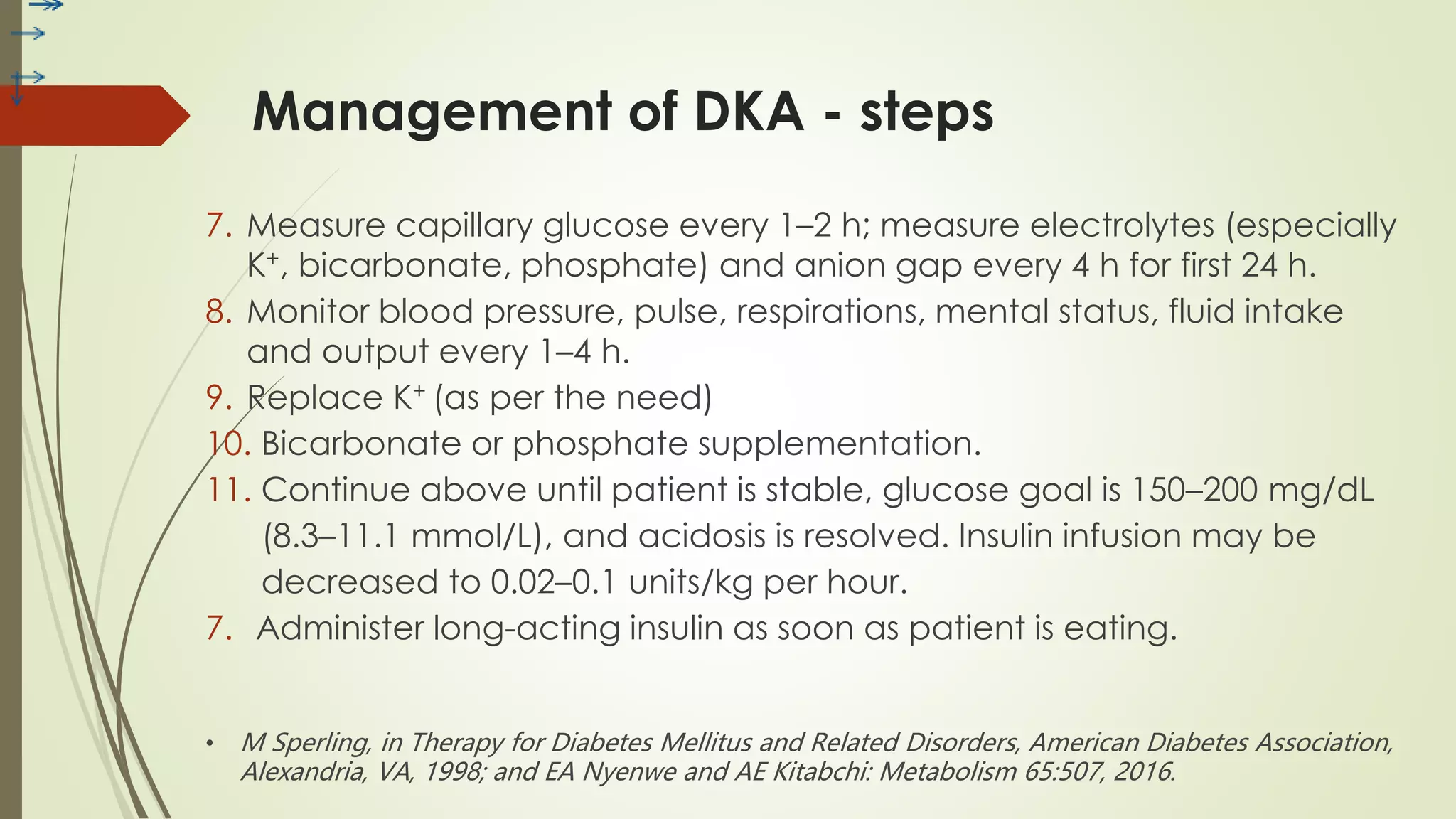
7. Measure capillary glucose every 1–2 h; measure electrolytes (especially
K+, bicarbonate, phosphate) and anion gap every 4 h for first 24 h.
8. Monitor blood pressure, pulse, respirations, mental status, fluid intake
and output every 1–4 h.
9. Replace K+ (as per the need)
10. Bicarbonate or phosphate supplementation.
11. Continue above until patient is stable, glucose goal is 150–200 mg/dL
(8.3–11.1 mmol/L), and acidosis is resolved. Insulin infusion may be
decreased to 0.02–0.1 units/kg per hour.
7. Administer long-acting insulin as soon as patient is eating.
• M Sperling, in Therapy for Diabetes Mellitus and Related Disorders, American Diabetes Association,
Alexandria, VA, 1998; and EA Nyenwe and AE Kitabchi: Metabolism 65:507, 2016.
Management of DKA - steps
Treatment of DKA : (Milwaukee DKA Protocol - modified)
TIME THERAPY COMMENT
1ST Hour
• 10-20 mL/kg IV bolus 0.9% NaCl or R/L • Quick volume expansion;
• may be repeated.
• NPO.
• Monitor I/O, neurologic status.
2nd Hour
until DKA
resolved
• 0.45% NaCl: plus Insulin drip at 0.05 to
0.10 units/kg/hr
• 20 mEq/L K Phos and
• 20 mEq/L K Ac
• 5% glucose if blood sugar < 250 mg/dL
(14 mmol/L)
• IV rate = 85 mL /kg + maintenance − bolus
23 hrs
• If K < 3 mEq/L, give 0.5-1.0 mEq/kg as oral
K solution or increase IV K to 80 mEq/L
Variable Oral intake with subcutaneous insulin
No emesis; HCO3 ≥16 mEq/L; normal
electrolytes
# Maintenance (24 hr) =
100 mL/kg (for the first 10 kg) + 50 mL/kg (for the second 10 kg) + 25 mL/kg (for all remaining kg)
Treatment of DKA : I V Fluids
Isotonic fluids 0.9 N S 1-2 L over 1-2 hrs
(till plasma volume is replaced)
0.45 N S at 200-500 ml/hr
till blood glucose 300 mg/dL
Add 5% dextrose when BG is around 250 – 300 mg/dL
OR
10 % dextrose if BG is <180 mg/dL
Treatment of DKA : Potassium replacement
Total body potassium may be deficit, but at
presentation S Pot may be normal, or high.
Potassium should never be given until S
Potassium levels obtained
As acidosis is corrected, K+ is driven back
into cells and Serum K+ may fall in spite of
replacement.
Potassium 20-40 mEq/L (as KCl pr KPO4)
added in IV fluids once urine is established
and serum potassium is < 5.5 mEq/L
• K+ = > 5.5 mEq/l; no supplemental is required
• K+ = 4 - 5 mEq/l; 20 mEq/L of replacement fluid
• K+ = 3 - 4 mEq/l; 40 mEq/L of replacement fluid
(or if Soda bicarb is being administered)
1
2
3
4
Treatment of DKA : Sodium replacement
The initial serum sodium is usually normal or low because of the osmolar dilution
of hyperglycemia and the effect of an elevated sodium-free lipid fraction
“True,” serum sodium for any given glucose level above 100 mg/dL (5.6 mmol/L)
is calculated as follows:
[Na+] + (1.6 mEq/L Na+ for every 100 mg/dL glucose in excess of 100)
If the corrected value is > 150 mmol/L, severe hypernatremic dehydration may
be present and may require slower fluid replacement.
Declining sodium may indicate excessive free water accumulation and
increased risk of cerebral edema.
1
2
3
4
Start an intravenous insulin infusion 1-2
hours after beginning intravenous fluid
therapy
Do not give bolus doses of
intravenous insulin
Low insulin infusion rates
(0.02-0.05 units/kg/hr)
are usually sufficien
Regular
Insulin
Once rehydration fluids and
potassium are running, blood
glucose levels will start to fall.
Treatment of DKA - Insulin
3
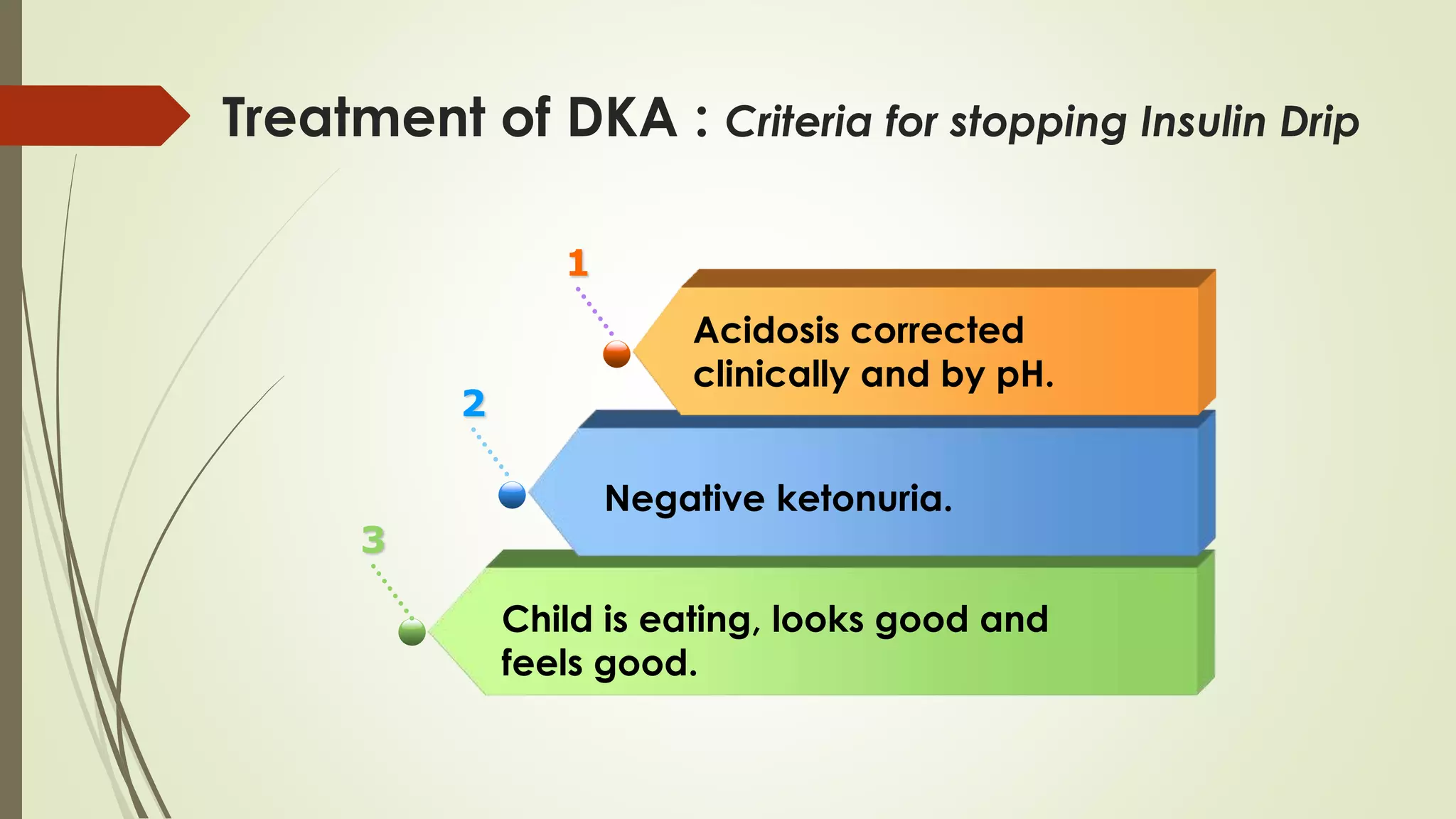
Child is eating, looks good and
feels good.
2
Negative ketonuria.
1
Acidosis corrected
clinically and by pH.
Treatment of DKA : Criteria for stopping Insulin Drip
- Bicarbonate: should NOT be used routinely…
… may be considered
01
02
03
If pH does not improve
Arterial pH remains below <7
(venous pH < 6.9)
Serum bicarbonate < 5 to 10 mEq/L
BUT
Discontinue once pH is > 7.1 and S bicarbonate >10 mEq/L
Bicarbonate
DKA - Monitoring
 Fluid balance: Intake/output hourly to adjust IV fluids every
4 hours
 Venous pH, S HCO3 and S. ketones : every 2 hours initially,
less frequently later. If acidosis severe and bicarbonate is
being given, hourly pH is indicated.
 Bedside blood sugar : hourly
 S Electrolytes: every 2 hours, and if stable, every 4 hours
1. Dehydration
2. Hypotension / shock
3. Metabolic acidosis (Non-anion gap hyperchloremic)
4. Hypokalemia / hyperkalemia
5. Hypoglycemia
6. Aspiration pneumonia
7. Sepsis
8. Acute tubular necrosis
9. Stroke
10. Cerebral edema
DKA - Complications
• ~ 1% of childhood DKA and is associated with
high mortality and neurological morbidity
• Attributed it to cellular swelling as a result of rapid
osmolar changes occurring during IV infusions.
• Presents as gradual deterioration and worsening of
conscious level OR
• Gradual general improvement followed by sudden
neurological deterioration
Cerebral edema
Cerebral edema – Clinical Features
 Decreased sensorium
 Sudden and severe headache
 Incontinence
 Persistent vomiting
 Disorientation
 Agitation
 Ophthalmoplegia
 Pupillary changes
 Papilledema
 Posturing; Seizure
Mannitol 20% IV ; Dose: 0.5-1 g/kg
infused over 30 minutes, which can
be repeated after 1 hour
Reduce IV fluid rate
to 70% maintenance
3% hypertonic saline is 5-10 mL/kg,
infused over 30 min, which can be
repeated after 1 hr..
Elevate head end of
bed to 45 degrees
Cerebral edema – Management
Urgent recognition
Consider intubation &
controlled hyperventilation
(vasoconstrictor effect of
hypercarbia)
Oral glycerol
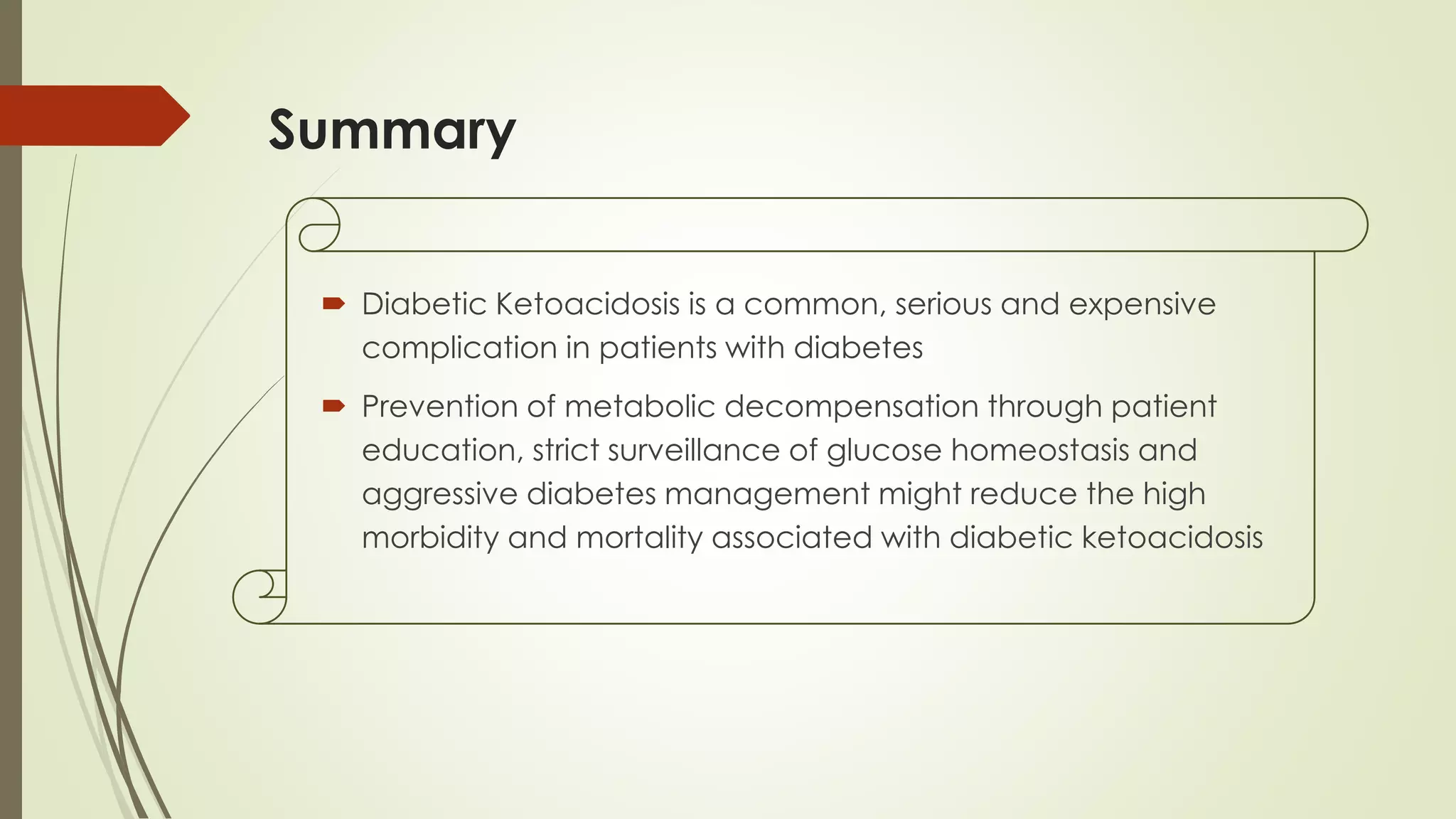
Summary
 Diabetic Ketoacidosis is a common, serious and expensive
complication in patients with diabetes
 Prevention of metabolic decompensation through patient
education, strict surveillance of glucose homeostasis and
aggressive diabetes management might reduce the high
morbidity and mortality associated with diabetic ketoacidosis
Thank You
Dr. C.S.N.Vittal

Dibetic Ketoacidosis in Children

  • 1.
  • 2.
    Occurs in patientswith type 1 diabetes more frequently Usually precipitated by infection, stress and trauma, and conditions associated with increased insulin requirement and higher level of counter regulatory hormones. Diabetic Ketoacidosis Diabetic ketoacidosis (DKA) is an acute, major, life threatening complication of diabetes
  • 3.
    DKA - Definition Astate of absolute or relative insulin deficiency resulting in hyperglycemia and an accumulation of ketoacids in the blood with subsequent metabolic acidosis
  • 4.
    DKA – Severity ParameterNormal Mild Moderate Severe Bicarbonate (mEq/L) 20 - 28 < 20 < 10 < 5 pH (venous) 7.35 - 7.45 < 7.3 < 7.2 < 7.1 Clinical No change Oriented, alert but fatigued Kussmaul respirations; oriented but sleepy; arousable Kussmaul or depressed respirations; sleepy to depressed sensorium to coma • Severe hypernatremia (corrected Na >150 mEq/L) would also be classified as severe diabetic ketoacidosis • P. Raghupathy; Diabetic ketoacidosis in children and adolescents Indian J Endocrinol Metab. 2015 Apr; 19(Suppl 1): S55–S57.
  • 5.
    DKA - Physiologicalbackground • To develop DKA there must be both a relative lack of insulin and a relative overactivity of counter-regulatory hormones Insulin (Anabolic) Counterregulatory hormones (Catabolic) • Glucose : used for energy substrate OR stored as glycogen • Protein : acceleration of protein formation • Fats: stored as triglycerides • Glycogenolysis • Proteolysis, Gluconeogenesis • Lypolysis – FFAs & ketone bodies
  • 6.
    DKA – Whento suspect? New onset diabetes Type ! (20-40%) Inadequate insulin treatment Non compliance Acute illness / infection Drugs (Olanzapine, Lithium)
  • 7.
    DKA - Pathophysiology • Threemajor pathophysiologic syndromes 1. Metabolic acidosis 2. Electrolyte disturbance 3. Osmotic diuresis
  • 8.
  • 9.
    DKA – Pathophysiology– Severe insulinopenia results in a physiologic cascade of events in 3 general pathways: • osmotic diuresis • loss of fluid and electrolytes, dehydration • activation of the renin– angiotensin – aldosterone axis - accelerated K+ loss. • risk of cerebral edema Excessive glucose production & reduced glucose utilization > raises serum glucose. • cellular losses of sodium, potassium, and phosphate Increased catabolic processes • ketoacids accumulate, • buffer systems are depleted, and • metabolic acidosis Increased release of free fatty acids 01 02 03
  • 10.
    With prolonged illness& severe DKA… …losses from body 10-13 mEq/kg of Sodium1 5-6 mEq/kg of Potassium2 4-5 mEq/kg of Phosphate3 The combined effects of Serum hyperosmolarity, Dehydration, and Acidosis a Result in increased osmolarity in brain cells clinically manifests as an altered consciousness.
  • 11.
    Hyperkalemia  Hyperkalemia causesacidosis  Acidosis causes hyperkalemia HYPERKALEMIA H+ H+ H+ H+ H+ H+ H+ H+ K+ K+ K+ K+ K+ K+ K+ K+ ACIDOSIS
  • 12.
    Cellular-Extracellular Shifts  Insulindeficiency predisposes an individual to hyperkalemia  Cellular uptake of K+ ions is enhanced by insulin, aldosterone and epinephrine  Provides protection from extracellular K+ overload Insulin K+ K+ K+ K+ K+ K+ Click to view animation C E L L
  • 13.
    DKA – Potassium •Compartmental shift • Osmotic diuresis • Kaliuretic effect of hyperaldosteronism • The compartmental shift of K+ inside to outside the cell • Lack of insulin (catabolic predominance) • Acidosis • 3-6 mEq/kg 1 2 3 4 K+
  • 14.
    DKA – Sodium Depletionsecondary to urinary losses / vomiting Rapid decrease in S. Sodium > cerebral edema Hyperlipidemia displaces > fictitiously lowering sodium values. h Glucose a i Sodium 1 2 3 Na+
  • 15.
    DKA – ClinicalFeatures Symptoms: • Nausea / Vomiting (due to b hydroxybutyrate) • Polydipsia / Polyuria / Nocturia • Abdominal pain • Shortness of breath (acidosis) • Weakness (due to decreased tissue perfusion) • Fruity breath odour of ketotic patients. Signs: • Dehydration • Hypotension • Tachycardia • Tachypnea / Kussmaul respirations • Acetone odour of breath • Abdominal tenderness • Lethargy / altered level of consciousness / possibly coma
  • 16.
    DKA – OtherLabs & Dx  Serum amylase - may be due to pancreatitis.  Serum Creatinine may be falsely elevated due to interference by ketones in the autoanalyzer methodology.  Blood Urea Nitrogen (BUN) may be elevated.  Complete Blood Counts: may reveal possible infectious etiology  CSF study,  CXR to rule out other causes for the clinical condition.
  • 17.
    Intervene if complicationsoccur Replace electrolyte losses Restore normal acid-base balance Arrest ketogenesis Restore perfusion Management of DKA Therapy must address both the initiating event in this cascade (insulinopenia) and the subsequent physiologic disruptions
  • 18.
    Management of DKA- steps 1. Confirm diagnosis (↑ plasma glucose, positive serum ketones, metabolic acidosis). 2. Admit to hospital; intensive care setting may be necessary for frequent monitoring or if pH <7.00 or unconscious. 3. Assess:  Serum electrolytes (K+, Na+, Mg2+, Cl–, bicarbonate, phosphate)  Acid-base status—pH, HCO3 –, Pco2, β-hydroxybutyrate  Renal function (creatinine, urine output) 4. Replace fluids: 1st hour ?, remaining 23 hours ?- calculations 5. Administer short-acting regular insulin: 6. Assess patient: What precipitated the episode (noncompliance, infection, trauma, pregnancy, infarction, cocaine)? Initiate appropriate workup for precipitating event (cultures, CXR, ECG).
  • 19.
    7. Measure capillaryglucose every 1–2 h; measure electrolytes (especially K+, bicarbonate, phosphate) and anion gap every 4 h for first 24 h. 8. Monitor blood pressure, pulse, respirations, mental status, fluid intake and output every 1–4 h. 9. Replace K+ (as per the need) 10. Bicarbonate or phosphate supplementation. 11. Continue above until patient is stable, glucose goal is 150–200 mg/dL (8.3–11.1 mmol/L), and acidosis is resolved. Insulin infusion may be decreased to 0.02–0.1 units/kg per hour. 7. Administer long-acting insulin as soon as patient is eating. • M Sperling, in Therapy for Diabetes Mellitus and Related Disorders, American Diabetes Association, Alexandria, VA, 1998; and EA Nyenwe and AE Kitabchi: Metabolism 65:507, 2016. Management of DKA - steps
  • 20.
    Treatment of DKA: (Milwaukee DKA Protocol - modified) TIME THERAPY COMMENT 1ST Hour • 10-20 mL/kg IV bolus 0.9% NaCl or R/L • Quick volume expansion; • may be repeated. • NPO. • Monitor I/O, neurologic status. 2nd Hour until DKA resolved • 0.45% NaCl: plus Insulin drip at 0.05 to 0.10 units/kg/hr • 20 mEq/L K Phos and • 20 mEq/L K Ac • 5% glucose if blood sugar < 250 mg/dL (14 mmol/L) • IV rate = 85 mL /kg + maintenance − bolus 23 hrs • If K < 3 mEq/L, give 0.5-1.0 mEq/kg as oral K solution or increase IV K to 80 mEq/L Variable Oral intake with subcutaneous insulin No emesis; HCO3 ≥16 mEq/L; normal electrolytes # Maintenance (24 hr) = 100 mL/kg (for the first 10 kg) + 50 mL/kg (for the second 10 kg) + 25 mL/kg (for all remaining kg)
  • 21.
    Treatment of DKA: I V Fluids Isotonic fluids 0.9 N S 1-2 L over 1-2 hrs (till plasma volume is replaced) 0.45 N S at 200-500 ml/hr till blood glucose 300 mg/dL Add 5% dextrose when BG is around 250 – 300 mg/dL OR 10 % dextrose if BG is <180 mg/dL
  • 22.
    Treatment of DKA: Potassium replacement Total body potassium may be deficit, but at presentation S Pot may be normal, or high. Potassium should never be given until S Potassium levels obtained As acidosis is corrected, K+ is driven back into cells and Serum K+ may fall in spite of replacement. Potassium 20-40 mEq/L (as KCl pr KPO4) added in IV fluids once urine is established and serum potassium is < 5.5 mEq/L • K+ = > 5.5 mEq/l; no supplemental is required • K+ = 4 - 5 mEq/l; 20 mEq/L of replacement fluid • K+ = 3 - 4 mEq/l; 40 mEq/L of replacement fluid (or if Soda bicarb is being administered) 1 2 3 4
  • 23.
    Treatment of DKA: Sodium replacement The initial serum sodium is usually normal or low because of the osmolar dilution of hyperglycemia and the effect of an elevated sodium-free lipid fraction “True,” serum sodium for any given glucose level above 100 mg/dL (5.6 mmol/L) is calculated as follows: [Na+] + (1.6 mEq/L Na+ for every 100 mg/dL glucose in excess of 100) If the corrected value is > 150 mmol/L, severe hypernatremic dehydration may be present and may require slower fluid replacement. Declining sodium may indicate excessive free water accumulation and increased risk of cerebral edema. 1 2 3 4
  • 24.
    Start an intravenousinsulin infusion 1-2 hours after beginning intravenous fluid therapy Do not give bolus doses of intravenous insulin Low insulin infusion rates (0.02-0.05 units/kg/hr) are usually sufficien Regular Insulin Once rehydration fluids and potassium are running, blood glucose levels will start to fall. Treatment of DKA - Insulin
  • 25.
    3 Child is eating,looks good and feels good. 2 Negative ketonuria. 1 Acidosis corrected clinically and by pH. Treatment of DKA : Criteria for stopping Insulin Drip
  • 26.
    - Bicarbonate: shouldNOT be used routinely… … may be considered 01 02 03 If pH does not improve Arterial pH remains below <7 (venous pH < 6.9) Serum bicarbonate < 5 to 10 mEq/L BUT Discontinue once pH is > 7.1 and S bicarbonate >10 mEq/L Bicarbonate
  • 27.
    DKA - Monitoring Fluid balance: Intake/output hourly to adjust IV fluids every 4 hours  Venous pH, S HCO3 and S. ketones : every 2 hours initially, less frequently later. If acidosis severe and bicarbonate is being given, hourly pH is indicated.  Bedside blood sugar : hourly  S Electrolytes: every 2 hours, and if stable, every 4 hours
  • 28.
    1. Dehydration 2. Hypotension/ shock 3. Metabolic acidosis (Non-anion gap hyperchloremic) 4. Hypokalemia / hyperkalemia 5. Hypoglycemia 6. Aspiration pneumonia 7. Sepsis 8. Acute tubular necrosis 9. Stroke 10. Cerebral edema DKA - Complications
  • 29.
    • ~ 1%of childhood DKA and is associated with high mortality and neurological morbidity • Attributed it to cellular swelling as a result of rapid osmolar changes occurring during IV infusions. • Presents as gradual deterioration and worsening of conscious level OR • Gradual general improvement followed by sudden neurological deterioration Cerebral edema
  • 30.
    Cerebral edema –Clinical Features  Decreased sensorium  Sudden and severe headache  Incontinence  Persistent vomiting  Disorientation  Agitation  Ophthalmoplegia  Pupillary changes  Papilledema  Posturing; Seizure
  • 31.
    Mannitol 20% IV; Dose: 0.5-1 g/kg infused over 30 minutes, which can be repeated after 1 hour Reduce IV fluid rate to 70% maintenance 3% hypertonic saline is 5-10 mL/kg, infused over 30 min, which can be repeated after 1 hr.. Elevate head end of bed to 45 degrees Cerebral edema – Management Urgent recognition Consider intubation & controlled hyperventilation (vasoconstrictor effect of hypercarbia) Oral glycerol
  • 32.
    Summary  Diabetic Ketoacidosisis a common, serious and expensive complication in patients with diabetes  Prevention of metabolic decompensation through patient education, strict surveillance of glucose homeostasis and aggressive diabetes management might reduce the high morbidity and mortality associated with diabetic ketoacidosis
  • 33.