Bronze baby
syndrome
INTRODUCTION
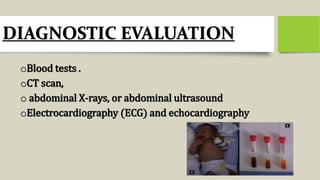
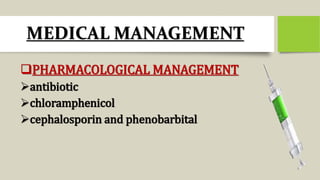
Bronze Baby Syndrome Intense grey-brown discoloration
of the skin, serum, and urine, especially in premature
infants; when phototherapy was used to reduce hyper-
bilirubinemia . Pre-existing hepatic disease is suspected
as a cause of the jaundice and may have prevented the
biliary excretion of the photo oxidation products of
bilirubin; their retention resulted in the bronze
discoloration
DEFINITION
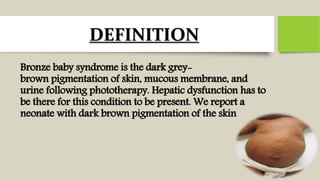
Bronze baby syndrome is the dark grey-
brown pigmentation of skin, mucous membrane, and
urine following phototherapy. Hepatic dysfunction has to
be there for this condition to be present. We report a
neonate with dark brown pigmentation of the skin
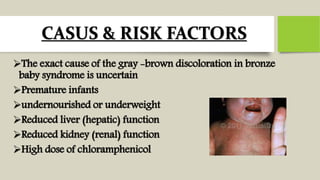
CASUS & RISK FACTORS
The exact cause of the gray -brown discoloration in bronze
baby syndrome is uncertain
Premature infants
undernourished or underweight
Reduced liver (hepatic) function
Reduced kidney (renal) function
High dose of chloramphenicol
Pathogenesis
• Proposed mechanisms including photodestruction of
porphyrin and deposition in the skin or a deposition of a
photo-isomer of bilirubin the skin
Clinical manifestation
• Dark gray - brown discoloration of the entire skin surface, fading
approximately 6 weeks after stopping phototherapy
• Fussiness
• Poor feeding
• Weakness
• Vomiting
• Changes in mental status such as lethargy and less alertness
(obtundation)
• Pale appearance (pallor)
CONTI…
• Ashen-gray colour of the skin
• Abdominal tenderness
• Abdominal distention
• Hypotension (low blood pressure)
• Cyanosis causing blue lips, blue nails and bluish skin
• Respiratory distress
• Low body temperature
DIAGNOSTIC EVALUATION
oBlood tests .
oCT scan,
o abdominal X-rays, or abdominal ultrasound
oElectrocardiography (ECG) and echocardiography
MANAGEMENT
MEDICAL MANAGEMENT
PHARMACOLOGICAL MANAGEMENT
antibiotic
chloramphenicol
cephalosporin and phenobarbital
CONTI…
NON PHARMACOLOGICAL MANAGEMENT
Exchange Transfusion: Here, a major part of your baby’s blood
will be removed and replaced with fresh blood group matched
blood or plasma using a catheter.
Haemodialysis: With this, the toxins are removed from your
baby’s bloodstream and a balance is achieved in potassium and
sodium levels to stabilise the baby’s blood pressure
Oxygen therapy
PREVENTION
Ante-natal screening to detect Rh iso -immunization &
prompt administration of Anti D after first obstetric event.
Ensure adequate breast feeding.
 Educate parent about danger signs to ensure immediate
checkup.
Follow-up high risk babies( large cephalohematoma, family
history of jaundice) for 2-3 days of discharge
FOLLOWUP
oBabies with serum bilirubin>20 mg/dl & those
who required ET should be kept under follow-
up in high-risk clinic for neurodevelopmental
outcome.
oHearing assessment should be done at 3months
of age.
CONCLUSION
Bronze baby syndrome (BBS) is an extremely rare
dyschromia occurring in neonates with a raised
conjugated bilirubin level under phototherapy …
Bronze baby syndrome

Bronze baby syndrome

  • 1.
  • 2.
    INTRODUCTION Bronze Baby SyndromeIntense grey-brown discoloration of the skin, serum, and urine, especially in premature infants; when phototherapy was used to reduce hyper- bilirubinemia . Pre-existing hepatic disease is suspected as a cause of the jaundice and may have prevented the biliary excretion of the photo oxidation products of bilirubin; their retention resulted in the bronze discoloration
  • 3.
    DEFINITION Bronze baby syndromeis the dark grey- brown pigmentation of skin, mucous membrane, and urine following phototherapy. Hepatic dysfunction has to be there for this condition to be present. We report a neonate with dark brown pigmentation of the skin
  • 4.
    CASUS & RISKFACTORS The exact cause of the gray -brown discoloration in bronze baby syndrome is uncertain Premature infants undernourished or underweight Reduced liver (hepatic) function Reduced kidney (renal) function High dose of chloramphenicol
  • 5.
    Pathogenesis • Proposed mechanismsincluding photodestruction of porphyrin and deposition in the skin or a deposition of a photo-isomer of bilirubin the skin
  • 6.
    Clinical manifestation • Darkgray - brown discoloration of the entire skin surface, fading approximately 6 weeks after stopping phototherapy • Fussiness • Poor feeding • Weakness • Vomiting • Changes in mental status such as lethargy and less alertness (obtundation) • Pale appearance (pallor)
  • 7.
    CONTI… • Ashen-gray colourof the skin • Abdominal tenderness • Abdominal distention • Hypotension (low blood pressure) • Cyanosis causing blue lips, blue nails and bluish skin • Respiratory distress • Low body temperature
  • 8.
    DIAGNOSTIC EVALUATION oBlood tests. oCT scan, o abdominal X-rays, or abdominal ultrasound oElectrocardiography (ECG) and echocardiography
  • 9.
  • 10.
  • 11.
    CONTI… NON PHARMACOLOGICAL MANAGEMENT ExchangeTransfusion: Here, a major part of your baby’s blood will be removed and replaced with fresh blood group matched blood or plasma using a catheter. Haemodialysis: With this, the toxins are removed from your baby’s bloodstream and a balance is achieved in potassium and sodium levels to stabilise the baby’s blood pressure Oxygen therapy
  • 12.
    PREVENTION Ante-natal screening todetect Rh iso -immunization & prompt administration of Anti D after first obstetric event. Ensure adequate breast feeding.  Educate parent about danger signs to ensure immediate checkup. Follow-up high risk babies( large cephalohematoma, family history of jaundice) for 2-3 days of discharge
  • 13.
    FOLLOWUP oBabies with serumbilirubin>20 mg/dl & those who required ET should be kept under follow- up in high-risk clinic for neurodevelopmental outcome. oHearing assessment should be done at 3months of age.
  • 14.
    CONCLUSION Bronze baby syndrome(BBS) is an extremely rare dyschromia occurring in neonates with a raised conjugated bilirubin level under phototherapy …