By

D.V.RAMACHARI
MGIT






The name LD stands for Linz and Donawitz, these
were the two places in Austria where the process was
born.
This process is also called as Basic Oxygen Process.
LD process is a refining process which is carried out in
a LD vessel(or LD converter/BOF).






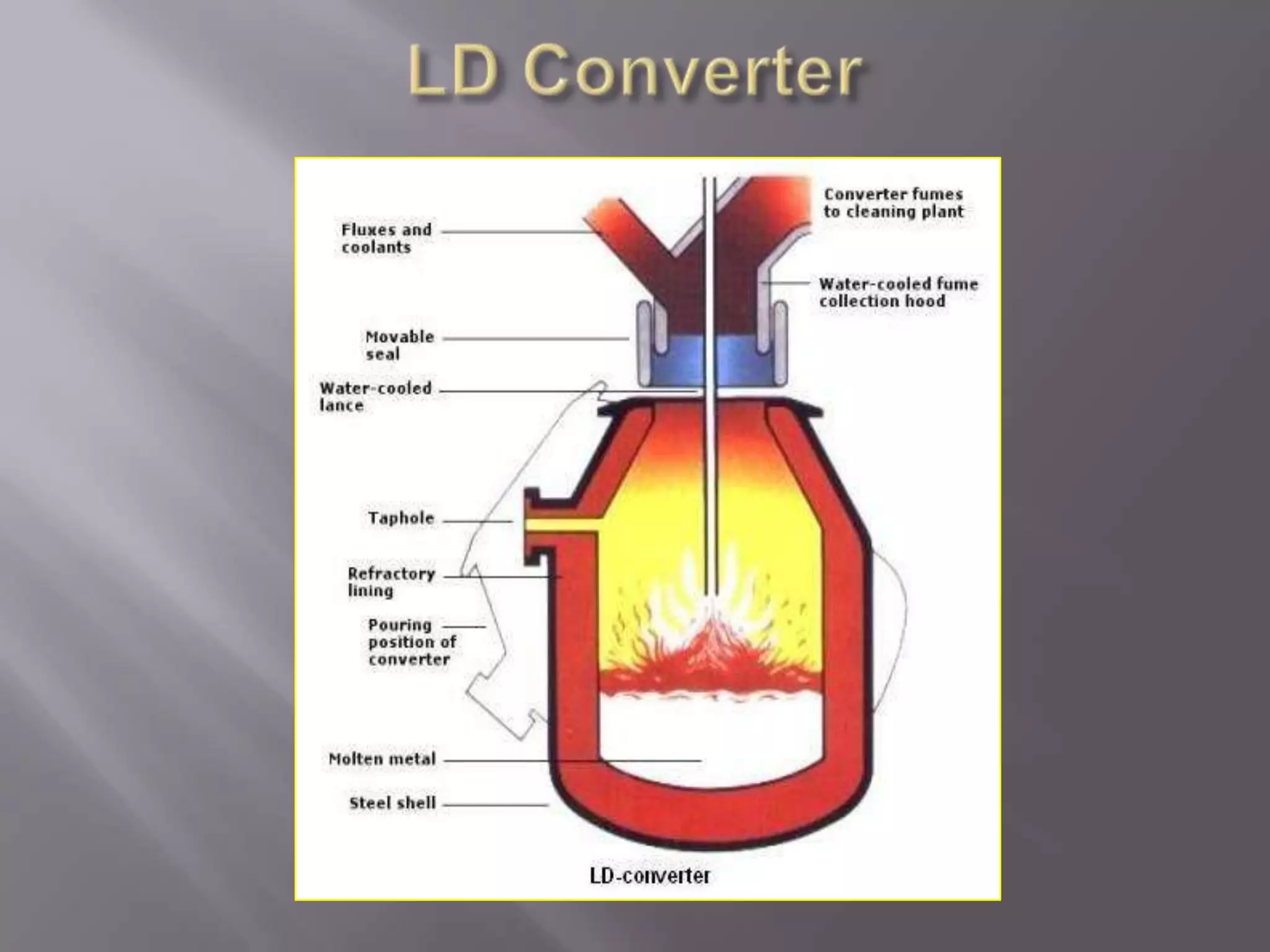
LD converter is a welded construction of non-ageing
steel plates (8mm), the height of the vessel varies from
7-10m.
L.D converter has a basic lining of magnesite bricks
(permanent lining) and Dolomite bricks (working
lining).
Oxygen lance (8-10m & 20-25cm dia) is made of
concentric steel tubes and the tip of the lance is made
with Copper.
1.

Charging

2.

Blowing

3.

Sampling

4.

Tapping

5.

Slag off
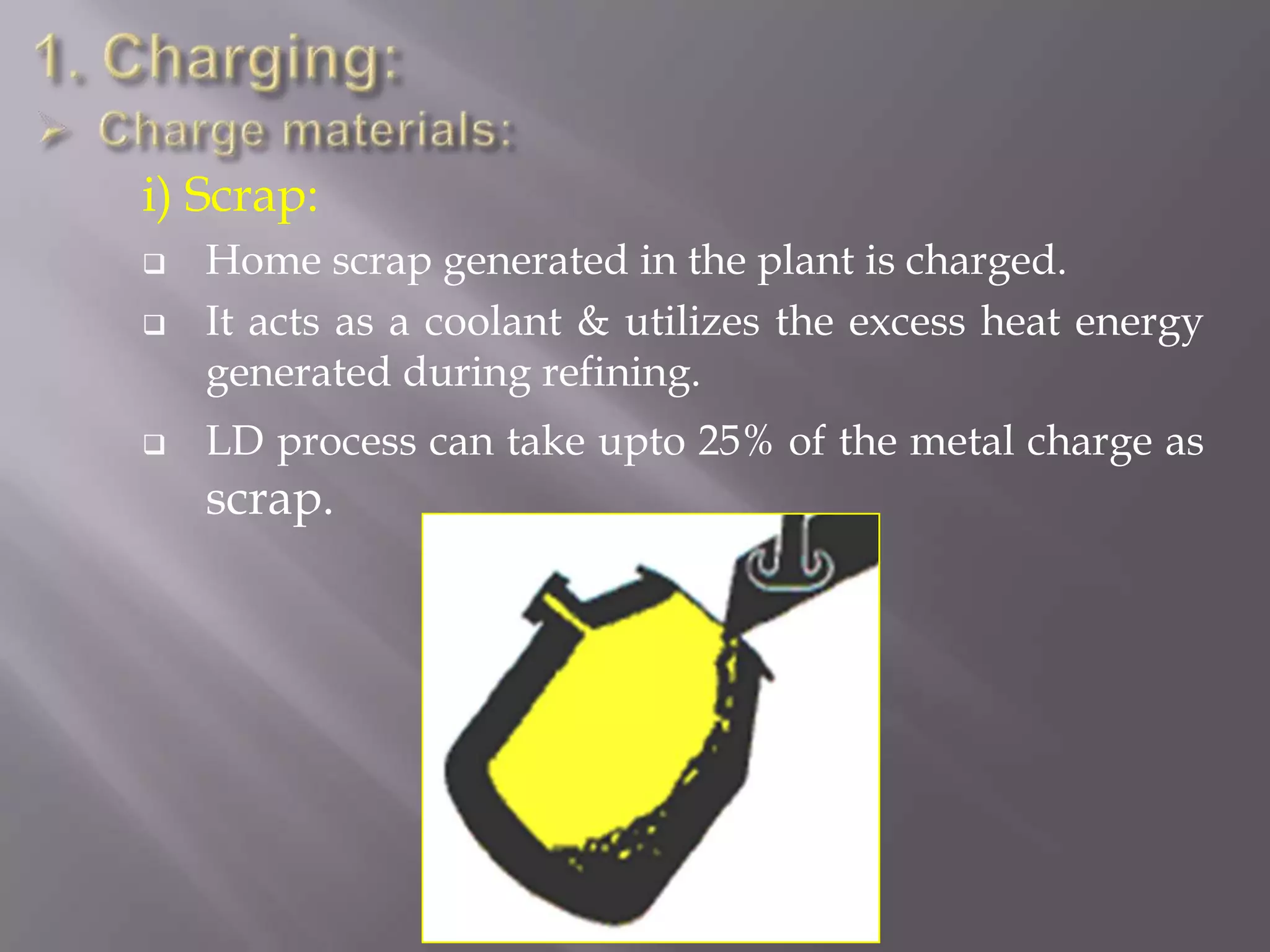
i) Scrap:


Home scrap generated in the plant is charged.
It acts as a coolant & utilizes the excess heat energy
generated during refining.



LD process can take upto 25% of the metal charge as



scrap.
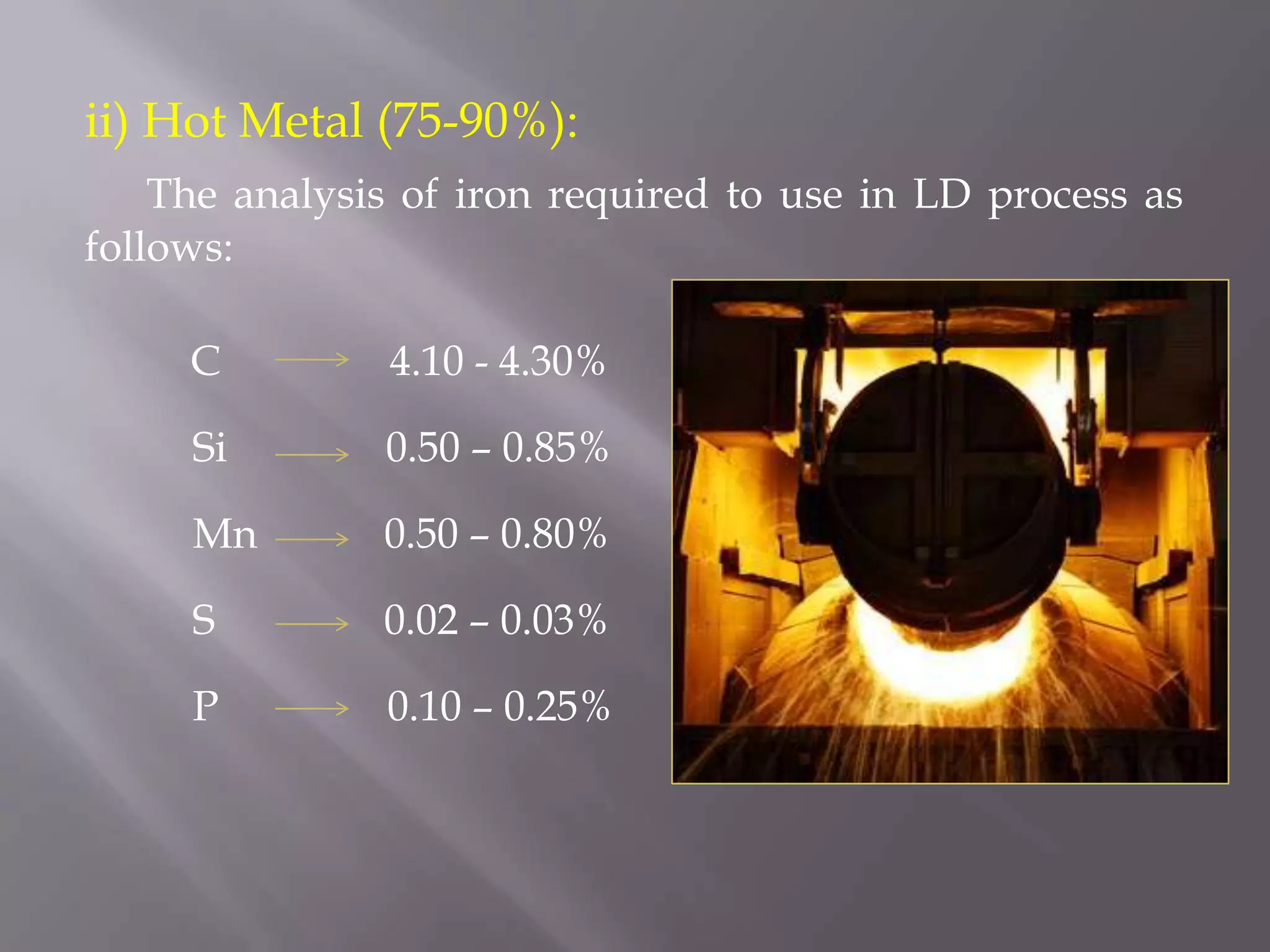
ii) Hot Metal (75-90%):
The analysis of iron required to use in LD process as
follows:

C

4.10 - 4.30%

Si

0.50 – 0.85%

Mn

0.50 – 0.80%

S

0.02 – 0.03%

P

0.10 – 0.25%
iii) Fluxes:


Lime (95+%CaO) and dolomite (58%CaO, 39%MgO)
are the two primary fluxes.

iv) Coolants:


Limestone, scrap, iron ore, and sponge iron are all
potential coolants that can be added to a heat that has
been overblown and is excessively hot.

v) Oxygen:


99.5% of pure oxygen is used as refining agent.








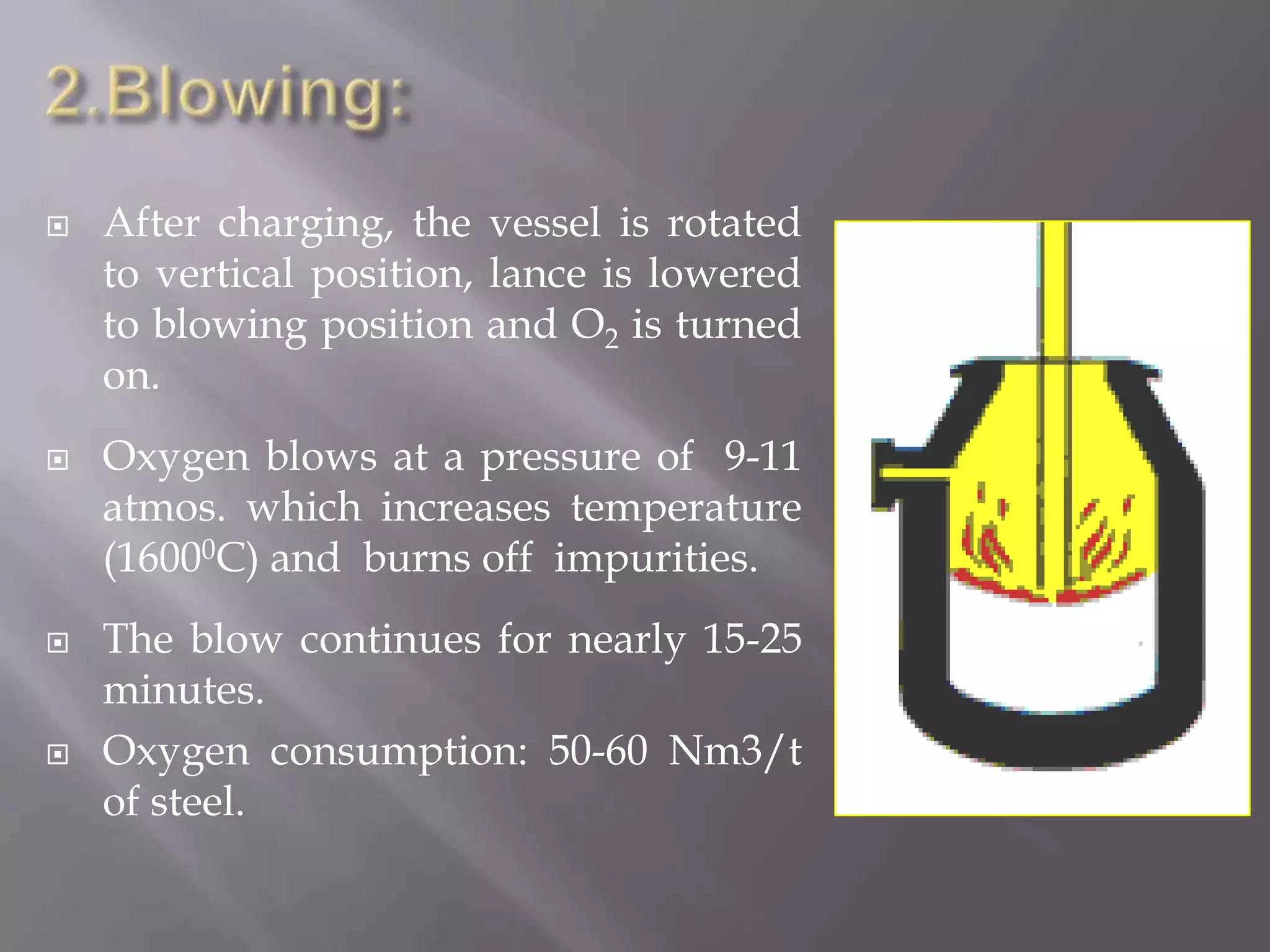
After charging, the vessel is rotated
to vertical position, lance is lowered
to blowing position and O2 is turned
on.
Oxygen blows at a pressure of 9-11
atmos. which increases temperature
(16000C) and burns off impurities.
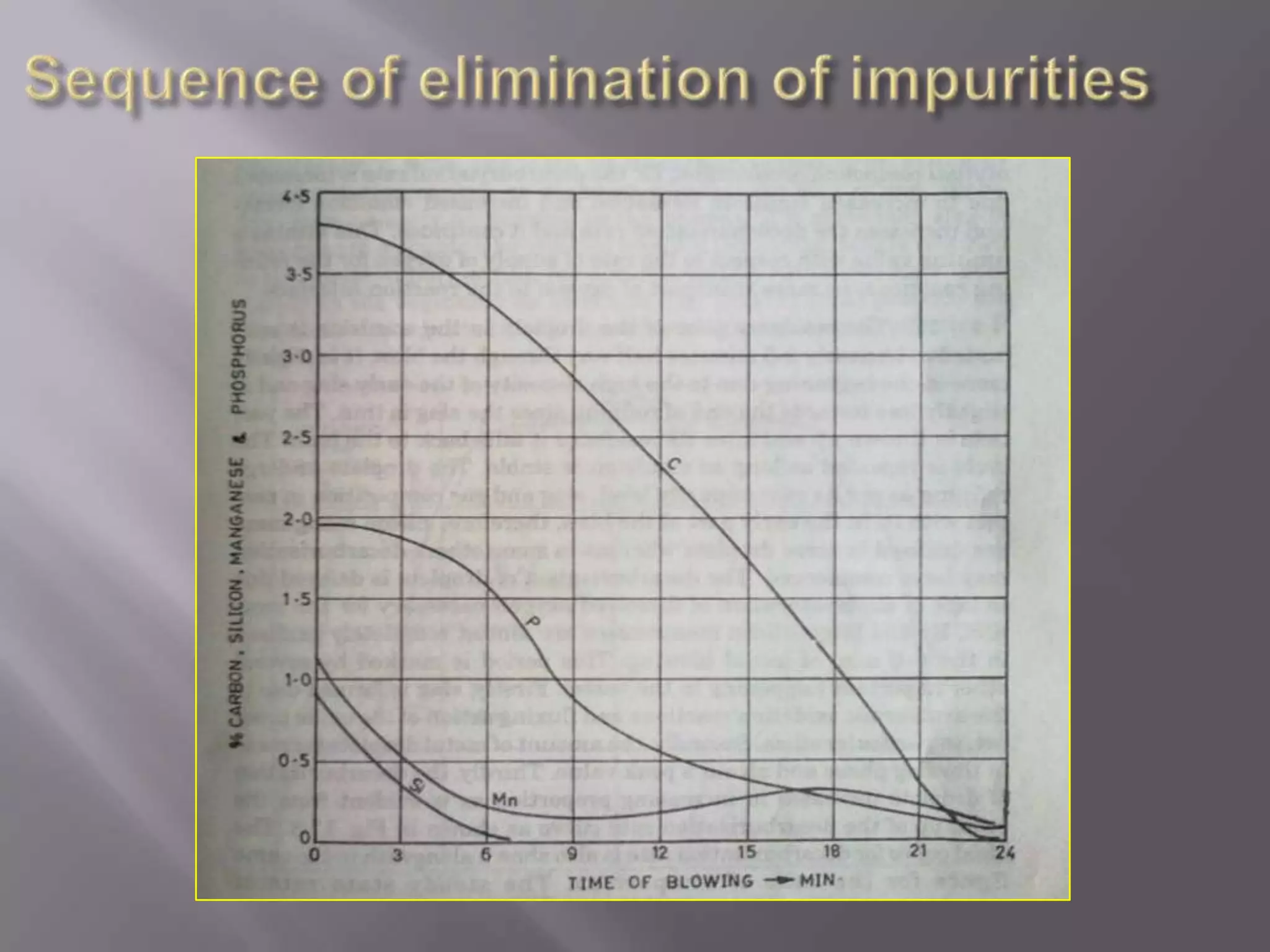
The blow continues for nearly 15-25
minutes.
Oxygen consumption: 50-60 Nm3/t
of steel.



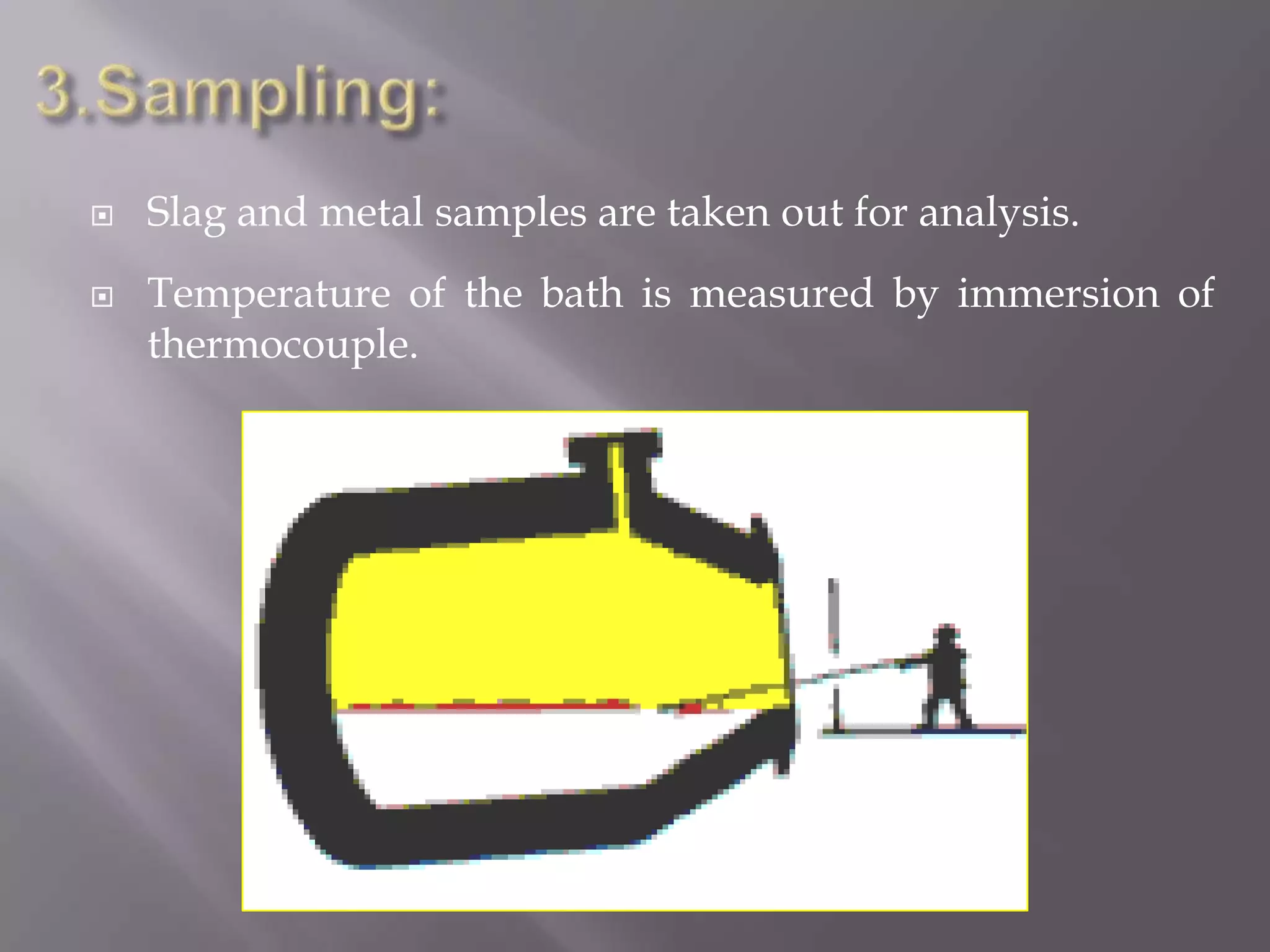
Slag and metal samples are taken out for analysis.
Temperature of the bath is measured by immersion of
thermocouple.






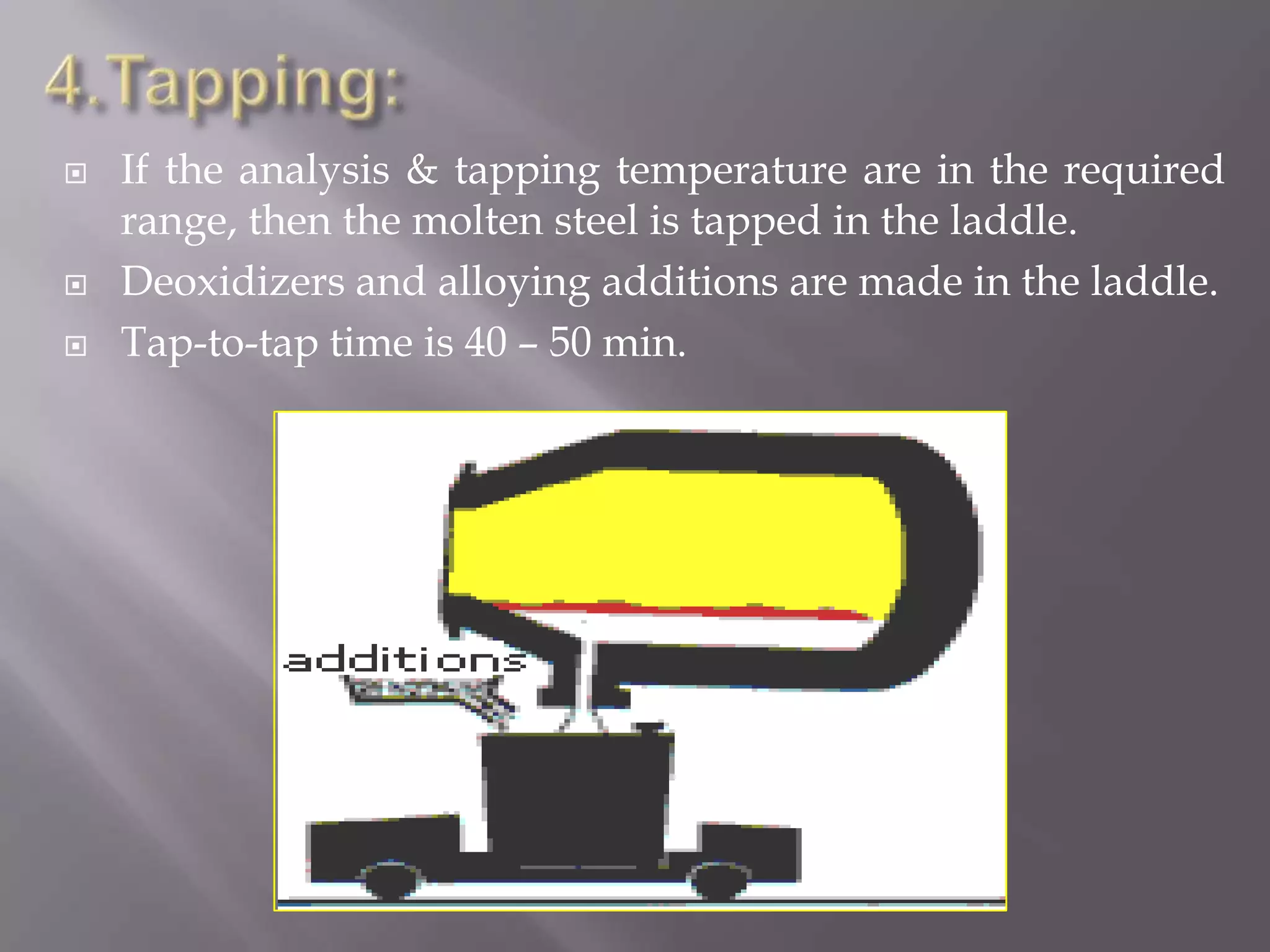
If the analysis & tapping temperature are in the required
range, then the molten steel is tapped in the laddle.
Deoxidizers and alloying additions are made in the laddle.
Tap-to-tap time is 40 – 50 min.




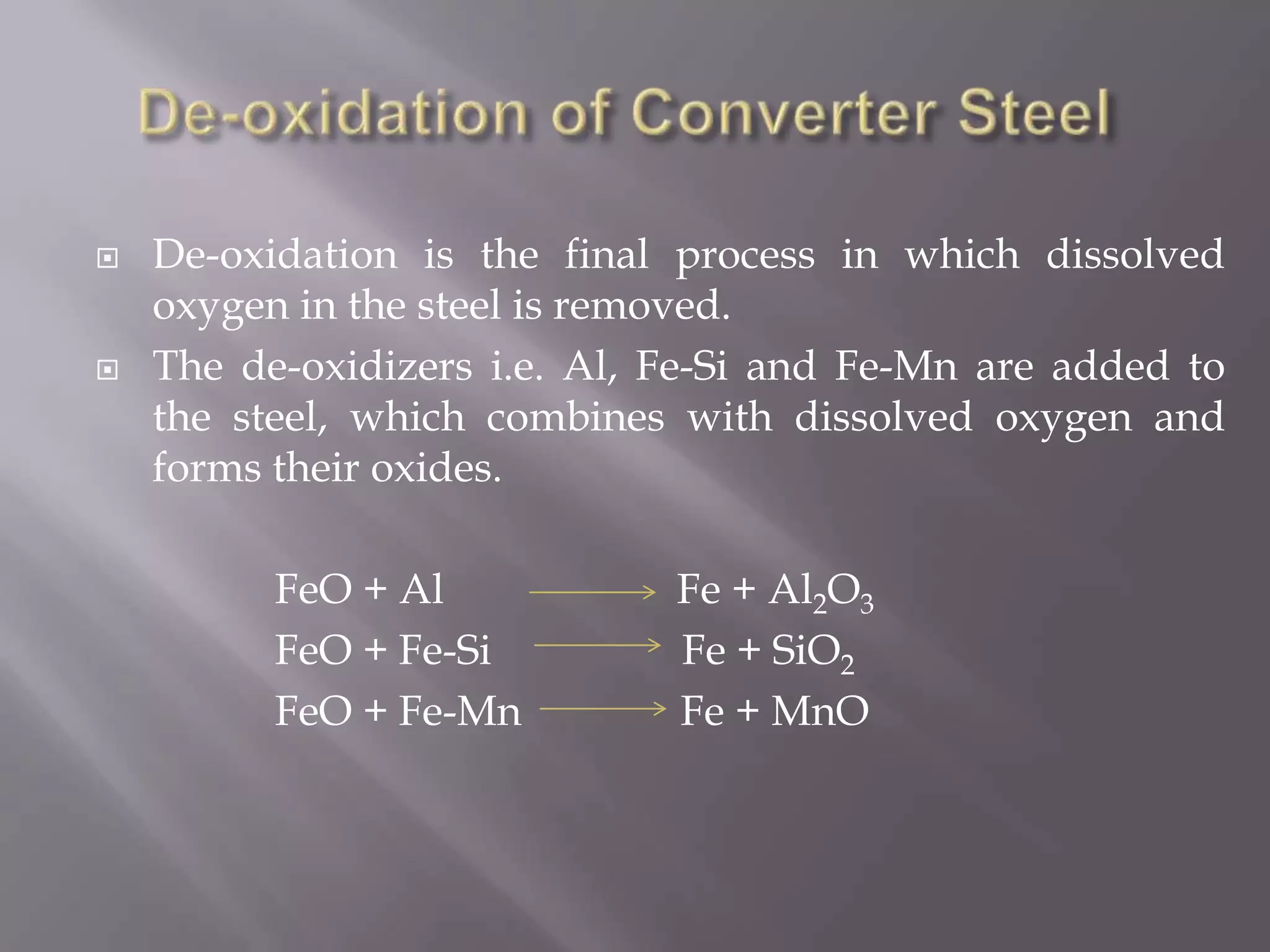
De-oxidation is the final process in which dissolved
oxygen in the steel is removed.
The de-oxidizers i.e. Al, Fe-Si and Fe-Mn are added to
the steel, which combines with dissolved oxygen and
forms their oxides.
FeO + Al
FeO + Fe-Si
FeO + Fe-Mn

Fe + Al2O3
Fe + SiO2
Fe + MnO


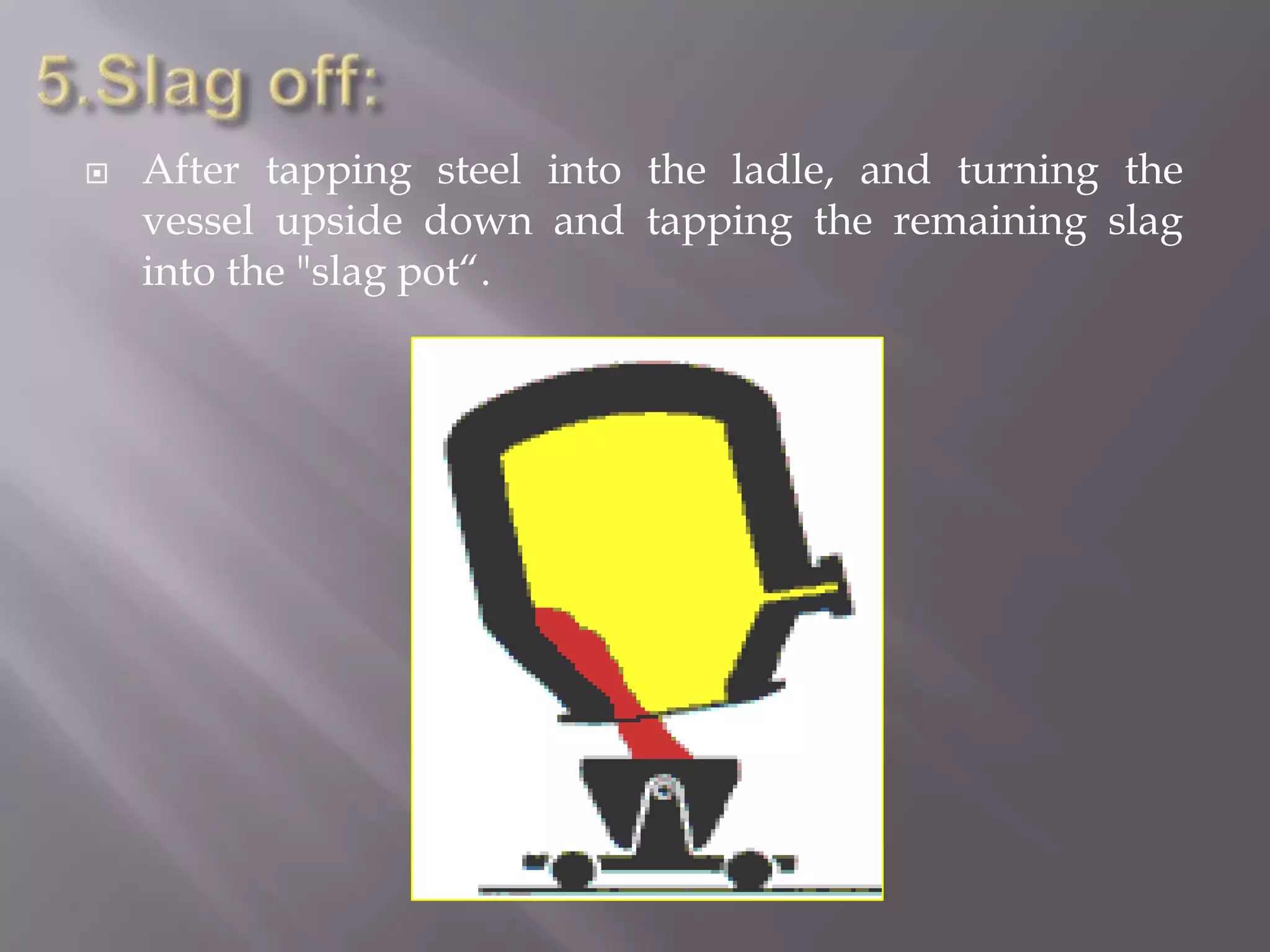
After tapping steel into the ladle, and turning the
vessel upside down and tapping the remaining slag
into the "slag pot“.
1.

[Fe]

+

[O] = (FeO)

2.

[C]

+

[O] = {CO}

3.

[Si]

+

2 [O] = (SiO2)

4.

[Mn]

+

[O] = (MnO)

5.

2[P]

+

5[O] = (P2O5)

6.

[FeS/MnS]

+

(CaO) = (CaS) + (FeO/MnO)


L-D process is about ten times faster than the open

hearth process.


Instead of air pure oxygen is used, this eliminates the
harmful effects of nitrogen.



It produces steel with low S & P content from raw
materials of ordinary quality.



It does not use an external source of heat or fuel.


The major disadvantage of L-D process is that the

charge must include a considerable quantity of molten
pig, thus limiting the amount of scrap that can be used.


Steel wastage due to splashes by oxygen lancing is

more.


Insufficient depth of penetration of O2, leads to
thermal gradient in the bath.
LD process

LD process

  • 1.
  • 2.
       The name LDstands for Linz and Donawitz, these were the two places in Austria where the process was born. This process is also called as Basic Oxygen Process. LD process is a refining process which is carried out in a LD vessel(or LD converter/BOF).
  • 4.
       LD converter isa welded construction of non-ageing steel plates (8mm), the height of the vessel varies from 7-10m. L.D converter has a basic lining of magnesite bricks (permanent lining) and Dolomite bricks (working lining). Oxygen lance (8-10m & 20-25cm dia) is made of concentric steel tubes and the tip of the lance is made with Copper.
  • 5.
  • 6.
    i) Scrap:  Home scrapgenerated in the plant is charged. It acts as a coolant & utilizes the excess heat energy generated during refining.  LD process can take upto 25% of the metal charge as  scrap.
  • 7.
    ii) Hot Metal(75-90%): The analysis of iron required to use in LD process as follows: C 4.10 - 4.30% Si 0.50 – 0.85% Mn 0.50 – 0.80% S 0.02 – 0.03% P 0.10 – 0.25%
  • 8.
    iii) Fluxes:  Lime (95+%CaO)and dolomite (58%CaO, 39%MgO) are the two primary fluxes. iv) Coolants:  Limestone, scrap, iron ore, and sponge iron are all potential coolants that can be added to a heat that has been overblown and is excessively hot. v) Oxygen:  99.5% of pure oxygen is used as refining agent.
  • 9.
        After charging, thevessel is rotated to vertical position, lance is lowered to blowing position and O2 is turned on. Oxygen blows at a pressure of 9-11 atmos. which increases temperature (16000C) and burns off impurities. The blow continues for nearly 15-25 minutes. Oxygen consumption: 50-60 Nm3/t of steel.
  • 10.
      Slag and metalsamples are taken out for analysis. Temperature of the bath is measured by immersion of thermocouple.
  • 11.
       If the analysis& tapping temperature are in the required range, then the molten steel is tapped in the laddle. Deoxidizers and alloying additions are made in the laddle. Tap-to-tap time is 40 – 50 min.
  • 12.
      De-oxidation is thefinal process in which dissolved oxygen in the steel is removed. The de-oxidizers i.e. Al, Fe-Si and Fe-Mn are added to the steel, which combines with dissolved oxygen and forms their oxides. FeO + Al FeO + Fe-Si FeO + Fe-Mn Fe + Al2O3 Fe + SiO2 Fe + MnO
  • 13.
     After tapping steelinto the ladle, and turning the vessel upside down and tapping the remaining slag into the "slag pot“.
  • 14.
    1. [Fe] + [O] = (FeO) 2. [C] + [O]= {CO} 3. [Si] + 2 [O] = (SiO2) 4. [Mn] + [O] = (MnO) 5. 2[P] + 5[O] = (P2O5) 6. [FeS/MnS] + (CaO) = (CaS) + (FeO/MnO)
  • 16.
     L-D process isabout ten times faster than the open hearth process.  Instead of air pure oxygen is used, this eliminates the harmful effects of nitrogen.  It produces steel with low S & P content from raw materials of ordinary quality.  It does not use an external source of heat or fuel.
  • 17.
     The major disadvantageof L-D process is that the charge must include a considerable quantity of molten pig, thus limiting the amount of scrap that can be used.  Steel wastage due to splashes by oxygen lancing is more.  Insufficient depth of penetration of O2, leads to thermal gradient in the bath.