
4/18/20203:43PM
1
SEMINAR TOPIC ON
BLAST FURNACE
PRESENTED BY:-
MR.MD.RAZA ANSARI
ASST.PROF. MECHANICAL ENGG.
MANOJ KUMAR SAHU REG.NO. 1101224146
INTRODUCTION(BF)
 The purpose of a blast furnace is to reduce
and convert iron oxides into liquid iron
called "hot metal".
 The blast furnace is a huge, steel stack lined
with refractory brick.
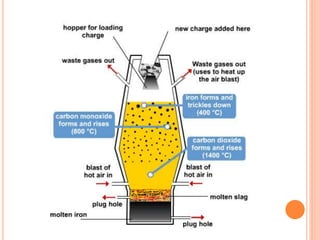
 Iron ore, coke and limestone are put into the
top, and preheated air is blown into the
bottom.
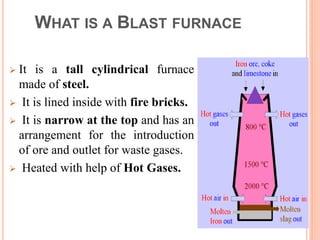
WHAT IS A BLAST FURNACE
The raw materials are:
 It is a tall cylindrical furnace
made of steel.
 It is lined inside with fire bricks.
 It is narrow at the top and has an
arrangement for the introduction
of ore and outlet for waste gases.
 Heated with help of Hot Gases.
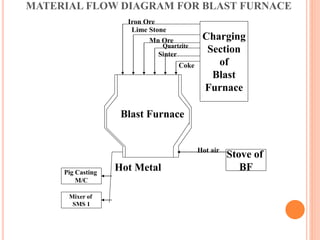
MATERIAL FLOW DIAGRAM FOR BLAST FURNACE
Stove of
BF
Charging
Section
of
Blast
Furnace
Pig Casting
M/C
Mixer of
SMS 1
Blast Furnace
Hot Metal
Iron Ore
Lime Stone
Mn Ore
Sinter
Coke
Hot air
Quartzite
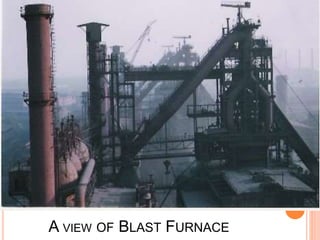
A VIEW OF BLAST FURNACE
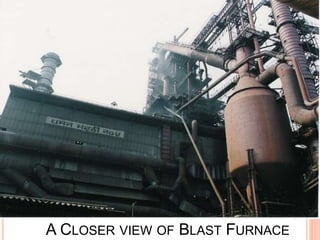
A CLOSER VIEW OF BLAST FURNACE
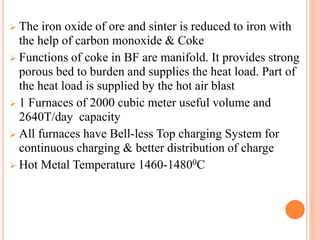
 The iron oxide of ore and sinter is reduced to iron with
the help of carbon monoxide & Coke
 Functions of coke in BF are manifold. It provides strong
porous bed to burden and supplies the heat load. Part of
the heat load is supplied by the hot air blast
 1 Furnaces of 2000 cubic meter useful volume and
2640T/day capacity
 All furnaces have Bell-less Top charging System for
continuous charging & better distribution of charge
 Hot Metal Temperature 1460-14800C
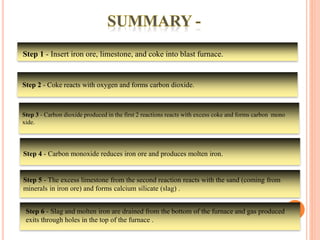
Step 3 - Carbon dioxide produced in the first 2 reactions reacts with excess coke and forms carbon mono
xide.
Step 2 - Coke reacts with oxygen and forms carbon dioxide.
Step 5 - The excess limestone from the second reaction reacts with the sand (coming from
minerals in iron ore) and forms calcium silicate (slag) .
Step 1 - Insert iron ore, limestone, and coke into blast furnace.
Step 6 - Slag and molten iron are drained from the bottom of the furnace and gas produced
exits through holes in the top of the furnace .
Step 4 - Carbon monoxide reduces iron ore and produces molten iron.
Products formed
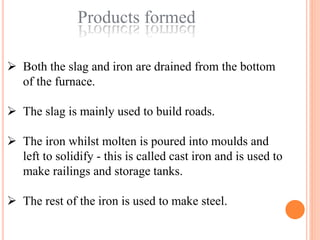
 Both the slag and iron are drained from the bottom
of the furnace.
 The slag is mainly used to build roads.
 The iron whilst molten is poured into moulds and
left to solidify - this is called cast iron and is used to
make railings and storage tanks.
 The rest of the iron is used to make steel.
THANK YOU

Blast furnace

  • 1.
    4/18/20203:43PM 1 SEMINAR TOPIC ON BLASTFURNACE PRESENTED BY:- MR.MD.RAZA ANSARI ASST.PROF. MECHANICAL ENGG. MANOJ KUMAR SAHU REG.NO. 1101224146
  • 2.
    INTRODUCTION(BF)  The purposeof a blast furnace is to reduce and convert iron oxides into liquid iron called "hot metal".  The blast furnace is a huge, steel stack lined with refractory brick.  Iron ore, coke and limestone are put into the top, and preheated air is blown into the bottom.
  • 3.
    WHAT IS ABLAST FURNACE The raw materials are:  It is a tall cylindrical furnace made of steel.  It is lined inside with fire bricks.  It is narrow at the top and has an arrangement for the introduction of ore and outlet for waste gases.  Heated with help of Hot Gases.
  • 4.
    MATERIAL FLOW DIAGRAMFOR BLAST FURNACE Stove of BF Charging Section of Blast Furnace Pig Casting M/C Mixer of SMS 1 Blast Furnace Hot Metal Iron Ore Lime Stone Mn Ore Sinter Coke Hot air Quartzite
  • 5.
    A VIEW OFBLAST FURNACE
  • 6.
    A CLOSER VIEWOF BLAST FURNACE
  • 7.
     The ironoxide of ore and sinter is reduced to iron with the help of carbon monoxide & Coke  Functions of coke in BF are manifold. It provides strong porous bed to burden and supplies the heat load. Part of the heat load is supplied by the hot air blast  1 Furnaces of 2000 cubic meter useful volume and 2640T/day capacity  All furnaces have Bell-less Top charging System for continuous charging & better distribution of charge  Hot Metal Temperature 1460-14800C
  • 9.
    Step 3 -Carbon dioxide produced in the first 2 reactions reacts with excess coke and forms carbon mono xide. Step 2 - Coke reacts with oxygen and forms carbon dioxide. Step 5 - The excess limestone from the second reaction reacts with the sand (coming from minerals in iron ore) and forms calcium silicate (slag) . Step 1 - Insert iron ore, limestone, and coke into blast furnace. Step 6 - Slag and molten iron are drained from the bottom of the furnace and gas produced exits through holes in the top of the furnace . Step 4 - Carbon monoxide reduces iron ore and produces molten iron.
  • 10.
    Products formed  Boththe slag and iron are drained from the bottom of the furnace.  The slag is mainly used to build roads.  The iron whilst molten is poured into moulds and left to solidify - this is called cast iron and is used to make railings and storage tanks.  The rest of the iron is used to make steel.
  • 11.