Language Registers
5 Language Registers:
• describes the various styles of language available for writing
or speaking
• Language is classified into 5 categories called language
registers. (Frozen, Formal, Consultative, Casual, Intimate)
• We determine which register to use based on: who is in our
audience, what our topic is, and the purpose of our
communication.
• It is important to use the appropriate language register so
we do not offend others.
Universal Rule
 A person can go from one register to the next register without any conflicts
Frozen
Pledge of Allegiance, Lord’s Prayer,
Preamble to Constitution
Language that remains
fixed/unchanged
It is “frozen” in time
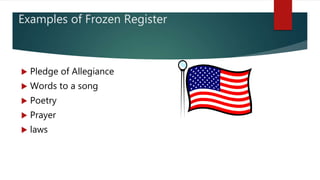
Examples of Frozen Register
 Pledge of Allegiance
 Words to a song
 Poetry
 Prayer
 laws
Formal
Interviews, academic language in
classroom (lectures, instruction –
mini lessons), public speaking
Examples of Formal Register
 Presentations
 Academic Paper
 Essays in school
 Used at work, school, and
business
 Interviews
 TAKS
Consultative
Talking to a boss/supervisor/teacher,
lawyer, doctor, counselor
Asking for assistance
Used to ask and answer questions
Consultative Register
 Two way communication used in conversation
 No past experience with that person
Casual
Talking with friends and peers
Slang is used
http://www.youtube.com/watch?v=5
7dzaMaouXA&safe=active
Examples of Casual Register
 Slang
 Talking with friends
 Personal letter to a friend
Intimate
Private Communication
Reserved for close family members or
intimate people
Communication between a pair
Husband &wife, parent & child
Examples of Intimate Register
 Finish each other’s sentences
 Very close relationship

Language Registers notes

  • 1.
  • 2.
    5 Language Registers: •describes the various styles of language available for writing or speaking • Language is classified into 5 categories called language registers. (Frozen, Formal, Consultative, Casual, Intimate) • We determine which register to use based on: who is in our audience, what our topic is, and the purpose of our communication. • It is important to use the appropriate language register so we do not offend others.
  • 3.
    Universal Rule  Aperson can go from one register to the next register without any conflicts
  • 4.
    Frozen Pledge of Allegiance,Lord’s Prayer, Preamble to Constitution Language that remains fixed/unchanged It is “frozen” in time
  • 5.
    Examples of FrozenRegister  Pledge of Allegiance  Words to a song  Poetry  Prayer  laws
  • 6.
    Formal Interviews, academic languagein classroom (lectures, instruction – mini lessons), public speaking
  • 7.
    Examples of FormalRegister  Presentations  Academic Paper  Essays in school  Used at work, school, and business  Interviews  TAKS
  • 8.
    Consultative Talking to aboss/supervisor/teacher, lawyer, doctor, counselor Asking for assistance Used to ask and answer questions
  • 9.
    Consultative Register  Twoway communication used in conversation  No past experience with that person
  • 10.
    Casual Talking with friendsand peers Slang is used http://www.youtube.com/watch?v=5 7dzaMaouXA&safe=active
  • 11.
    Examples of CasualRegister  Slang  Talking with friends  Personal letter to a friend
  • 12.
    Intimate Private Communication Reserved forclose family members or intimate people Communication between a pair Husband &wife, parent & child
  • 13.
    Examples of IntimateRegister  Finish each other’s sentences  Very close relationship