SPEECH STYLES
“..patterns of speaking
characterized by distinctive
pronunciation, vocabulary,
intent, participants, and
grammatical structures.”
Scene 1:
You and your girl/boyfriend fights
because he/she was jealous of
someone else. How will you portray
this scene?
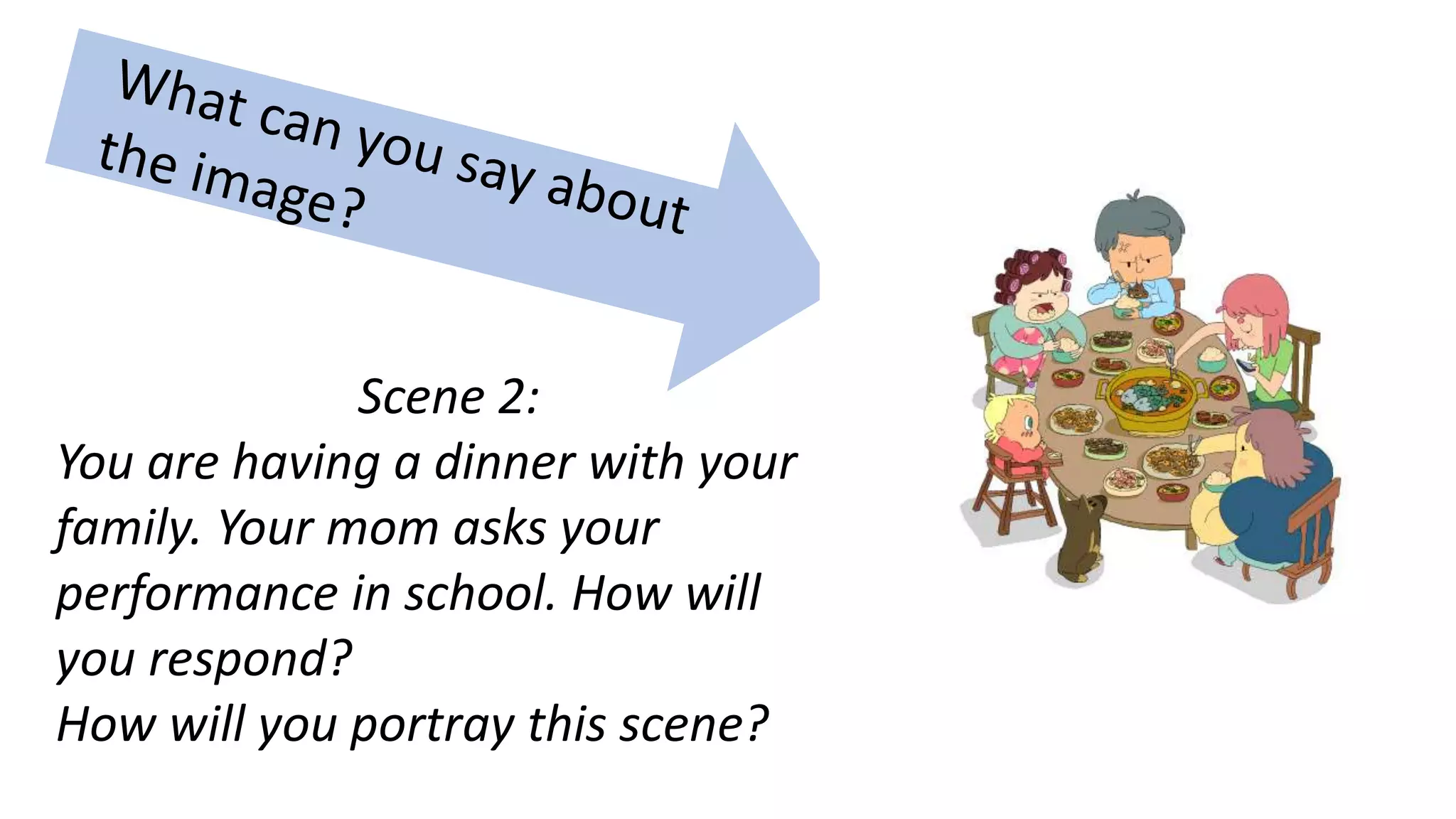
Scene 2:
You are having a dinner with your
family. Your mom asks your
performance in school. How will
you respond?
How will you portray this scene?
Scene 3:
Recite the “Panunumpa:” with
conviction and poise
Scene 4:
Your company was declared
bankrupt due to low sales. How will
you tell this to your subordinates?
Scene 5:
You went to a doctor to consult
about your health condition. How
will you talk with the doctor?
FROZENFROZENStyle
A very formal style not really intended to
give message but to allow a reader to find
many meaning for oneself
Does not require any feedback from the
audience
a very formal style whose quality is static,
ritualistic, and even be archaic
Usually uses long sentences with good
grammar and vocabulary
Prayers
Pledges
Oath
The Preamble
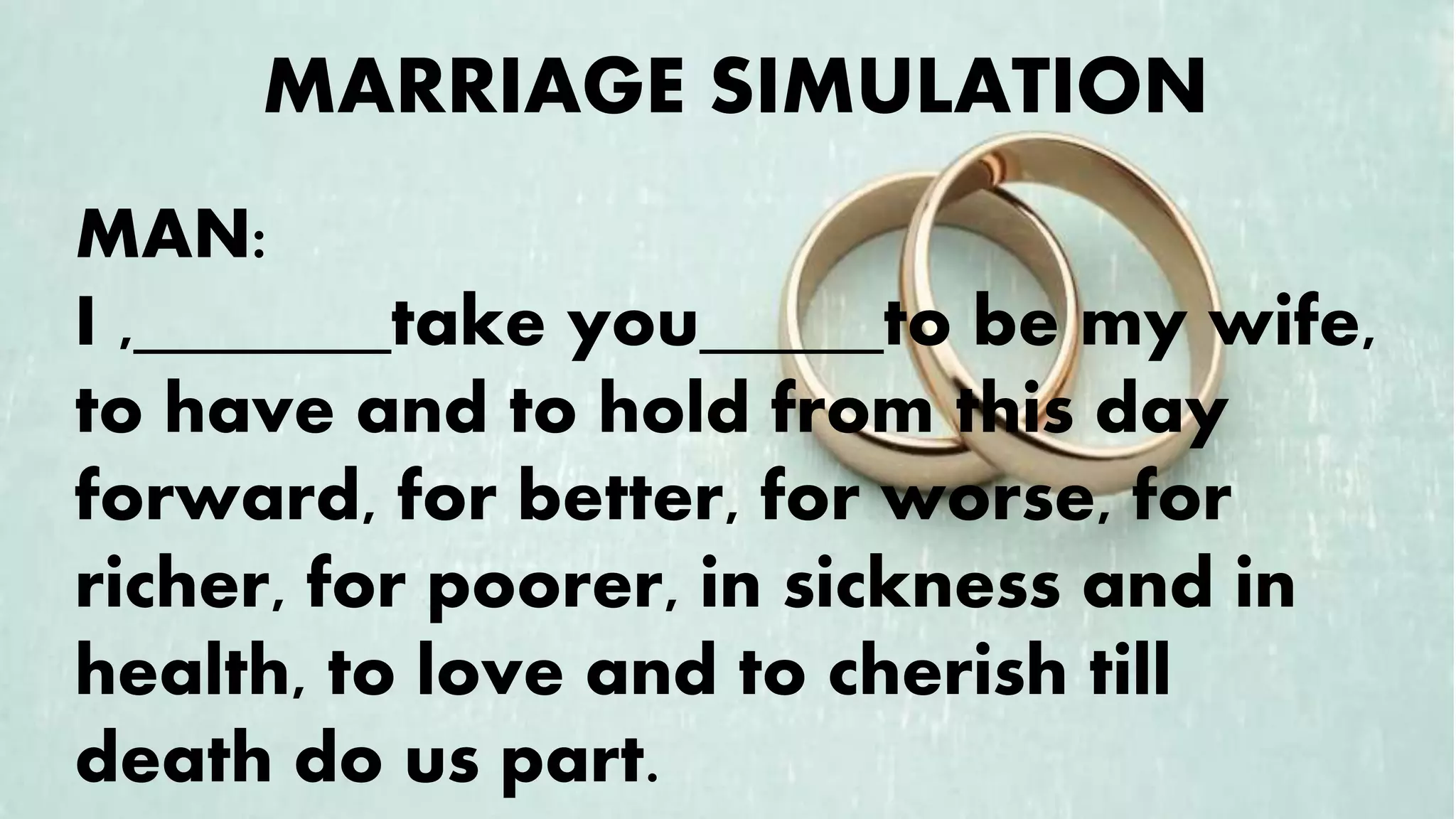
MAN:
I ,_______take you_____to be my wife,
to have and to hold from this day
forward, for better, for worse, for
richer, for poorer, in sickness and in
health, to love and to cherish till
death do us part.
MARRIAGE SIMULATION
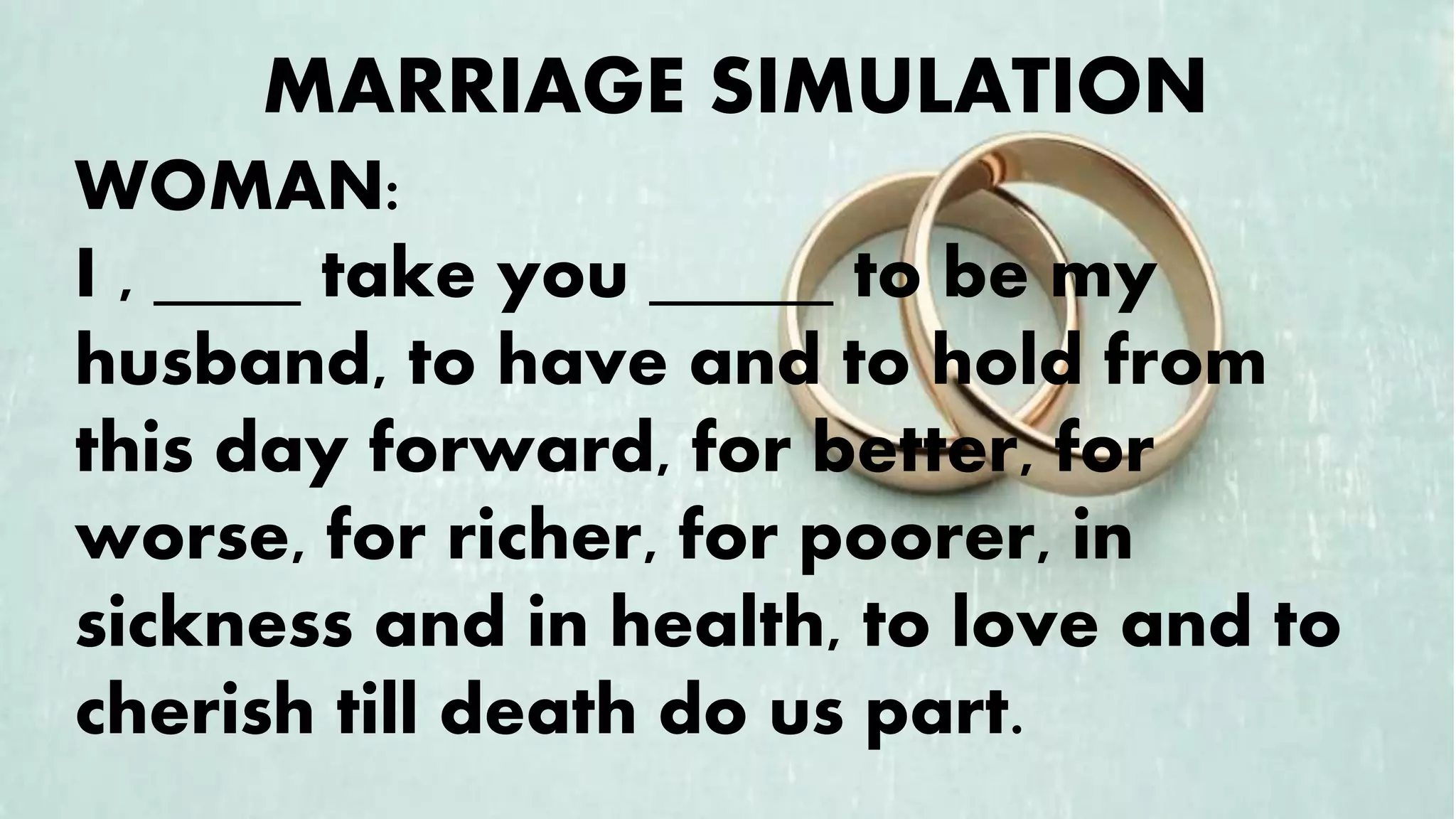
WOMAN:
I , ____ take you _____ to be my
husband, to have and to hold from
this day forward, for better, for
worse, for richer, for poorer, in
sickness and in health, to love and to
cherish till death do us part.
MARRIAGE SIMULATION
FORMALFORMALStyle
Used for imparting information
Well-organized and correct grammar
and diction
Speech or utterance are planned in
advance
Avoids using slang terminologies
Meeting
Interview
court
WHAT IF?
YOU WERE IN AN INTERVIEW
FOR YOUR DREAM JOB.
CONSULTATIVECONSULTATIVEStyle
Opposite of intimate style
People who do not share common
experience or meaning
Used in semi-formal communication
Happens in two-way participation
Speaker does not usually plan what he
wants to say
Sentences end to be shorter and
spontaneous
Doctor-patient
Teacher-student
Regular
conversation
Expert-apprentice
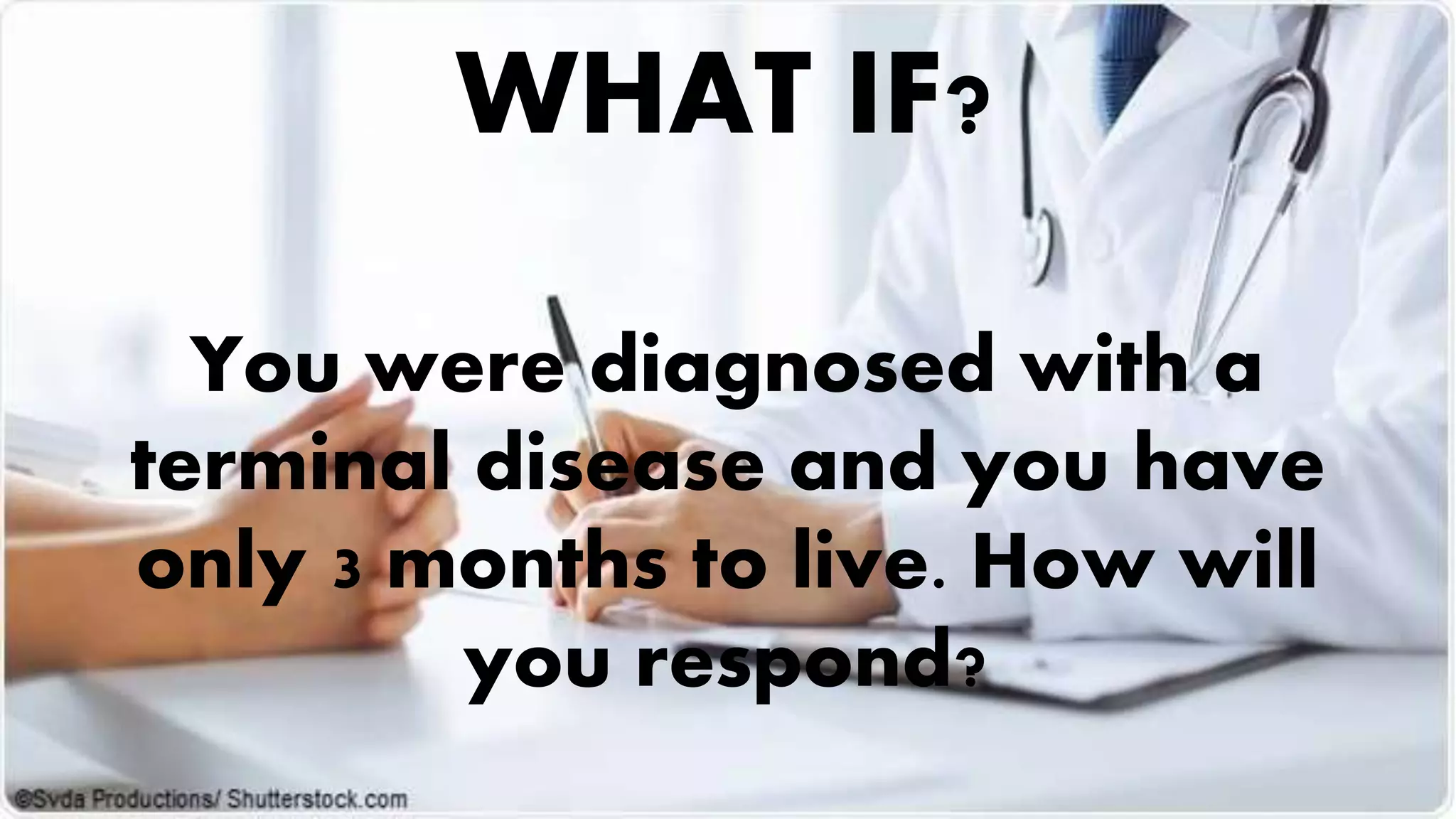
You were diagnosed with a
terminal disease and you have
only 3 months to live. How will
you respond?
WHAT IF?
CASUALCASUALStyle
Language used between friends
Often very relaxed and focused on just
getting the information out
Slangs are quite often used in these
instances
This style is used in informal situations and
language
Relationship between speaker and hearer
is closed
casual
conversations with
friends and family
members
Chats
phone calls and
messages
Relate your most
embarrassing
moment.
INTIMATEINTIMATEStyle
Completely private language used within
family of very close friends or group
Uses personal language codes
Grammar is unnecessary
Does not need complete language
Certain terms of endearment, slangs or
expressions whose meaning is shared with
a small subset of persons to person
Lovers
Married couples
What will you say to convince the
girl/boy you love to choose you.
Choose me because ….
GROUP ACTIVITY:
Within your group, create three different
scenes that showcase three different speech
styles. A script is not require but the
scenes/dialogue should be spontaneous. Be
sure to make your scene CLEAR because the
other groups will have to guess what SPEECH
STYLE was used.
Preparation time: 30 mins
REFERENCES:
Oral Communication in Context for Senior High
School. Retrieved from
https://oralcom.wordpress.com/2016/10/14/ty pes-of-speech-styles/
Pena, A. & Anudin, A. (2016) Oral Communication.
Araneta Avenue, Quezon City: Vibal Group Inc.

Speech styles

  • 1.
  • 2.
    “..patterns of speaking characterizedby distinctive pronunciation, vocabulary, intent, participants, and grammatical structures.”
  • 3.
    Scene 1: You andyour girl/boyfriend fights because he/she was jealous of someone else. How will you portray this scene?
  • 4.
    Scene 2: You arehaving a dinner with your family. Your mom asks your performance in school. How will you respond? How will you portray this scene?
  • 5.
    Scene 3: Recite the“Panunumpa:” with conviction and poise
  • 6.
    Scene 4: Your companywas declared bankrupt due to low sales. How will you tell this to your subordinates?
  • 7.
    Scene 5: You wentto a doctor to consult about your health condition. How will you talk with the doctor?
  • 8.
    FROZENFROZENStyle A very formalstyle not really intended to give message but to allow a reader to find many meaning for oneself Does not require any feedback from the audience a very formal style whose quality is static, ritualistic, and even be archaic Usually uses long sentences with good grammar and vocabulary Prayers Pledges Oath The Preamble
  • 9.
    MAN: I ,_______take you_____tobe my wife, to have and to hold from this day forward, for better, for worse, for richer, for poorer, in sickness and in health, to love and to cherish till death do us part. MARRIAGE SIMULATION
  • 10.
    WOMAN: I , ____take you _____ to be my husband, to have and to hold from this day forward, for better, for worse, for richer, for poorer, in sickness and in health, to love and to cherish till death do us part. MARRIAGE SIMULATION
  • 11.
    FORMALFORMALStyle Used for impartinginformation Well-organized and correct grammar and diction Speech or utterance are planned in advance Avoids using slang terminologies Meeting Interview court
  • 12.
    WHAT IF? YOU WEREIN AN INTERVIEW FOR YOUR DREAM JOB.
  • 13.
    CONSULTATIVECONSULTATIVEStyle Opposite of intimatestyle People who do not share common experience or meaning Used in semi-formal communication Happens in two-way participation Speaker does not usually plan what he wants to say Sentences end to be shorter and spontaneous Doctor-patient Teacher-student Regular conversation Expert-apprentice
  • 14.
    You were diagnosedwith a terminal disease and you have only 3 months to live. How will you respond? WHAT IF?
  • 15.
    CASUALCASUALStyle Language used betweenfriends Often very relaxed and focused on just getting the information out Slangs are quite often used in these instances This style is used in informal situations and language Relationship between speaker and hearer is closed casual conversations with friends and family members Chats phone calls and messages
  • 16.
  • 17.
    INTIMATEINTIMATEStyle Completely private languageused within family of very close friends or group Uses personal language codes Grammar is unnecessary Does not need complete language Certain terms of endearment, slangs or expressions whose meaning is shared with a small subset of persons to person Lovers Married couples
  • 18.
    What will yousay to convince the girl/boy you love to choose you. Choose me because ….
  • 19.
    GROUP ACTIVITY: Within yourgroup, create three different scenes that showcase three different speech styles. A script is not require but the scenes/dialogue should be spontaneous. Be sure to make your scene CLEAR because the other groups will have to guess what SPEECH STYLE was used. Preparation time: 30 mins
  • 20.
    REFERENCES: Oral Communication inContext for Senior High School. Retrieved from https://oralcom.wordpress.com/2016/10/14/ty pes-of-speech-styles/ Pena, A. & Anudin, A. (2016) Oral Communication. Araneta Avenue, Quezon City: Vibal Group Inc.