SPEECH ACT
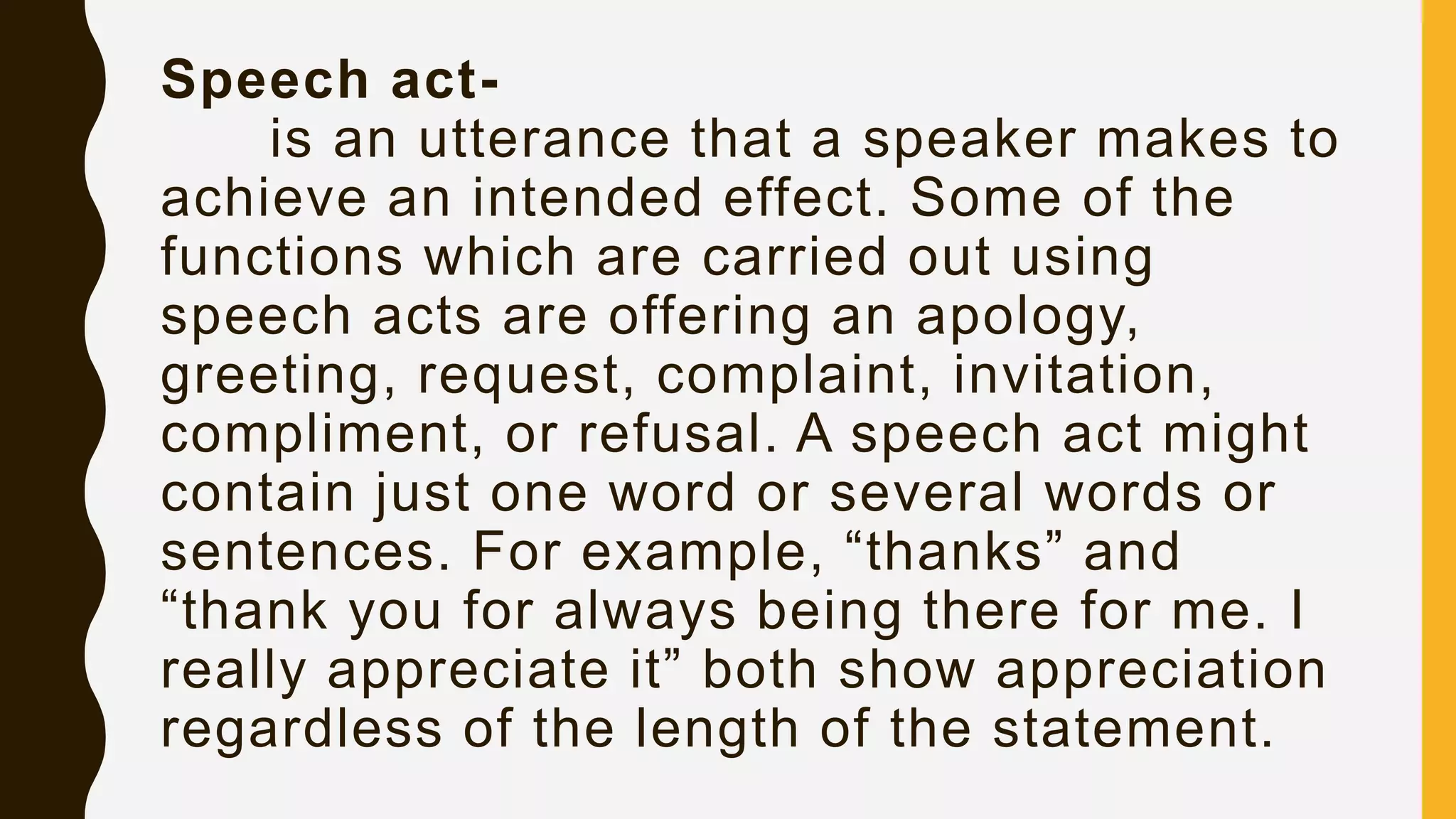
Speech act-
is an utterance that a speaker makes to
achieve an intended effect. Some of the
functions which are carried out using
speech acts are offering an apology,
greeting, request, complaint, invitation,
compliment, or refusal. A speech act might
contain just one word or several words or
sentences. For example, “thanks” and
“thank you for always being there for me. I
really appreciate it” both show appreciation
regardless of the length of the statement.
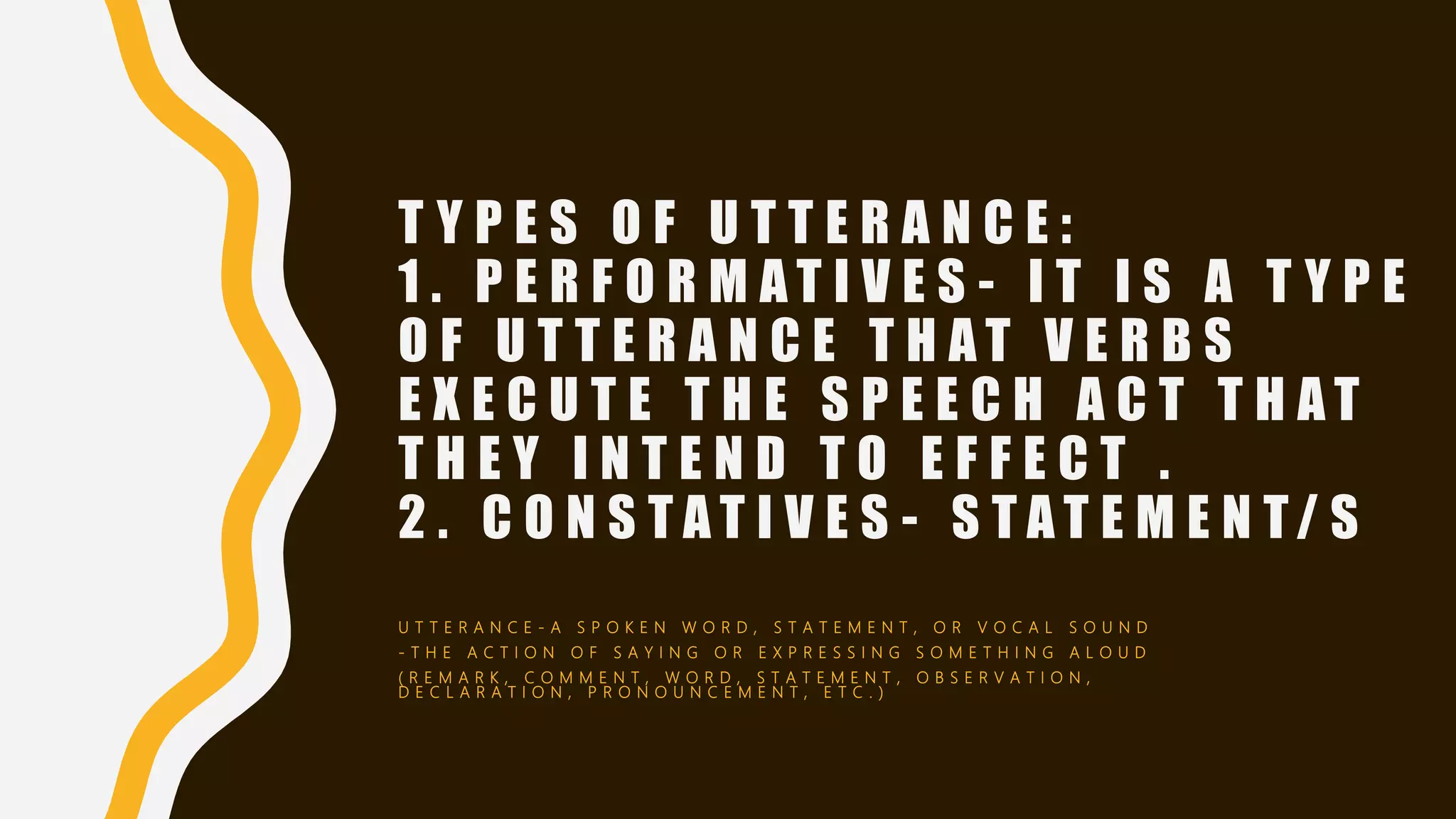
T Y P E S O F U T T E R A N C E :
1 . P E R F O R M A T I V E S - I T I S A T Y P E
O F U T T E R A N C E T H A T V E R B S
E X E C U T E T H E S P E E C H A C T T H A T
T H E Y I N T E N D T O E F F E C T .
2 . C O N S T A T I V E S - S T A T E M E N T/ S
U T T E R A N C E - A S P O K E N W O R D , S T A T E M E N T , O R V O C A L S O U N D
- T H E A C T I O N O F S A Y I N G O R E X P R E S S I N G S O M E T H I N G A L O U D
( R E M A R K , C O M M E N T , W O R D , S T A T E M E N T , O B S E R V A T I O N ,
D E C L A R A T I O N , P R O N O U N C E M E N T , E T C . )
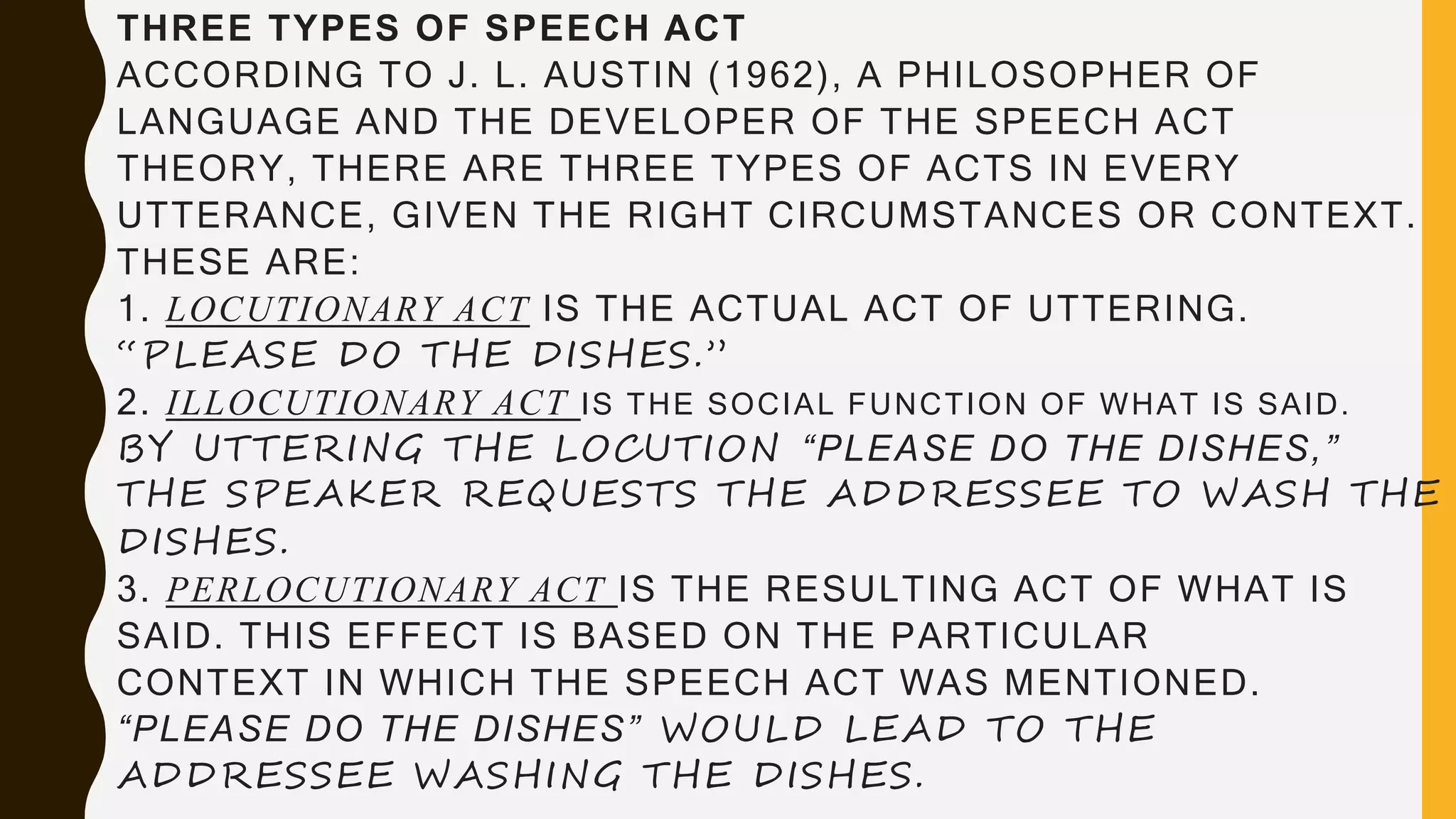
THREE TYPES OF SPEECH ACT
ACCORDING TO J. L. AUSTIN (1962), A PHILOSOPHER OF
LANGUAGE AND THE DEVELOPER OF THE SPEECH ACT
THEORY, THERE ARE THREE TYPES OF ACTS IN EVERY
UTTERANCE, GIVEN THE RIGHT CIRCUMSTANCES OR CONTEXT.
THESE ARE:
1. LOCUTIONARY ACT IS THE ACTUAL ACT OF UTTERING.
“PLEASE DO THE DISHES.”
2. ILLOCUTIONARY ACT IS THE SOCIAL FUNCTION OF WHAT IS SAID.
BY UTTERING THE LOCUTION “PLEASE DO THE DISHES,”
THE SPEAKER REQUESTS THE ADDRESSEE TO WASH THE
DISHES.
3. PERLOCUTIONARY ACT IS THE RESULTING ACT OF WHAT IS
SAID. THIS EFFECT IS BASED ON THE PARTICULAR
CONTEXT IN WHICH THE SPEECH ACT WAS MENTIONED.
“PLEASE DO THE DISHES” WOULD LEAD TO THE
ADDRESSEE WASHING THE DISHES.
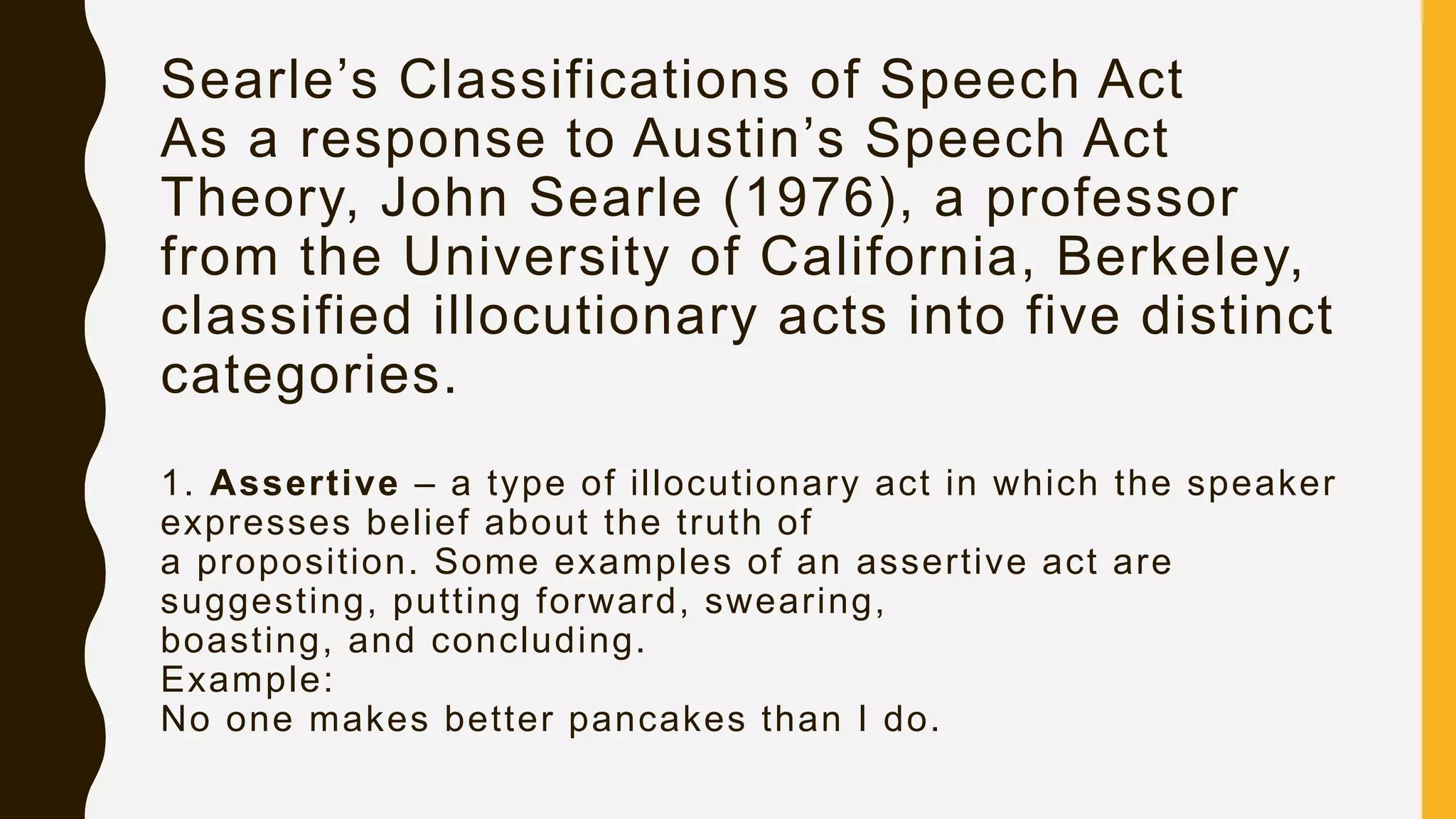
Searle’s Classifications of Speech Act
As a response to Austin’s Speech Act
Theory, John Searle (1976), a professor
from the University of California, Berkeley,
classified illocutionary acts into five distinct
categories.
1. Assertive – a type of illocutionary act in which the speaker
expresses belief about the truth of
a proposition. Some examples of an assertive act are
suggesting, putting forward, swearing,
boasting, and concluding.
Example:
No one makes better pancakes than I do.
2. Directive – a type of illocutionary act in which the speaker
tries to make the addressee perform an action. Some
examples of a directive act are asking, ordering, requesting,
inviting, advising, and begging.
Example:
Please close the door.
3. Commissive – a type of illocutionary act which commits the
speaker to doing something in the future. Examples of a
commissive act are promising, planning, vowing, and betting.
Example:
From now on, I will participate in our group activity.
4. Expressive – a type of illocutionary act in which the
speaker expresses his/her feelings or emotional reactions.
Some examples of an expressive act are thanking,
apologizing, welcoming, and deploring.
Example:
I am so sorry for not helping out in our group projects and
letting you do all the work.
5. Declaration – a type of illocutionary act which brings a
change in the external situation.
Simply put, declarations bring into existence or cause the
state of affairs which they refer to.
Some examples of declarations are blessing, firing, baptizing,
bidding, passing a sentence,
and excommunicating.
Example:
You are fired!
By saying that someone is fired, an employer causes or brings
about the person’s
unemployment, thus changing his external situation.

Types of speech act

  • 1.
  • 2.
    Speech act- is anutterance that a speaker makes to achieve an intended effect. Some of the functions which are carried out using speech acts are offering an apology, greeting, request, complaint, invitation, compliment, or refusal. A speech act might contain just one word or several words or sentences. For example, “thanks” and “thank you for always being there for me. I really appreciate it” both show appreciation regardless of the length of the statement.
  • 3.
    T Y PE S O F U T T E R A N C E : 1 . P E R F O R M A T I V E S - I T I S A T Y P E O F U T T E R A N C E T H A T V E R B S E X E C U T E T H E S P E E C H A C T T H A T T H E Y I N T E N D T O E F F E C T . 2 . C O N S T A T I V E S - S T A T E M E N T/ S U T T E R A N C E - A S P O K E N W O R D , S T A T E M E N T , O R V O C A L S O U N D - T H E A C T I O N O F S A Y I N G O R E X P R E S S I N G S O M E T H I N G A L O U D ( R E M A R K , C O M M E N T , W O R D , S T A T E M E N T , O B S E R V A T I O N , D E C L A R A T I O N , P R O N O U N C E M E N T , E T C . )
  • 4.
    THREE TYPES OFSPEECH ACT ACCORDING TO J. L. AUSTIN (1962), A PHILOSOPHER OF LANGUAGE AND THE DEVELOPER OF THE SPEECH ACT THEORY, THERE ARE THREE TYPES OF ACTS IN EVERY UTTERANCE, GIVEN THE RIGHT CIRCUMSTANCES OR CONTEXT. THESE ARE: 1. LOCUTIONARY ACT IS THE ACTUAL ACT OF UTTERING. “PLEASE DO THE DISHES.” 2. ILLOCUTIONARY ACT IS THE SOCIAL FUNCTION OF WHAT IS SAID. BY UTTERING THE LOCUTION “PLEASE DO THE DISHES,” THE SPEAKER REQUESTS THE ADDRESSEE TO WASH THE DISHES. 3. PERLOCUTIONARY ACT IS THE RESULTING ACT OF WHAT IS SAID. THIS EFFECT IS BASED ON THE PARTICULAR CONTEXT IN WHICH THE SPEECH ACT WAS MENTIONED. “PLEASE DO THE DISHES” WOULD LEAD TO THE ADDRESSEE WASHING THE DISHES.
  • 5.
    Searle’s Classifications ofSpeech Act As a response to Austin’s Speech Act Theory, John Searle (1976), a professor from the University of California, Berkeley, classified illocutionary acts into five distinct categories. 1. Assertive – a type of illocutionary act in which the speaker expresses belief about the truth of a proposition. Some examples of an assertive act are suggesting, putting forward, swearing, boasting, and concluding. Example: No one makes better pancakes than I do.
  • 6.
    2. Directive –a type of illocutionary act in which the speaker tries to make the addressee perform an action. Some examples of a directive act are asking, ordering, requesting, inviting, advising, and begging. Example: Please close the door. 3. Commissive – a type of illocutionary act which commits the speaker to doing something in the future. Examples of a commissive act are promising, planning, vowing, and betting. Example: From now on, I will participate in our group activity. 4. Expressive – a type of illocutionary act in which the speaker expresses his/her feelings or emotional reactions. Some examples of an expressive act are thanking, apologizing, welcoming, and deploring. Example: I am so sorry for not helping out in our group projects and letting you do all the work.
  • 7.
    5. Declaration –a type of illocutionary act which brings a change in the external situation. Simply put, declarations bring into existence or cause the state of affairs which they refer to. Some examples of declarations are blessing, firing, baptizing, bidding, passing a sentence, and excommunicating. Example: You are fired! By saying that someone is fired, an employer causes or brings about the person’s unemployment, thus changing his external situation.