Chapter 2Chapter 2
BuildingBuilding
ConfidenceConfidence
Overcoming Communication
Apprehension
What we will discussWhat we will discuss
 Communication apprehension is common
 What is fear?
 Who gets frightened in front of an audience?
 What are the symptoms?
 Need to establish an accurate perception
 Your audience
 Your speech
 Yourself
 The Planks of Confidence
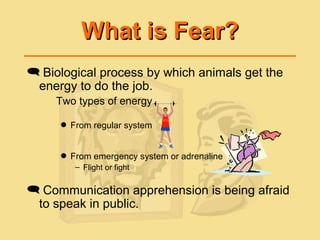
What is Fear?What is Fear?
 Biological process by which animals get the
energy to do the job.
Two types of energy
 From regular system
 From emergency system or adrenaline
– Flight or fight
 Communication apprehension is being afraid
to speak in public.
CommunicationCommunication
ApprehensionApprehension
 It’s Stage Fright
 Almost everyone gets it
 80 to 90% of Americans
 Even actors suffer from it
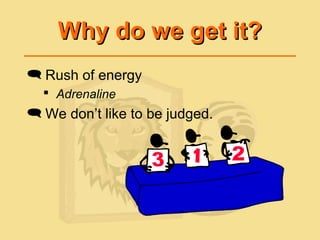
Why do we get it?Why do we get it?
 Rush of energy
 Adrenaline
 We don’t like to be judged.
What is the Fear?What is the Fear?
 Fear of failure
 Fear of attention
 Fear of humiliation
What are theWhat are the
symptoms?symptoms?
 Upset stomach
 Flushed face
 Dizziness
 Fast heartbeat
 Shortness of breath
 Wobbly legs
What experiences have you had?
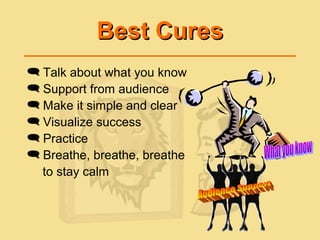
Best CuresBest Cures
 Talk about what you know
 Support from audience
 Make it simple and clear
 Visualize success
 Practice
 Breathe, breathe, breathe
to stay calm
Establish an AccurateEstablish an Accurate
PerceptionPerception
“Public speaking is no more difficult
than breathing, using chopsticks or
tying a bow tie. The mysterious
becomes simple…once you know
how to do it.”
-Charles Osgood, news commentator
See things as they are, not as you fear.
Perception of thePerception of the
AudienceAudience
“Studies on how well an audience perceives
anxiety should comfort nervous speakers.
Researchers have found that most report
noticing little or no anxiety in a speaker. Even
when individuals are trained to detect anxiety
cues and are instructed to look for them, there
is little correlation between their evaluations
and how anxious speakers actually felt.”
-Michael T. Motley, Psychology Today
People don’t see all your mistakes or nerves.
Perception of thePerception of the
SpeechSpeech
 Not a performance
but a conversation
 It is an extension of
your personality
 Have an intrapersonal
discussion
Perception of YourselfPerception of Yourself
 You don’t have to be perfect.
 You have failed before, but survived.
 The first time you walked
 The first time you rode a bike
 The first time you swam
Self-esteem is the result of a
discovery process
 Being given responsibility and then earning it
Planks of ConfidencePlanks of Confidence
 Content
 Organization
 Notes
 Friendliness
 Impression
 Dedication
 Empathy
 Newness
 Conviction
 Enthusiasm
Recalling FactsRecalling Facts
What is how you see things?
A good speech is a performance or a discussion?
What is another word for confidence?
What is communication apprehension?
What is fear?
What are the symptoms of stage fright?
Why do we get them?
What are the Planks of confidence?
What are the two mistakes made with note cards?
Recalling the FactsRecalling the Facts
AnswersAnswers
Perception
Discussion
Fear of speaking
Biological process to secure energy
Sweating palms, upset stomach, dizziness, flushed
face, fast heartbeat, wobbly legs
Bodies are flooded with energy to handle the situation
Content, Organization, Notes, Friendliness,
Impressions, Dedication, Empathy, Newness,
Conviction, Enthusiasm
Too many cards or too many words
VocabularyVocabulary
notes
friendliness
impression
dedication
empathy
common ground
newness
conviction
enthusiasm
confidence
communication
apprehension
fear
phobia
stage fright
perception
content
organization
List on Page 27 of textbook

Chapter 2 Confidence

  • 1.
  • 2.
    What we willdiscussWhat we will discuss  Communication apprehension is common  What is fear?  Who gets frightened in front of an audience?  What are the symptoms?  Need to establish an accurate perception  Your audience  Your speech  Yourself  The Planks of Confidence
  • 3.
    What is Fear?Whatis Fear?  Biological process by which animals get the energy to do the job. Two types of energy  From regular system  From emergency system or adrenaline – Flight or fight  Communication apprehension is being afraid to speak in public.
  • 4.
    CommunicationCommunication ApprehensionApprehension  It’s StageFright  Almost everyone gets it  80 to 90% of Americans  Even actors suffer from it
  • 5.
    Why do weget it?Why do we get it?  Rush of energy  Adrenaline  We don’t like to be judged.
  • 6.
    What is theFear?What is the Fear?  Fear of failure  Fear of attention  Fear of humiliation
  • 7.
    What are theWhatare the symptoms?symptoms?  Upset stomach  Flushed face  Dizziness  Fast heartbeat  Shortness of breath  Wobbly legs What experiences have you had?
  • 8.
    Best CuresBest Cures Talk about what you know  Support from audience  Make it simple and clear  Visualize success  Practice  Breathe, breathe, breathe to stay calm
  • 9.
    Establish an AccurateEstablishan Accurate PerceptionPerception “Public speaking is no more difficult than breathing, using chopsticks or tying a bow tie. The mysterious becomes simple…once you know how to do it.” -Charles Osgood, news commentator See things as they are, not as you fear.
  • 10.
    Perception of thePerceptionof the AudienceAudience “Studies on how well an audience perceives anxiety should comfort nervous speakers. Researchers have found that most report noticing little or no anxiety in a speaker. Even when individuals are trained to detect anxiety cues and are instructed to look for them, there is little correlation between their evaluations and how anxious speakers actually felt.” -Michael T. Motley, Psychology Today People don’t see all your mistakes or nerves.
  • 11.
    Perception of thePerceptionof the SpeechSpeech  Not a performance but a conversation  It is an extension of your personality  Have an intrapersonal discussion
  • 12.
    Perception of YourselfPerceptionof Yourself  You don’t have to be perfect.  You have failed before, but survived.  The first time you walked  The first time you rode a bike  The first time you swam Self-esteem is the result of a discovery process  Being given responsibility and then earning it
  • 13.
    Planks of ConfidencePlanksof Confidence  Content  Organization  Notes  Friendliness  Impression  Dedication  Empathy  Newness  Conviction  Enthusiasm
  • 14.
    Recalling FactsRecalling Facts Whatis how you see things? A good speech is a performance or a discussion? What is another word for confidence? What is communication apprehension? What is fear? What are the symptoms of stage fright? Why do we get them? What are the Planks of confidence? What are the two mistakes made with note cards?
  • 15.
    Recalling the FactsRecallingthe Facts AnswersAnswers Perception Discussion Fear of speaking Biological process to secure energy Sweating palms, upset stomach, dizziness, flushed face, fast heartbeat, wobbly legs Bodies are flooded with energy to handle the situation Content, Organization, Notes, Friendliness, Impressions, Dedication, Empathy, Newness, Conviction, Enthusiasm Too many cards or too many words
  • 16.