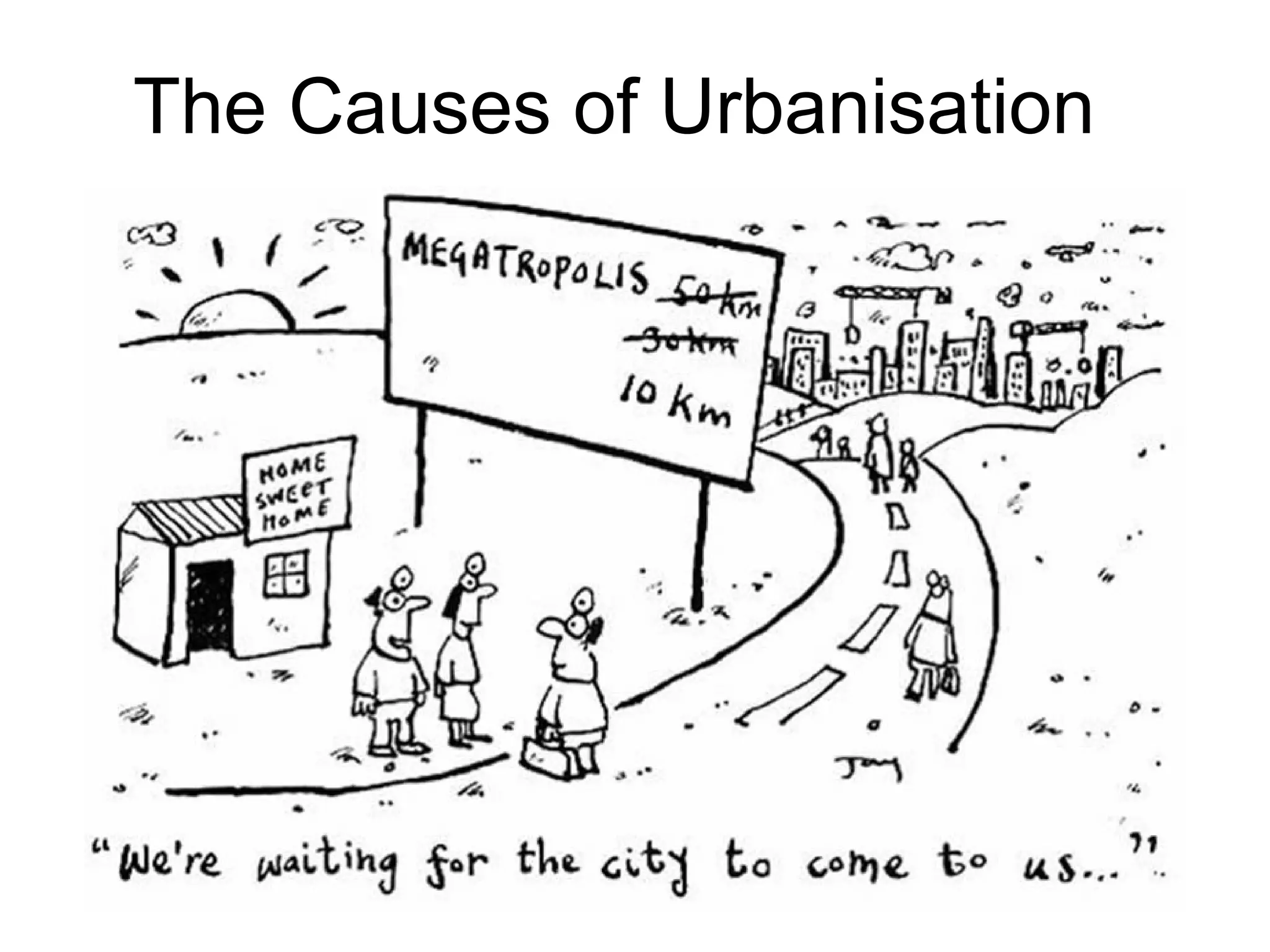
The Causes of Urbanisation
Syllabus …
Key idea:
Urbanisation is a global phenomenon
Specification content:
Students should appreciate the different
pace and causes of urbanisation in the
rich and poor world.
References …
• B&P pg 154 / 155
• AQA A pg 195
• CGP pg 85
Starter - Recap
• Look at the interactive map at the
website below:
http://news.bbc.co.uk/1/shared/spl/hi/world/06/urbanisatio
What trends can we see in how
urbanisation has taken place over time
in different parts of the world?
Lesson Objectives
• All will understand what we
mean by the term rural -
urban migration.
• Most will understand the
push and pull factors that
force people to leave rural
areas to find a new life in
cities.
• Some will be able to use
descriptive phrases to
illustrate the problems that
face people living in rural
areas in LEDCs today.
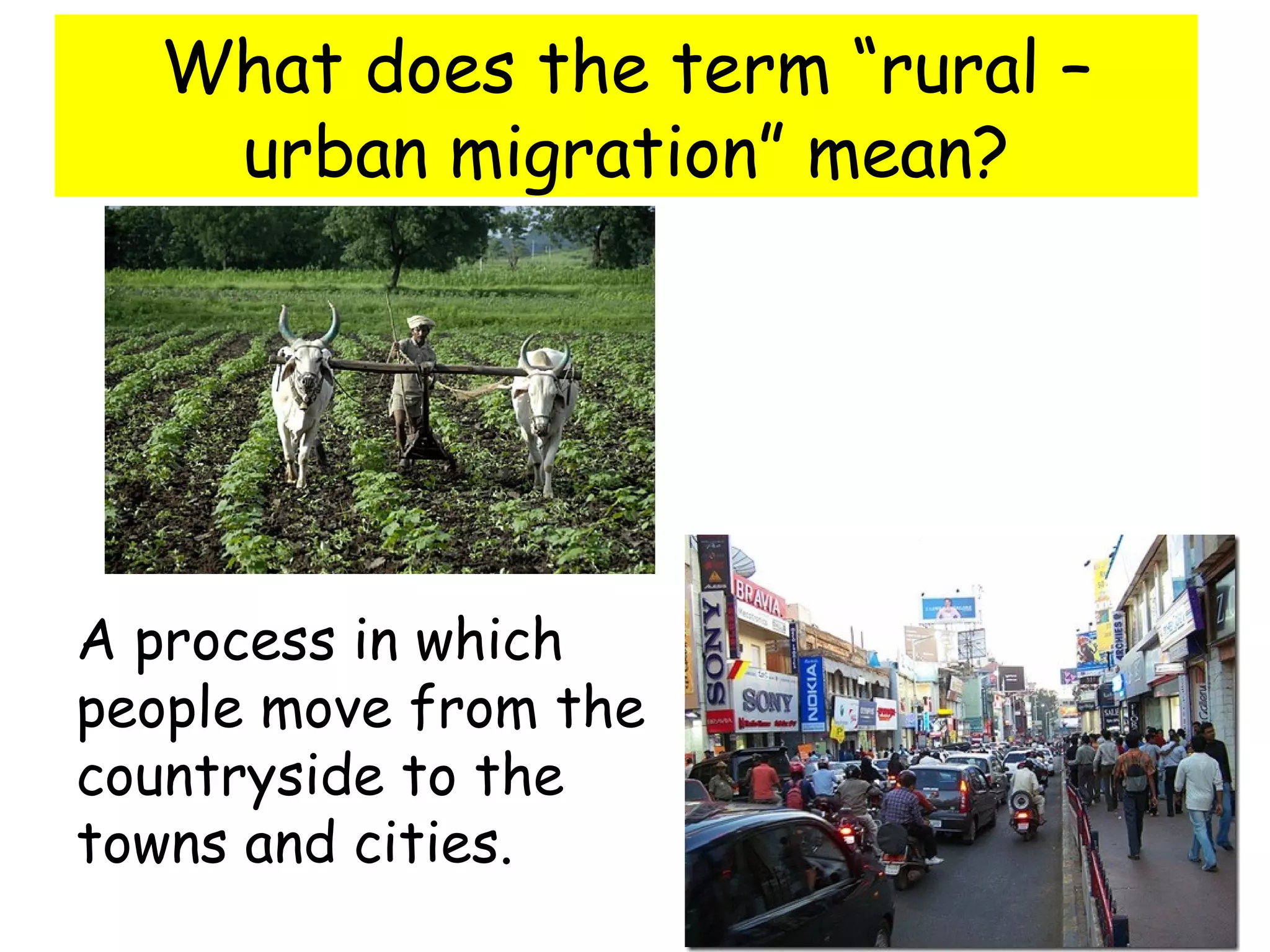
What does the term “rural –
urban migration” mean?
A process in which
people move from the
countryside to the
towns and cities.
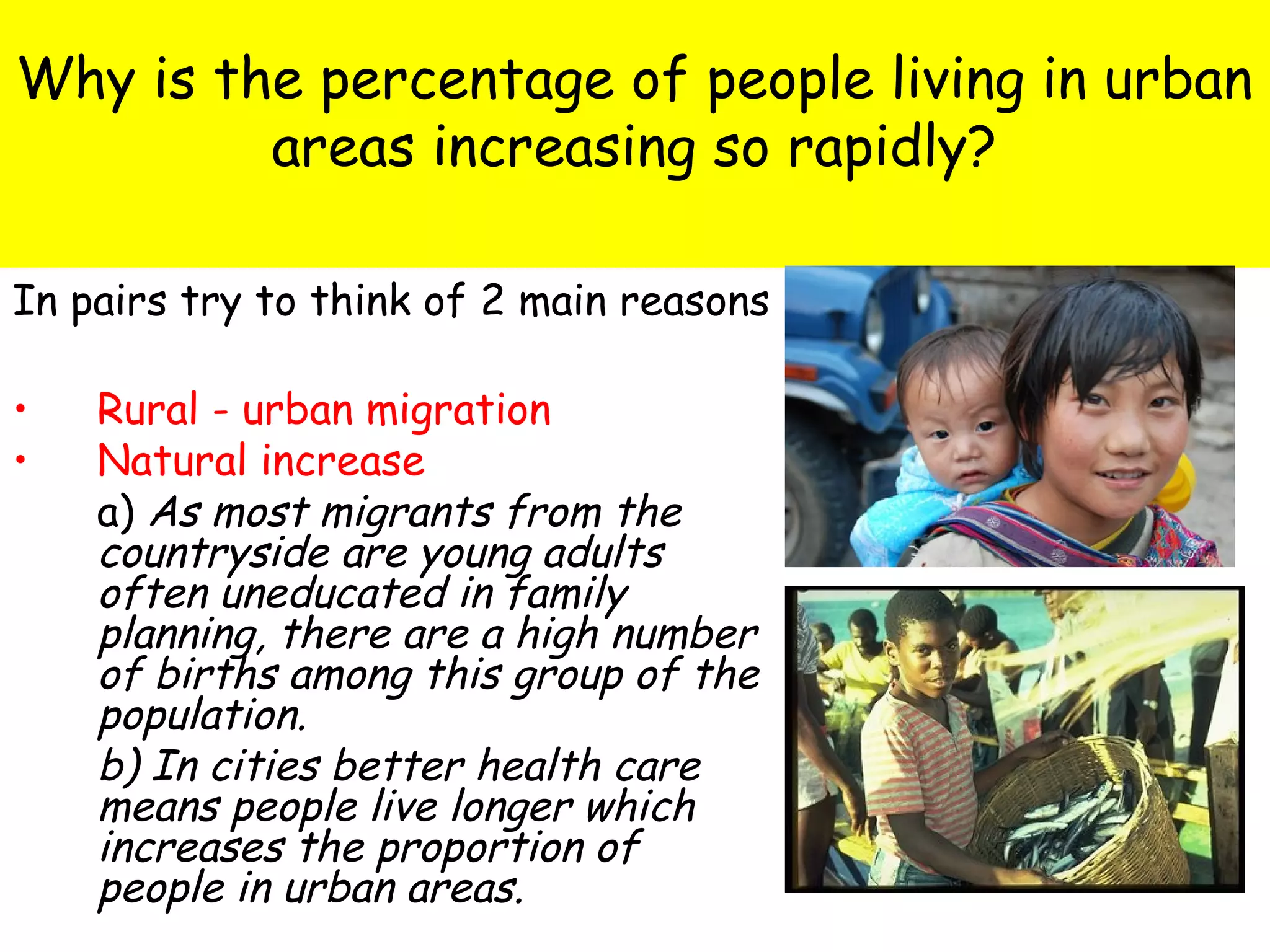
Why is the percentage of people living in urban
areas increasing so rapidly?
In pairs try to think of 2 main reasons
• Rural - urban migration
• Natural increase
a) As most migrants from the
countryside are young adults
often uneducated in family
planning, there are a high number
of births among this group of the
population.
b) In cities better health care
means people live longer which
increases the proportion of
people in urban areas.
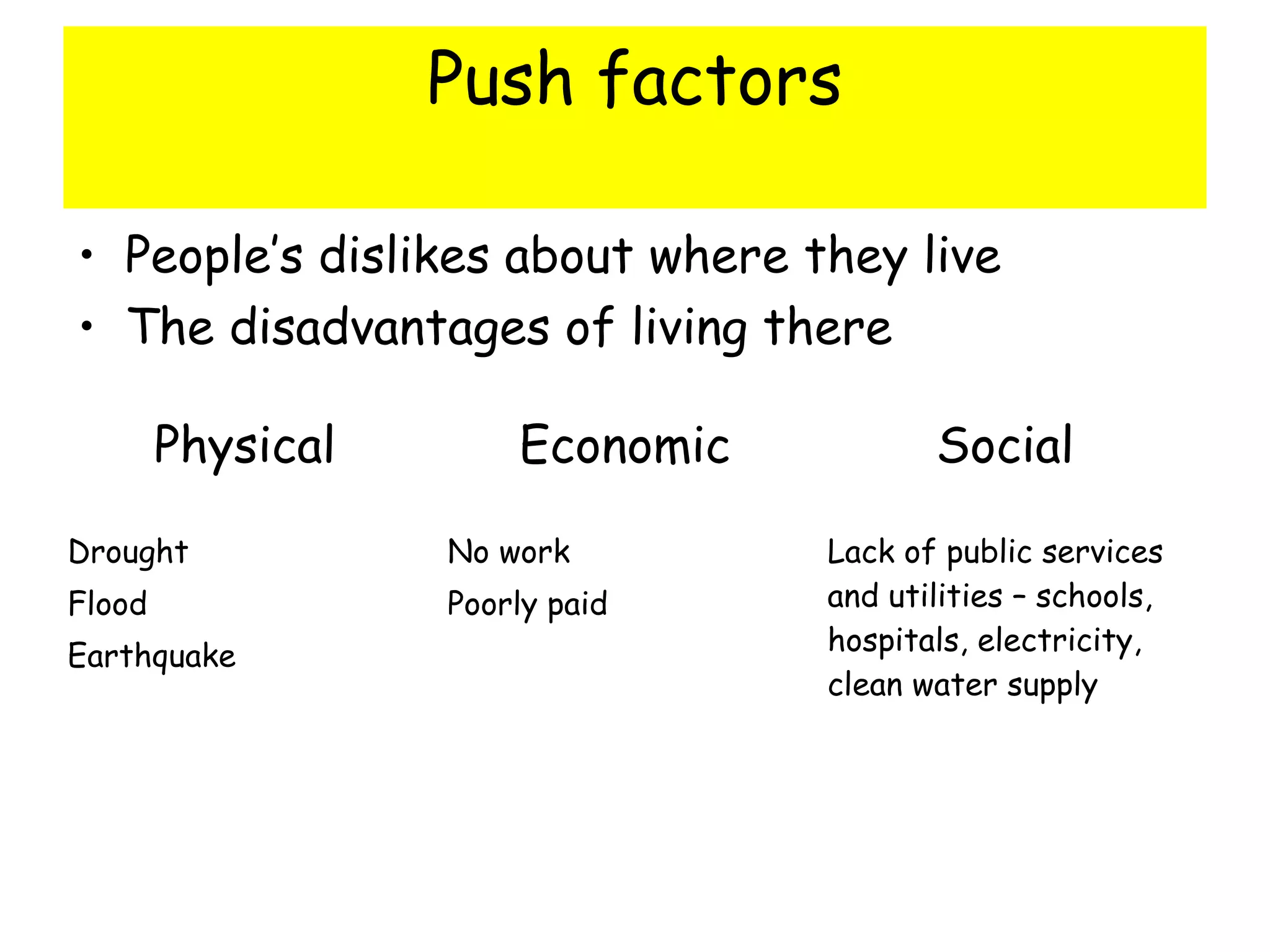
Push factors
• People’s dislikes about where they live
• The disadvantages of living there
Physical Economic Social
Drought
Flood
Earthquake
No work
Poorly paid
Lack of public services
and utilities – schools,
hospitals, electricity,
clean water supply
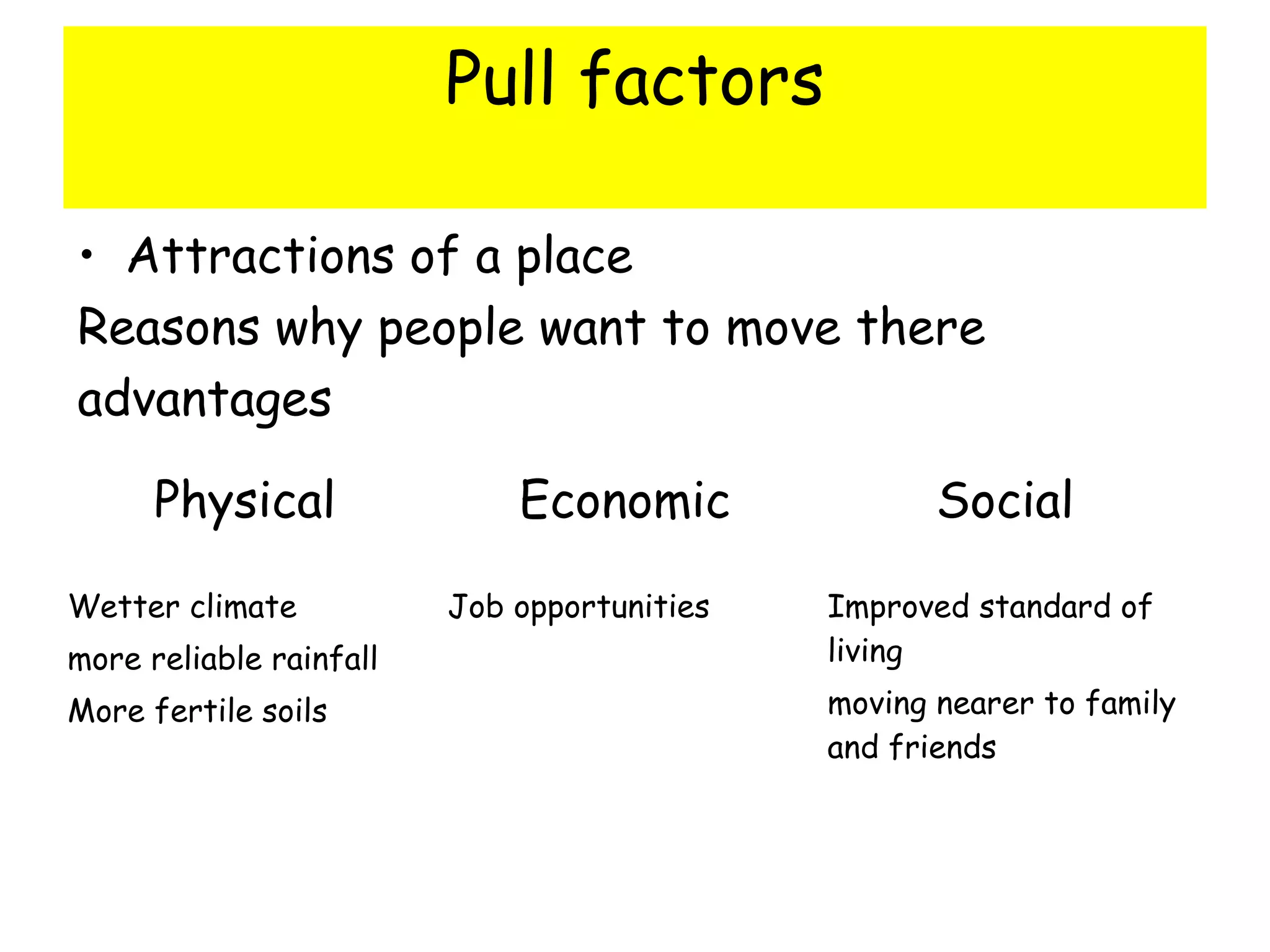
Pull factors
• Attractions of a place
Reasons why people want to move there
advantages
Physical Economic Social
Wetter climate
more reliable rainfall
More fertile soils
Job opportunities Improved standard of
living
moving nearer to family
and friends
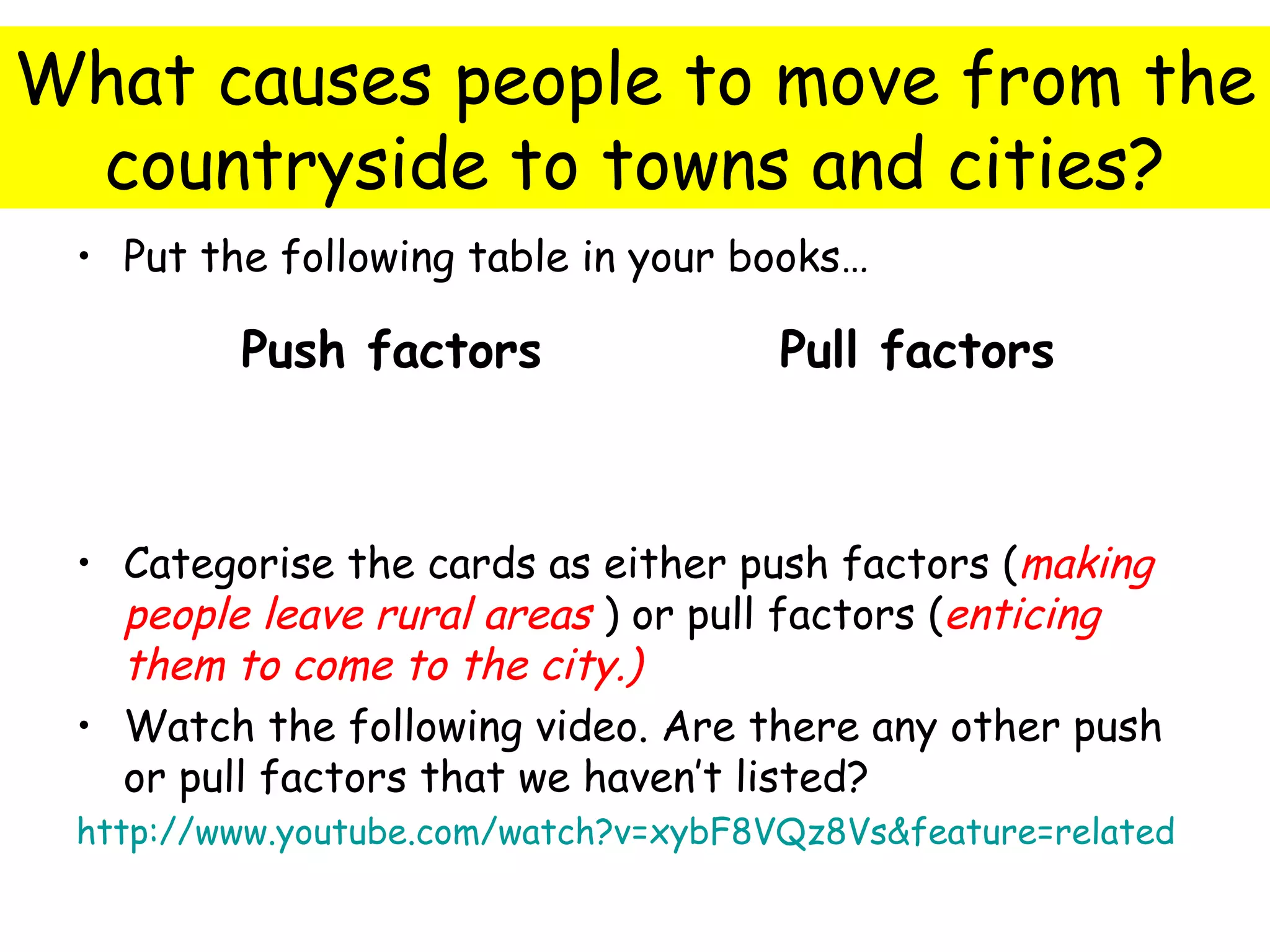
What causes people to move from the
countryside to towns and cities?
• Put the following table in your books…
• Categorise the cards as either push factors (making
people leave rural areas ) or pull factors (enticing
them to come to the city.)
• Watch the following video. Are there any other push
or pull factors that we haven’t listed?
http://www.youtube.com/watch?v=xybF8VQz8Vs&feature=related
Push factors Pull factors
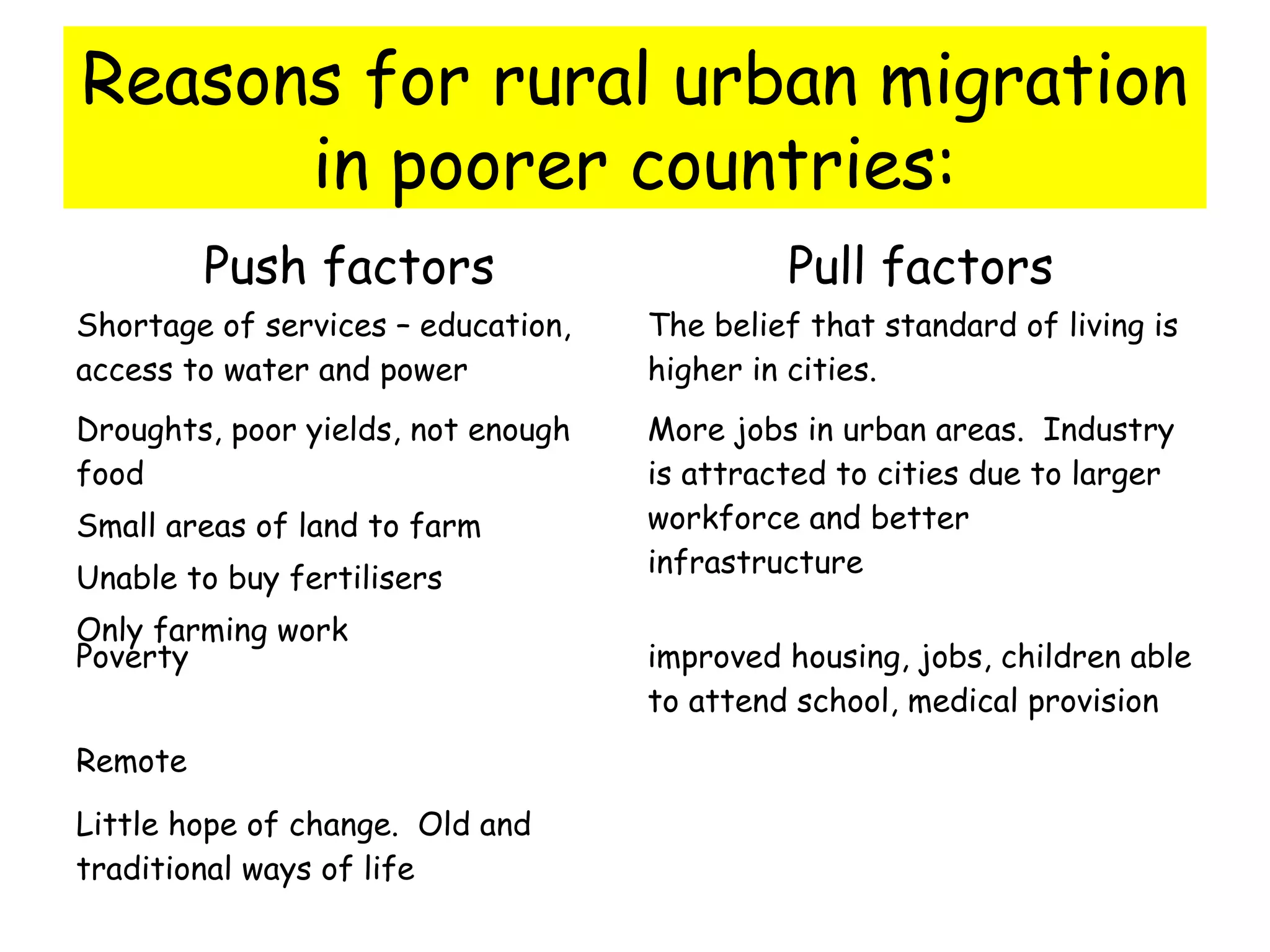
Reasons for rural urban migration
in poorer countries:
Push factors Pull factors
Shortage of services – education,
access to water and power
The belief that standard of living is
higher in cities.
Droughts, poor yields, not enough
food
Small areas of land to farm
Unable to buy fertilisers
Only farming work
More jobs in urban areas. Industry
is attracted to cities due to larger
workforce and better
infrastructure
Poverty improved housing, jobs, children able
to attend school, medical provision
Remote
Little hope of change. Old and
traditional ways of life
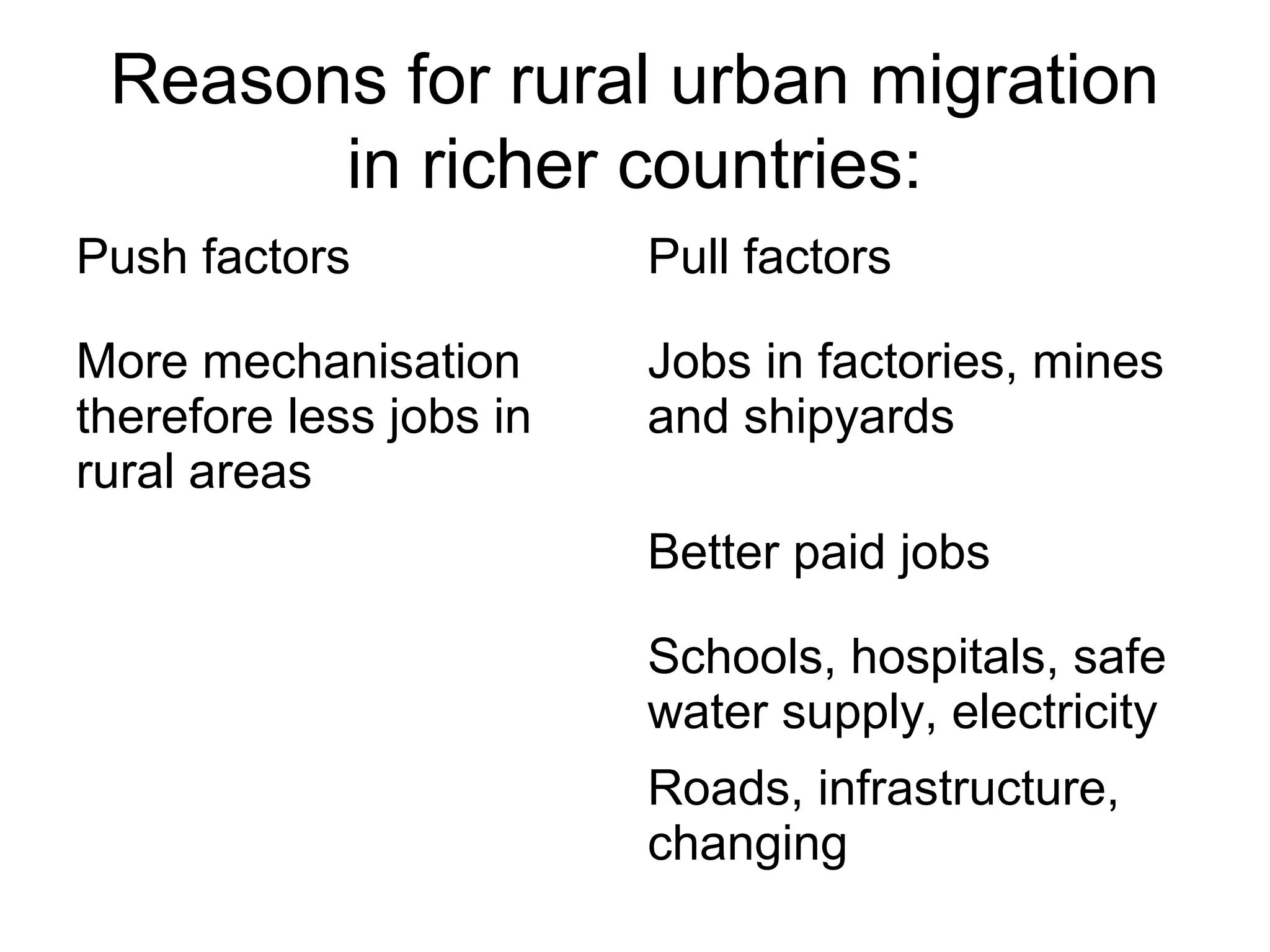
Reasons for rural urban migration
in richer countries:
Push factors Pull factors
More mechanisation
therefore less jobs in
rural areas
Jobs in factories, mines
and shipyards
Better paid jobs
Schools, hospitals, safe
water supply, electricity
Roads, infrastructure,
changing
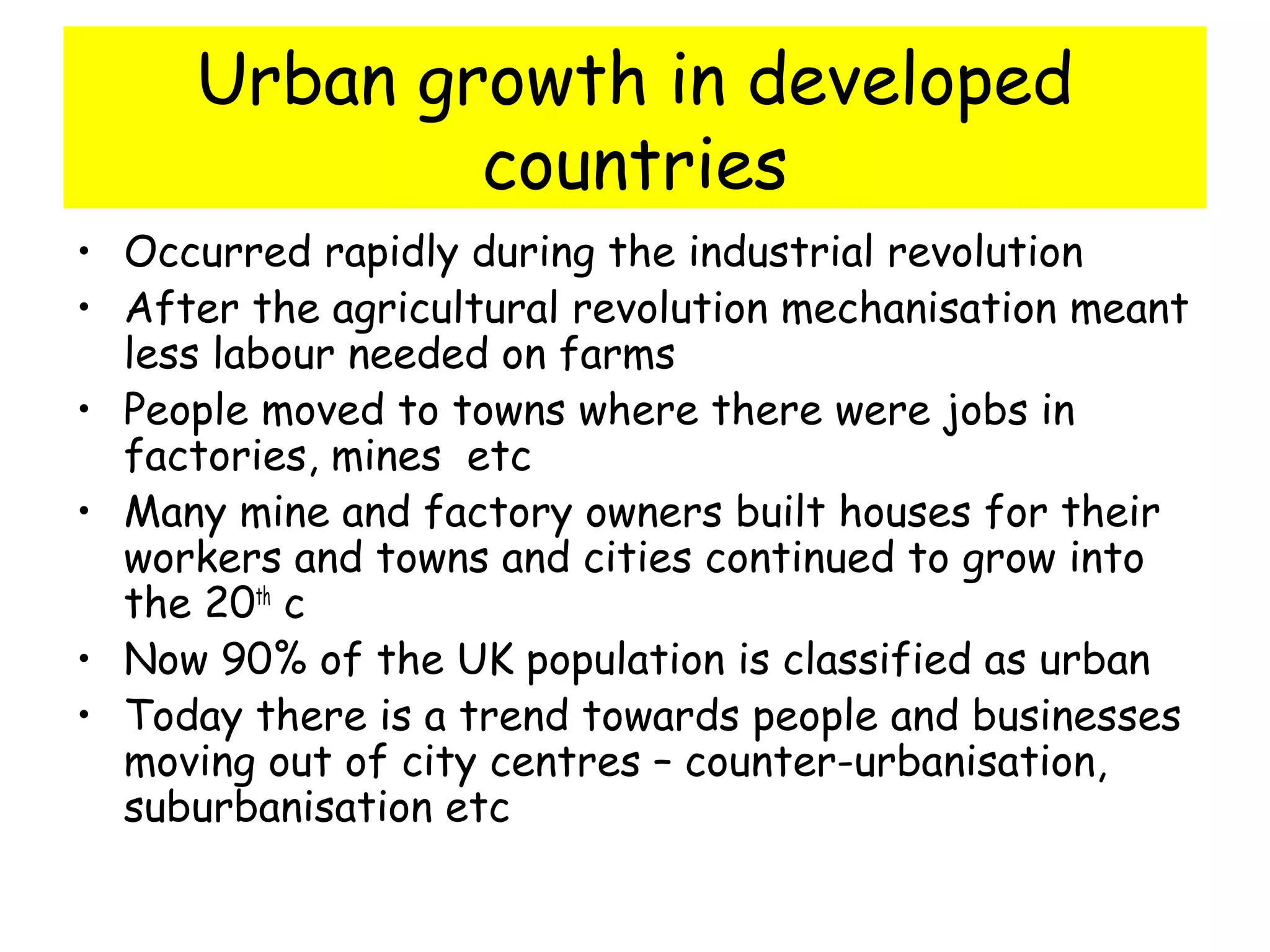
Urban growth in developed
countries
• Occurred rapidly during the industrial revolution
• After the agricultural revolution mechanisation meant
less labour needed on farms
• People moved to towns where there were jobs in
factories, mines etc
• Many mine and factory owners built houses for their
workers and towns and cities continued to grow into
the 20th
c
• Now 90% of the UK population is classified as urban
• Today there is a trend towards people and businesses
moving out of city centres – counter-urbanisation,
suburbanisation etc
Urban growth in poorer countries
3 causes identified:
1. Rural – urban migration
2. High fertility rates and high rates of natural
increase. City population structures are
dominated by young people under 25 of child
bearing ages.
3. Urban areas are dynamic growth points where
industry is concentrated. This makes them
attractive to people looking for work.
Your task
1. Give reasons why:
• A high percentage of the population is
urban in the UK, but the percentage is
not likely to increase much in the future
• A low percentage under 45% is urban in
developing countries like China and the
% is likely to keep on increasing.
2. complete task 2 on w/s (BP pg 155)
Homework
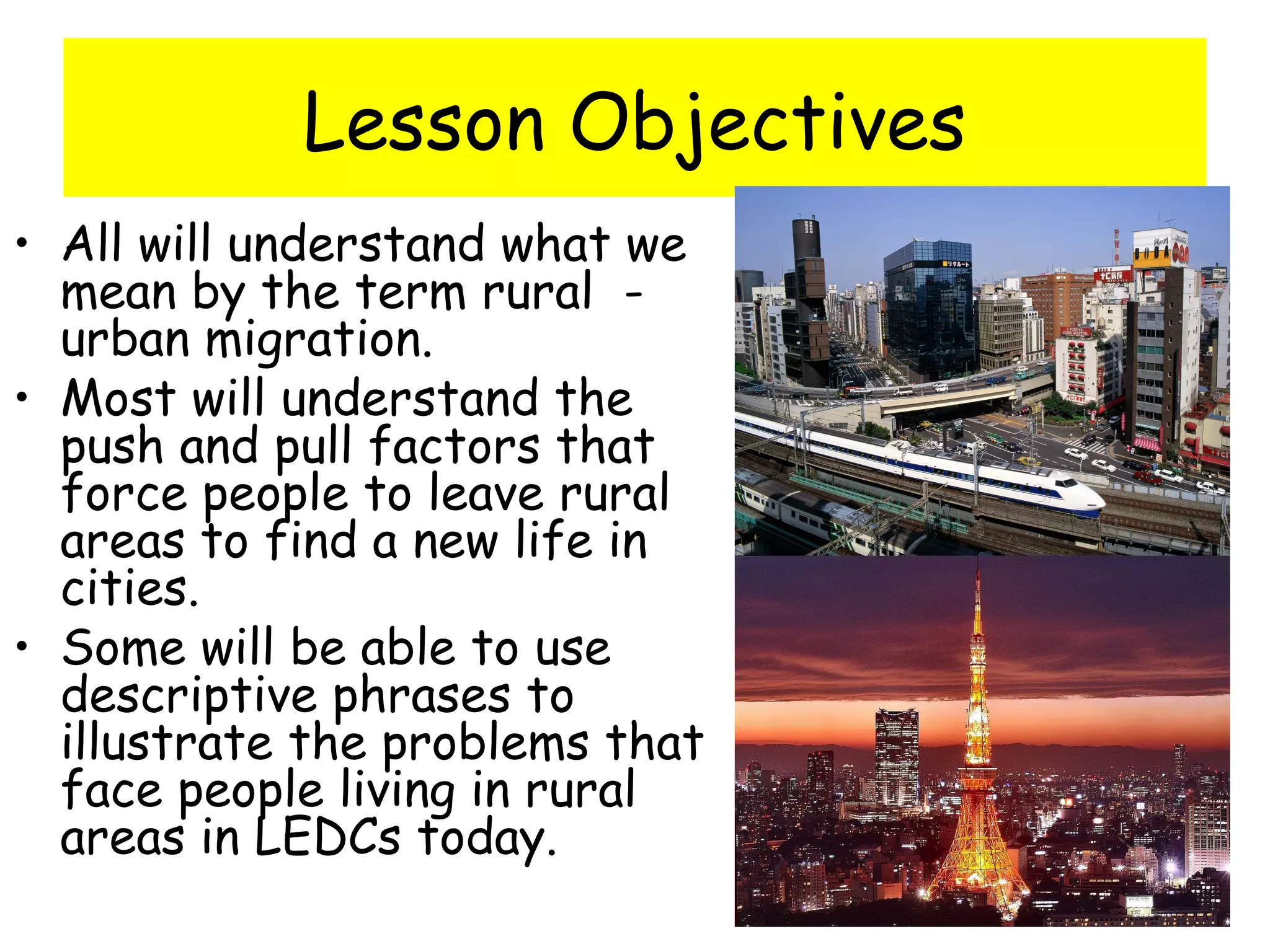
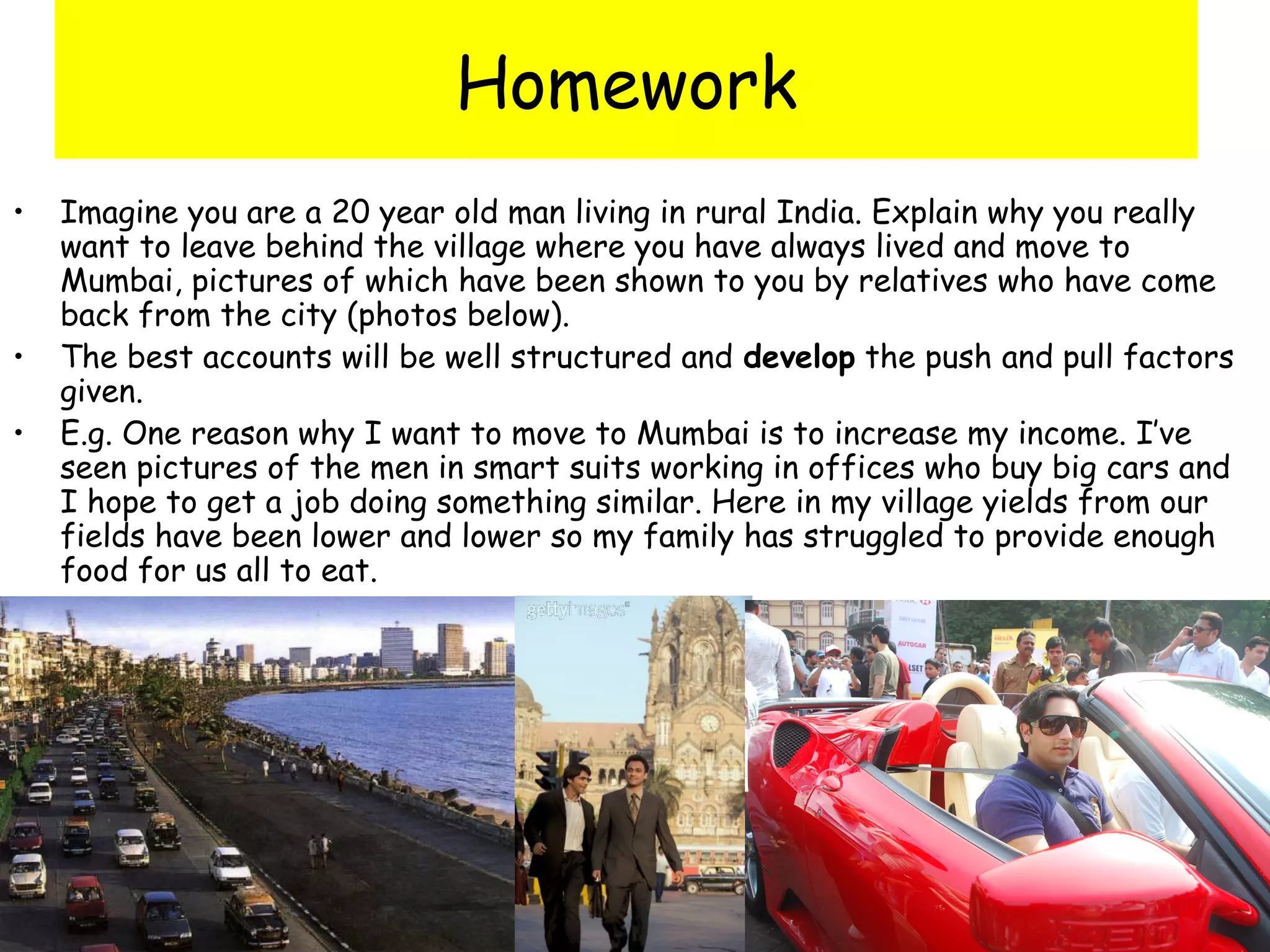
• Imagine you are a 20 year old man living in rural India. Explain why you really
want to leave behind the village where you have always lived and move to
Mumbai, pictures of which have been shown to you by relatives who have come
back from the city (photos below).
• The best accounts will be well structured and develop the push and pull factors
given.
• E.g. One reason why I want to move to Mumbai is to increase my income. I’ve
seen pictures of the men in smart suits working in offices who buy big cars and
I hope to get a job doing something similar. Here in my village yields from our
fields have been lower and lower so my family has struggled to provide enough
food for us all to eat.
Lesson Objectives
• All will understand what we
mean by the term rural -
urban migration.
• Most will understand the push
and pull factors that force
people to leave rural areas to
find a new life in cities.
• Some will be able to use
descriptive phrases to
illustrate the problems that
face people living in rural
areas in LEDCs today.

L2 the causes of urbanisation

  • 1.
    The Causes ofUrbanisation
  • 2.
    Syllabus … Key idea: Urbanisationis a global phenomenon Specification content: Students should appreciate the different pace and causes of urbanisation in the rich and poor world.
  • 3.
    References … • B&Ppg 154 / 155 • AQA A pg 195 • CGP pg 85
  • 4.
    Starter - Recap •Look at the interactive map at the website below: http://news.bbc.co.uk/1/shared/spl/hi/world/06/urbanisatio What trends can we see in how urbanisation has taken place over time in different parts of the world?
  • 5.
    Lesson Objectives • Allwill understand what we mean by the term rural - urban migration. • Most will understand the push and pull factors that force people to leave rural areas to find a new life in cities. • Some will be able to use descriptive phrases to illustrate the problems that face people living in rural areas in LEDCs today.
  • 6.
    What does theterm “rural – urban migration” mean? A process in which people move from the countryside to the towns and cities.
  • 7.
    Why is thepercentage of people living in urban areas increasing so rapidly? In pairs try to think of 2 main reasons • Rural - urban migration • Natural increase a) As most migrants from the countryside are young adults often uneducated in family planning, there are a high number of births among this group of the population. b) In cities better health care means people live longer which increases the proportion of people in urban areas.
  • 8.
    Push factors • People’sdislikes about where they live • The disadvantages of living there Physical Economic Social Drought Flood Earthquake No work Poorly paid Lack of public services and utilities – schools, hospitals, electricity, clean water supply
  • 9.
    Pull factors • Attractionsof a place Reasons why people want to move there advantages Physical Economic Social Wetter climate more reliable rainfall More fertile soils Job opportunities Improved standard of living moving nearer to family and friends
  • 10.
    What causes peopleto move from the countryside to towns and cities? • Put the following table in your books… • Categorise the cards as either push factors (making people leave rural areas ) or pull factors (enticing them to come to the city.) • Watch the following video. Are there any other push or pull factors that we haven’t listed? http://www.youtube.com/watch?v=xybF8VQz8Vs&feature=related Push factors Pull factors
  • 11.
    Reasons for ruralurban migration in poorer countries: Push factors Pull factors Shortage of services – education, access to water and power The belief that standard of living is higher in cities. Droughts, poor yields, not enough food Small areas of land to farm Unable to buy fertilisers Only farming work More jobs in urban areas. Industry is attracted to cities due to larger workforce and better infrastructure Poverty improved housing, jobs, children able to attend school, medical provision Remote Little hope of change. Old and traditional ways of life
  • 12.
    Reasons for ruralurban migration in richer countries: Push factors Pull factors More mechanisation therefore less jobs in rural areas Jobs in factories, mines and shipyards Better paid jobs Schools, hospitals, safe water supply, electricity Roads, infrastructure, changing
  • 13.
    Urban growth indeveloped countries • Occurred rapidly during the industrial revolution • After the agricultural revolution mechanisation meant less labour needed on farms • People moved to towns where there were jobs in factories, mines etc • Many mine and factory owners built houses for their workers and towns and cities continued to grow into the 20th c • Now 90% of the UK population is classified as urban • Today there is a trend towards people and businesses moving out of city centres – counter-urbanisation, suburbanisation etc
  • 14.
    Urban growth inpoorer countries 3 causes identified: 1. Rural – urban migration 2. High fertility rates and high rates of natural increase. City population structures are dominated by young people under 25 of child bearing ages. 3. Urban areas are dynamic growth points where industry is concentrated. This makes them attractive to people looking for work.
  • 15.
    Your task 1. Givereasons why: • A high percentage of the population is urban in the UK, but the percentage is not likely to increase much in the future • A low percentage under 45% is urban in developing countries like China and the % is likely to keep on increasing. 2. complete task 2 on w/s (BP pg 155)
  • 16.
    Homework • Imagine youare a 20 year old man living in rural India. Explain why you really want to leave behind the village where you have always lived and move to Mumbai, pictures of which have been shown to you by relatives who have come back from the city (photos below). • The best accounts will be well structured and develop the push and pull factors given. • E.g. One reason why I want to move to Mumbai is to increase my income. I’ve seen pictures of the men in smart suits working in offices who buy big cars and I hope to get a job doing something similar. Here in my village yields from our fields have been lower and lower so my family has struggled to provide enough food for us all to eat.
  • 17.
    Lesson Objectives • Allwill understand what we mean by the term rural - urban migration. • Most will understand the push and pull factors that force people to leave rural areas to find a new life in cities. • Some will be able to use descriptive phrases to illustrate the problems that face people living in rural areas in LEDCs today.