Sustainability requires the development of ecotourism . NT Pg 316 – 317 BP pg 258 – 249 CGP pg 129 - 130
objectives Understand the need for stewardship and conservation. Know a case study and explain the ways that ecotourism can benefit the environment, the local economy and the lives of the people. Appreciate and explain how this form of tourism can contribute to sustainable development.
Stewardship and Conservation Stewardship  is used to mean careful management of the environment on a large scale. All types of development and resource exploitation are planned sustainably Conservation  is stewardship on a smaller and more manageable scale. Individuals are involved.  E.g. habitats in rural areas can be protected, conserving energy, recycling waste
Growing concern for the environment is forcing many countries and companies to move towards more sustainable – allowing development to continue today without damaging the environment and the cultural heritage for the future.  This is being achieved by: Encouraging tourists to act responsibly The sustainable management of tourist areas Increasing interest in ecotourism
What is Eco-tourism? ... Costa Rica   Costa Rica Eco-Tourism
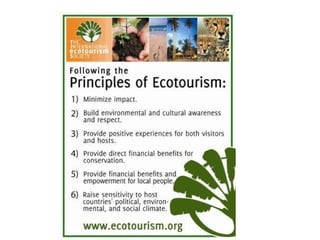
Ecotourism Ecotourism is environmentally friendly tourism. Tourism is blamed for environmental, social and cultural damage.  Ecotourism caters for the growing niche market of environmentally aware tourists
 
Ecotourism  is… A  Environmentally sound Natural environments and wildlife safeguarded B  Socially sound Considers the needs of, and involves, local communities. C  Sustainable Looking after today’s tourist needs that does not damage those of future generations.
Why should tourists be careful of the label ecotourism? Some companies do simply use it as a sales to  entice tourists into using their company than  another. One cynic describes ecotourism as: ‘ ordinary tourism dressed up in a politically  correct manner.’ .
Ecotourism replaces responsible tourism. “ protects the environment, respects local cultures, benefits local communities, Conserves natural resources, and causes  minimum pollution.”
Characteristics of ecotourism Ecotourists want to experience the natural environment, undertaking activities such as trekking. They want their holiday to have as little impact on the environment as possible.  Energy use should be sustainable No waste should be generated which cannot be dealt with Small scale accommodation Eat local food Use local people as guides Low impact on environment Small scale but high price paid for holiday
Benefits of Ecotourism Careful disposal of waste Use renewable energy supplies and local foods – better for environment Many ecotourism schemes fund community projects – schools, water tanks. Health centres Indirect employment – producing crafts to sell to visitors, supplying the tourist industry with goods Reduces poaching and hunting.  Locals benefit from protecting these species for tourism People have a better and more stable income and therefore standard of living Creates jobs for local people which helps the local economy grow Local people are encouraged to conserve the environment Social Economic Environmental
Ecotourism helps the sustainable development of areas Improves the quality of life for people but doing it in a way that doesn’t stop future generations getting what they need. Increases the quality of life for local people.  The profits from ecotourism can be used to build schools or healthcare facilities Done without damaging the environment
Tataquara Lodge (CGP) Located on an island in Xingu River, Para, Brazil Owned by a cooperative of 6 local tribes Lodge has 15 rooms Offers fishing, canoeing, wildlife viewing and forest walks Surrounding rainforest has rive variety of wildlife including harpy eagle and giant river otter
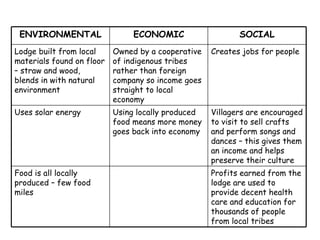
Profits earned from the lodge are used to provide decent health care and education for thousands of people from local tribes Food is all locally produced – few food miles Villagers are encouraged to visit to sell crafts and perform songs and dances – this gives them an income and helps preserve their culture Using locally produced food means more money goes back into economy Uses solar energy Creates jobs for people Owned by a cooperative of indigenous tribes rather than foreign company so income goes straight to local economy Lodge built from local materials found on floor – straw and wood, blends in with natural environment SOCIAL ECONOMIC ENVIRONMENTAL
Tataquara Lodge helps sustainable development … Profits are used to improve healthcare and education in the area.  This increases quality of life for local people Development is sustainable because the money to do it is generated without damaging the environment Resources aren’t being used up and so are there for future generations
2010 6 (c) (ii)  Explain how ecotourism can contribute to sustainable development
Emphasis should be that present day development of tourism should not have a detrimental effect on future generations, due to an overuse of resources or damage to the environment. There should the utilisation of local labour and skills, so that the local people are the ones who benefit from the development of tourism and the arrival of visitors. Any development of the infrastructure must be sympathetic to the environment and have minimal visual impact. (4 marks) Level 1 (Basic) (1-2 marks) Simple statements with no reference to sustainable development. Ecotourism does not damage the environment. Ecotourism helps the local economy. The lives of the people are not interrupted. Level 2 (Clear) (3-4 marks) Linked statements with indication of how ecotourism contributes to sustainable development. The development of ecotourism allows the local people to make use of their traditional skills to build accommodation so that they are earning money. Sympathetic development of the infrastructure such as roads is useful to the local community as well as the tourists.
Plenary 1.Produce a list of rules for being a responsible tourist 2. Brainstorm: Why should tourism be sustainable? 3 “just a minute”. The topic is ecotourism. You must talk for 1 minute about the subject without hesitation, deviation or repetition.

Sustainability requires the

  • 1.
    Sustainability requires thedevelopment of ecotourism . NT Pg 316 – 317 BP pg 258 – 249 CGP pg 129 - 130
  • 2.
    objectives Understand theneed for stewardship and conservation. Know a case study and explain the ways that ecotourism can benefit the environment, the local economy and the lives of the people. Appreciate and explain how this form of tourism can contribute to sustainable development.
  • 3.
    Stewardship and ConservationStewardship is used to mean careful management of the environment on a large scale. All types of development and resource exploitation are planned sustainably Conservation is stewardship on a smaller and more manageable scale. Individuals are involved. E.g. habitats in rural areas can be protected, conserving energy, recycling waste
  • 4.
    Growing concern forthe environment is forcing many countries and companies to move towards more sustainable – allowing development to continue today without damaging the environment and the cultural heritage for the future. This is being achieved by: Encouraging tourists to act responsibly The sustainable management of tourist areas Increasing interest in ecotourism
  • 5.
    What is Eco-tourism?... Costa Rica Costa Rica Eco-Tourism
  • 6.
    Ecotourism Ecotourism isenvironmentally friendly tourism. Tourism is blamed for environmental, social and cultural damage. Ecotourism caters for the growing niche market of environmentally aware tourists
  • 7.
  • 8.
    Ecotourism is…A Environmentally sound Natural environments and wildlife safeguarded B Socially sound Considers the needs of, and involves, local communities. C Sustainable Looking after today’s tourist needs that does not damage those of future generations.
  • 9.
    Why should touristsbe careful of the label ecotourism? Some companies do simply use it as a sales to entice tourists into using their company than another. One cynic describes ecotourism as: ‘ ordinary tourism dressed up in a politically correct manner.’ .
  • 10.
    Ecotourism replaces responsibletourism. “ protects the environment, respects local cultures, benefits local communities, Conserves natural resources, and causes minimum pollution.”
  • 11.
    Characteristics of ecotourismEcotourists want to experience the natural environment, undertaking activities such as trekking. They want their holiday to have as little impact on the environment as possible. Energy use should be sustainable No waste should be generated which cannot be dealt with Small scale accommodation Eat local food Use local people as guides Low impact on environment Small scale but high price paid for holiday
  • 12.
    Benefits of EcotourismCareful disposal of waste Use renewable energy supplies and local foods – better for environment Many ecotourism schemes fund community projects – schools, water tanks. Health centres Indirect employment – producing crafts to sell to visitors, supplying the tourist industry with goods Reduces poaching and hunting. Locals benefit from protecting these species for tourism People have a better and more stable income and therefore standard of living Creates jobs for local people which helps the local economy grow Local people are encouraged to conserve the environment Social Economic Environmental
  • 13.
    Ecotourism helps thesustainable development of areas Improves the quality of life for people but doing it in a way that doesn’t stop future generations getting what they need. Increases the quality of life for local people. The profits from ecotourism can be used to build schools or healthcare facilities Done without damaging the environment
  • 14.
    Tataquara Lodge (CGP)Located on an island in Xingu River, Para, Brazil Owned by a cooperative of 6 local tribes Lodge has 15 rooms Offers fishing, canoeing, wildlife viewing and forest walks Surrounding rainforest has rive variety of wildlife including harpy eagle and giant river otter
  • 15.
    Profits earned fromthe lodge are used to provide decent health care and education for thousands of people from local tribes Food is all locally produced – few food miles Villagers are encouraged to visit to sell crafts and perform songs and dances – this gives them an income and helps preserve their culture Using locally produced food means more money goes back into economy Uses solar energy Creates jobs for people Owned by a cooperative of indigenous tribes rather than foreign company so income goes straight to local economy Lodge built from local materials found on floor – straw and wood, blends in with natural environment SOCIAL ECONOMIC ENVIRONMENTAL
  • 16.
    Tataquara Lodge helpssustainable development … Profits are used to improve healthcare and education in the area. This increases quality of life for local people Development is sustainable because the money to do it is generated without damaging the environment Resources aren’t being used up and so are there for future generations
  • 17.
    2010 6 (c)(ii) Explain how ecotourism can contribute to sustainable development
  • 18.
    Emphasis should bethat present day development of tourism should not have a detrimental effect on future generations, due to an overuse of resources or damage to the environment. There should the utilisation of local labour and skills, so that the local people are the ones who benefit from the development of tourism and the arrival of visitors. Any development of the infrastructure must be sympathetic to the environment and have minimal visual impact. (4 marks) Level 1 (Basic) (1-2 marks) Simple statements with no reference to sustainable development. Ecotourism does not damage the environment. Ecotourism helps the local economy. The lives of the people are not interrupted. Level 2 (Clear) (3-4 marks) Linked statements with indication of how ecotourism contributes to sustainable development. The development of ecotourism allows the local people to make use of their traditional skills to build accommodation so that they are earning money. Sympathetic development of the infrastructure such as roads is useful to the local community as well as the tourists.
  • 19.
    Plenary 1.Produce alist of rules for being a responsible tourist 2. Brainstorm: Why should tourism be sustainable? 3 “just a minute”. The topic is ecotourism. You must talk for 1 minute about the subject without hesitation, deviation or repetition.